



What Our Repair Services Cover
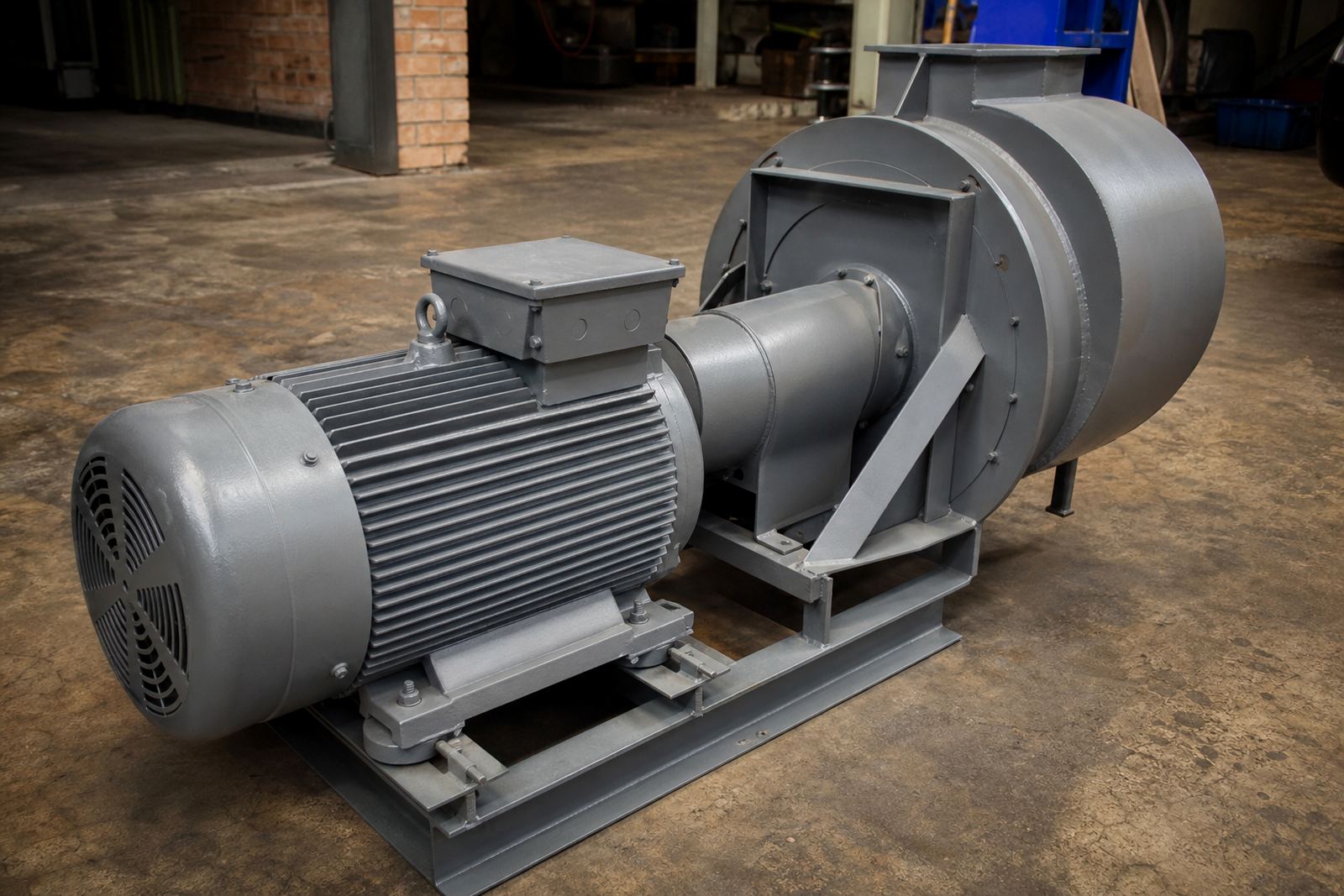
Our repair work is aimed at equipment that keeps production moving, from small workshop motors to larger units used on plant floors. The right approach depends on the fault, the duty cycle and the condition of the surrounding system, because a motor problem is not always just a motor problem.
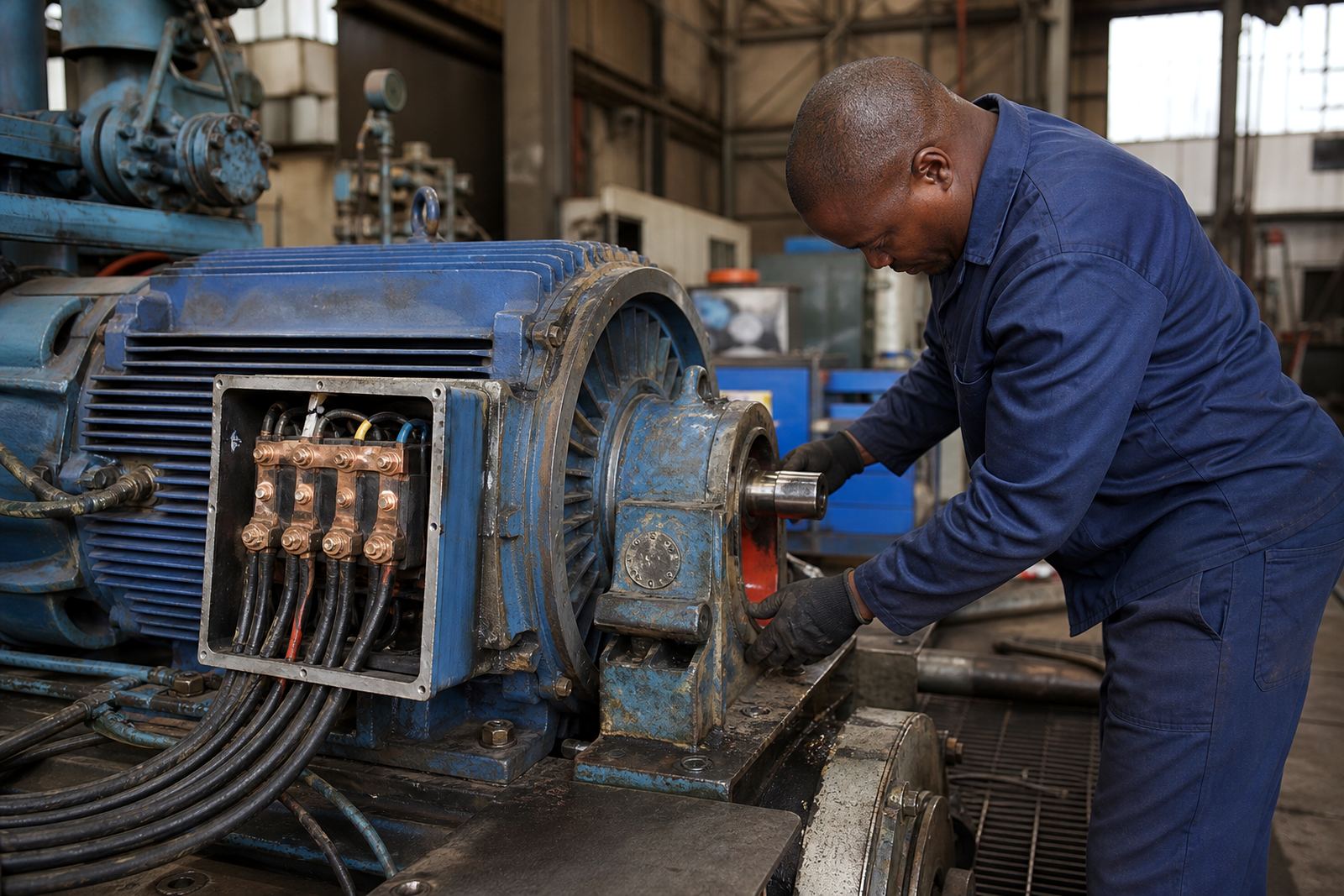
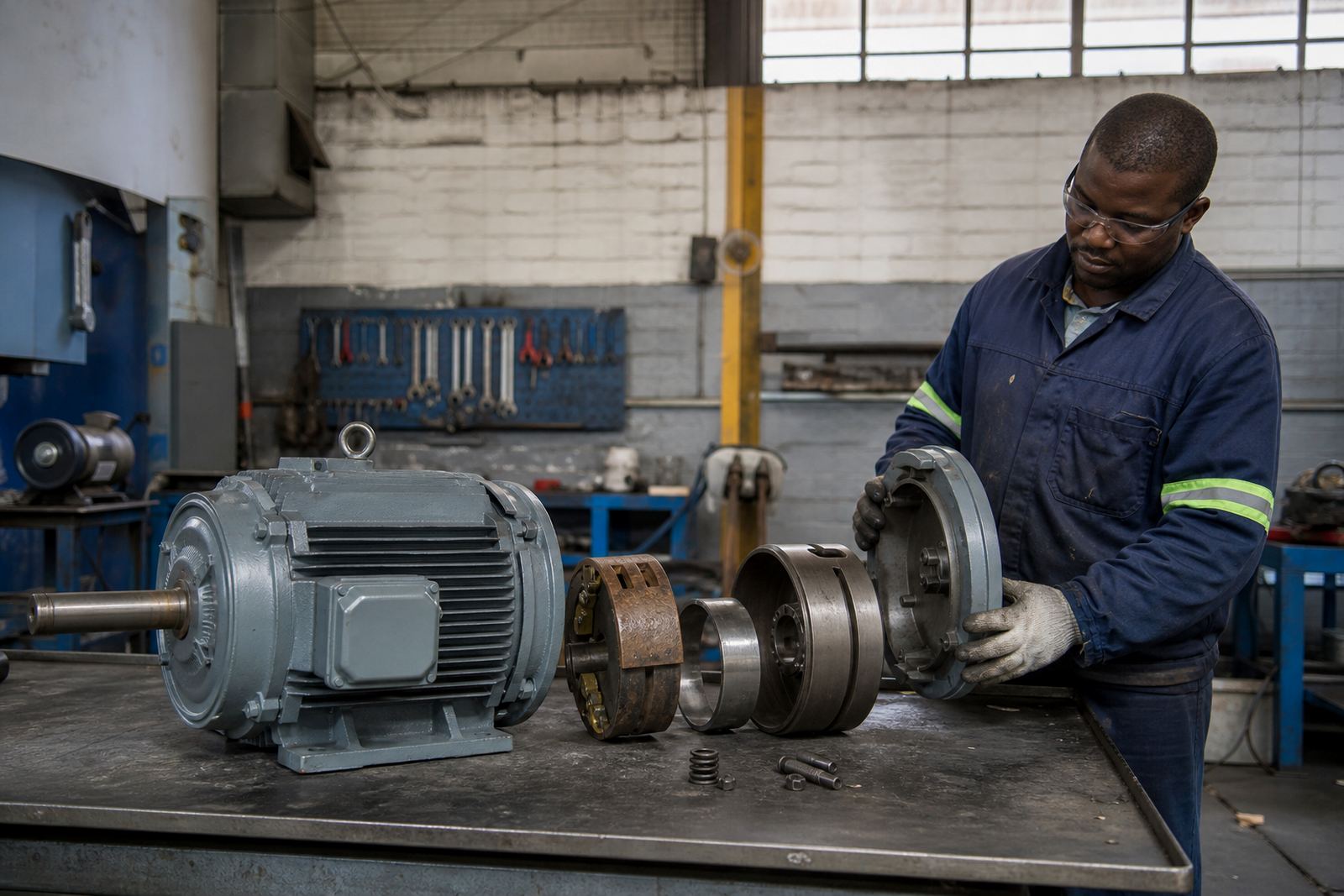
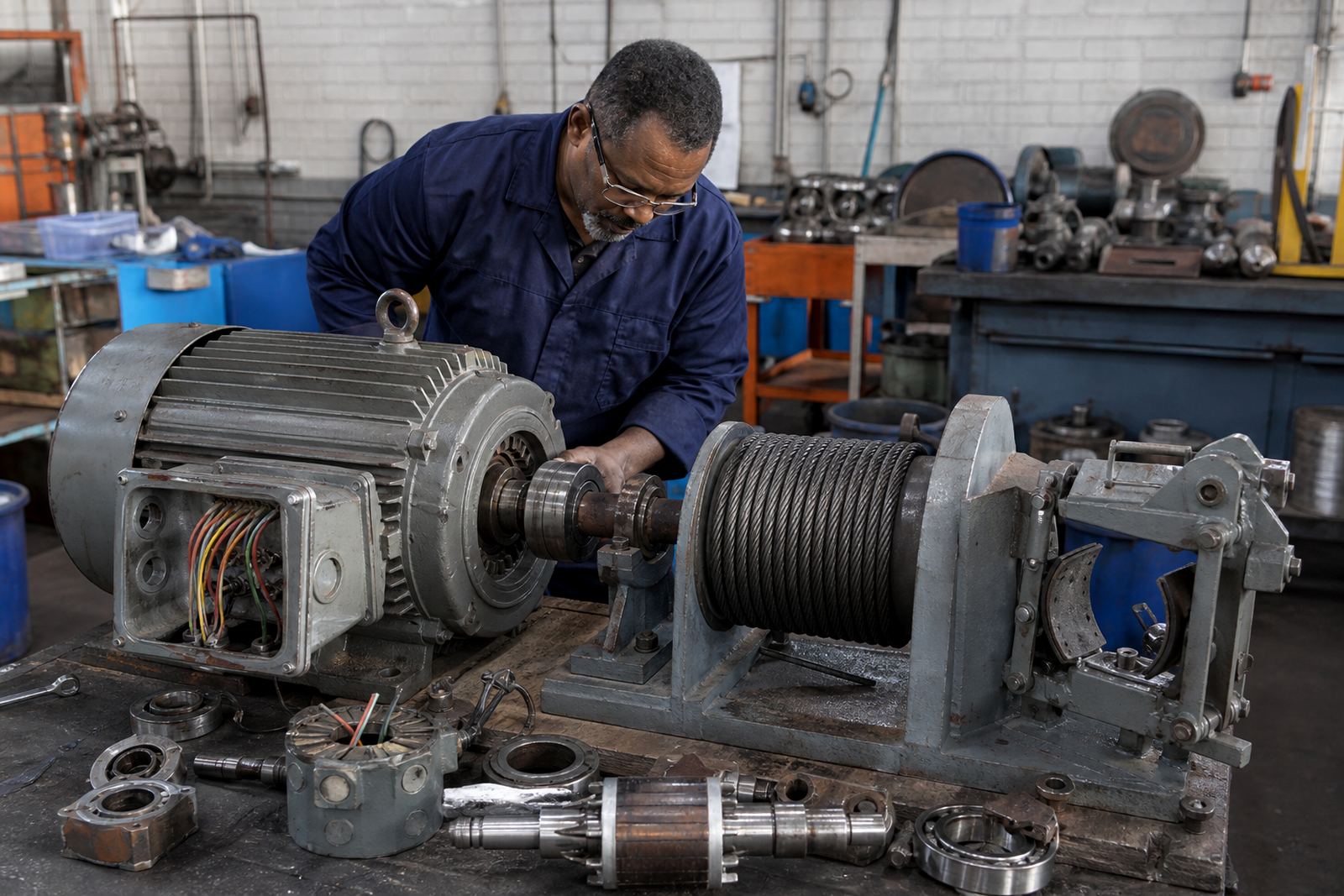
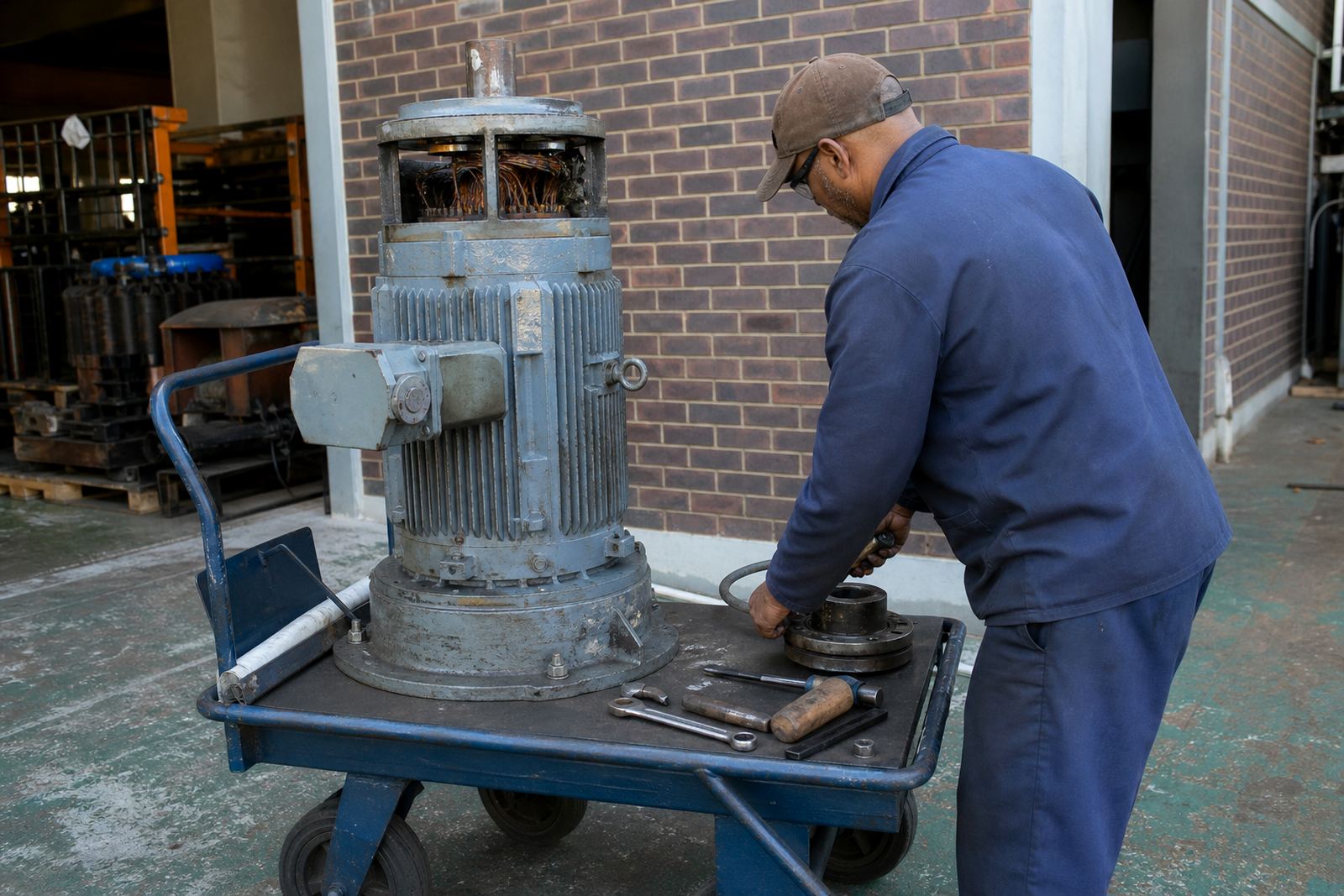
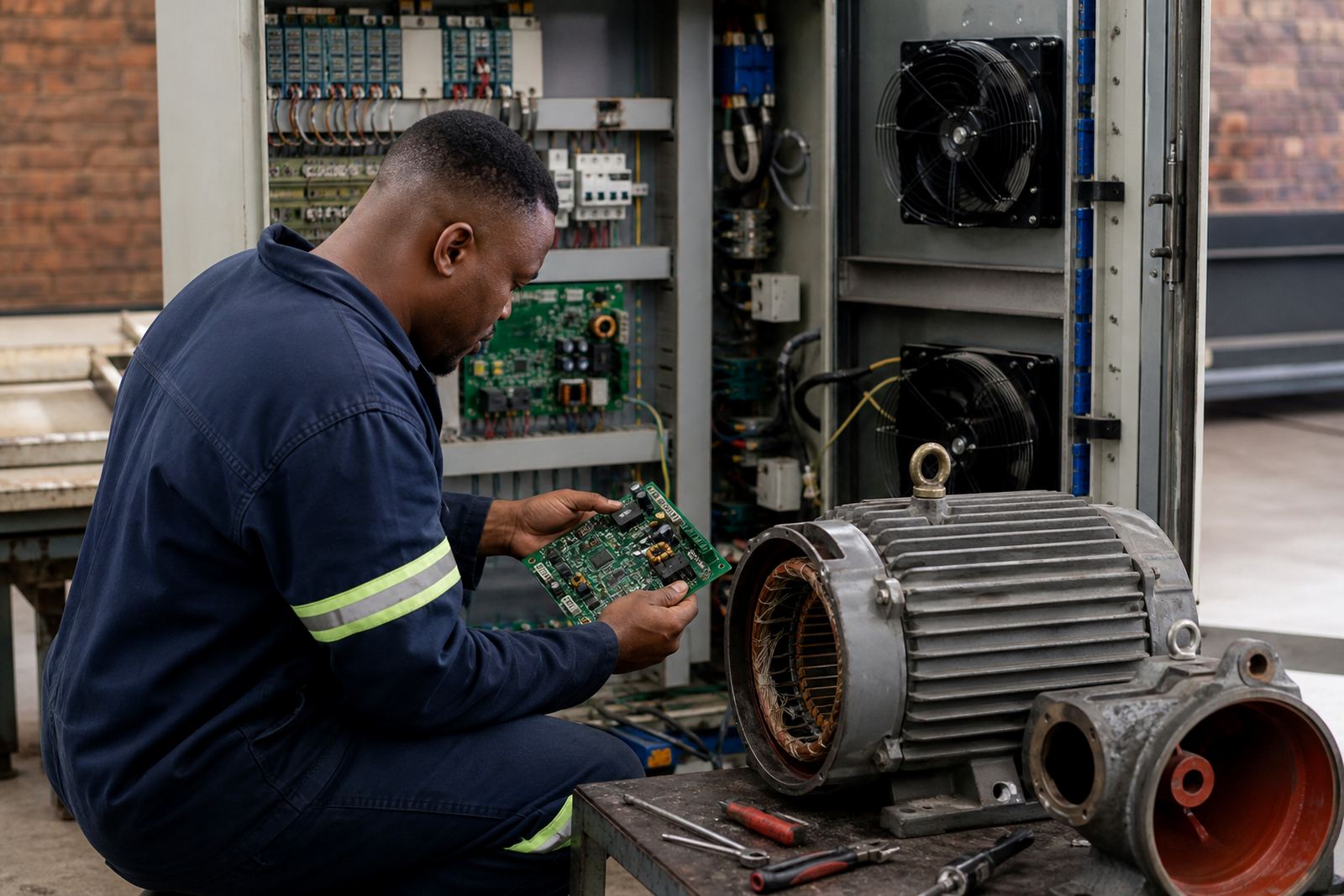
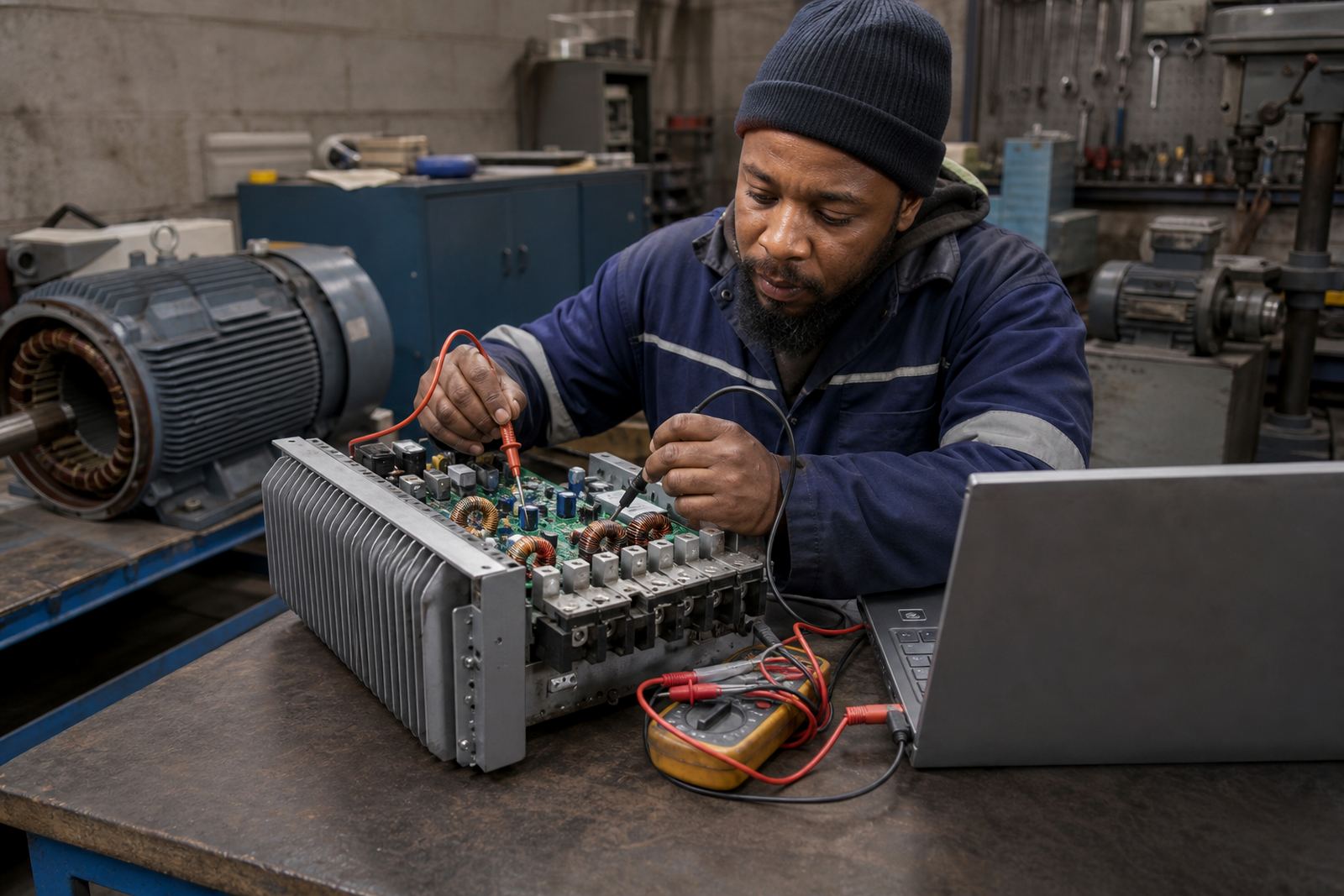
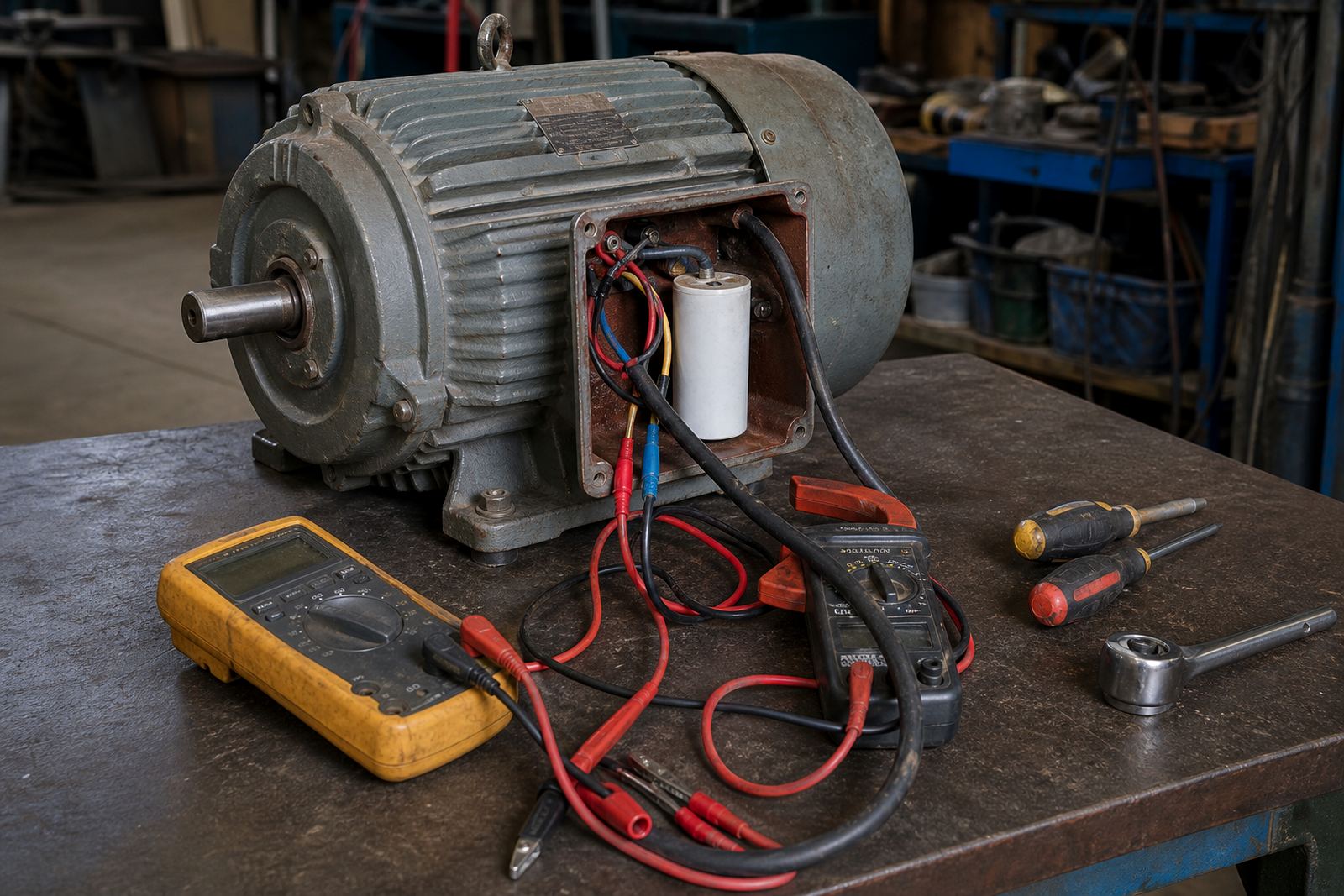
We handle fault finding, motor removal, drive inspection and related checks so the work starts with a proper diagnosis. That includes looking at the machine, its connections, its load and any signs of overheating, vibration or contamination. In many cases the issue is linked to more than one part, so the repair plan needs to be practical and thorough.
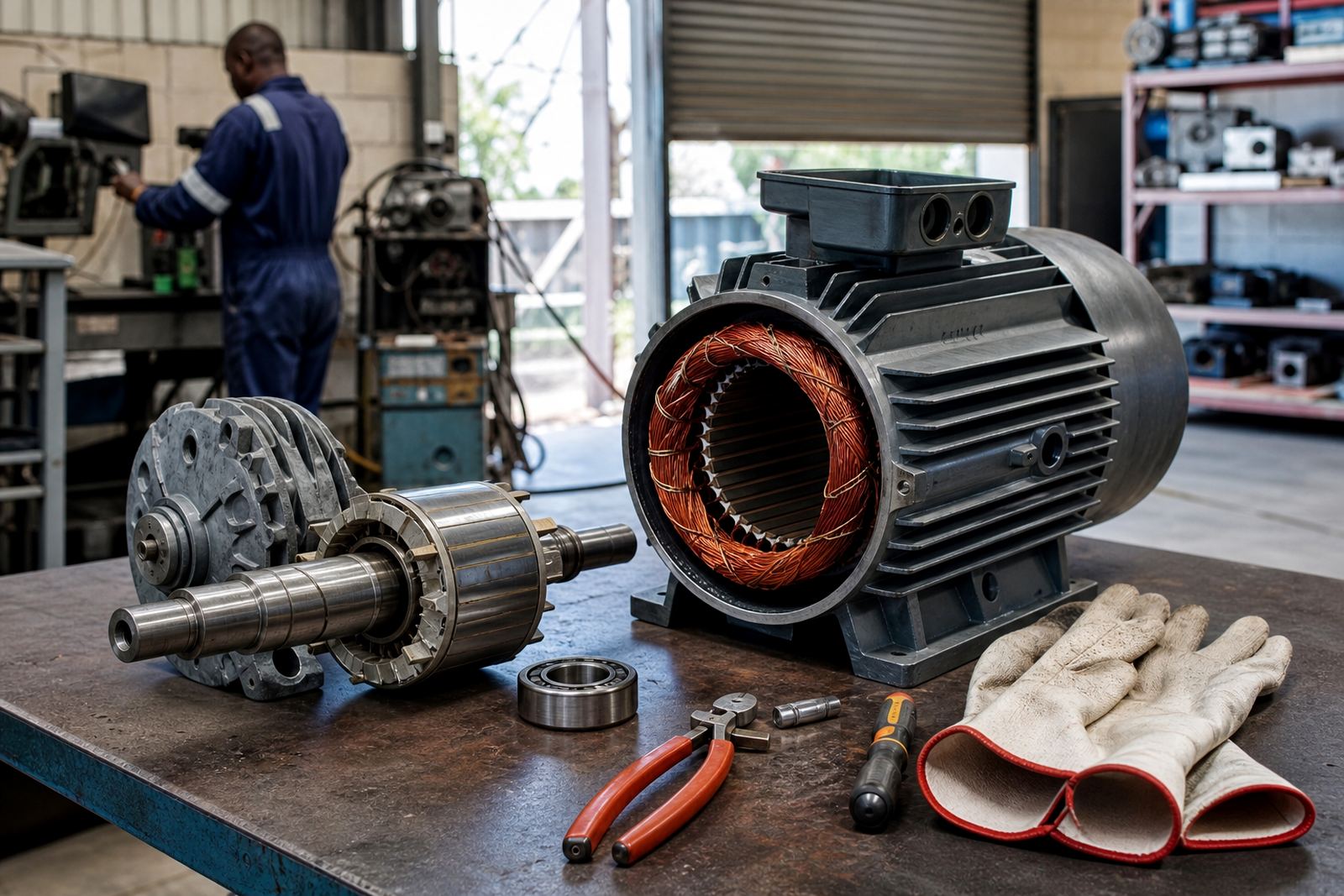
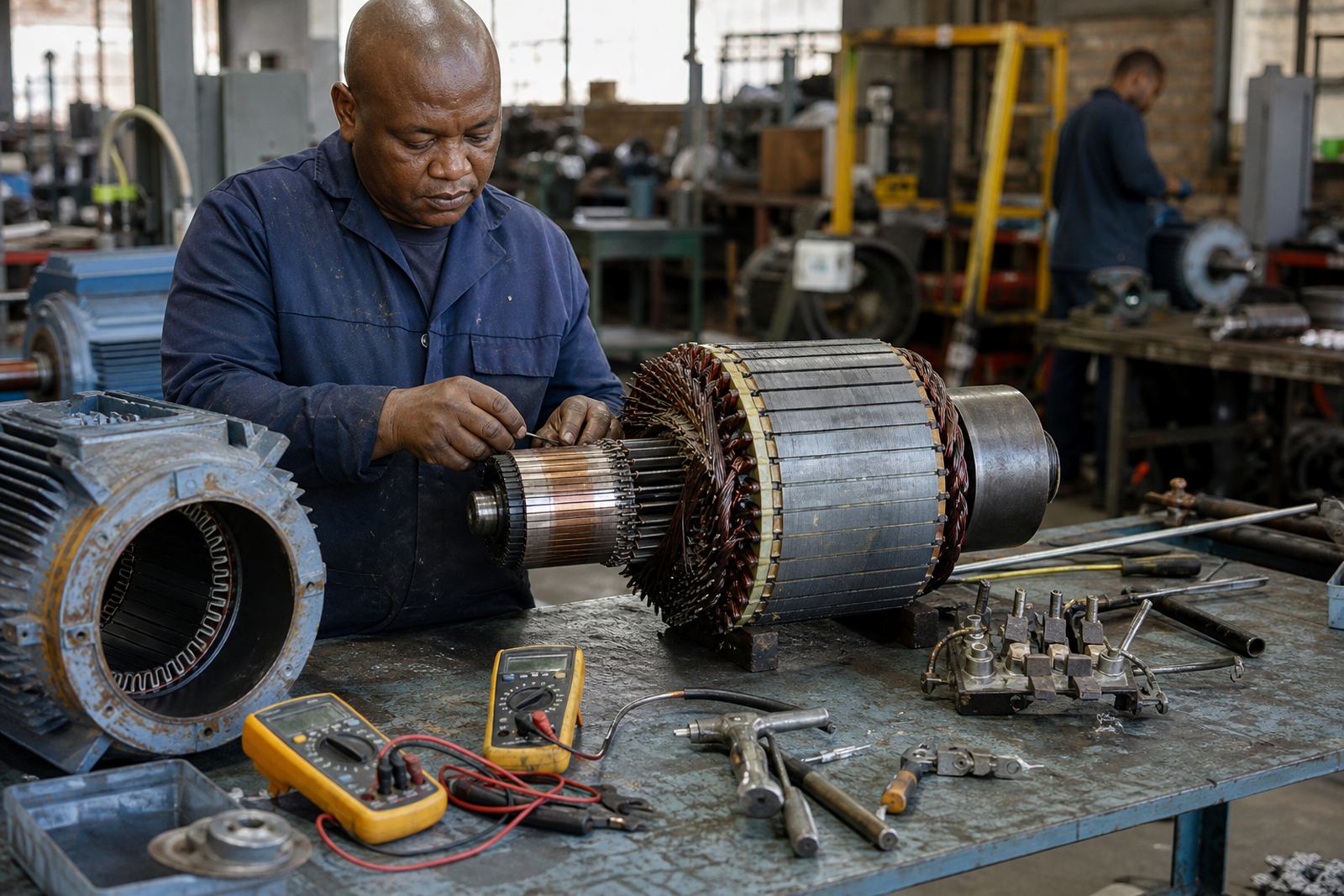
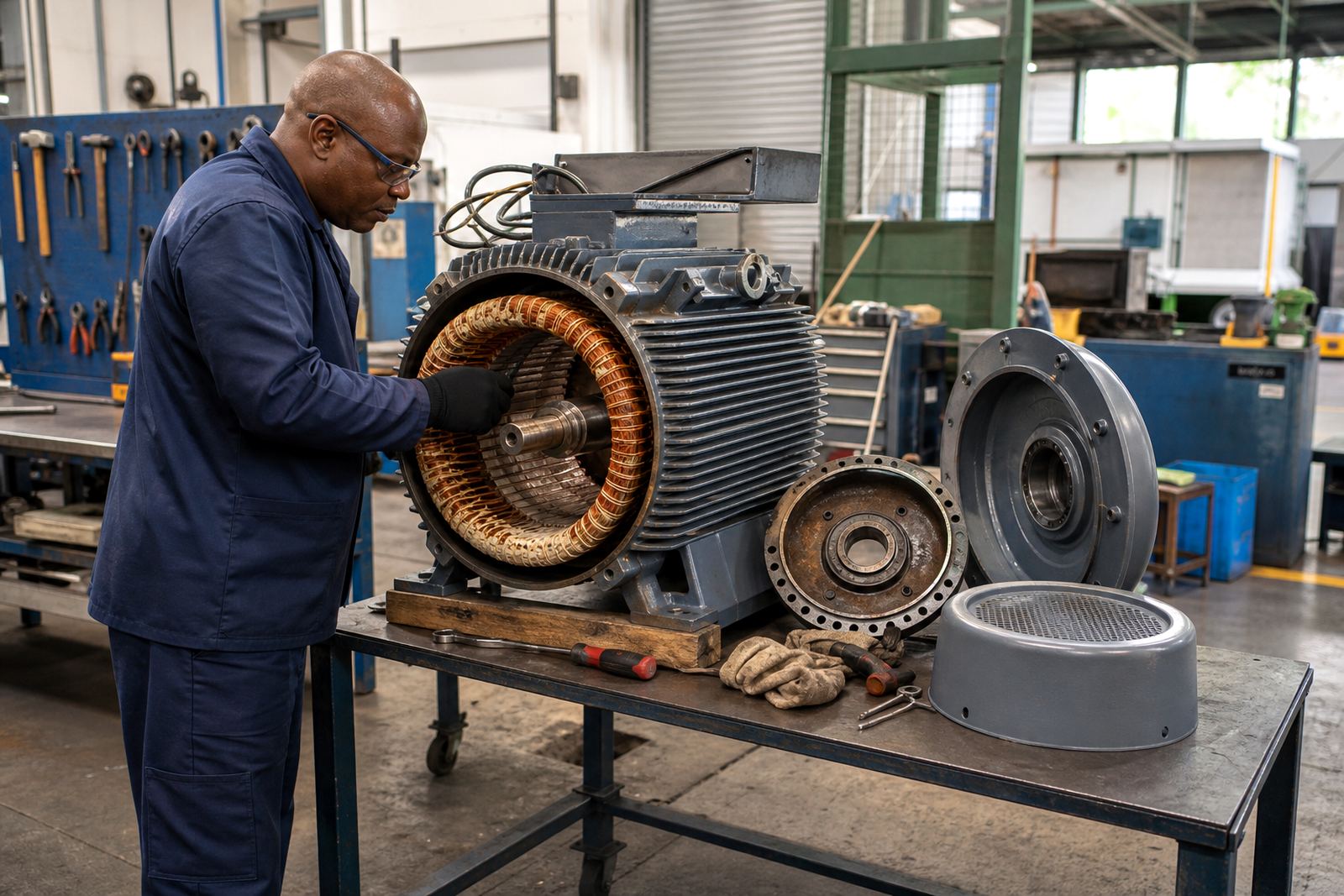
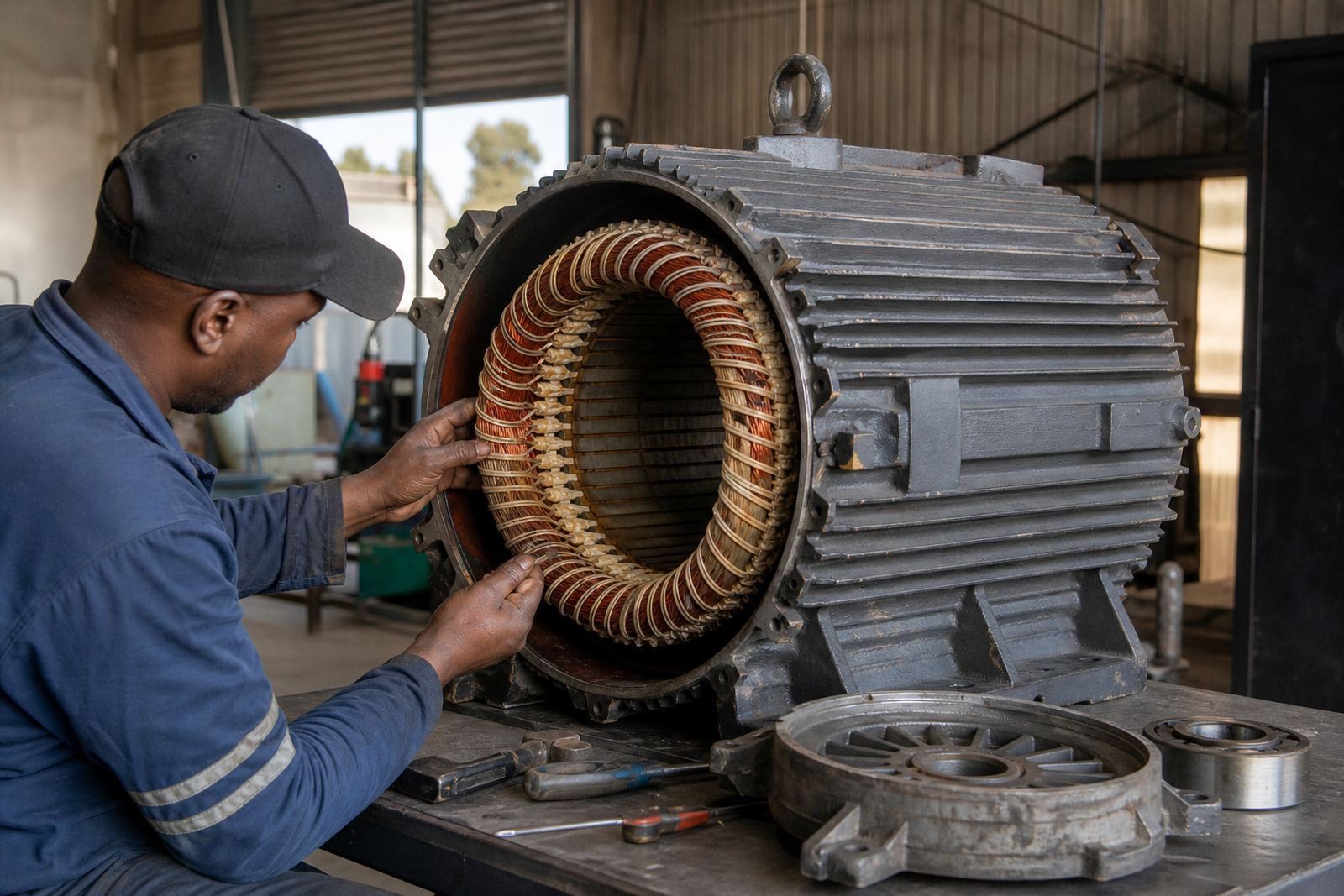
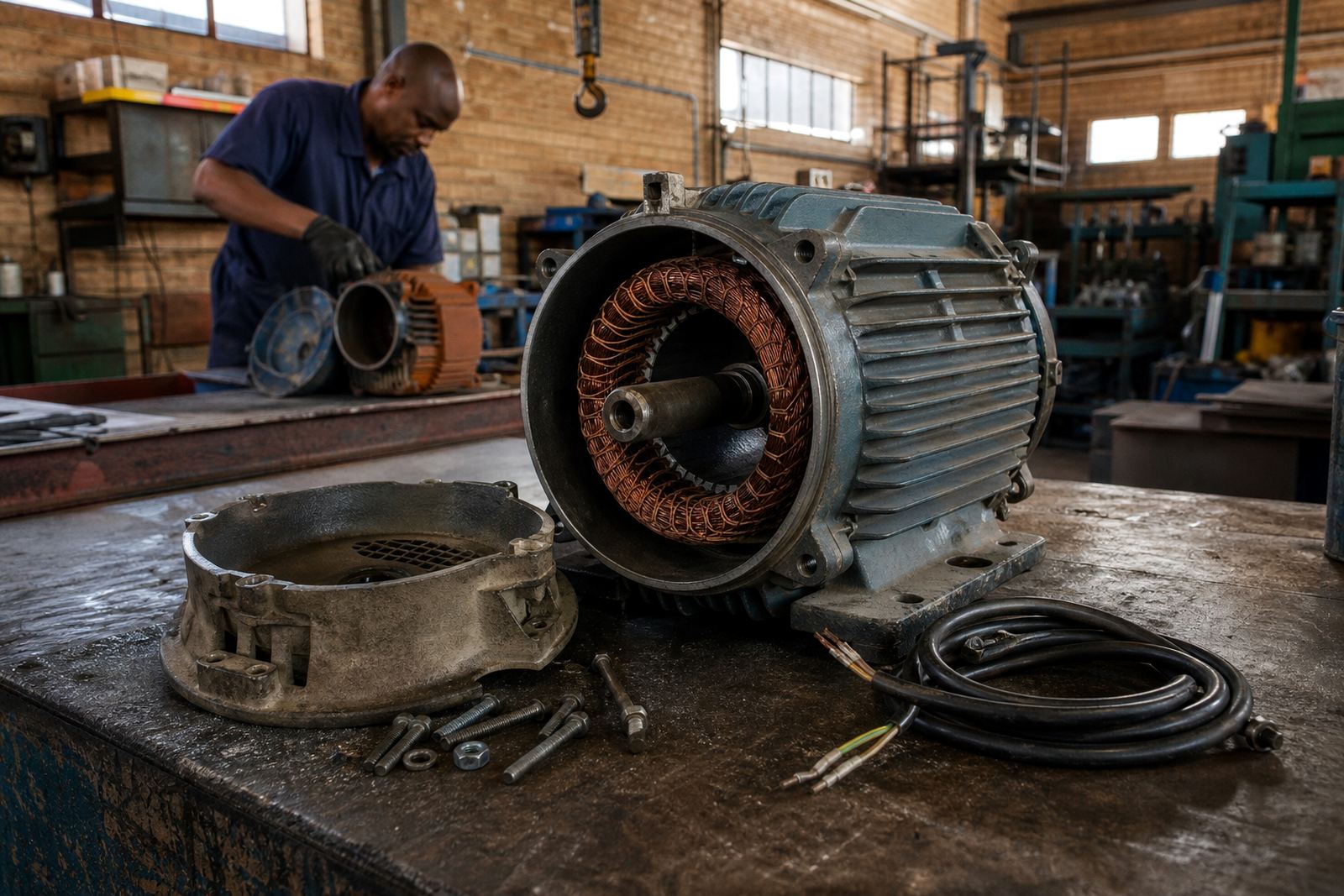
Electric Motor Rewinding and Insulation Testing
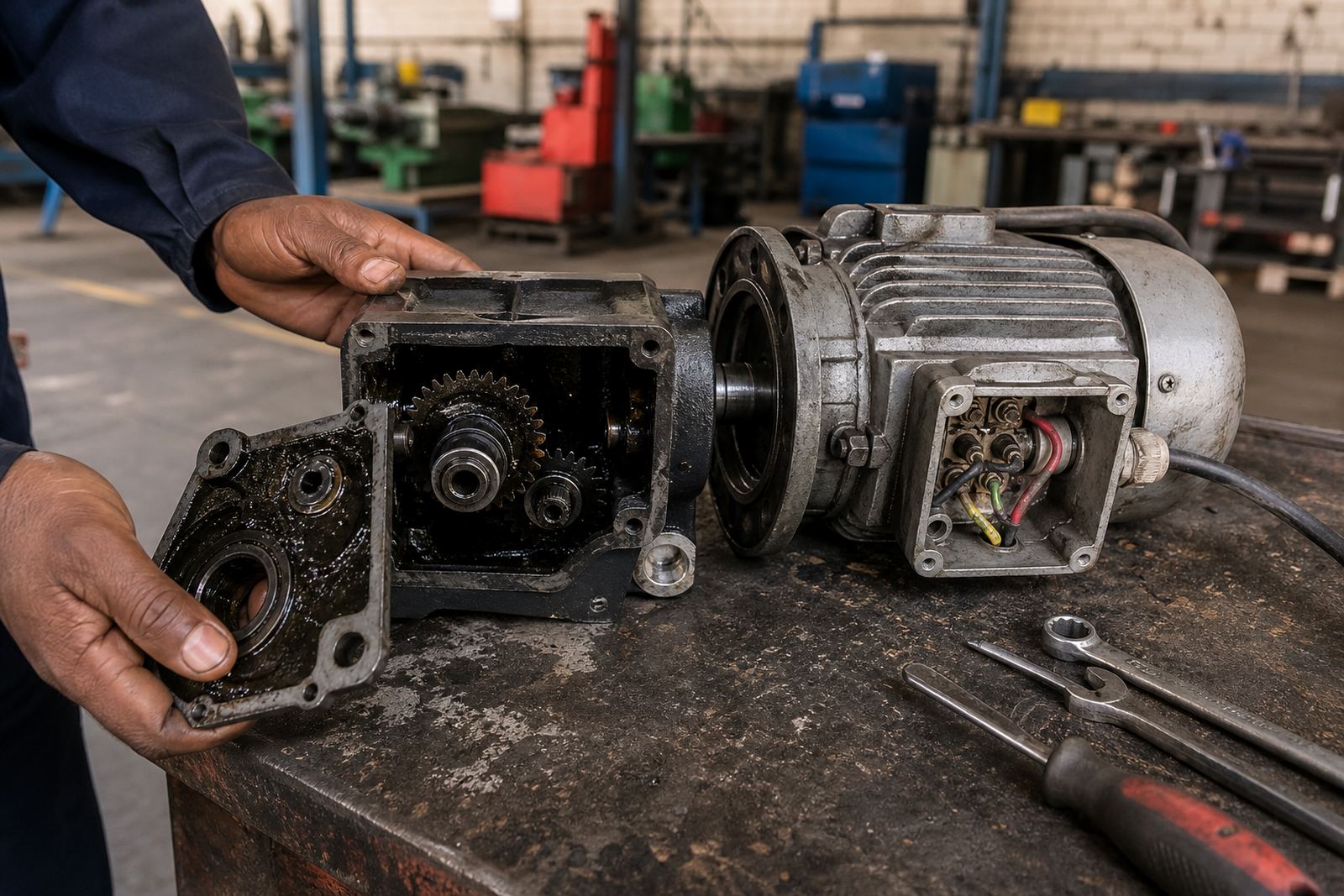
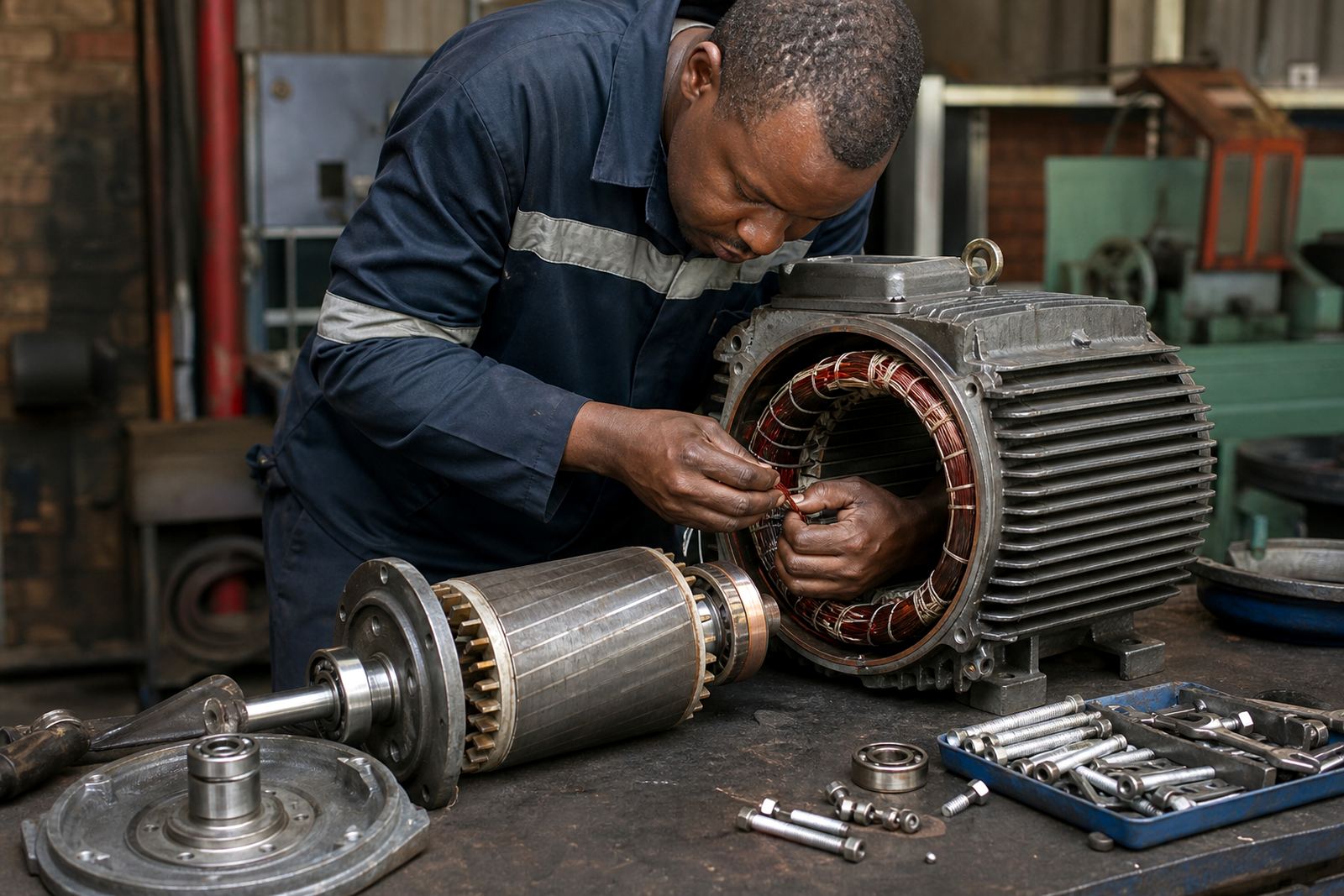
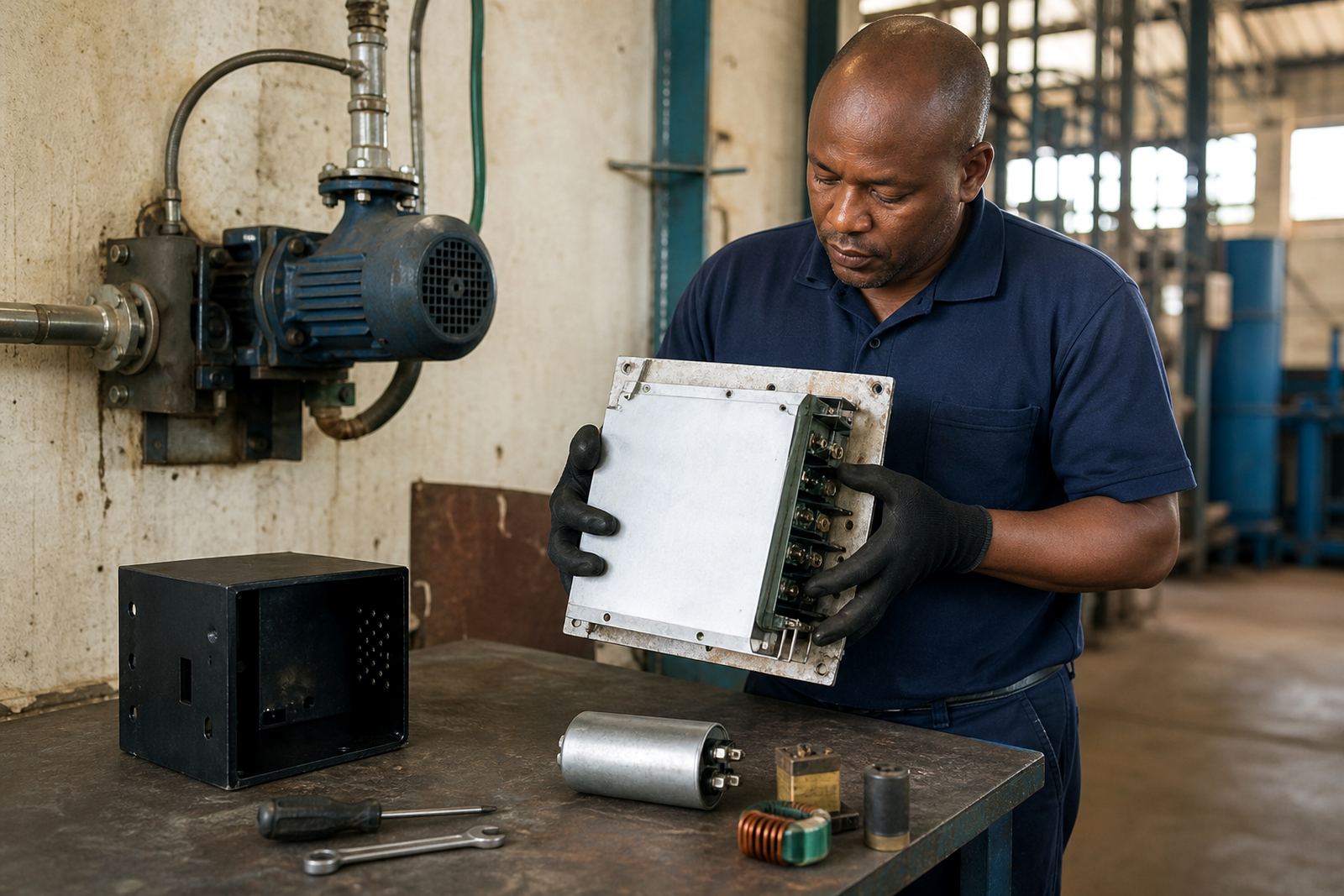
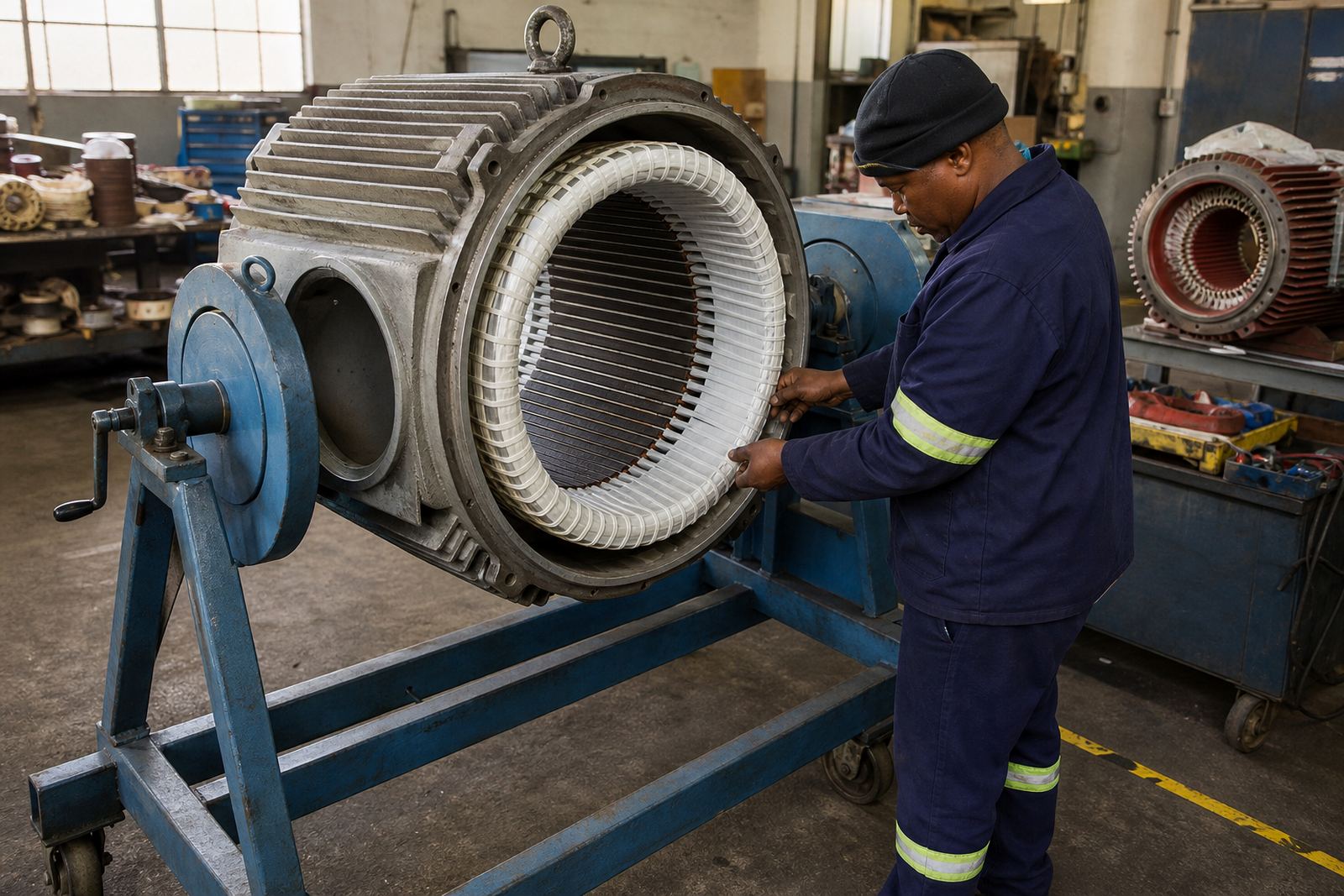
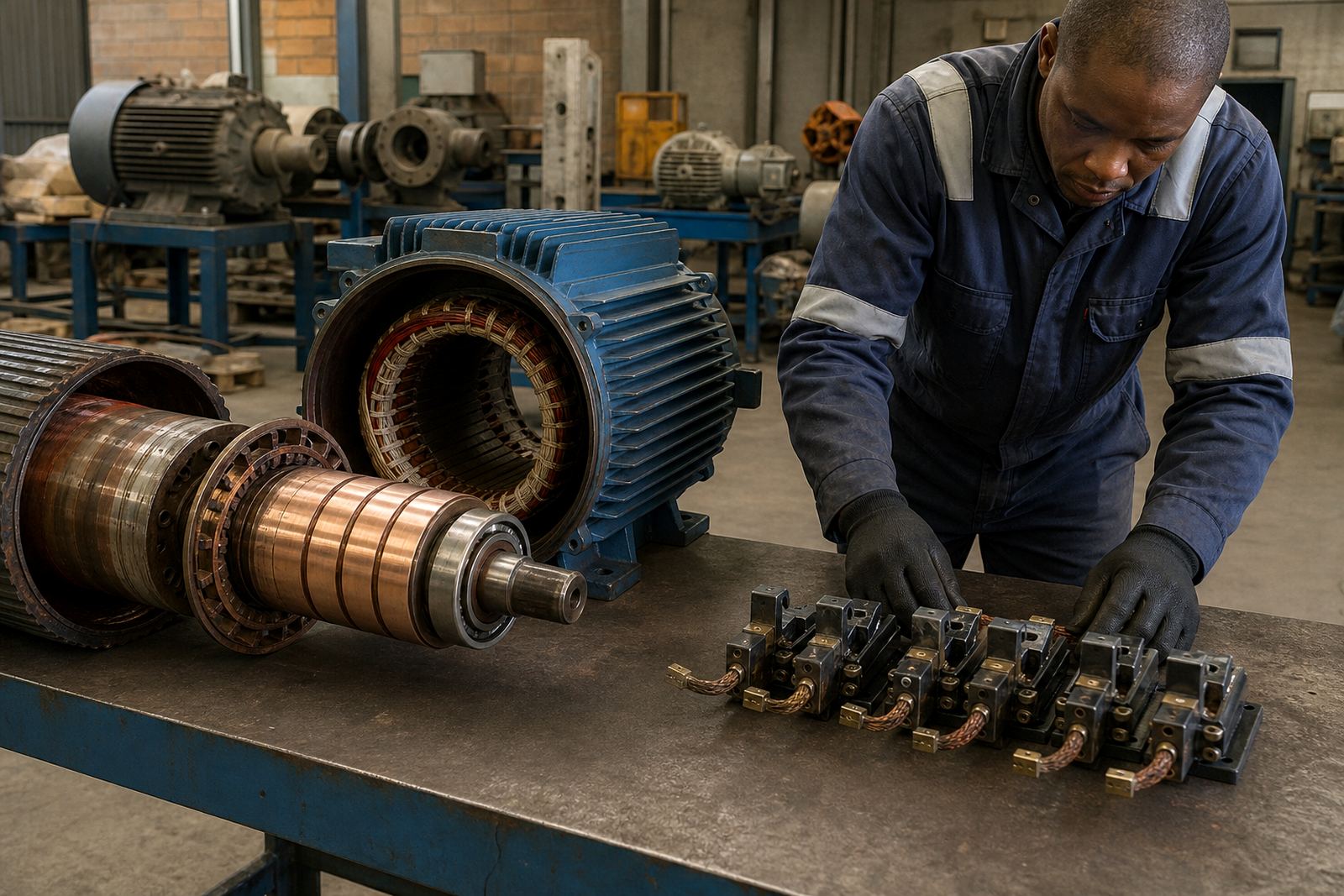
Motor rewinding is used when windings are damaged by heat, moisture, dust, voltage stress or a winding-to-earth fault. The process normally involves stripping the old winding, inspecting the core, replacing insulation materials and rewinding to the correct pattern and wire size for the motor design.
Before a motor goes back into service, insulation testing is essential. This helps check whether the winding and related parts can withstand operating voltage without leakage or breakdown. In coastal areas such as Durban, humidity can affect insulation condition over time, while in dusty industrial spaces around Germiston and Ekurhuleni contamination can cause tracking and early failure.
- Rewinding after burnt or shorted windings
- Insulation resistance testing before and after repair
- Checks for overheating, contamination and moisture damage
- Advice on whether repair or replacement is the better option
Bearing Replacement and Alignment Checks
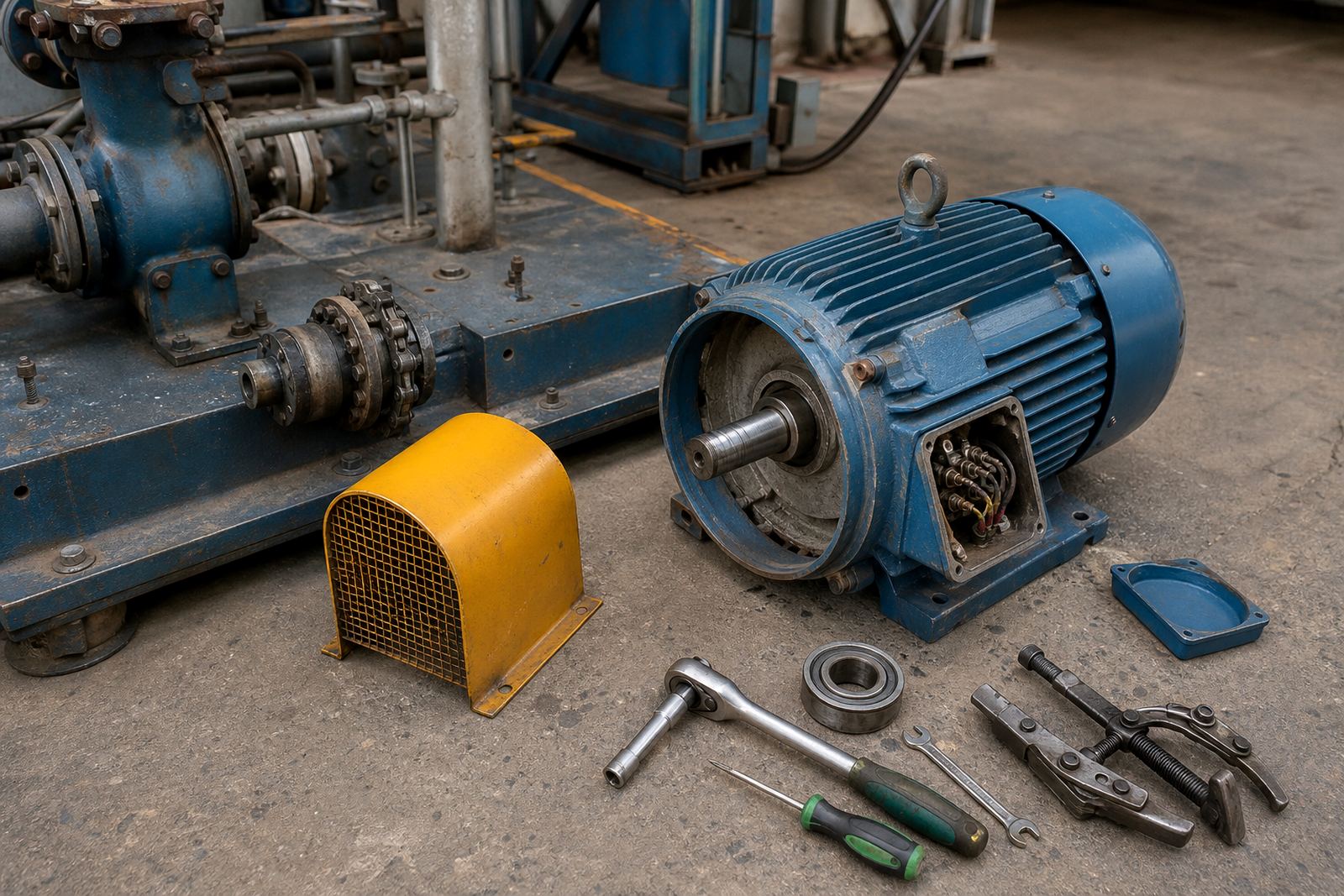
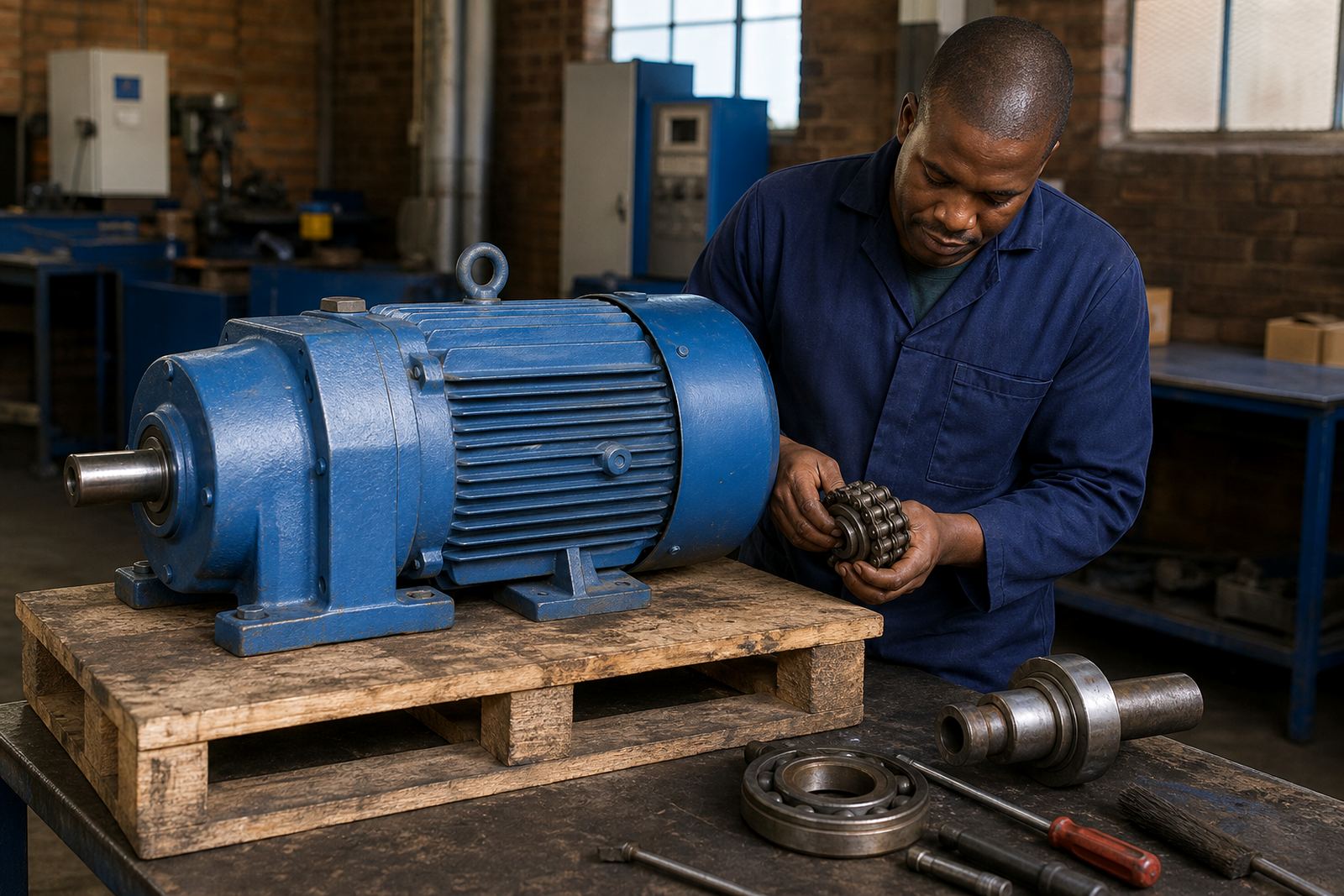
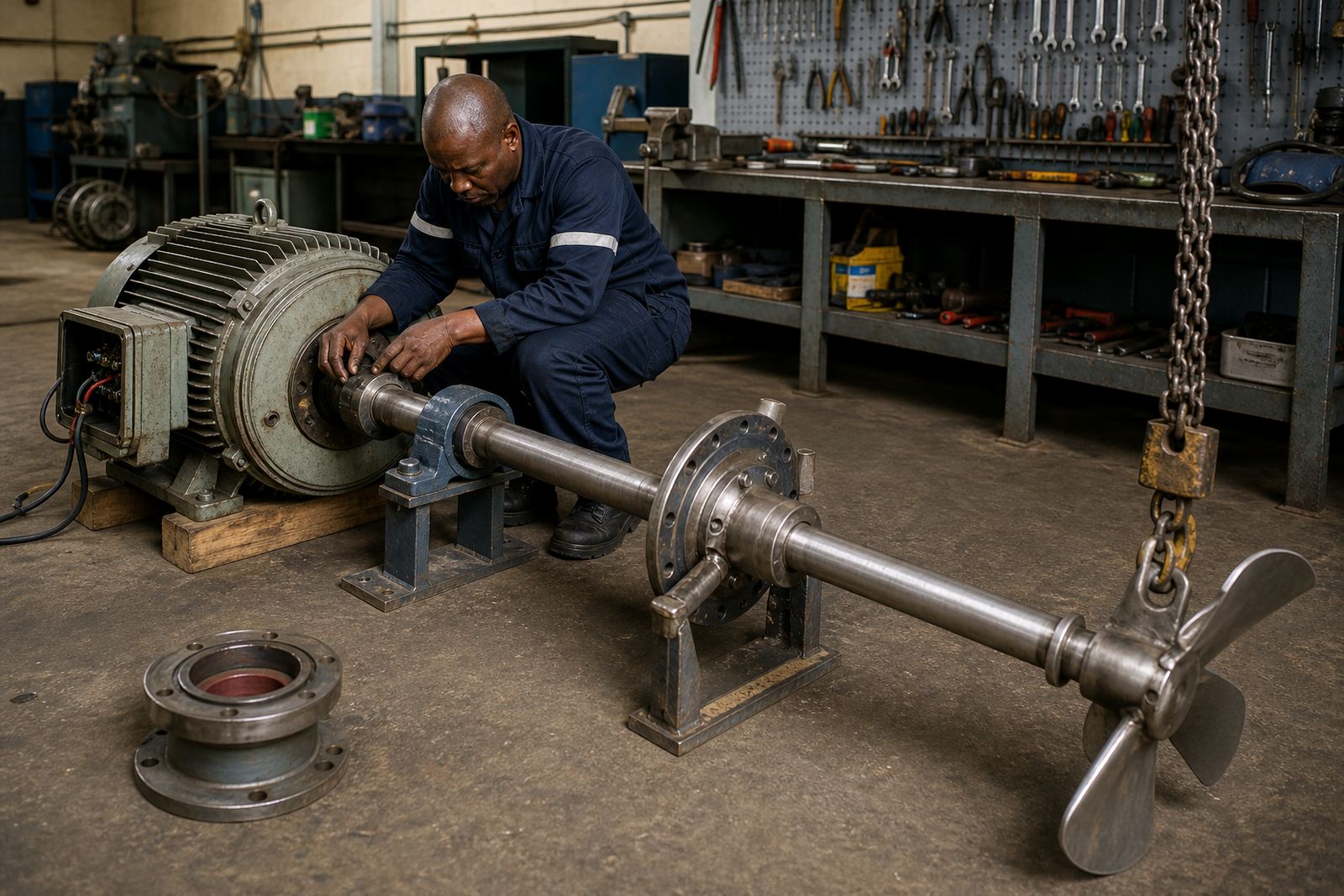
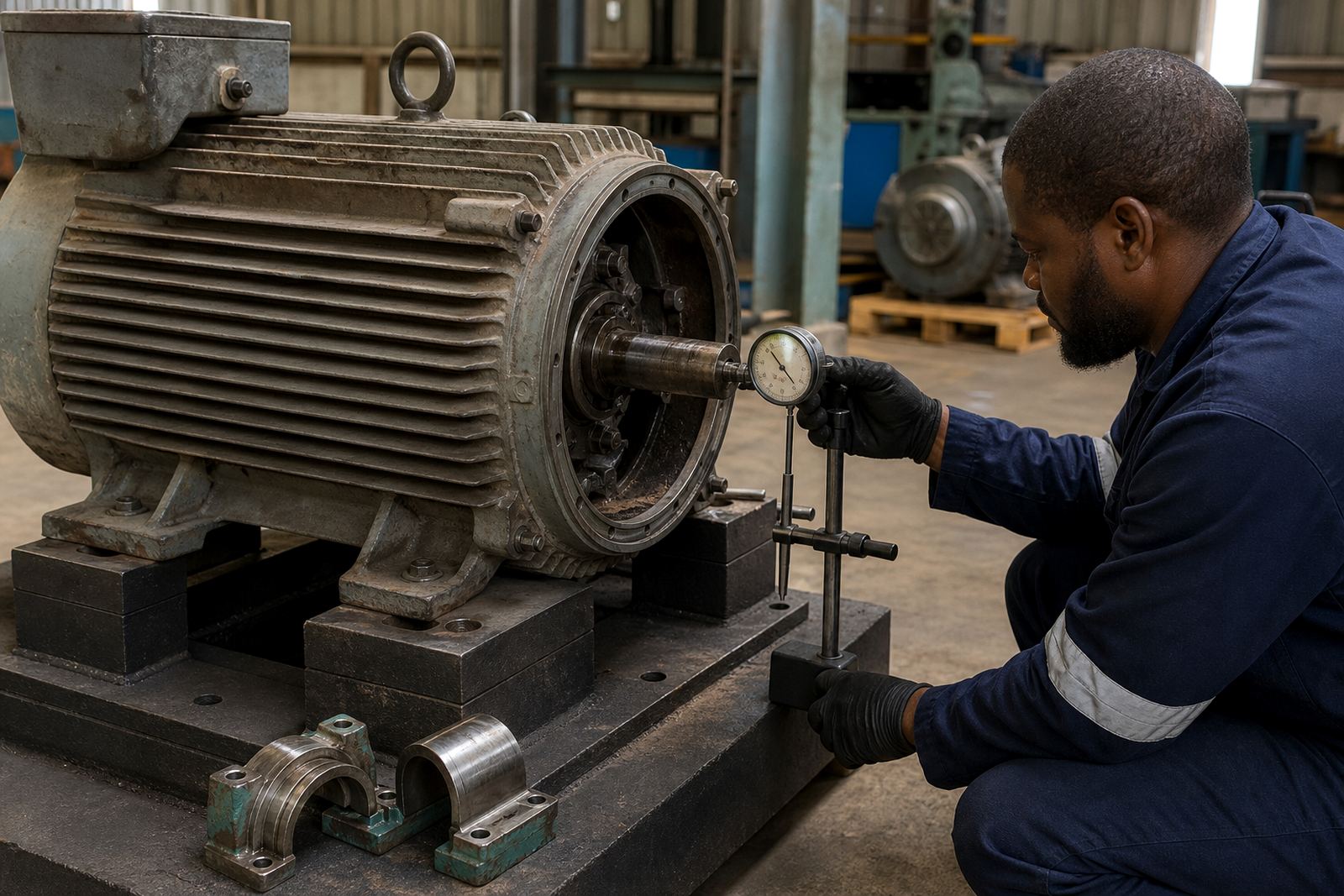
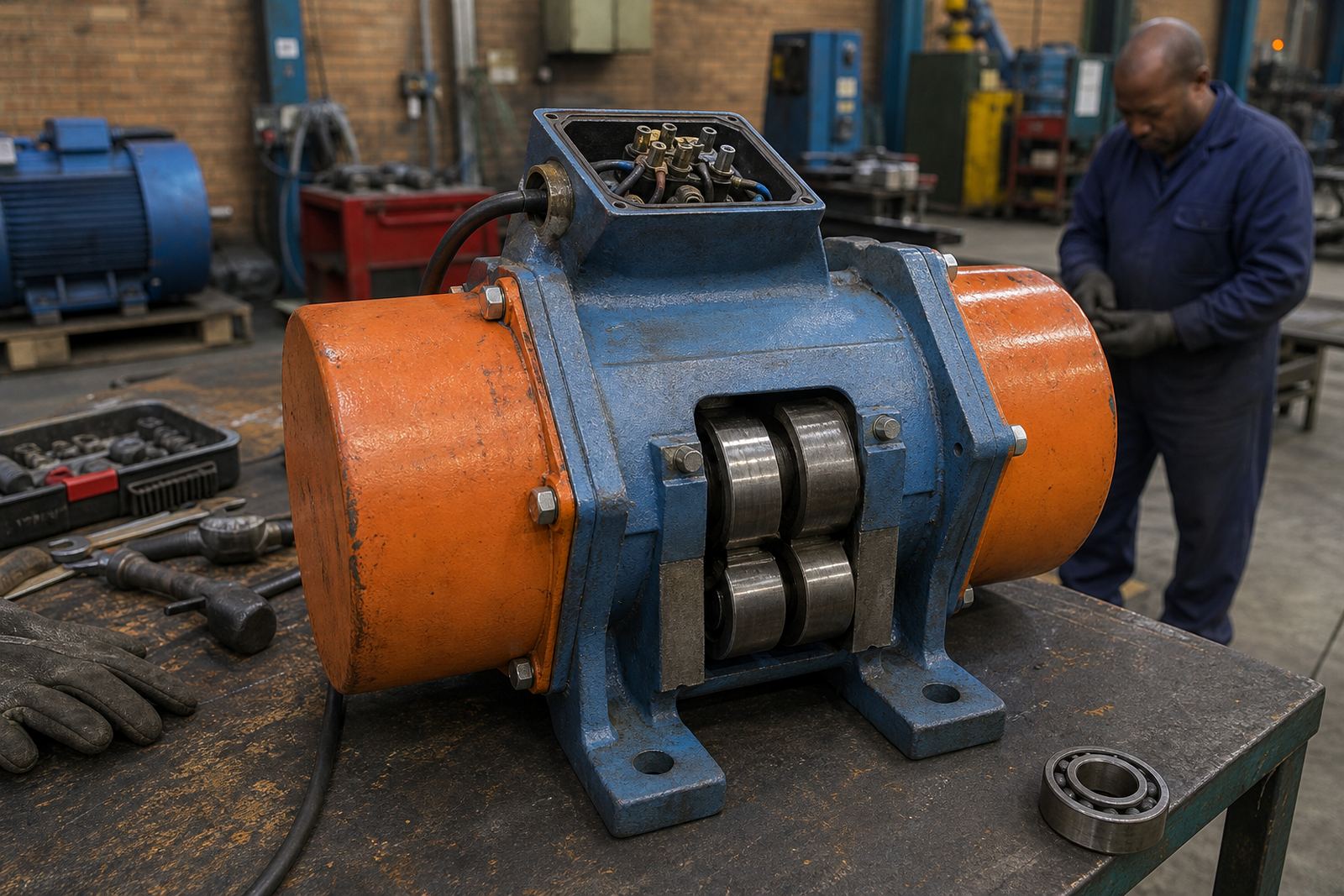
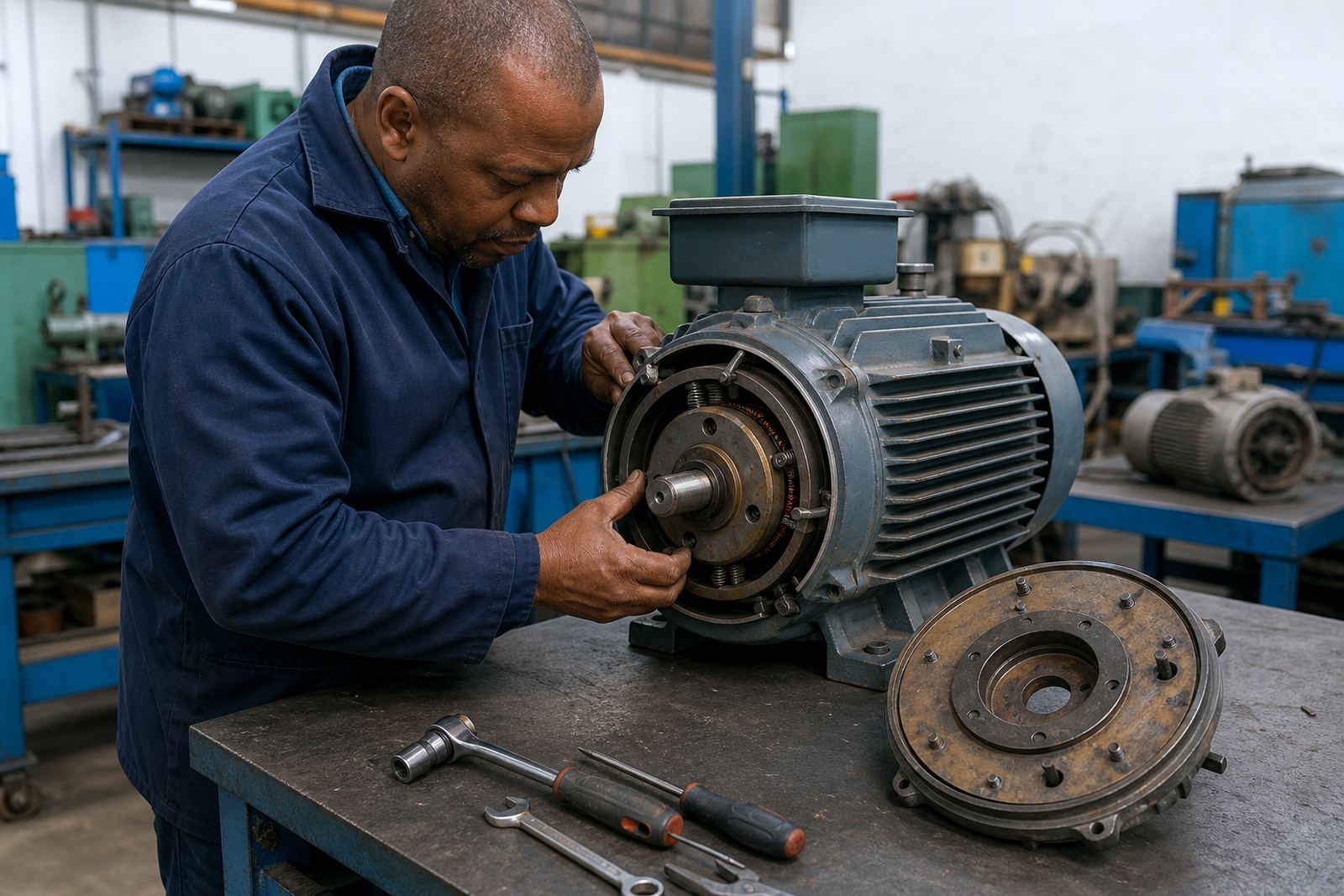
When a motor runs noisy, hot or vibrates more than normal, the bearings are often part of the story. Bearing replacement is not just a matter of fitting new parts. The shaft, housing, fit and lubrication condition must all be checked, otherwise a new bearing can fail very quickly.
Alignment also matters, especially on pumps, fans, conveyors and other coupled equipment. Poor alignment can create load on the bearings, increase vibration and shorten the life of both the motor and driven machine. During shutdown work, it is worth checking base condition, coupling wear and mounting bolts as well.
- Bearing checks for wear, heat damage and noise
- Replacement of worn bearings and associated seals where needed
- Alignment checks after installation
- Support during planned shutdowns and recommissioning
Variable Speed Drive Repair for Plant Control
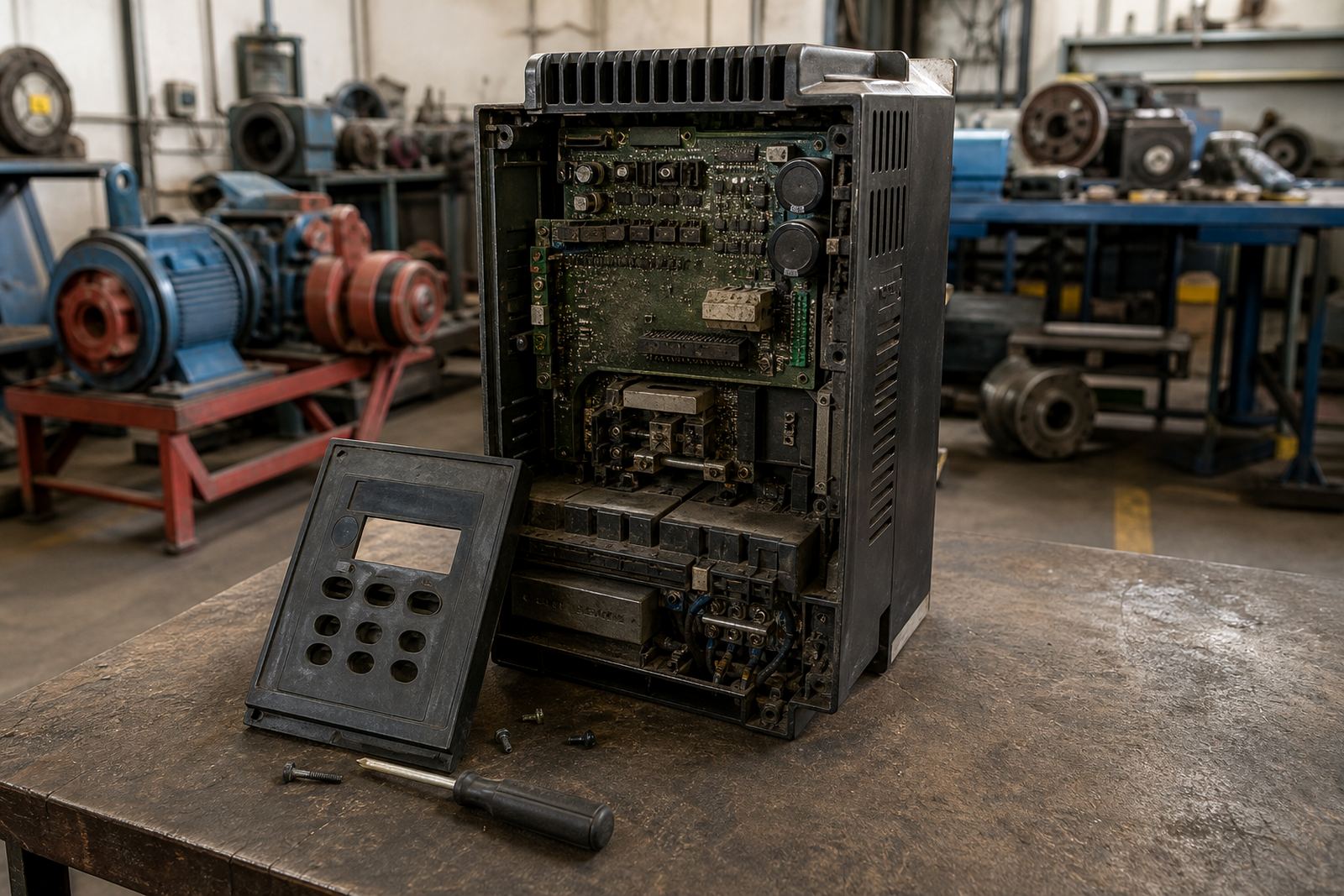
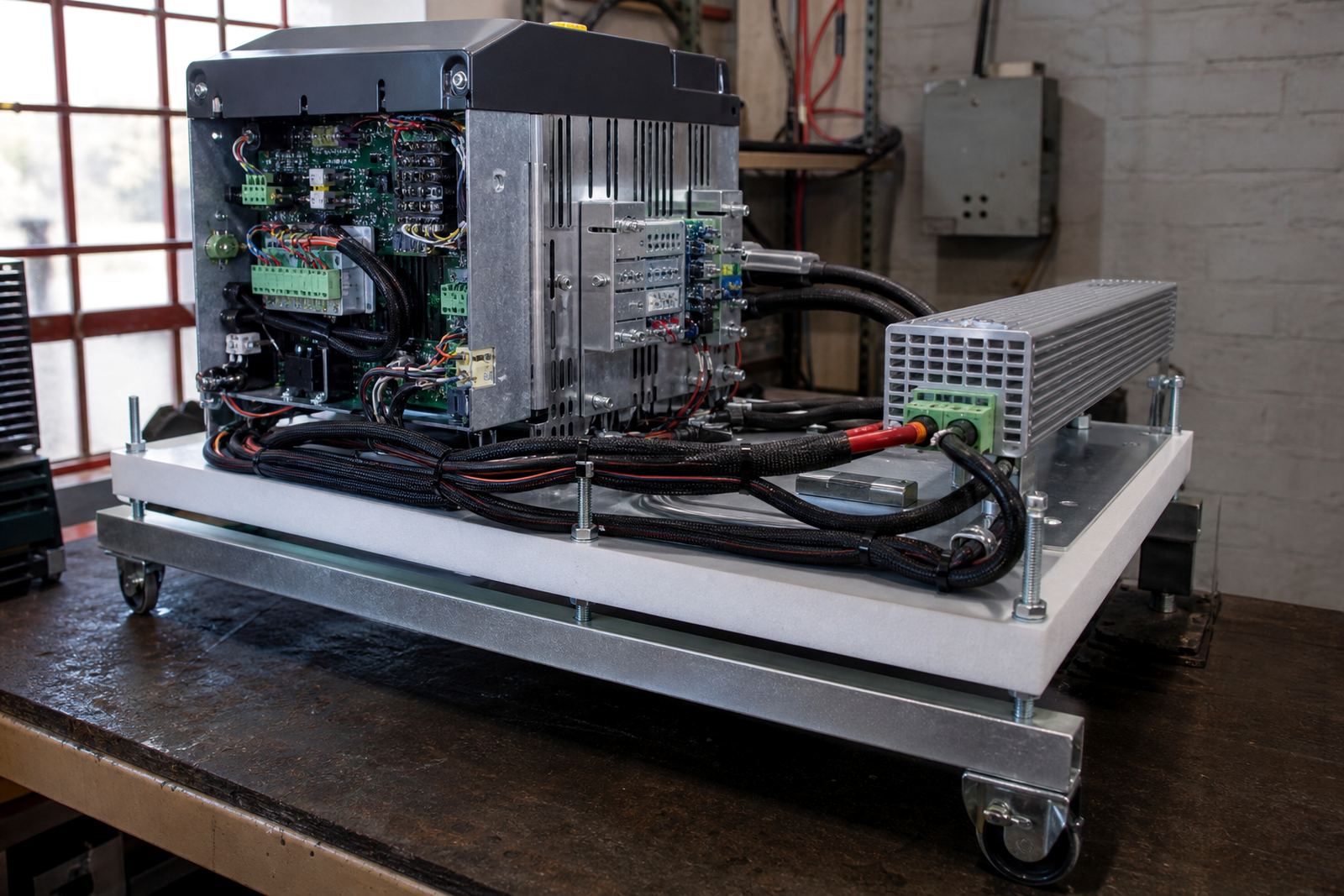
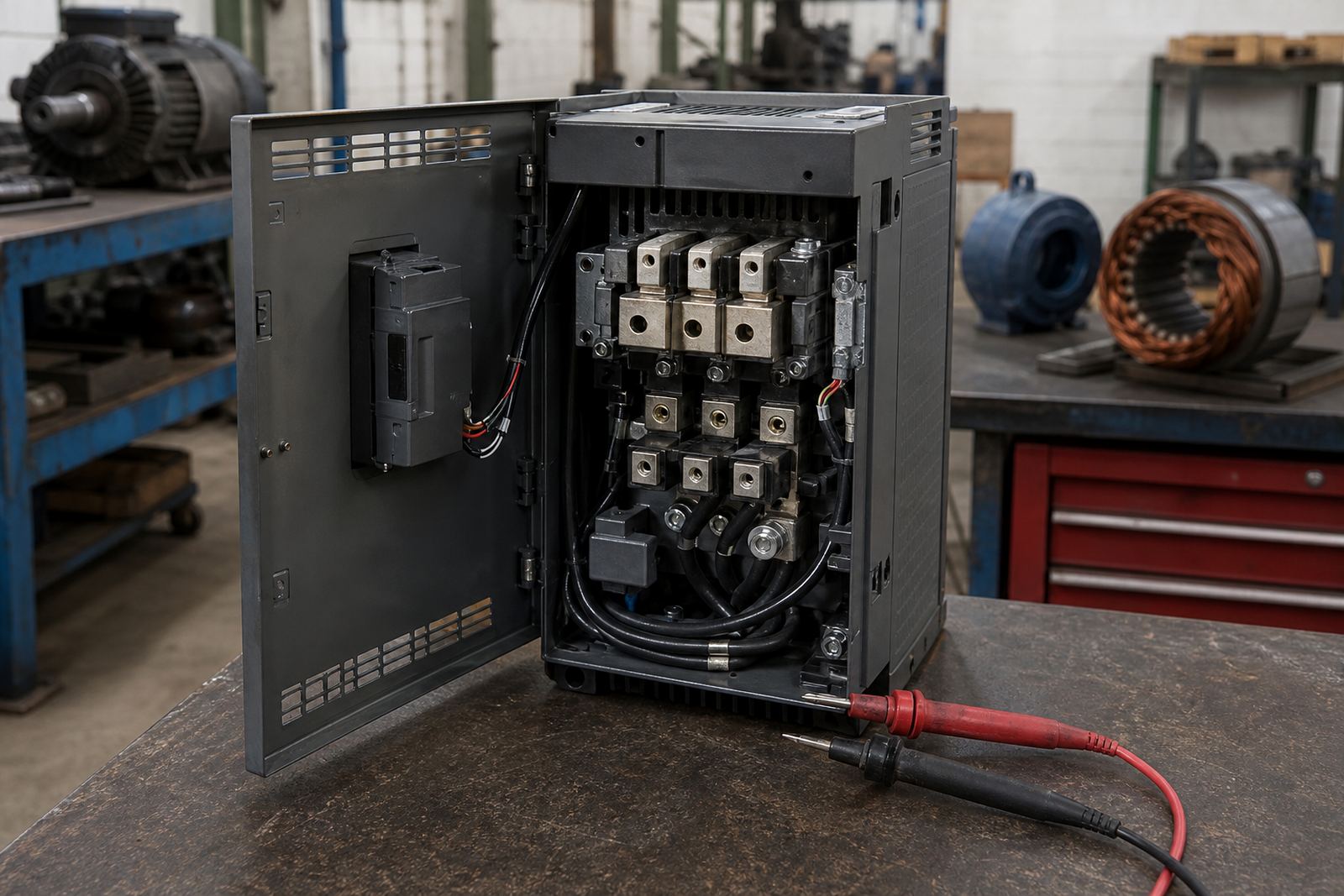
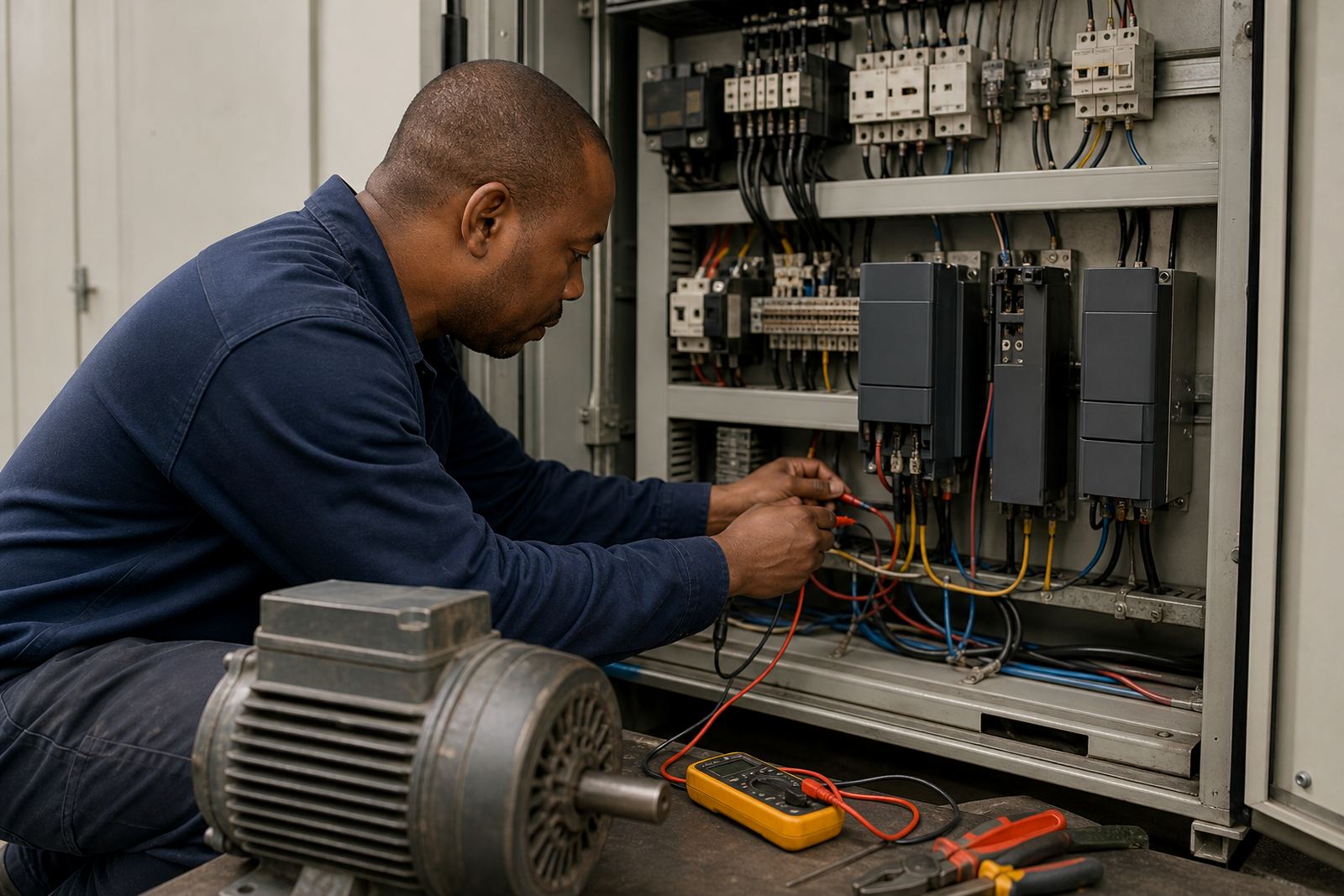
Variable speed drives are used to control motor speed, torque and start-up behaviour. When a drive fails, the cause can be electrical, environmental or related to the load it is controlling. Common issues include contamination in the panel, loose terminations, damaged power components or control faults.
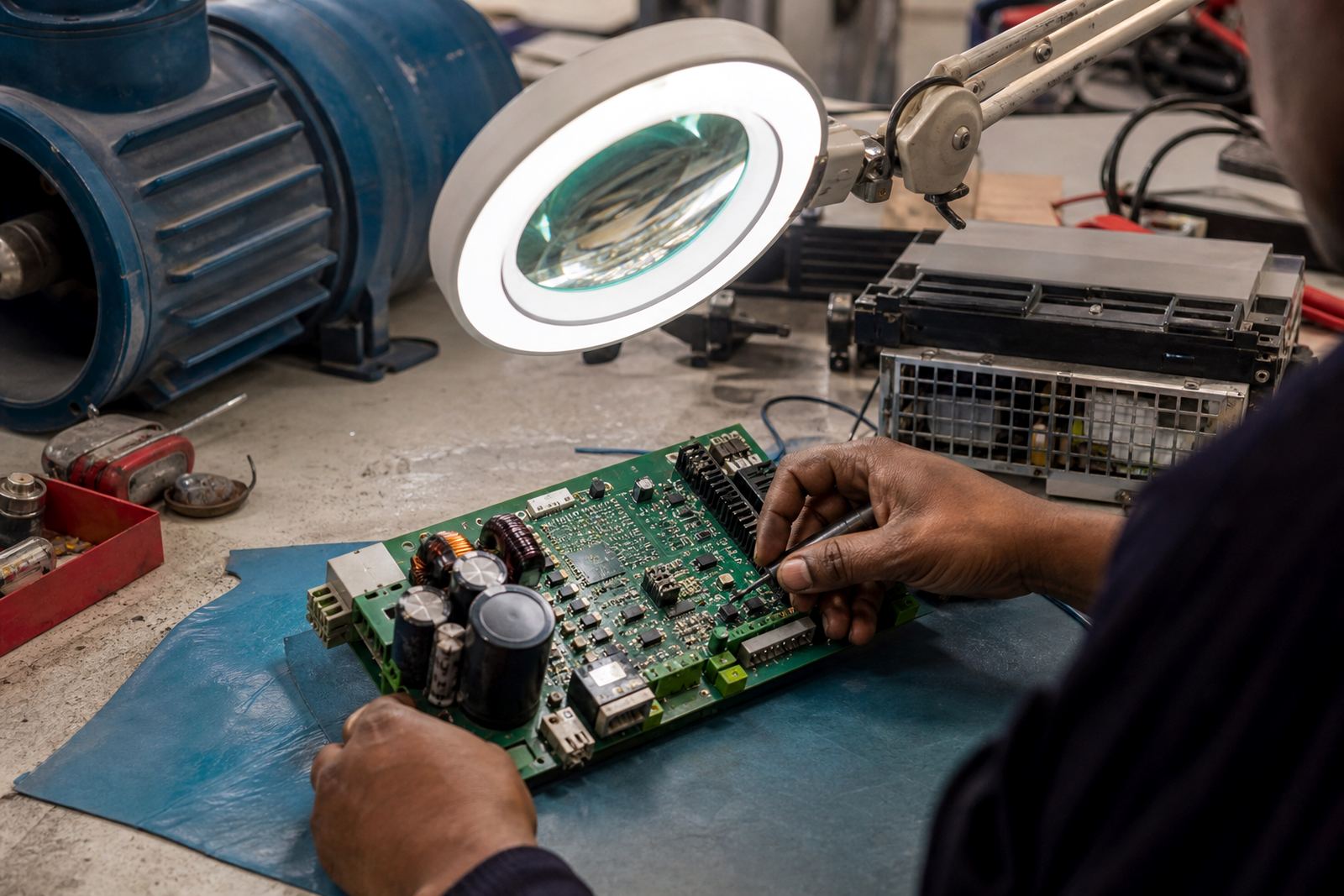
Repair work on drives usually starts with inspection, cleaning and assessment of the power and control sections. Cable checks, panel cleaning and spares assessment help identify whether the unit can be repaired safely or whether further site work is needed. Because drives are sensitive equipment, the surrounding installation should also be checked for ventilation, earthing and correct protection.
Site Support, Shutdown Planning and Commissioning
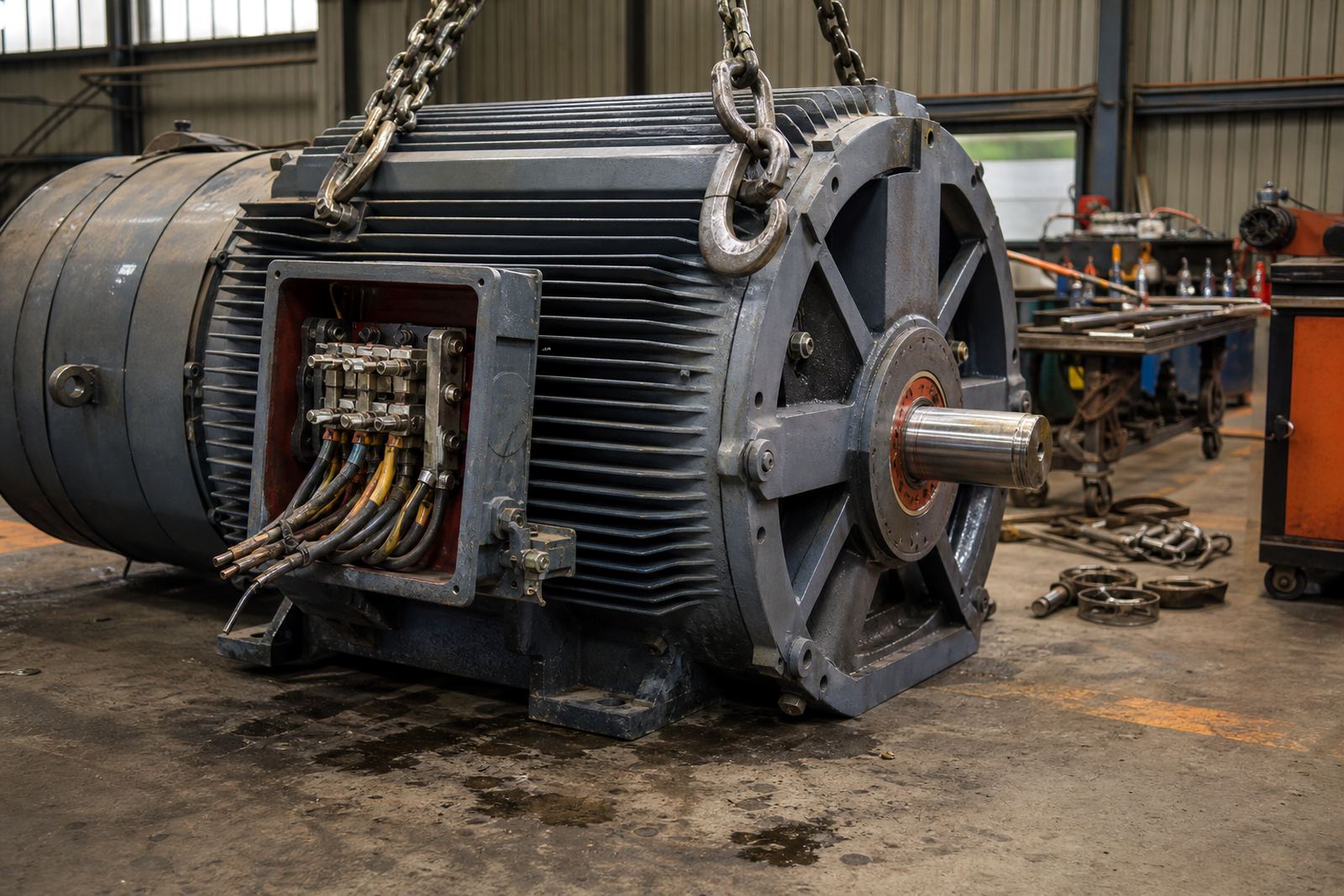
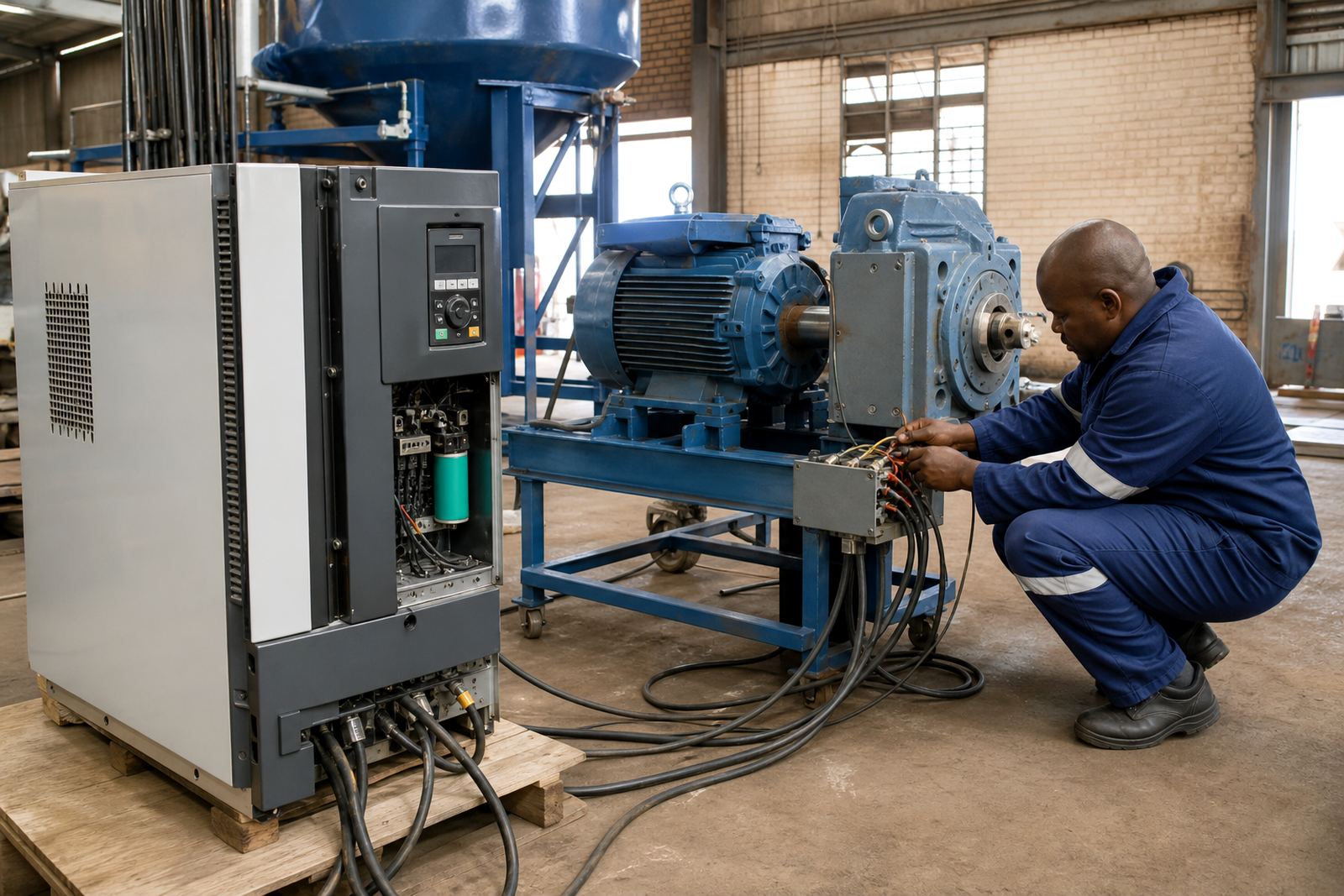
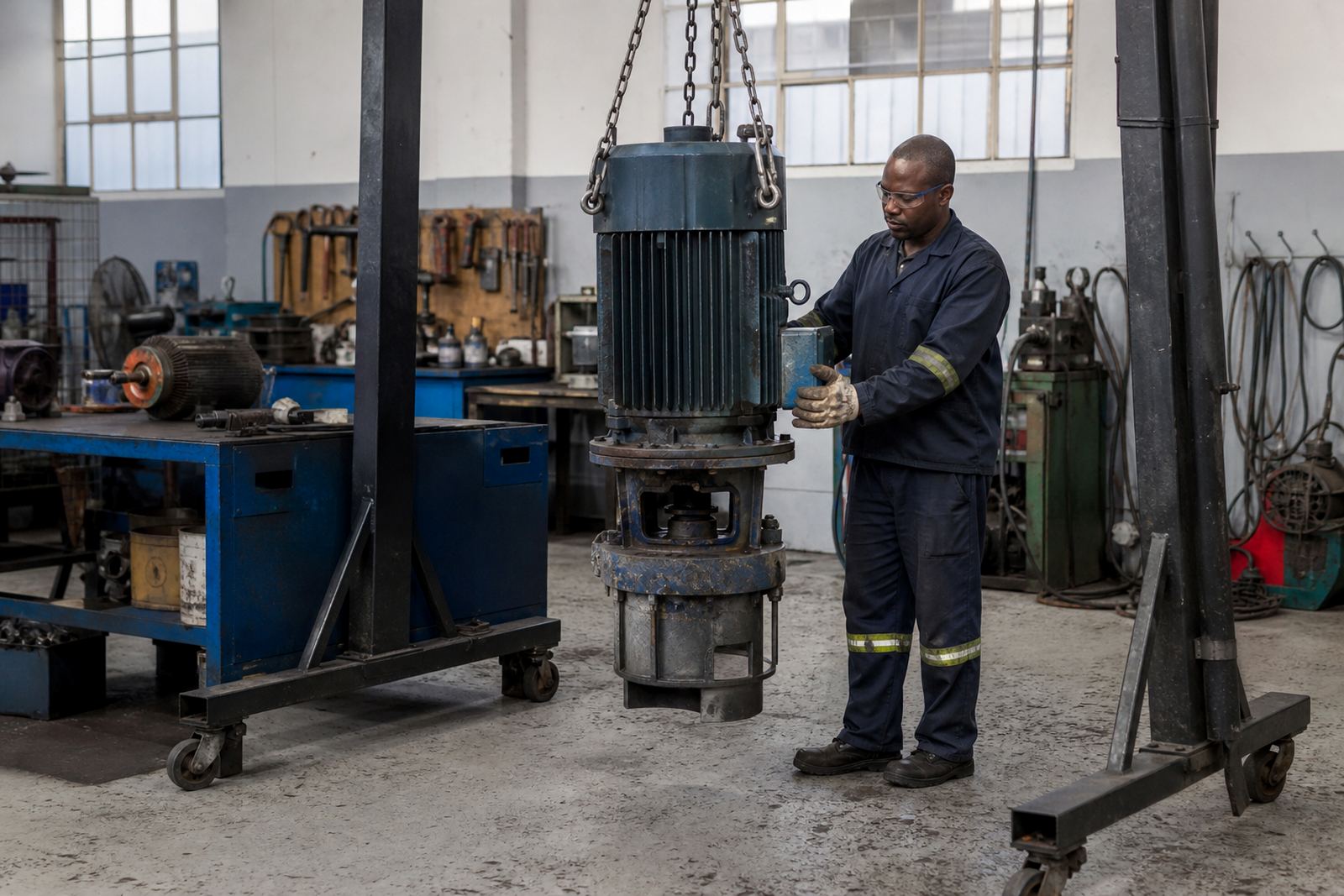
Some repairs need workshop work only, while others need field support before removal or after refitting. That is where shutdown planning, commissioning support and site reporting become useful. A planned approach saves time and helps teams avoid rushed decisions when a production line is already under pressure.
Our team works with plants and workshops across Johannesburg, Pretoria, Vereeniging, Boksburg, Kempton Park, Ekurhuleni and Durban. For remote or busy sites, we can assist with motor removal planning, spares assessment and practical feedback on the condition of the equipment on site.
- Shutdown planning for maintenance teams
- Commissioning support after repair or replacement
- Site reporting with findings and next steps
- Help coordinating repairs from Germiston across South Africa
How to Choose the Right Repair Path
If the unit has burnt windings, electrical smell or failed insulation tests, rewinding and insulation checks are usually the starting point. If the issue is noise, heat or vibration, bearing checks and alignment are often more relevant. If the control panel has tripped or the speed control has become unstable, the drive may need inspection first.
Electrical work must only be done by qualified people using proper lockout procedures. That applies to motor removal, drive isolation, cable checks and commissioning alike. It is better to isolate the equipment properly than to take a risk with live parts or unexpected restart.
Clients reach Locor through the enquiry form on our contact page when they need repair guidance, workshop support or a site visit from Germiston. We help identify the fault, explain the likely repair route and keep the process practical for industrial users.