

What a Slip Ring Motor Does On Site
A slip ring motor is an induction motor with a wound rotor and brush gear, used where controlled starting torque or lower starting current is needed. Instead of starting direct on line like a squirrel-cage motor, the rotor circuit can be altered through external resistances or control gear, which helps when a machine has a heavy load at start-up.
These motors are common on cranes, mills, hoists, conveyors, mixers and older process plant. When the rotor circuit, slip rings or brushes wear unevenly, the motor may start rough, run hot, trip a drive, or pull more current than normal. In many cases the issue is not the stator alone but the whole rotating assembly, so proper testing matters.
Repair Work for Rotor Circuits and Brush Gear
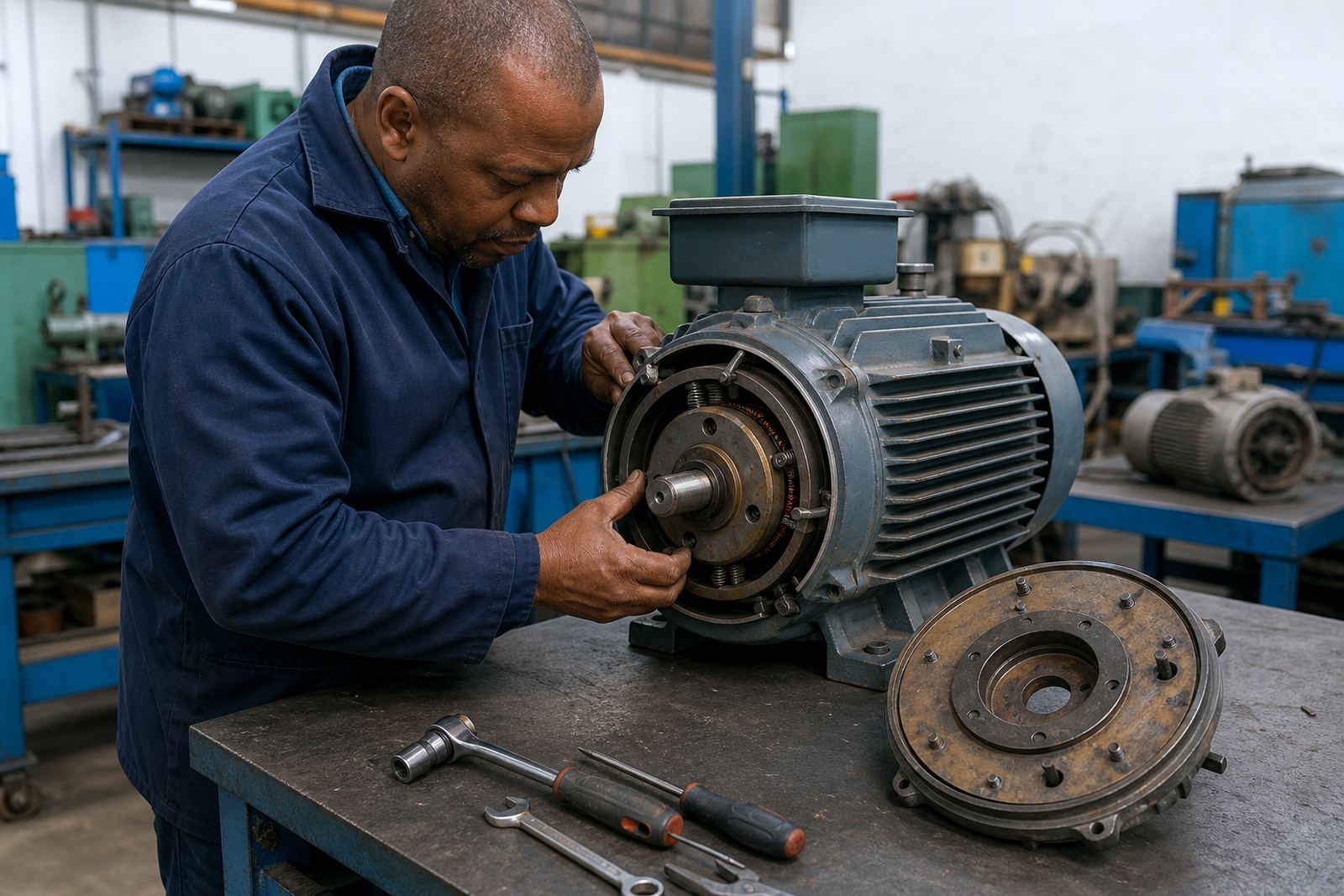
Locor handles slip ring motor repair as a practical workshop job, not a guessing game. The work usually begins with fault finding, visual inspection, electrical tests and a check of the shaft, windings, rotor leads and brush gear. From there, the team can strip, clean and assess the motor before deciding what needs repair.
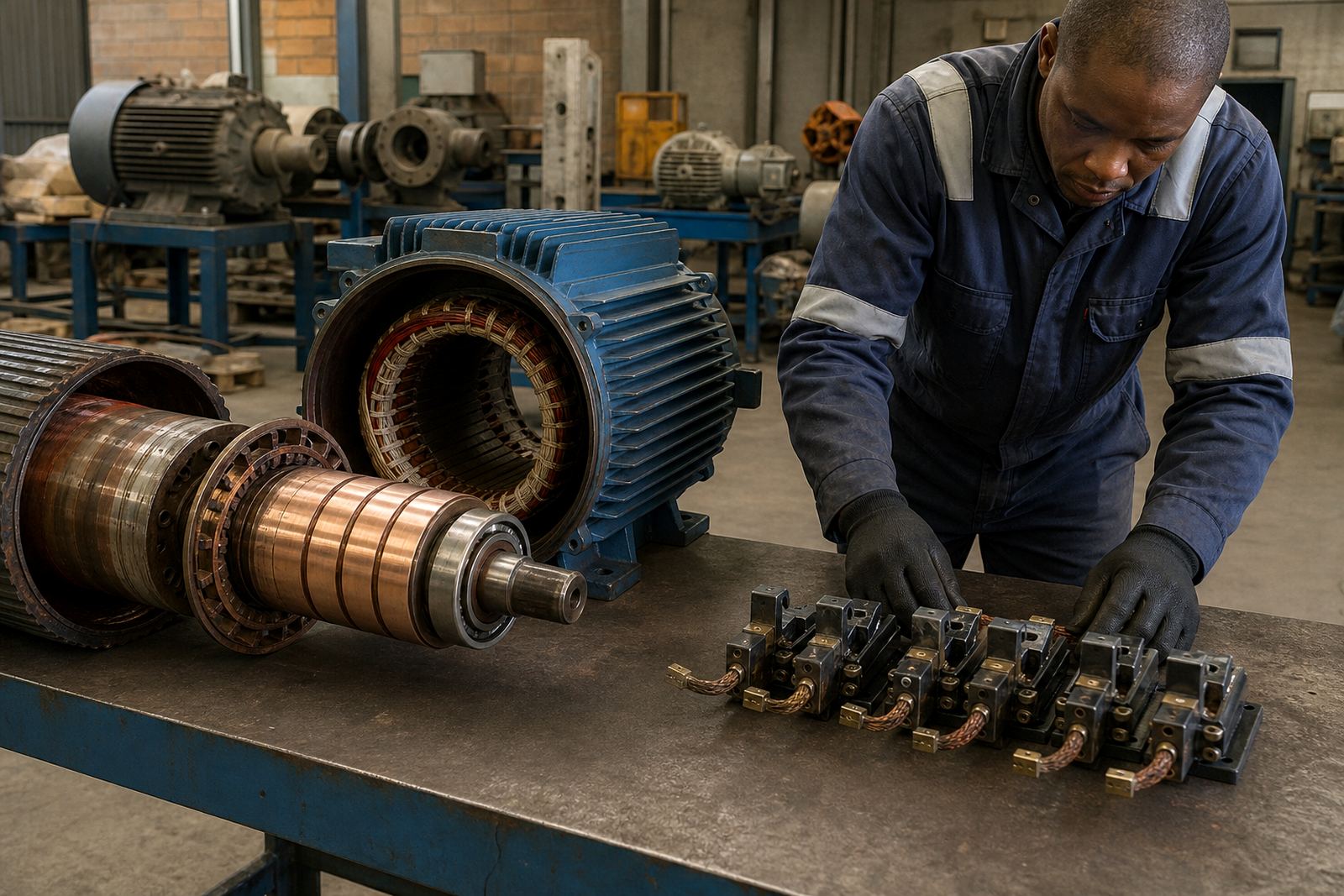
- Rotor circuit inspection for broken connections, heat damage and poor continuity
- Brush holder checks, brush wear checks and contact surface inspection
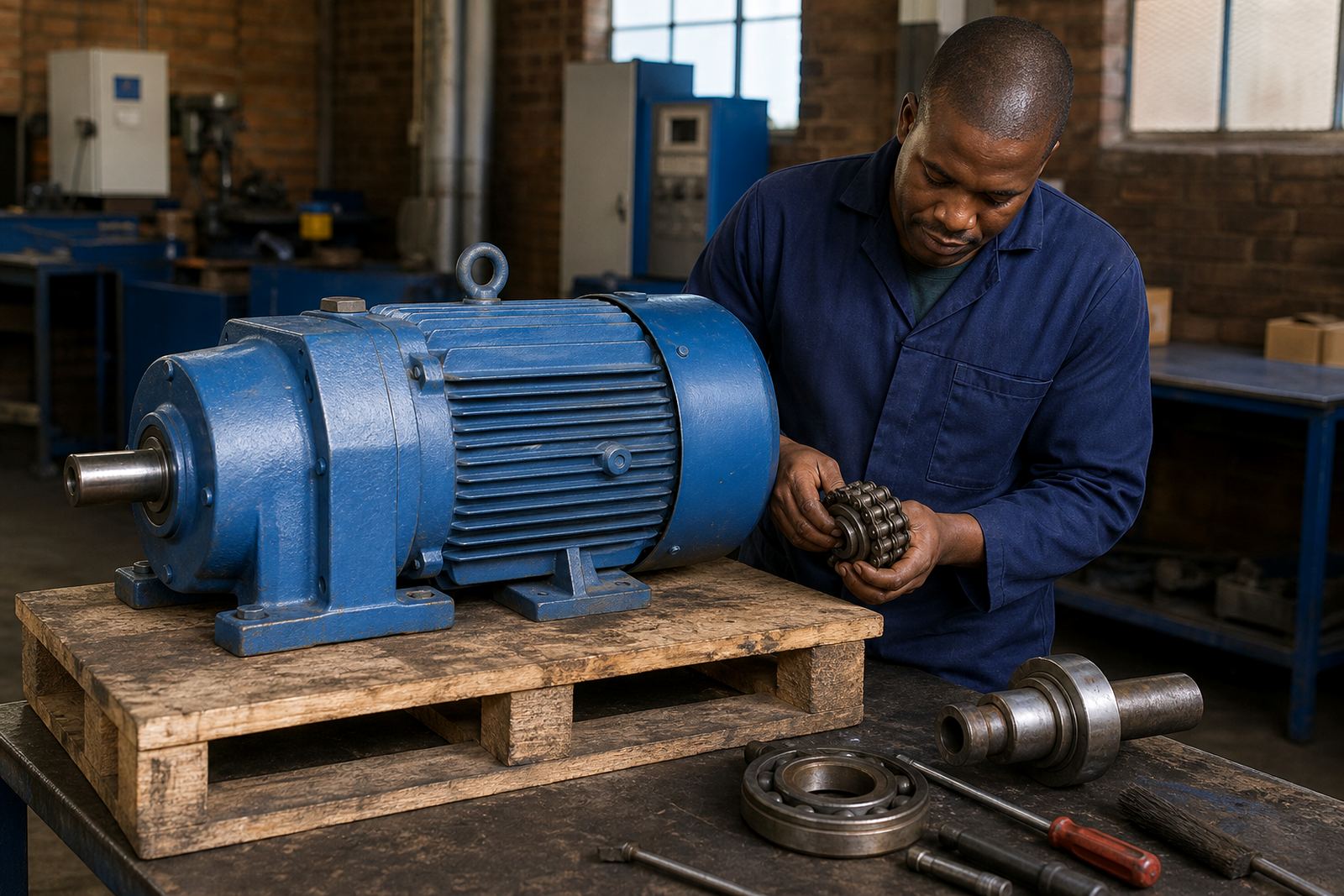
- Bearing replacement where noise, play or heat has affected the motor
- Insulation testing on windings before recommissioning
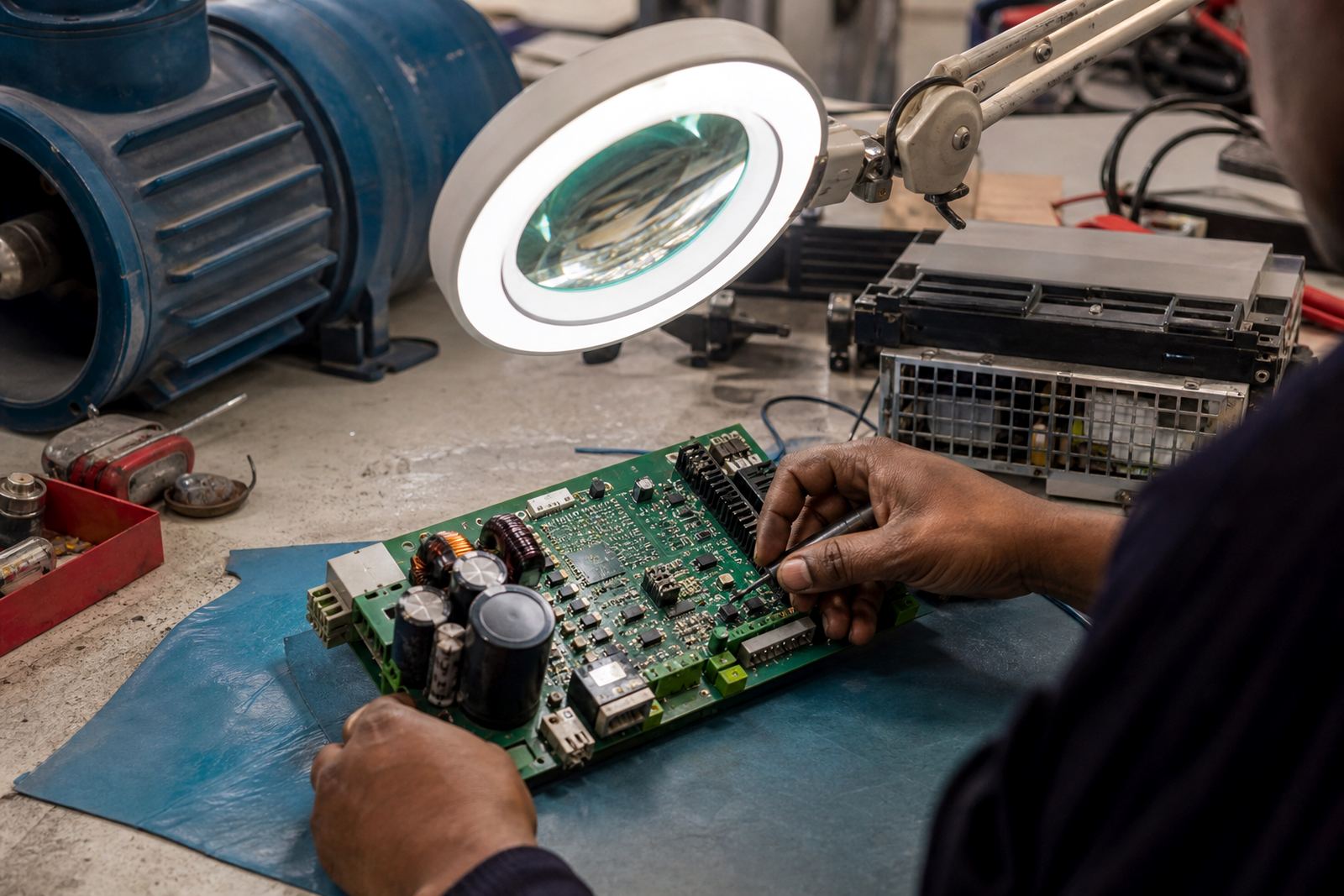
- Panel cleaning, cable checks and site reporting where the motor is paired with controls
Electrical work must always be done by qualified people using lockout procedures, with the supply isolated and verified dead before anyone starts. That matters on plant sites in Germiston, Boksburg, Kempton Park and across Gauteng where shutdown time is tight and one mistake can affect the whole line.
Sizes, Frames and Typical Options
Slip ring motors are supplied in a range of frame sizes, power ratings and mounting arrangements. Some are compact units for smaller machinery, while others are large floor-mounted motors used on process lines and heavy plant. The right repair depends on the motor size, duty cycle, voltage, speed and how the rotor is configured.
At enquiry stage, it helps to note the nameplate details, the number of poles, the mounting type and whether the motor is coupled directly or through belts, a gearbox or a driven drum. If the original nameplate is worn, Locor can still work from measurements and test results, but the more detail you give the better. A clean photo of the terminal box and brush gear can save time, ja.
- Common supply voltages: typically low-voltage industrial systems such as 380 V, 400 V or 525 V depending on site equipment
- Cooling: fan-cooled or externally ventilated layouts are both seen in service
- Enclosures: open, drip-proof or enclosed types depending on dust and moisture exposure
- Duty: intermittent starting, heavy starting torque or continuous running applications
Where Slip Ring Motors Suit Better Than Standard Motors
Slip ring motors suit situations where a machine needs a softer start, controlled acceleration or higher starting torque. That makes them useful on plant with heavier rotating loads, or where the supply network does not appreciate a big inrush current. In older installations around Vereeniging, Pretoria and Durban you still find these motors doing honest work every day.
They are often chosen for equipment with frequent starts, shock loading or long acceleration times. In South African conditions this can include dusty workshops, coastal humidity in Durban, and sites where load-shedding or supply dips have already stressed the controls. A repaired motor that is properly tested can often go back into service without a full replacement, provided the rotor circuit and insulation are still sound.
Installation, Power Needs and Safe Commissioning
Installation should follow the motor nameplate and the machine manufacturer's requirements, with correct alignment, coupling, cable sizing and protection. Slip ring motors may also need compatible starting equipment, rotor resistors or control gear, depending on the application. If the control side is not right, even a healthy motor will struggle.
Before commissioning, check the supply, earthing, phase balance and mechanical alignment. Make sure the brushes seat properly, the slip rings are clean and the rotor circuit is connected as intended. After repair, a proper start-up should include current checks, vibration checks and a short run under load where possible. Site conditions matter too, especially in areas with dust, moisture or fluctuating power quality.
- Confirm supply voltage, phase sequence and protection settings
- Check shaft alignment, coupling condition and mounting bolts
- Verify brush seating and slip ring condition after installation
- Inspect cables, glands and terminal security before energising
Care, Servicing and What to Check When Ordering
Regular care helps slip ring motors last longer. Brush dust should be cleaned out, bearings monitored for noise or heat, and insulation tested before small faults become expensive ones. In busy plants, planned shutdowns are better than waiting for a live failure during production. Locor supports fault finding, motor removal, shutdown planning, spares assessment, commissioning support and site reporting where needed.
When you enquire, send the motor details, the symptoms and clear photos if possible. If the unit has been off site already, include whether it failed after a trip, a jam, flooding, overheating or repeated starting. If the motor is fitted in a panel or with special controls, that info helps too. The aim is simple: get the right repair first time and avoid unnecessary downtime.
- Motor nameplate details, power rating and speed
- Voltage, phase and starting arrangement
- Application type, such as conveyor, hoist or mixer
- Visible wear on brushes, rings, bearings or terminal box
- Any signs of overheating, moisture ingress or rotor damage
Key facts
| Motor type | Slip ring, wound rotor induction motor |
|---|---|
| Typical work | Rotor circuit repair, brush gear service, bearing replacement, insulation testing |
| Size range | Small workshop units through to heavy industrial motors |
| Applications | Cranes, conveyors, hoists, mills, mixers and similar plant |
| Service area | Germiston, Johannesburg, Ekurhuleni, Pretoria, Vereeniging, Durban |
| Enquiry method | Through the contact page enquiry form only |