

What a gear motor repair covers
A gear motor combines an electric motor and a gearbox in one unit, so faults can come from either side. A noisy gearbox, broken seal, worn bearings, damaged windings or poor alignment can all show up as the same complaint on the line: slow start-up, unusual vibration, heat build-up or a unit that simply will not hold up under load. At Locor, our team checks the full assembly rather than only the electrical side, because the motor and gearbox work together and both must be right before the unit goes back into service.
Since 2007, our Germiston base has supported plants and workshops that need practical repair work on integrated drive equipment. We handle fault finding, motor removal, drive inspection, bearing checks, insulation testing, alignment checks and site reporting. For many sites in Johannesburg, Ekurhuleni, Pretoria, Vereeniging and Durban, that means less guesswork and a clearer repair plan before any parts are ordered or work starts.
Electrical and mechanical faults we look for
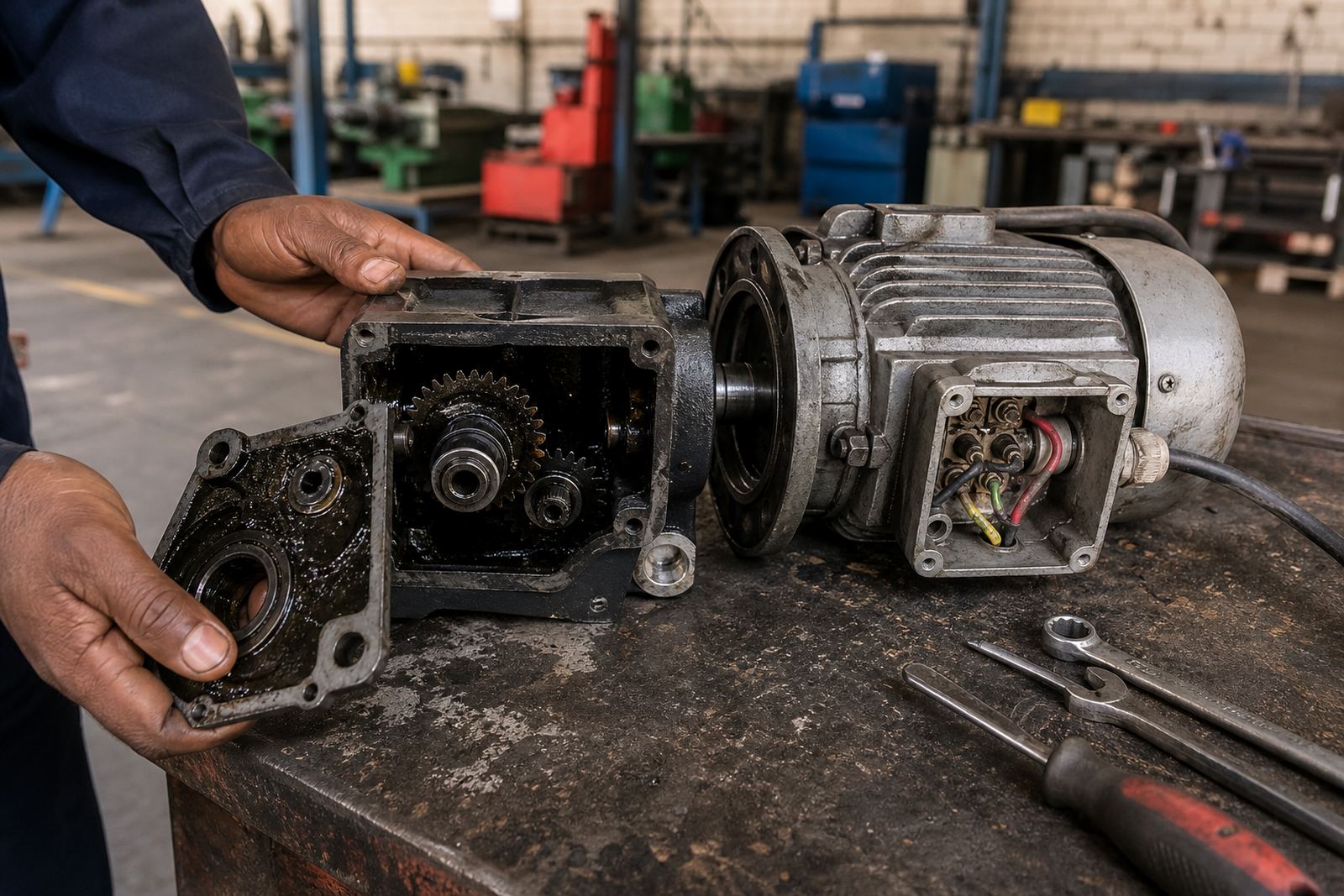
Gear motor problems often begin with a small change in sound or temperature. A bearing that is starting to fail can place extra load on the shaft, while insulation breakdown may cause tripping, weak starting or overheating. On the gearbox side, oil loss, contaminated grease, worn gears or a bent coupling can create drag and shorten motor life. We check the unit as a whole, then separate the electrical fault from the mechanical one so the right repair is done first time.
- Stator winding damage from heat, dust or moisture
- Loose terminals, burnt connections or cable damage
- Worn bearings, seal failure and shaft play
- Gear wear, oil leakage and abnormal backlash
- Misalignment between the motor and driven machine
- Contamination from water, chemical washdown or fine dust
Work on electrical equipment must be done by qualified people only, with lockout procedures in place before any cover comes off. That matters on busy sites where conveyors, mixers, pumps and packaging lines can start without warning if controls are not isolated properly.
Sizes, configurations and where they suit
We repair gear motors used in light workshop duty as well as heavier plant service. These units are commonly mounted on conveyors, augers, agitators, lifts, feeders, dosing systems and general production machinery. The right repair depends on frame size, mounting style, duty cycle and the gearbox ratio, not only the motor nameplate. In practical terms, that means we work from the actual unit on the bench or from the site details if removal has not yet been done.
Common options include foot mounted units, flange mounted units, inline units and right-angle arrangements. Shaft dimensions, terminal box position, brake fitment, cooling method and enclosure type all matter. In coastal areas such as Durban, extra care is often needed for humidity, surface corrosion and moisture ingress. In dusty inland sites around Germiston and Ekurhuleni, the main concern is contamination around bearings, cooling paths and terminals.
- Single or three-phase motor sections
- Light, medium and heavy duty gearboxes
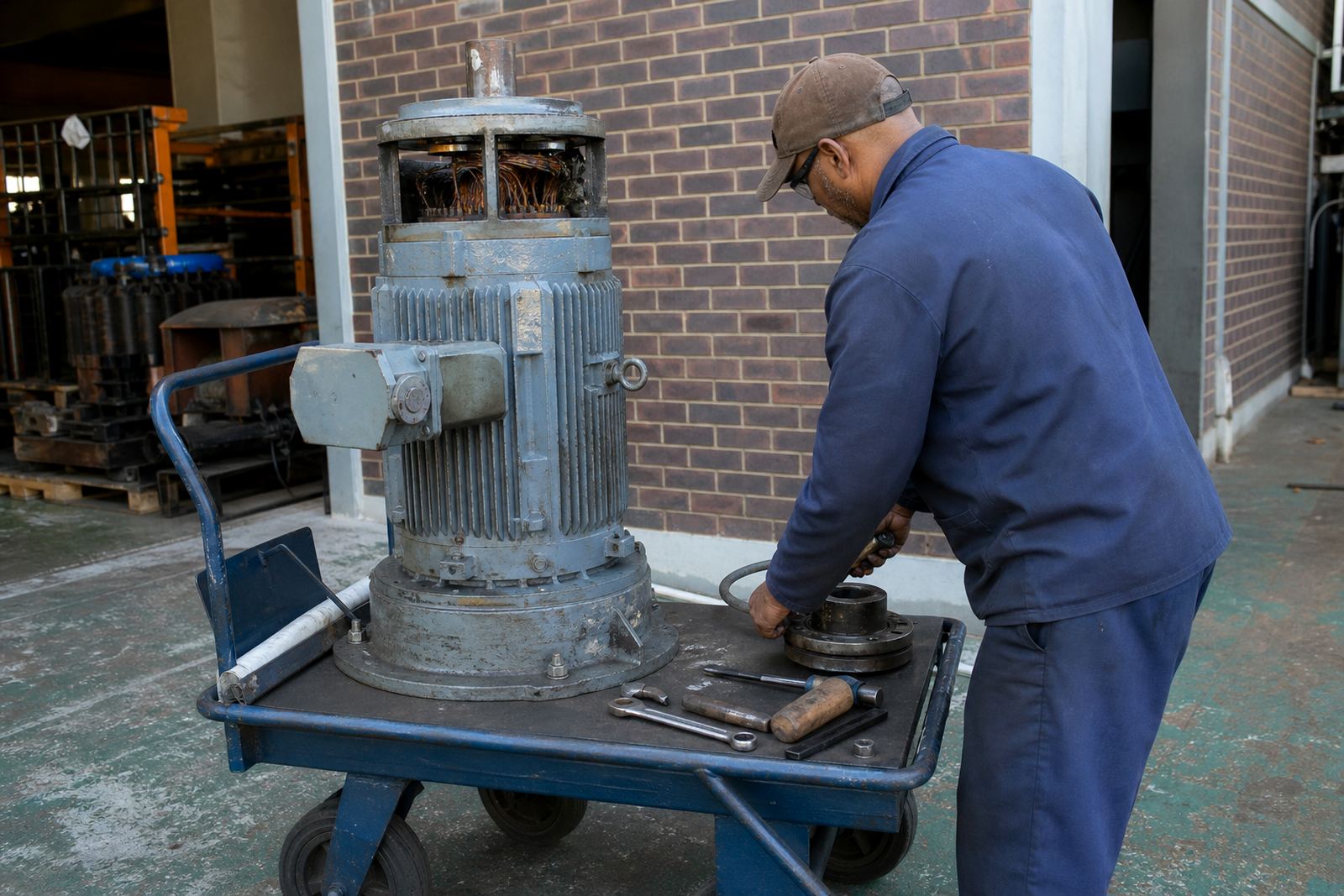
- Horizontal or vertical mounting positions
- Units with brakes, fans or special couplings
- Site conditions ranging from dry warehouse use to damp washdown areas
Workshop process from inspection to final test
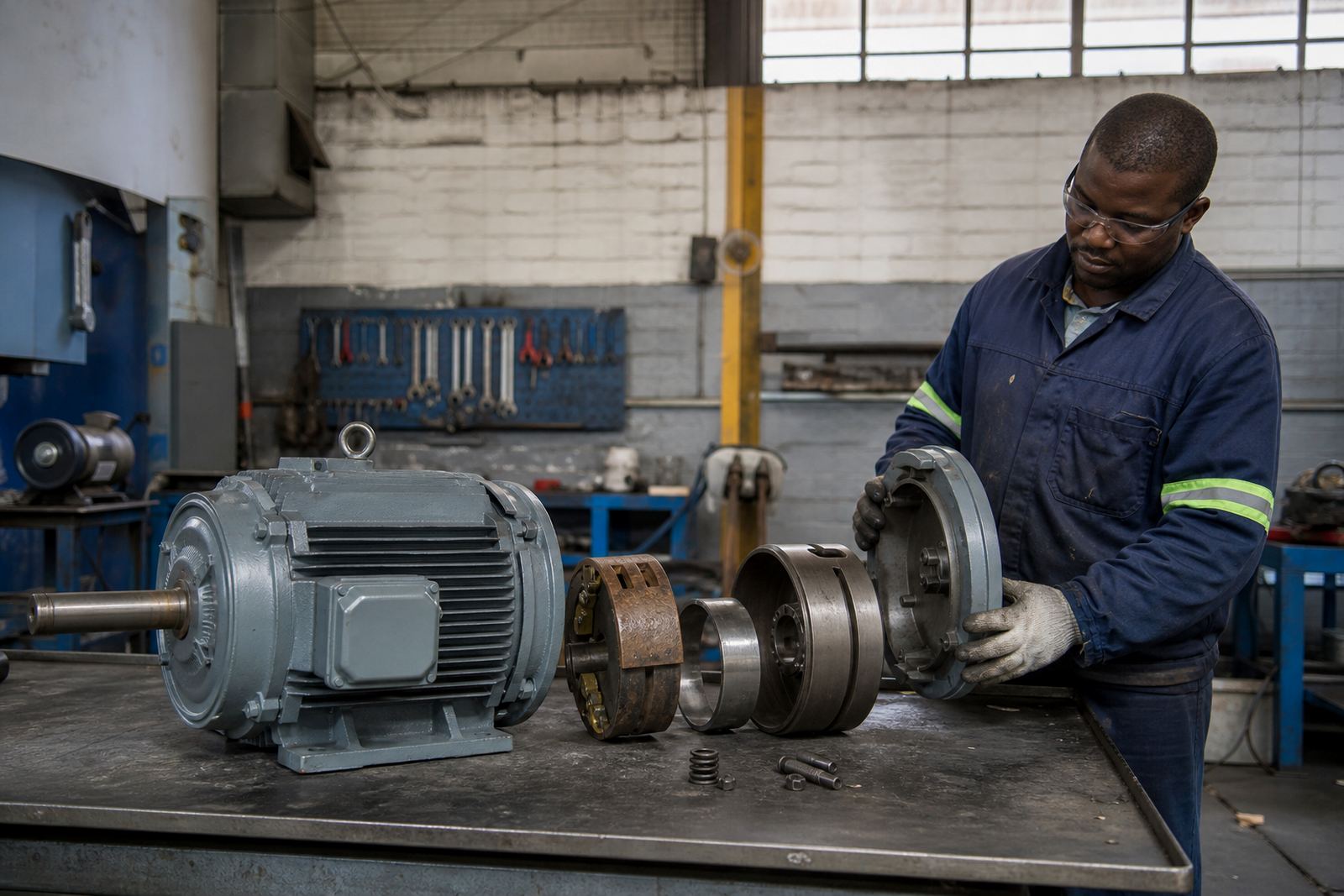
Every gear motor repair starts with a proper strip down and inspection. We assess the gearbox condition, check the windings, test insulation resistance and look at bearings, seals and shaft wear. If rewinding is needed, the damaged windings are removed and replaced with suitable copper and insulation materials for the duty required. If the gearbox has worn components, those are identified before reassembly begins. That way the repair is based on measured condition, not assumptions.
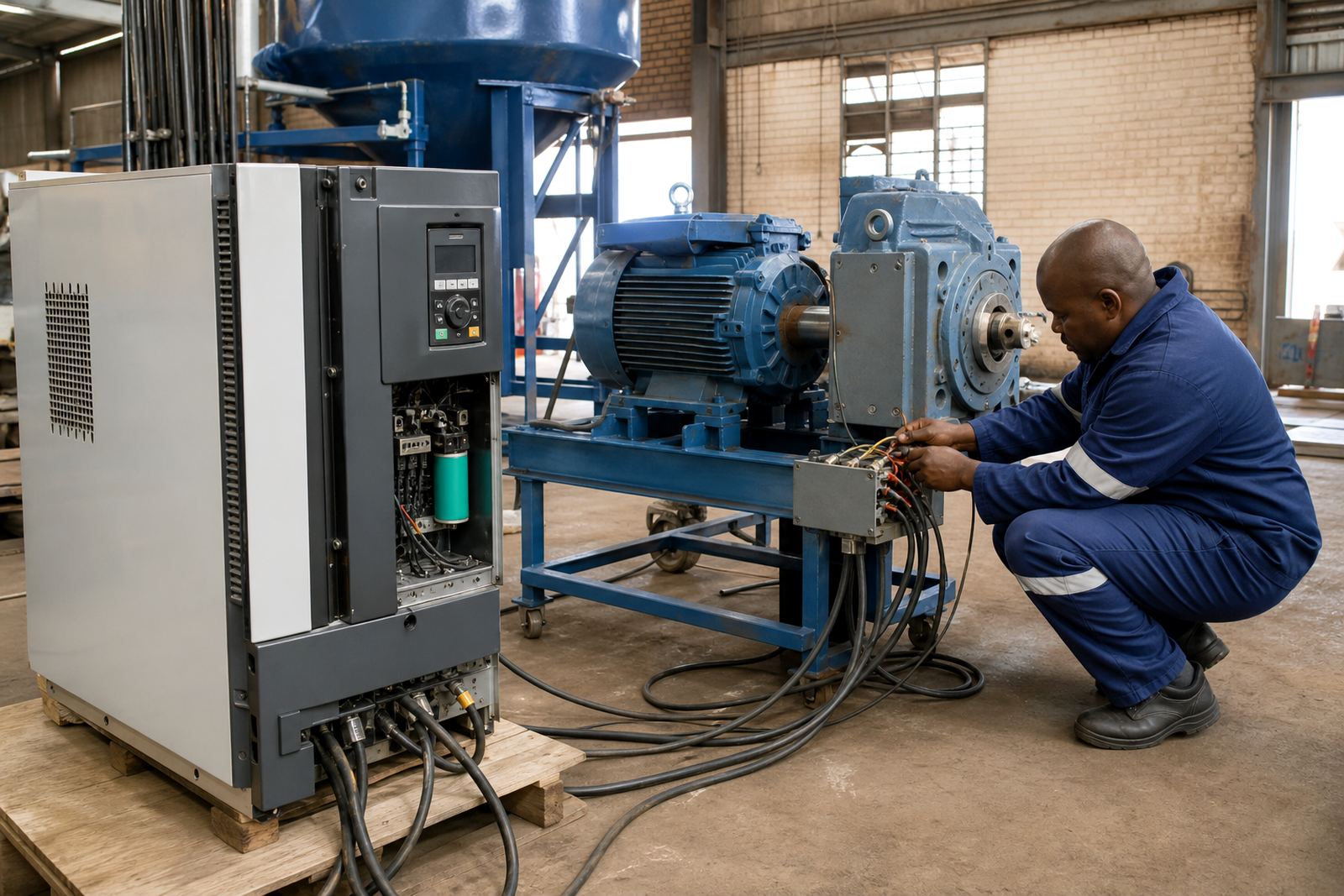
After repair, the unit is reassembled, aligned and tested under controlled conditions where possible. We also check the quality of terminations, cable entry and earthing points. If the gear motor was linked to a variable speed drive, the drive side can be inspected as well so the unit is not put back into a system with the same fault waiting on the supply side. On sites with load-shedding pressure, a unit that starts and stops often needs careful attention to overheating, surge stress and restart behaviour.
Installation needs, site prep and power supply checks
Before a repaired gear motor goes back into service, the installation point should be ready. The mounting base must be level and firm, with correct bolt sizes and enough clearance for the shaft, cooling fan and cover removal. If the machine uses a coupling or chain drive, alignment should be checked again after installation. Cable sizing, protection devices and isolation points also need attention, especially where drives and motor starters are in the same panel.
There is no gas requirement for a gear motor installation because the unit is electrically powered, but the site does need the right electrical supply and safe isolation. For many plants that means a proper lockable isolator, correct overload settings and a clean panel. If the site is in a municipal area with strict outage planning or limited access windows, we can assist with shutdown planning, commissioning support and site reporting so the work is done in the time available.
- Correct nameplate voltage and frequency
- Safe isolation and lockout before work starts
- Baseplate, coupling and alignment checks
- Clean terminals and secure cable glands
- Enough space for future inspection and lubrication
Servicing that helps the unit last longer
Gear motors usually give warning signs before a serious breakdown. Regular checks can catch rising bearing noise, oil seepage, vibration, loose fasteners or a drive that is working harder than it should. In workshop and plant settings, that kind of routine attention helps prevent surprise stoppages on conveyors, mixers and process lines. Our team can support planned shutdowns, spares assessment and panel cleaning so the unit is not repaired in isolation from the rest of the system.
Good care also means keeping the area clean. Dust, moisture and chemical residue all shorten service life if they get into terminals, seals or cooling paths. In coastal humidity or in workshops where washdown is common, the inspection schedule should be tighter. A small amount of water inside a terminal box can lead to tracking, corrosion and repeated trips. If a gear motor has already been opened, it should be rechecked after installation and again after the first period of running, especially where the load is heavy.
Key facts
| Repair type | Workshop repair for integrated gear motors, including electrical and mechanical fault checks |
|---|---|
| Common work | Rewinding, bearing replacement, insulation testing, gearbox inspection and alignment checks |
| Mounting styles | Foot mounted, flange mounted and inline units |
| Typical supply | Low-voltage AC motor sections, commonly single or three-phase depending on the unit |
| Site conditions | Suitable for dry indoor plants, dusty workshops and damp or coastal environments with added protection |
| Service areas | Germiston, Johannesburg, Ekurhuleni, Pretoria, Vereeniging, Durban, Boksburg and Kempton Park |