

Mixer motors that keep product moving
Mixer motors work harder than many general duty motors because they start under load, face vibration, and often run in dusty or humid areas. In batching rooms, blending bays and process tanks, a failing motor can slow production, affect mix quality, or stop a line altogether. Locor repairs these motors so they can return to service with the correct torque, correct speed and sound electrical condition.
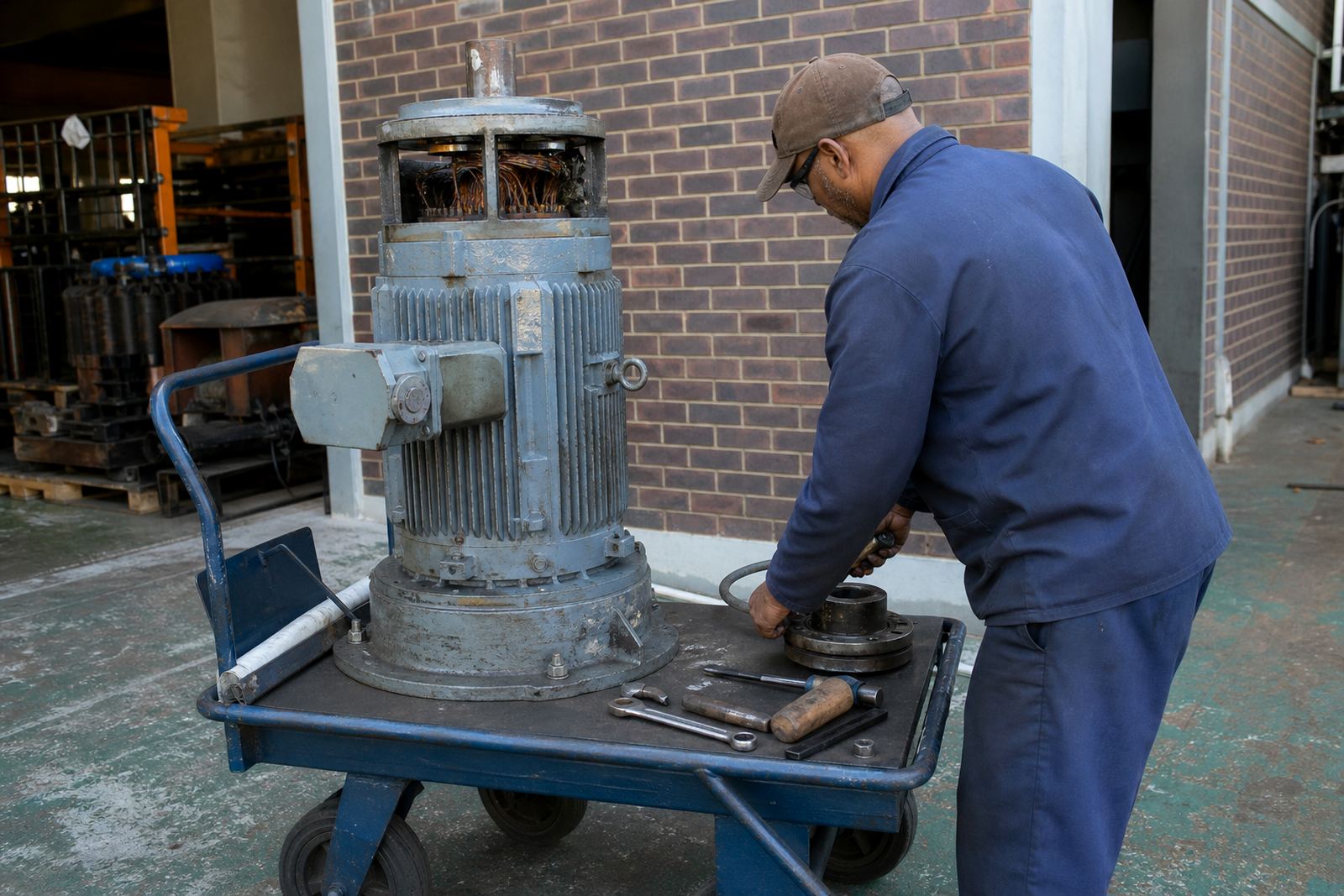
We work on motors used with paddle mixers, tank agitators, ribbon mixers and other driven mixing equipment. The repair approach depends on the fault: burnt windings, worn bearings, a damaged shaft end, poor insulation, overheating, or a problem picked up during drive inspection. In every case, the motor is assessed before any work starts so the repair is matched to the actual condition of the unit.
- Suitable for light, medium and heavy duty mixer applications
- Common in food preparation, chemicals, plastics, minerals and general process plants
- Useful where frequent starts, long run times or wet cleaning routines are part of daily work
Rewinding, bearing checks and electrical testing
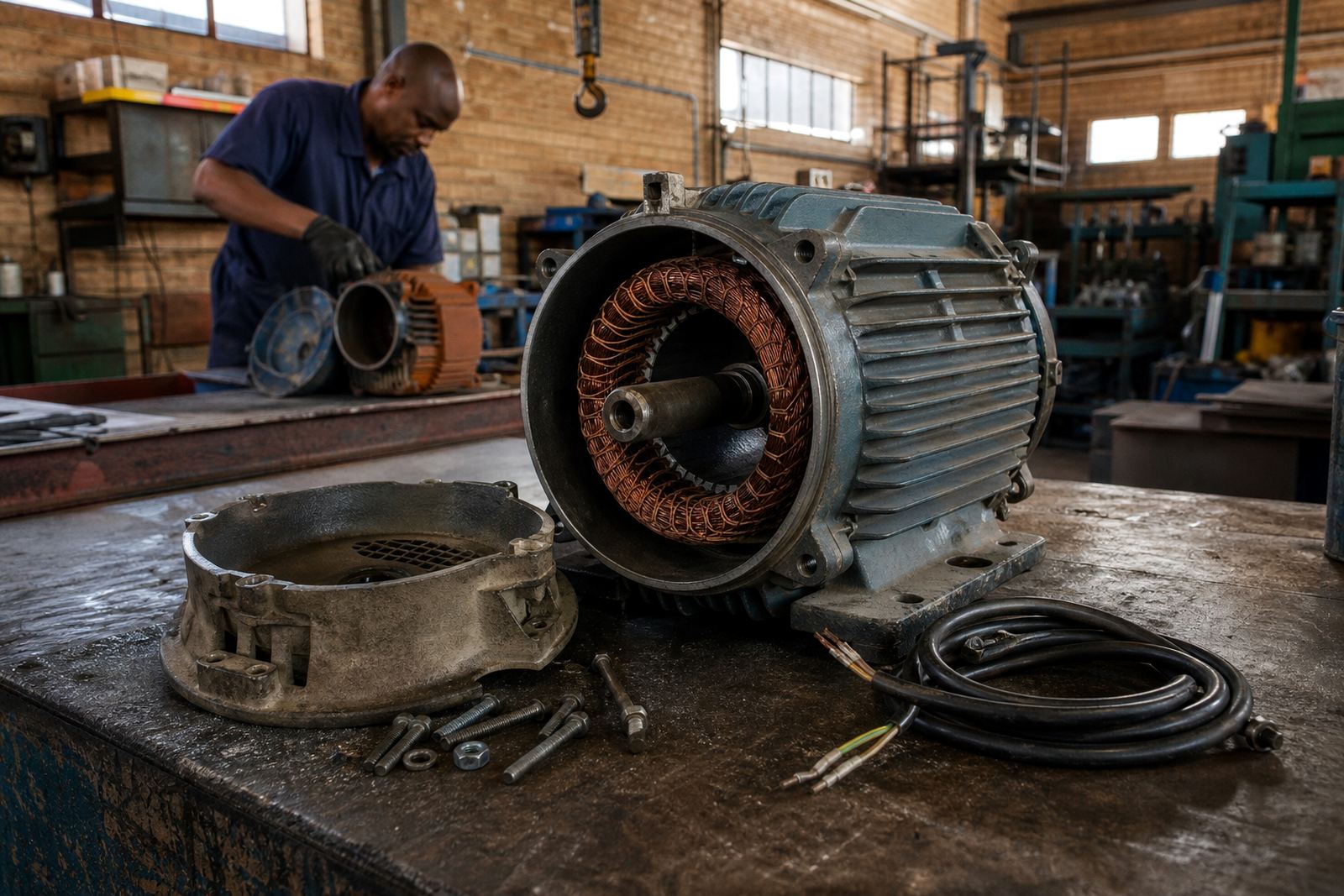
Electric motor rewinding is used when the original winding has failed, degraded or lost insulation strength. The damaged winding is removed, the core is checked, and a new winding is fitted to the required electrical design for that motor. Bearing replacement is often carried out at the same time, especially where a mixer has run with vibration, poor alignment or contamination from dust and wash down water. A worn bearing can create noise, heat and shaft play, which then puts extra stress on the winding.
Insulation testing is part of the repair process because it helps show whether the motor can safely withstand operating voltage without leakage to earth or between windings. We also carry out fault finding, cable checks and panel cleaning where needed, since the problem is sometimes outside the motor itself. Work on electrical equipment must only be done by qualified people, with lockout procedures in place and proper isolation before the unit is opened.
- Winding removal and replacement
- Bearing checks and replacement where required
- Insulation resistance testing and visual inspection
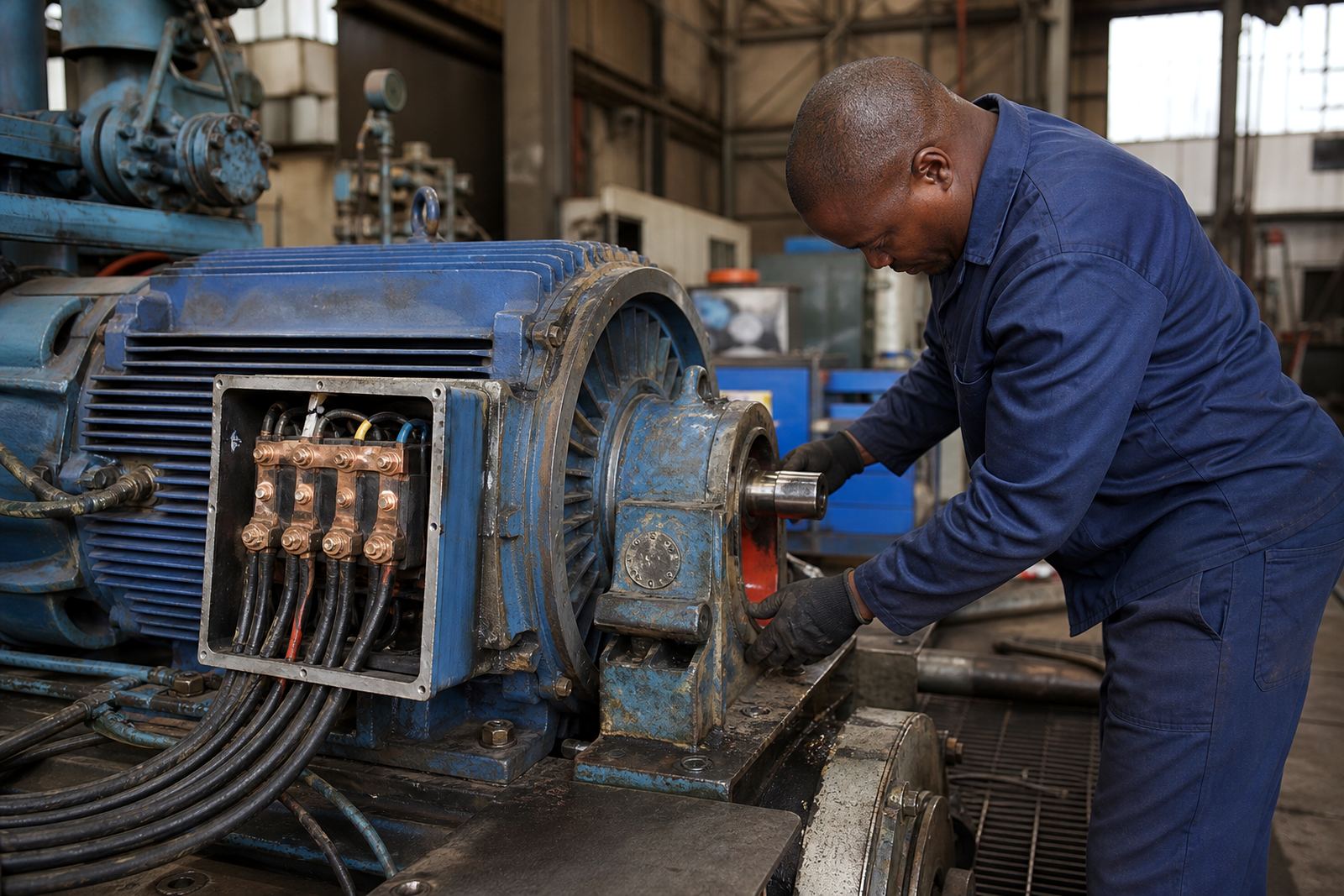
- Shaft, frame and connection box condition checks
Where mixer motor repair suits best
These repairs suit sites that rely on consistent mixing of powders, liquids or semi solids. That includes batching plants, blending rooms, process tanks, workshop mixers and smaller production lines. In Gauteng, we often see motors affected by dust, vibration and load-shedding related restarts. Near the coast, humidity and corrosion can also affect terminals, bearings and insulation over time.
For plants in Germiston, Johannesburg, Ekurhuleni, Pretoria, Vereeniging, Boksburg, Kempton Park and Durban, the main concern is keeping the mixer available for scheduled production windows. A motor that trips repeatedly, struggles to start, or runs hot under normal load should be checked before it causes further damage to the coupling, gearbox or driven equipment. If the mixer is part of a critical batch process, shutdown planning and site reporting can help maintenance teams prepare the work properly.
- Batching and blending plants
- Process tanks and agitators
- Workshops with fixed or portable mixers
- Operations that need planned maintenance during shutdowns
Installation, power needs and site requirements
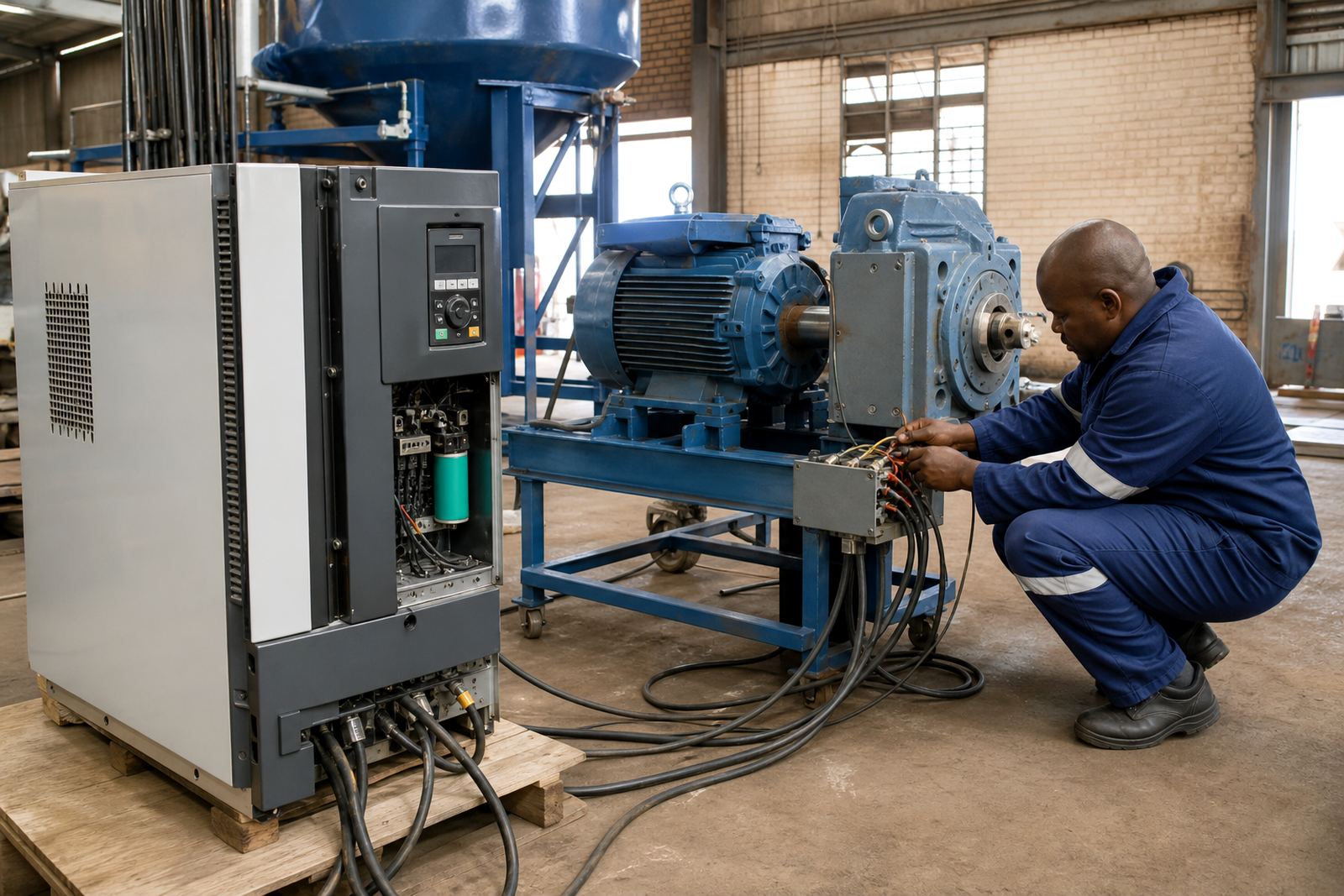
Mixer motor repairs are not only about the motor itself. The installation has to match the application. A unit may be mounted foot mounted or flange mounted, and the shaft height, coupling, belt set-up or gearbox interface must be correct. The electrical supply also needs to suit the motor nameplate details, starter arrangement and any variable speed drive being used. If a mixer runs from a drive, drive inspection and commissioning support are useful after repair to make sure the speed control, current draw and acceleration settings are sensible for the load.
Before installation, the site should confirm space for removal and lifting, clean access to the mixer, and safe isolation points. If the motor is installed in an area with wash down routines, dust, or outdoor exposure, sealing and cable entry need extra attention. We also assess alignment, cable condition and panel cleanliness because these small issues can shorten motor life. A repaired motor can still fail early if the mounting is wrong or the supply is unstable.
- Check motor mounting type and shaft dimensions
- Confirm voltage, phase and speed requirements
- Inspect the coupling, gearbox or driven load
- Verify starter, overload and drive settings before return to service
How to look after a repaired mixer motor
Good care starts with routine checks. Keep the motor area clean, listen for bearing noise, and watch for unusual vibration, current spikes or heat at the frame and terminal box. If the mixer is used in a harsh environment, seals and cable glands should be inspected more often. In coastal and humid areas, condensation can attack insulation and terminal connections, so regular inspection is important.
Service intervals depend on running hours, duty cycle and the product being mixed, but the basics stay the same: keep the unit aligned, keep fasteners tight, and do not ignore tripping or slow starting. If a mixer motor has suffered a rewind, record the repair details and keep them with maintenance notes for future reference. That makes it easier to compare performance later and spot a repeat fault before it becomes a shutdown.
- Check for heat, noise and vibration during operation
- Inspect bearings and coupling condition on a planned basis
- Keep terminals dry and free of dust build-up
- Do not bypass overload protection or safety interlocks
What to send with your order enquiry
When asking about a mixer motor repair, the more detail you can give, the better the assessment. Include the motor rating plate details, the mixer duty, the fault symptoms, and whether the unit is coupled directly or through a gearbox. If the motor has already tripped, overheated or failed after a power event, mention that too. Photos of the nameplate, connections and mounting arrangement help with fault finding and spares assessment.
Locor supports customers through the enquiry form on our contact page, with service from Germiston to Johannesburg, Ekurhuleni, Pretoria, Vereeniging and Durban. Our team includes Sibusiso Mthembu, Annelie van Wyk, Thabo Nkosi, Megan Naidoo, Johan Pretorius and Lerato Molefe, so your job is handled by people who understand both workshop repair and site support. We work with plants and workshops that need practical advice, clear reporting and careful handling of electrical equipment.
- Motor kW or HP rating and voltage
- Frame size, mounting type and speed
- Fault details and any previous repair history
- Photos of the motor, terminal box and coupling or belt drive
Key facts
| Repair type | Electric motor rewinding, bearing replacement, insulation testing, fault finding |
|---|---|
| Motor sizes | Small workshop motors through to larger industrial mixer drives |
| Typical supply | Single phase or three phase, matched to the motor nameplate |
| Mounting options | Foot mounted, flange mounted, coupled or belt driven |
| Service areas | Germiston, Johannesburg, Ekurhuleni, Pretoria, Vereeniging, Durban |
| Related support | Drive inspection, cable checks, panel cleaning, commissioning support |