

What Extruder Motor Repairs Cover
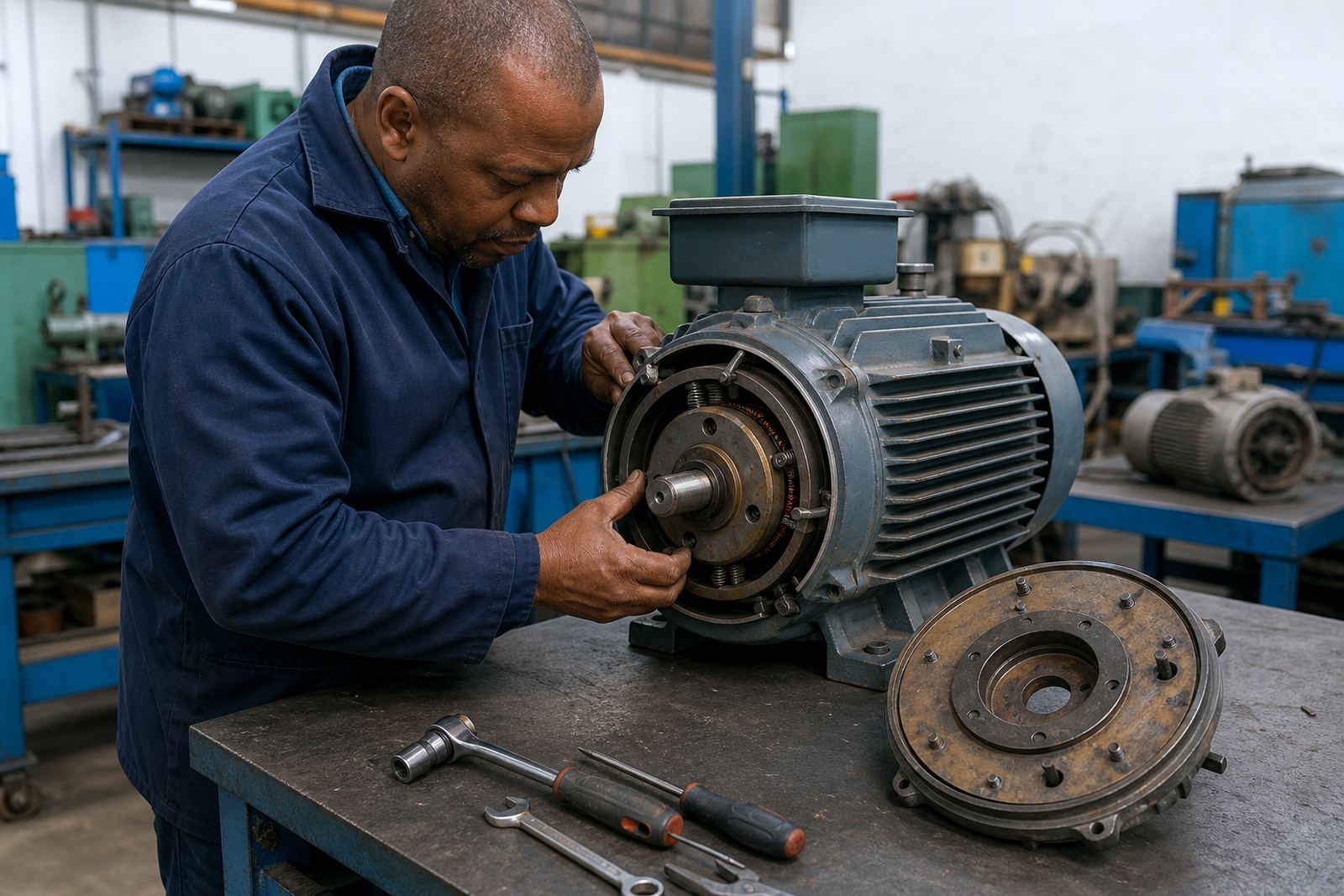
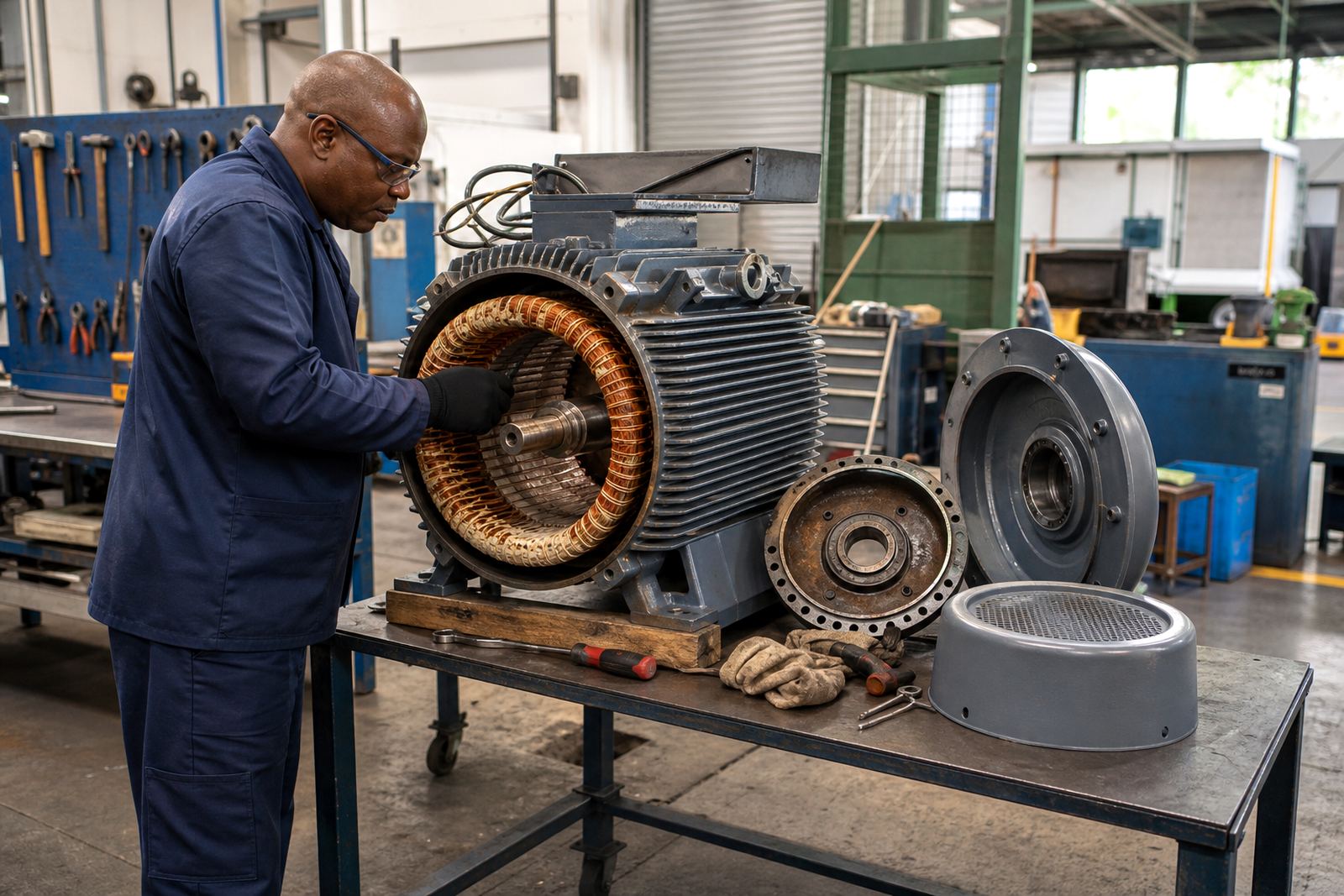
Extruder motors on plastic, rubber and process lines spend long hours under high torque demand, with heat build-up, dust, vibration and repeated starts all taking their toll. When a motor begins to overheat, trip on current, lose torque or run noisier than usual, repair work usually starts with fault finding, insulation testing and a full strip down to identify what has actually failed.
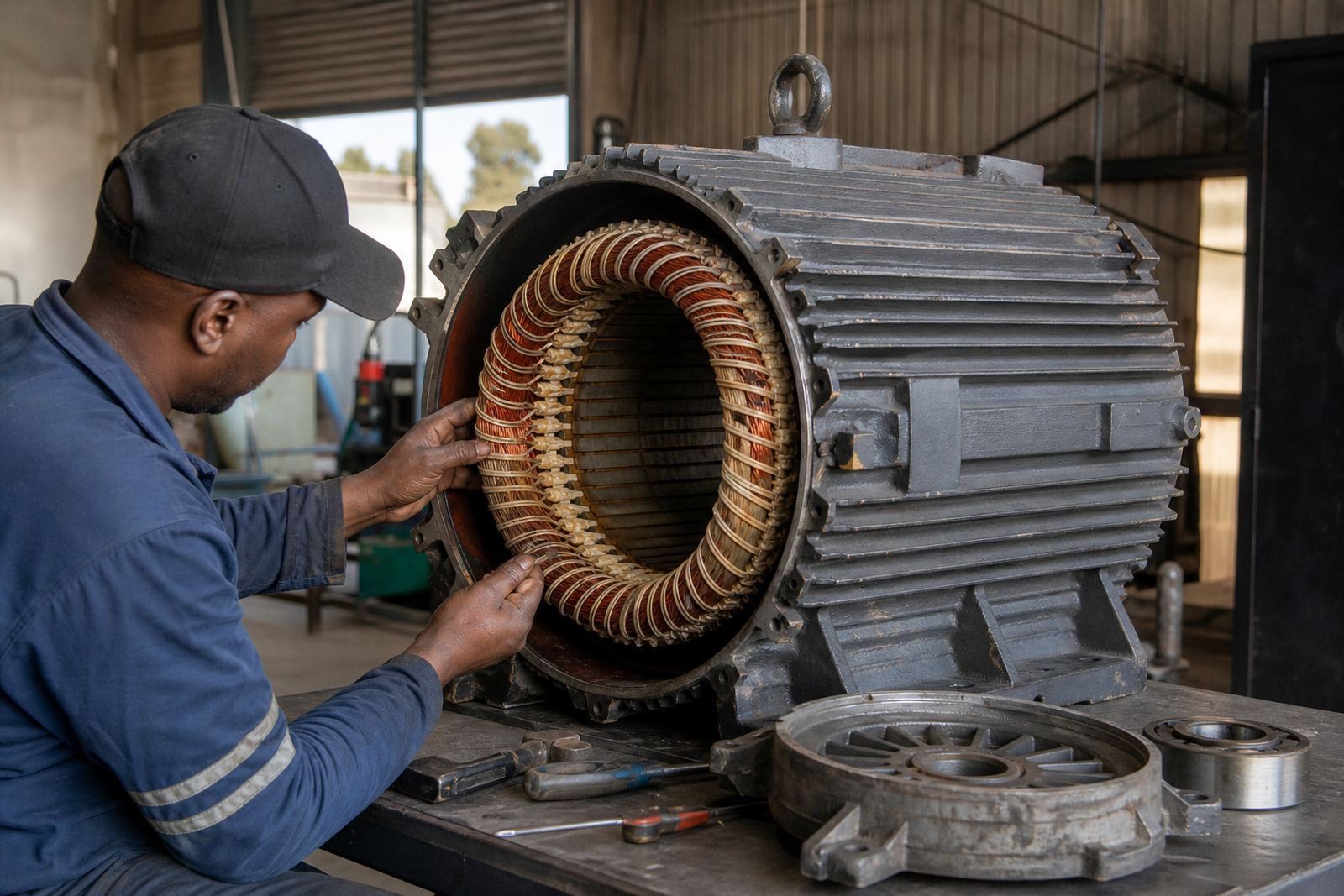
Locor handles electric motor rewinding, bearing replacement, rotor and stator inspection, terminal repairs and related checks for extruder duty motors. Where the problem is linked to the supply or control system, we also inspect the variable speed drive, cable terminations, panel condition and site connections. Electrical work must be done by qualified people, with proper lockout procedures and safe isolation before any testing or removal starts.
- Common signs include overheating, burning smell, tripping, uneven speed and vibration.
- Repairs can involve rewinding, insulation rework, bearing changes and drive fault investigation.
- We also check coupling condition, alignment and whether the motor is still suitable for the duty cycle.
Motor Sizes, Frames and Duty Options
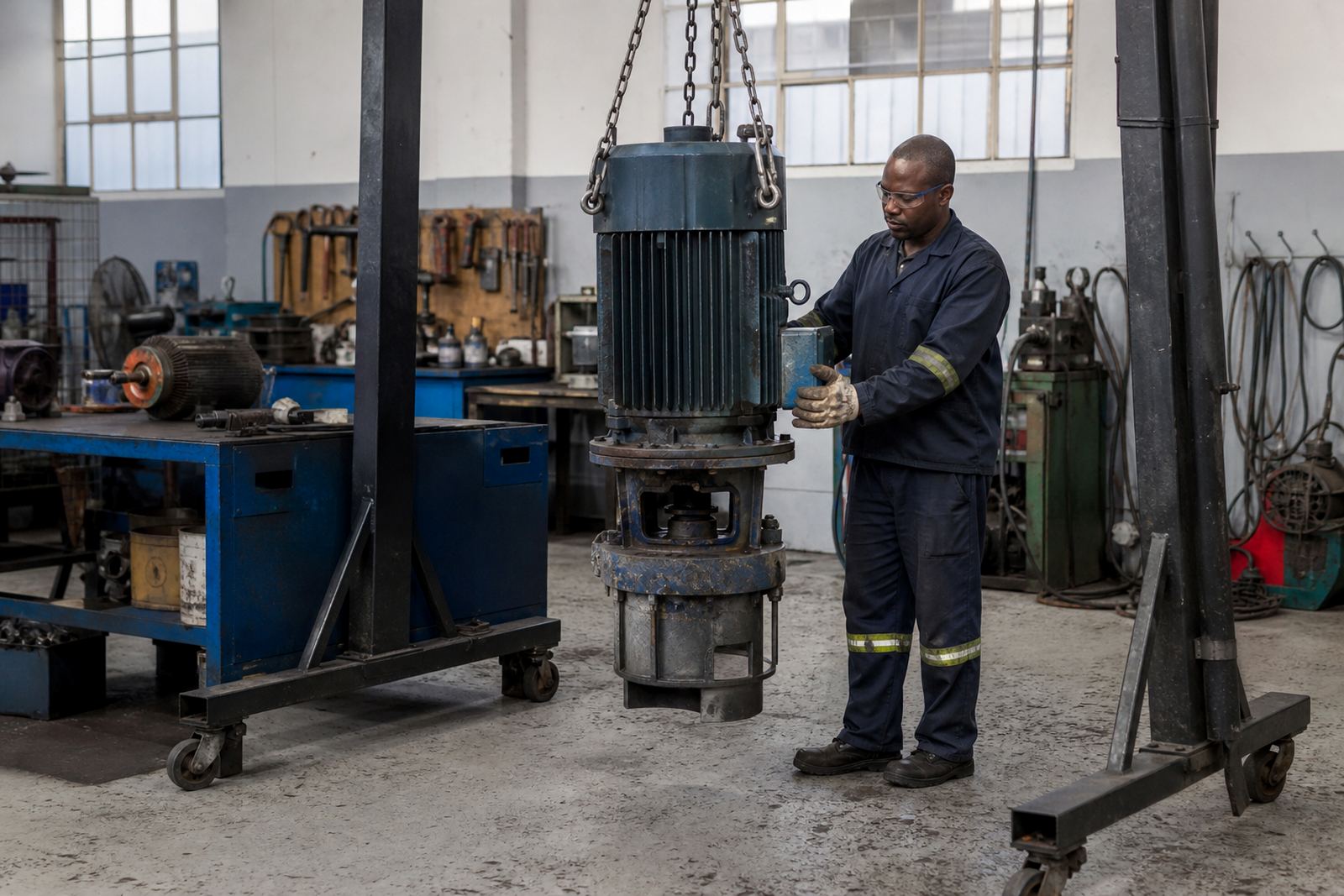
Extruder motor repairs are not one-size-fits-all. Smaller motors on auxiliary equipment may be easier to strip and test quickly, while larger frame motors on production extruders need more careful handling, lifting support and extra time for inspection. We work on low-voltage industrial motors in common plant sizes, from compact units through to larger flange and foot-mounted assemblies used on continuous process lines.
The right repair depends on the application, the motor enclosure and the environment. A motor in a hot, dusty inland plant in Gauteng will face different conditions to one working near the coast in Durban, where humidity can affect insulation and terminals. We match the repair approach to the motor’s duty, starting method and service conditions rather than treating every job the same.
- Foot-mounted and flange-mounted motors
- Totally enclosed and fan cooled designs
- Standard industrial duty and high duty cycle applications
- Motors paired with direct online, soft start or variable speed drive control
Where These Repairs Suit Best
Extruder motor repairs suit plants and workshops that need steady output and cannot afford repeated failures on the line. We regularly support operations in Germiston, Ekurhuleni, Johannesburg, Pretoria, Vereeniging and Durban, including sites where motors run in long shifts and are exposed to heat from heaters, dies, gearboxes and surrounding machinery.
These repairs are especially useful where the motor is still mechanically sound but has electrical damage, worn bearings or signs of stress from poor ventilation and contamination. They also suit facilities planning a shutdown, where the motor can be removed, assessed and returned to service before full production starts again. Sibusiso Mthembu leads the business as Managing Director, with a team that includes winding, drive repair, field service and customer support staff who work through practical site conditions.
- Plastic extrusion plants
- Rubber and polymer processing lines
- Industrial workshops and maintenance stores
- Shutdowns, planned outages and emergency breakdowns
Installation, Power Supply and Site Needs
Before a repaired extruder motor goes back into service, the installation conditions need to be checked. That includes mounting bolts, base flatness, shaft alignment, coupling fit, cable glands, earthing and the condition of the starter or drive. If the motor is run through a variable speed drive, the drive settings, ramp times and current limits should be verified against the motor data and the process load.
Power supply quality matters as well. Voltage imbalance, loose connections and poor cable joints can shorten motor life and cause repeated faults. On site, the area should allow safe access for lifting, removal and testing, with proper lockout, signage and housekeeping around the machine. If panels need to be opened, dust should be cleaned out and any signs of heat damage or tracking should be recorded before recommissioning.
- Confirm supply voltage and phase balance before start-up
- Check earthing, cable condition and terminal tightness
- Inspect coupling alignment and base integrity
- Verify drive settings where a VSD is used
Care and Servicing After Repair
A repaired motor will last longer if the surrounding system is kept in good condition. Bearings need the correct lubrication practice for the motor type, and over greasing can be just as harmful as running dry. Cooling fins, fans and covers should stay clear of dust and fibres, while the extrusion area should be kept as clean as possible to reduce contamination entering the motor.
Regular checks should include vibration, noise, temperature and current draw. If the motor is tied into a drive system, the drive should also be inspected for fan condition, signs of overheating, loose terminals and contamination in the enclosure. An occasional site report helps maintenance teams plan ahead instead of waiting for a stop-start failure. For coastal areas like Durban, extra attention to moisture and corrosion is worth the effort, especially on terminal boxes and control panels.
- Keep cooling paths clear and clean regularly
- Monitor bearing noise and abnormal vibration
- Check temperature rise after load changes
- Inspect drive enclosures for dust, moisture and heat marks
What to Check When Ordering a Repair
When you send through an enquiry, the more detail you can provide the better the assessment will be. Motor nameplate details, application type and the fault history all help. If the unit is still on site, a few photos of the motor, coupling, base, terminal box and any drive panel can save time and help the technician understand the likely failure points before collection or removal.
Useful information also includes the machine duty, hours worked, the location of the plant and whether the motor failed after a power event, overload or temperature issue. If a shutdown is scheduled, include the timing so the removal and return can be planned around the production window. Locor receives enquiries through the contact page form and supports customers across South Africa, from Germiston and Boksburg to Kempton Park, Pretoria and Durban.
- Motor frame size, kW rating and voltage
- Direct-on-line or variable speed drive application
- Fault symptoms and when they started
- Site location and shutdown timing
Key facts
| Service type | Extruder motor repair, rewinding and electrical fault finding |
|---|---|
| Motor range | Industrial low-voltage motors used on extrusion and process equipment |
| Typical work | Rewinding, bearing replacement, insulation testing, drive repair, alignment checks |
| Application | Plastic, rubber and related continuous process lines |
| Service area | Germiston, Johannesburg, Ekurhuleni, Pretoria, Vereeniging and Durban |
| Access note | Qualified electrical work only, with lockout and safe isolation before handling |