

What Lathe Motor Repairs Cover
Lathe motors work hard from the first start of the day to the last part turned after hours. When a motor starts humming, running hot, tripping a breaker or losing torque under load, the problem can sit in the windings, bearings, connections, insulation or the drive feeding the motor. Repair work is about finding the fault properly, then restoring the motor so it runs squarely and with the right speed control for machining work.
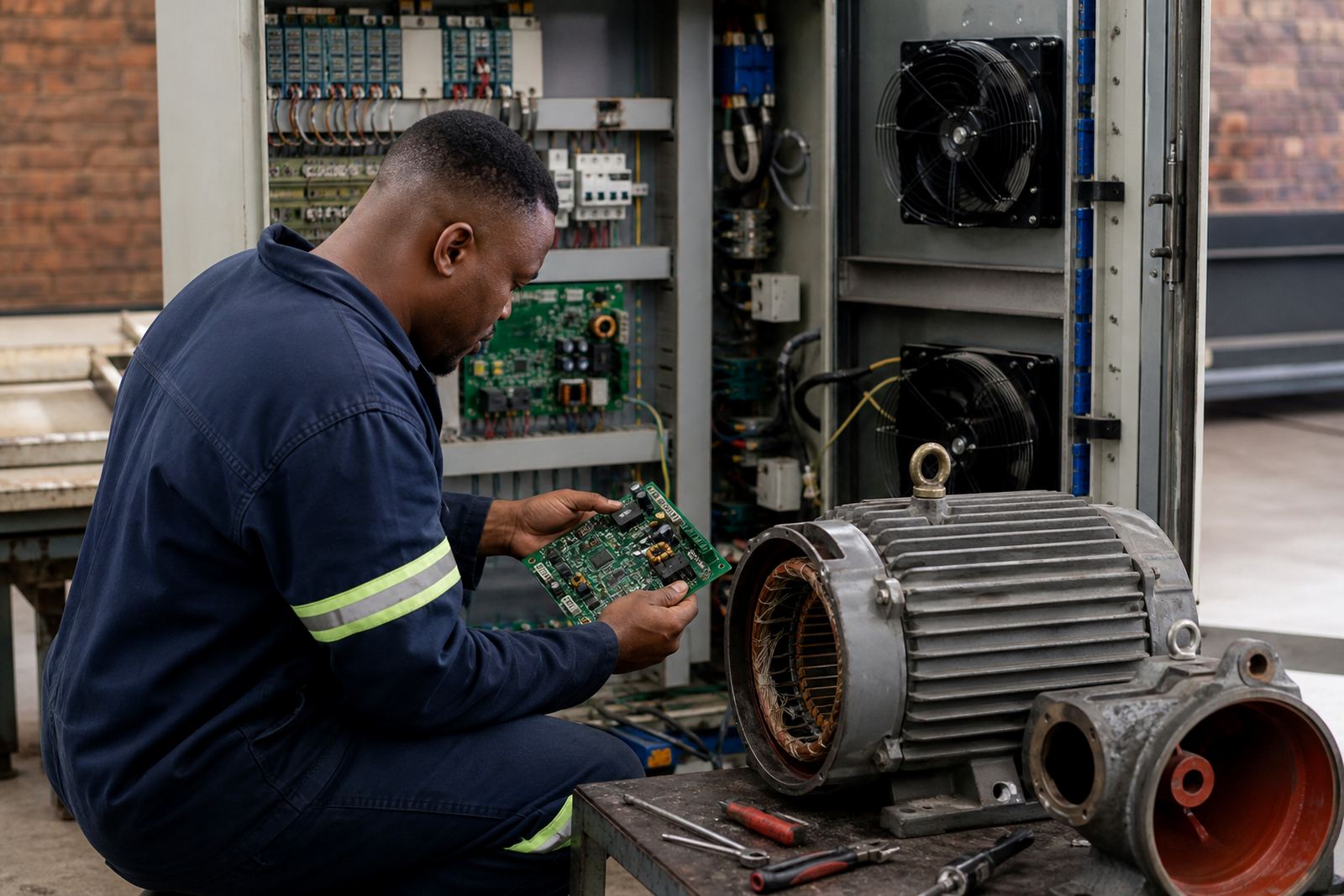
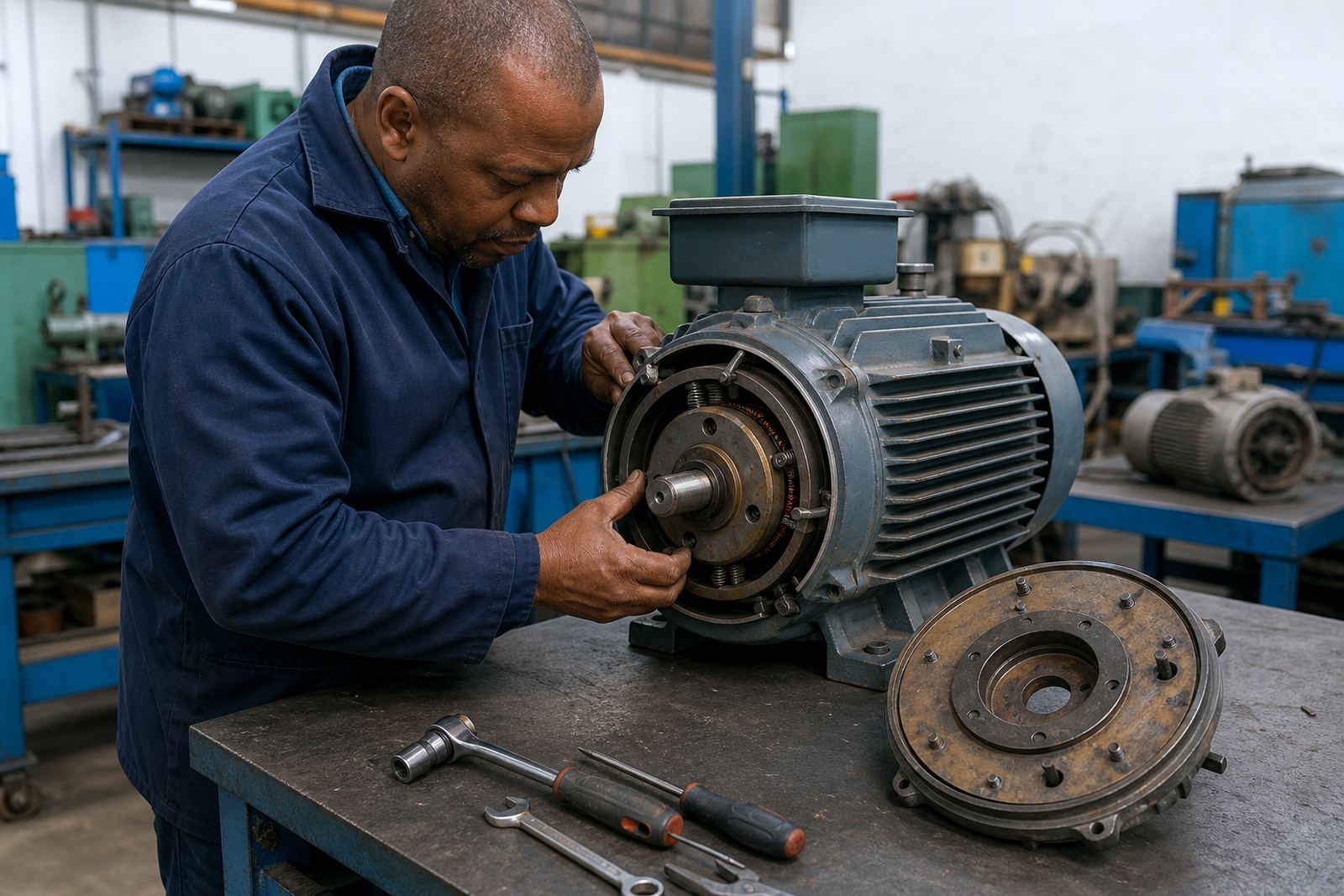
For workshop equipment, repair usually includes stripping the motor, cleaning out dust and oil mist, checking the rotor and stator, measuring insulation resistance and testing the bearings. If the windings are damaged, the motor may be rewound with correctly sized copper wire and new insulation materials. If the motor is still electrically sound, it may only need bearing replacement, cable repairs or terminal work.
All electrical work must be done by qualified people using lockout and isolation procedures. Lathe motors are not a place for guesswork because a bad repair can damage the machine, the drive and the workpiece in one shift.
When a Lathe Motor Needs Attention
Machine shops often notice the early signs before the motor gives up completely. A lathe may become slow to pick up speed, cut unevenly or trip when taking a deeper pass. A hot smell after a short run, noisy bearings or visible sparking at the motor terminals are all signs that the unit needs inspection.
On older lathes, moisture, coolant vapour and fine metal dust can work into the motor housing. In coastal areas like Durban, humidity can lead to insulation breakdown faster, while inland sites around Germiston and Pretoria often deal with dust and heat. Load-shedding, repeated restarts and long production hours can also stress contactors and variable speed drives.
- Motor starts then trips under load
- Unusual bearing noise or vibration
- Burning smell from the motor or drive cabinet
- Slow acceleration or weak torque
- Intermittent running, especially after a shutdown
Early fault finding saves time and often prevents damage to the chuck, belts, couplings and control gear.
Motor Sizes, Mountings and Repair Options
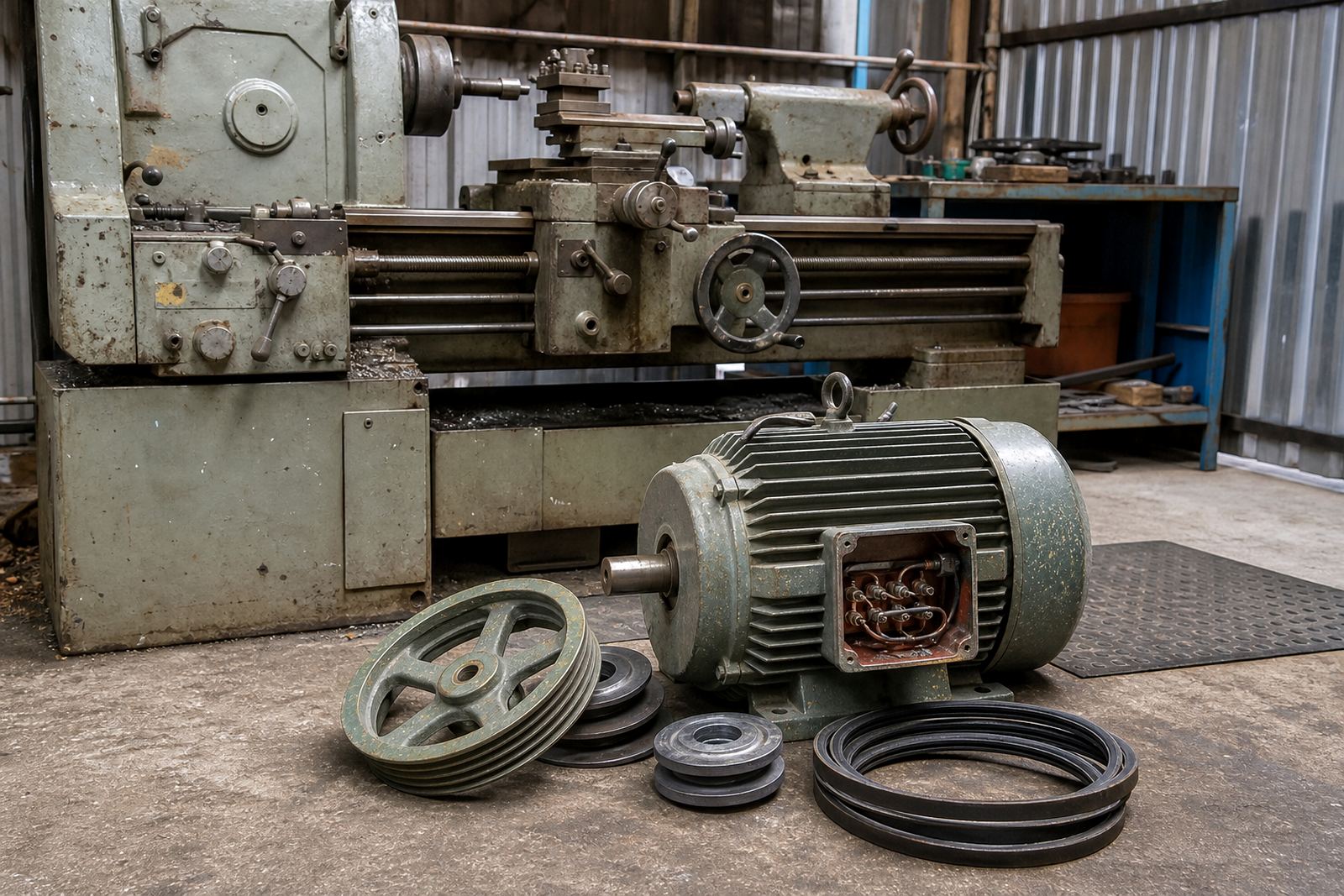
Lathe motors are found in a range of sizes, from smaller workshop units to heavier-duty motors used on production machines. We typically see single-phase and three-phase motors, with frame sizes selected to suit the lathe bed, belt drive and spindle load. The repair approach depends on the motor type, condition and how the machine is used.
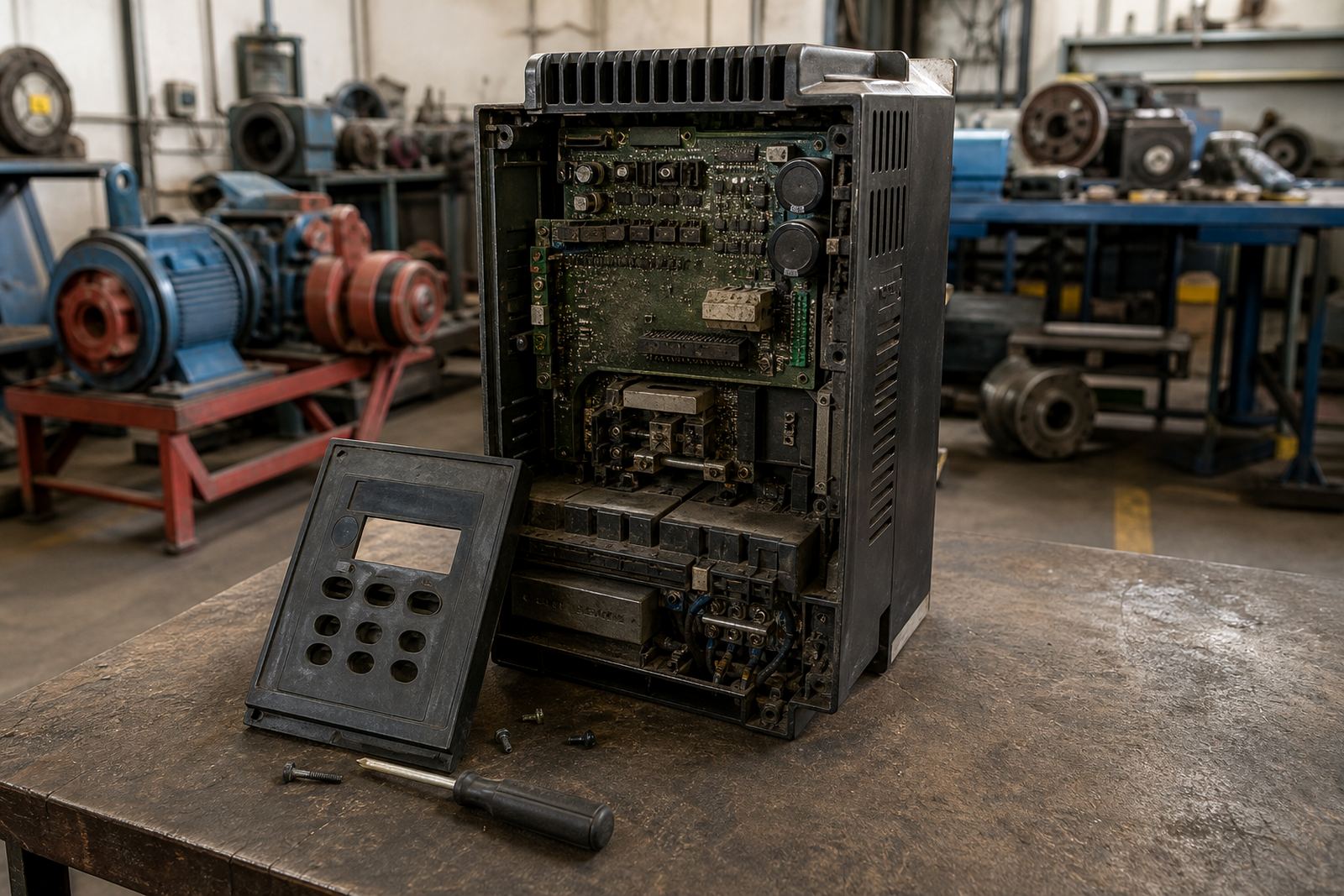
Options can include bearing replacement, rewinding, endshield repair, shaft checks, terminal box cleaning and insulation treatment. If the motor is integrated with a variable speed drive, the drive may need inspection too, especially where the machine changes speed often or has been exposed to heat and dust. Where the motor has been removed from the lathe, alignment checks during refitting are important to avoid belt wear and excess vibration.
For many workshops, it makes sense to assess whether the existing motor can be repaired economically or whether the unit needs a full strip and rewind. We also check whether the mounting feet, coupling or pulley condition could be contributing to repeat failures.
Installation Needs and Power Requirements
Lathe motor repairs do not end at the bench. Once a motor is reinstalled, the supply, protection and mechanical setup all need to match the machine. A lathe motor may require correct phase rotation, sound earthing, suitable overload protection and a supply that can handle start-up current without nuisance tripping. On controlled-speed systems, the drive settings must also be checked against the motor nameplate and the machine duty.
Before commissioning, we recommend a full cable check, panel cleaning and inspection of isolators, contactors and terminals. If the workshop has unstable power or frequent outages, surge protection and proper restart procedures can reduce the risk of repeat drive faults. Shutdown planning matters too, especially where one lathe supports urgent repair work and the line cannot sit idle for long.
- Correct voltage and phase supply
- Reliable earthing and isolation point
- Proper motor protection and overload setting
- Clear access for maintenance and cleaning
- Enough space for safe removal and refitting
Qualified electrical work and lockout procedures are essential before any removal, testing or recommissioning takes place.
Care, Servicing and Workshop Conditions
Lathe motors last longer when the workshop keeps them clean and dry. Fine swarf, coolant mist and oil build-up can sit around the fan cover and terminal box, then work into the winding over time. A simple service routine can reduce downtime and help the motor stay steady through long production runs.
Useful care steps include checking for vibration, listening for bearing noise, cleaning dust from the motor frame and watching for loose conduit fittings. On machines used daily, bearing checks and insulation testing should be part of planned maintenance rather than only done after a failure. If the lathe is in a coastal or humid area, keeping vents clear and the motor dry after washdown is especially important.
For workshops with several machines, service records help track which lathe motors are running hot, which drives are tripping and which machines need attention before a shutdown period. That kind of planning can reduce emergency callouts and keeps jobs moving when orders are tight.
What to Check Before You Order Repair Work
When you send a lathe motor in for repair, the right information helps us assess the job properly. If possible, note the motor frame size, voltage, phase, speed, mounting style and any visible damage. Photos of the terminal box, nameplate and the lathe drive arrangement are useful too.
It also helps to describe the fault clearly. For example, does the motor trip at start-up, run hot after 20 minutes, or make a grinding sound only at a certain speed. If the machine uses a variable speed drive, tell us whether the fault appears on the motor side, the drive side or both. This makes it easier to decide on fault finding, motor removal, drive inspection and spares assessment before work starts.
- Motor nameplate details and mounting type
- Single-phase or three-phase supply
- Symptoms, noise, heat or tripping pattern
- Whether the motor runs with belts, pulleys or direct coupling
- Any previous rewinds, bearing changes or drive repairs
For machine shops in Germiston, Boksburg, Kempton Park, Johannesburg, Ekurhuleni, Pretoria, Vereeniging and Durban, Locor supports practical repair work that keeps lathe motors in service and production moving.
Key facts
| Motor types | Single-phase and three-phase lathe drive motors |
|---|---|
| Repair scope | Fault finding, rewinding, bearing replacement, insulation testing and drive repair |
| Typical power range | Small workshop motors through heavier production lathe motors |
| Mounting options | Foot mounted, flange mounted and coupled drive setups |
| Service areas | Germiston, Johannesburg, Ekurhuleni, Pretoria, Vereeniging, Durban, Boksburg and Kempton Park |
| Workshop support | Motor removal, drive inspection, alignment checks, commissioning support and site reporting |