

Agitator motor repairs for hard-working mixers
Agitator motors do a demanding job. They drive mixers, blenders and tank agitators that keep liquids, slurries and process blends moving at a steady speed. In chemical plants they may handle corrosive atmospheres, in food plants they work around washdowns and in water treatment they often run long shifts with frequent starts and stops. When one fails, the process can stall very quickly.
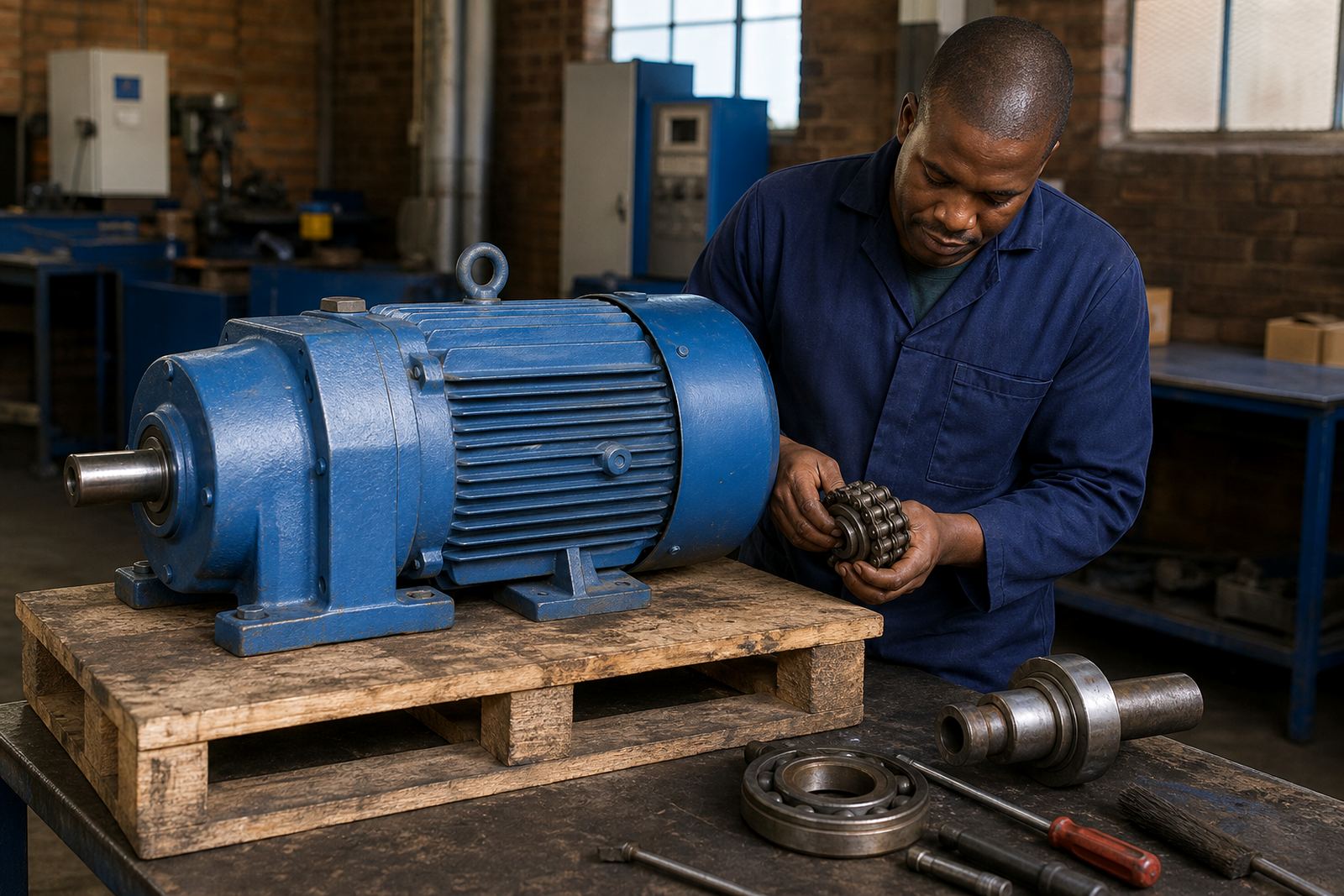
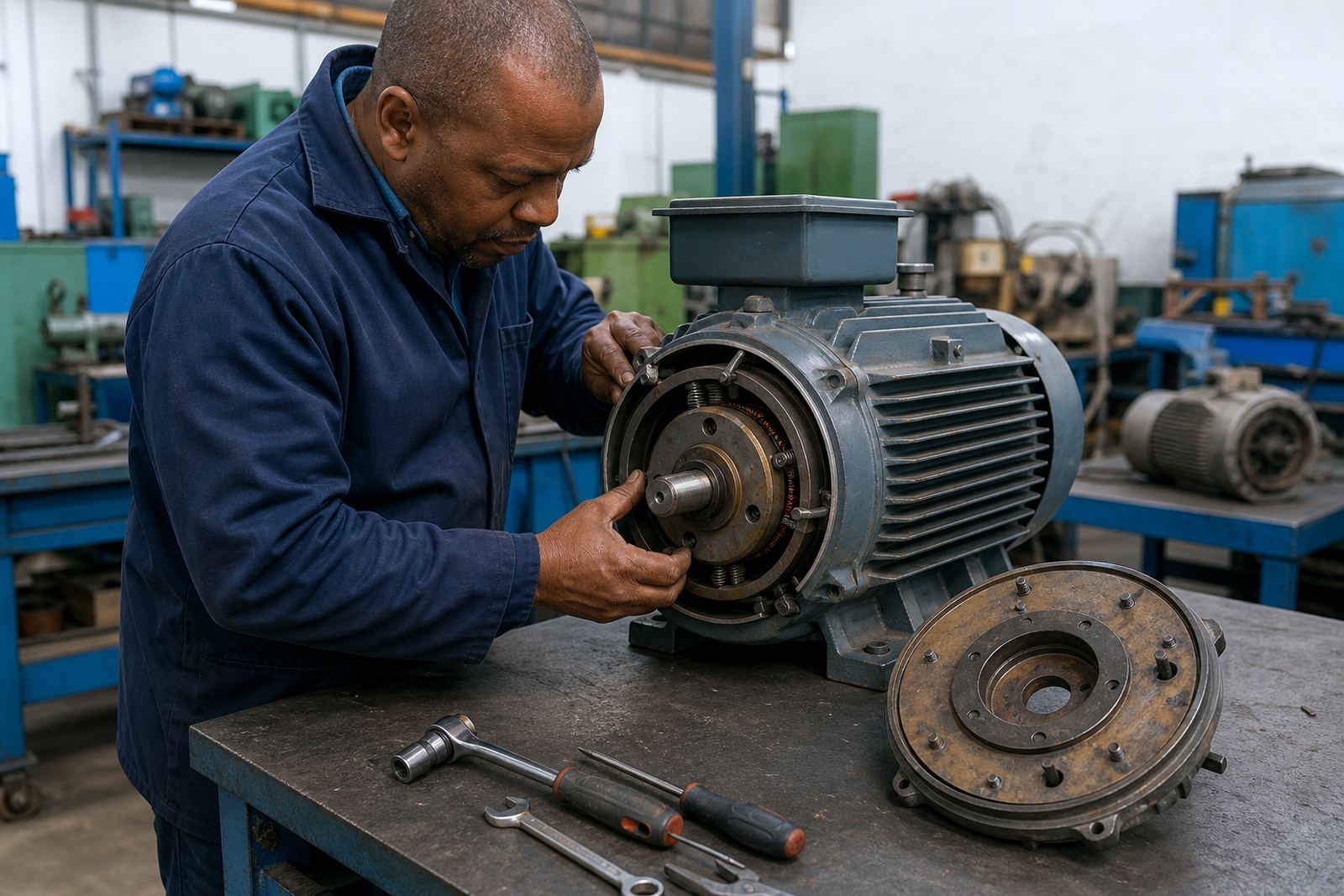
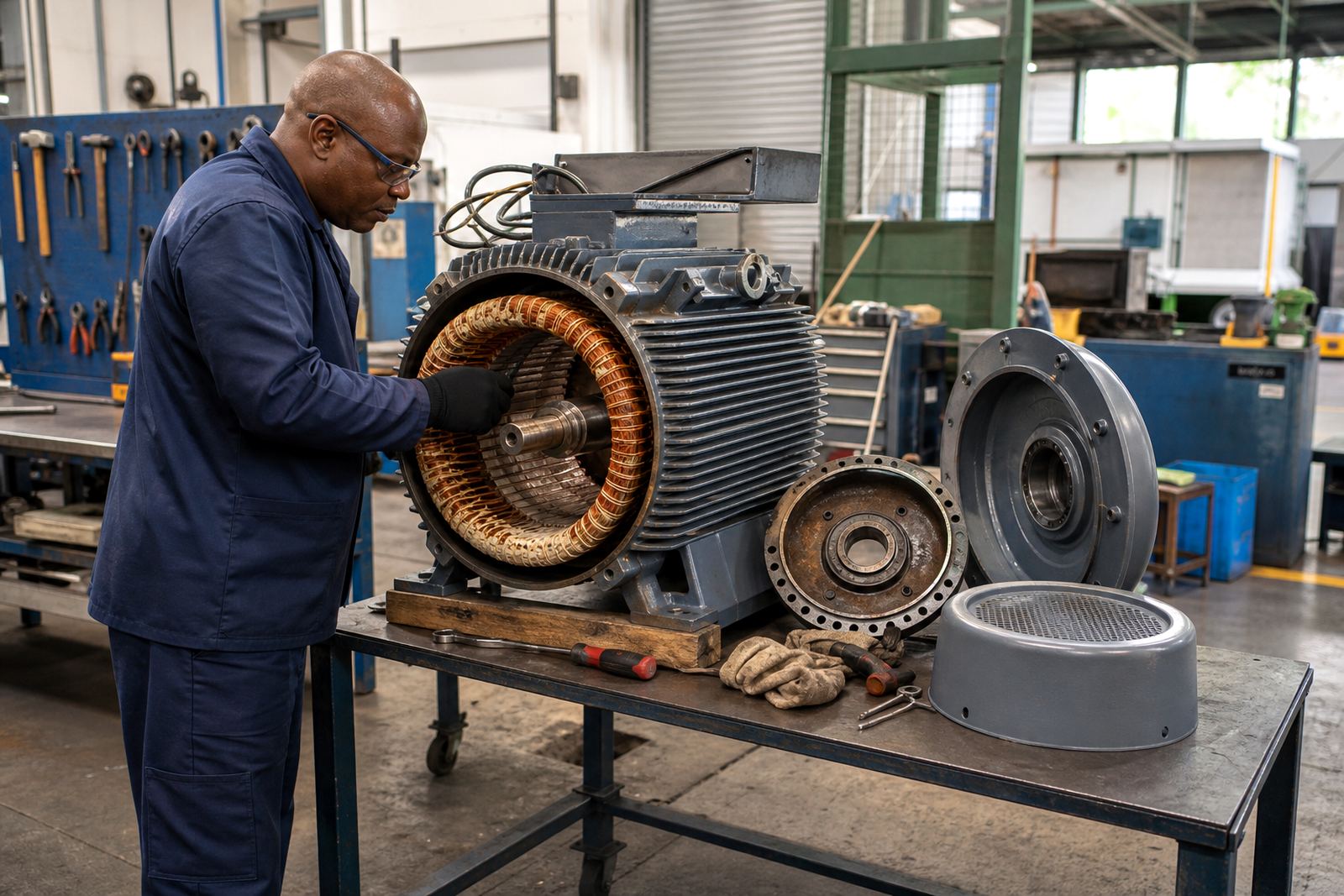
Locor carries out workshop repairs for agitator motors from small frame sizes to larger industrial units. We assess the winding condition, bearings, shaft play, cooling, terminal box condition and signs of overload before advising on the repair path. Where needed we rewind the motor, replace worn bearings and check the insulation system so the motor can return to service with the right electrical performance.
These motors are commonly found in standard three phase duties, often coupled to gearboxes or mounted directly on tanks and vessels. Some units are drip-proof, others are fully enclosed, and the correct repair depends on the environment, mounting and duty cycle. If the motor has been exposed to moisture, chemical vapours or repeated nuisance tripping, a proper strip-down gives a far clearer picture than a quick visual check.
What a proper agitator motor repair includes
A sound repair is more than changing a part. The motor should be cleaned, tested, measured and rebuilt to suit the application. Our workshop work typically includes fault finding, stripping, bearing checks, insulation testing, rewinding where required and final inspection before release. If the motor is linked to a variable speed drive, we can also inspect the drive and look for fault history that may point to supply or load issues.
- Fault finding on burnt windings, earth faults, phase imbalance and poor starting
- Bearing replacement and checks for shaft wear or end cover damage
- Insulation resistance testing and related electrical tests
- Drive inspection for overload, trips, cooling fan issues and parameter concerns
- Panel cleaning, cable checks and site reporting where a field review is needed
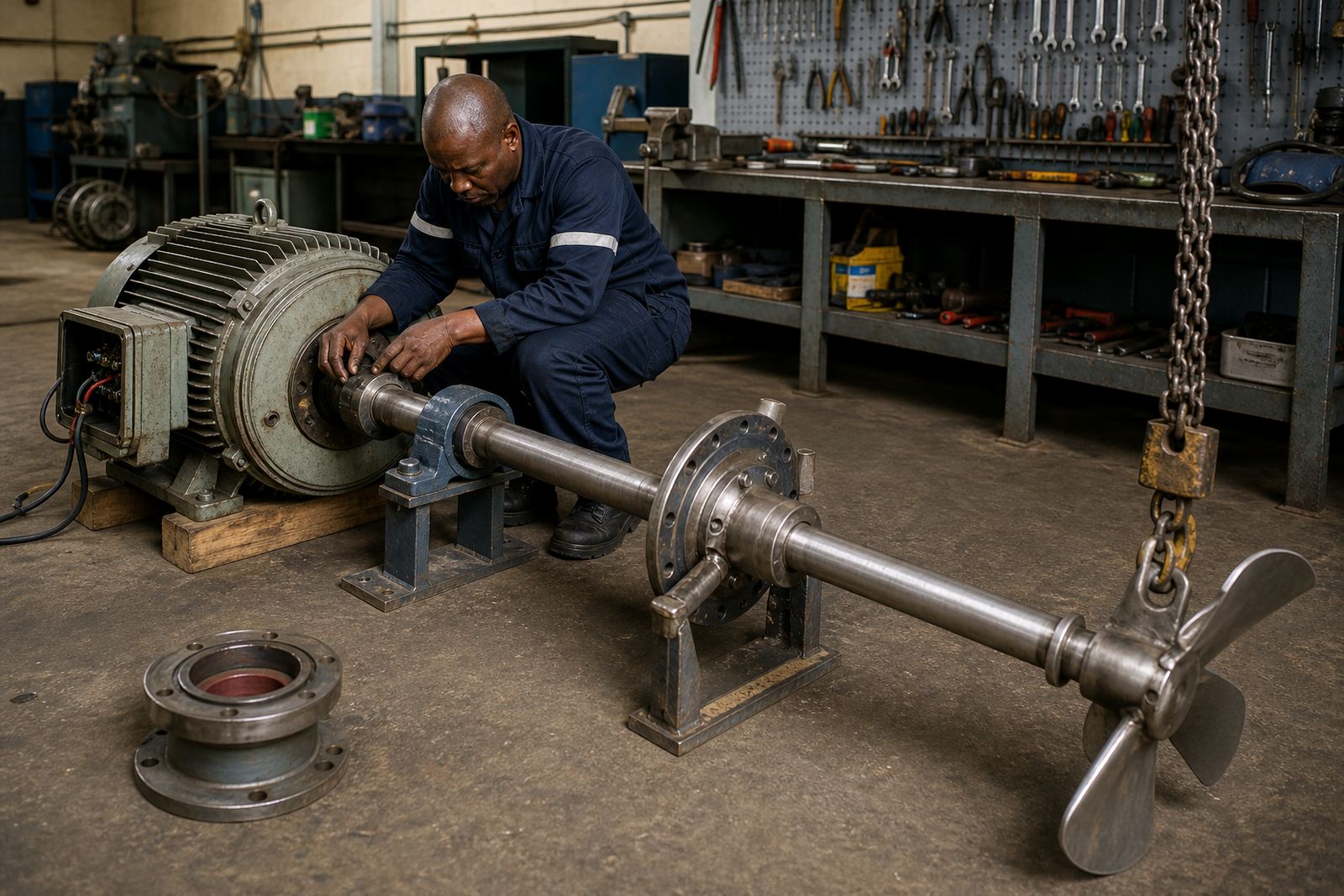
For agitated process equipment, we also pay attention to the mechanical side. Excess vibration can come from bent shafts, loose mounting feet, coupling misalignment or worn bearings. If the motor is repaired without checking those items, the same fault can come back after a short run.
Motor sizes, build options and common applications
Agitator motors are used in a wide range of frame sizes and power ratings. Some are compact units for small dosing tanks or pilot plants, while others are larger motors fitted to heavy mixers in batch plants and treatment works. The exact size depends on the tank volume, product density, mixing resistance and whether the unit runs continuously or only on demand.
Typical options include foot mounted, flange mounted and special shaft arrangements. Some motors are fitted with brake units, special seals or forced cooling for low speed operation. In coastal areas like Durban, moisture protection matters because humidity can affect terminals and windings if the enclosure is not maintained properly. In inland plants around Germiston, Boksburg and Kempton Park, dust and process residue are often the bigger issue.
- Power range depends on duty, from light mixer duties to high torque industrial service
- Standard supply is usually three phase, 380 V to 400 V systems are common
- Ingress protection and cooling must suit washdown, dust or chemical exposure
- Mounting style and shaft dimensions must match the gearbox or coupling
- Some units run direct on line while others use variable speed control
When you order a repair, it helps to provide the motor nameplate details, the process it serves and any fault history. If the motor failed after a power dip or load-shedding event, that detail can point us toward a drive issue, insulation breakdown or supply side problem.
Installation, power needs and site conditions
Agitator motor installation should be handled by qualified people only, with lockout procedures in place before any work starts. Electrical isolation, verification and safe mechanical handling are essential because these motors are often connected to tanks, gearboxes and moving shafts. A rushed changeover can damage the coupling or put staff at risk.
Most agitator motors need a stable three phase supply, correct overload protection and proper earthing. Where a variable speed drive is used, the drive setting must suit the motor nameplate data, cable length and process requirement. Poor power quality, loose terminations or undersized cables can cause overheating, nuisance trips and shortened insulation life.
In food and water treatment work, washdown routines and chemical cleaning can affect seals, gland entries and terminal boxes. In plants with regular power interruptions, it is worth checking how the motor restarts after an outage and whether the drive has any fault memories. Site conditions also matter: vibration, ambient heat and poor ventilation can all reduce motor life, especially where units run for long periods without a break.
Care and servicing that keep mixers working
Regular servicing helps reduce unplanned downtime. Agitator motors should be inspected for noise, heat, vibration and signs of leakage or contamination. A bearing that starts to rumble, a fan cover filled with dust or a terminal box showing moisture should be dealt with early before it turns into a bigger repair. Small issues can become expensive very fast on continuous process plants.
Good maintenance usually includes scheduled checks on alignment, coupling condition, insulation readings and motor temperature. If the mixer starts drawing more current than normal, it may be working against thicker product, a mechanical fault or a problem in the drive system. Keeping simple records helps teams spot changes in performance before failure happens.
- Check bearing noise and shaft movement during shutdowns
- Keep cooling fins, fan covers and terminal boxes clean and dry
- Record current draw and compare it with normal running values
- Inspect cables, glands and earthing points after washdowns
- Review alignment after any motor or gearbox removal
For plants across Johannesburg, Pretoria and Vereeniging, planned shutdown work often gives the best chance to service agitator motors properly. That way the repair can be completed without pressure, and any related panel or cable problems can be corrected at the same time.
What to check before sending in a repair
Before ordering agitator motor repairs, gather the details that help identify the fault and match the rebuild correctly. The more accurate the information, the easier it is to assess the motor and quote the right repair scope. If you are not sure of a detail, a clear photo of the nameplate and mounting arrangement can help.
- Motor nameplate data, including kW, volts, amps, speed and frame size
- How the motor is mounted, and whether it drives directly or through a gearbox
- Application details, such as chemical mixing, food processing or water treatment
- Fault symptoms, for example tripping, overheating, noise, vibration or no start
- Any recent events like flooding, washdown exposure, power dips or overloads
- Whether the unit runs on a variable speed drive or direct on line
If a motor has failed repeatedly, it is worth checking the surrounding equipment too. A bearing issue, misalignment or drive fault may be the real cause. Locor supports plants and workshops from Germiston to Boksburg, Kempton Park and further afield, with workshop repairs and field support where needed. Electrical work must always be done by qualified people using proper lockout procedures, especially around process vessels and moving machinery.
Why process plants call Locor
Locor has been serving industrial clients from Germiston since 2007, with a team led by Sibusiso Mthembu and supported by experienced specialists in winding, drive repair and site coordination. That means one point of contact for the repair, practical advice on the likely cause and clear follow-up on what was found. We work with plants and workshops across South Africa, including Johannesburg, Ekurhuleni, Pretoria, Vereeniging and Durban.
For agitator motors, the aim is simple: return dependable equipment to service with the least disruption possible. Whether the issue is a worn bearing, damaged winding, insulation breakdown or a variable speed drive fault, we assess the unit carefully and repair it in line with the application. If your mixer has started to behave differently, it is best to have it checked before the next shutdown becomes an emergency.
Key facts
| Service type | Workshop repairs for industrial agitator motors |
|---|---|
| Motor sizes | Small frame motors to larger process-duty units |
| Common supply | Three phase 380 V to 400 V systems |
| Typical work | Rewinding, bearing replacement, insulation testing, drive repair |
| Applications | Chemical, food processing and water treatment |
| Coverage | Germiston, Johannesburg, Ekurhuleni, Pretoria, Vereeniging and Durban |