

What fan motor repair covers
Fan motor repair is more than swapping a part and hoping for the best. It usually starts with fault finding to work out whether the issue is electrical, mechanical or a mix of both. On many units the problem comes from worn bearings, contaminated windings, failed insulation, loose connections or damage caused by continuous vibration. In some cases the fan itself has been running out of balance and the motor has paid the price.
We repair fan motors used on extraction systems, cooling equipment, process ventilation and air movement systems in factories, workshops and service buildings. That can include single phase and three phase motors, direct drive units and motors paired with belts or pulleys. The right fix depends on the motor size, frame, duty cycle and the conditions it works in. A motor running in a warm plant room with fine dust needs different attention from one in a coastal site where humidity and corrosion are part of daily life.
Electrical work must always be done by qualified people, with proper lockout and isolation procedures before any removal or testing starts. That includes verifying that the supply is dead, isolating stored energy, and making sure the fan cannot start unexpectedly while maintenance is underway.
Typical repairs for fan motors
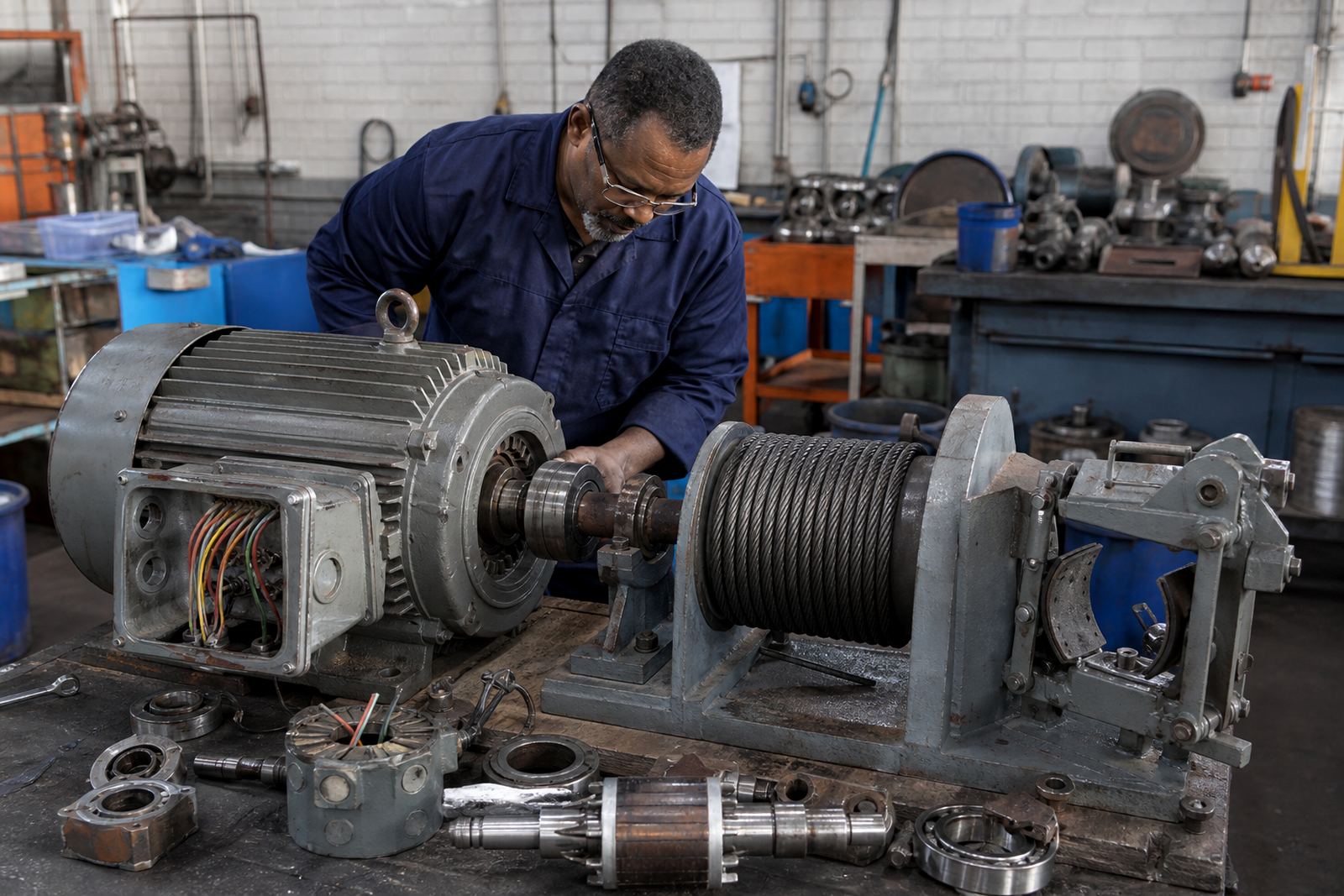
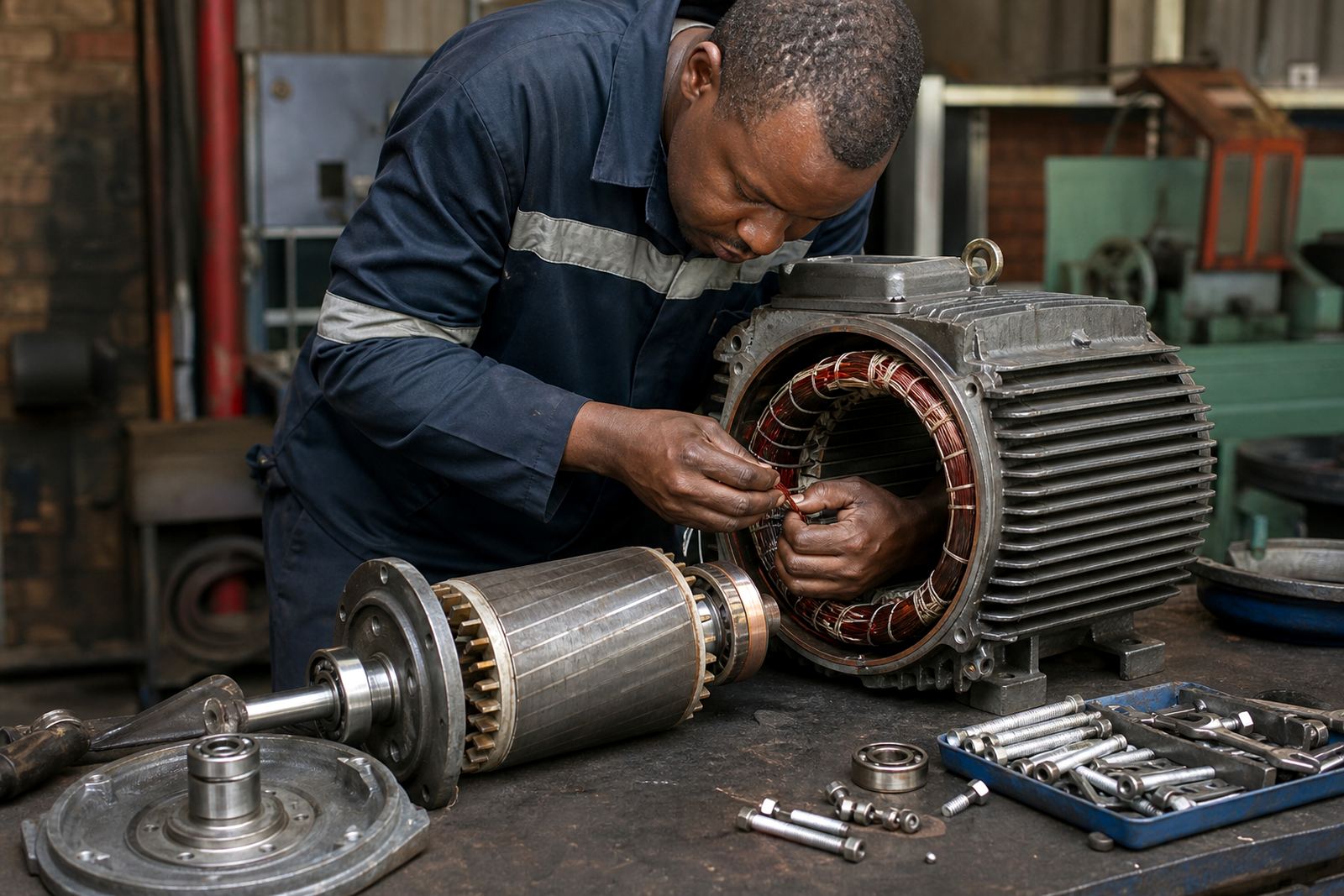
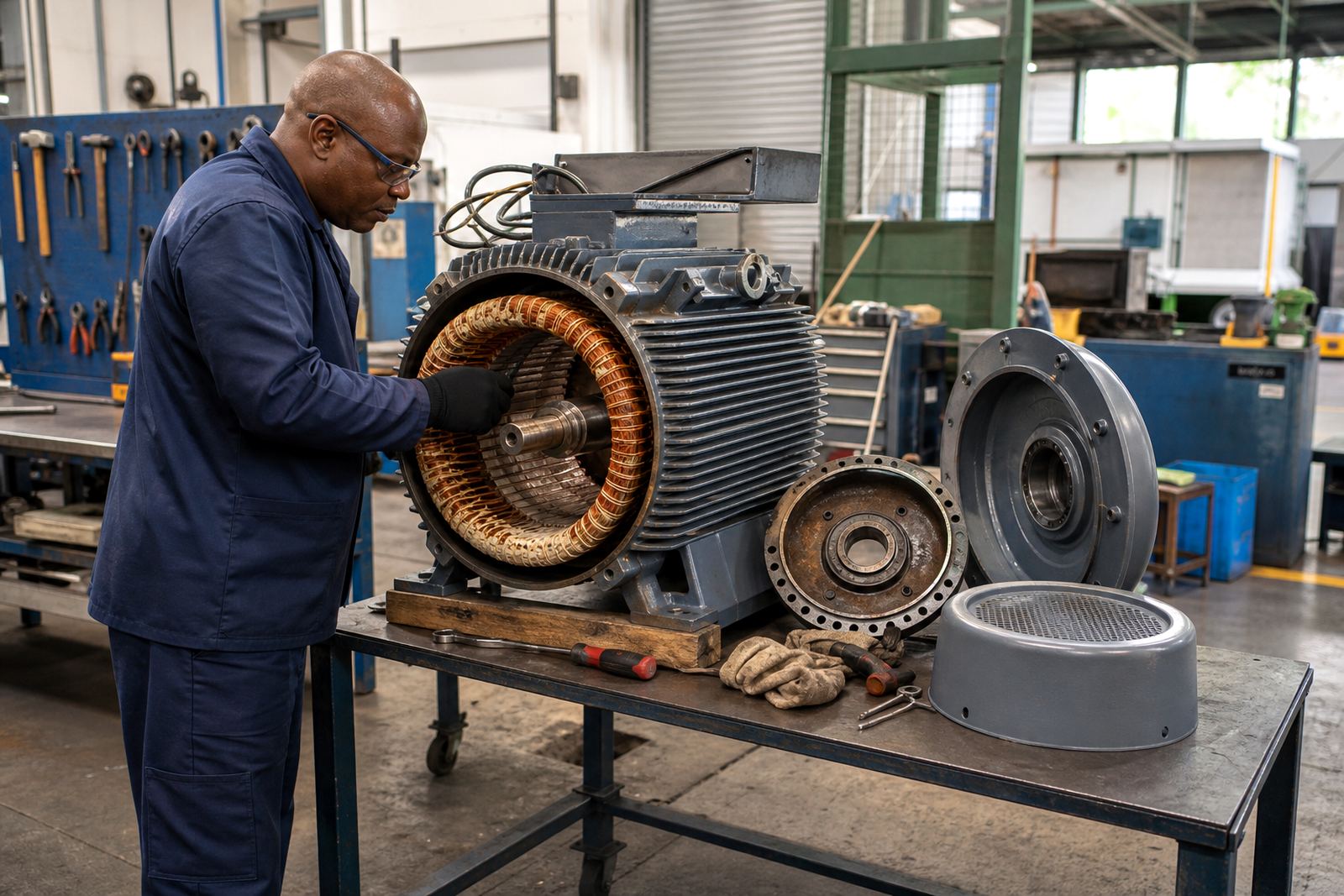
Locor handles the repair work needed to get a fan motor back into service safely. Where the windings have overheated or show breakdown, we can rewind the motor using suitable wire size, insulation materials and winding patterns for the application. If bearings are noisy, rough or have play, they are checked and replaced before the motor is returned to duty. We also inspect shafts, end shields, housings and cooling fans for wear or damage.
- Rewinding burnt or shorted stator windings
- Bearing replacement and lubrication checks
- Insulation resistance testing and continuity checks
- Cleaning dust, grease and conductive contamination from the motor frame
- Checking rotor condition, shaft alignment and fan balance
- Testing terminal blocks, leads and cable entries
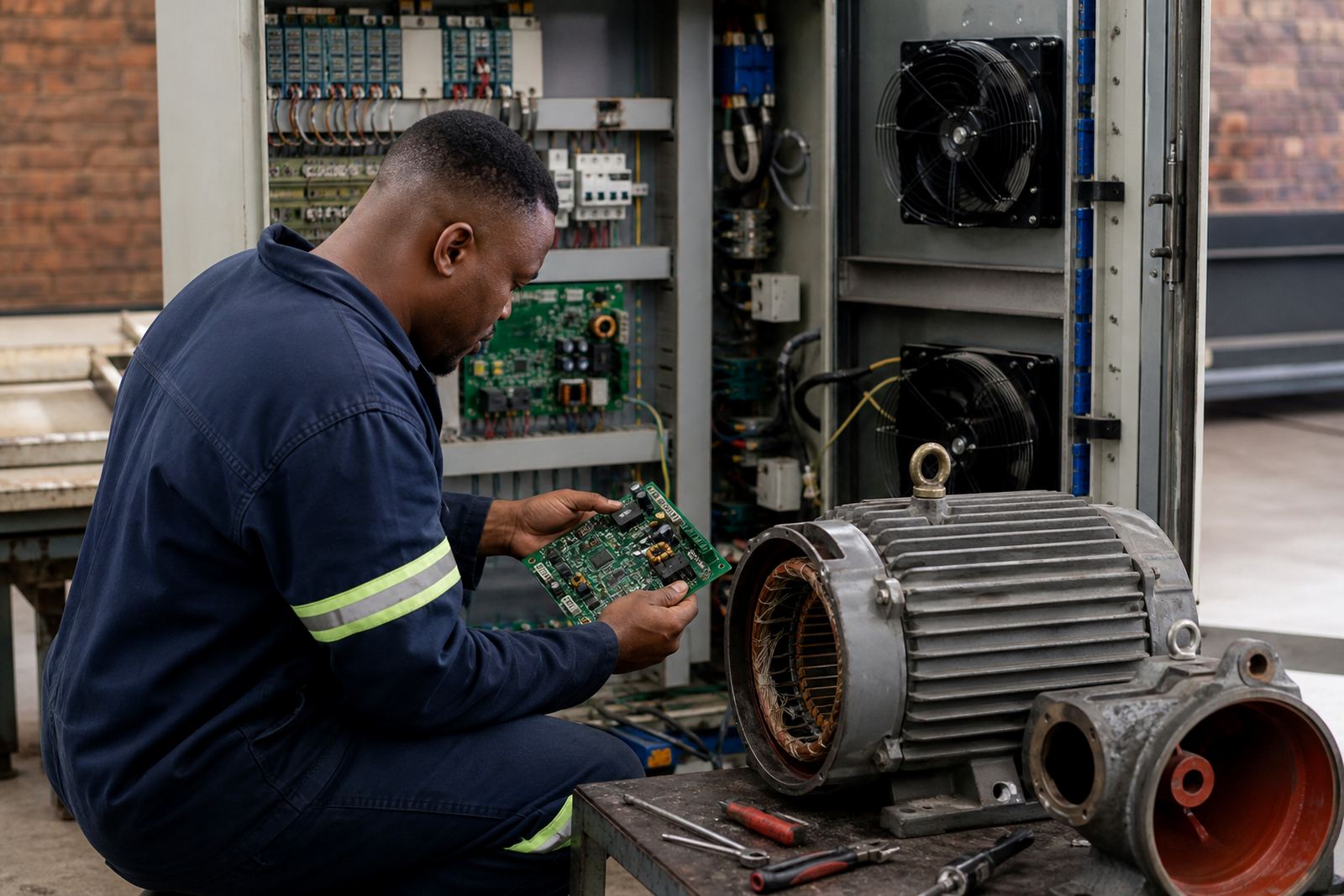
Where a fan motor is linked to a variable speed drive, we also look at the drive side of the system. A motor can be perfectly serviceable and still trip if the drive settings, cabling or control signals are wrong. That is why the motor and the control equipment should be assessed together when the fault is not obvious.
Sizes, options and motor types we see
Fan motors come in a wide range of sizes, from small fractional horsepower units to larger industrial motors used on air handling and extraction plant. The frame size, mounting type and duty rating matter just as much as the kilowatt rating. A compact motor on a workshop extractor has different cooling and vibration needs from a larger motor in a manufacturing line or boiler room.
We work on common fan motor arrangements including foot mounted, flange mounted and special bracketed units. Options may include standard speed motors, multi speed motors, motors with external cooling, and units fitted for frequent start-stop duty. In some sites the motor is paired with belts and pulleys, while in others it is direct coupled to the fan. If the fan blade or impeller is damaged or out of balance, that needs to be sorted too because the motor will not last if the root cause stays in place.
When a customer sends an enquiry, it helps to share the motor nameplate details, the fan size, the application and the symptoms. Even a small clue, like tripping only after warm-up or a bearing howl at start-up can save time during diagnosis.
Where fan motor repairs suit your operation
Fan motors are used wherever air movement matters, from plant ventilation and dust extraction to cooling towers, drying systems and general workshop extraction. In Germiston, Boksburg and Kempton Park, these motors often run in factories where dust, weld smoke and metal fines can work into bearings and windings. In Pretoria and Johannesburg, many units are used in commercial buildings, processing plants and maintenance workshops where reliable airflow is needed every day.
These repairs also suit sites that face load-shedding and repeated restarts. When power returns, a motor can take a hard hit if the system starts against load or if the controls are not set correctly. We check the full condition of the motor and related components so the repair is practical for the site, not just neat on the bench.
- Factories and production plants
- Workshops and maintenance facilities
- Extraction and ventilation systems
- Cooling and drying equipment
- Sites with high dust, heat or vibration
- Coastal and inland facilities affected by humidity or fine contamination
Installation, power and site requirements
Proper installation matters as much as the repair itself. Fan motors must match the supply voltage, phase, frequency and starting method used on site. In South Africa that often means checking whether the motor is 230 V single phase or 400 V three phase, and whether it is started direct on line, through a starter, or through a variable speed drive. If the supply is wrong, the motor can overheat, vibrate or fail early.
Mechanical fit also counts. Mounting feet, flange holes, shaft height, rotation direction and coupling alignment must all be checked before commissioning. A motor that is physically forced into place will not run for long. Cable sizing, overload settings, protection devices and earthing all need to be right too, especially in industrial settings where the equipment may run for long shifts and under continuous load. We also look at local conditions such as dust ingress, moisture, washdown exposure and the need for panel cleaning or cable checks if the motor is controlled from a nearby panel.
Qualified electrical people should complete the installation, with lockout procedures in place before any connection or test run. That is basic site discipline and it protects both the team and the equipment.
Care, servicing and what to check before you order
Fan motors last longer when they are kept clean, aligned and properly loaded. Regular servicing should include bearing checks, insulation testing, inspection of terminals and a look at the fan blades or impeller for dirt build-up and imbalance. If a motor runs hotter than usual, makes a new noise or starts tripping, do not keep resetting it and hoping for the best. That is usually how a small issue becomes a full rewind or shaft repair.
Before you place an order or send a motor in, please check the nameplate and note the following details. If you do not have everything, send what you can and we will work through the rest with you.
- Motor kilowatt or horsepower rating
- Supply voltage, phase and frequency
- Frame size and mounting type
- Rotation direction and fan application
- Fault symptoms, including noise, heat or tripping
- Any drive, starter or control gear connected to the motor
For clients across Johannesburg, Ekurhuleni, Pretoria, Vereeniging and Durban, clear information at the start helps us plan the repair properly. It also makes shutdown planning, spares assessment and site reporting easier when the job needs to be handled around production time.
Key facts
| Motor types | Single phase and three phase fan motors, direct drive and belt driven units |
|---|---|
| Common supply | 230 V or 400 V, depending on the motor nameplate and site arrangement |
| Repair methods | Fault finding, rewinding, bearing replacement, insulation testing and terminal inspection |
| Typical mounting | Foot mounted, flange mounted and bracketed fan motor arrangements |
| Best suited environments | Dusty plants, warm workshops, humid sites and vibration prone installations |
| Service areas | Germiston, Johannesburg, Ekurhuleni, Pretoria, Vereeniging, Durban, Boksburg and Kempton Park |