




Help For Motors That Need Attention
Locor supports electric motor rewinding, bearing replacement and related fault finding for AC and DC motors used in plants, workshops and production lines. The aim is to identify whether the issue is electrical, mechanical or both, so the repair is done properly first time and the machine is not put back into service with a hidden problem.
For many sites in Gauteng and along the coast, the first step is a proper inspection of the motor, terminals, bearings and winding condition. Dust, heat, vibration and moisture can all affect performance, and on coastal sites humidity can also contribute to insulation breakdown if a motor is left standing too long.
What Happens During A Motor Repair
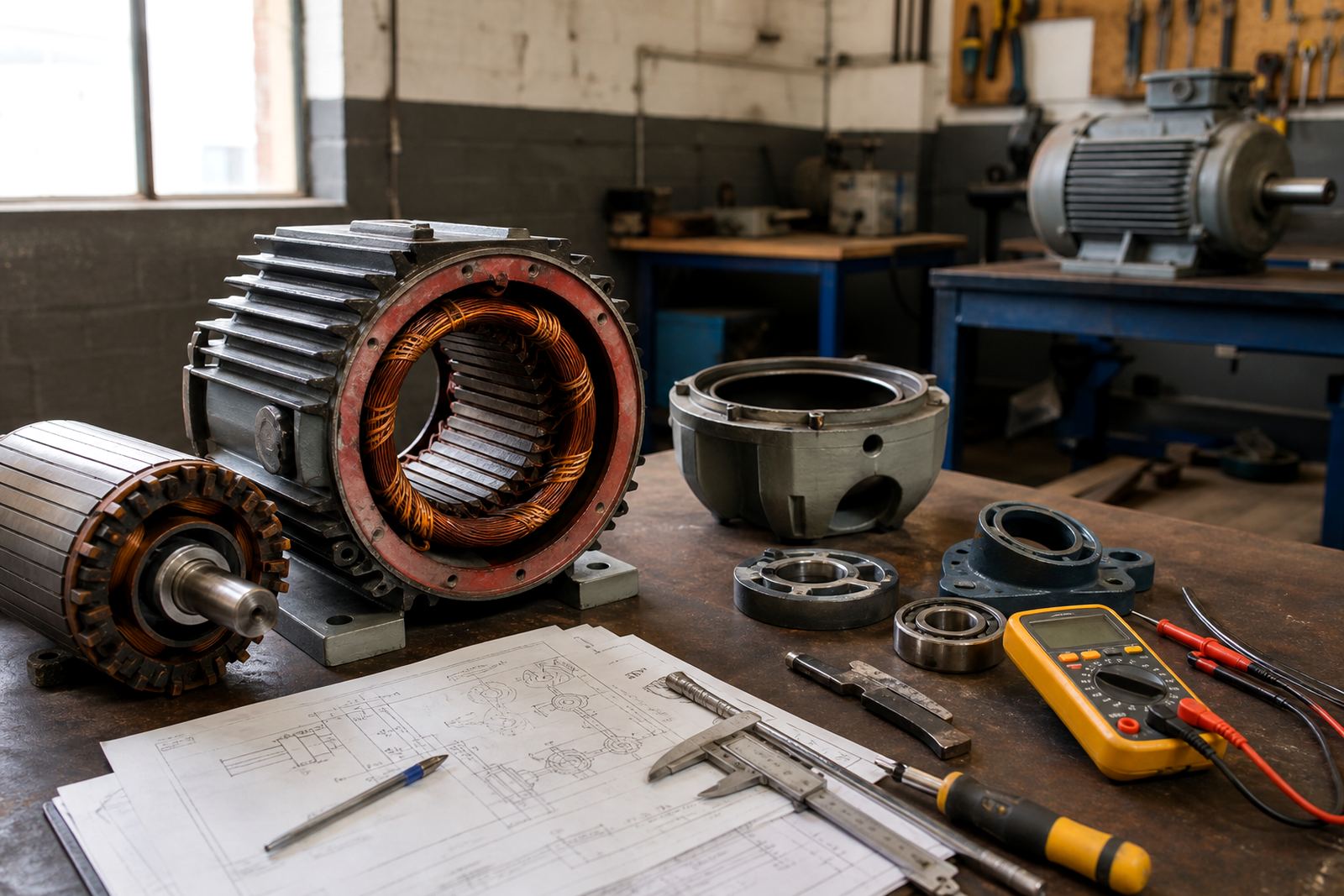
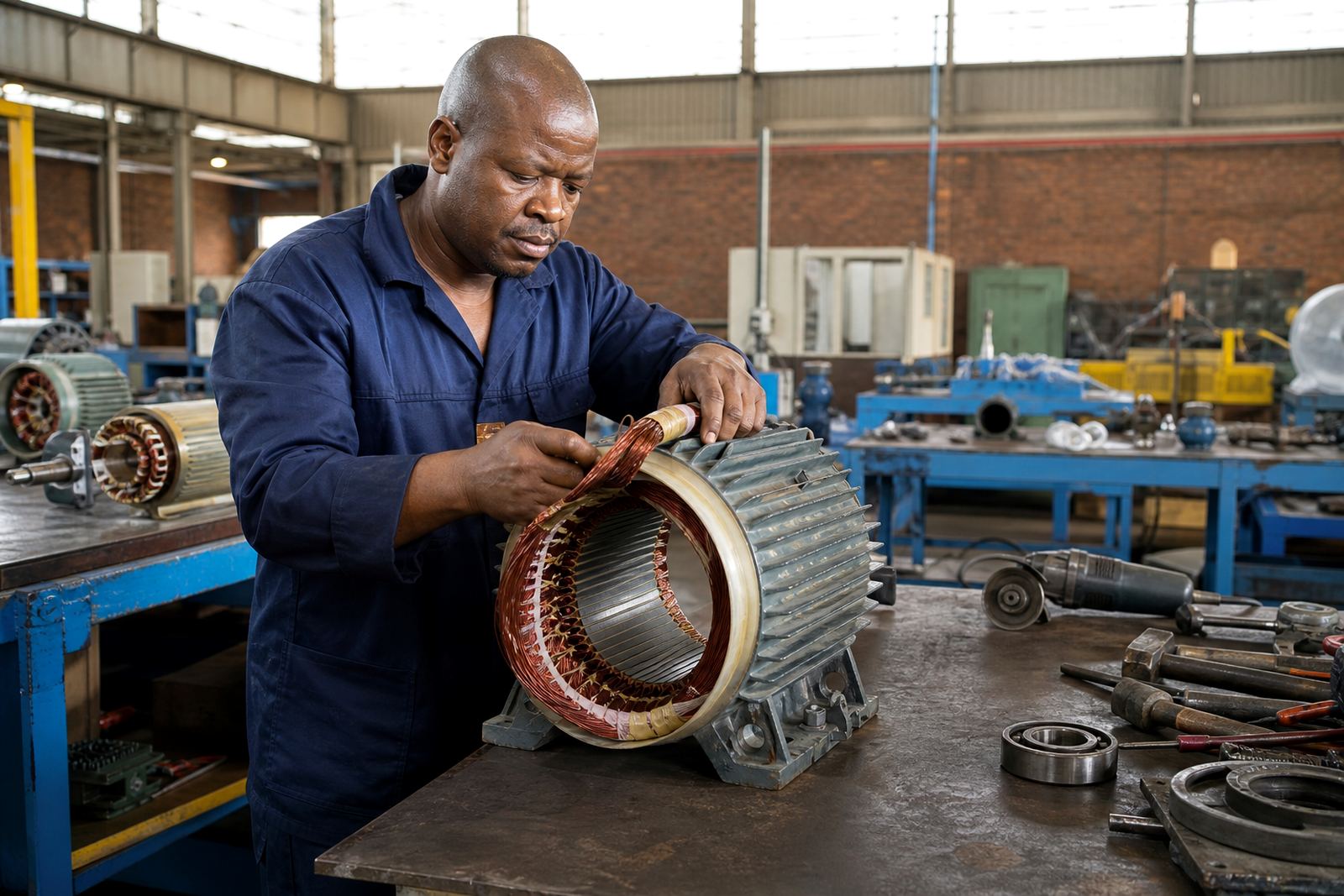
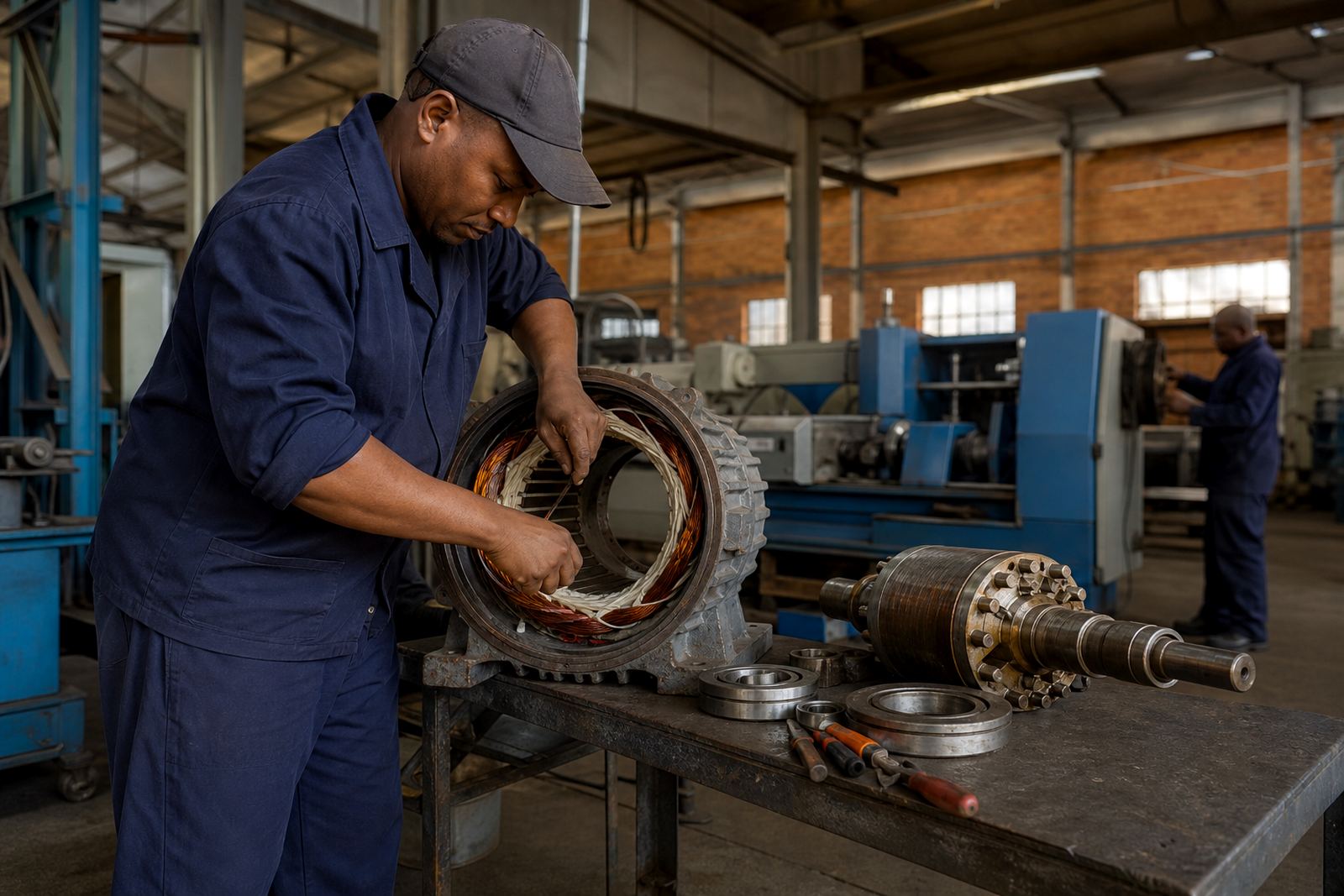
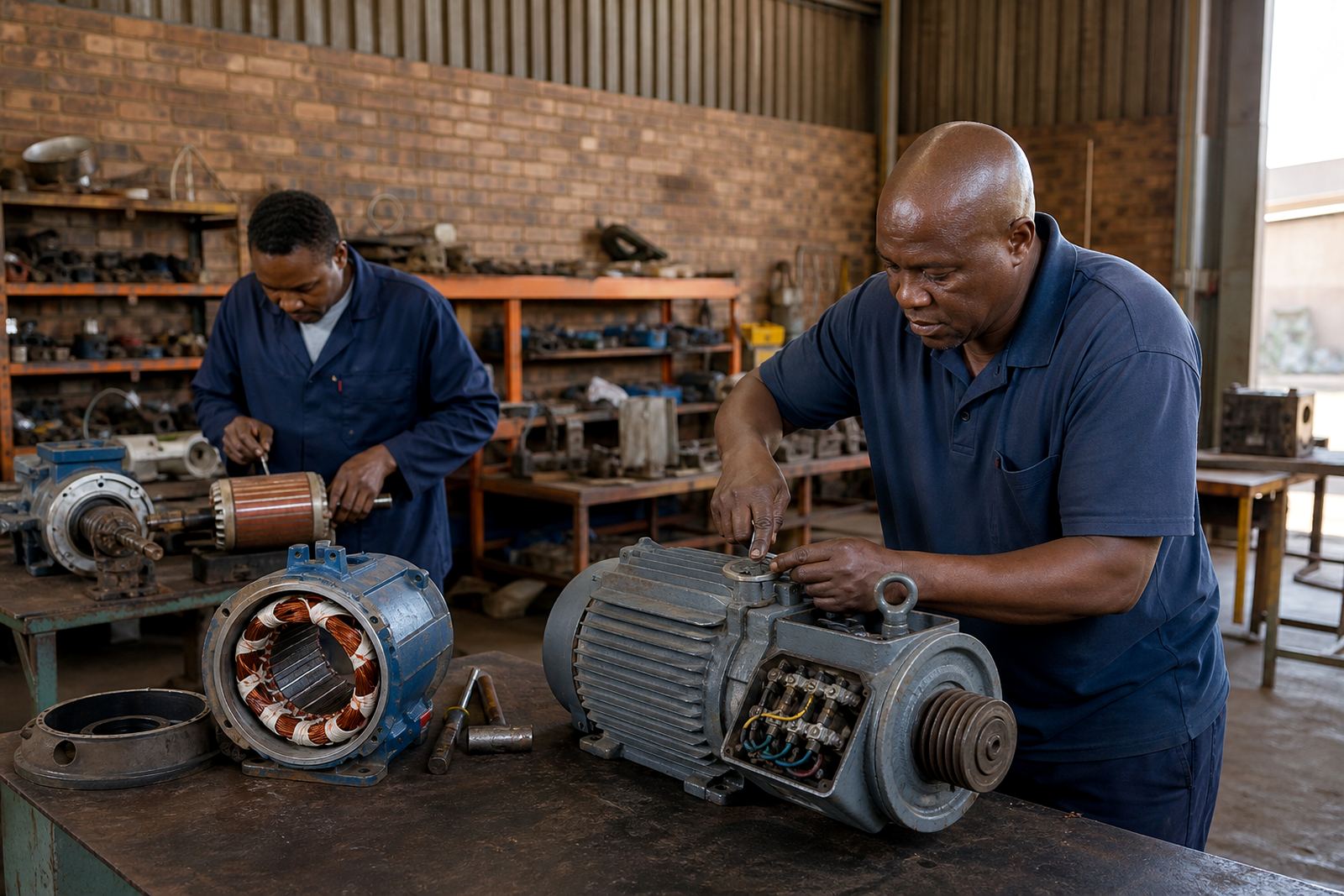
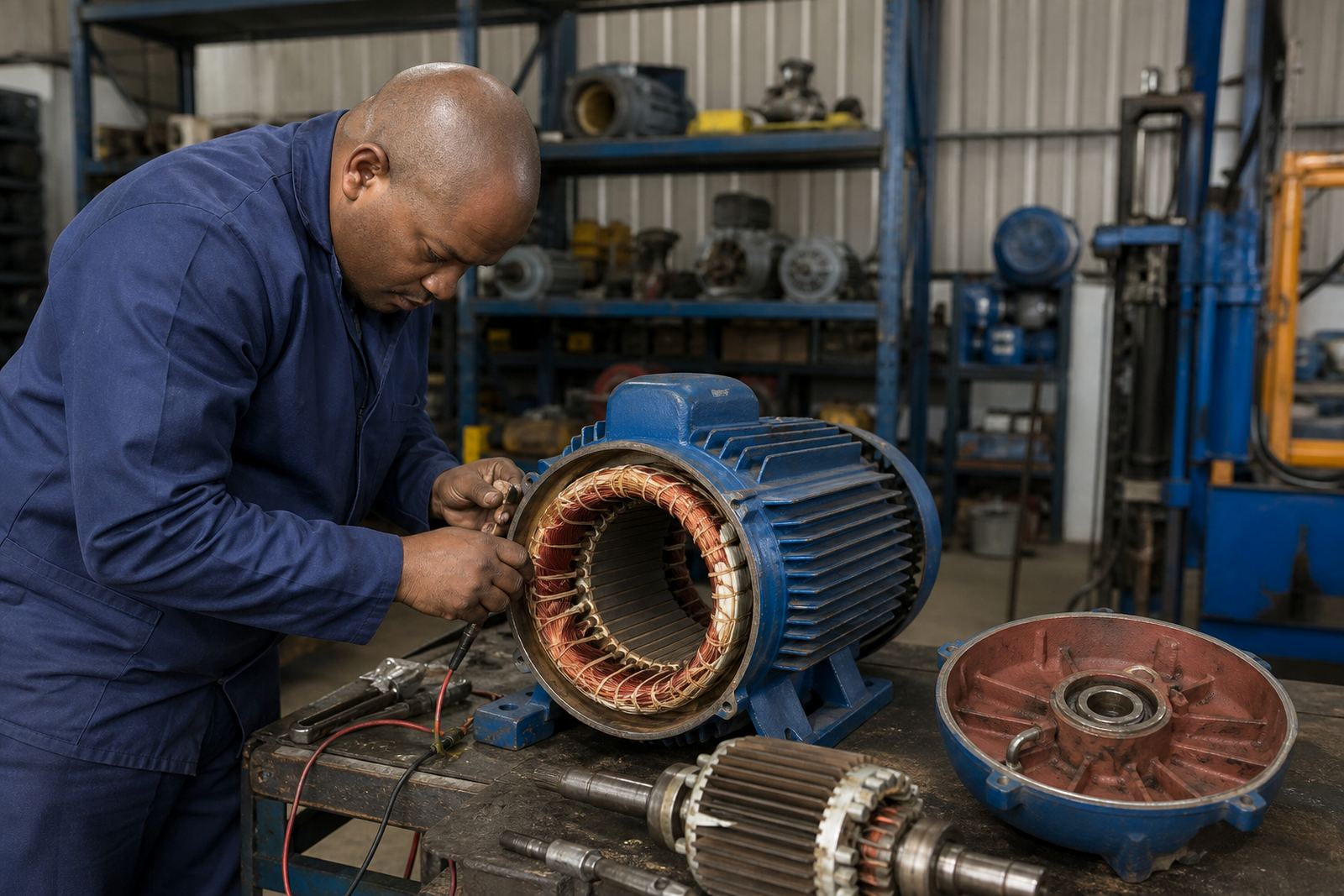
Motor work normally starts with fault finding and strip down, then measuring and checking the winding, frame, shaft and bearings. If the winding is damaged, the coil data is assessed and the motor is rewound to suit the original application as closely as possible. This is not a casual job, it needs experienced winding work and correct testing before reassembly.
- Motor removal and basic condition checks
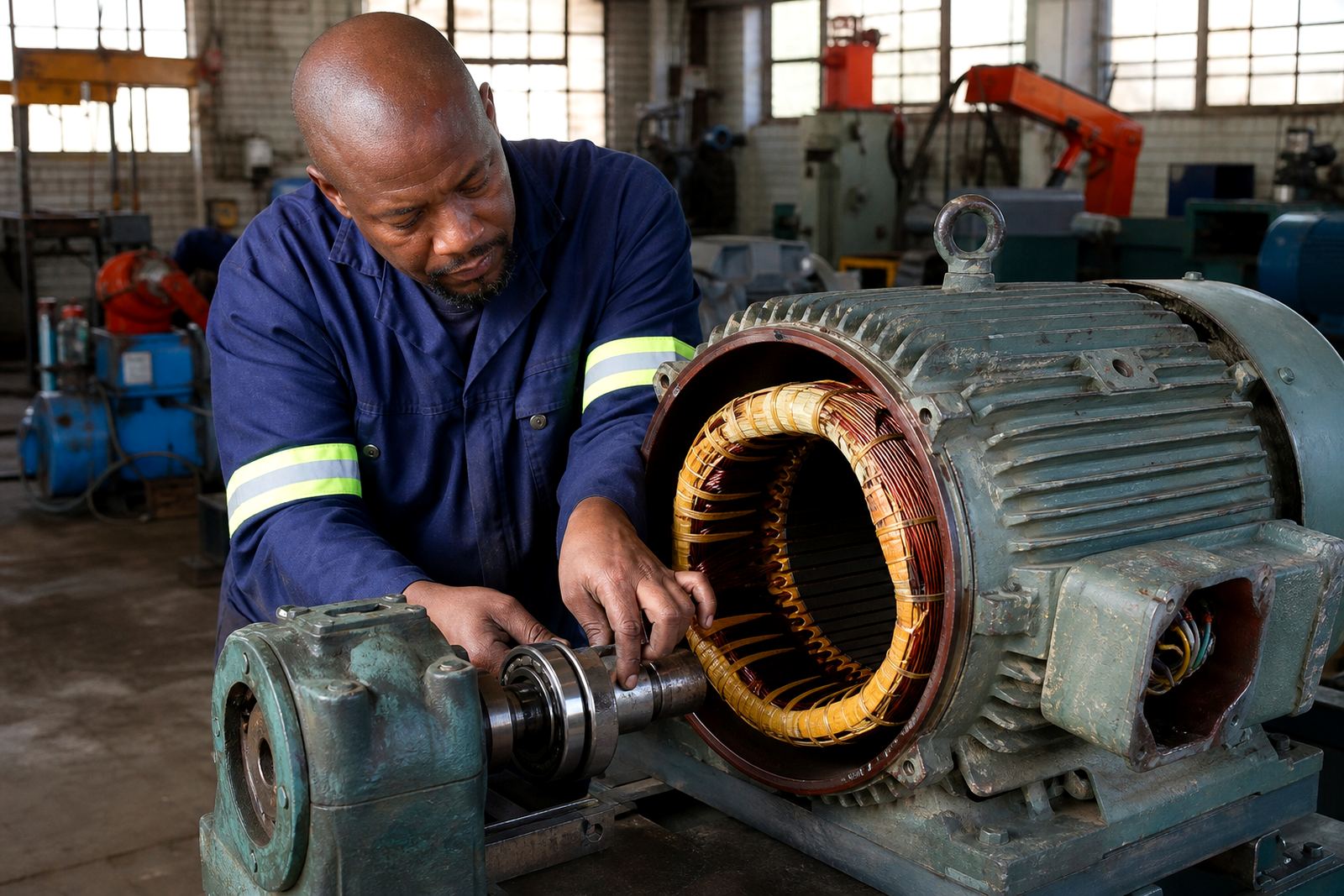
- Bearing checks and replacement where needed
- Insulation testing before and after repair
- Alignment checks before recommissioning
- Site reporting so the next step is clear
Variable Speed Drive Repair And Inspection
Variable speed drives need careful inspection when a machine trips, runs erratically or shows signs of control damage. Locor handles drive inspection and repair for sites that rely on stable motor control through long shifts and load-shedding recovery. A drive fault can point to power issues, cooling problems, dirty panels or cable damage, so the unit and its surroundings must both be checked.
Panel cleaning, cable checks and spares assessment are part of the support process where needed. If a drive is being refitted after a shutdown, commissioning support helps confirm settings, connections and basic operation before the plant is handed back. A loose terminal or burnt connection can cause repeat failure, so it pays to check the small things as well.
Safety Comes First On Every Job
Electrical work must be done by qualified people only, with lockout procedures in place before any motor or drive is touched. That includes isolating supply, proving dead, and making sure stored energy is removed before testing or removal starts. On live sites this is especially important during maintenance windows and shutdowns where several teams may be working at once.
For field jobs in Germiston, Boksburg, Kempton Park and Pretoria, clear communication on access, permits and isolation points saves time and reduces risk. If the site has municipal or plant rules for after-hours work, confined spaces or hot work, those details should be shared before the team arrives.
Shutdown Planning And Site Coordination
Well planned support keeps downtime under control. Locor assists with shutdown planning, motor removal and site reporting so maintenance teams know what has been inspected, what can be repaired on site, and what has to come back to the workshop. This matters on busy production sites where every hour counts and a missed detail can hold up the restart.
- Plan access, lifting and removal routes
- Confirm isolation points and permits
- Assess whether a spare motor is needed
- Coordinate reinstallation and alignment
- Record findings for maintenance teams
Where We Support Clients
Locor is based in Germiston, Gauteng and supports clients across Johannesburg, Ekurhuleni, Pretoria, Vereeniging and Durban, including Boksburg and Kempton Park. The work spans industrial sites, workshops, service centres and plant rooms where reliable motors and drives matter day after day.
Whether the issue is a noisy bearing, an insulation failure, a tripping drive or a motor that will not start, the right response is to inspect, test and repair in a controlled way. That approach helps extend service life and keeps equipment running more consistently, even when conditions are tough and the schedule is tight.