What crusher motor repair covers on site and in workshop
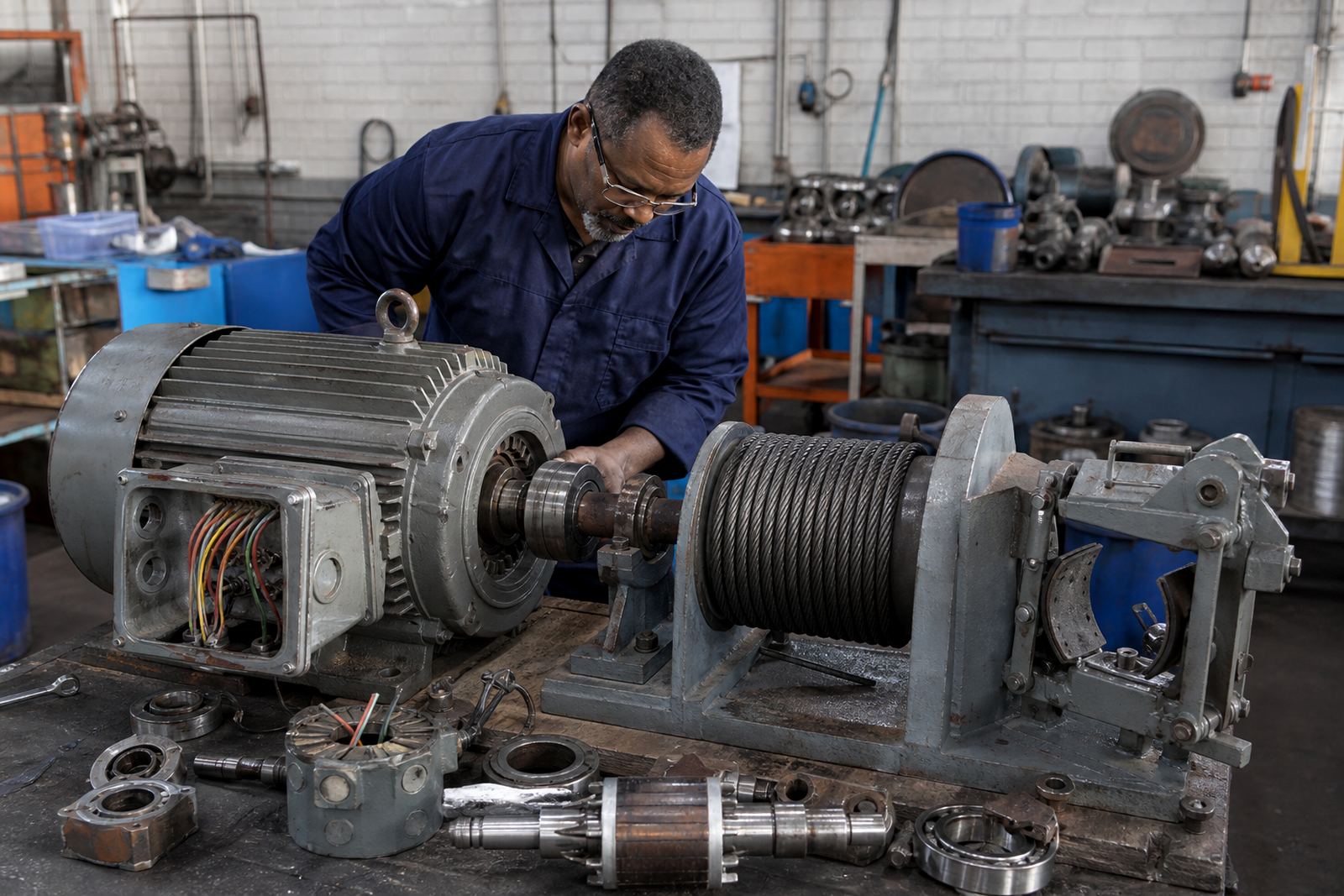
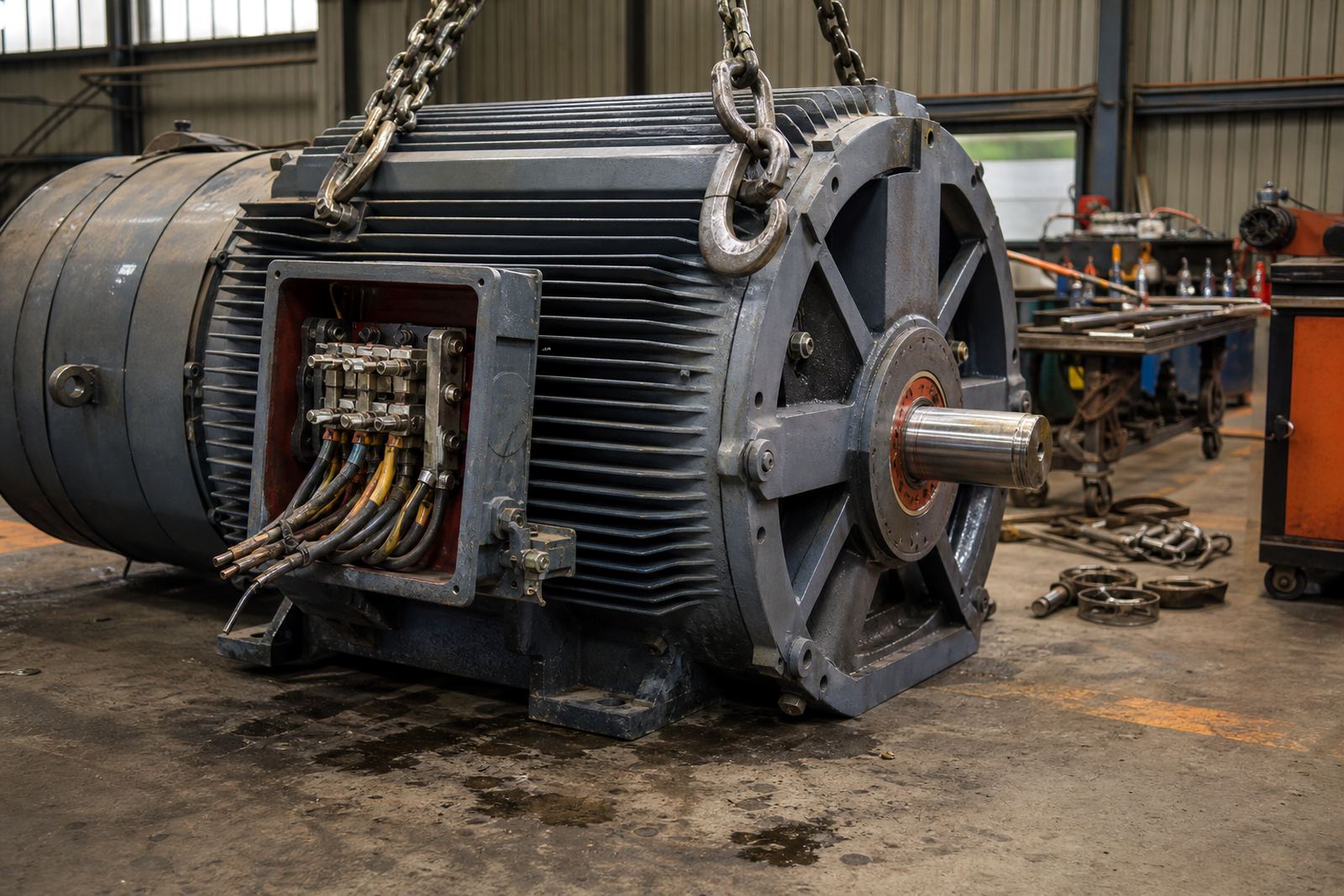
Crusher motor repair is more than changing a part and sending the unit back. These motors work in hard conditions with high starting torque, vibration, dust, stone fines and frequent overloads, so the repair process must check the full electrical and mechanical picture. At Locor, that can include fault finding, motor removal, bearing checks, insulation testing, rewinding, alignment checks and commissioning support once the motor is back in place.
A crusher motor may show signs such as tripping on start, running hot, low torque, noisy bearings, burning smell, moisture damage or a drive fault that keeps coming back. In some cases the fault starts in the winding. In other cases the motor is sound but the bearings have failed, the coupling is out of line or the variable speed drive is not delivering the right output. Each of these faults needs a different repair approach, not a guess.
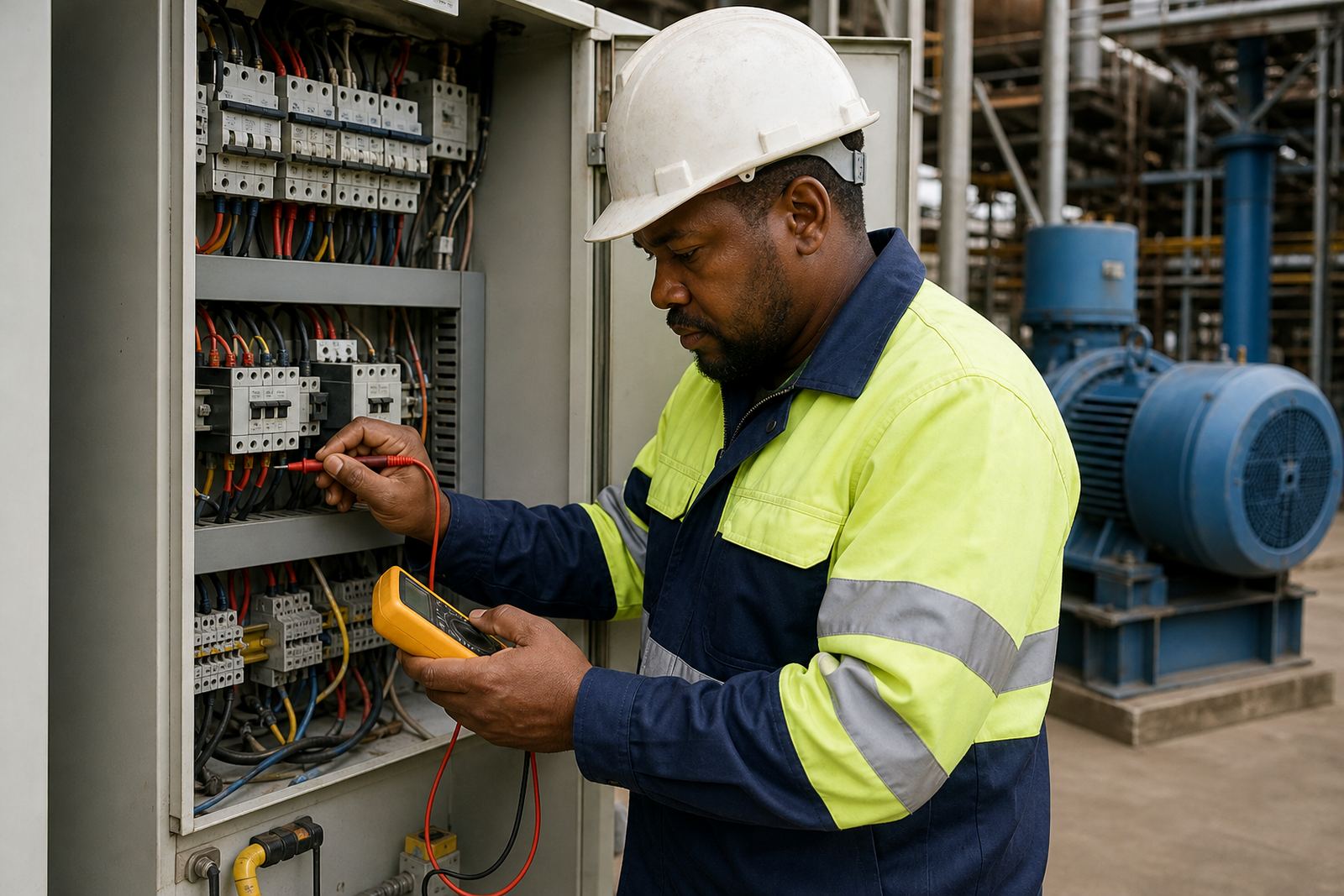
Crusher plant work should always be done by qualified people, with lockout procedures in place before any inspection or removal. That matters for motor terminals, control panels, moving shafts and stored energy in the drive train. If a site is in Johannesburg, Ekurhuleni, Pretoria or further afield, the same basic rule applies: isolate, prove dead and make the area safe before work starts.
Rewinding, bearings and insulation checks for severe duty motors
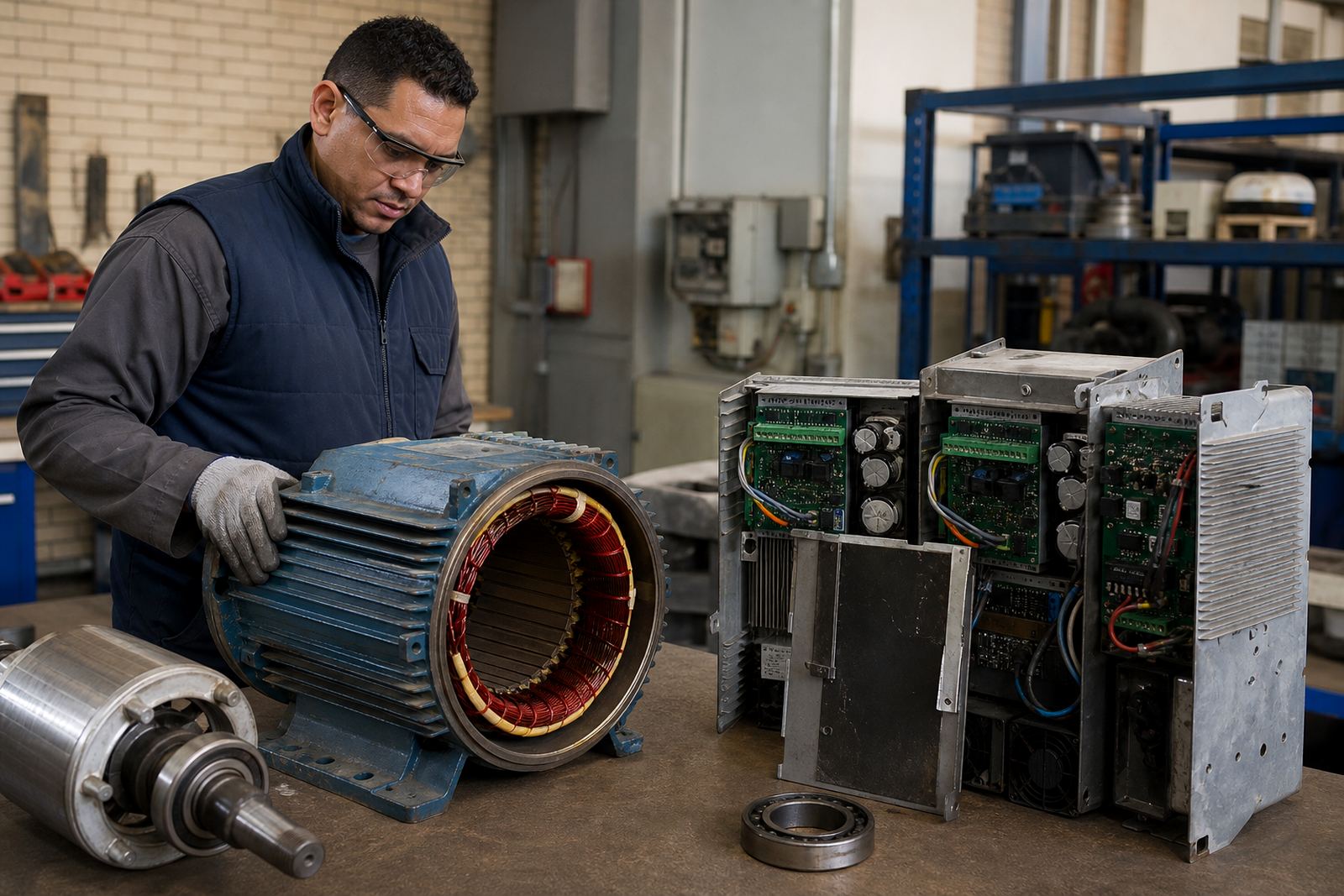
For motors exposed to dust and shock load, rewinding often starts with a close inspection of the old winding pattern, slot condition, lead connections and signs of heat or contamination. The replacement winding must match the motor design, voltage and duty so the unit can handle crusher starting conditions again. Where needed, bearing replacement is done at the same time, since worn bearings can cause vibration that damages a fresh rewind.
Insulation testing is a key part of the repair. We check winding resistance, insulation resistance and earth fault signs to help confirm whether the motor is fit for service. If the motor has been washed down, stood idle or worked in a humid coastal area like Durban, moisture can affect insulation and surface contamination can create intermittent faults. That is why drying, cleaning and retesting are part of a proper repair process.
- Stator rewind for low voltage and medium duty industrial motors
- Bearing replacement and shaft end inspection
- Insulation resistance testing and fault tracing
- Terminal box cleaning and lead identification
- Mechanical checks for fan covers, end shields and mounting feet
Sizes and options for crusher plants, screens and conveyor drives
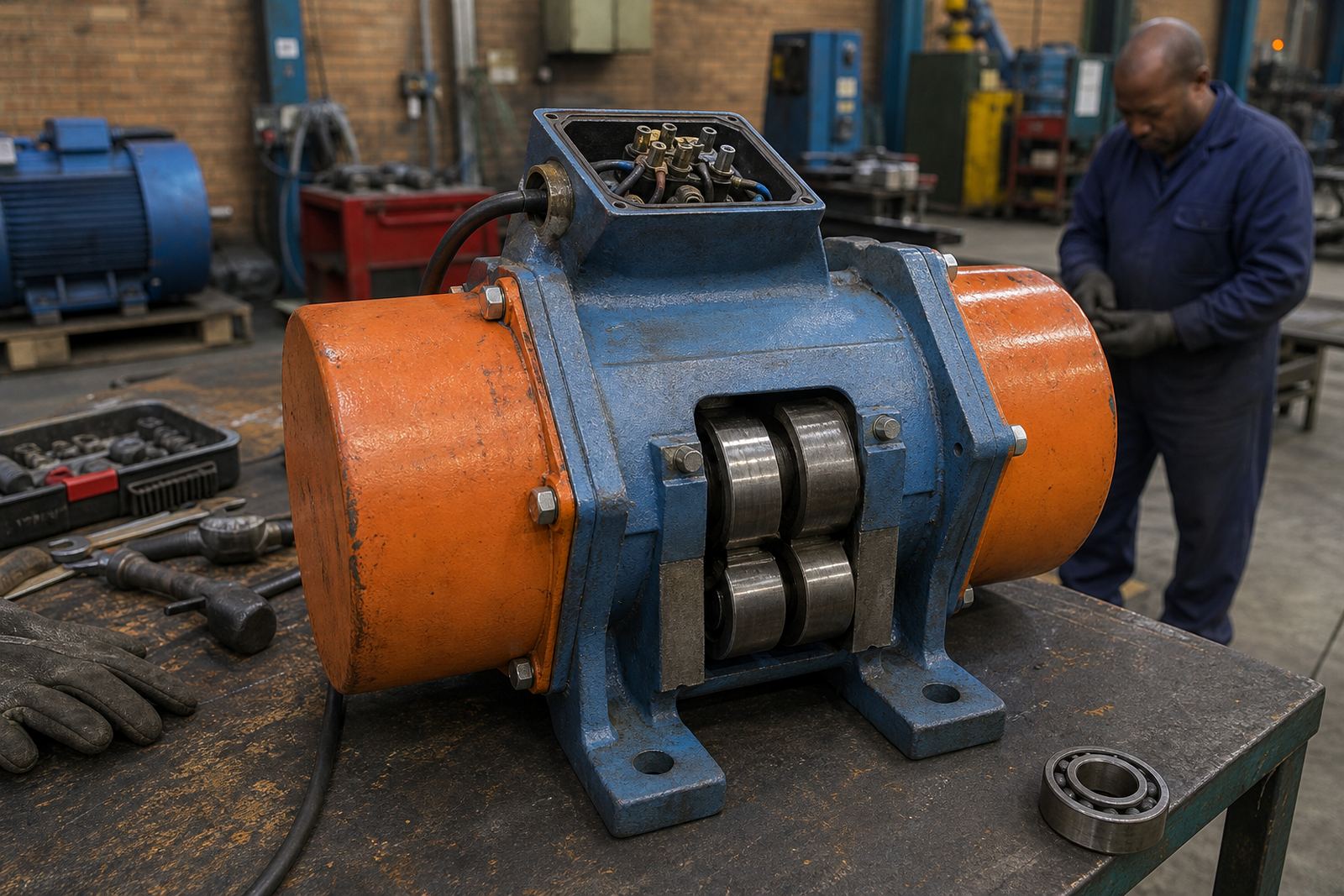
Crusher motors come in a range of frame sizes and power ratings, from smaller auxiliary motors to large motors driving primary or secondary crushing equipment. The right repair depends on the motor frame, mounting style, enclosure, speed and how the machine is loaded. Some sites also use motors with brake arrangements, special shaft dimensions or custom coupling setups, so the repair plan must follow the original build as closely as possible.
Locor handles motors used on jaw crushers, cone crushers, screens, feeders, conveyors and related plant equipment. In practice, that means we look at the motor, the driven machine and the control gear together. A motor that looks fine on the bench may still fail under load if the coupling is worn, the base is loose or the drive settings are wrong. This is why site reporting and shutdown planning matter, especially where production windows are tight.
- Small, medium and heavy-duty three-phase industrial motors
- Frame sizes suited to standard and custom crusher bases
- Open, enclosed and fan-cooled motor types
- Single-speed and multi-speed applications
- Motors matched to fixed speed or variable speed operation
Variable speed drive repair and motor control checks
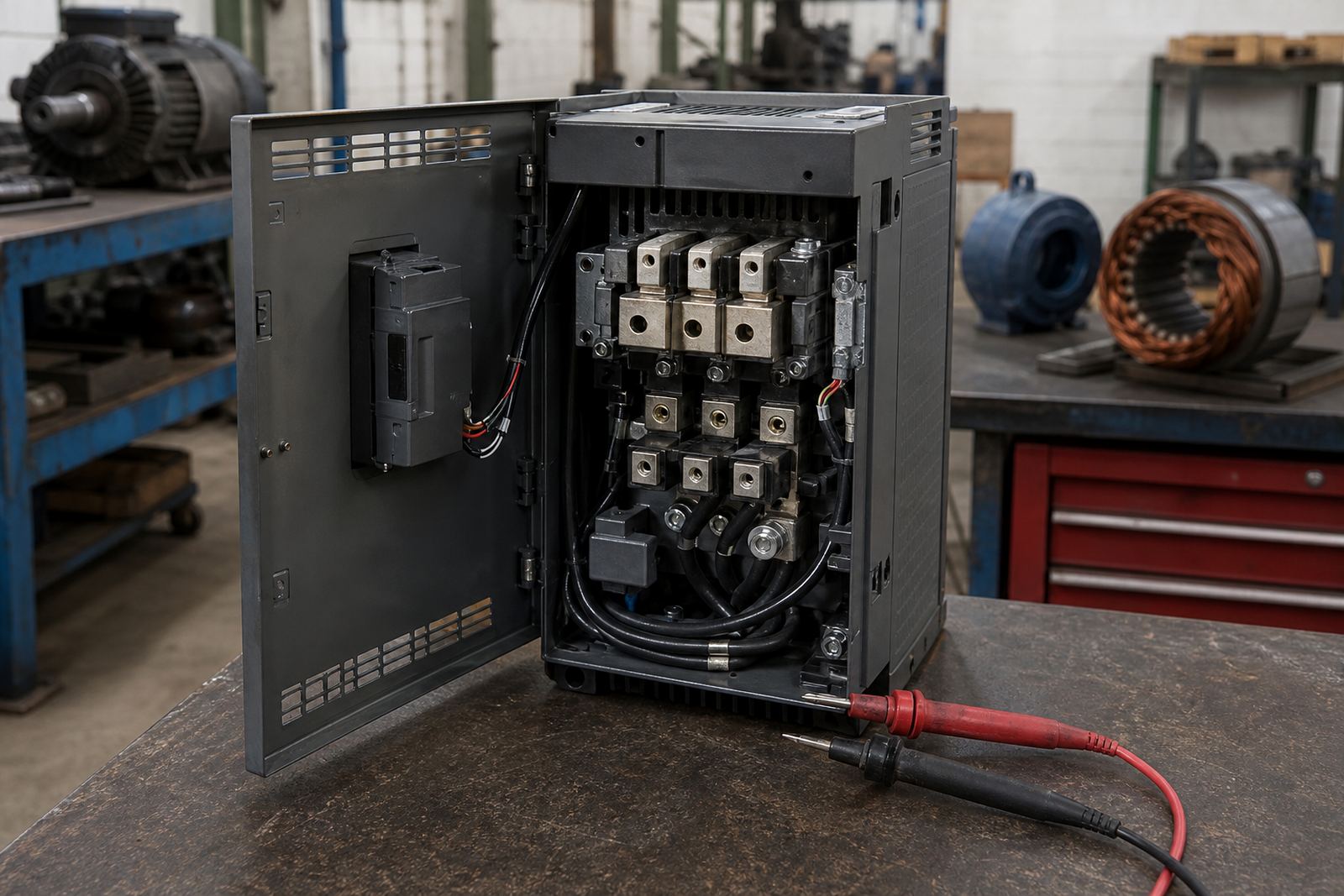
Crusher installations often rely on a variable speed drive to control starting, torque and process flow. When a drive trips, overheats or gives unstable output, the motor can suffer repeated stress. Drive inspection includes checking for overheating, contamination, loose connections, failed components, cooling fan issues and control signal problems. Panel cleaning and cable checks are often part of the job too, because dust and loose terminations can cause nuisance faults.
Drive repair works best when the motor and the control side are checked together. If the drive is repaired but the motor has insulation damage or a bad bearing, the fault can return quickly. If the motor is rewound but the drive parameters are not suited to the load, the crusher may still start harshly or trip on overload. For this reason, commissioning support and site reporting are useful after the repair, especially on busy plants in Germiston, Boksburg, Kempton Park and the wider Ekurhuleni area.
Installation needs, power supply and site conditions
Crusher motor installation needs a stable power supply, correct protection and a solid mechanical base. Before installation, check that the feeder cables are sized properly, the breaker and overload protection suit the motor current, and the control circuit is in good condition. If the site uses a generator or has load-shedding related changeover systems, it is worth confirming that the starting current and control logic still suit the motor and drive arrangement.
Crusher rooms and plant areas are often dusty, damp or exposed to vibration. That affects the life of bearings, terminal boxes and insulation. Where there is washdown or coastal humidity, extra care is needed with sealing, cleaning and cable entry points. Alignment checks should be done after mounting, because even a good motor can fail early if the coupling runs off line or the base flexes under load.
Electrical work should always be handled by qualified people with lockout and isolation procedures. No one should open a drive, move terminals or disconnect a motor until the system is proven safe.
Care, servicing and what to check before you send a motor in
Crusher motors last longer when they are cleaned regularly, checked for bearing noise and kept dry where possible. A simple inspection routine can catch dust build-up, loose mounting bolts, hot terminals and signs of overheating before a full breakdown. If the motor has been repaired, it should be monitored during the first period back in service for temperature, vibration and starting behaviour.
When ordering or sending in a crusher motor for repair, please have the basic details ready. This helps us assess the fault correctly and avoid delays once the unit arrives. If you are in Vereeniging, Pretoria or Durban, the same information still applies and can be sent through the enquiry form on our contact page.
- Motor nameplate details, including voltage, current and speed
- Application type, such as crusher, feeder, screen or conveyor
- Fault symptoms and when the problem started
- Photos of the motor, terminals, coupling and mounting feet
- Any recent trips, overloads, water ingress or bearing noise
- Site location and whether removal or field service is needed
Key facts
| Service area | Germiston base, with support for Johannesburg, Ekurhuleni, Pretoria, Vereeniging and Durban |
|---|---|
| Repair focus | Crusher motor rewinding, bearing replacement, insulation testing and drive repair |
| Motor types | Three-phase industrial motors used on crushers, screens, feeders and conveyors |
| Inspection items | Fault finding, drive inspection, bearing checks, cable checks and site reporting |
| Installation support | Motor removal, alignment checks, commissioning support and shutdown planning |
| Safety note | Qualified electrical work only, with lockout and isolation procedures before any work starts |