

What a Vertical Motor Does on Site
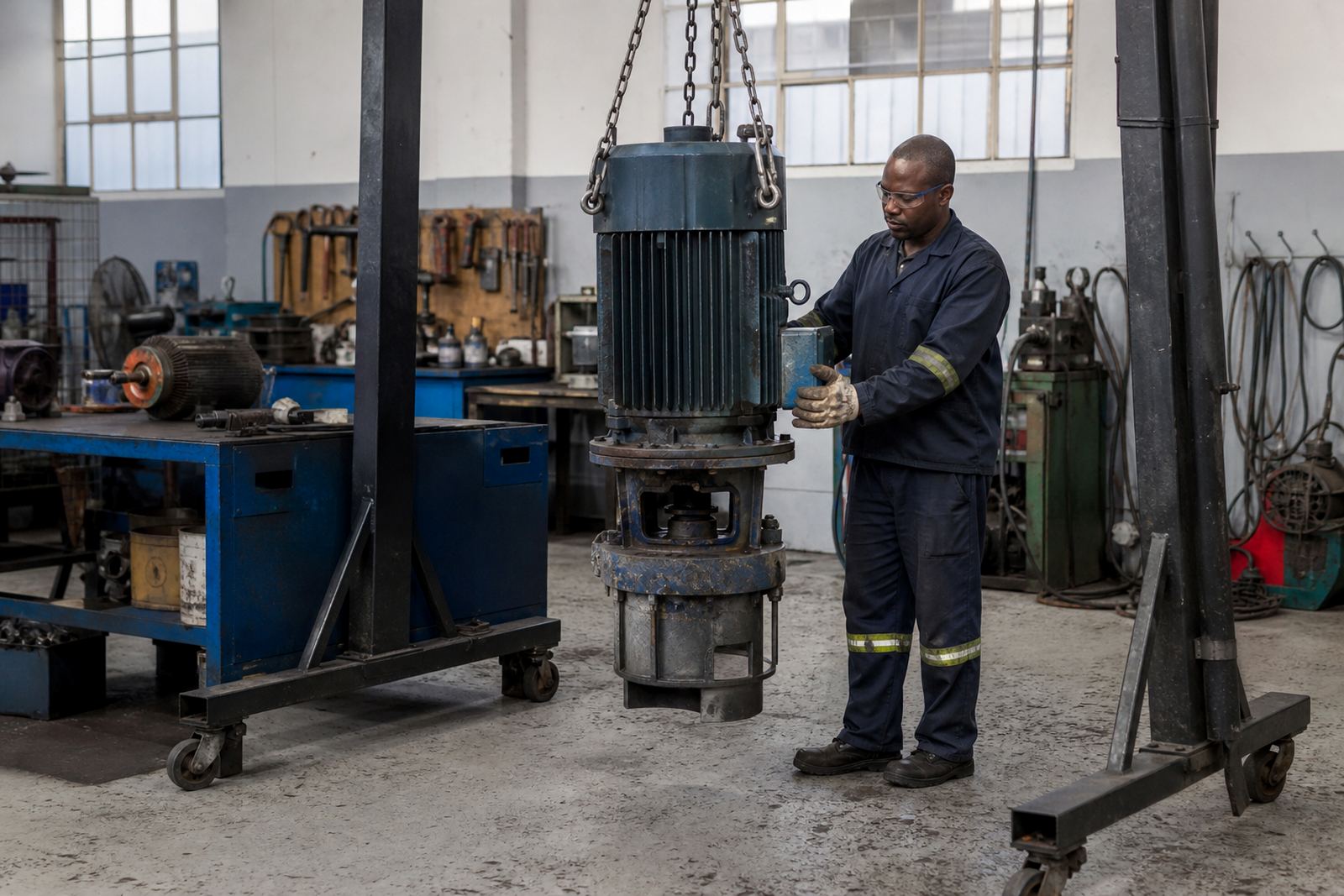
A vertical motor is used where space is tight, the driven machine sits below the motor, or the installation needs a top-mounted drive arrangement. In many plants it runs pumps, cooling systems, aeration equipment, conveyors and other process machines that must keep moving for long shifts. These motors are built to handle steady duty, but they still need correct alignment, sound bearings and clean electrical insulation to work properly over time.
When a vertical motor starts tripping, running hot, making noise or losing output, the cause may be mechanical or electrical. A proper repair looks at the whole unit, not just the winding. That means checking the shaft, frame, bearing housing, cable entry, terminal box, fan arrangement if fitted, and the condition of the winding before deciding on repair or rewinding.
Repair Sizes and Build Options We Work With
Vertical motors come in a wide range of frame sizes and power ratings, from smaller units on workshop pumps to heavier machines on larger process lines. Some are standard foot and flange mounted, while others are built for special pump interfaces, longer shafts, thrust loading or top-mounted couplings. We work on motors with squirrel cage construction and a variety of enclosure types used in indoor plants, dusty workshops and humid coastal areas.
- Single phase and three phase motors
- Small frame units through to large industrial motors
- Open, drip proof and enclosed motor designs
- Direct-coupled pump motors and process drive motors
- Motors with special bearing arrangements or thrust loads
If the motor was fitted for wet or dirty conditions, it may also have improved sealing, drain paths or corrosion protection. On coastal sites around Durban, moisture and salt in the air can shorten bearing life and damage insulation if the motor is not kept clean and dry. In Gauteng, dust and vibration are more common causes of wear.
Where Vertical Motors Suit Best
These motors suit water reticulation, food processing, chemical handling, mines, factories, workshops and municipal plant rooms where pumps and vertical driven equipment must stay dependable. They are also common in systems where floor space is limited and the motor must sit above the machine rather than beside it. In many cases the installation has to cope with continuous duty, load changes and occasional power dips during load-shedding.
For pump sets and process equipment, the motor must match the load profile. If the motor is too small it will overheat and draw high current. If it is too large for the application, it can waste power and place extra stress on the mechanical parts. Matching the frame size, speed and mounting pattern is a practical part of getting the job right.
- Water pumping and borehole systems
- Process and transfer pumps
- Mixer and agitator drives
- Cooling and circulation systems
- Plant rooms and utility areas
Installation, Power Supply and Safety Checks
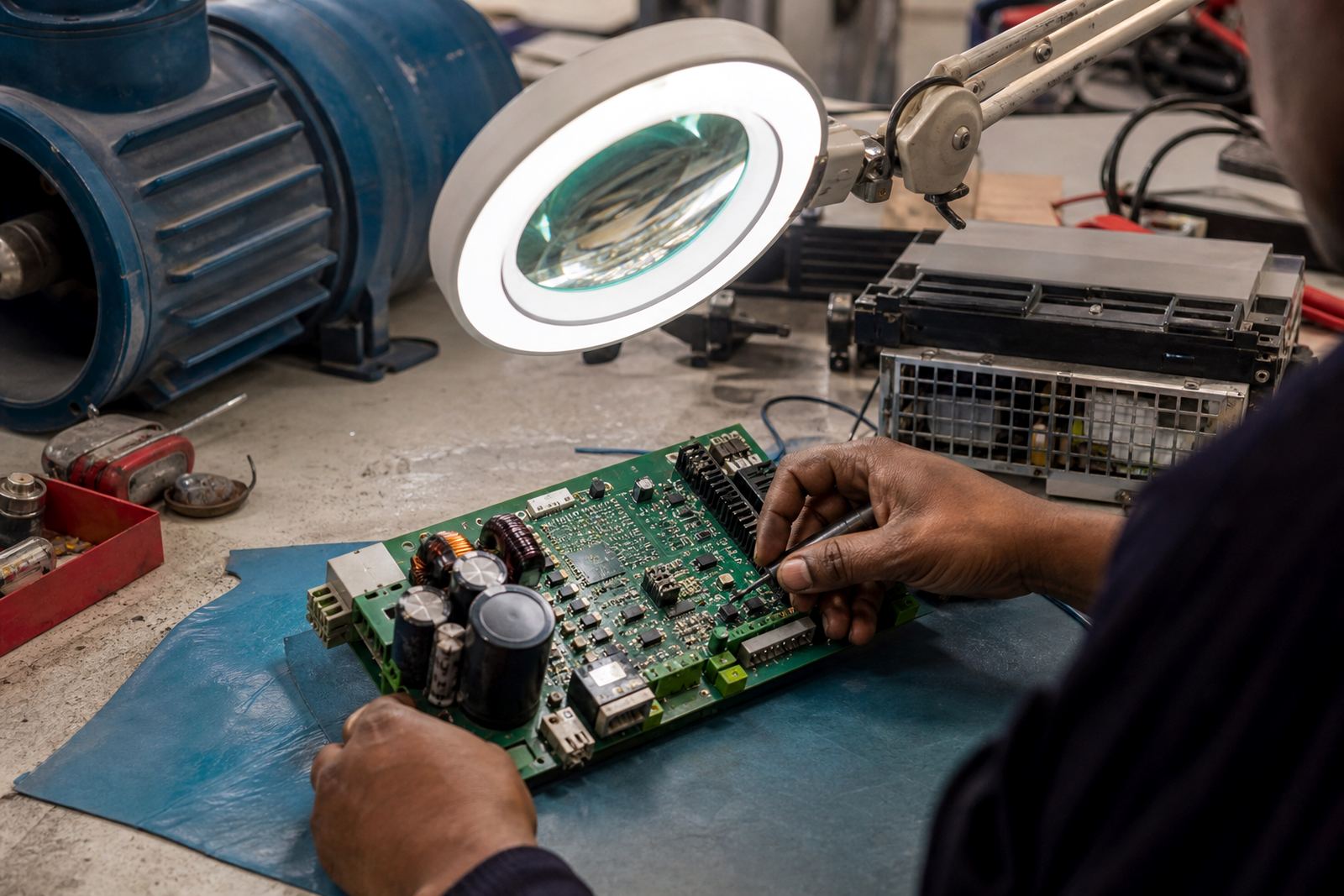
Vertical motor work must be handled by qualified people, with lockout procedures in place before any inspection, removal or testing begins. Isolating the supply, proving dead and keeping clear records is not optional on industrial sites. Before commissioning, the supply voltage, phase balance, protective devices and cable condition should all be checked. Where a variable speed drive is part of the system, the settings, cooling and cable routing need attention as well.
In South African plants, power quality can change quickly during storm conditions or after repeated outages. That means a motor that looks fine mechanically may still fail if the supply is poor or if the drive settings are wrong. Good installation practice also includes sound earthing, correct gland sealing and careful alignment between the motor and the driven machine.
- Confirm voltage and frequency match the site supply
- Check starting method, direct-on-line or drive controlled
- Inspect cable size, insulation and terminations
- Verify alignment, coupling and base condition
- Test protective trips before returning to service
Rewinding, Bearings and Insulation Testing
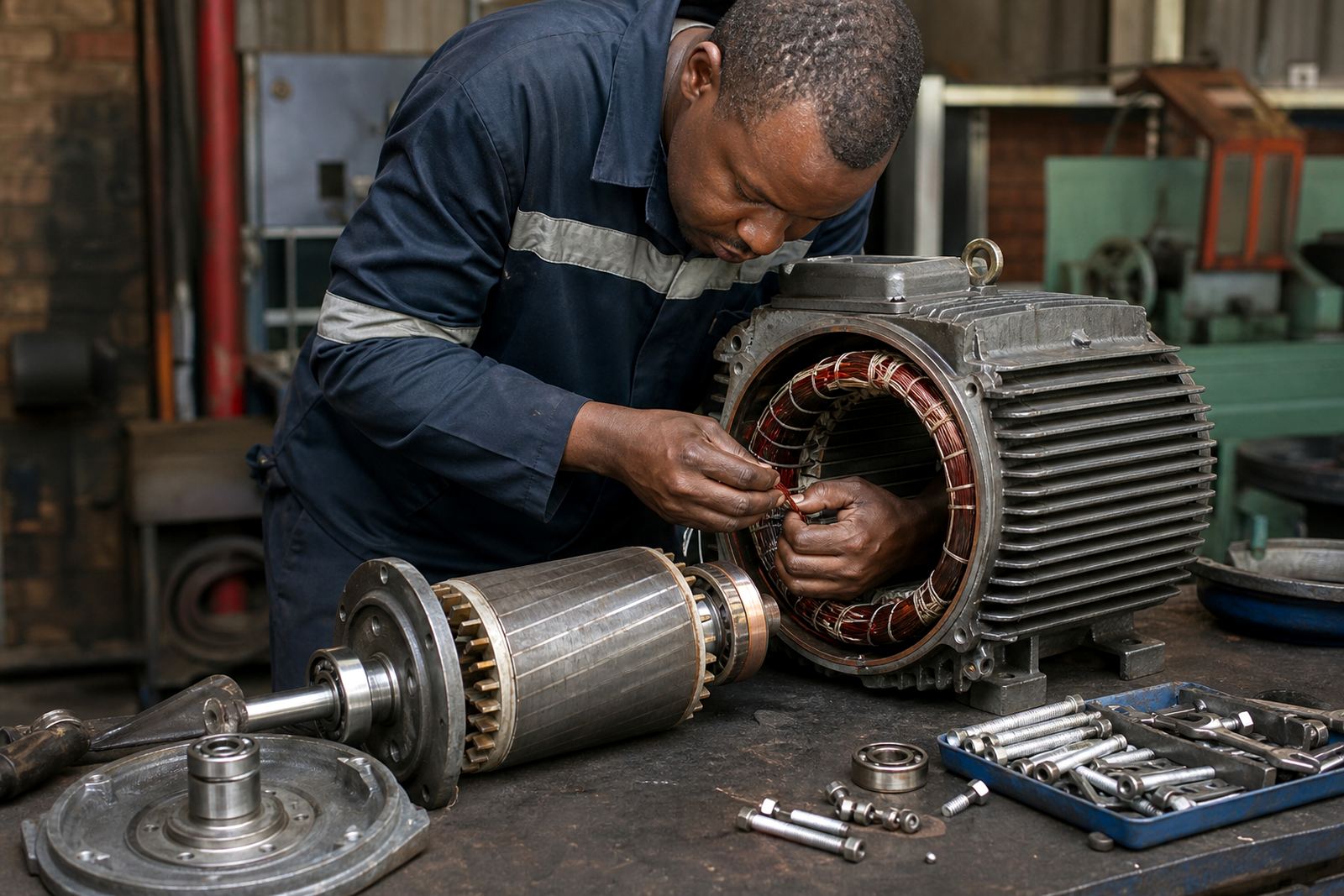
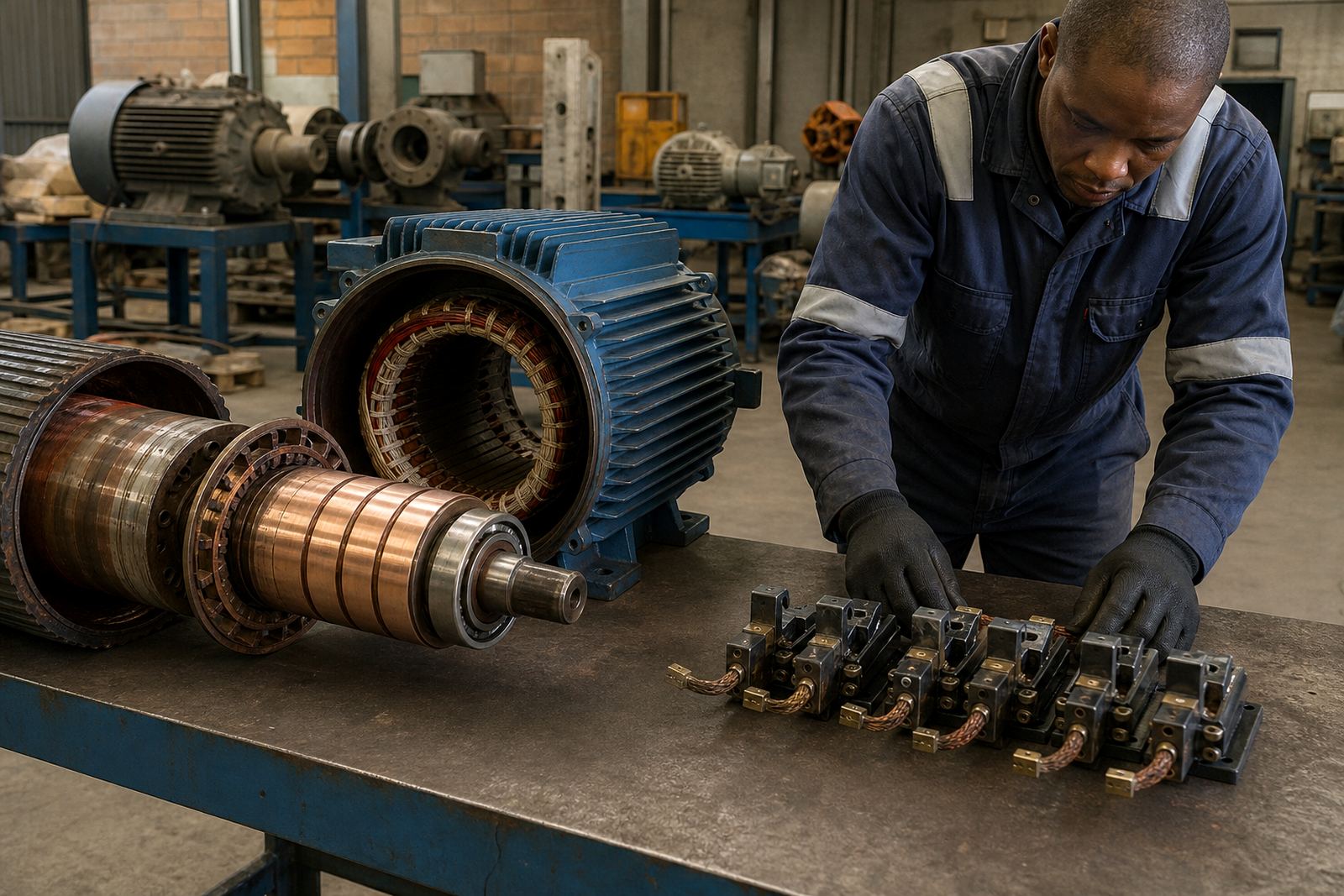
Repairing a vertical motor often starts with fault finding and strip-down inspection. If the winding is burnt, damp, contaminated or shorted, rewinding may be needed. That process includes removing the old winding, recording the coil data, fitting new insulation materials, winding to the required pattern and carrying out electrical tests before reassembly. Bearing replacement is just as important, because worn bearings can cause vibration, heat and shaft movement that damages the winding again.
Insulation testing checks whether the winding can safely withstand the operating voltage and site conditions. Together with bearing checks, this helps identify whether the motor needs a minor repair or a full rebuild. We also assess shaft condition, seals, end shields and signs of water ingress. On some jobs the problem is a mix of dirt, moisture and mechanical wear, so a full inspection gives the clearest picture.
Care, Servicing and What to Check When Ordering
Routine care helps a vertical motor last longer. Keep the area clean, check for leaks from the pump or process equipment, listen for bearing noise, and watch for heat, vibration or repeated tripping. On shutdowns, it is worth checking that the motor is free from dust buildup, cable damage and rust around the terminal box. If the site has washdown conditions or coastal humidity, more frequent inspection is sensible.
When ordering or requesting repair, the more detail you can give, the easier it is to match the motor and plan the work. A clear nameplate photo helps, but if the plate is worn, other details can still guide the job. We also help with shutdown planning, site reporting and spares assessment so the motor can go back into service with fewer delays.
- Frame size, kilowatt rating and speed
- Voltage, phase and frequency
- Mounting type and shaft arrangement
- Whether the motor drives a pump, mixer or other load
- Any history of overheating, water ingress or vibration
- Site location, access limits and outage timing
If you are in Germiston, Johannesburg, Ekurhuleni, Pretoria, Vereeniging, Boksburg, Kempton Park or Durban, Locor can assist with vertical motor repairs, rewinding and related drive work for plants and workshops across South Africa.
Key facts
| Product type | Vertical electric motor repair and rewinding service |
|---|---|
| Typical applications | Pumps, process equipment, mixers, circulation systems and utility plant |
| Power range | Small to large industrial motors, subject to inspection |
| Mounting | Vertical shaft arrangements, pump-mounted and flange-based units |
| Service methods | Fault finding, bearing replacement, insulation testing, alignment checks and commissioning support |
| Coverage area | Germiston, Johannesburg, Ekurhuleni, Pretoria, Vereeniging, Durban and surrounding industrial areas |