

Repairing Conveyor Motors That Keep Production Moving
Conveyor motors do a hard job. They run belts, rollers and transfer lines in dusty plants, hot bays and areas where vibration is constant. When one starts tripping, overheating or losing torque, the whole line can slow down or stop. Locor handles conveyor motor repairs for electric motors used on material handling systems, production lines and workshop conveyors, with a focus on getting the unit back into reliable service rather than replacing it too quickly.
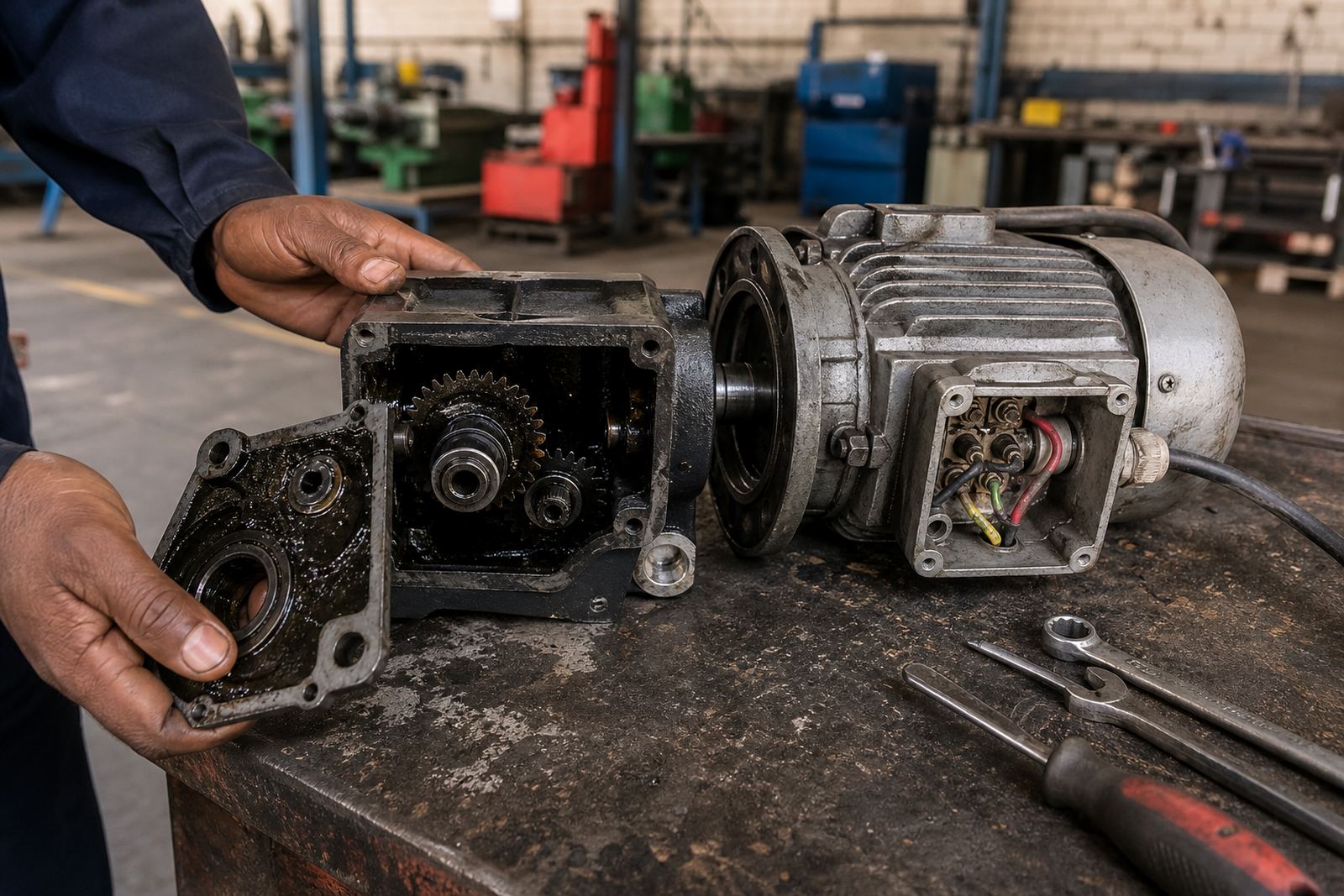
Typical repair work includes fault finding, motor removal, strip-down, cleaning, bearing replacement, electrical checks, winding repairs and reassembly. Where needed, we also carry out insulation testing and site reporting so you can see what failed and what still needs attention. Electrical work must always be done by qualified people using proper lockout procedures, especially on live plants where a conveyor can start unexpectedly or a drive can hold residual charge.
- Suitable for belt conveyors, screw conveyors, chain conveyors and roller lines
- Used in packhouses, factories, warehouses, workshops and mines support areas
- Works on foot-mounted, flange-mounted and geared motor applications
What Size And Type Of Conveyor Motor Can Be Repaired
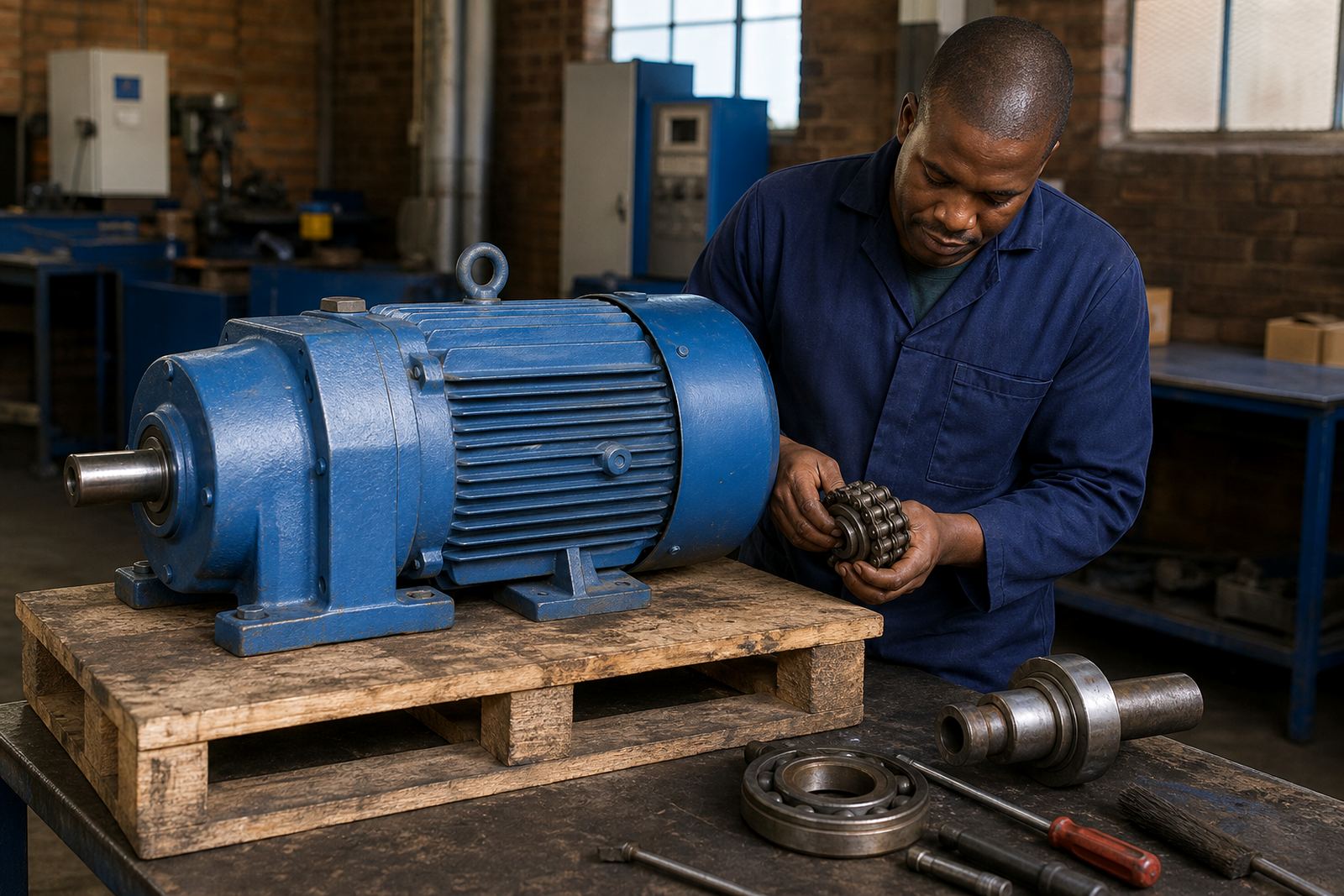
Conveyor motors come in a wide range of sizes, from small single phase units used on light handling systems to larger three phase motors fitted to heavy-duty lines. We repair standard squirrel-cage motors, geared motors and motors coupled to variable speed drives. The exact repair path depends on frame size, winding condition, shaft wear, bearing condition and whether the motor has been affected by moisture, dust or electrical surges.
In practical terms, our work often covers motor frames from about 0,37 kW for light duty lines up to larger industrial units used in demanding production and loading areas. We also work on motors with different mounting styles, including B3 foot mount, B5 flange mount and B35 combinations. If the conveyor runs in a humid or coastal area such as Durban, we look closely at insulation condition, corrosion and bearing contamination. In Gauteng, dust and heat are often the bigger issue, especially on sites with open conveyors and poor panel housekeeping.
- Power supply options commonly include 230 V single phase and 400 V three phase
- Speed control may be fixed speed or controlled through a variable speed drive
- Can be assessed for duty cycle, starts per hour and load type before repair
Fault Finding, Rewinding, Bearings And Insulation Testing
A conveyor motor fault is not always a winding failure. Sometimes the issue is worn bearings, poor cable terminations, loose connections, contaminated terminal boxes or a drive problem that is making the motor look faulty. We start with fault finding and inspection, then decide whether the motor needs rewinding, bearing replacement, shaft repair or further drive-side checks. This avoids unnecessary work and helps identify the real cause of the breakdown.
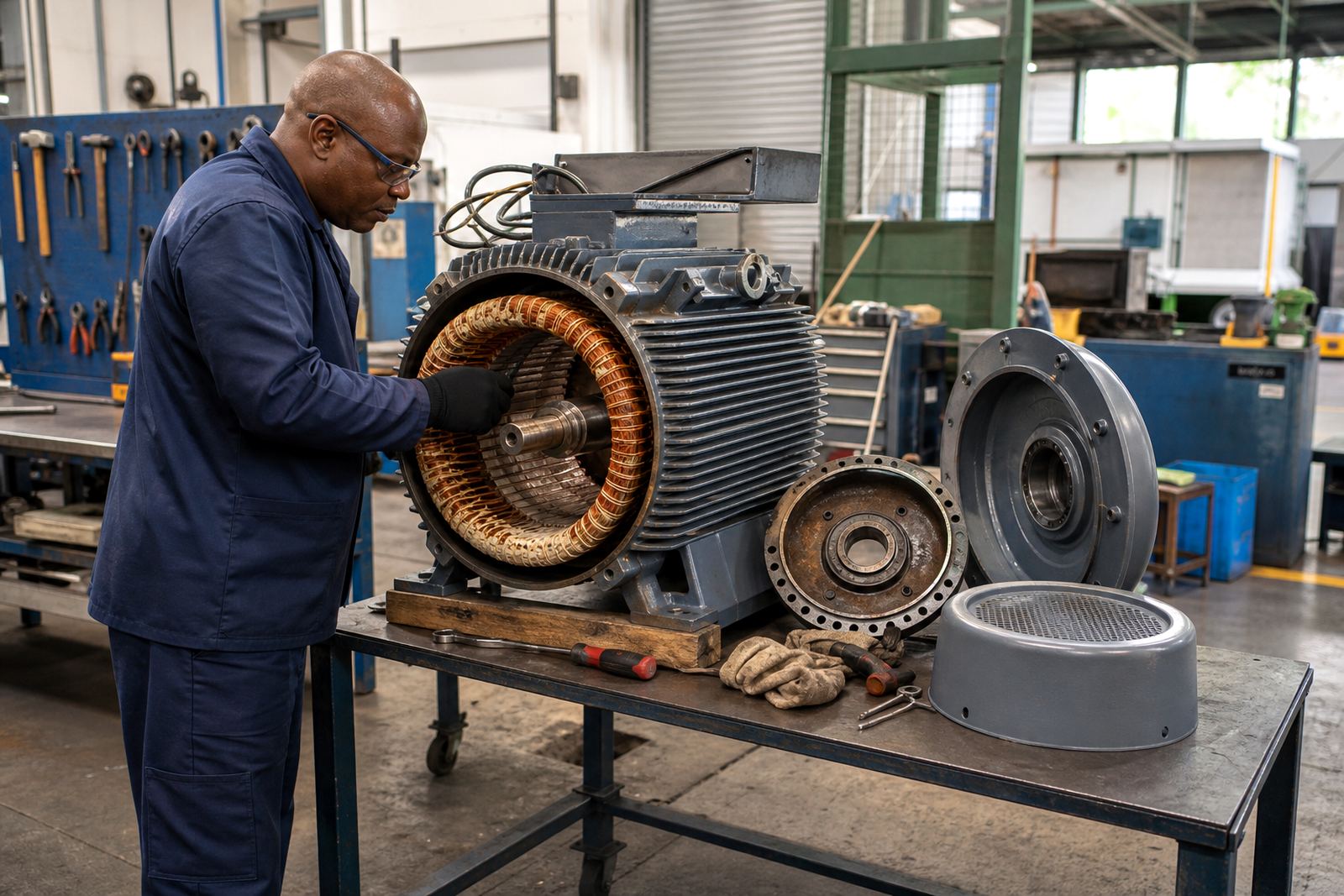
Motor rewinding is used when the stator winding has burned, gone open circuit or lost insulation strength. The old winding is removed, the core is checked, and a new winding is installed to the correct pattern and coil arrangement. Bearing replacement helps with noise, overheating and vibration, while insulation testing shows whether moisture, age or heat has damaged the winding. In some cases a motor has failed because the control panel was dirty or the cable was damaged, so panel cleaning and cable checks can be part of the job too.
- Fault finding for nuisance tripping, overheating, low torque and no-start conditions
- Bearing checks and replacement where noise, play or heat is present
- Insulation testing to assess winding health before and after repair
Variable Speed Drive Repair For Conveyor Control
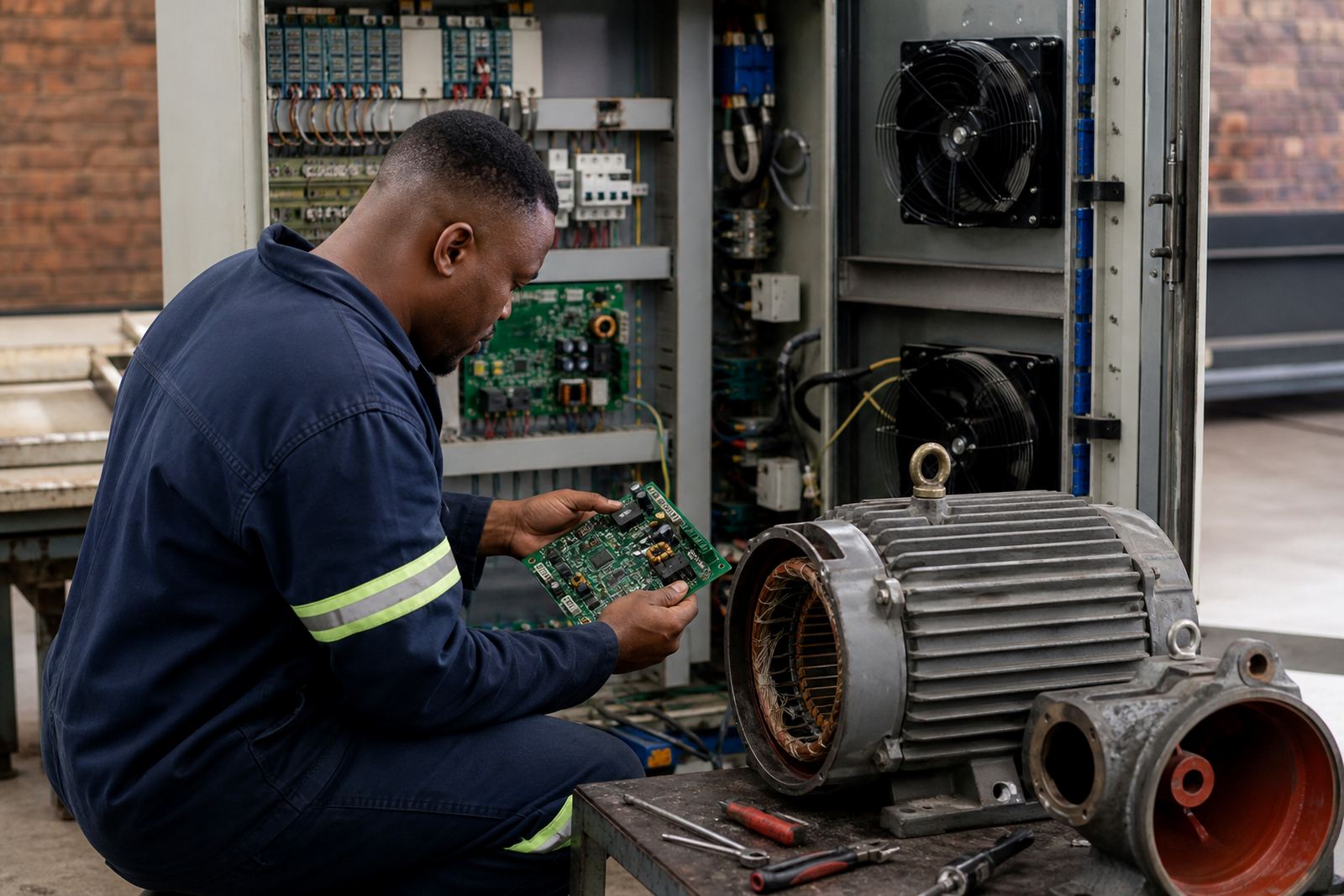
Many conveyor systems rely on variable speed drives to match line speed to production demand. When a drive fails, the conveyor may trip, run erratically or stop responding to control signals. Locor repairs variable speed drives used with conveyor motors, including inspection of power sections, control boards, cooling fans, terminals and visible component damage. We also check whether the failure came from supply issues, overload, poor ventilation or a motor problem feeding back into the drive.
Drive repair is especially important on sites where downtime is expensive and replacement lead times are too long. Before any unit is returned to service, the installation should be checked for correct earthing, cable size, incoming supply and motor compatibility. A repaired drive can still fail if the panel is full of dust or the cooling path is blocked. That is why panel cleaning and cable checks are often included in the overall service plan. On some jobs the motor itself is fine but the drive settings, acceleration ramp or overload settings need proper review, otherwise the same fault returns.
Because these systems involve electrical energy and stored charge, only qualified people should handle installation, testing and commissioning. Lockout and isolation must be followed every time, even on short shutdown jobs where staff feel tempted to rush.
Where Conveyor Motor Repairs Suit South African Sites
Our conveyor motor repairs suit plants and workshops that need practical support across South Africa, especially in Germiston, Johannesburg, Ekurhuleni, Pretoria, Vereeniging and Durban. These are the kinds of places where conveyors run long hours and a small fault can affect packing, loading, manufacturing or dispatch. We also support Boksburg and Kempton Park, where many industrial sites use conveyor systems in confined bays and under load-shedding pressure.
The service is a good fit for:
- Manufacturing lines that need steady belt speed and reliable starting torque
- Materials handling areas with dust, vibration or frequent starts and stops
- Workshops that need a motor repaired instead of replacing the full conveyor assembly
- Shutdowns where the motor, drive and control panel need to be checked together
We can assist with shutdown planning and site reporting so the job is handled in the right sequence. That may include motor removal, drive inspection, alignment checks, spares assessment and commissioning support once the repaired unit is back in place. If a conveyor is in a coastal or corrosive environment, regular checks are important because moisture and salt can shorten the life of bearings and insulation if they are ignored.
Installation, Power Needs And What To Check Before Ordering
When ordering a conveyor motor repair, the more detail you give, the better the repair path. Please share the motor nameplate details if available, the supply voltage, frame size, mounting type, duty cycle and the fault symptoms. If the unit is coupled to a gearbox or drive, mention that too. A photo of the terminal box, shaft end and mounting feet can save time and help us prepare the correct bearings, seals or rewinding data.
For installation, the site must have the correct power supply, proper isolation and safe access to the conveyor. Some units are simple direct-on-line starts, while others are controlled by a variable speed drive and need careful parameter checks before the first run. After fitting, the motor should be aligned correctly, cables checked, terminal connections tightened and rotation confirmed. Any sign of rubbing, abnormal noise or heat should be investigated at once rather than left for later.
- Check kW rating, voltage, frame size, mounting style and shaft dimensions
- Confirm whether the motor runs through a drive, starter or direct connection
- Note the fault history, including trips, smoke, bearing noise, vibration or water ingress
Locor works from Germiston with a practical approach that suits industrial sites. Our team includes experienced technicians, drive specialists and field support staff who understand that a conveyor motor has to do its job under pressure, not just on a test bench.
Key facts
| Service type | Conveyor motor repairs for materials handling and production lines |
|---|---|
| Motor sizes | From small single phase units to larger industrial three phase motors |
| Common work | Rewinding, bearing replacement, insulation testing and fault finding |
| Drive support | Variable speed drive inspection and repair for conveyor control |
| Mounting styles | Foot mount, flange mount and combined mounting types |
| Service areas | Germiston, Johannesburg, Ekurhuleni, Pretoria, Vereeniging and Durban |