

What a Three Phase Motor Does on Site
A three phase motor is a workhorse for industrial equipment because it delivers steady torque, runs efficiently and suits continuous duty work. You will find these motors on fans, mixers, crushers, machine tools, conveyors, pumps and lifting equipment, where dependable starting and running matters every day.
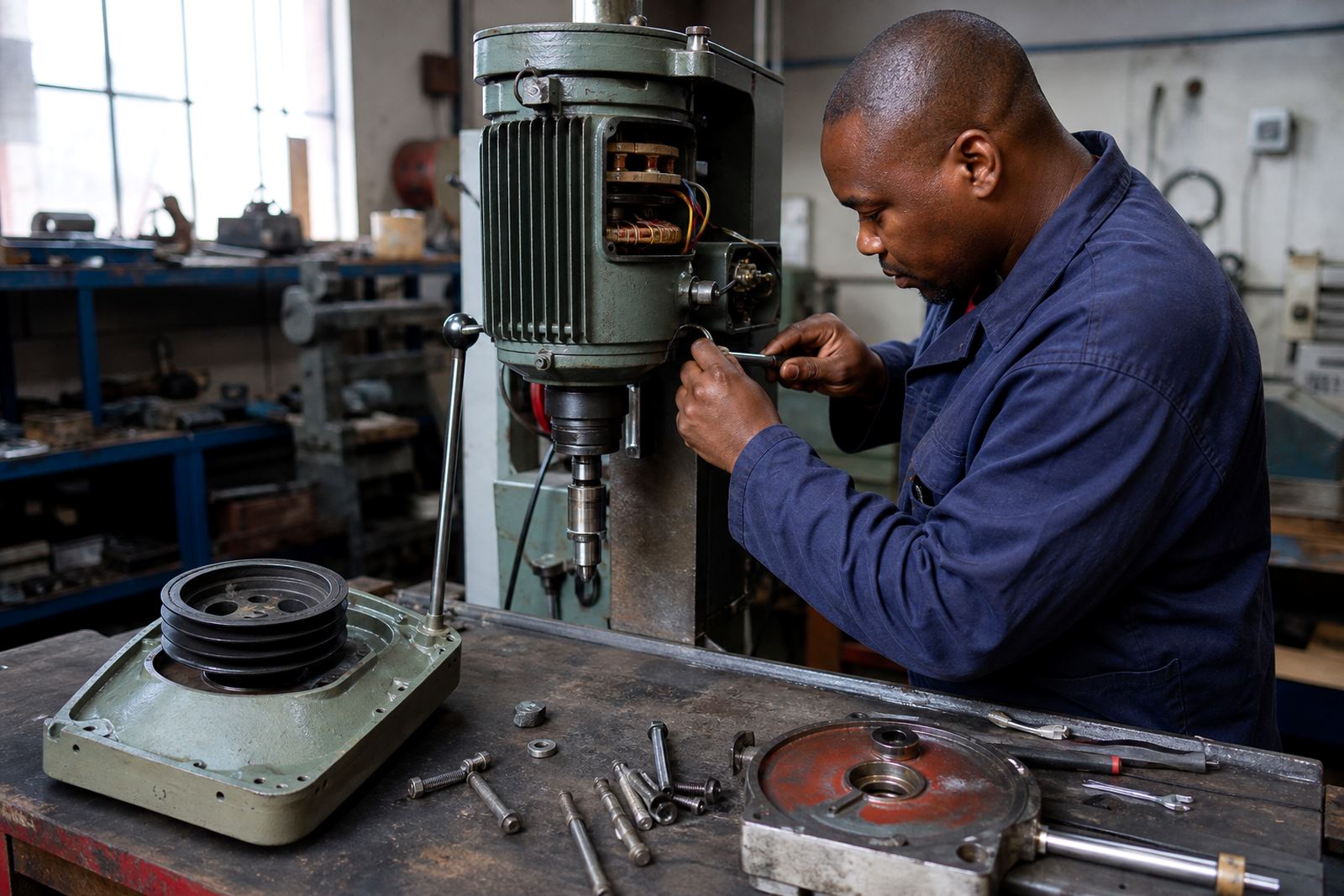
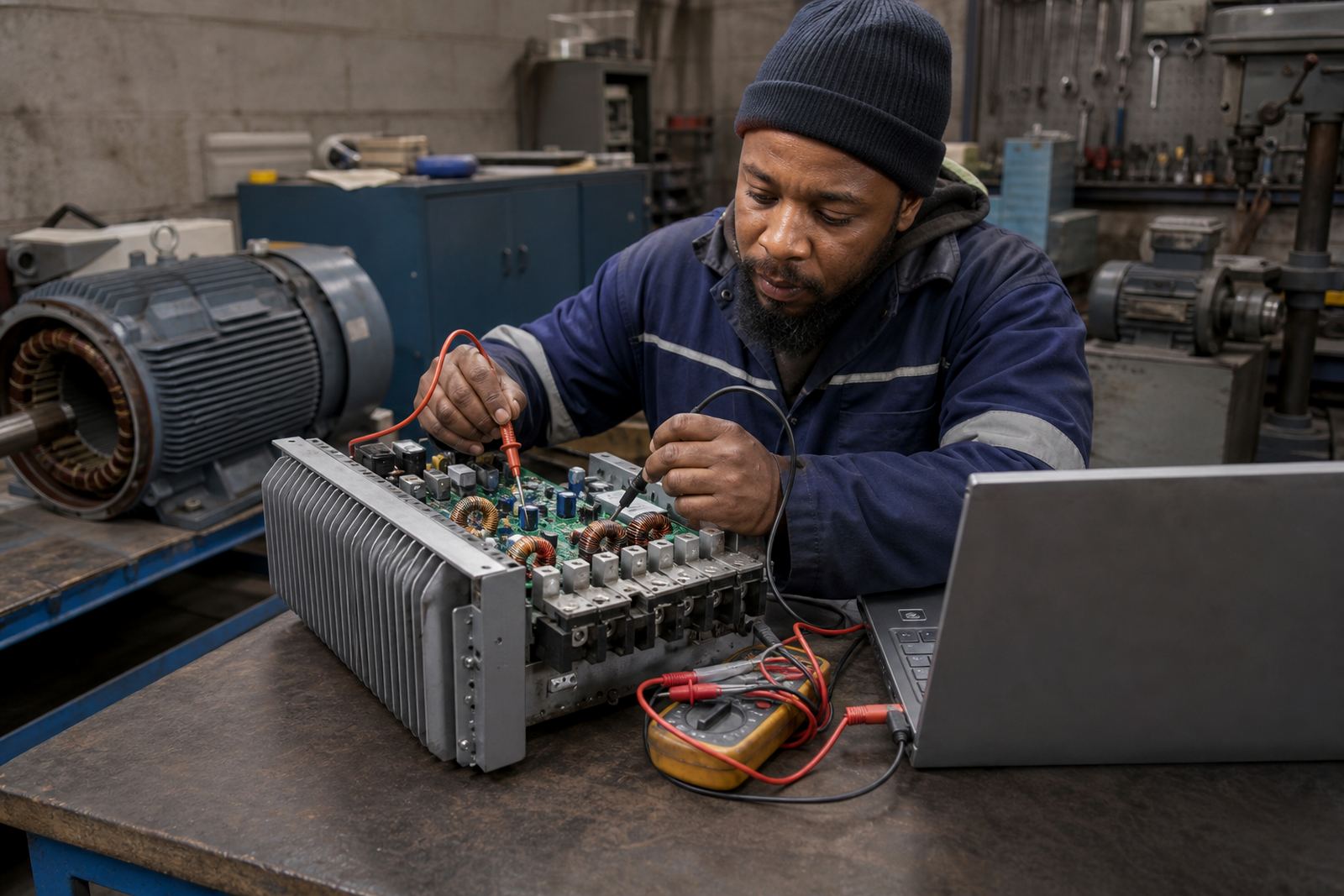
When a motor starts tripping, runs hot, smells burnt or begins to vibrate, the fault can be electrical, mechanical or both. That is why inspection matters before any rewind or parts replacement. Our team handles fault finding, motor removal, bearing checks, insulation testing and site reporting so the issue is understood before work begins.
For safety, all electrical work must be carried out by qualified people using lockout procedures. Isolate the supply, prove dead and keep the starter panel controlled before anyone opens the motor or touches the cable terminations.
Rewind and Repair Options for Different Frames
Three phase motors are supplied in a wide range of frame sizes, power ratings and mounting styles. Some are small foot mounted units for workshop machines, while others are larger flange mounted motors driving heavier plant. The windings, terminals, cooling method and shaft arrangements can vary a lot, so the right repair depends on the exact motor on your floor.
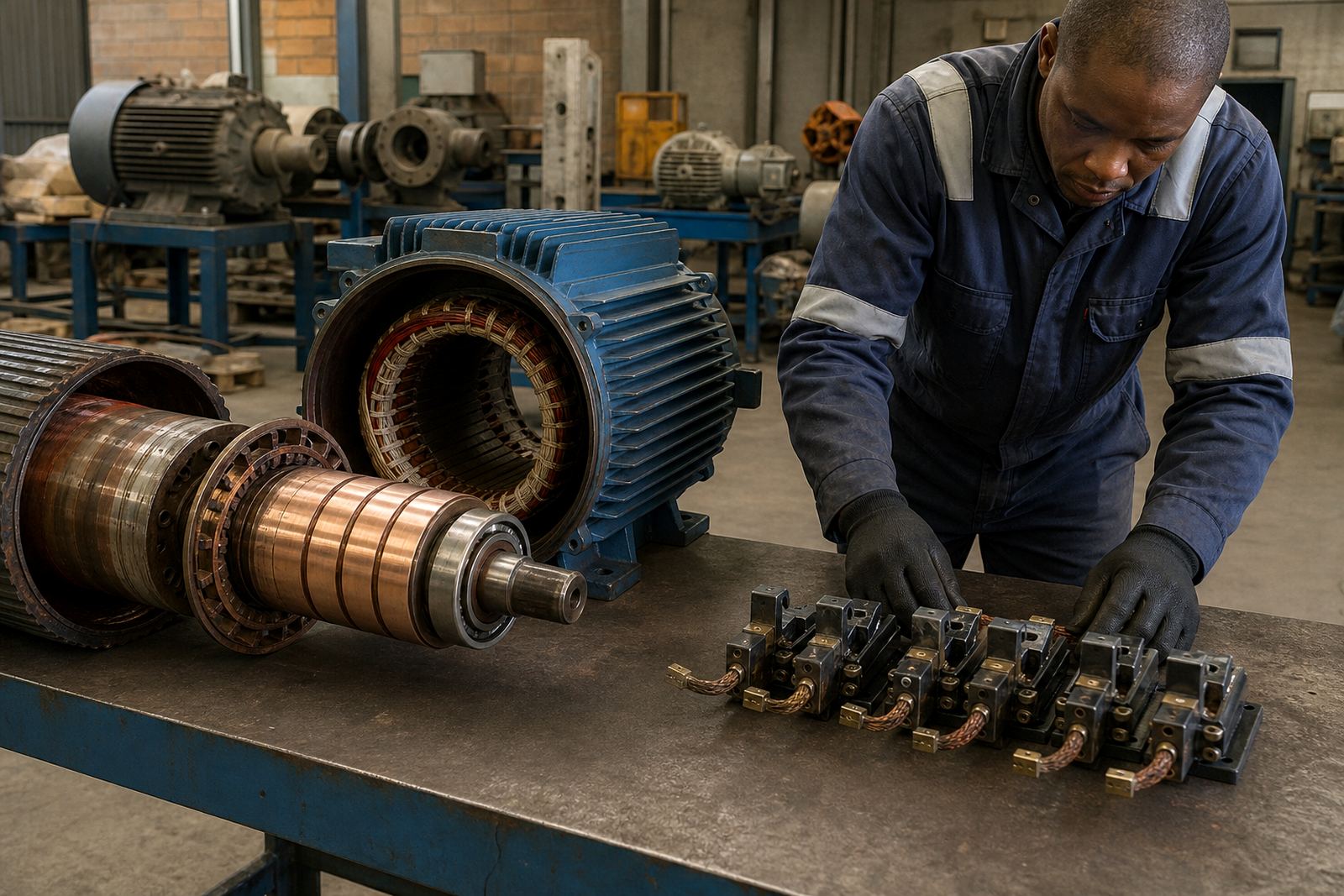
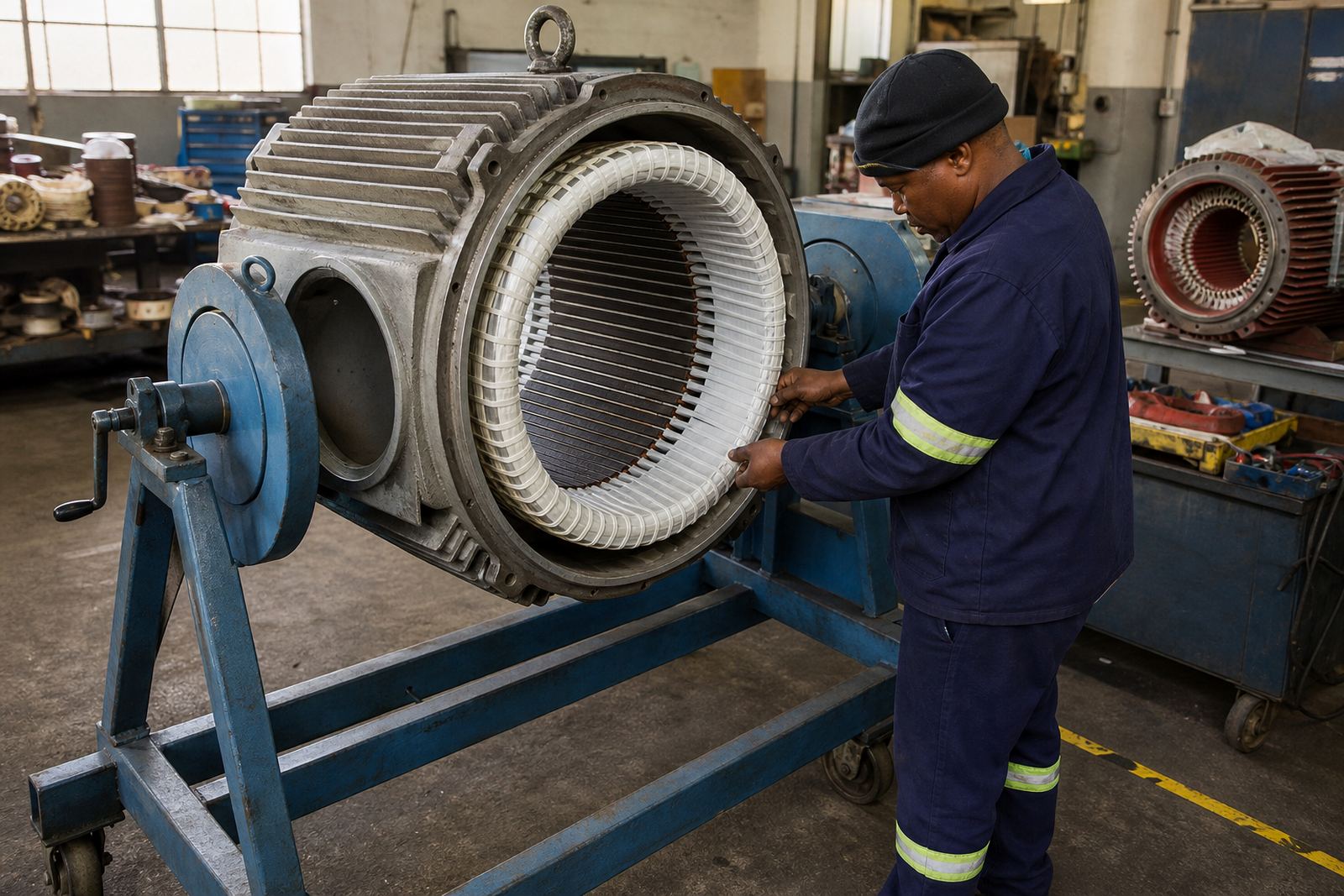
Common repair work includes stripping, cleaning, replacing damaged windings, fitting new bearings, checking the rotor and stator, and confirming that the insulation system is in good condition. On some jobs the motor only needs careful bearing replacement and a fresh set of seals, while on others the rewinding process is the correct fix because the insulation has broken down or the windings have overheated.
- Foot mounted, flange mounted and face mounted motors
- Aluminium or cast frame constructions
- Open, drip proof or enclosed cooling styles
- Common IEC frame sizes used in industry
- Standard and special shaft arrangements
Where Three Phase Motors Suit Best
Three phase motors suit plants and workshops that need regular start stop duty, stable running and practical maintenance. They are common in manufacturing, food handling, packaging, water and wastewater, warehousing, light mining support and engineering workshops. In Gauteng, many sites need motors that can handle long shifts, dust, heat and the occasional power disturbance.
They also suit locations where load-shedding has made electrical health checks more important. After repeated starts, voltage dips or poorly set starters, a motor can show signs of stress long before it fails completely. In coastal areas such as Durban, humidity and salty air can affect terminals, bearings and insulation, so regular checks help prevent avoidable downtime.
Where a site is subject to municipal electrical rules or shutdown planning, we can support with site reporting, panel cleaning, cable checks and commissioning support after the motor goes back in service.
Installation, Supply and Power Requirements
Before ordering or sending in a motor for repair, it helps to confirm the supply details and the machine it drives. A three phase motor normally needs the correct voltage, frequency, protection and cable sizing for the site. The starter, overloads and contactor settings must also match the motor duty and load. If the unit is fitted to a gearbox, pulley set or pump base, alignment checks should be part of the installation.
Make sure the following details are checked before delivery or installation:
- Rated voltage and frequency of the supply
- kW or HP rating and full load current
- Frame size, mounting type and shaft dimensions
- Rotation direction and terminal box position
- Duty cycle and the machine the motor drives
- Any special environment such as dust, moisture or heat
Electrical installation must be done by qualified people only. Lockout procedures, isolation and test equipment are not optional, especially where live panels and remote starters are involved.
Care, Servicing and Early Warning Signs
Three phase motors last longer when bearings are kept in good order, cooling paths are clean and the electrical supply stays within the correct range. Dust build up, blocked fan covers and poor alignment can shorten service life. In workshops with fine powder, metal swarf or cement dust, the motor should be cleaned on a routine schedule, not only when it fails.
Watch for heat at the bearing housings, noise on start up, vibration, tripping overloads, burning smells or a motor that takes longer to come up to speed. These are often the first signs that insulation testing, bearing checks or drive inspection is needed. If the motor is paired with a variable speed drive, the drive settings, cooling and cable integrity also need checking.
Good shutdown planning helps too. If a plant can schedule a planned stop, then motor removal, spares assessment and workshop repair can be coordinated properly instead of waiting for an emergency failure.
What to Check When Ordering or Sending a Motor In
The best repair starts with the right information. When you send a motor in for rewinding or bring it in for inspection, include the nameplate details and a short note on the fault. If the nameplate is unreadable, measure the frame and shaft carefully and note how the motor was connected in the panel. A clear fault description helps our technicians decide whether the issue points to insulation failure, bearing wear, rotor damage or a supply problem.
If you are replacing rather than repairing, check whether the original motor was used on a pump, fan, conveyor or compressor. That affects starting torque, enclosure type and duty rating. Also confirm if the motor had a brake, encoder, special mount or non standard shaft. A missing detail can slow the process and may cause fitment trouble on site.
For customers in Germiston, Johannesburg, Ekurhuleni, Pretoria, Vereeniging, Durban, Boksburg and Kempton Park, our enquiry form on the contact page is the quickest way to start. It helps us capture the motor details, site location and required checks in one place.
Key facts
| Motor type | Three phase industrial motors for plant and workshop use |
|---|---|
| Typical work | Rewinding, bearing replacement, insulation testing and fault finding |
| Mounting styles | Foot mounted, flange mounted and face mounted |
| Common sizes | Small workshop units through to larger process motors |
| Service area | Germiston, Gauteng plus Johannesburg, Ekurhuleni, Pretoria, Vereeniging and Durban |
| Related support | Motor removal, drive inspection, alignment checks and commissioning support |