

What AC motor rewinding involves
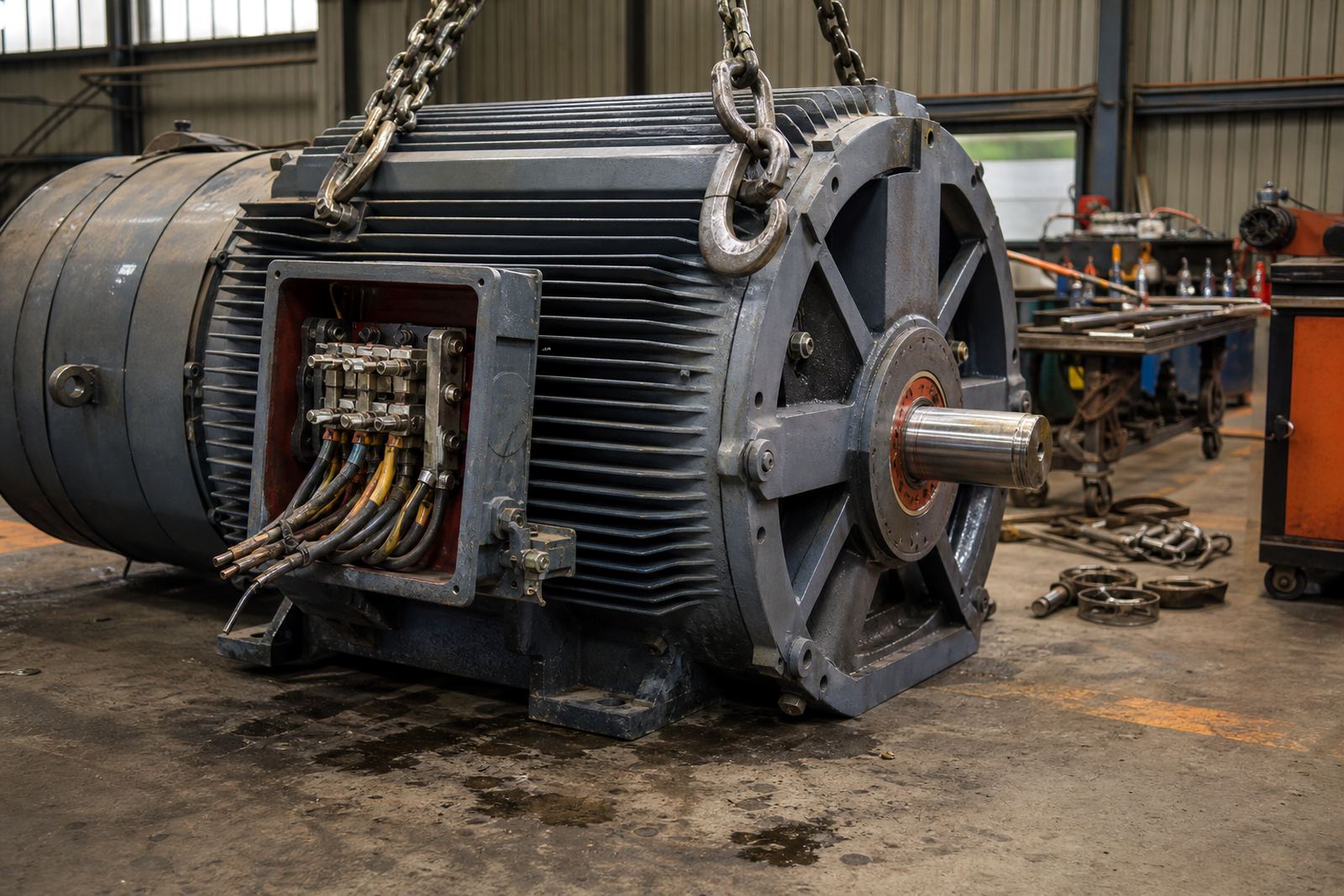
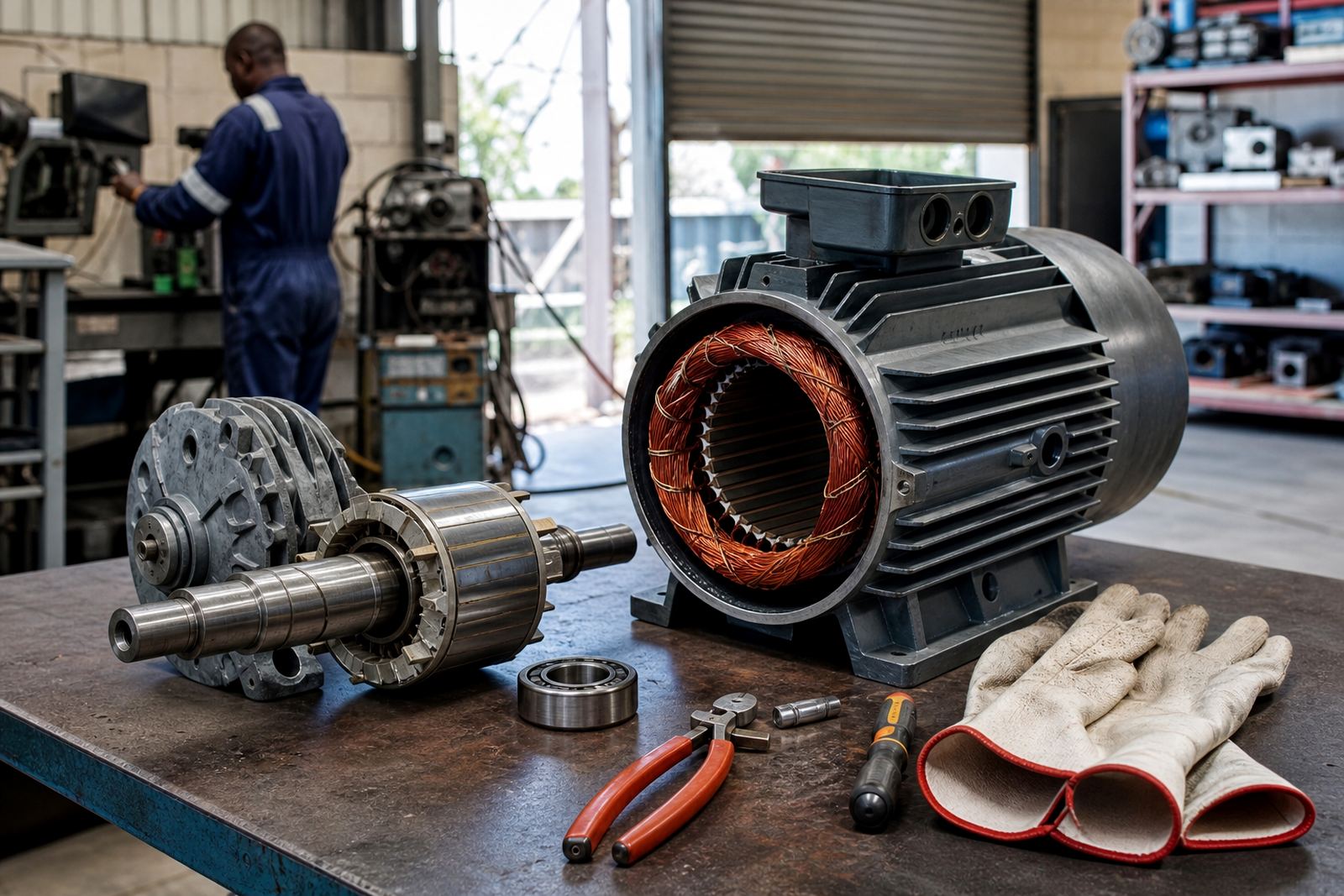
AC motor rewinding is the process of stripping out failed winding wire, cleaning the stator or rotor section where needed, and fitting new winding conductors to the correct pattern and coil count. The work must be done carefully because the motor depends on the insulation system, winding balance and connection method all working together. If the rewind is not done properly, the motor can draw excess current, run hot, trip a drive or fail again under load.
For plant and workshop users, rewinding is often the practical option when the frame, laminations, shaft and end shields are still in serviceable condition. It can be used on common three phase motors and other AC motor types found on conveyors, pumps, fans, compressors, mixers and general machinery. Electrical work must only be handled by qualified people, with lockout and test-before-touch steps followed on site.
Motor sizes, ratings and winding options
Locor handles a range of AC motors used in industrial settings, from smaller workshop units to larger motors used on process lines and heavy plant. The rewind method is selected to match the motor design, duty cycle, cooling arrangement and starting method. Where required, we also work around mounting style and space limits so the repaired motor can go back into the same application without unnecessary changes.
- Typical supply: 220 V, 380 V, 400 V and 525 V AC systems
- Common frame sizes: small IEC-style frames through to larger industrial frames
- Poles and speeds: 2 pole, 4 pole, 6 pole and 8 pole windings where applicable
- Duty use: continuous running, intermittent duty and heavy-start applications
- Enclosures: open, fan cooled and enclosed types, depending on site conditions
For coastal areas such as Durban and humid sites in Gauteng, moisture protection and cleanliness matter more than many buyers expect. A motor that works well in a dry store room can fail early if insulation, seals and terminal connections are left exposed to damp, dust or washdown conditions.
Where AC motor rewinding suits best
This service suits plants and workshops that rely on motors for daily production and cannot afford repeated failures. It is often used when the machine is mechanically sound but the motor has burnt windings, poor insulation values, earth leakage issues or signs of overheating. If the motor is part of a line that stops an entire process, planned rewind work can save far more time than waiting for a breakdown to spread.
We support customers in Germiston, Johannesburg, Ekurhuleni, Pretoria, Vereeniging, Boksburg, Kempton Park and Durban, with site visits and collection arranged according to the job. Common uses include pumping, conveying, cutting, ventilation, material handling and workshop machinery. Load-shedding also makes dependable motor condition more important, because repeated starts after power interruptions can stress weak windings and old bearings.
- Pumps and booster sets
- Fans and extractors
- Conveyor drives
- Compressors and mixers
- General workshop machinery
Testing, bearings and related checks
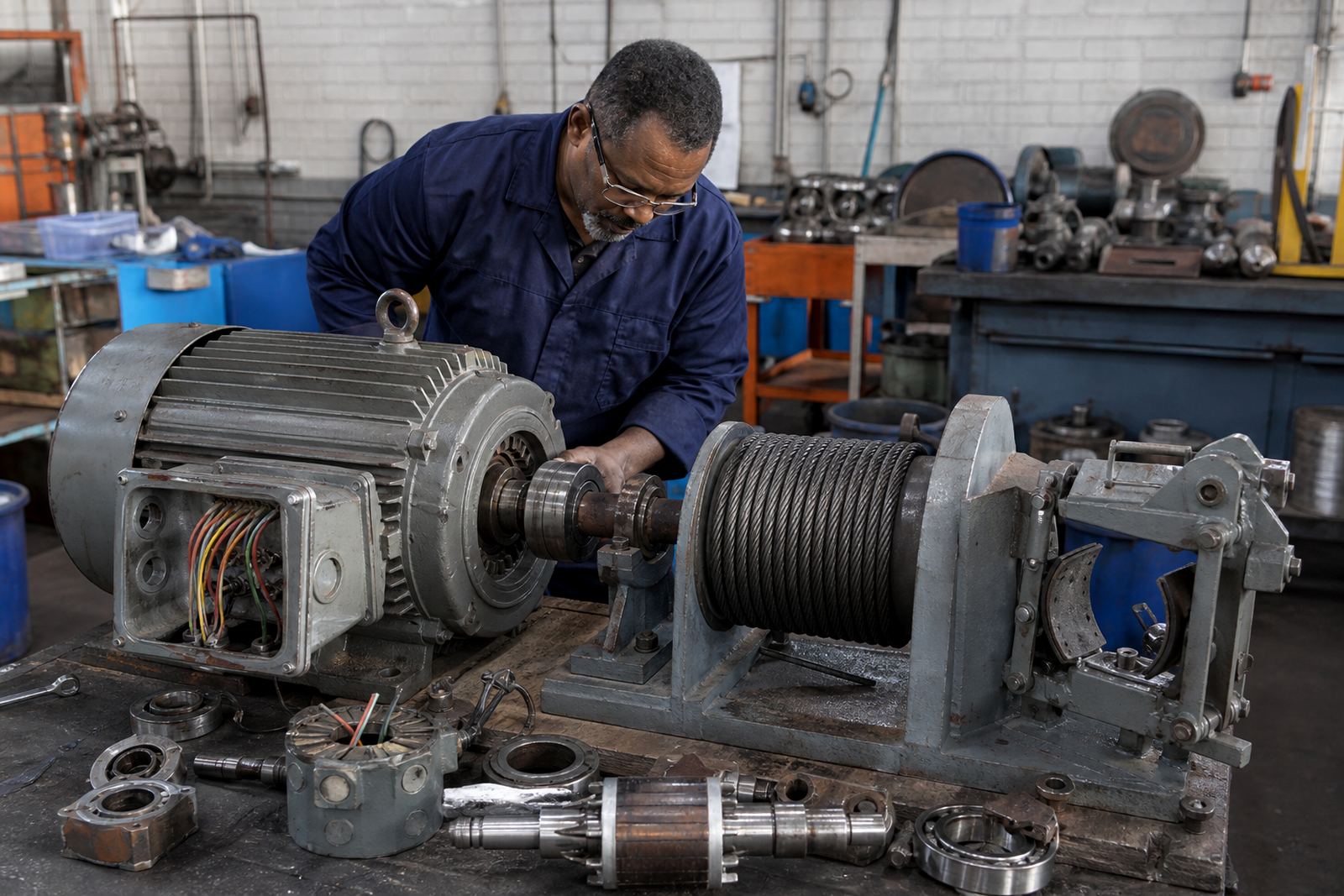
A proper rewind job is not only about wire. Before and after winding, the motor should be inspected for shaft wear, bearing condition, terminal damage, contamination and signs of frame distortion. If the bearings are noisy, loose or seized, replacing them at the same time can prevent the new winding from being damaged by vibration or misalignment. Alignment checks are also useful where the motor drives a pump or gearbox that has been moved during removal.
Insulation testing helps confirm whether the motor can return to service safely. In practice this includes checking winding resistance, insulation resistance and earth fault risk, then making sure the motor runs within expected current and temperature limits when powered up. Site reporting, spares assessment and panel cleaning can be included where the job needs extra follow-up. On some sites, cable checks and drive inspection are needed as well, because a motor fault can start in the control gear rather than the motor itself.
Installation, power supply and site needs
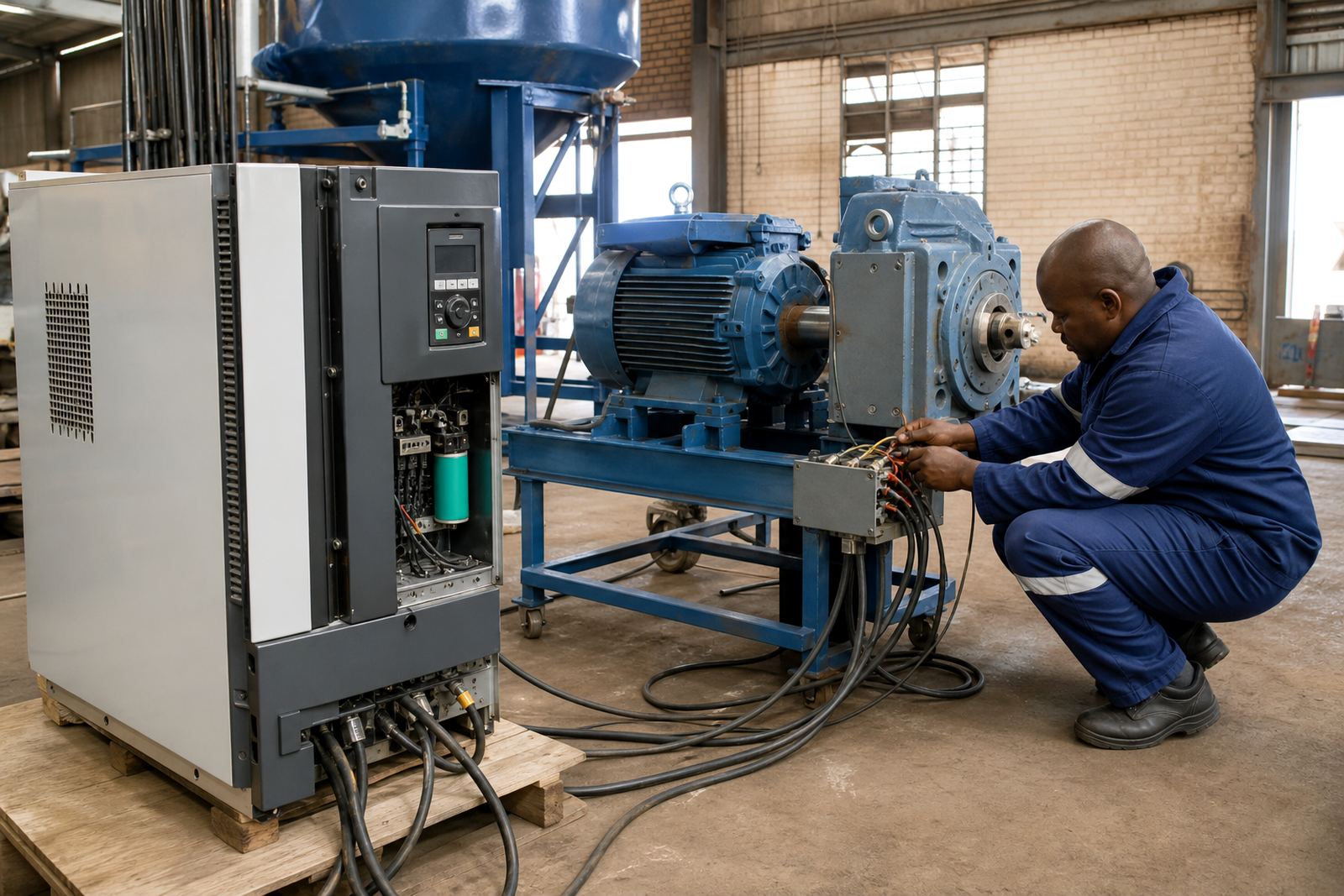
Installation should always be handled by qualified electrical personnel who understand isolation, safe testing and correct re-energising procedures. For planned shutdowns, the motor can be removed, checked and reinstalled with the machine isolated and tagged out. If the motor is paired with a variable speed drive, the control settings and cable condition should be reviewed before restart, otherwise the repaired motor can be put back into a faulty circuit.
Before ordering or scheduling a rewind, it helps to confirm the supply voltage, mounting arrangement, shaft dimensions and whether the motor is direct-on-line or drive-controlled. Sites may also need clear access for lifting equipment and enough space for safe removal. In busy plants, shutdown planning can reduce disruption because the technician can work around production windows and limited access, especially in older buildings with cramped plant rooms.
- Confirm supply voltage and frequency
- Check frame size, shaft size and mounting feet
- Note rotation direction and cable entry position
- Record whether the unit is open, enclosed or fan cooled
- List any site restrictions for lifting or access
What to check when ordering a rewind
When you send through an enquiry, it helps to give the motor nameplate details and any fault history you have. If the plate is unreadable, a clear photo of the motor, terminal box and mounting can still help. Let us know whether the motor failed after a trip, a power cut, overheating, water ingress or bearing noise, because the likely cause changes the checks that should be done first.
It also helps to say whether you need motor removal, drive inspection, bearing checks, insulation testing or commissioning support as part of the job. For some customers the need is simply a rewind, while others need the full service chain from fault finding to site reporting. The more detail you can share at the start, the easier it is to plan the work and avoid repeat downtime.
Our team is based in Germiston and managed by Sibusiso Mthembu, with support from Annelie van Wyk, Thabo Nkosi, Megan Naidoo, Johan Pretorius and Lerato Molefe. If you are working across Johannesburg, Pretoria, Vereeniging or Durban, the same practical approach applies: isolate properly, test properly and return the motor only when it is ready for service.
Key facts
| Service type | AC motor rewinding for industrial and workshop use |
|---|---|
| Common supply ranges | 220 V, 380 V, 400 V and 525 V AC |
| Typical motor sizes | Small workshop units through to larger plant motors |
| Related checks | Bearing replacement, insulation testing, alignment and terminal inspection |
| Site support | Motor removal, drive inspection, commissioning support and shutdown planning |
| Service areas | Germiston, Johannesburg, Ekurhuleni, Pretoria, Vereeniging, Durban, Boksburg and Kempton Park |