

What a single phase motor does and where it is used
A single phase motor runs from standard supply power and is common on smaller machines where three phase supply is not available or not needed. It is often found on pumps, fans, compressors, grinders, bench equipment, mixers, workshop tools and light duty production machines. These motors are usually fitted with a start winding and a run winding, plus a capacitor or starting switch on many models.
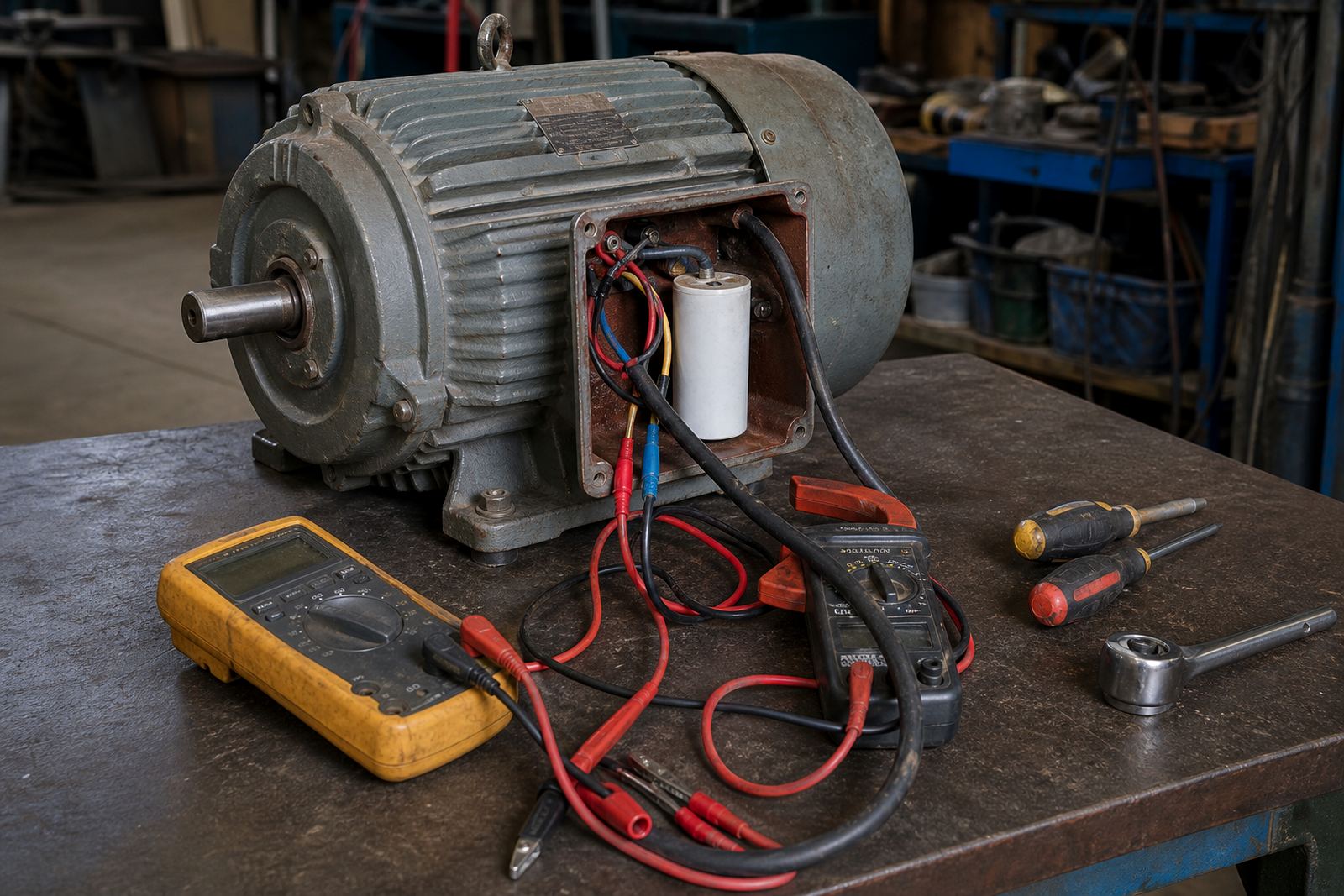
When a motor starts humming, tripping breakers, running hot or losing torque, the fault may be electrical or mechanical. We check the winding condition, the bearings, the capacitor circuit, shaft condition and general insulation state before advising on repair. In a busy workshop, a small motor can stop a whole process, so it pays to sort the issue before it becomes a bigger failure.
Repair and rewinding work we do
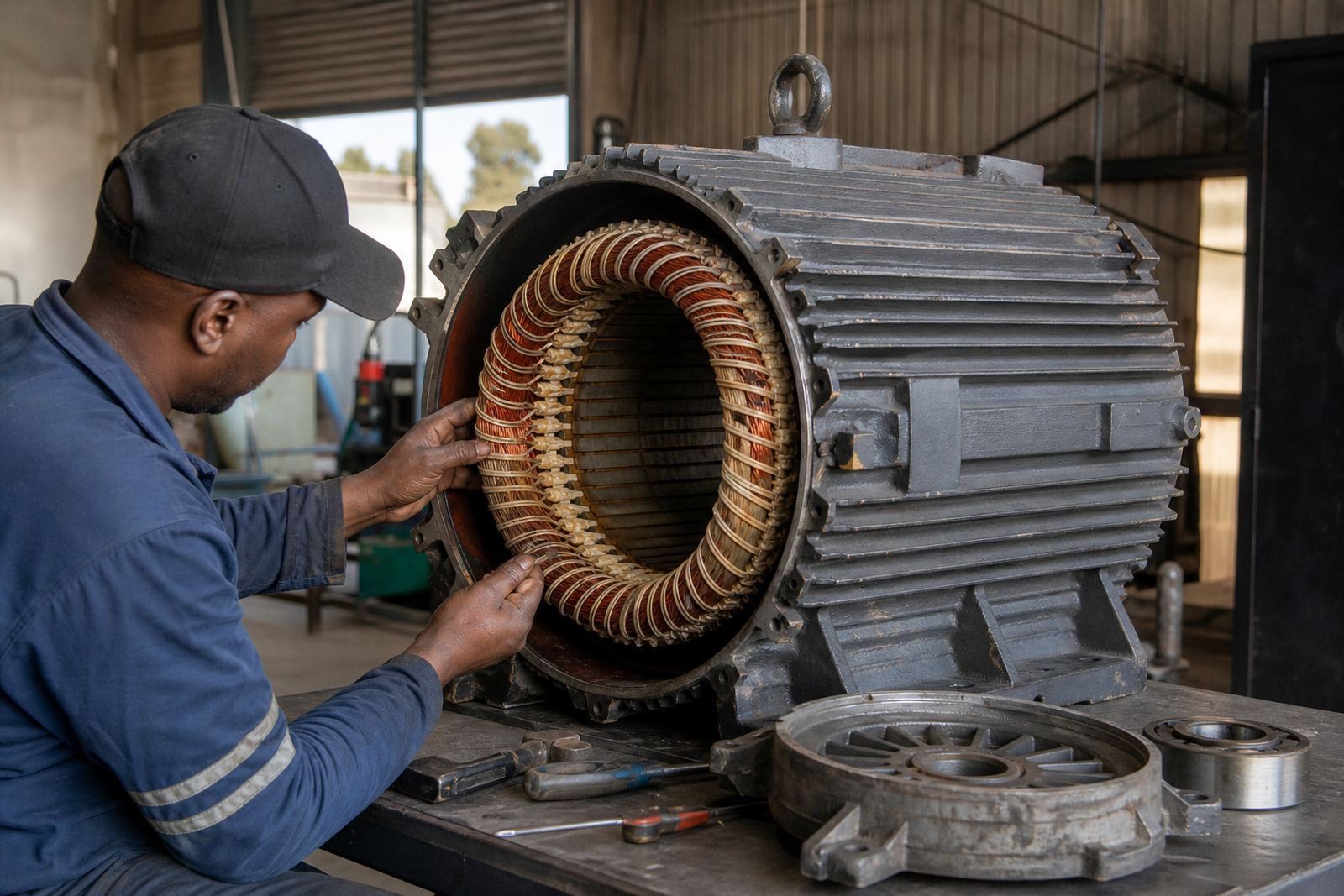
Single phase motor repair usually starts with fault finding, strip down and cleaning. From there we can carry out rewinding, bearing replacement, insulation testing, shaft and end cover checks, fan inspection and terminal box repair where needed. If the windings are burnt, shorted or badly damaged by moisture or dust, rewinding may be the practical route.
Rewinding is done to match the original winding data as closely as possible, using suitable wire size, coil layout and insulation materials for the motor frame and duty. If the motor has suffered bearing wear, we also check for rotor rubbing, end play and signs of heat damage. A motor can look fine on the outside and still fail under load, so the internal checks matter.
- Fault finding and bench inspection
- Stator rewinding and insulation renewal
- Bearing replacement and shaft checks
- Capacitor and starting circuit inspection
- Terminal box cleaning and cable checks
Sizes, frame types and common options
Single phase motors are supplied in a range of frame sizes and power ratings, usually from small fractional horsepower units up to light industrial sizes. Common options include capacitor start, capacitor run, split phase and shaded pole styles, depending on the application. Mounting can be foot mounted, flange mounted or a combination, and the shaft size, keyway and rotation direction need to match the machine.
When ordering or sending a motor in for repair, it helps to note the nameplate details, mounting style and the machine it drives. If the plate is unreadable, we can assess the frame and working parts in the workshop. We also look at service duty, enclosure type and cooling, because a motor working in a dusty factory or a damp coastal area needs the right protection.
- Typical supply: 220 V to 240 V single phase
- Common enclosures: open, fan cooled or enclosed types
- Mounting: foot, flange or dual mount depending on frame
- Typical use: intermittent or light continuous duty
- Options: thermal protection, capacitor start, capacitor run
Where single phase motors suit best in South African operations
These motors suit small plant rooms, maintenance shops, farms, body shops, food prep areas and light manufacturing lines where a simple supply is available. They are also used on equipment in remote sites where three phase power is not present at every point. In areas with load-shedding or unstable supply, motor condition becomes even more important because repeated starts and voltage dips can stress the windings and capacitor circuit.
For coastal areas such as Durban, humidity can cause tracking, corrosion and insulation breakdown if motors are not kept clean and dry. Inland dust and fine metal particles can also build up in the fan cover and terminal box. A motor that runs in a clean room may last well, while the same motor in a gritty workshop needs more regular inspection.
Installation, supply checks and electrical safety
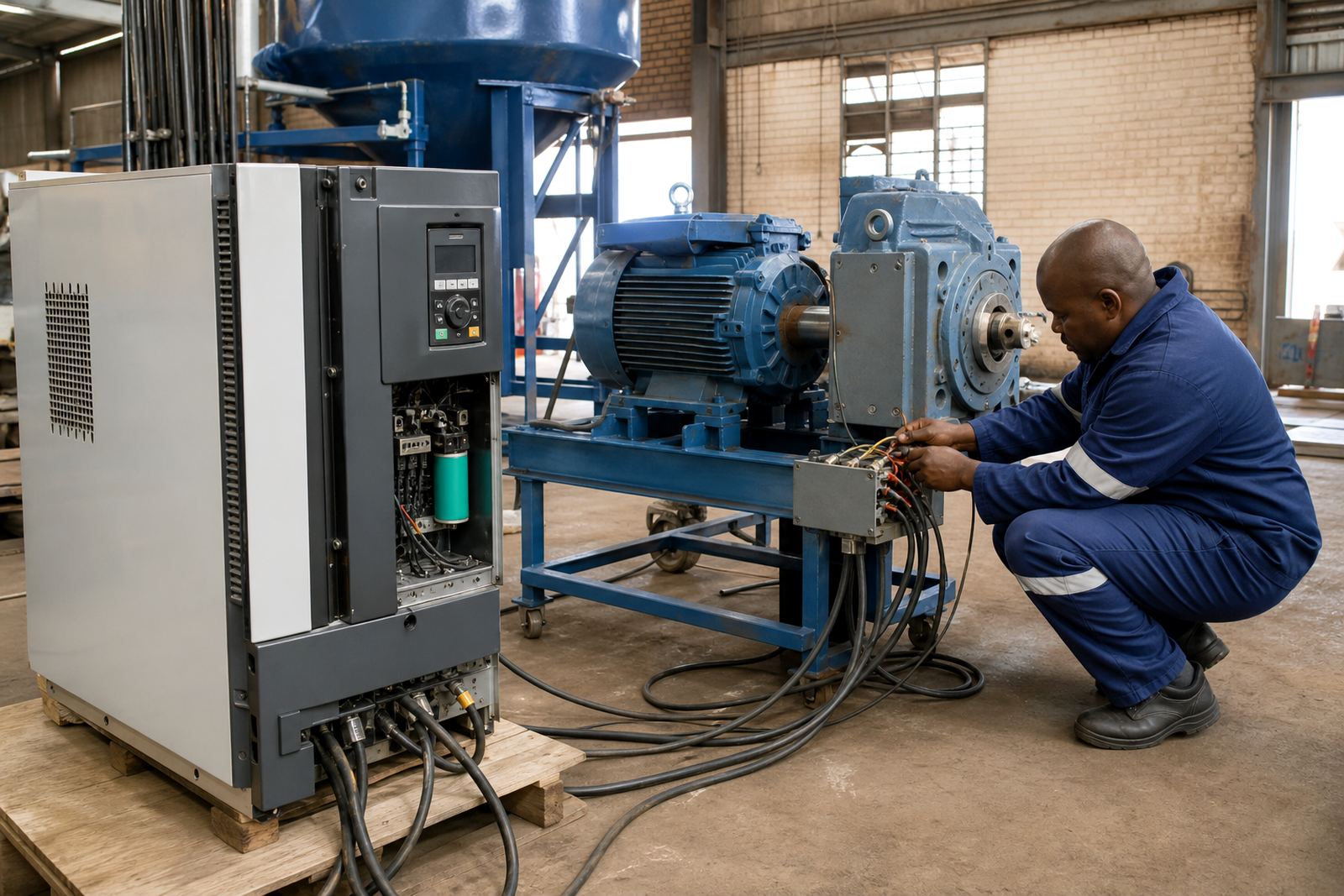
Single phase motors must be installed by qualified people using proper lockout procedures. Before any work starts, isolate the supply, verify dead, and make sure the machine cannot restart unexpectedly. A motor circuit should have correct protection, sound earthing and proper cable sizing. Loose connections and undersized cables can cause low voltage, overheating and nuisance tripping.
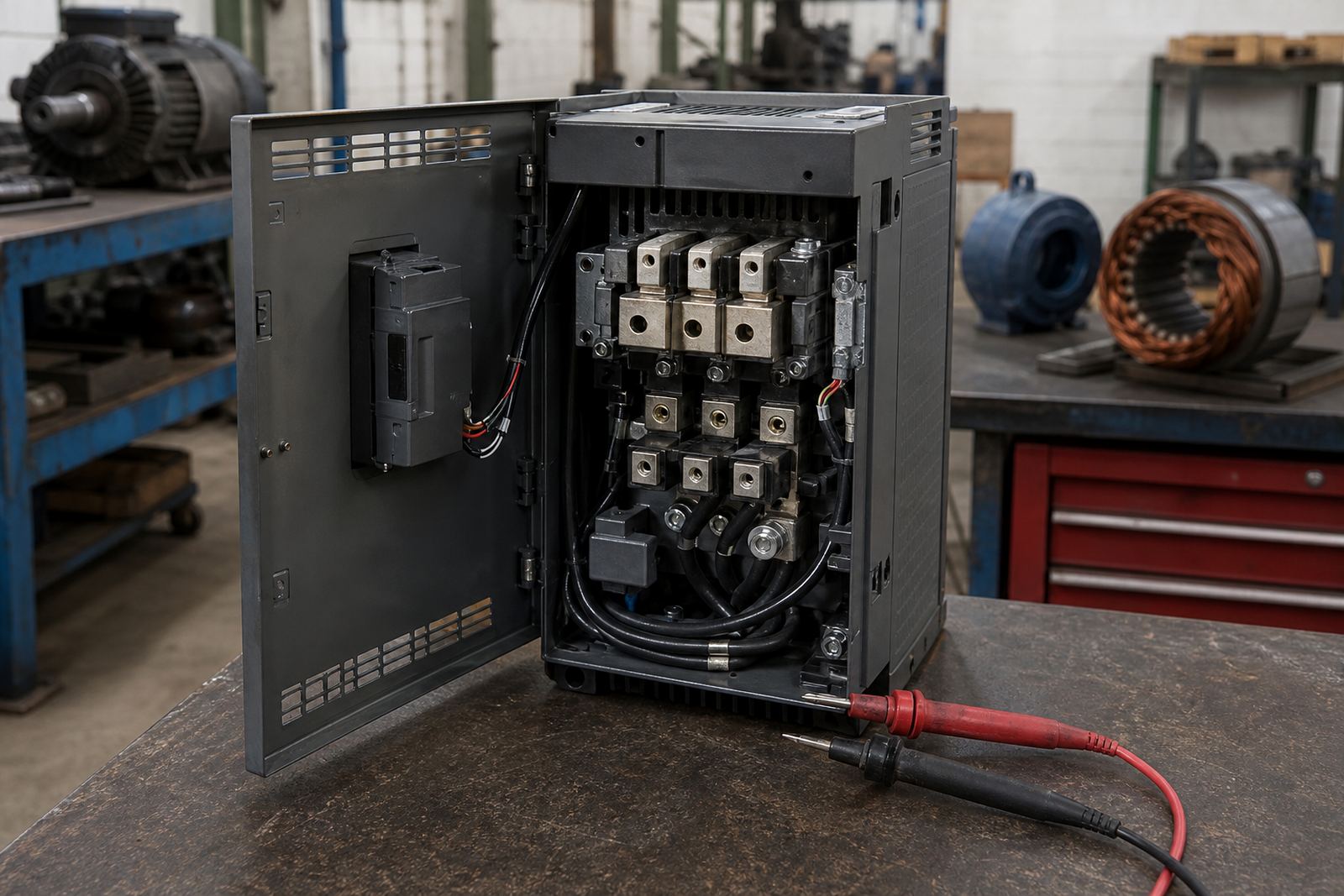
When fitting a repaired motor back into service, check rotation, coupling alignment, pulley condition and driven load before leaving it unattended. If the equipment uses a start capacitor or a run capacitor, the values must suit the motor design and the replacement parts should be tested before commissioning. It is also worth checking the contactor, overload and control wiring at the same time, because the motor is only one part of the system.
- Isolate and lock out before removal or testing
- Check supply voltage under load
- Confirm earth continuity and cable condition
- Verify rotation and coupling alignment after installation
- Inspect overloads, capacitors and control gear
Care, servicing and what to check when you order
Routine care extends motor life. Keep the cooling paths clear, clean dust from the fan cover, listen for bearing noise and look for signs of overheating at the terminal box. If a motor has been exposed to water, oil mist or heavy dust, it should be checked before the next long run. A small amount of preventative attention can avoid a shutdown in the middle of a shift.
When you contact Locor through the enquiry form, give as much detail as you can. The more we know upfront, the easier it is to assess whether the motor needs rewinding, bearing work or a full strip and test. If the motor is still available, send the nameplate information and clear photos of the frame, shaft and terminal box. If not, measurements help us identify the right match.
- Nameplate data, if available
- Supply voltage and frequency
- Mounting style and shaft size
- What machine the motor drives
- Fault symptoms, such as tripping, humming or slow start
- Any past repairs, capacitor changes or bearing issues
Key facts
| Product type | Single phase electric motor repair and rewinding |
|---|---|
| Typical supply | 220 V to 240 V AC, single phase |
| Common power range | Fractional horsepower up to light industrial sizes |
| Mounting styles | Foot mounted, flange mounted, dual mount |
| Service work | Fault finding, rewinding, bearing replacement, insulation testing |
| Use areas | Workshop equipment, pumps, fans, compressors and light plant machinery |