

Compressor Motor Repair Work For Daily Plant Demand
Compressor motors usually run for long shifts, often with frequent starts, heat build-up and dust or moisture around the machine room. When a motor starts tripping, running hot, humming under load or losing torque, the issue may sit in the windings, bearings, cable terminations or the starting and control equipment.
Our compressor motor repair support is set up for industrial use, not light domestic work. We handle fault finding, motor removal, bearing checks, insulation testing, alignment checks and commissioning support for motors that drive screw compressors, piston compressors, air handlers and related plant equipment. The aim is to return the motor to safe service and reduce repeat failure.
Because electrical work must be done by qualified people, with proper lockout procedures in place, we treat each job as a controlled repair task. That matters on live plants where compressed air systems feed tools, production lines and process equipment. Sibusiso Mthembu and the team at Locor work with site teams to keep the repair practical and clear, from initial inspection to final test run.
Rewinding, Bearing Replacement And Insulation Testing
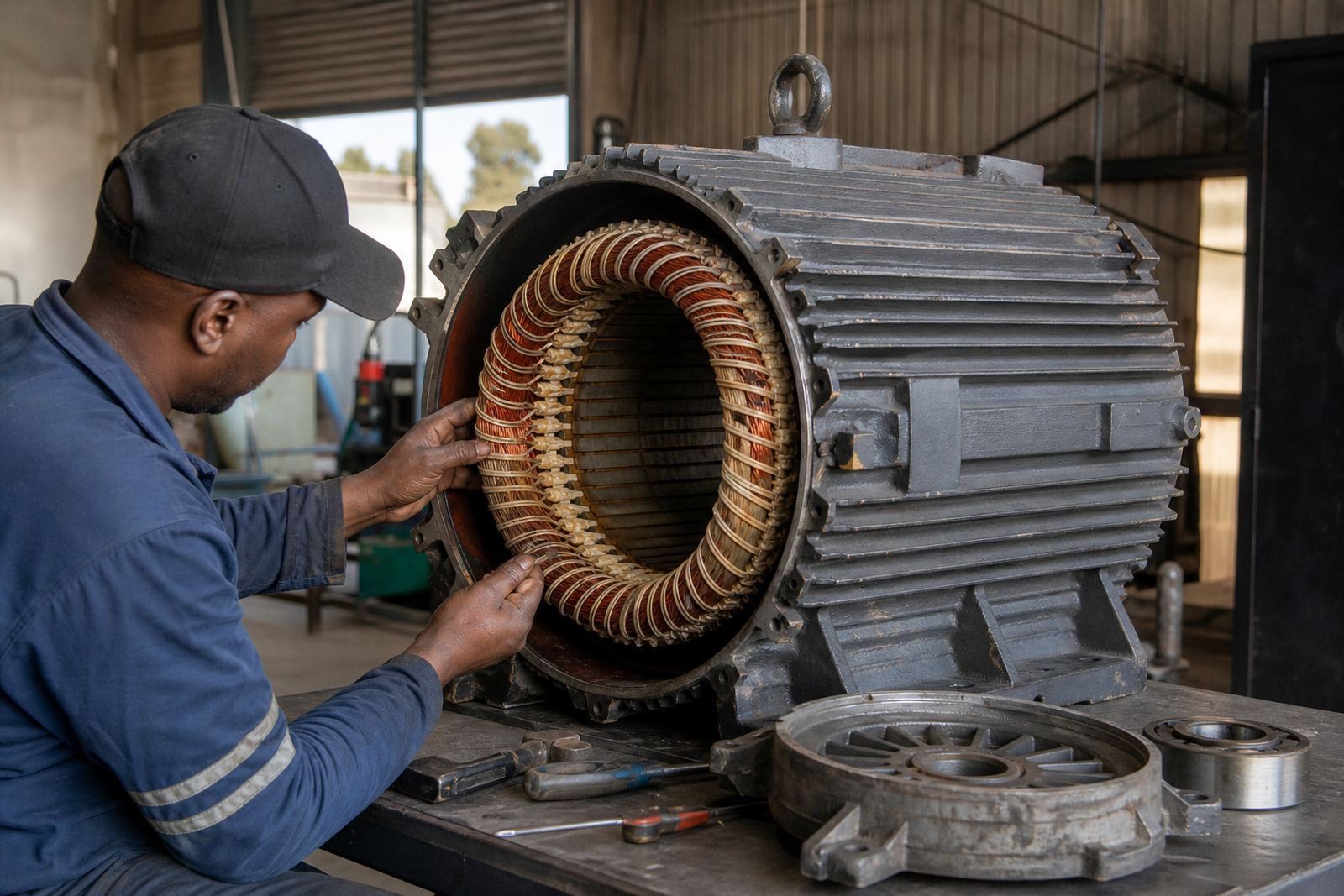
Electric motor rewinding is used when the stator winding has burnt, shorted, gone brittle from heat or been damaged by moisture ingress. The motor is stripped, the failed windings removed and the core inspected before new windings are fitted to suit the motor design. After that, the motor is tested for continuity, resistance balance and insulation strength before reassembly.
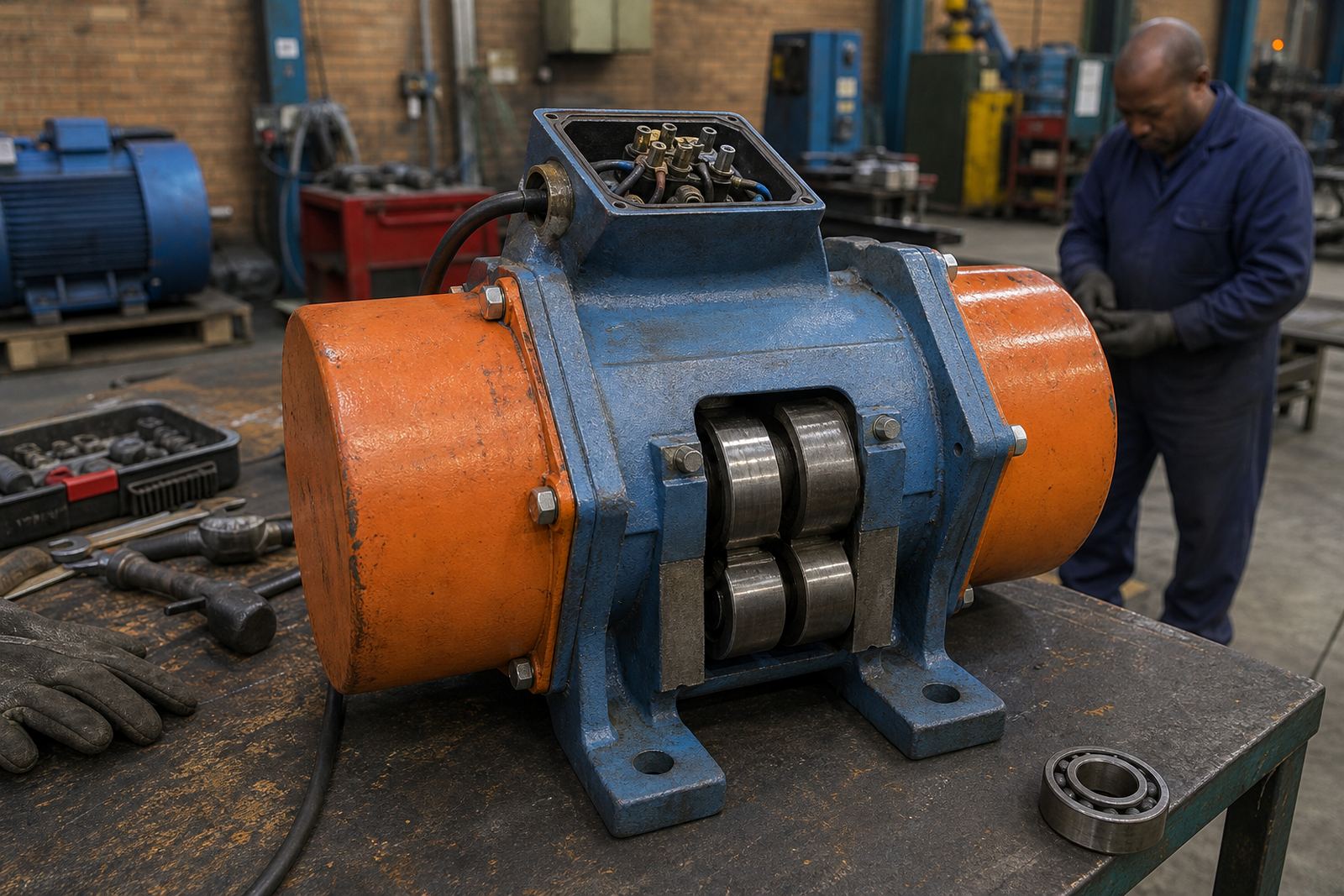
Bearing replacement is often needed on compressor motors because of constant running, belt tension and vibration. A worn bearing can create noise, excess heat and shaft play, then damage the rotor or end shields if it is left too long. We inspect the bearing seats, shaft condition and lubrication path before fitting the correct replacement and checking alignment again.
Insulation testing helps confirm whether a motor can be returned to service safely. We look at winding insulation resistance, phase balance and earth leakage indications, then record the results for site reporting. On coastal sites, humidity can affect insulation and terminal boxes, so the checks are important even when the motor still appears to run.
- Stator rewind for damaged or overheated windings
- Bearing replacement for noisy, rough-running or seized motors
- Insulation resistance testing before and after repair
- Rotor and shaft condition checks where vibration is present
Motor Sizes, Enclosures And Duty Ratings We Commonly See
Compressor motors come in a range of frame sizes and duty ratings, from smaller workshop units through to larger industrial motors used in packaged compressor skids. We work on single phase and three phase motors, with common supply ratings from 220 V to 400 V and larger industrial supplies where site equipment requires it. Power capacity varies by compressor duty, starting method and load profile.
Motor enclosures matter in South African conditions. In dusty inland workshops, a more closed enclosure helps protect the windings and bearings from grit. In humid or coastal environments, attention to seals, terminal boxes and moisture control becomes even more important. We also see motor issues linked to poor ventilation, blocked cooling fins and panel contamination.
Locor supports repairs for compressor motors used in factories, mines, warehouses, workshops and service yards across Germiston, Johannesburg, Ekurhuleni, Pretoria, Vereeniging, Durban, Boksburg and Kempton Park. That includes motors on compressors that run through load-shedding changes, generator changeovers or unstable supply conditions, where starting stress can become a real factor.
- Small workshop motors for light industrial air supply
- Mid-size continuous-duty motors for plant compressors
- Larger frame motors on fixed compressor sets and skids
- Induction motors used on direct drive and belt drive systems
Where Compressor Motor Repairs Suit Your Site
Compressor motor repair suits any site that depends on steady air supply and cannot afford avoidable downtime. That includes machining shops, packaging lines, body repair workshops, food and beverage plants, maintenance depots and general manufacturing. A failing compressor motor can affect pneumatic tools, actuators, cleaning systems and process control.
We can assist with motor removal, drive inspection, panel cleaning, cable checks, spares assessment and shutdown planning where the compressor is part of a larger system. If the motor failure is connected to the variable speed drive, starter panel or protection device, the repair needs to cover the full chain rather than only the motor itself.
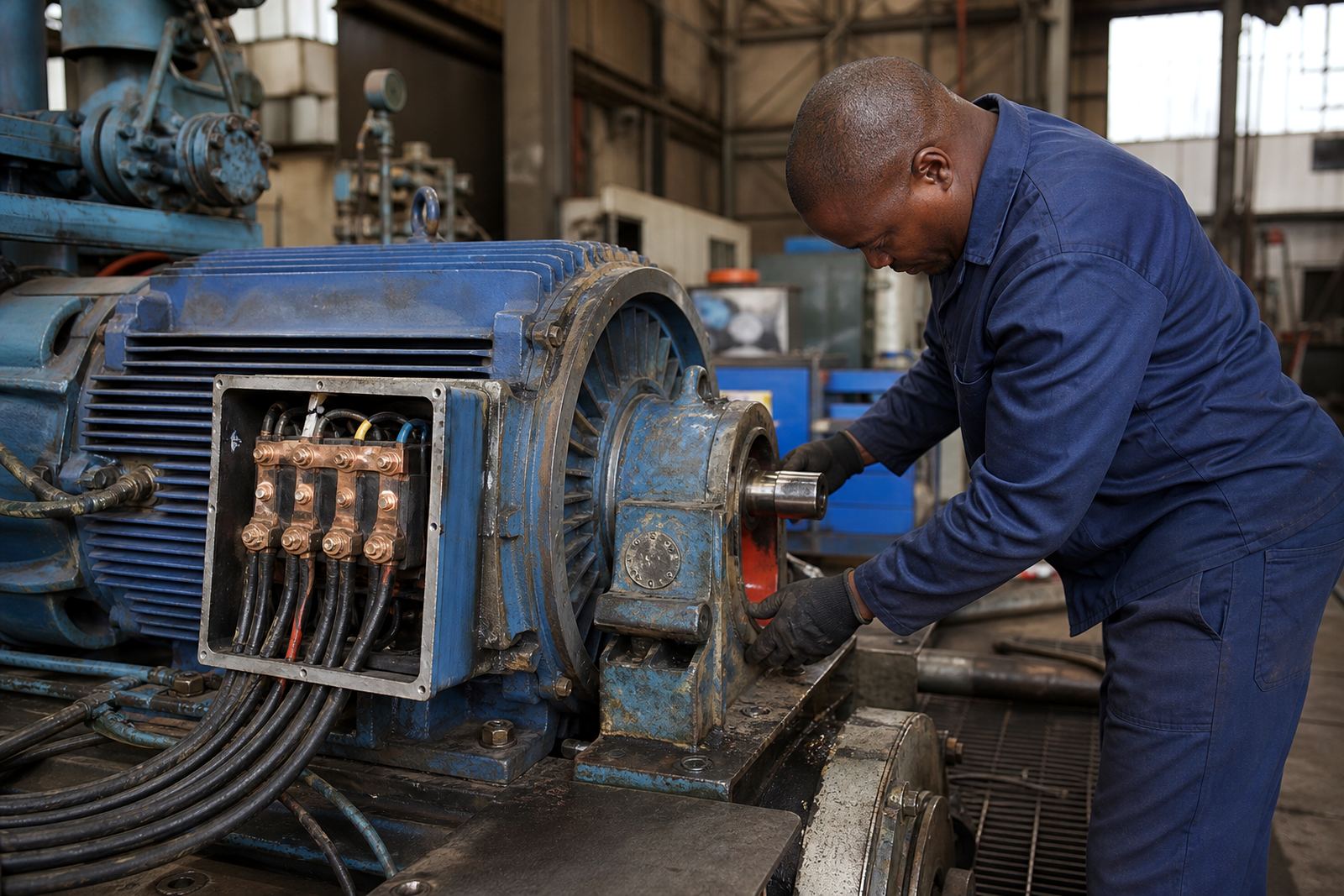
For field work, Johan Pretorius coordinates site attendance so the repair approach matches the shutdown window and access available. On some jobs the motor can be removed for workshop repair, while on others the inspection starts on site to check alignment, condition of couplings, overload settings and signs of water or dust entry.
- Sites with compressed air critical to production
- Workshops with frequent start stop duty
- Plants affected by heat, dust, vibration or humidity
- Operations that need reporting before restart
Installation Needs, Power Supply And Protection Checks
Before fitting a repaired compressor motor back into service, the installation side should be checked properly. The motor must match the supply voltage, phase arrangement, protection settings and starting method used on site. If the compressor uses direct-on-line starting, soft starting or a variable speed drive, the repair needs to suit that method and the load profile.
Power quality matters too. Loose terminals, damaged cables, poor earthing and undersized protection can all shorten motor life. On sites with long cable runs or generator-backed supply, voltage drop and switching conditions may also affect performance. We check cable condition, terminal security and panel cleanliness so the repaired motor is not put back into a bad environment.
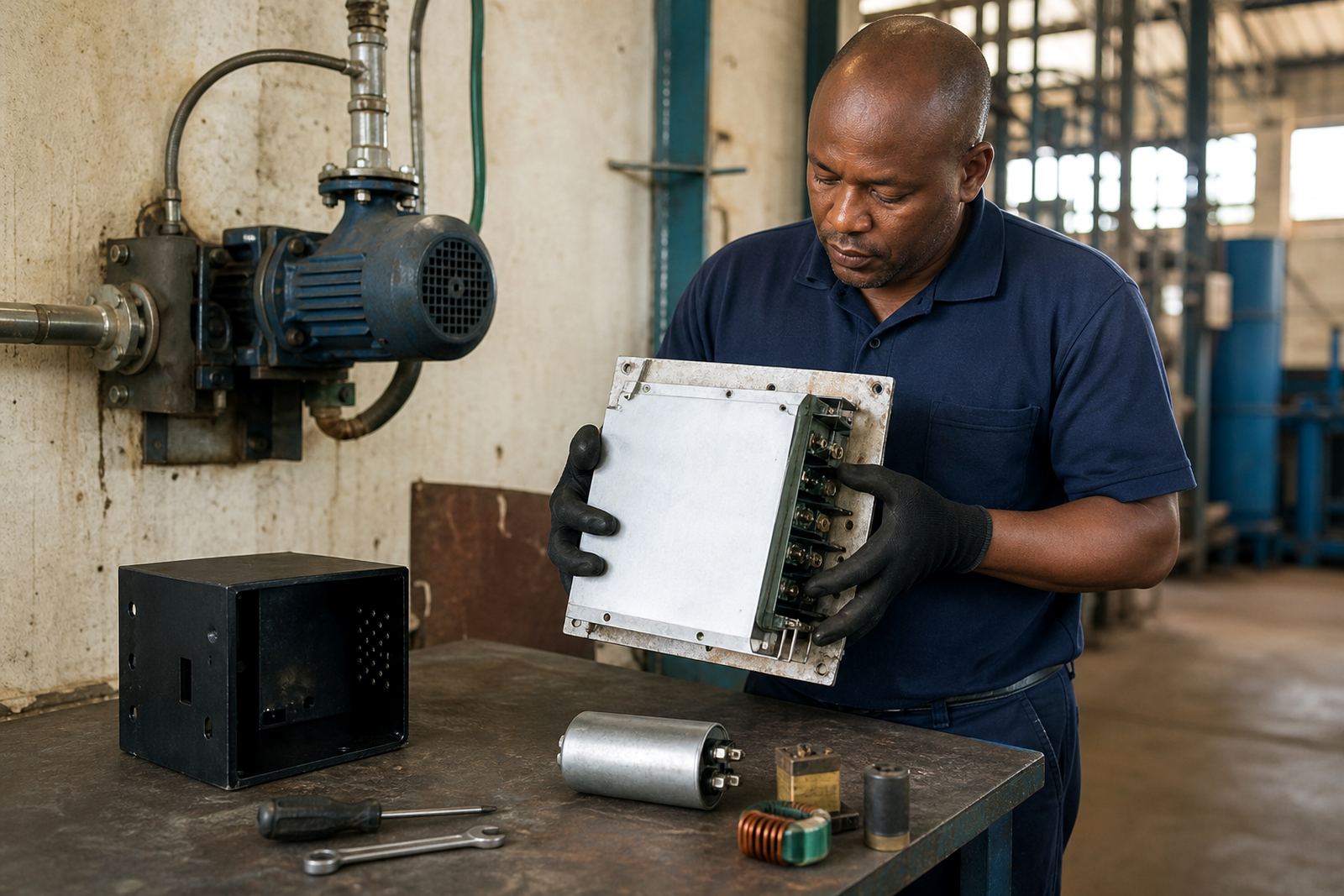
If a compressor system is linked to a drive, Megan Naidoo checks the drive side for fault codes, fan condition, heat sink contamination, capacitor wear and terminal damage. A repaired motor can still fail again if the drive output or incoming supply is unstable, so the system needs a full look-over before commissioning.
Care, Servicing And What To Check When Ordering
Regular care keeps compressor motors running longer. Keep cooling passages clear, check for vibration, listen for bearing noise and inspect the terminal box for dust or moisture. On load-shedding affected sites, watch for repeated hard starts and nuisance trips after power restoration, because that can place extra stress on the winding and bearings.
Service planning should include shutdown timing, spares assessment and a clear record of any previous failures. Annelie van Wyk and Lerato Molefe help customers gather the information needed for the repair process, while Thabo Nkosi checks the winding details and Johan coordinates any field work required. Clear details save time and prevent confusion on arrival.
When you enquire, have the motor nameplate details ready if possible, plus the compressor type and the fault symptoms. That helps us identify whether the issue is mainly electrical, mechanical or drive related. We also need to know the supply voltage, mounting arrangement, any signs of water ingress, and whether the unit has been running hot or tripping under load.
- Motor kW or HP rating and supply voltage
- Frame size, mounting style and shaft details
- Fault symptoms such as noise, heat, trip or low torque
- Whether the motor is on a drive, starter or direct-on-line system
Clients reach us through the enquiry form on our contact page, and the team responds from our Germiston base for work across South Africa. Founded in 2007, Locor has built its compressor motor repair support around practical fault finding, careful rewinding and honest site communication.
Key facts
| Service type | Compressor motor repairs for industrial and workshop use |
|---|---|
| Typical supply | Single phase and three phase, commonly 220 V to 400 V |
| Work covered | Fault finding, rewinding, bearing checks, insulation testing, alignment checks |
| Related systems | Direct-on-line starters, soft starters and variable speed drives |
| Service area | Germiston, Johannesburg, Ekurhuleni, Pretoria, Vereeniging, Durban and nearby industrial areas |
| Base | Germiston, Gauteng |