

What a Mixer Drive Does on the Plant Floor
A mixer drive controls motor speed and torque so a mixer, agitator or blending unit can start smoothly and run at the right pace for the product in the vessel. In many plants this matters for batch consistency, heat control and product quality. When the drive starts tripping, hunting, overheating or losing output, the whole line can slow down quickly.
We repair variable speed drives used on mixers across food, chemical, water treatment, packaging and general processing environments. That includes units on tank-mounted agitators, floor mixers, portable mixers and machine skids. The work can involve fault finding on the power stage, control section, cooling path and input or output circuits, depending on the problem.
Electrical work must be done by qualified people using proper lockout procedures, test equipment and safe isolation. That applies at the panel and at the motor side, especially where there is stored energy, backfeed or interlocked machinery.
Repair Scope for Drives Used with Mixers and Agitators
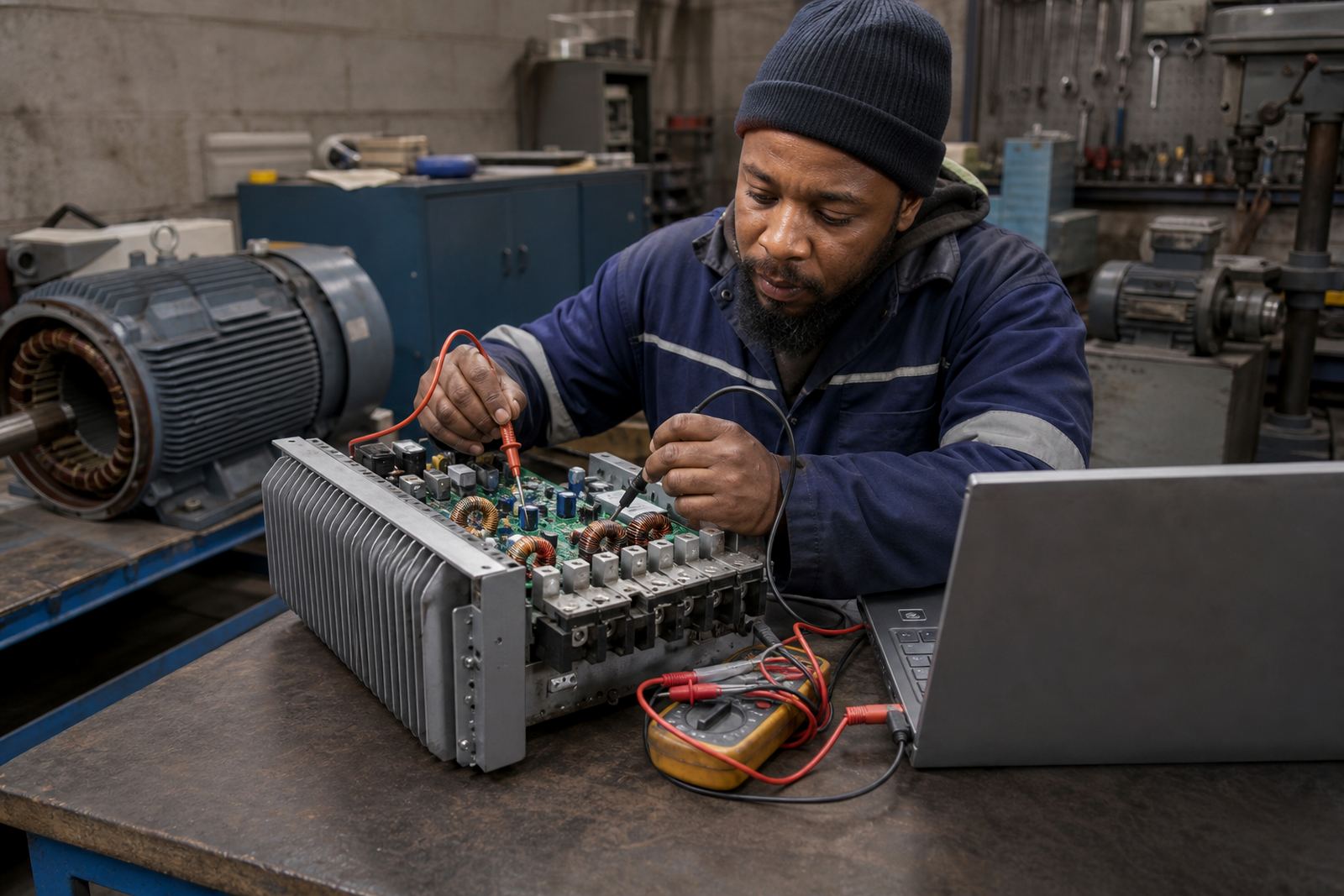
Our repair process covers the usual wear and fault points found in mixer drive applications. We inspect the unit, test key components and confirm whether the drive can be repaired safely or whether a deeper electrical issue in the motor, cable or control system is causing the fault. If the problem is on site, we can also help with shutdown planning and site reporting.
- Drive inspection and fault finding
- Panel cleaning and cable checks
- Insulation testing where required
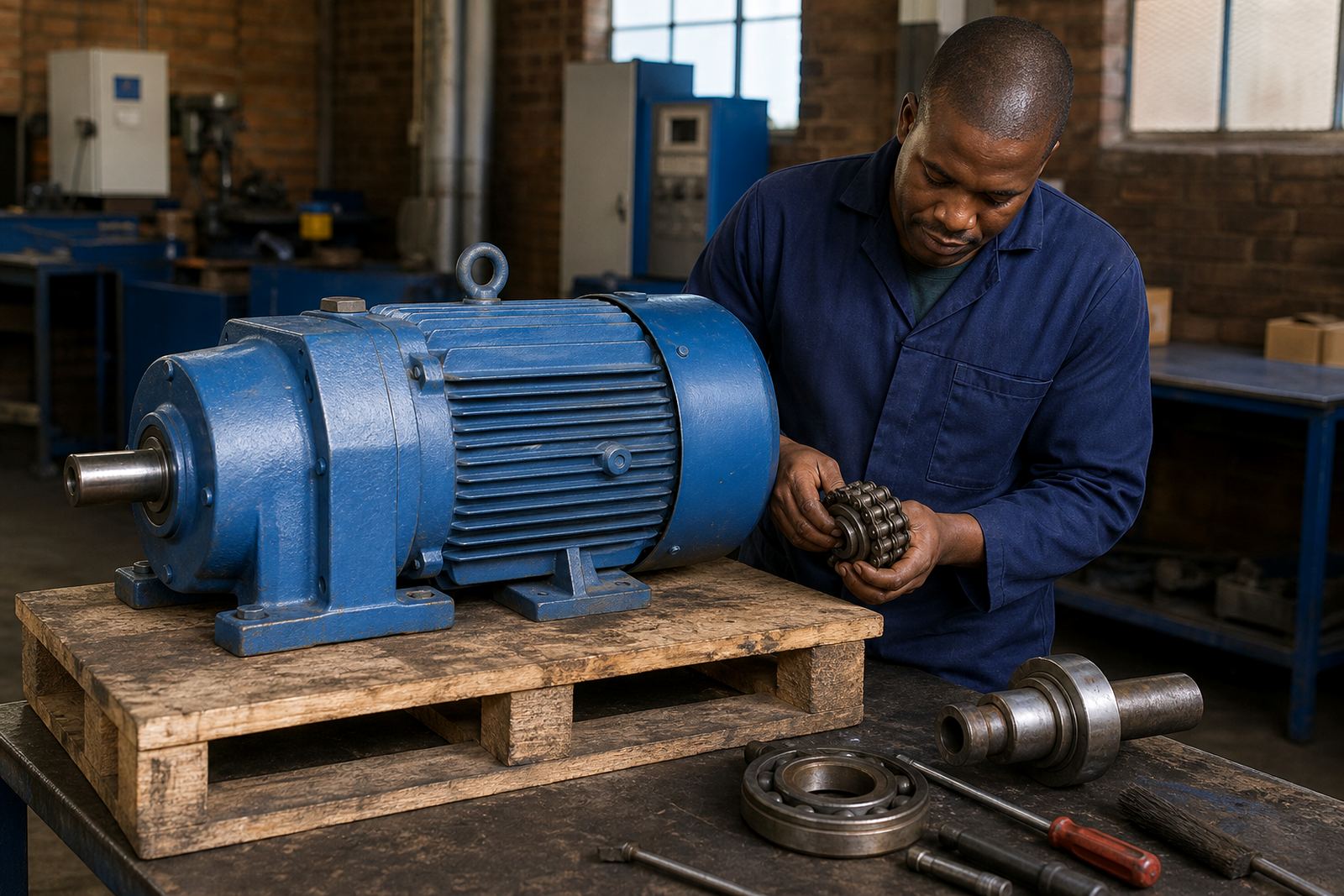
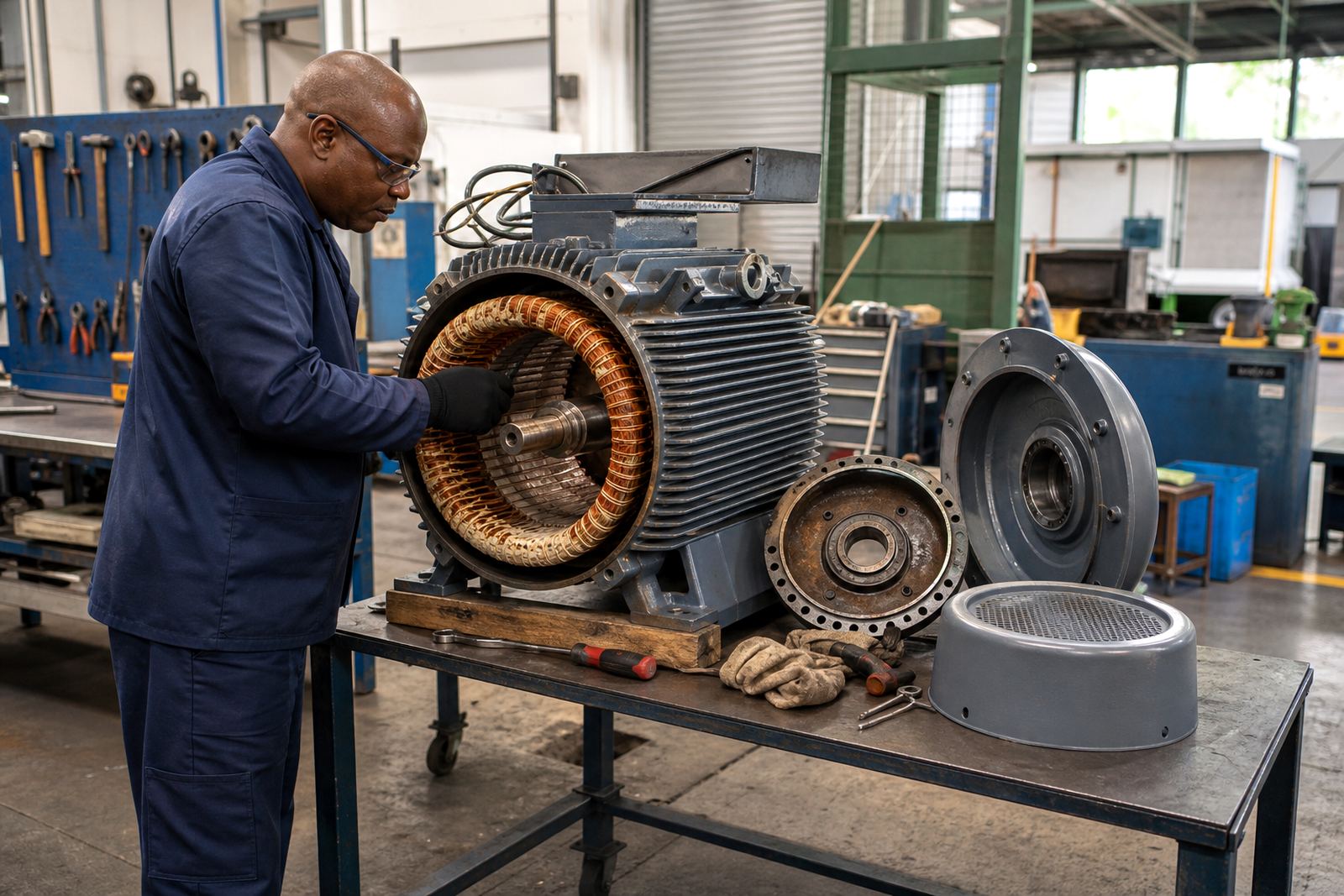
- Bearing checks on the driven motor
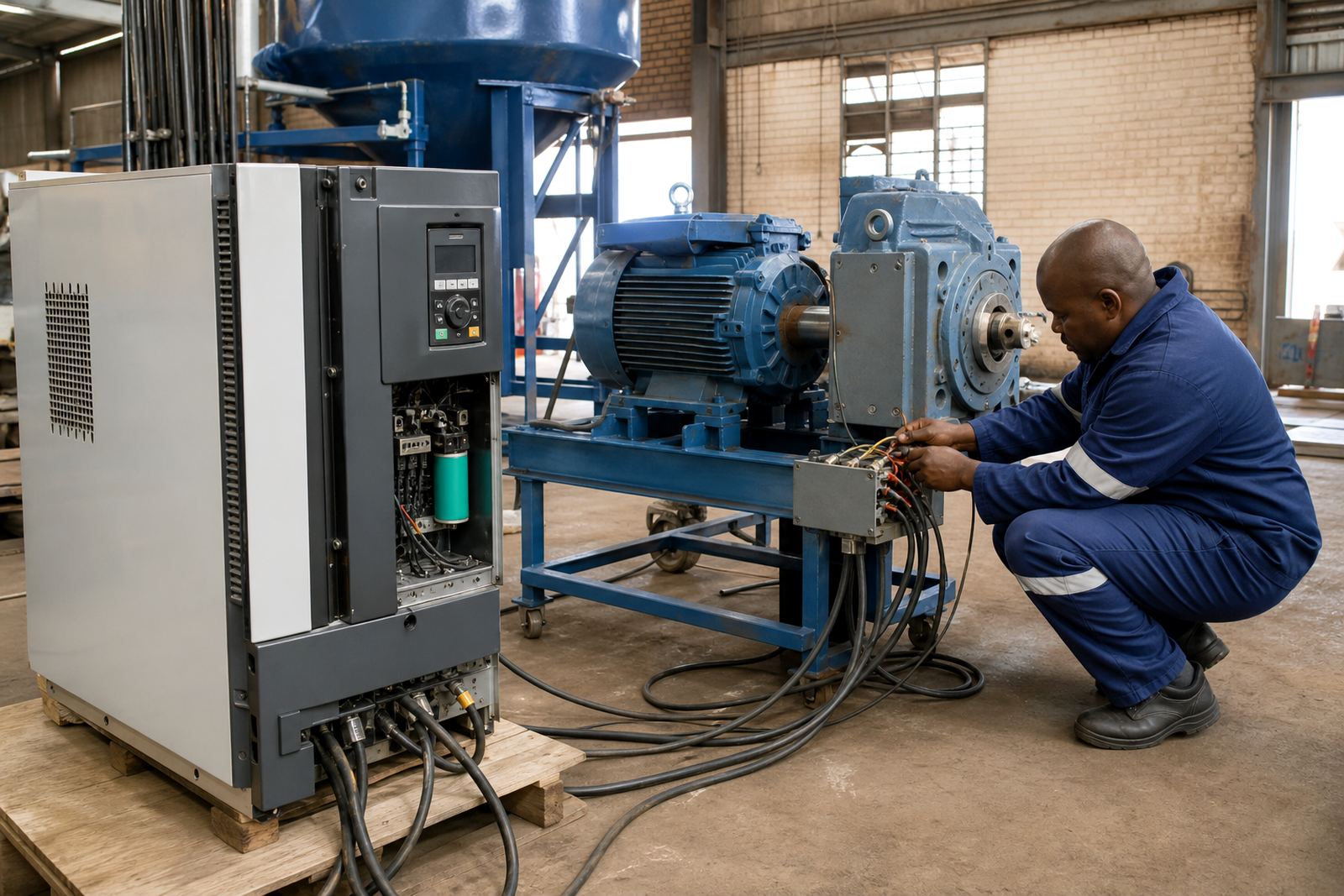
- Alignment checks and commissioning support
- Spares assessment before repair work starts
Where a drive has been damaged by heat, dust, moisture or unstable supply conditions, we look at the root cause too. On many sites the real issue is not only the drive itself, but also poor cabinet ventilation, loose terminations, contaminated panels or a motor that is drawing more current than it should.
Sizes, Control Options and Common Drive Types
Mixer drives are selected to suit the motor size, load profile and control method used on the plant. Some mixers need simple speed adjustment, while others need tighter torque control for heavy start-up loads or thick product. We work on smaller units for workshop mixers as well as larger plant drives used in continuous processing.
Typical options include single or three phase input units, fixed-speed setups with external control, and variable speed drives with keypad control, remote control or analogue signal input. In practical terms, the right unit must match the motor rating, supply voltage and control logic already in use. A mismatch can cause nuisance trips, poor starting or damaged components, so checking the nameplate details matters.
- Low power mixer drives for small batch equipment
- Mid-range drives for general process mixers
- Higher torque units for heavy agitators and thick slurry applications
- Panel-mounted or wall-mounted installations
- Local keypad, remote control or PLC-linked operation
We do not guess on sizing. We check what is fitted, what the load demands and whether the existing installation gives enough cooling and clearance. A unit that is too small will run hot and a unit that is oversized may not solve the underlying fault.
Where Mixer Drive Repairs Suit Best
This service suits plants that need controlled mixing, blending, agitation or circulation and cannot afford long stoppages. It is commonly used in sites around Germiston, Boksburg, Kempton Park and the wider Ekurhuleni area, as well as Johannesburg, Pretoria, Vereeniging and Durban. We also assist workshops that run test mixers, maintenance rigs or process equipment with variable load conditions.
Mixer drives are often exposed to dust, steam, wash-down, coastal humidity and vibration. That is why a damaged drive may show repeated failures if the site conditions are not corrected. If the cabinet is in a wet or corrosive area, we look at enclosure condition, seals, cable entries and whether the cooling path is still working properly.
On some sites the mixer is part of a shutdown sequence or cleaning cycle, so timing matters. If the drive is being repaired during a plant stop, it helps to confirm the control sequence, bypass arrangements and the exact motor connection points before anyone starts stripping equipment.
Installation, Power Needs and Site Checks
Before a repaired drive goes back into service, the installation must be checked carefully. The supply voltage must match the drive rating, the earthing must be sound and the motor cable must be in good condition. If the motor leads are damaged, pinched or contaminated with oil or moisture, the drive can fail again shortly after start-up.
We recommend checking the following before ordering repair work or planning a return to service:
- Motor nameplate data, including voltage, current and kW rating
- Supply type, whether single phase or three phase
- Control method, keypad, remote signal or PLC control
- Cabinet space, cooling and dust levels
- Cable length and condition between drive and motor
- Any recent overloads, trips or power dips on site
If the mixer is on a municipal site or in a regulated process area, make sure your internal permits, isolation steps and switchroom access are in order before the equipment is removed. That saves time and reduces the chance of a rushed reinstatement.
Care, Servicing and What to Check When Ordering
Good servicing helps a mixer drive last longer. Keep the cabinet clean, check for blocked cooling fans and confirm that dust, moisture and product spillages are not reaching the electronics. If the motor bearings are noisy or the coupling is running out of line, the drive may show current spikes or repeated faults. A sound motor makes a big difference to drive life.
When you enquire, have the make, model if visible, motor details, the fault symptom and any photos of the nameplate ready. It also helps to note whether the unit failed during start-up, under load or after a power disturbance. If the panel has scorch marks, broken terminals or signs of water ingress, mention that too. A little detail upfront often shortens the diagnosis step, and it avoids unnecessary strip-downs.
Our Germiston base supports repair work, collection planning and site coordination for customers across South Africa. We handle the practical side of the job, from inspection to testing, so your maintenance team can keep the mixing process moving with less downtime and fewer surprises.
Key facts
| Service type | Variable speed drive repair for mixers and agitators |
|---|---|
| Typical supply | Single phase or three phase, depending on the unit fitted |
| Motor range | Small workshop mixers through to larger process agitators |
| Work scope | Fault finding, inspection, testing, repair and recommissioning support |
| Support area | Germiston, Johannesburg, Ekurhuleni, Pretoria, Vereeniging and Durban |
| Safety note | Qualified electrical personnel only, with lockout and isolation procedures |