

What a Water Pump Drive Does on Site
A water pump drive is a variable speed drive used to control the speed of an electric motor on a pumping set. Instead of running a pump flat out all day, the drive adjusts output to suit demand. That can help with water pressure control, tank filling, circulation, booster sets and process lines where flow changes through the shift.
In practice, the drive takes incoming AC power and changes the frequency and voltage sent to the motor. That lets the motor start more smoothly, run at the right speed and avoid hard starts that can stress couplings, seals and bearings. It is common on borehole systems, fire pumps with controls, HVAC pumps, wash bays, cooling towers and municipal or industrial water reticulation. If the drive trips often, runs hot, or gives unstable speed control, it usually needs proper testing rather than guesswork.
- Suitable for single pump and duty standby pumping panels
- Useful where line pressure changes through the day
- Helps reduce mechanical shock on pipes and valves
- Can support controlled starts after load shedding or supply dips
Repair Work for Pumping Drives and Control Panels
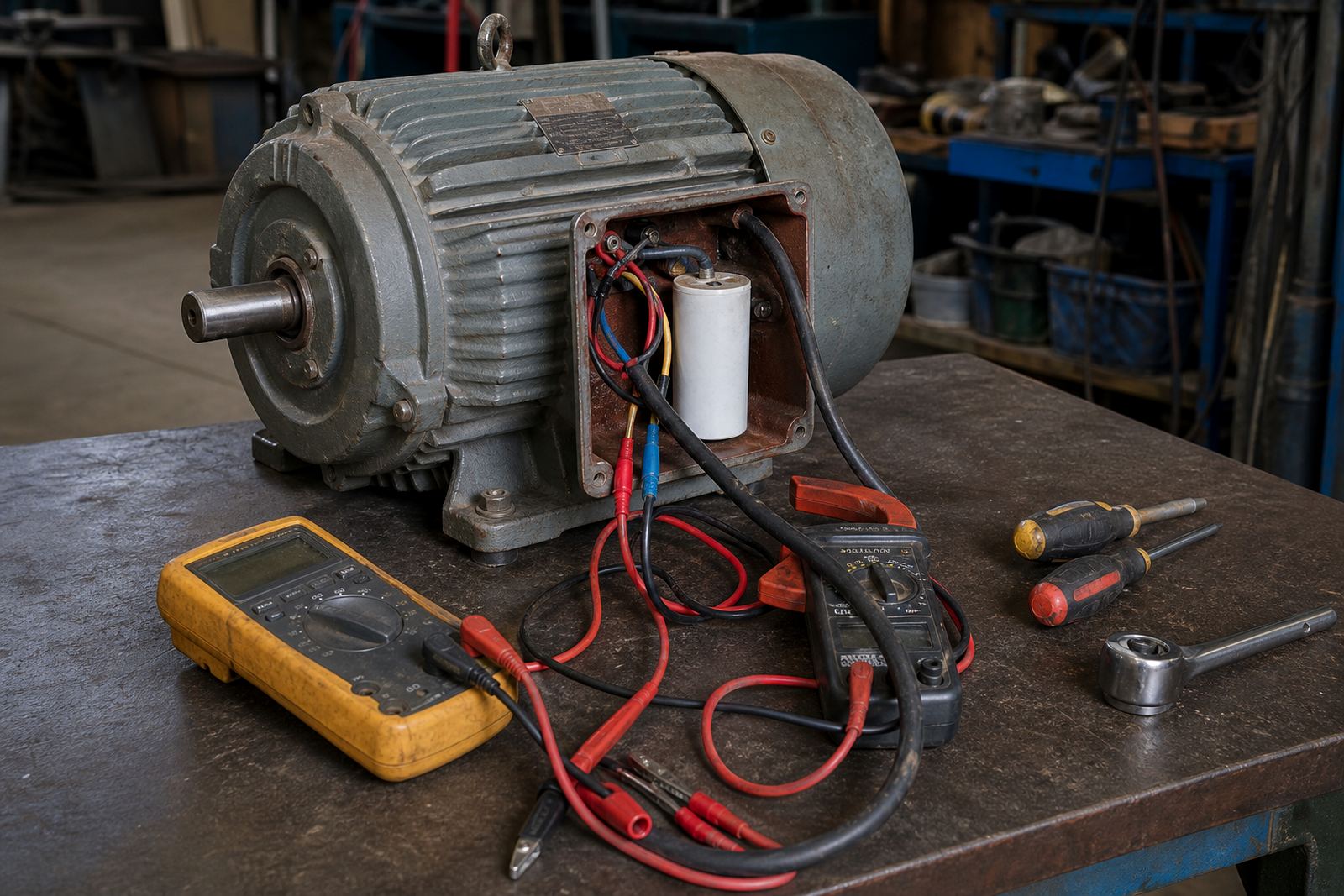
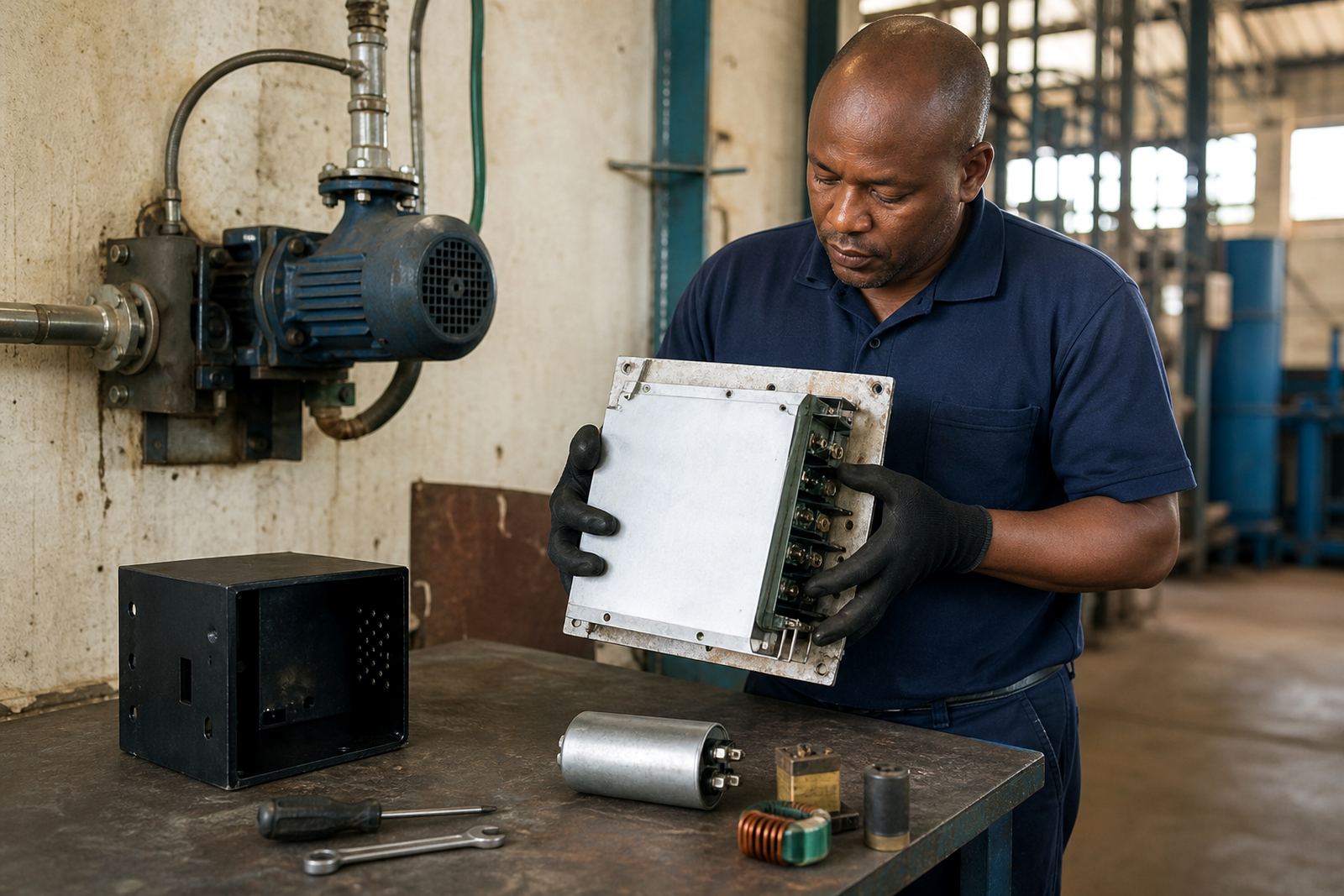
Locor carries out variable speed drive repair for water pumping systems used in plants, workshops and service yards. Typical work includes fault finding, drive inspection, panel cleaning, cable checks, spares assessment and site reporting. We also look at related items such as cooling fans, terminal damage, contactors, fuses, control wiring and sign of moisture or dust ingress.
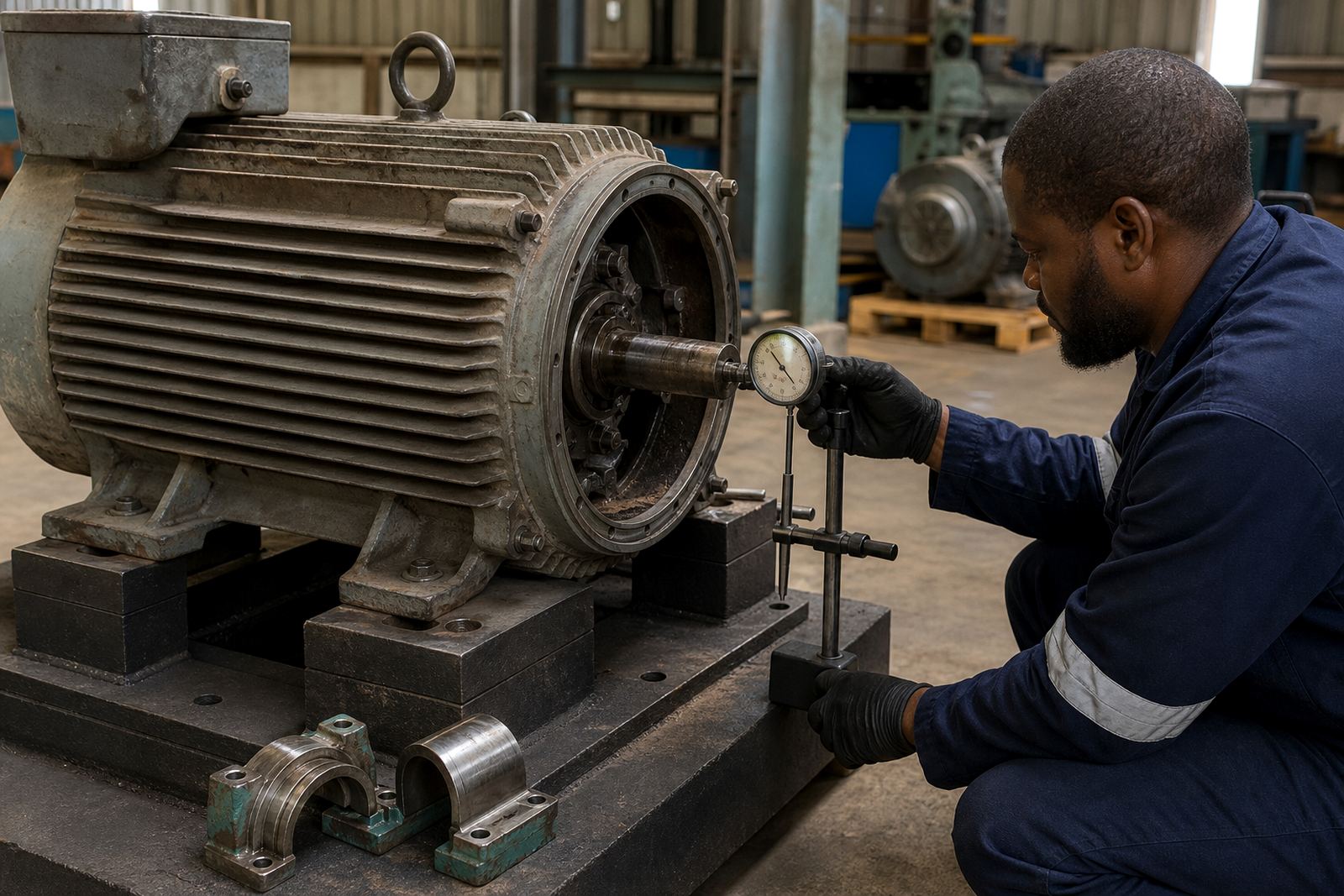
A drive problem is not always inside the drive itself. Sometimes the fault is caused by a tired motor, poor earthing, loose terminals, a blocked panel filter or an overloaded pump. We test the full chain and check the motor side as well, because a repaired drive will not stay healthy if the pump is drawing too much current or the shaft is out of alignment. On coastal routes to Durban, humidity can also create corrosion and tracking, while in workshops around Germiston and Boksburg fine dust can build up on boards and sinks.
- Drive fault finding and electrical checks
- Panel cleaning and contamination removal
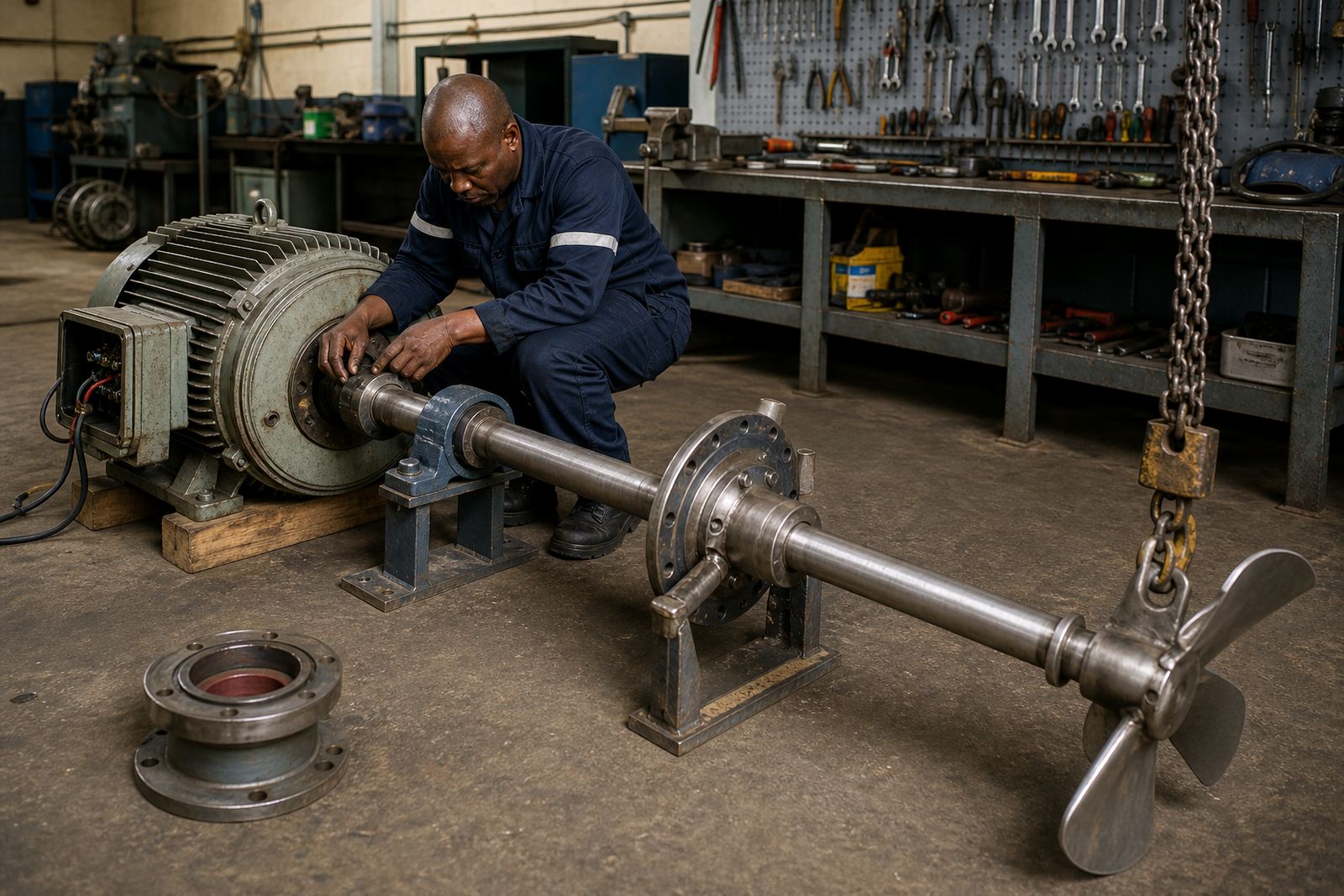
- Motor removal and refit planning
- Alignment checks and commissioning support
Sizes, Ratings and Options to Match the Pump
Water pump drives come in a range of sizes to suit small booster pumps right through to larger process duty systems. The right selection depends on motor kW, supply voltage, current draw, duty cycle and the control method needed on site. Some systems need simple local keypad control, while others use remote start stop, pressure transducer input or building management signals.
Common options include basic fixed speed control, multi pump sequencing, soft start functions and PID control for pressure holding. Depending on the application, you may also need a drive with a conformal coated board, better heat management or a higher enclosure protection level for dusty or damp areas. In plant rooms with limited ventilation, the drive must be sized carefully so it can handle heat and not trip during long pumping cycles.
- Typical supply ranges: 230 V single phase, 400 V three phase
- Common motor sizes: smaller circulation pumps up to larger booster sets
- Control options: keypad, remote start stop, analogue signal, PID control
- Protection needs: overload, short circuit, earth fault and overtemperature monitoring
Where Water Pump Drives Fit Best
These drives suit sites where water demand changes often and the pump needs to keep pressure steady without wasting power. They are used in factories, workshops, schools, estates, farms, borehole systems, washing bays and building services. In Gauteng, they are common on systems that work through heavy weekday demand and then back off after hours.
They also help where water quality or mechanical wear has been causing repeat failures. A drive can reduce starting stress, but it should be fitted with proper motor protection and correct cable sizing. If the site uses long cable runs, the installer must allow for voltage drop and motor insulation condition. For municipal or industrial systems, the control panel layout should leave enough space for safe access and maintenance, not cramp everything in too tight.
- Booster pump sets and pressure control systems
- Borehole pumping and storage tank transfer
- Wash bays and water recirculation lines
- Process pumps in plants and workshops
Installation, Power Supply and Safety Requirements
Electrical work on pump drives must be done by qualified people, with lockout procedures in place before any cover is opened or cable is handled. The incoming supply must be isolated, tested dead and secured before work starts. That matters on all sites, especially where pumps are tied into critical water supply or fire protection systems. Never rely on the keypad or a stop button alone.
For installation, the drive needs a clean mounting area, adequate airflow and correct cable routing. Earthing must be sound, motor and supply cables should be correctly terminated, and control wiring must be separated from power conductors where possible. If the plant suffers from load shedding, supply dips or generator changeover, the drive settings may need review so it restarts cleanly after power returns. In some sites a line reactor, braking resistor or surge protection may be needed depending on the duty and cable length.
- Confirm incoming voltage and phase before ordering
- Check motor full load current, not only kW
- Allow for ventilation and dust control in the panel
- Use proper lockout and test before touch procedures
Servicing, Checks and What to Send With an Order
Regular care makes a big difference to pump drive life. Dust should be removed, filter fans checked, terminal tightness verified and the panel kept dry. On coastal sites, corrosion and salt build-up can shorten service intervals. In hot rooms or plant areas with poor airflow, overheating becomes a bigger risk and the drive may start derating or tripping without warning.
When asking for help with a water pump drive, send the drive model details, motor nameplate information, fault code if visible and a clear description of the problem. Include what the pump is used for, whether it runs on a pressure sensor or float switch, and if the issue happens on start-up, under load or only after a power interruption. If the drive has already been opened, mention any burn marks, loose parts or water ingress. The more detail you give, the faster the fault can be traced and the better the repair plan.
- Motor kW, volts, amps and speed from the nameplate
- Supply type and site location
- Fault code, alarms or symptoms
- Any recent work on pumps, cables or control panels
Key facts
| Service type | Variable speed drive repair for water pump systems |
|---|---|
| Typical supply | 230 V single phase or 400 V three phase, site dependent |
| Motor range | Small booster pumps through larger industrial pump motors |
| Control methods | Local keypad, remote signals, pressure control and sequencing |
| Common applications | Booster sets, boreholes, transfer pumps, wash bays and process water |
| Service area | Germiston, Johannesburg, Ekurhuleni, Pretoria, Vereeniging, Durban and surrounding areas |