

Hoist Drive Repairs for Controlled Lifting
Hoist drives are used where lifting must be steady, predictable and safe, whether the equipment is moving a chain block, overhead crane, gantry system or a custom lifting arrangement in a workshop. When a drive starts to trip, runs hot, gives rough acceleration, or loses speed control, the lift can become unsafe and production slows down. Our hoist drive repair support focuses on the electrical and control side of the system so that motion is restored with proper attention to the load, duty cycle and switching conditions.
In practice, this means checking the drive unit, the motor interface, braking functions, control signals, terminals, cooling parts and the surrounding panel condition. We work on systems that need careful handling during shutdowns, including sites in Johannesburg, Ekurhuleni, Pretoria, Vereeniging and Durban. For lifting duties, the key is not only getting the equipment to run again but making sure it responds correctly under load and after repeated starts. Electrical work must always be done by qualified people using lockout procedures, because hoist circuits can store energy and create serious risk if isolated poorly.
What the Repair Work Usually Covers
Hoist drive faults often begin with a small issue that becomes harder to ignore under daily use. We commonly inspect for damaged components, loose terminations, moisture ingress, heat stress, worn cooling fans, contaminated panels and signs of failed power sections. On many sites the problem is linked to poor ventilation, dust, vibration or repeated power interruptions during load shedding. If the drive is mounted near a humid area or a workshop door, corrosion can also affect terminals and boards.
Repair support may include the following:
- Fault finding on the drive and related control circuit
- Drive inspection and panel cleaning
- Cable checks and termination checks
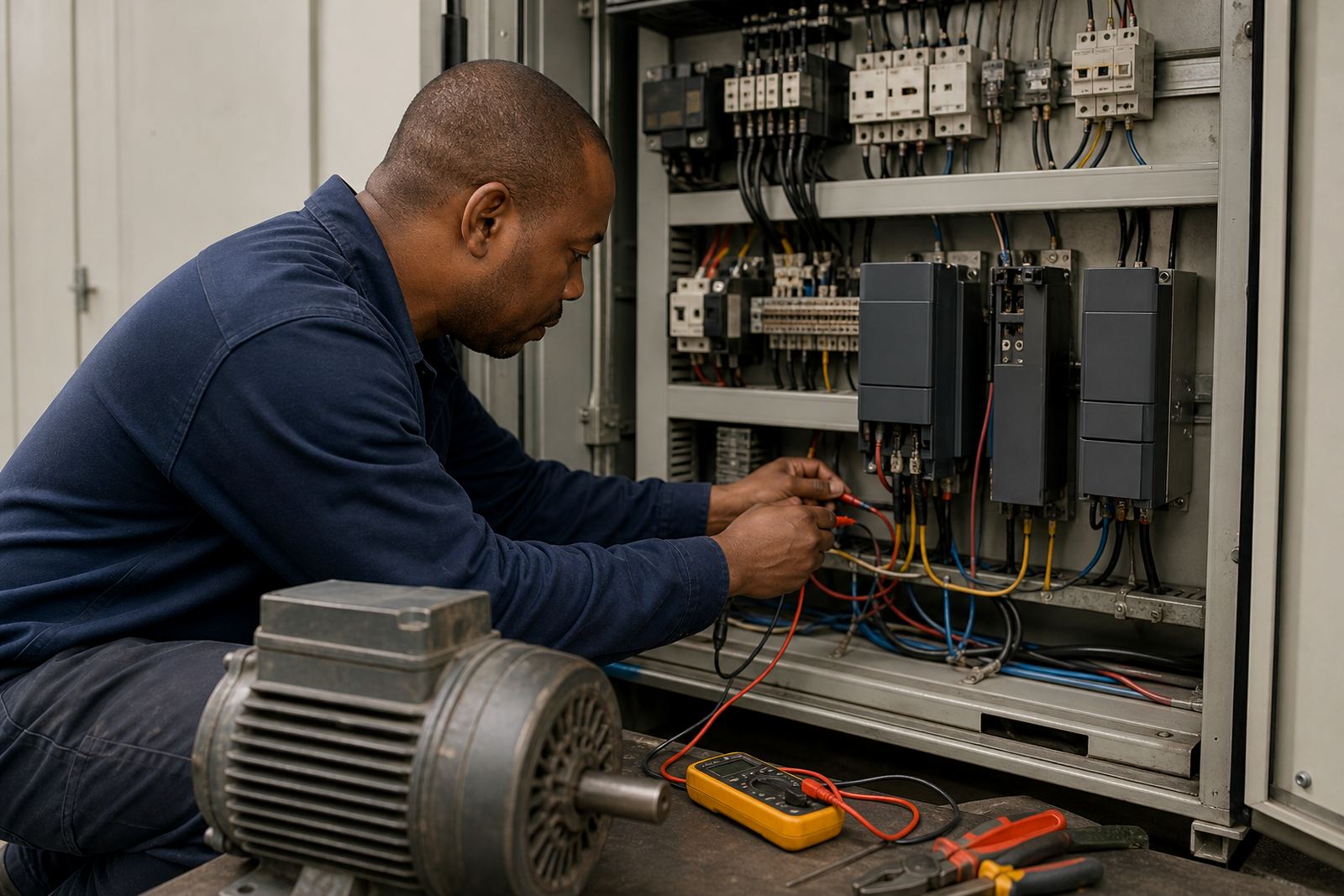
- Insulation testing where motor circuits are involved
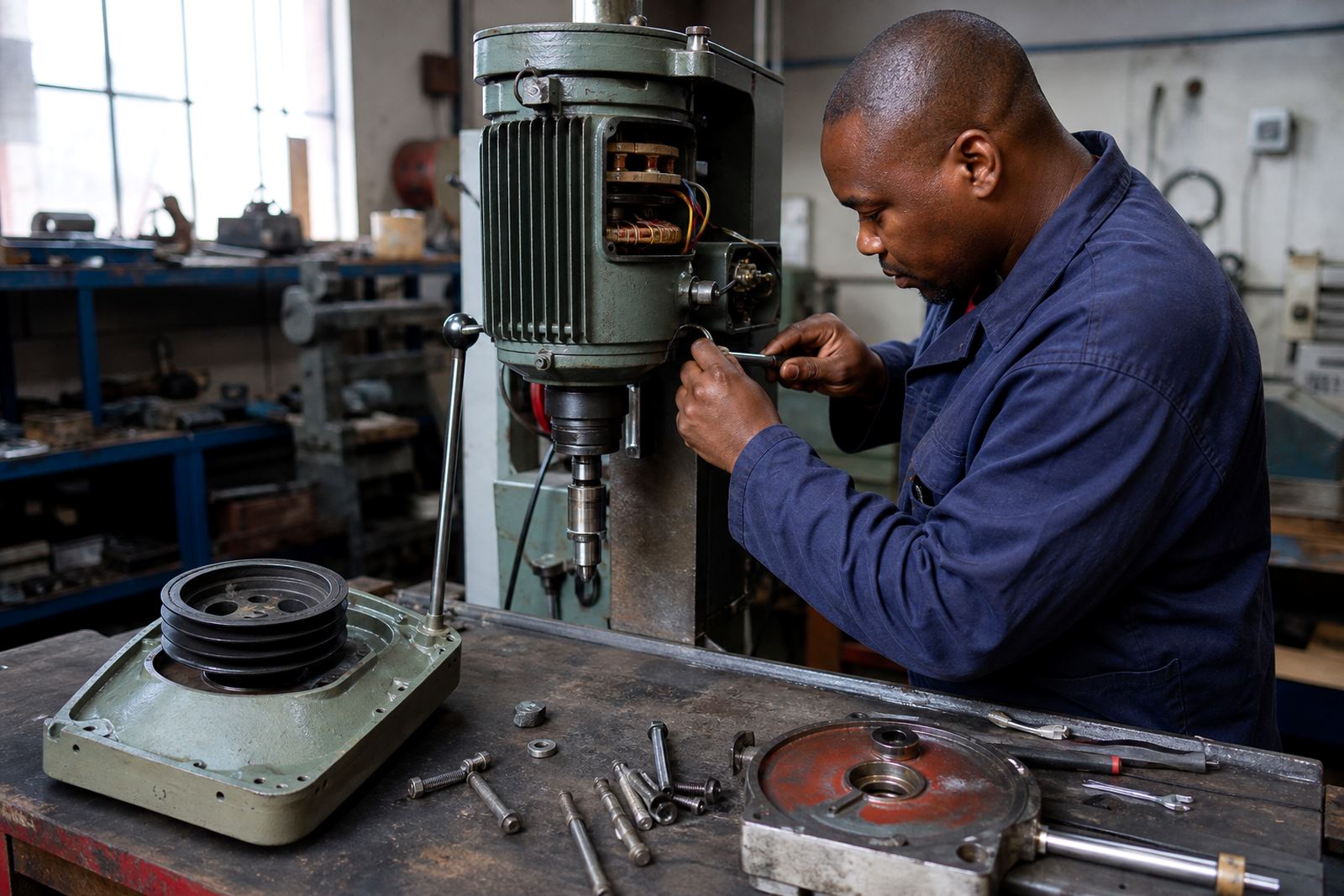
- Bearing checks on the driven motor where vibration or noise is present
- Alignment checks after reinstallation
- Commissioning support after repairs or replacement
- Site reporting for maintenance records
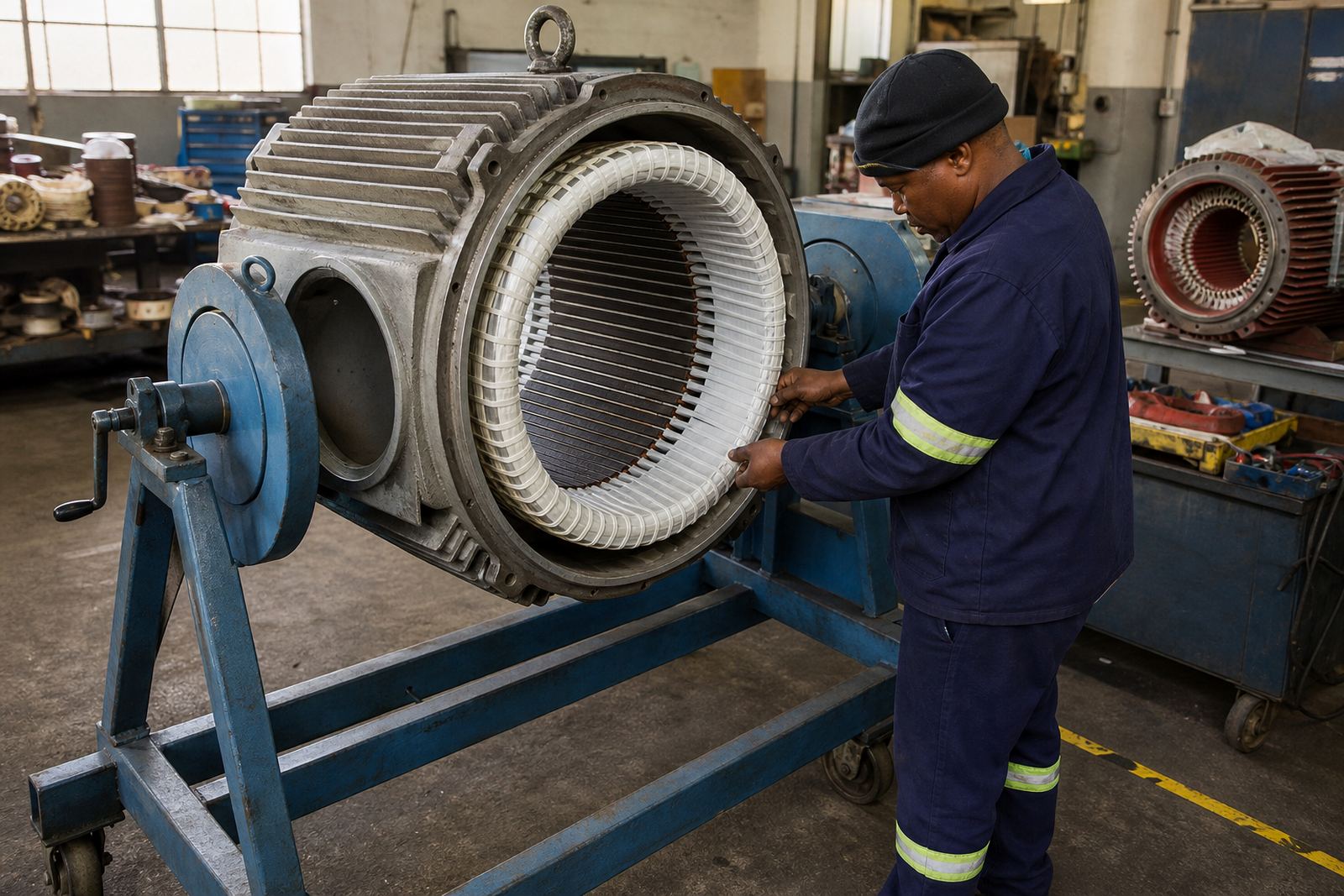
We also assess whether the motor itself needs rewinding, because a hoist drive can be healthy while the motor windings are not. If the motor insulation has broken down or the bearings are failing, the drive may trip repeatedly and the lift will never settle properly.
Sizes, Ratings and Control Options
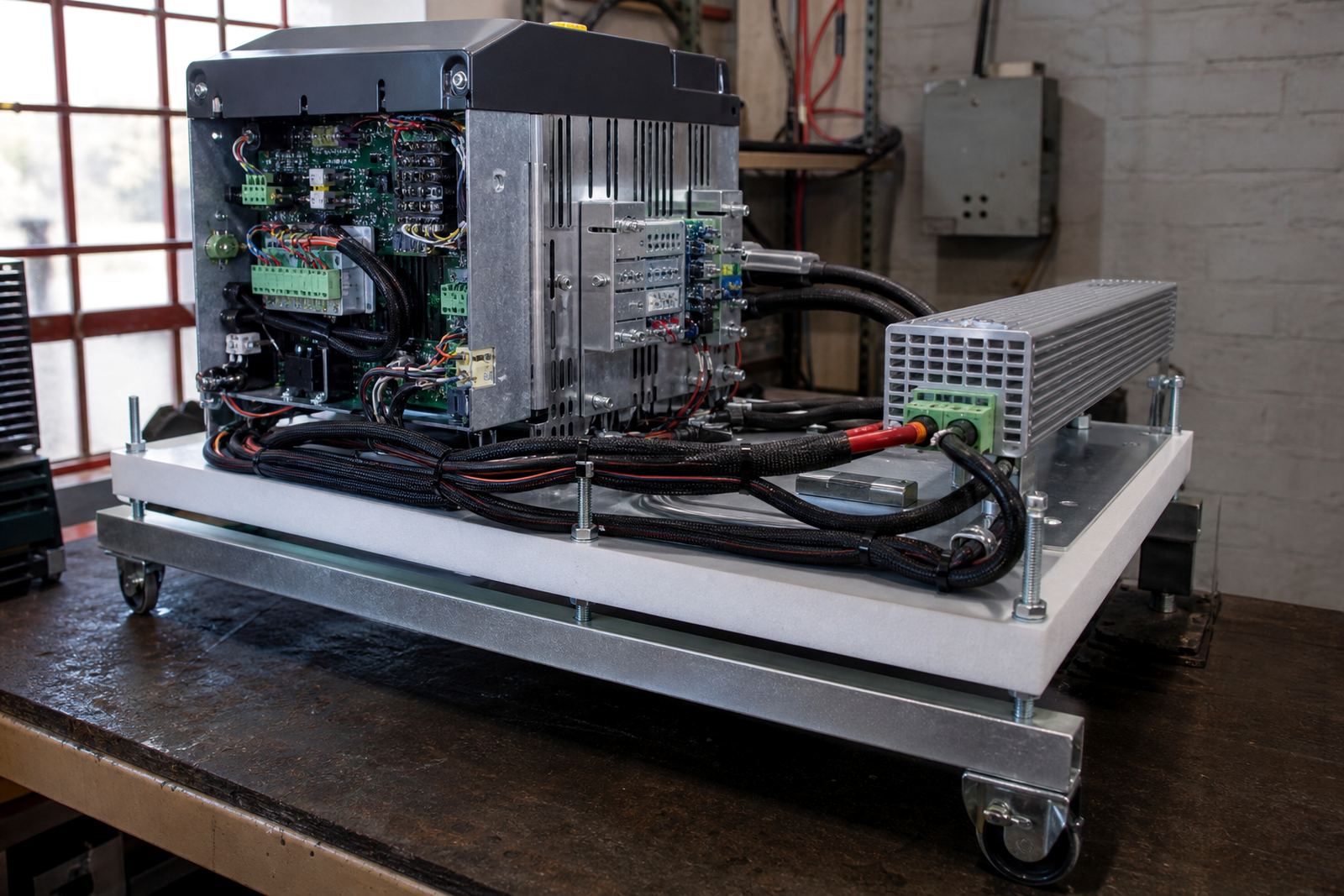
Hoist drive systems are not one size fits all. In smaller workshops, the unit may be fitted to a compact lifting device for occasional use. In plant environments, the equipment can be part of a higher duty installation with frequent starts, reversing, braking and speed control. We handle a range of drive sizes and control layouts, from smaller panel mounted units to larger variable speed drive systems used in heavier lifting applications.
When specifying a repair or replacement path, it helps to know the motor kW rating, supply voltage, phase arrangement, braking method and the type of control signals in use. Common options include fixed speed control, variable speed control, soft start behaviour and braking functions that help the load settle smoothly. If a hoist is used in a dusty area, outdoors, or near the coast, enclosure condition and sealing matter as much as the electronic parts themselves.
Typical information that helps with matching the right unit includes:
- Motor power rating in kW or HP
- Supply voltage and number of phases
- Control voltage for push buttons or PLC signals
- Whether the system uses dynamic braking or mechanical braking
- Mounting style and available panel space
- Application type, such as overhead lifting, gantry travel or winch duty
Where Hoist Drive Repairs Suit Best
Our hoist drive repair support suits plants and workshops that rely on safe lifting and need a practical response when a drive starts acting up. This includes manufacturing sites, fabrication shops, maintenance depots, warehouses, steel handling areas and service yards. In Germiston and the wider Ekurhuleni area, we often see lifting systems that run daily and get exposed to dust, vibration and interruptions in supply. In Durban and other coastal locations, moisture and corrosion can shorten the life of terminals and circuit boards if panels are not kept clean and closed properly.
Hoist drives are also common in settings where operators need accurate movement, not just on and off operation. If the acceleration is too harsh or the braking is inconsistent, the lifted load may swing, stress the structure or put extra load on the motor. That is why we inspect the full electrical chain, from the incoming supply and isolation method through to the drive output and motor condition. If needed, we can also support shutdown planning so the repair is done without affecting the whole site longer than necessary.
Installation, Power Needs and Safety Controls
Installing or returning a hoist drive to service needs a clean electrical setup, correct cable sizing and proper protection on the supply side. The drive must match the motor and the application, and the panel needs enough ventilation to keep heat under control. If the site has unstable power, voltage dips or generator changeovers, those conditions should be checked before the drive is commissioned again. A hoist system can appear healthy at idle and still fail under actual lifting load, so commissioning should include a proper test cycle.
We also check the surrounding equipment because faults are not always inside the drive itself. Loose control wires, damaged contactors, dirty terminals and worn brakes can all affect operation. Safe work on lifting systems depends on isolation, lockout and clear communication with the site team. Nobody should test or open a hoist circuit without the correct qualifications and procedures in place. That applies to panels, motors, brakes and any related control gear.
- Confirm safe isolation before opening any panel
- Verify incoming supply and phase condition
- Check motor cable insulation and termination quality
- Inspect cooling, braking and mounting condition
- Test the lifting motion under controlled conditions
Care, Servicing and What to Check Before Ordering
Good servicing starts with small checks carried out before the failure becomes expensive. On hoist drives, that means listening for fan noise, watching for repeated trips, checking for heat marks, cleaning dust from the panel and confirming that cables are secure. If the system is used heavily, scheduled inspections are worth it because lifting duty cycles put more strain on components than ordinary motor control. We recommend keeping records of trips, unusual sounds, panel temperatures and any work done during previous shutdowns.
When ordering repair support or a replacement drive assessment, please have the following details ready:
- Motor kW, voltage and phase
- Hoist type and lifting application
- Fault symptoms, such as tripping, no start, rough motion or overheating
- Whether the issue began after a power cut, maintenance job or water ingress
- Panel space and mounting style
- Any special braking or speed control requirements
Locor has been working from Germiston since 2007, supporting industrial customers who need practical repairs and clear reporting. Our team includes Sibusiso Mthembu, Annelie van Wyk, Thabo Nkosi, Megan Naidoo, Johan Pretorius and Lerato Molefe, and clients reach us through the enquiry form on our contact page. If your hoist drive has become unreliable, we can help assess the fault and plan the next step without guessing at the cause.
Key facts
| Service type | Hoist drive fault finding, repair and commissioning support |
|---|---|
| Application | Controlled lifting systems and motor speed control |
| Typical work scope | Drive inspection, cable checks, panel cleaning and site reporting |
| Related electrical services | Motor rewinding, bearing replacement and insulation testing |
| Base | Germiston, Gauteng |
| Service areas | Johannesburg, Ekurhuleni, Pretoria, Vereeniging, Durban, Boksburg and Kempton Park |