

Saw Motor Repairs For Cutting, Rip And Crosscut Duty
Saw motors work hard in dusty, high-vibration spaces. On panel saws, chop saws, mitre saws and fixed cutting lines, the motor has to start cleanly, hold speed under load and run without overheating. When a motor starts tripping, loses torque or makes a growling noise, the cause is often in the windings, bearings or supply side and not just the blade assembly.
We repair saw motors used in joinery, steel fabrication, furniture shops and maintenance bays. That includes single phase and three phase motors, direct drive units and motor assemblies linked to variable speed control. Typical work covers fault finding, winding repair, bearing replacement, shaft and end shield checks, insulation testing and alignment checks. If the motor is still mechanically sound, repair is often a practical option compared with full replacement.
Electrical work must be carried out by qualified people, with lockout procedures in place before any removal or testing begins. That matters on live plant, in shared workshops and during shutdowns where other machines may still be operating nearby.
What We Repair On Saw Motors
A saw motor can fail for several reasons. Overloading, poor ventilation, dust ingress, damaged bearings, loose connections and voltage issues all play a part. In coastal areas, moisture and fine dust can shorten insulation life. In inland plants, heat and long operating hours do the damage. Our approach is to test the motor properly, then repair the failed parts rather than guessing.
- Fault finding on motors that will not start, hum, trip or run hot
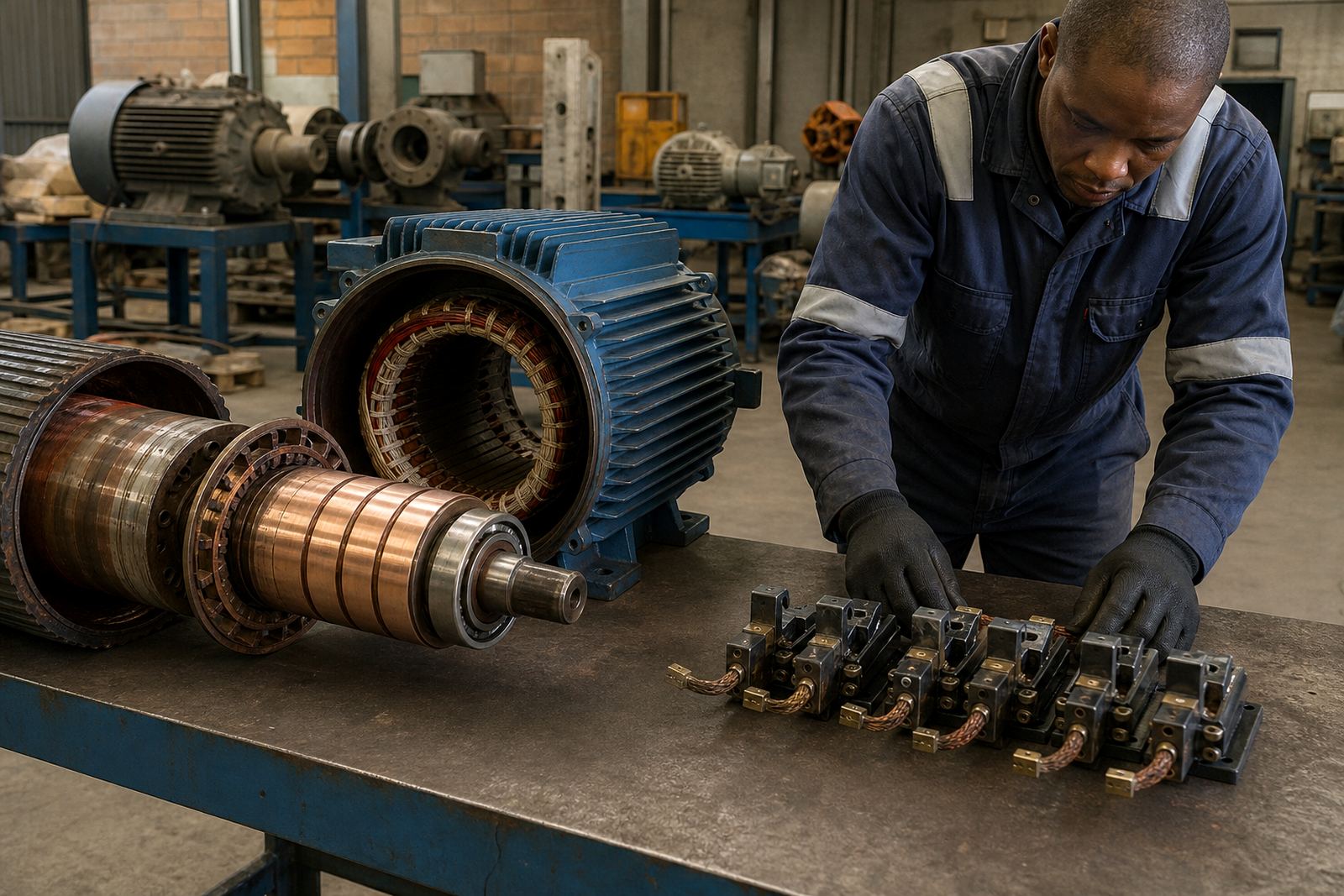
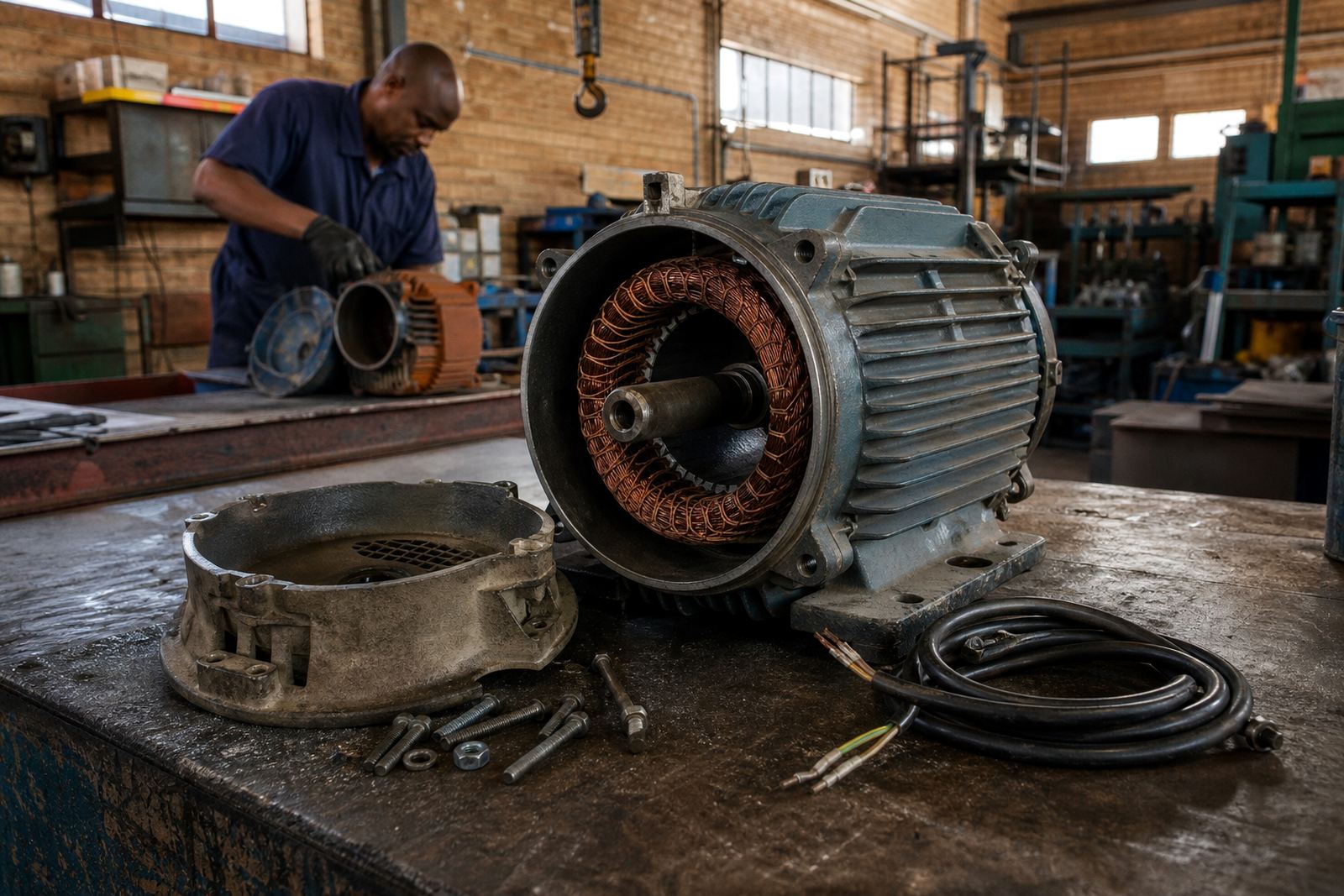
- Electric motor rewinding where winding damage, short circuits or earth faults are found
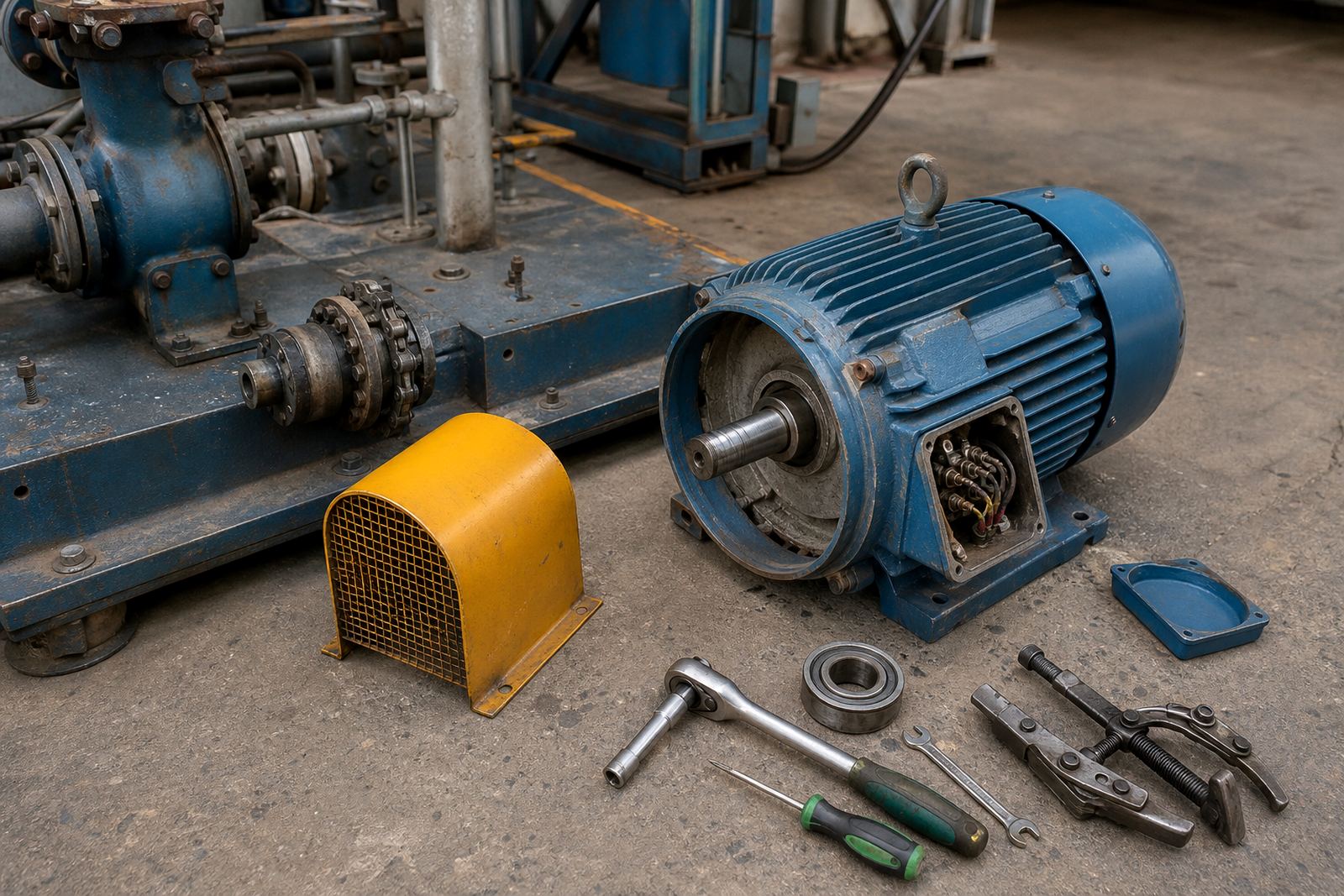
- Bearing checks and bearing replacement for noise, vibration or shaft play
- Insulation testing to assess winding condition before return to service
- Alignment checks and coupling inspection after refit
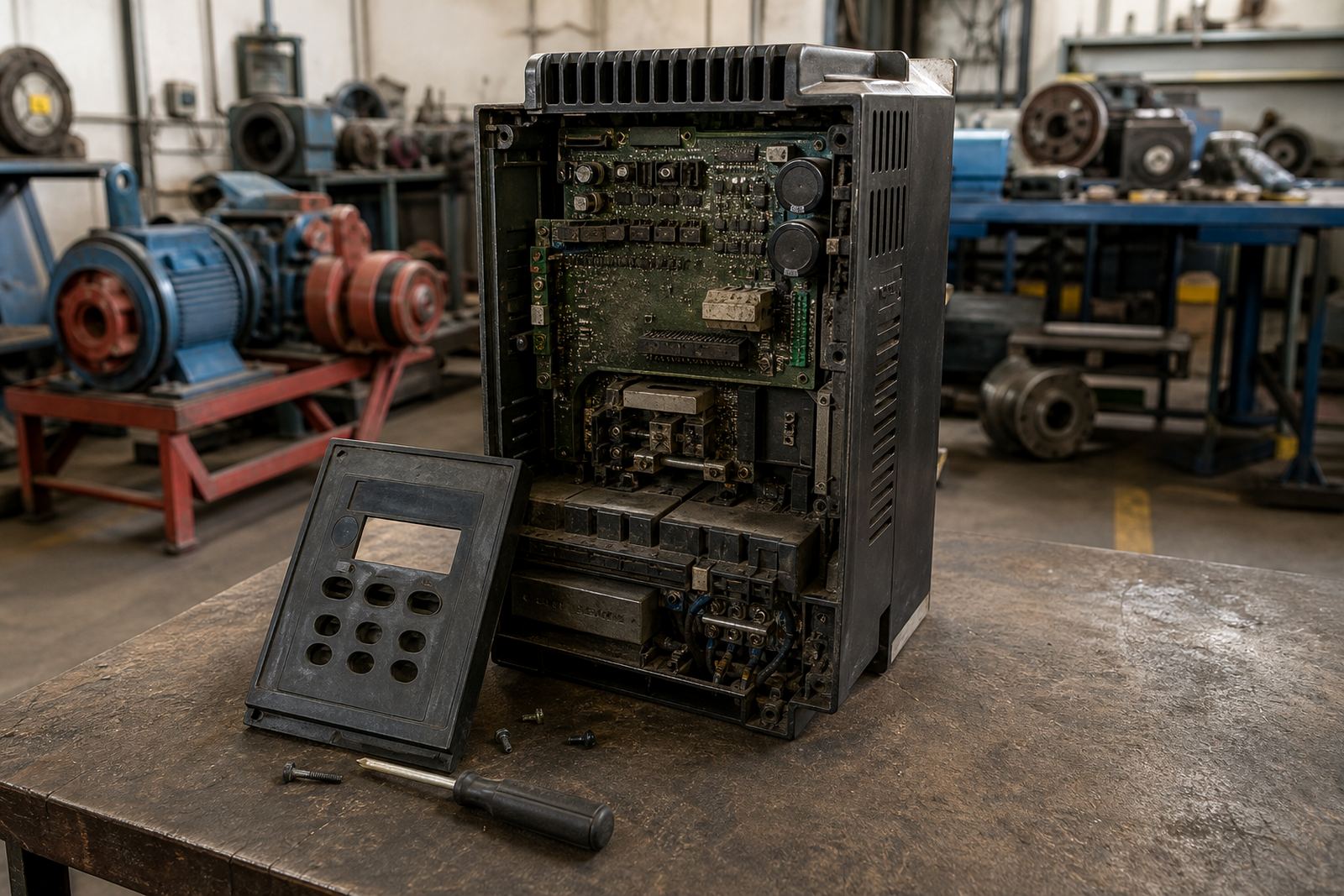
- Drive inspection and variable speed drive repair where speed control is part of the system
We also assess cables, terminals and control gear. A motor may be fine but still fail because of a loose termination, burnt contactor, blocked fan cover or cable fault. That sort of detail matters on saws because a small issue can affect cut quality and blade life.
Sizes, Options And Operating Duty
Saw motor repairs are handled across a wide range of frame sizes and power ratings, from smaller workshop units through to heavier industrial motors used on continuous cutting lines. The right repair depends on the motor frame, mounting style, shaft size, cooling method and the way it is used. Motors that start and stop often need different attention to motors that run for long periods under steady load.
We commonly work on foot mounted and flange mounted motors, motors with keyway shafts, and units fitted to saws with belt drive or direct coupling. Variable speed systems may include external drive control for soft start, speed adjustment or process control. If the drive has failed too, we can inspect the unit, check for fault codes and assess whether repair is practical before the motor is reinstalled.
- Single phase and three phase saw motors
- Direct drive, belt drive and coupled motor arrangements
- Motors used on timber, aluminium and light steel cutting equipment
- Units with standard or variable speed control
- Workshop motors, line motors and maintenance spares
Installation, Power Supply And Site Requirements
Correct installation has a direct effect on motor life. A repaired saw motor should be mounted securely, aligned correctly and connected with the right protection. Before commissioning, the supply should be checked for correct voltage, phase balance and earthing. If the motor is part of a variable speed system, the drive settings and motor parameters should match the load and duty cycle.
For sites in Germiston, Johannesburg, Ekurhuleni, Pretoria, Vereeniging and Durban, we often see different supply conditions from one premises to the next. Load-shedding events, generator changeover and poor power quality can all affect drive performance. In these cases, it helps to inspect cable size, breakers, control panels and cooling before putting the motor back into service.
Gas is not normally part of saw motor work, but compressed air may be present around the machine for cleaning or clamping. Keep air lines clear of heat sources and do not blow dust into motor vents. Dust extraction should also be working properly because fine debris can build up inside the fan cover and winding area.
Care, Servicing And Early Warning Signs
Regular service work keeps saw motors in better condition and reduces unplanned stoppages. The main task is to keep the motor clean, cool and properly loaded. Dust and offcut build-up can block airflow, while worn bearings put extra strain on the shaft and windings. A motor that is running hotter than usual should be checked before a winding failure develops.
Our service support can include shutdown planning, motor removal, bearing checks, panel cleaning, cable checks and site reporting. That helps plant teams keep track of what failed, what was repaired and what still needs attention. If a saw line runs after hours or under pressure, a simple inspection routine can prevent costly downtime.
- Listen for humming, grinding or rattling during startup
- Watch for excess heat or a burning smell
- Check if the blade slows under normal load
- Look for tripping, nuisance faults or irregular starting
- Inspect dust seals, fan covers and mounting bolts
What To Check When Ordering A Saw Motor Repair
When you send a saw motor in for repair, the more detail you can provide, the easier it is to assess the fault correctly. Start with the motor nameplate information, then add the machine type, symptoms and any recent changes to the installation. If the motor has failed after a storm, overload or panel fault, mention that as well. It can point to the right test sequence.
Useful details include frame size, mounting style, power rating, voltage, speed, duty type and whether the unit runs through a drive. If the motor is part of a production line, say whether it is required for continuous, intermittent or start-stop use. Photos of the nameplate, terminal box and mounting points also help. If the saw is still on site, we can assist with fault finding, motor removal, drive inspection and commissioning support once the repair is complete.
Clients in Boksburg, Kempton Park, Germiston, Pretoria, Vereeniging, Durban and surrounding areas can contact us through the enquiry form on our contact page. We work with plants and workshops that need practical repair support and clear feedback, not guesswork. A proper repair starts with the right information and a safe isolation procedure.
Key facts
| Service type | Saw motor repairs, rewinding and related electrical assessment |
|---|---|
| Motor types | Single phase and three phase saw motors |
| Power range | Small workshop units to heavier industrial cutting motors |
| Common faults | No start, tripping, overheating, noise, vibration, low torque |
| Related services | Bearing replacement, insulation testing, drive repair, alignment checks |
| Coverage | Germiston, Johannesburg, Ekurhuleni, Pretoria, Vereeniging, Durban and nearby industrial areas |