

What a Compressor Drive Does on Site
A compressor drive is used to control how a compressor motor starts, runs and responds when demand changes. In many workshops and plants, it helps reduce mechanical stress during start-up, keeps pressure control steadier and can protect the motor when load conditions vary. On variable speed systems it may also help lower power draw when the plant does not need full output all the time.
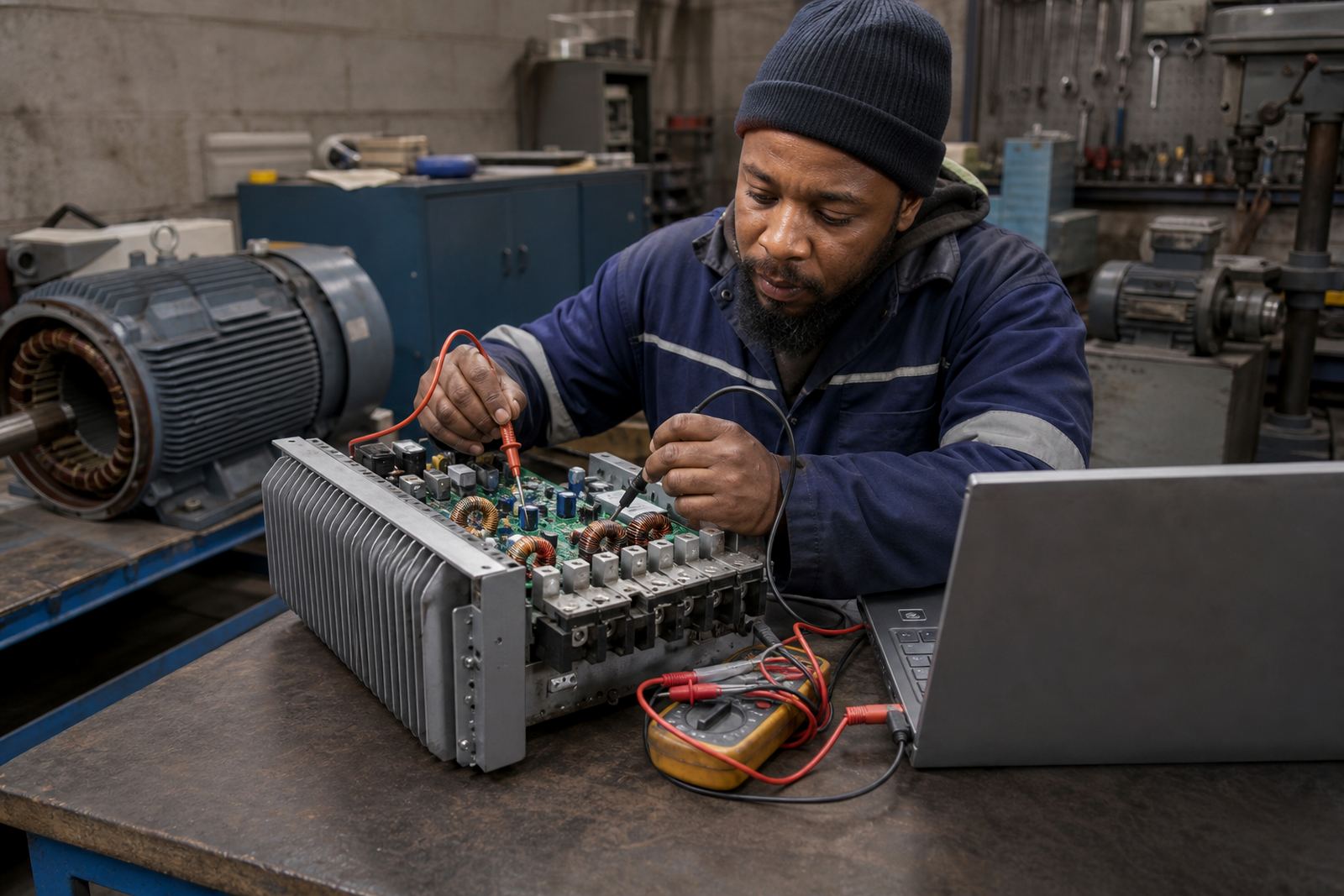
When a drive fails, the compressor may trip, run erratically, fail to start or lose protection functions such as overcurrent or undervoltage handling. In some cases the fault is inside the drive, while in others the real problem is a loose cable, poor earthing, contaminated control panel, weak motor insulation or a tired cooling fan. That is why proper fault finding matters before any repair work begins.
We work on compressor drive units used with air compressors, pump sets and related motor control systems across South Africa. Electrical work must only be done by qualified people, with lockout procedures in place and the supply proven dead before any covers are opened.
Repairs for Different Drive Sizes and Duty Levels
Compressor drives are supplied in a wide range of sizes, from compact units for small workshop compressors to larger industrial drives used in plant rooms and production facilities. The right repair approach depends on the drive rating, the cabinet size, the cooling method and the type of load it is controlling. A unit fitted to a dusty fabrication shop will often need different attention from one installed in a coastal plant where salt air and humidity are part of daily life.
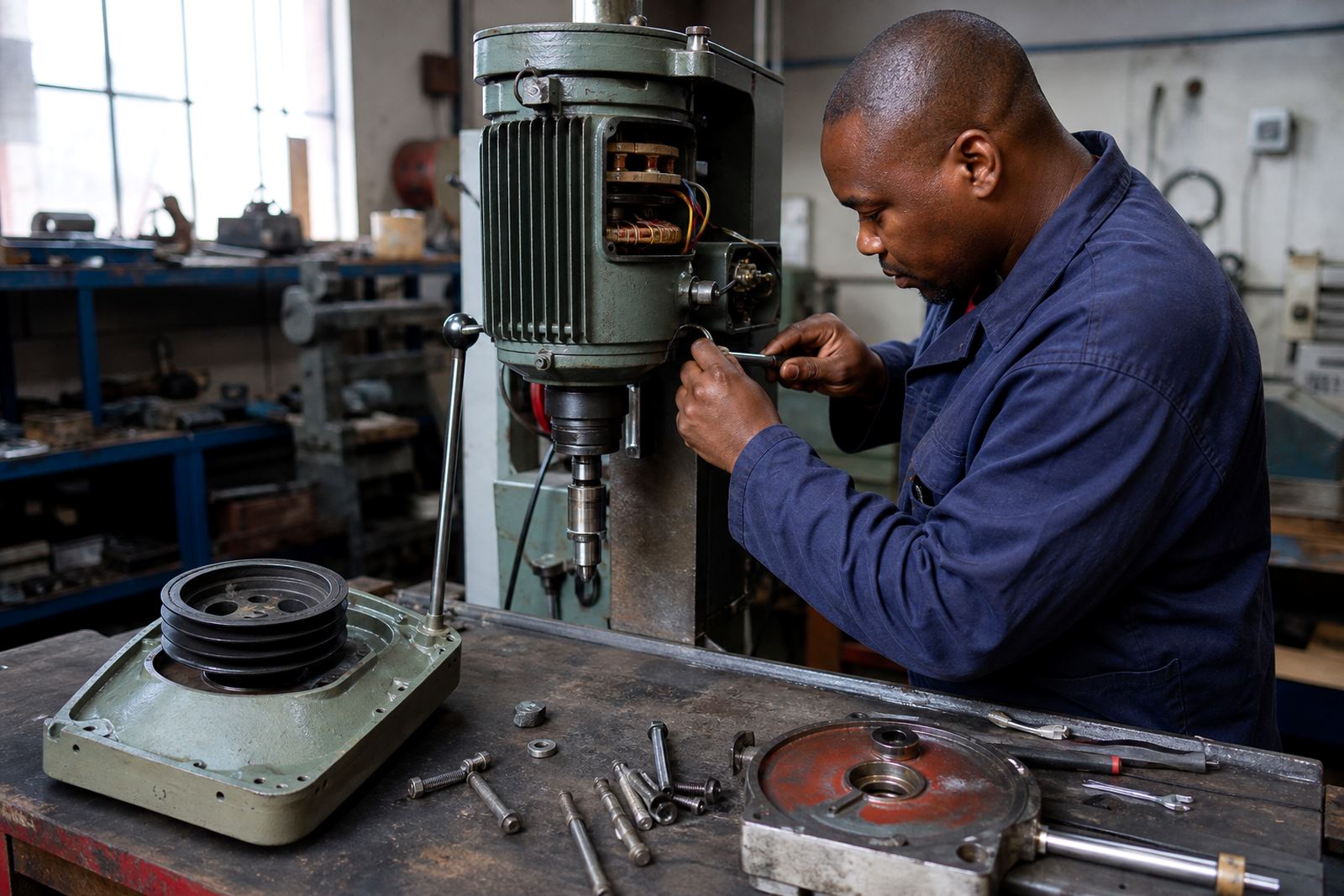
Typical repair work can include component replacement on the control side, cleaning of carbon dust or moisture contamination, inspection of bus capacitors, fan replacement, terminal tightening, board-level checks and verification of the power section where possible. If the drive has suffered a major failure, we assess whether the unit can be economically repaired or whether a like-for-like replacement is the better route.
- Single-phase and three-phase compressor drive units
- Compact wall-mounted or panel-mounted units
- Higher power units used in plant and workshop applications
- Drive systems with motor protection, soft start or speed control functions
Where Compressor Drive Repairs Fit Best
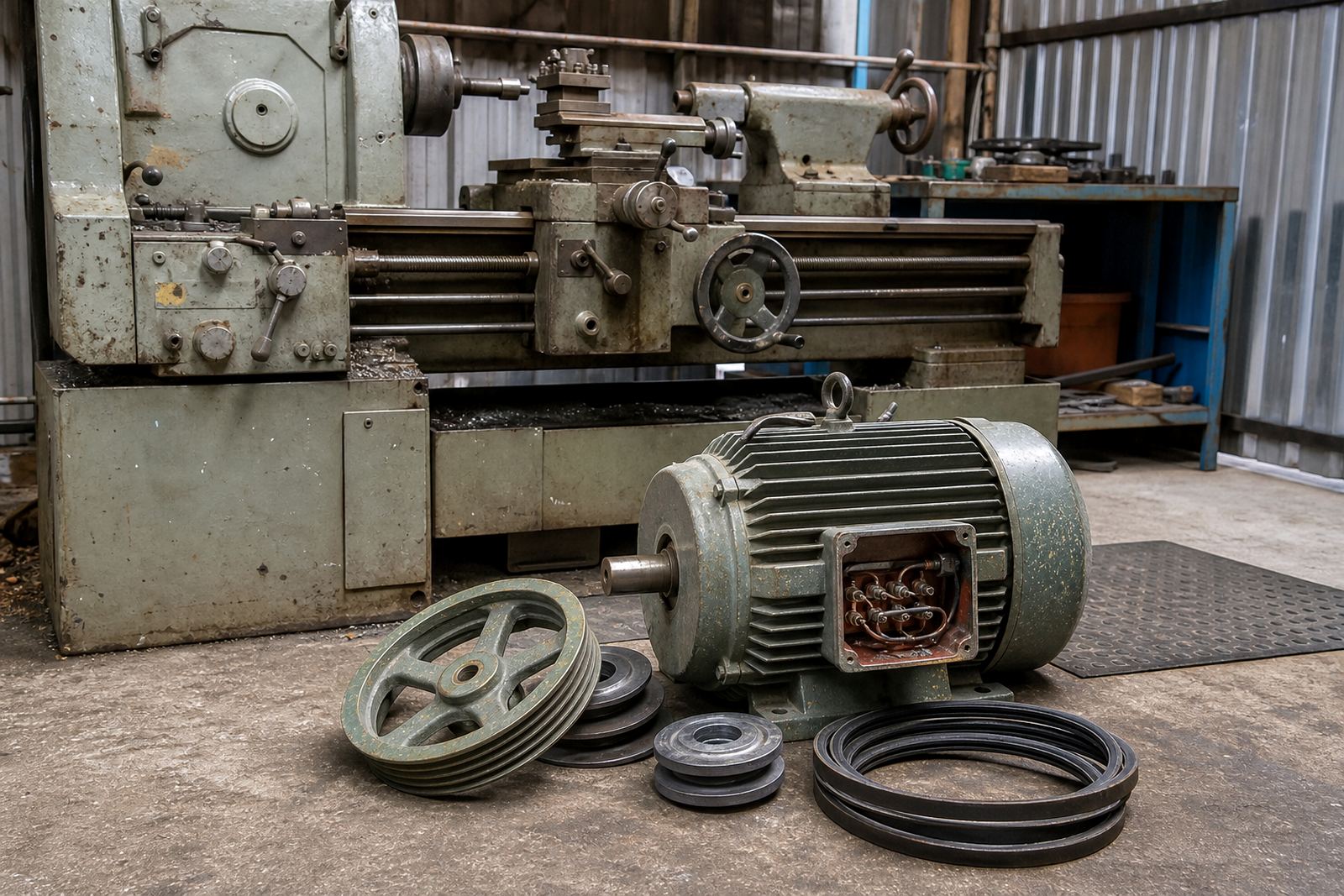
Compressor drives are used anywhere compressed air matters and downtime is costly. That includes engineering workshops, food and packaging sites, warehouses, maintenance depots, printing plants, automotive facilities and light manufacturing operations. In Germiston and the wider Ekurhuleni area, many sites rely on a stable air supply for tools, filling lines, clamping equipment and automated machinery.
These drives suit operations where load changes happen often, where motors need protection from harsh starting conditions, or where the plant must run through frequent load-shedding events and supply changes. A drive can also help when the compressor is oversized for the duty and needs a controlled operating range rather than repeated hard starts. Where pressure control is critical, a correctly repaired drive can support steadier operation and fewer nuisance trips.
We also see compressor drive faults after electrical surges, poor panel ventilation, dust build-up and water ingress. Sites near the coast often need extra care because damp air can affect terminals, boards and cooling paths more quickly than in dry inland areas.
Installation Requirements, Power Supply and Site Checks
Before a compressor drive is installed or returned to service, the supply and motor details must be checked carefully. The drive must match the compressor motor voltage, current, phase arrangement and duty requirement. If the motor data plate is unclear, the installation should not proceed until the correct information has been confirmed. Incorrect selection can cause repeated trips, overheating or poor torque response.
Good installation practice includes suitable cable sizing, correct protection devices, proper earthing, adequate cooling space and a clean enclosure. The panel should be free from dust, oil mist and loose conductors. If the compressor is part of a bigger system, the control signals, pressure switches, interlocks and emergency stop circuit must all be tested before restart. We also recommend checking whether the site has enough space for ventilation and whether the cabinet can cope with the heat load in summer.
- Confirm motor voltage, full load current and power rating
- Check supply quality, phase balance and earth continuity
- Verify cooling fan flow and panel cleanliness
- Inspect control wiring, interlocks and pressure inputs
Servicing After Repair and What to Keep an Eye On
After a compressor drive repair, ongoing care helps prevent repeat breakdowns. The simplest checks are often the most useful: look for blocked air paths, loose terminals, staining from heat, damaged cable glands and signs of moisture in the cabinet. On sites that run through load-shedding, it is worth checking how the drive recovers after power returns, because repeated interruptions can expose weak components.
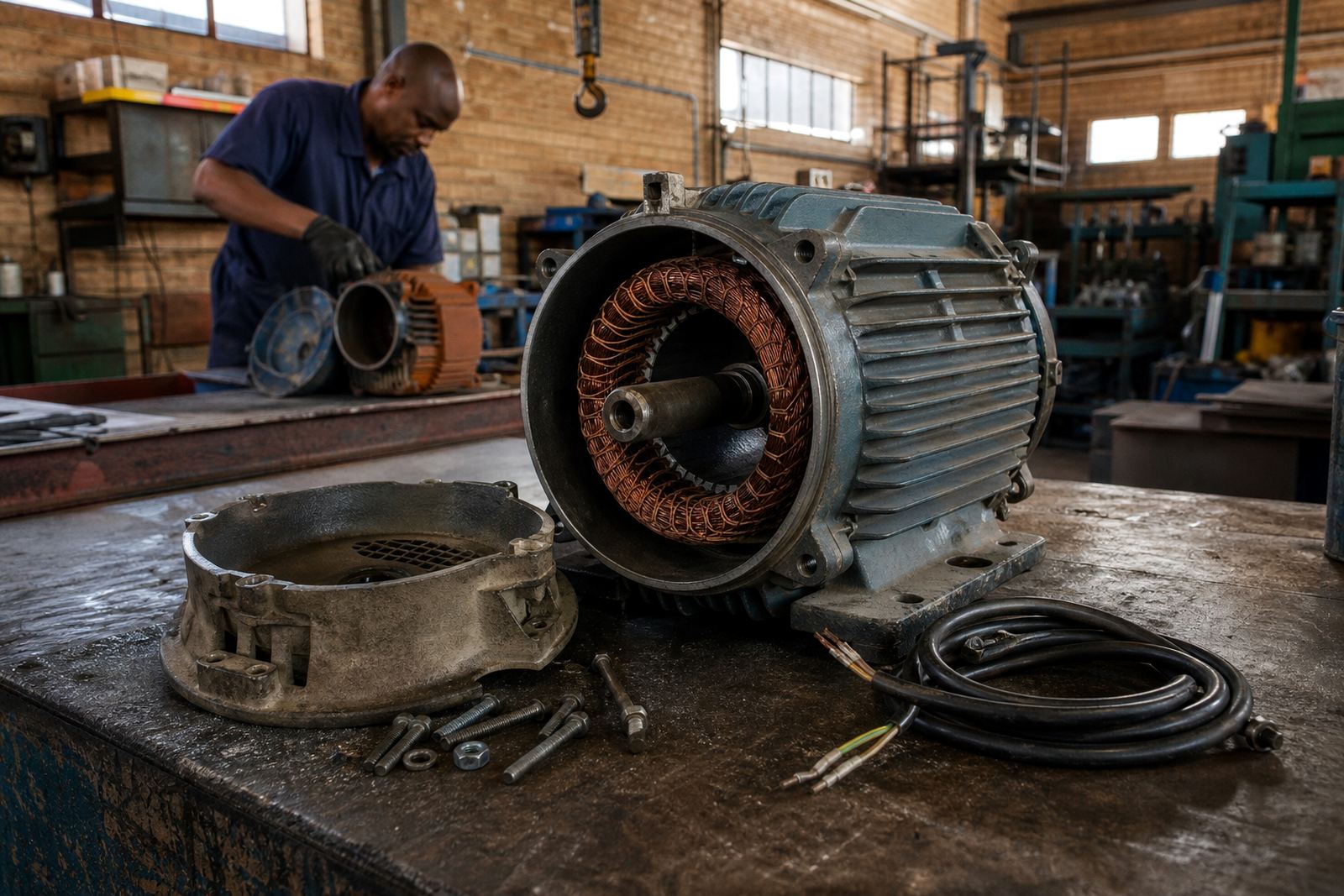
A practical service plan may include cleaning, insulation testing on the motor side, cable checks, bearing checks on the compressor motor where relevant, and inspection of the control panel and cooling fans. If the compressor is hard-working or located in a dusty or humid area, the interval between inspections should be shorter. We also suggest checking alignment and commissioning settings after any motor removal, because a drive fault is sometimes only part of a bigger mechanical issue.
Good records help. If a fault appears again, note the trip code, the time of day, any rain or high humidity, what else was running on site, and whether the compressor had been starting and stopping frequently. That kind of detail can save time during fault finding.
What to Check Before You Send an Order
When requesting compressor drive repairs, the more detail you can share, the faster the assessment usually goes. Please have the drive model details, motor nameplate information and a clear description of the fault ready. If the unit is still installed, tell us whether the compressor trips on start, during load change or only after running for a while. If it is removed, let us know whether the terminals are damaged, whether any parts are missing and whether there was a surge, water ingress or motor failure at the same time.
Useful details also include the site location, cabinet layout, any bypass arrangement, and whether the system is used for plant air, workshop air or a process line. If you need commissioning support, shutdown planning or site reporting, mention that early so the repair plan can match the work sequence on site. For safer handling, isolate the supply fully and follow lockout procedures before any inspection begins.
- Drive rating, motor rating and supply voltage
- Fault symptom and when it happens
- Whether the drive is mounted, removed or already opened
- Site conditions such as dust, heat, moisture or coastal air
Germiston Support for Plants and Workshops Nationwide
Locor is based in Germiston, Gauteng and supports compressor drive repairs for plants and workshops in Johannesburg, Ekurhuleni, Pretoria, Vereeniging and Durban, with work also reaching Boksburg and Kempton Park. Our team handles fault finding, drive inspection, motor removal, spares assessment, panel cleaning, cable checks, alignment checks, insulation testing, commissioning support, shutdown planning and site reporting.
Our service approach is practical and careful. We look at the drive, the motor and the installation together, because a drive rarely fails on its own. The aim is to return the system to safe working order with the right checks in place, so the compressor can do its job without unnecessary stoppages.
Key facts
| Drive type | Compressor motor control and protection drive |
|---|---|
| Power range | Small workshop units through to industrial three-phase systems |
| Supply options | Single-phase or three-phase, depending on application |
| Protection functions | Overcurrent, undervoltage and thermal monitoring support |
| Common use | Air compressors, process compressors and related motor loads |
| Service area | Germiston, Johannesburg, Ekurhuleni, Pretoria, Vereeniging and Durban |