

What HVAC drive repairs involve
HVAC drives control motor speed on systems such as supply fans, extract fans, chilled water pumps and condenser water pumps. When a drive fails, you can get nuisance trips, poor airflow, pressure problems or complete loss of control. Repair work focuses on finding the electrical fault, checking the control section, inspecting the power section and confirming that the drive can run safely again.
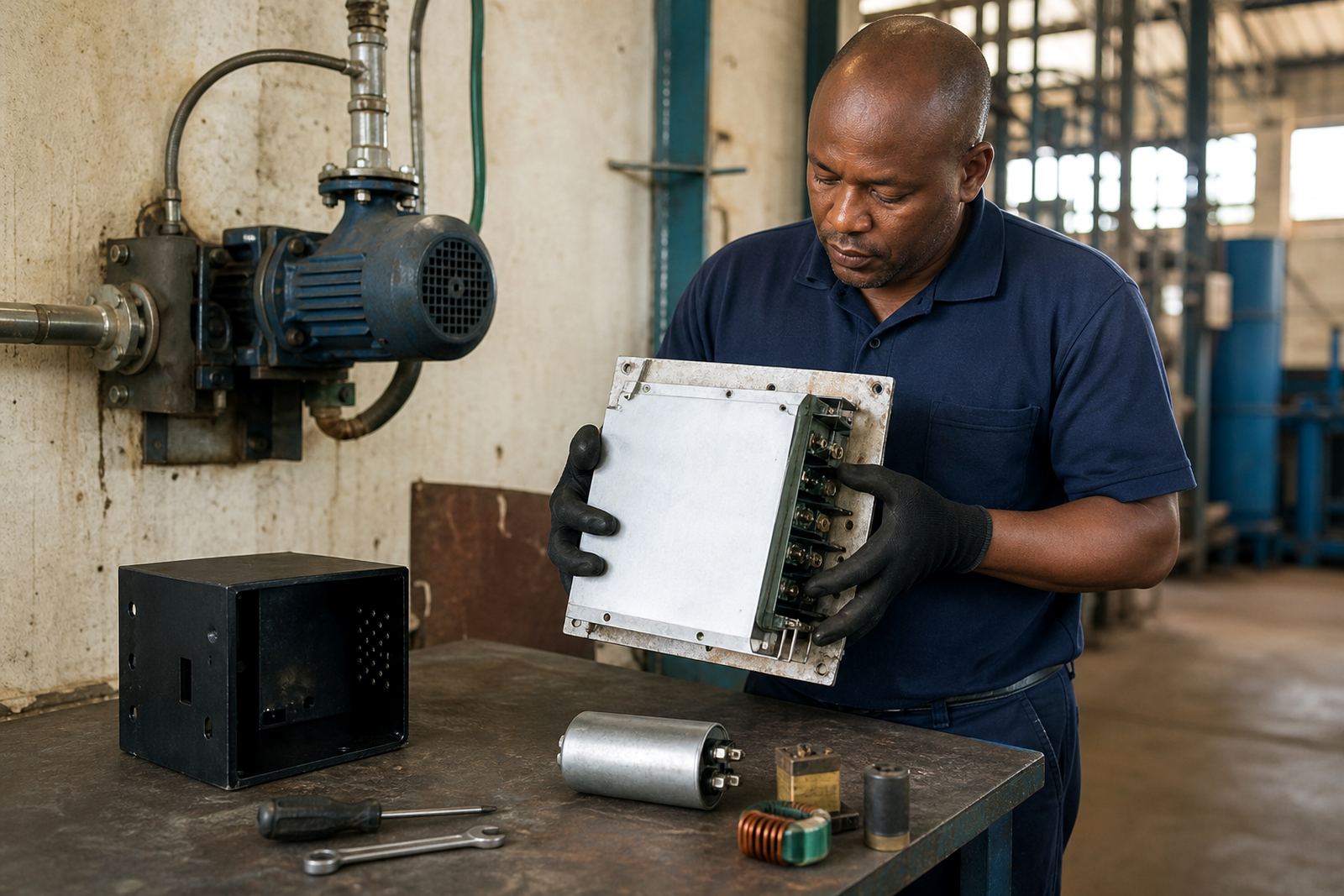
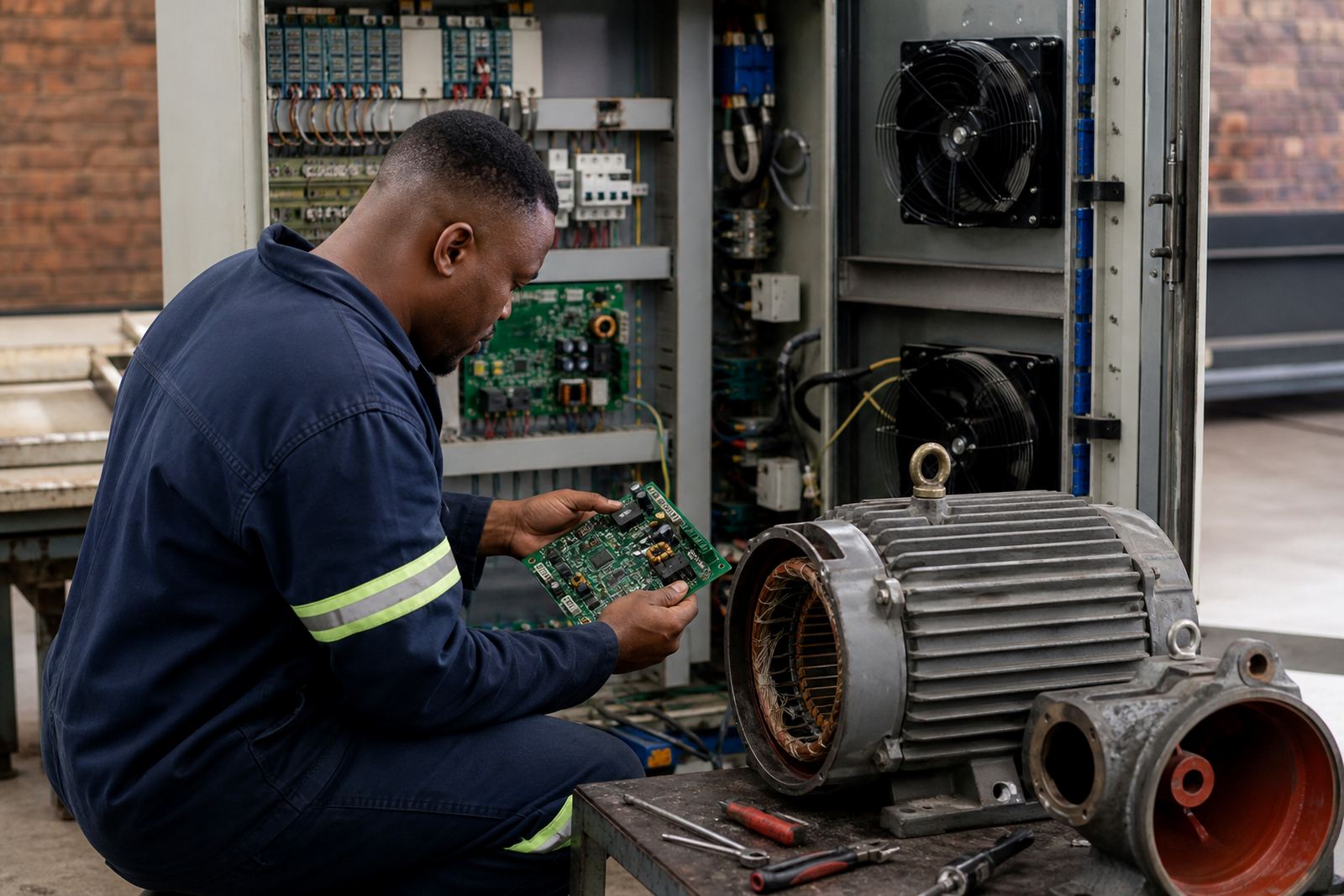
Typical repair steps include visual inspection, fault code reading, cleaning of internal dust and contamination, testing of capacitors and power devices where applicable, checking the cooling fan, and verifying input and output connections. We also look at the motor cable, earthing, control wiring and the condition of the panel. In many cases the real problem is outside the drive, so proper diagnosis saves time and avoids repeat failures.
All electrical work must be carried out by qualified people with lockout procedures in place. That matters on live building services equipment where a wrong connection or unsafe restart can damage the drive, the motor or the plant. Our approach is practical and site aware, with safety and fault tracing first.
Where these repairs suit building services systems
HVAC drives are used in offices, shopping centres, hospitals, factories, warehouses, schools and mixed-use buildings. They also appear on plant rooms that serve heating, cooling and ventilation systems. In places with dusty conditions, coastal humidity or load-shedding related stop starts, drives often need closer attention than the rest of the electrical panel.
We work on units used for:
- Air handling units and extraction fans
- Chilled water and condenser water pumps
- Pressurisation and booster sets
- Cooling tower motors and ventilation systems
- General building services motor control
For Gauteng sites in Germiston, Johannesburg, Ekurhuleni, Pretoria, Boksburg and Kempton Park, quick response often helps keep tenants comfortable and plant rooms stable. We also support customers in Vereeniging and Durban where heat, moisture and salt air can make drive faults more common.
Sizes, ratings and control options
Drives used in HVAC applications come in many sizes, from compact wall-mounted units to larger cabinet units for higher duty pumps and fans. The right repair method depends on the drive rating, the type of control input and the way the system is set up. We work with single phase and three phase supply arrangements where applicable, and we assess the motor load before handing a unit back.
Common options and points to confirm include:
- Supply voltage and phase arrangement
- Motor kW or HP rating
- Current rating in amps
- Mounting type, wall or panel
- Control method such as keypad, remote signal or building management input
- Cooling arrangement and enclosure condition
If a drive has to match an existing panel layout, spacing and cable access matter as much as the electrical rating. A unit may be electrically suitable but still too large for the enclosure, or its terminals may not suit the existing gland plate. That is why dimensions and mounting details should be checked before ordering or swapping a drive.
Installation requirements and site conditions
For a repaired HVAC drive to perform properly, the installation needs to be clean, well ventilated and correctly wired. Drives do not like excessive heat, loose terminations, blocked airflow or incorrect earthing. They also need suitable protection against dust and moisture, especially in pump rooms, basement plant areas and roof level installations.
Before energising a drive, check that:
- The motor is correctly isolated and safe to run
- Cables are the right size and properly terminated
- Input and output wiring have not been swapped
- The cooling fan and heatsink area are clear
- The enclosure is suitable for the site environment
- All lockout points are removed only after the system is ready for controlled testing
Power supply is essential, but gas supply is not part of drive repair work. HVAC drives need stable electrical supply, correct earthing and proper control signals. For plants affected by power dips or generator changeover, extra checks on restart logic and wiring integrity are often worthwhile.
Care, servicing and fault prevention
Regular care keeps a drive in service for longer. On HVAC systems, small issues can turn into repeated trips if the panel is not kept clean or if the motor and cable are not checked after a fault. We recommend routine inspection of the enclosure, terminations, fans and filters where fitted. Dust build-up on the heatsink or corrosion on terminals can cause overheating and unstable operation.
Servicing should include:
- Cleaning of panel dust and contamination
- Checking for loose terminals and heat marks
- Reviewing fault logs and trip history
- Inspecting motor insulation and cable condition
- Confirming cooling fan operation
- Checking that settings still suit the application
After a repair, the drive should be tested under controlled load and then monitored during normal operation. In some cases the motor, pump or fan issue is the real cause of the trip, so it is useful to inspect the whole system not only the drive. A proper follow-up can prevent repeat breakdowns and late-night callouts.
What to check when ordering repair support
When you send an HVAC drive for repair or request site support, accurate details help us assess the fault faster. Please have the drive model details, the fault code if visible, the motor size, the application and what happened before the failure. If the unit tripped after a power interruption, overload, water ingress or maintenance work, mention that too.
Useful information includes:
- Drive rating, voltage and current
- Motor kW, phase and application
- Panel photos and cable terminations
- Any burning smell, dust, moisture or visible damage
- Previous repairs, bypasses or wiring changes
- Whether the site has generator power or frequent load-shedding
Locor supports customers through the enquiry form on our contact page. From Germiston, we help plants and workshops across South Africa with fault finding, drive inspection, panel cleaning, cable checks, site reporting and commissioning support where needed. If your building services system depends on stable fan and pump control, a careful repair can get the plant back into service without unnecessary replacement.
Key facts
| Service type | HVAC drive repair for fans, pumps and building services systems |
|---|---|
| Typical units | Wall-mounted and panel-mounted variable speed drives |
| Supply | Single phase or three phase, depending on the installed unit |
| Application range | Air handling, extraction, chilled water, condenser water and booster systems |
| Support area | Germiston, Johannesburg, Ekurhuleni, Pretoria, Vereeniging, Durban and surrounding areas |
| Workshop support | Fault finding, inspection, cleaning, testing and site reporting |