

What a spindle drive does on your machine
A spindle drive controls the speed and torque of the spindle on a machine tool or production machine. In simple terms, it helps the spindle start, run, speed up, slow down and hold the right output for the job. When it works properly, you get cleaner cuts, steadier production and less strain on the motor and control system.
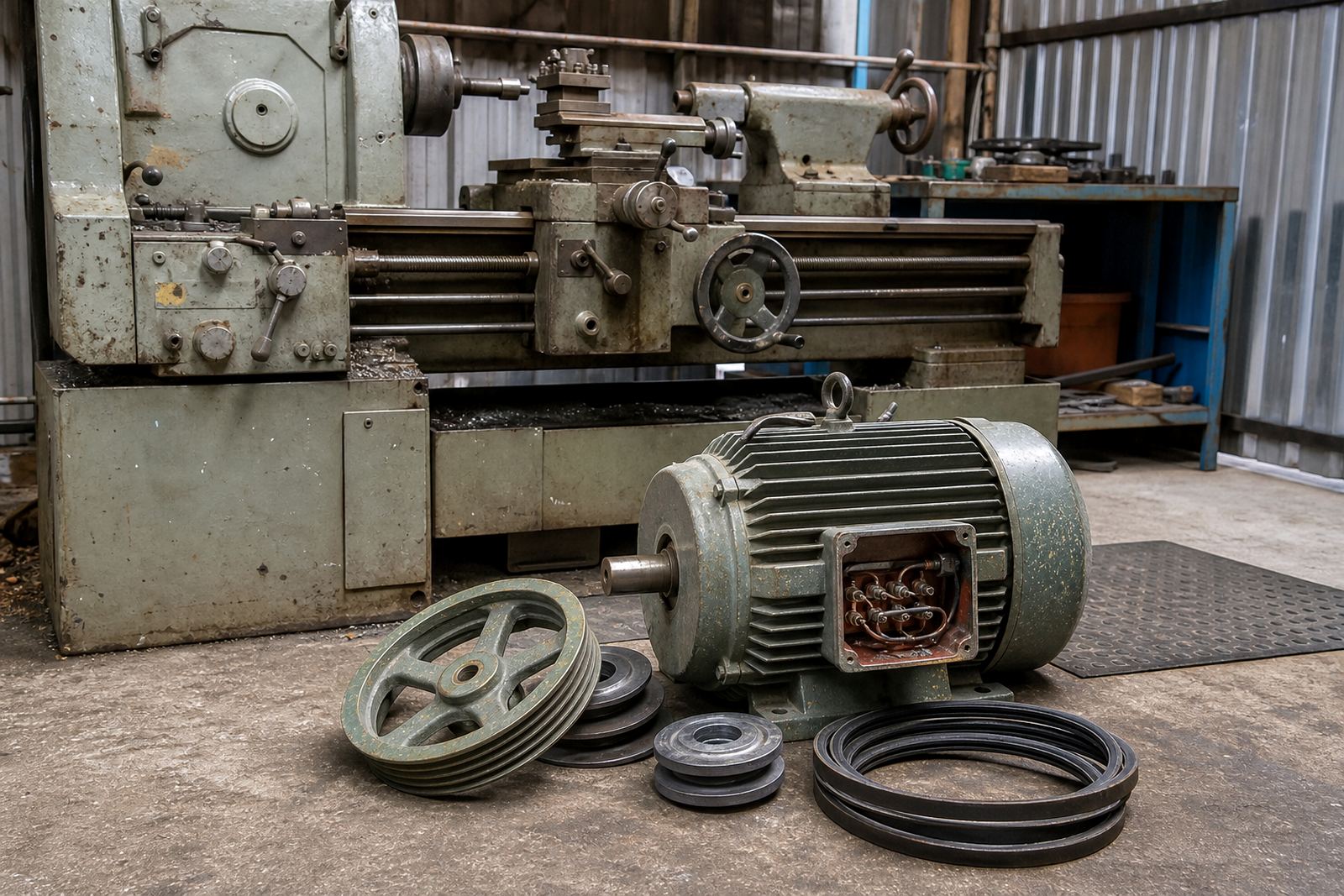
Spindle drives are used on milling machines, lathes, CNC equipment, drilling machines and other production machinery where speed control matters. They are also found in workshops that run through long shifts and feel the impact of load-shedding, dust, heat and voltage swings. If a drive is tripping, overheating or giving unstable speed, the fault can sit in the power stage, control section, cooling path or the connected motor and cable run.
Our repair work looks at the full picture, not only the visible fault. That includes fault finding, drive inspection, cable checks, panel cleaning, spares assessment and site reporting where needed. Electrical work must always be done by qualified people, with proper lockout procedures before any testing or removal starts.
Typical repair work and service steps
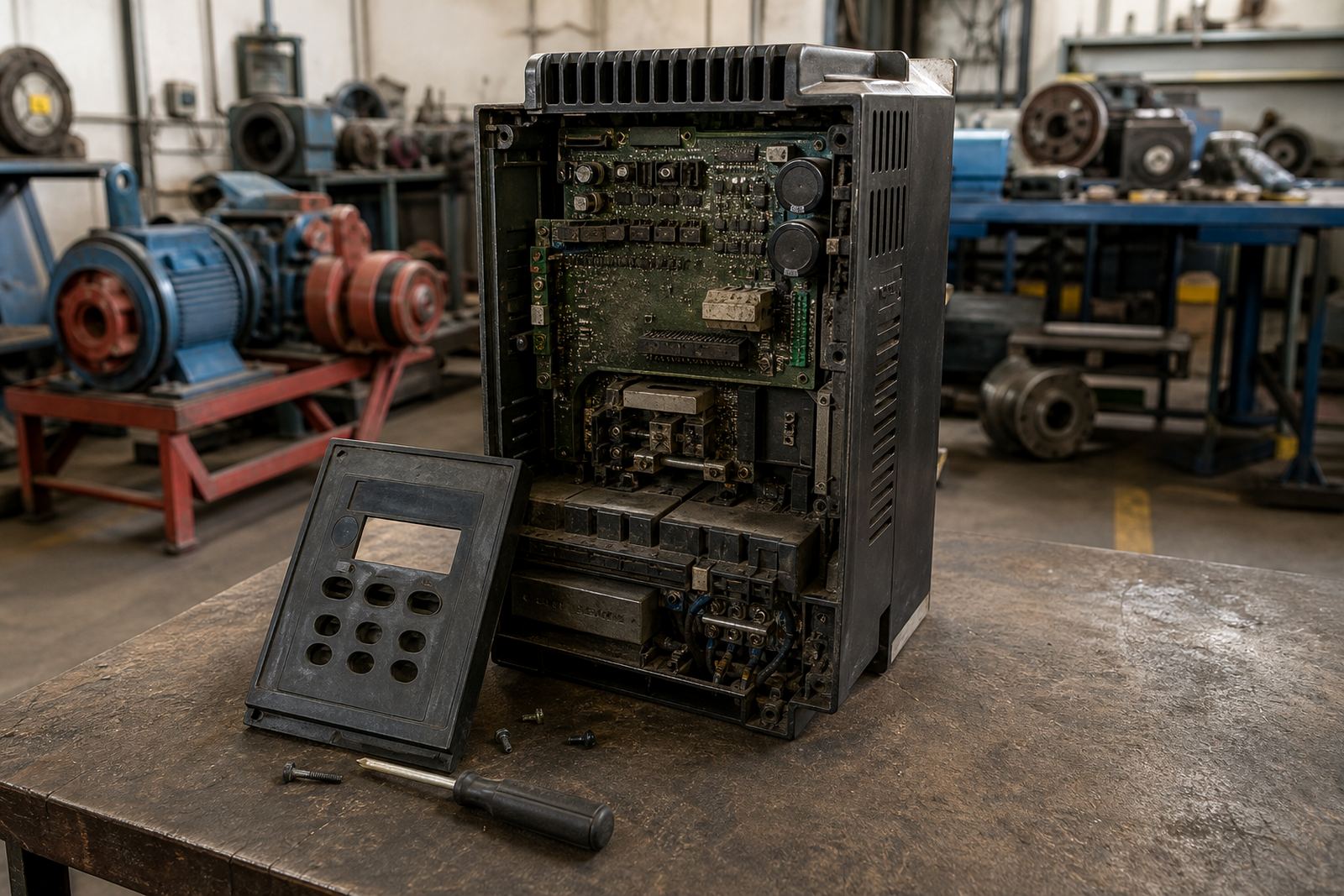
Spindle drive repair starts with inspection and diagnosis. We check the drive for signs of heat stress, burnt components, loose terminals, contamination, fan problems and evidence of past surges. Then we test the unit against the reported fault and confirm whether the issue is in the drive, the motor side or the machine controls.
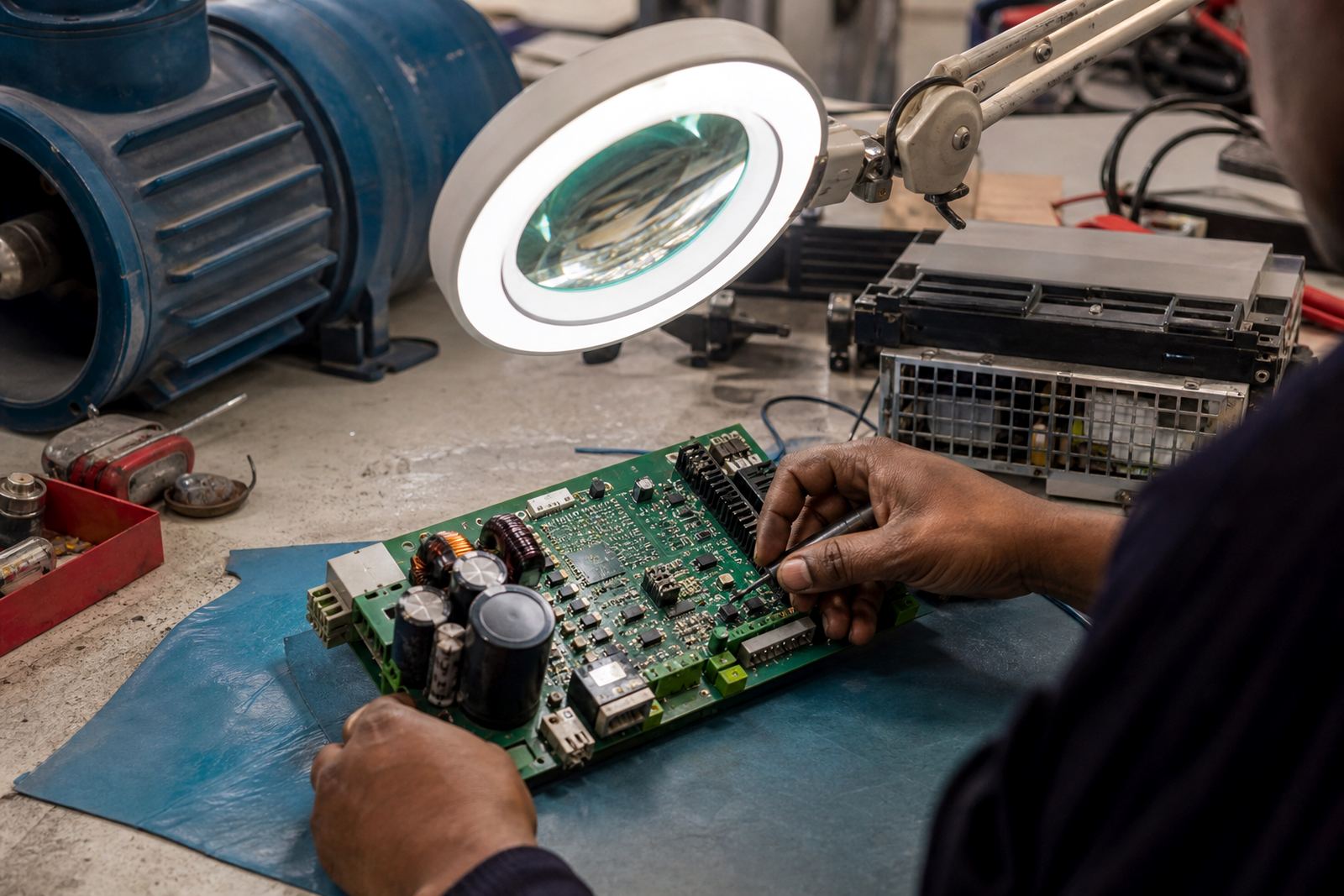
Where repair is practical, we replace failed parts and address the cause. That may include damaged capacitors, power devices, control boards, cooling fans, relays or connectors. We also check for poor earthing, cable damage and signs of moisture ingress. On sites in Durban or other coastal areas, humidity can cause corrosion and tracking, so a good clean and careful inspection matter. In Gauteng plants, fine dust and vibration can also shorten service life if panels are not kept clean.
- Fault finding and drive inspection
- Panel cleaning and cable checks
- Component-level repair where suitable
- Insulation testing on connected equipment
- Commissioning support after refit
We can also help with shutdown planning so work is carried out in an orderly way, especially where the machine sits on a production line and downtime has to be managed across several trades.
Sizes, options and common drive arrangements
Spindle drives come in different ratings and control formats, so the correct repair approach depends on the unit on your machine. Some are compact drives for smaller machine tools, while others are heavier industrial units used on higher power applications. The same machine family can also use different ratings depending on the motor size, spindle load and control method.
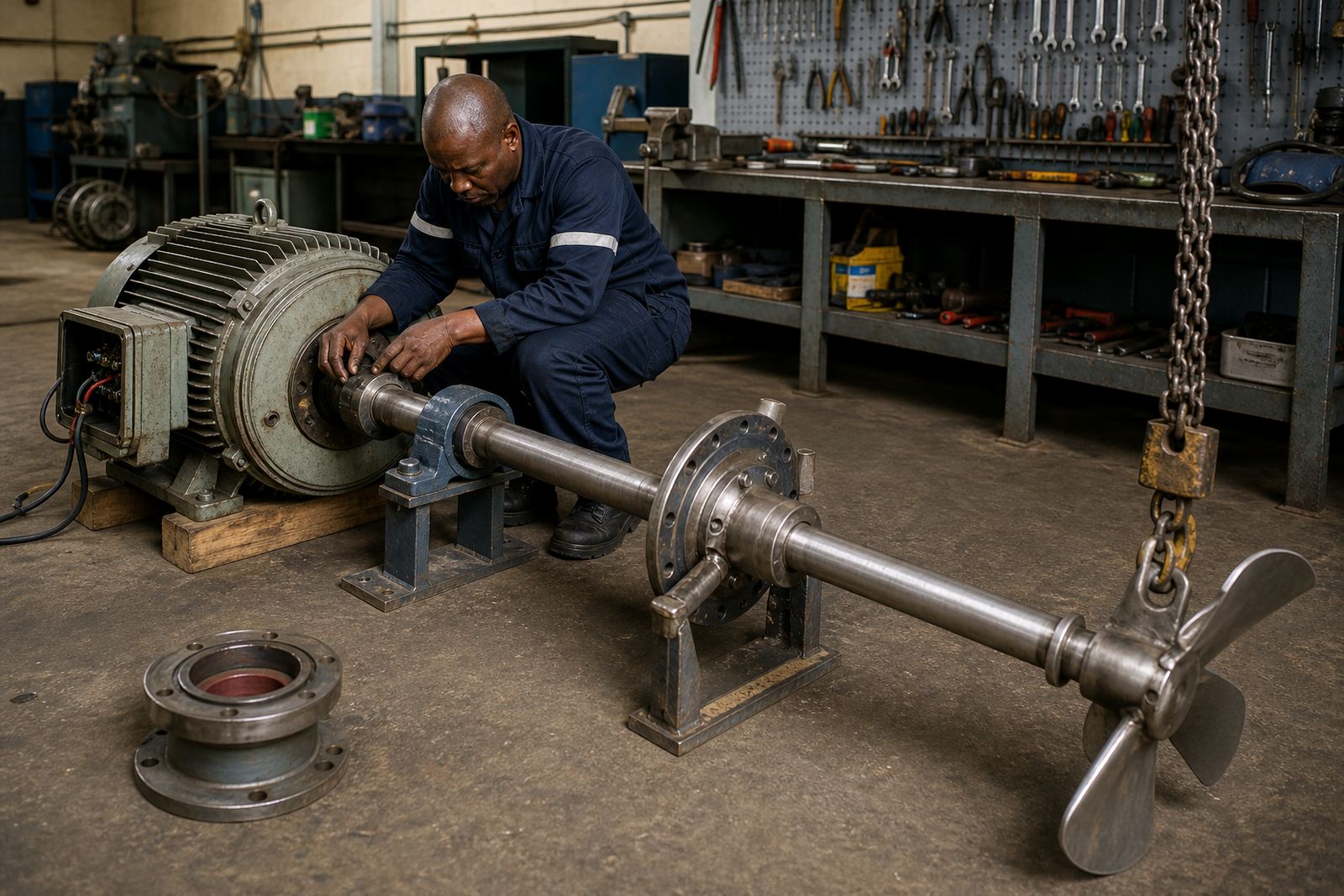
We work on drives fitted for three-phase industrial supply, with common control methods that may include keypad set-up, remote start and stop signals, analogue speed references or fieldbus-linked control. Where a drive has been matched to a specific spindle motor, the motor details are important because cable condition, insulation resistance and bearing condition can affect the final result. If a motor has been damaged, we can support motor removal, bearing checks, insulation testing and rewinding where required.
For ordering and assessment, it helps to know the drive type, machine model, fault symptoms and whether the unit is in a panel or mounted on the machine. If the site is in Boksburg, Kempton Park or elsewhere around Ekurhuleni, photos of the drive label, terminals and the surrounding control panel can save time during the first review.
Where spindle drive repair suits best
Spindle drive repair is suited to workshops and plants that rely on accurate speed control and repeatable machining. That includes metalworking shops, fabrication floors, toolrooms, production plants, maintenance departments and contract machine shops. It is often more practical than rushing into a full replacement when the drive is otherwise repairable and the machine is still in good condition.
We regularly support sites in Germiston, Johannesburg, Ekurhuleni, Pretoria, Vereeniging and Durban, with field service where access is needed for inspection or removal. If the machine is part of a larger line, commissioning support and site reporting can help the maintenance team document what was found and what still needs attention. For sites in older industrial areas, panel age and cable condition can be just as important as the drive fault itself.
- Machine tools and CNC equipment
- Production machinery with spindle speed control
- Workshops with repeated thermal or vibration issues
- Plants needing coordinated shutdown work
- Sites requiring on-site fault finding and removal support
Where a drive is beyond repair, we will say so plainly and help with the next step. That may include spares assessment, panel checks and advice on associated cables, motor condition and alignment checks before the new unit goes in.
Installation needs, power supply and site conditions
Spindle drives need a clean, dry and well-ventilated installation area. They also need the correct supply and control wiring, proper earthing and enough space around the unit for cooling. If the panel is packed too tightly or full of dust, the drive will run hotter and may fail again after repair. In South African workshops, heat, dust and power interruptions are everyday issues, so the installation environment matters.
The site should be checked for stable power, suitable protection and correct cable sizing. On machines that have suffered repeated trips, it is worth checking the incoming supply, motor cables, control wiring and any nearby contactors or relays. For plants affected by load-shedding or voltage variation, surge and supply problems can be part of the root cause, not just the drive itself.
Qualified people should handle all electrical work, including isolation, verification and lockout before any tests begin. Do not open a live panel or attempt a repair without the right training and procedures. If the machine needs alignment checks, commissioning support or site reporting after the work, we can include that as part of the service.
How to care for a repaired spindle drive
Good care starts with keeping the panel clean and dry. Dust buildup blocks cooling paths, while oil mist and moisture can damage boards and terminals over time. A repaired spindle drive should also be checked after the first few shifts, because loose terminals, cable strain or poor ventilation may only show up once the machine is back under load.
Routine servicing should include visual inspection, fan checks, terminal tightening where appropriate, cable checks and review of alarms or trip history. If the machine is operating in a busy plant, it helps to keep a simple service log so recurring faults are easier to trace. Bearing checks on the connected motor are also important because a worn bearing can increase load and make a healthy drive look faulty.
- Keep the panel clean and free of dust
- Watch for heat, noise and alarm codes
- Check cable glands and earthing points
- Inspect fans and airflow paths
- Review motor bearings and insulation if trips return
If a fault comes back after repair, do not assume the drive is the only problem. The motor, encoder feedback, cabling and machine controls all need to be considered together, especially on older equipment or where there has been previous patchwork maintenance.
What to check when ordering a spindle drive repair
When you send a unit in for repair or ask for site support, the more detail you give the better. The drive label, machine type, fault symptoms and any recent changes all help with diagnosis. If the issue started after a power outage, motor change, cable repair or maintenance shutdown, mention that as well. Even a small detail can point to the real cause.
It also helps to know whether the machine has already been isolated and whether the drive has been removed safely. If not, we can assist with motor removal, drive inspection and shutdown planning where the site needs controlled support. Please do not remove or test equipment unless you are qualified and the lockout procedure has been done properly.
- Drive make, model and rating details
- Machine type and what the spindle does
- Fault code, trip history or symptom description
- Supply details and panel condition
- Whether the fault is repeated or recent
Clients reach us through the enquiry form on our contact page. From there, our team in Germiston can guide the next step, whether the job needs workshop repair, on-site checks or coordination with other plant maintenance work.
Key facts
| Service type | Repair work for spindle drives used on production machinery and machine tools |
|---|---|
| Typical supply | Three-phase industrial supply as fitted on site |
| Common control formats | Local keypad, remote control, analogue reference or linked machine controls |
| Repair scope | Fault finding, component repair, testing, cleaning and commissioning support |
| Associated checks | Cable checks, insulation testing, bearing checks and alignment checks |
| Service area | Germiston, Johannesburg, Ekurhuleni, Pretoria, Vereeniging, Durban and surrounding industrial areas |