

What Crane Motor Repairs Cover
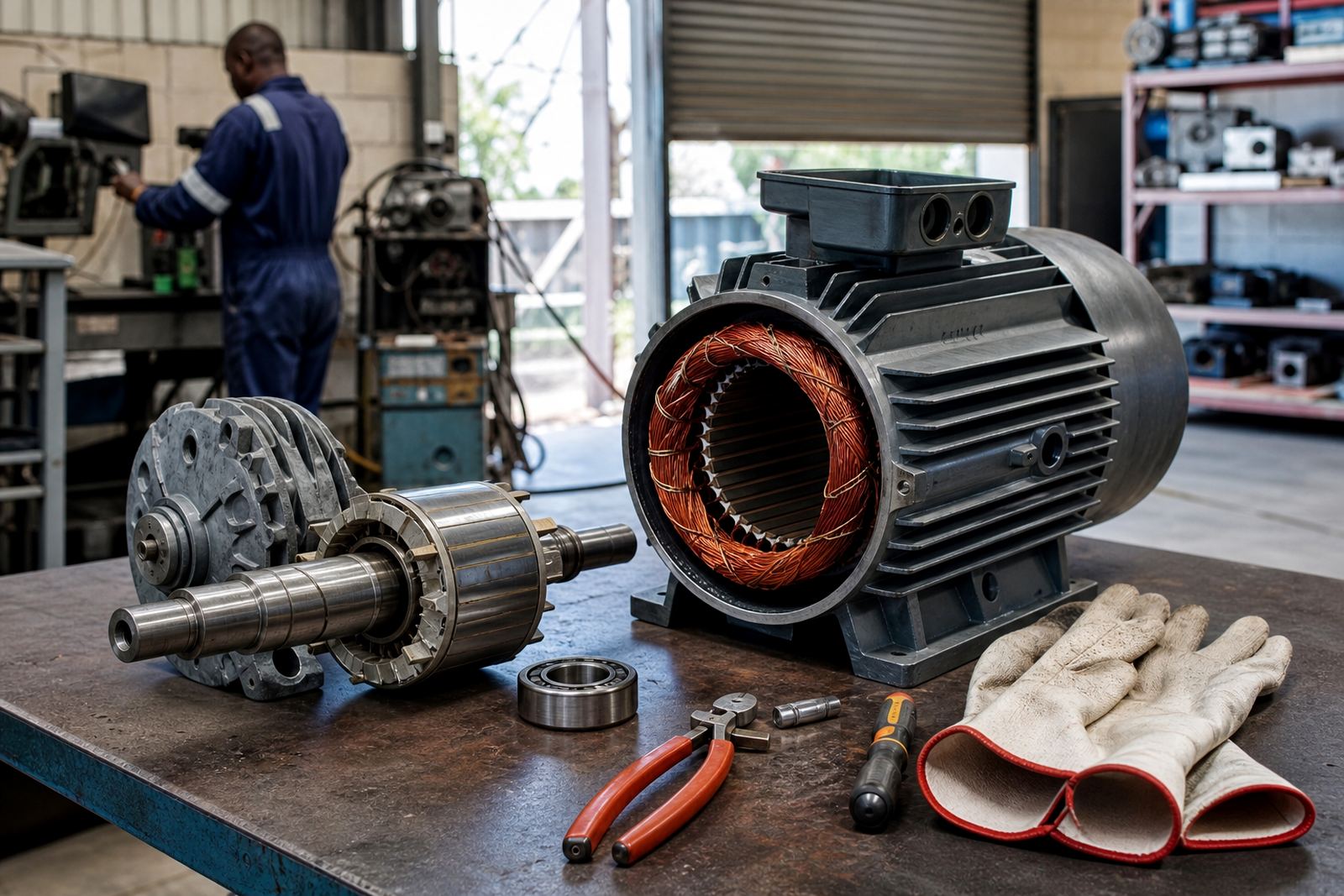
Crane motors operate differently from standard industrial motors. They start and stop often, run under short bursts of load, and must handle heat build-up, vibration and dust from day-to-day lifting work. Repairs usually begin with fault finding, strip-down, cleaning, testing and a close inspection of windings, bearings, shafts, seals and terminals.
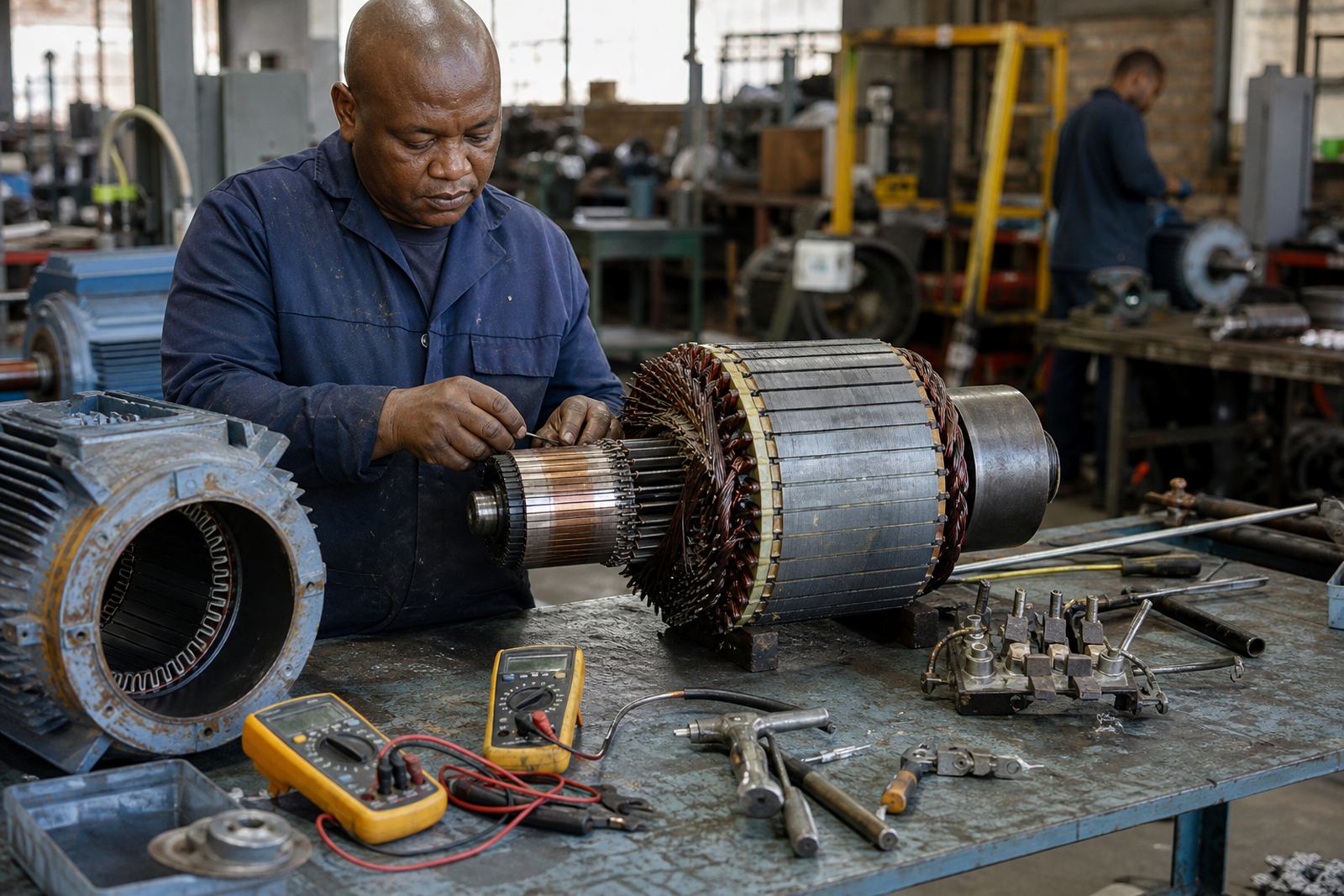
Common repair work includes electric motor rewinding, bearing replacement, rotor checks, insulation testing and alignment checks. On hoists and bridge cranes, a motor may also need coupling inspection, cable checks and control panel cleaning if contamination has entered the system. If the drive section is part of the problem, variable speed drive repair can be done alongside the motor work so the full lift system is checked as a unit.
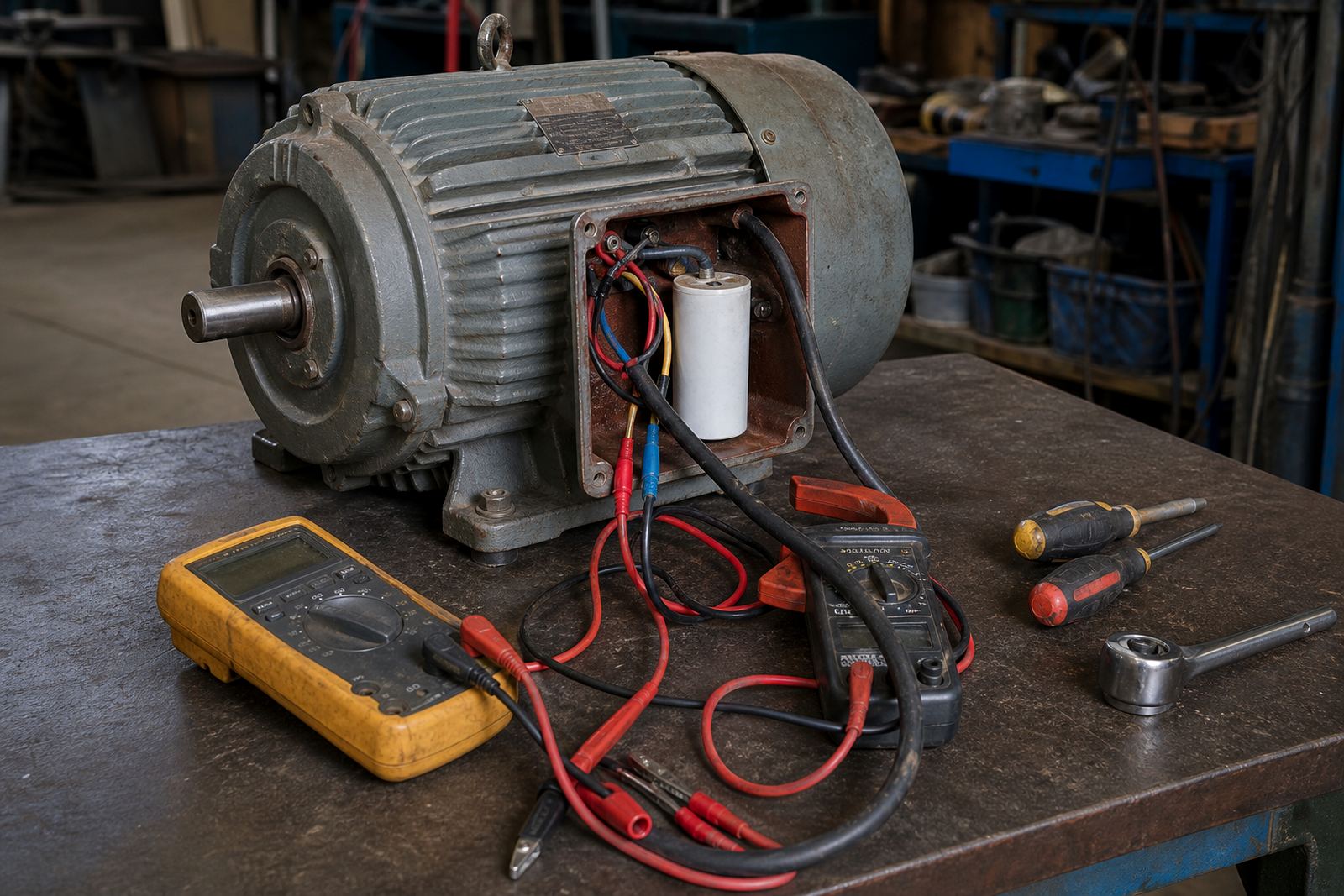
Electrical work on cranes must only be carried out by qualified people, with proper lockout procedures and a safe isolation process before any testing or removal starts. That matters on busy sites where a motor might be fed from a hoist panel, local isolator or drive cabinet and one mistake can put staff at risk.
Motor Sizes, Duty Types and Repair Options
Crane and hoist motors come in a wide range of frame sizes and ratings, from smaller workshop units to larger motors used on plant cranes, overhead gantries and yard handling systems. The right repair depends on the motor size, mounting style, cooling method and duty cycle. We work on motors used for intermittent starting, reversing and frequent braking, where insulation and bearing condition often show wear sooner than on steady-running equipment.
Typical repair options include partial rewinding, full rewinding, varnish treatment, bearing replacement, shaft inspection and terminal refurbishment. If the motor has been affected by moisture, dust or load-shedding related stoppages, it may also need drying, insulation re-testing and a detailed inspection before it goes back into service.
- Small crane and hoist motors for light workshop lifting
- Medium motors for overhead cranes, gantries and jib cranes
- High-duty motors used in plant handling and production areas
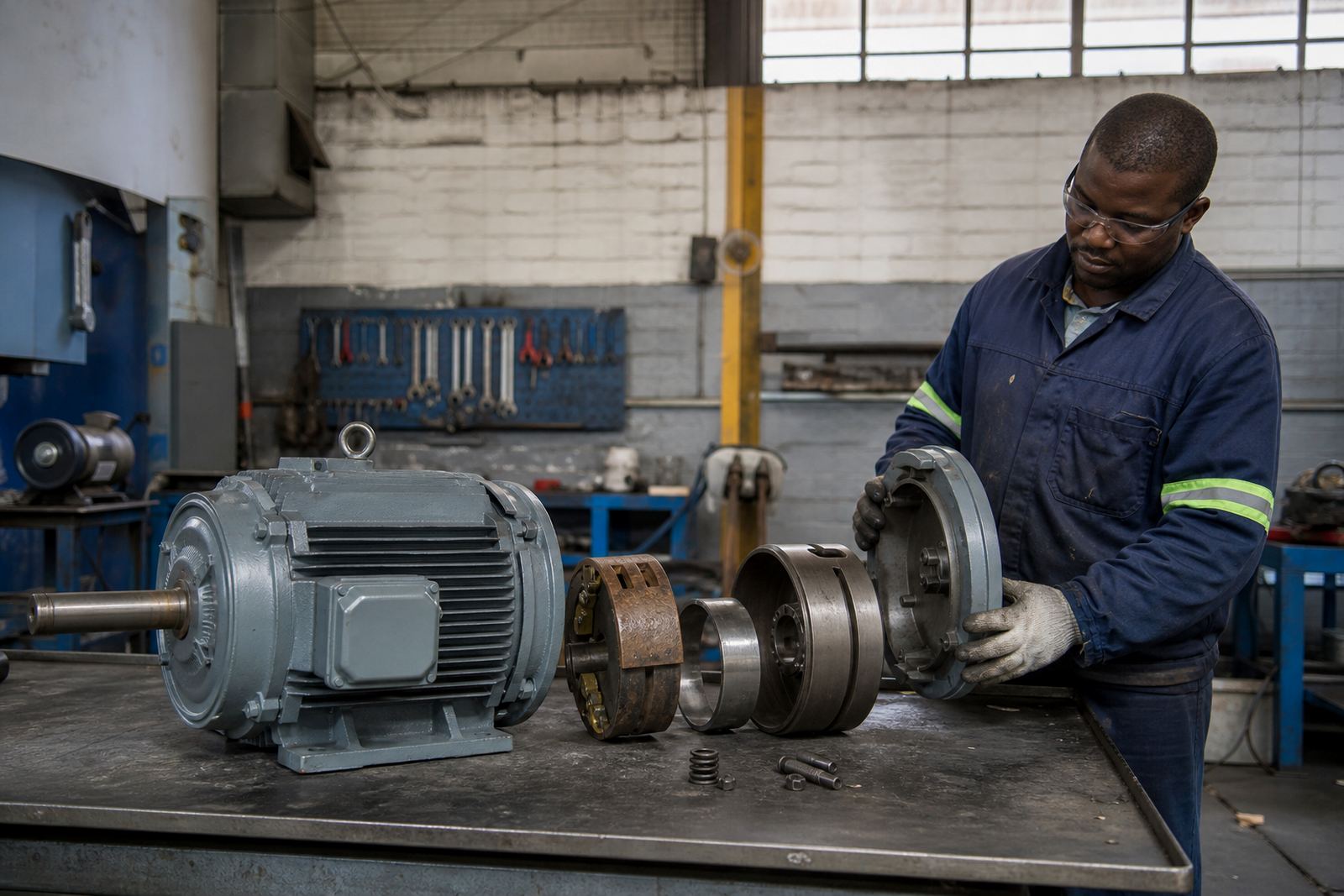
- Motors with brake assemblies, where brake wear must be checked
- Motors on variable speed systems for controlled lifting and travel
Where Crane Motor Repairs Suit Best
These repairs suit operations that cannot afford unreliable lifting equipment. That includes fabrication shops, maintenance stores, warehouses, steel handling areas, mills, processing plants and municipal workshops. Around Germiston, Boksburg and Kempton Park, crane motors are often used in tight production areas where a failed hoist can stop loading, offloading or machine movement for the shift.
We also support sites in Johannesburg, Ekurhuleni, Pretoria, Vereeniging and Durban where coastal humidity, dust or temperature swings can speed up bearing wear and insulation breakdown. In Durban, for example, corrosion and damp conditions can affect terminal boxes and cable entries, while inland plants often see heat and vibration as the main cause of failure. The repair approach is adjusted to the conditions the motor actually works in, not just the nameplate rating.
For clients managing more than one lifting point, site reporting helps track which motors are showing repeated faults so planned maintenance can be arranged before another shutdown. That saves time during peak production and gives the maintenance team clearer records for future servicing.
Installation, Power Supply and Site Requirements
Crane motor work normally starts with safe removal and identification of the motor, then continues through workshop testing or on-site inspection depending on access. If the motor is being fitted back into service, alignment checks and commissioning support help confirm that the drive line, brake and mounting are correct before the crane is handed over.
Power supply requirements depend on the motor and control system. Many crane applications use three-phase supply with controlled starting, braking or variable speed drive control. Some systems include limit switches, control panels, cable reels or pendant controls, so panel cleaning and cable checks may be needed at the same time. There is no gas requirement for crane motor repairs, but correct electrical isolation, lockout and tagging are essential before any work begins.
- Safe isolation and lockout before removal or testing
- Access to the motor, brake and control panel area
- Basic load details and duty cycle information
- Supply details, including voltage and starting method
- Clear note of the fault, noise, overheating or tripping issue
How We Test and Restore a Crane Motor
A proper repair does not stop at rewinding the windings. The motor should be measured, cleaned and tested as a full unit. We check the insulation condition, winding resistance, earthing points, bearing condition, shaft play and signs of overheating or contamination. If the motor has burnt windings, distorted slots or damaged lead wires, those issues are recorded before repair work continues.
Where needed, the rotor is checked for balance or mechanical damage, and bearings are replaced if they show roughness, looseness or signs of heat. After rewinding, the motor is reassembled carefully, tested again and prepared for recommissioning. If the motor is used with a variable speed drive, the drive may also need inspection for fault codes, cooling fan issues, loose terminals or dust build-up that can affect performance.
Our approach is practical: restore safe operation, confirm electrical health and make sure the motor suits the duty it is expected to handle. No shortcuts, because a crane motor that fails under load can damage equipment and delay work across the whole site.
Care, Servicing and What to Check When Ordering
Crane motors last longer when they are checked before a failure turns into a shutdown. Regular servicing should include bearing checks, terminal tightening, insulation testing, cleaning of dust and grease, and attention to cooling paths. On sites with heavy use or long idle periods, moisture can settle into the windings and bearings, so periodic testing is important even when the crane is not working every day.
When ordering crane motor repairs, please send the motor details and the problem description as clearly as possible. If the motor has already been removed, keep the nameplate details and note the mounting arrangement, brake type and any drive connection. If the motor is still installed, include the site location and access information so removal and shutdown planning can be arranged properly.
- Motor frame size, voltage and speed from the nameplate
- Whether the motor has a brake or variable speed drive
- Fault symptoms such as tripping, noise, overheating or vibration
- Where the motor is used and how often it operates
- Any previous repairs, rewinding or bearing replacements
Locor is based in Germiston and supports crane motor repairs for plants and workshops across South Africa. We handle enquiries from Johannesburg, Ekurhuleni, Pretoria, Vereeniging, Durban, Boksburg and Kempton Park through the contact page enquiry form, with practical site support from first fault report to final testing.
Key facts
| Service type | Crane motor repairs, rewinding and fault diagnosis |
|---|---|
| Typical motor duty | Intermittent start-stop and reversing duty with high load peaks |
| Repair methods | Rewinding, bearing replacement, insulation testing, cleaning and reassembly |
| Related systems | Hoist motors, travel motors, brake assemblies and variable speed drives |
| Site support | Removal, commissioning support, shutdown planning and site reporting |
| Service area | Germiston, Johannesburg, Ekurhuleni, Pretoria, Vereeniging and Durban |