

Start With the Right Equipment Details
Before any collection is arranged, please gather the equipment details that help us identify the fault and plan the work. This is especially useful for motors and drives that have been removed from a plant line, pump set, conveyor, fan or workshop machine. The more complete the handover notes are the easier it is to check the item when it arrives in Germiston.
- Equipment type, rating and frame size where available
- Nameplate photo or copied plate details
- What the motor or drive was doing before failure
- Any burning smell, tripping, noise or vibration noted
- Whether the unit was exposed to water, dust or coastal humidity
How Collections Are Arranged for Germiston
Collections are arranged through the enquiry form on our contact page. Once the request comes in, we use the details you provide to confirm the collection point, the item size, and whether lifting help or special packing is needed. For sites in Germiston, Johannesburg, Ekurhuleni, Pretoria, Vereeniging and Durban, it helps to mention site access times and any gate rules before the vehicle arrives.
If the equipment is coming from a workshop or plant shutdown, please tell us whether the item is loose, palletised or still installed. That allows us to plan the right transport and avoid delays at the gate or loading bay.
Safe Isolation Before Any Handover
Electrical work must only be handled by qualified people, and lockout procedures must be followed before a motor, drive or panel is removed. Switch off at the correct isolator, confirm isolation, and make sure the unit is safe to move before handover. Never leave live cables, open terminals or exposed conductors unsecured.
- Isolate and lock out the supply before removal
- Tag cables so reconnection is easier later
- Drain, clean or cool the unit if the process requires it
- Protect open shafts, terminal boxes and cable ends
- Keep bolts, couplings and covers together in one marked bag
What to Bring With the Unit
When the equipment reaches our workshop, a complete handover saves time. Small parts often go missing during a rush off a plant floor, so it is worth keeping everything together from the start. If the motor was removed from a skid or baseplate, please include any shims, foot bolts and coupling details where possible.
- Removal notes or fault description from site
- Loose covers, terminals, glands and fasteners
- Coupling, pulley or mounting hardware if relevant
- Photos of the installation and cable route
- Any operating history such as repeated overload or nuisance trips
Deliveries, Offloading and Workshop Handover
For deliveries to our Germiston base, please check that the item is secure for transport and packed against damage. Motors and drives should be loaded so they cannot shift, tip or pick up moisture on the way. If the unit is heavy or awkward to lift, mention that in advance so the right offloading plan can be prepared.
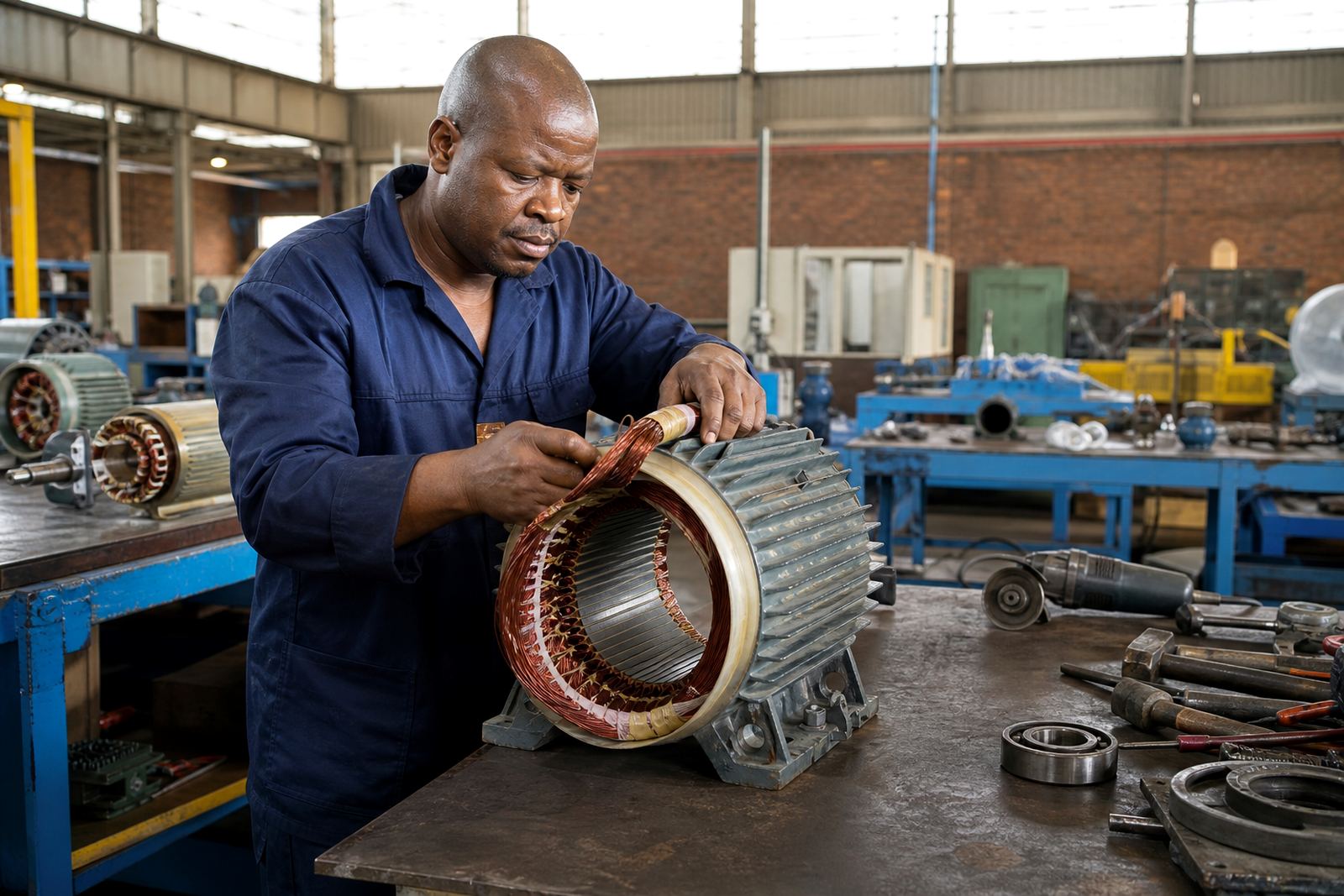
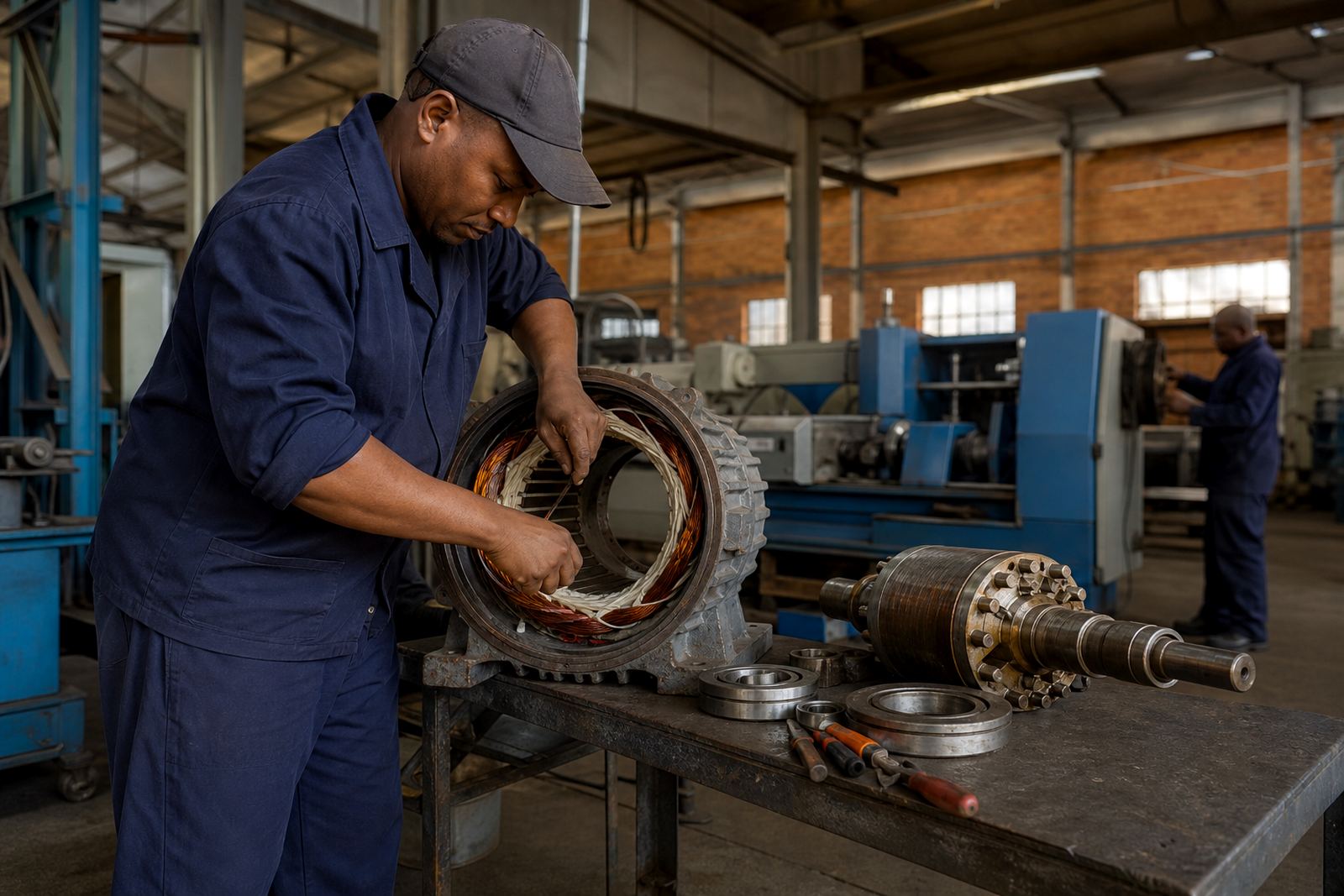
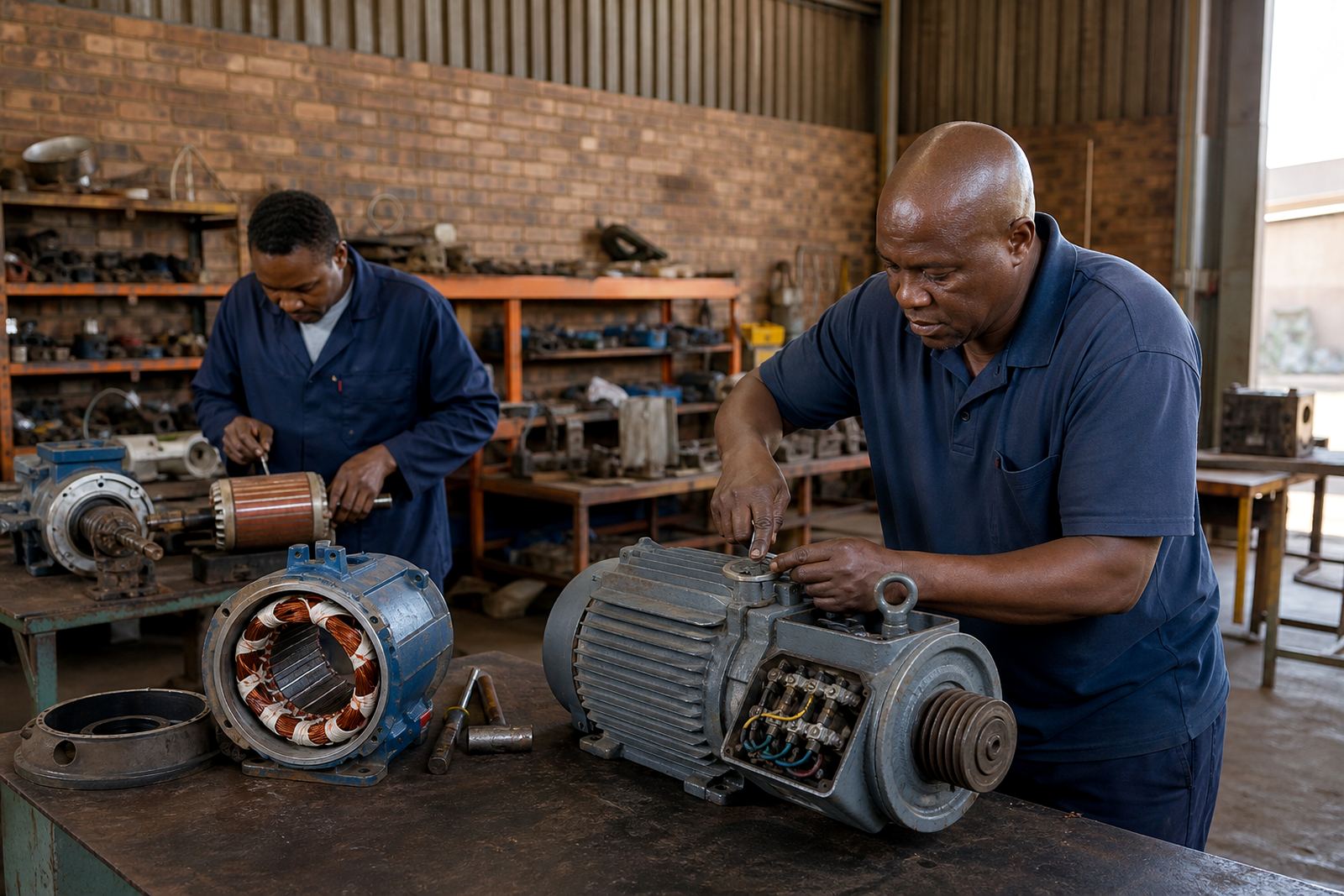
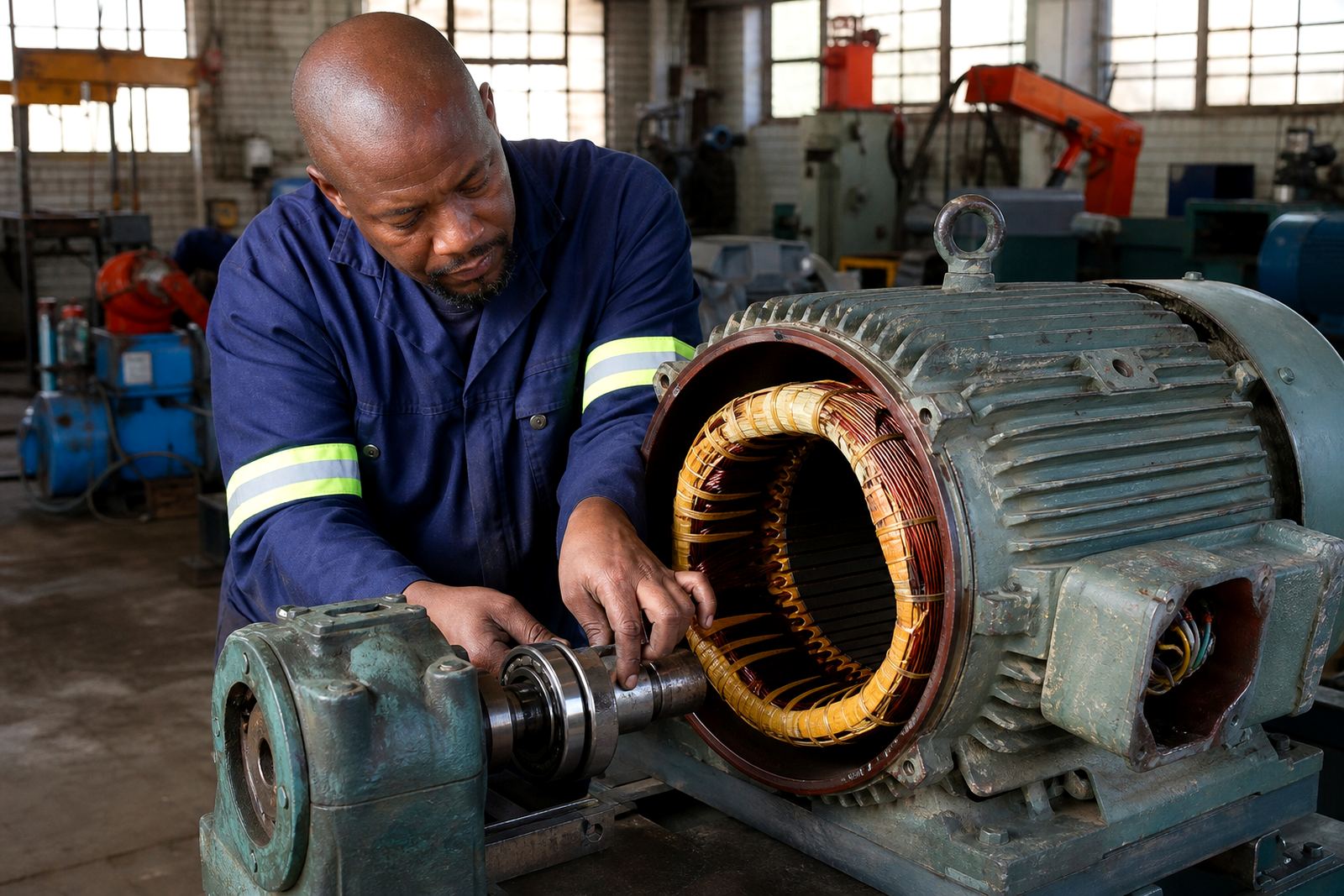
On arrival, we check the handover details against the equipment received, note visible damage, and record any missing parts. If the unit shows signs of burnt windings, bearing failure, water ingress or drive component damage, we will log that in the site report before fault finding begins.
After Collection: Assessment and Next Steps
Once the item is logged in, the assessment may include fault finding, bearing checks, insulation testing, panel cleaning, cable checks, alignment checks or drive inspection depending on the equipment type. Motor rewinding and variable speed drive repair are both handled with care because electrical faults can hide deeper damage that only shows up after strip-down and testing.
We also support shutdown planning, commissioning support and spares assessment for sites that need a controlled return to service. If further site work is needed, we will keep the communication practical and focused on the next step, rather than creating extra back-and-forth for your team.