

What We Check When a Motor Comes In
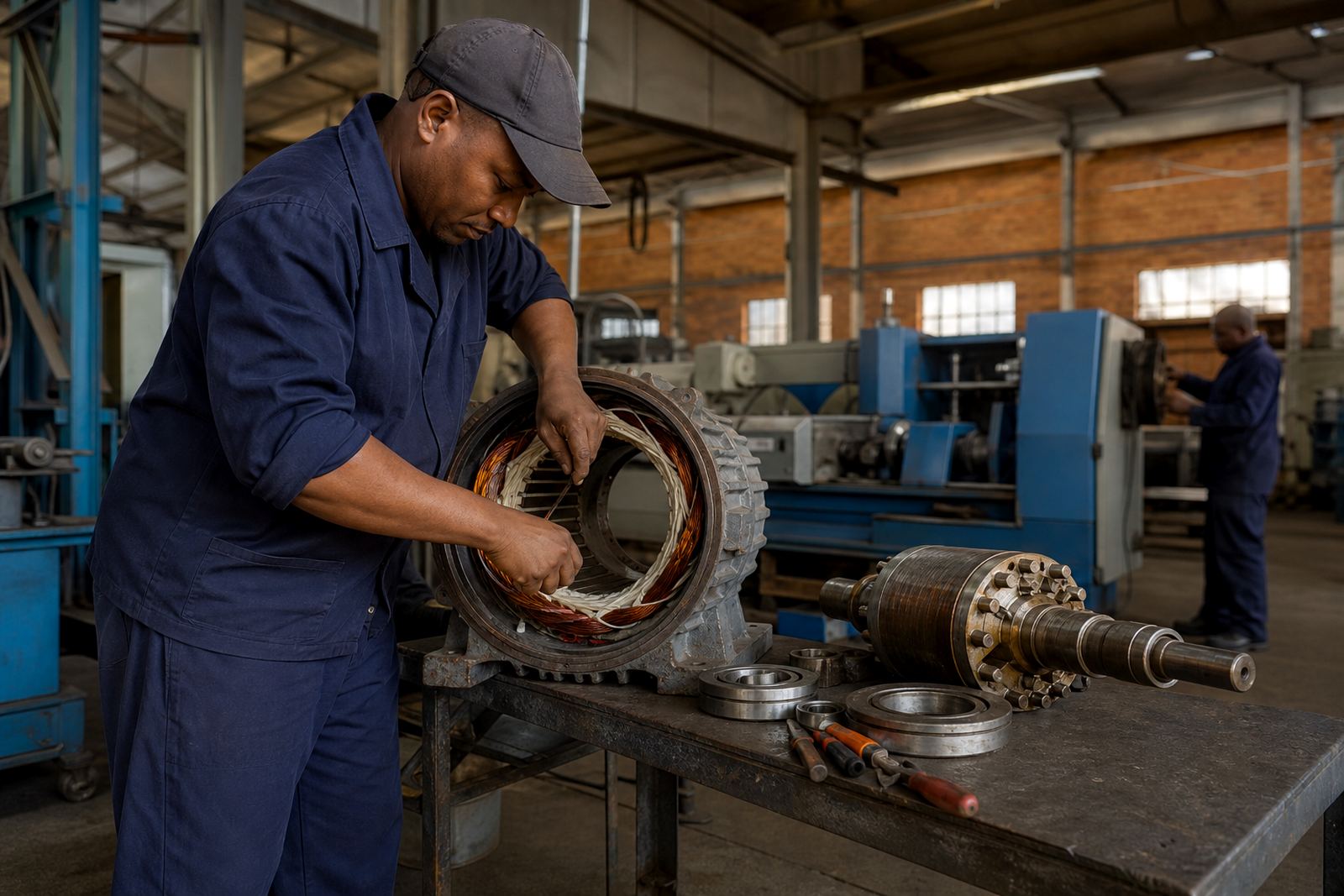
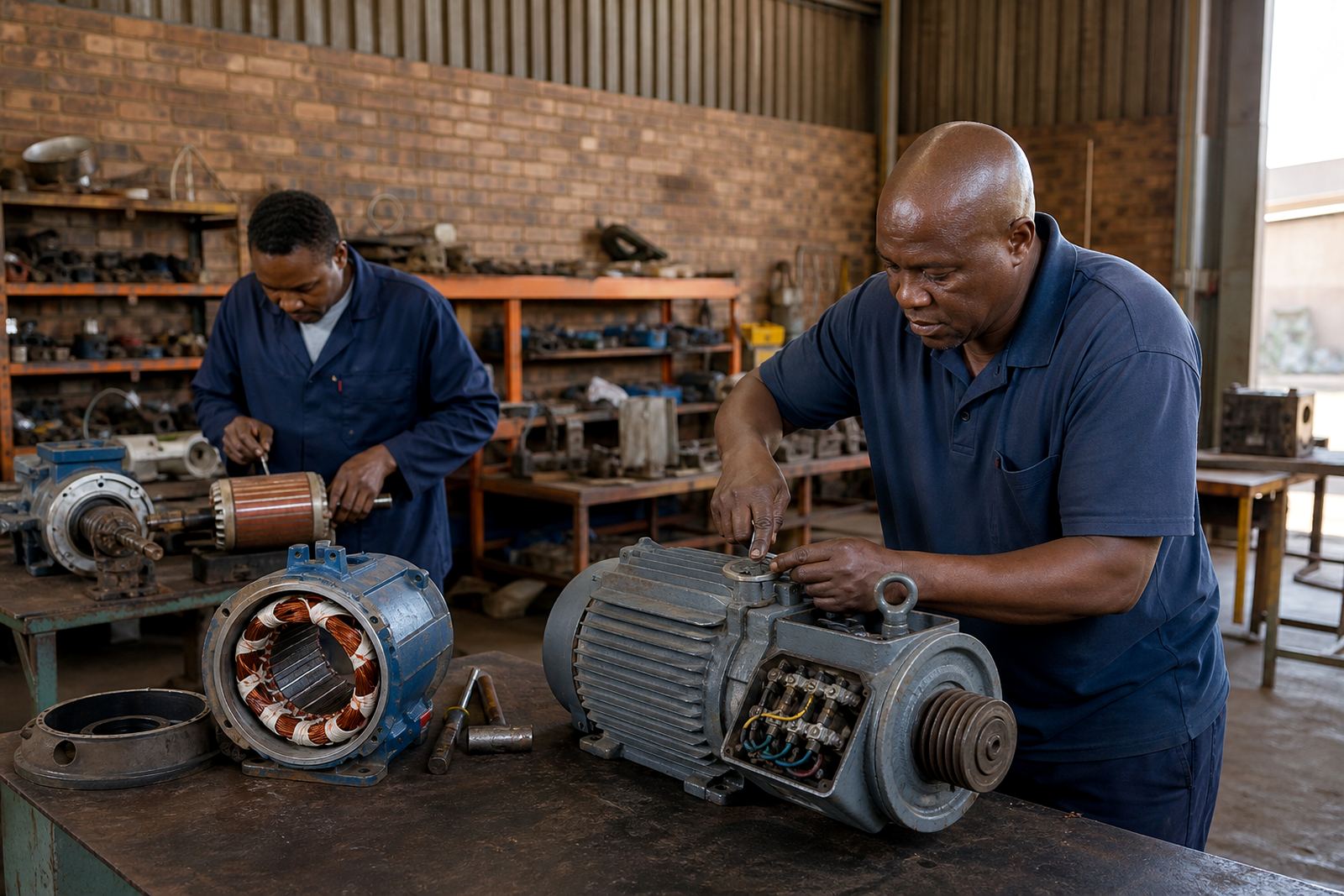
When a motor arrives at our Germiston base, the first step is a proper fault finding process. We check the nameplate details, the condition of the frame, shaft, terminal box and bearings, then look for signs of overheating, contamination, moisture ingress and mechanical damage. If the unit has tripped a starter or drive, we also look at the wider circuit and application, because the fault is not always inside the motor itself.
For plants and workshops in Johannesburg, Ekurhuleni, Pretoria, Vereeniging and Durban, that early inspection helps separate an electrical fault from a mechanical one. It also helps decide whether the unit needs rewinding, bearing replacement, cleaning, alignment checks or further testing.
- Visual inspection and fault notes
- Bearing checks and shaft condition
- Insulation testing
- Winding condition review
- Site reporting where needed
How Electric Motor Rewinding Is Handled
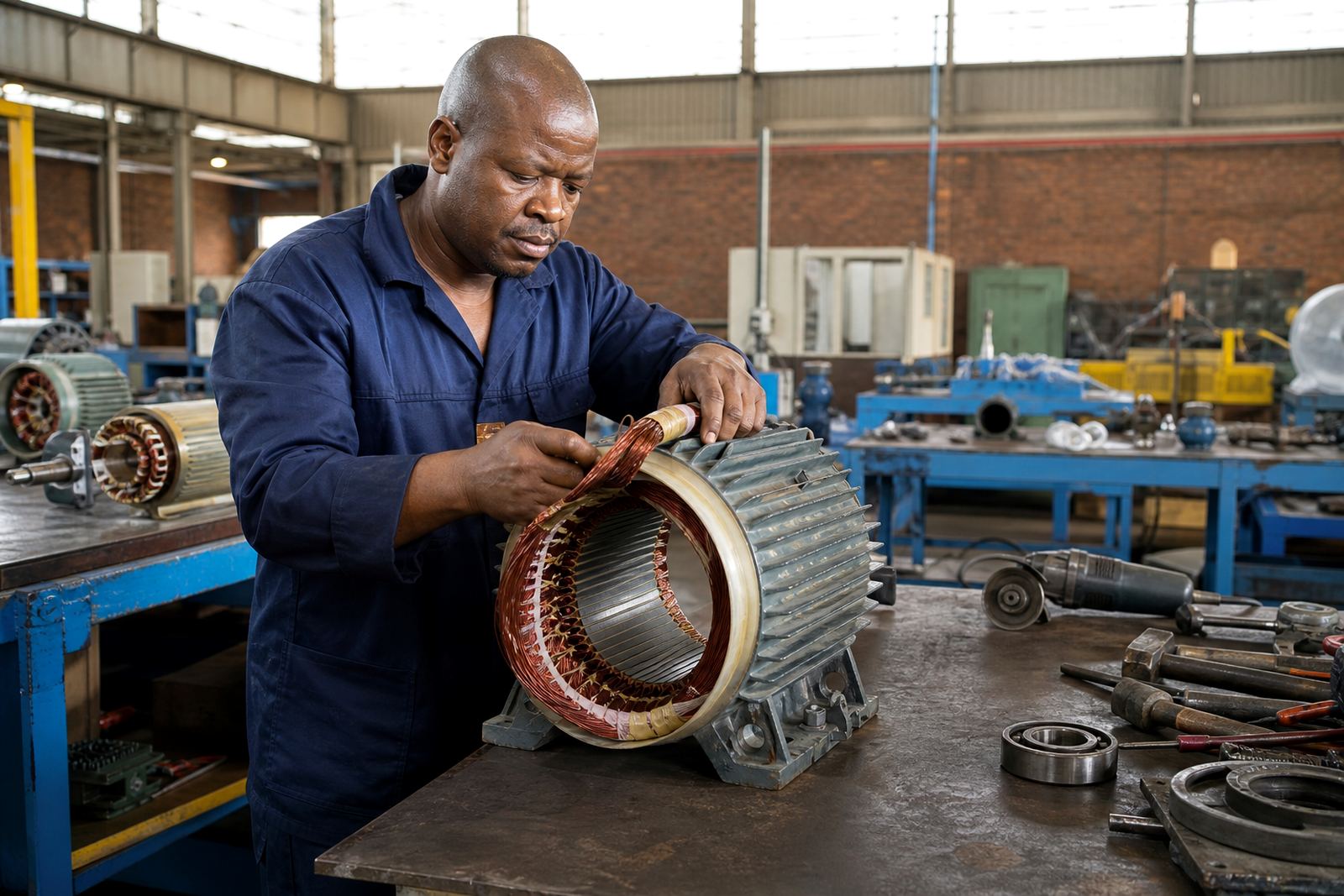
Motor rewinding is used when the original windings are damaged, shorted, burnt or affected by insulation breakdown. The process starts with stripping the motor carefully, recording the winding data where possible and removing the old winding without damaging the core. The stator is then cleaned, checked and prepared for new wire, insulation materials and finishing.
After rewinding, the motor is tested again to make sure the electrical values are within an acceptable range for the application. This is work for qualified people only, and lockout procedures must be followed before any motor is removed or worked on. That applies on site and in the workshop, whether the job is in Boksburg, Kempton Park or further afield.
- Remove and record the damaged winding
- Inspect the core and frame for heat damage
- Install new insulation and winding
- Varnish or finish as required
- Carry out final electrical checks
When Bearings Need Replacing Too
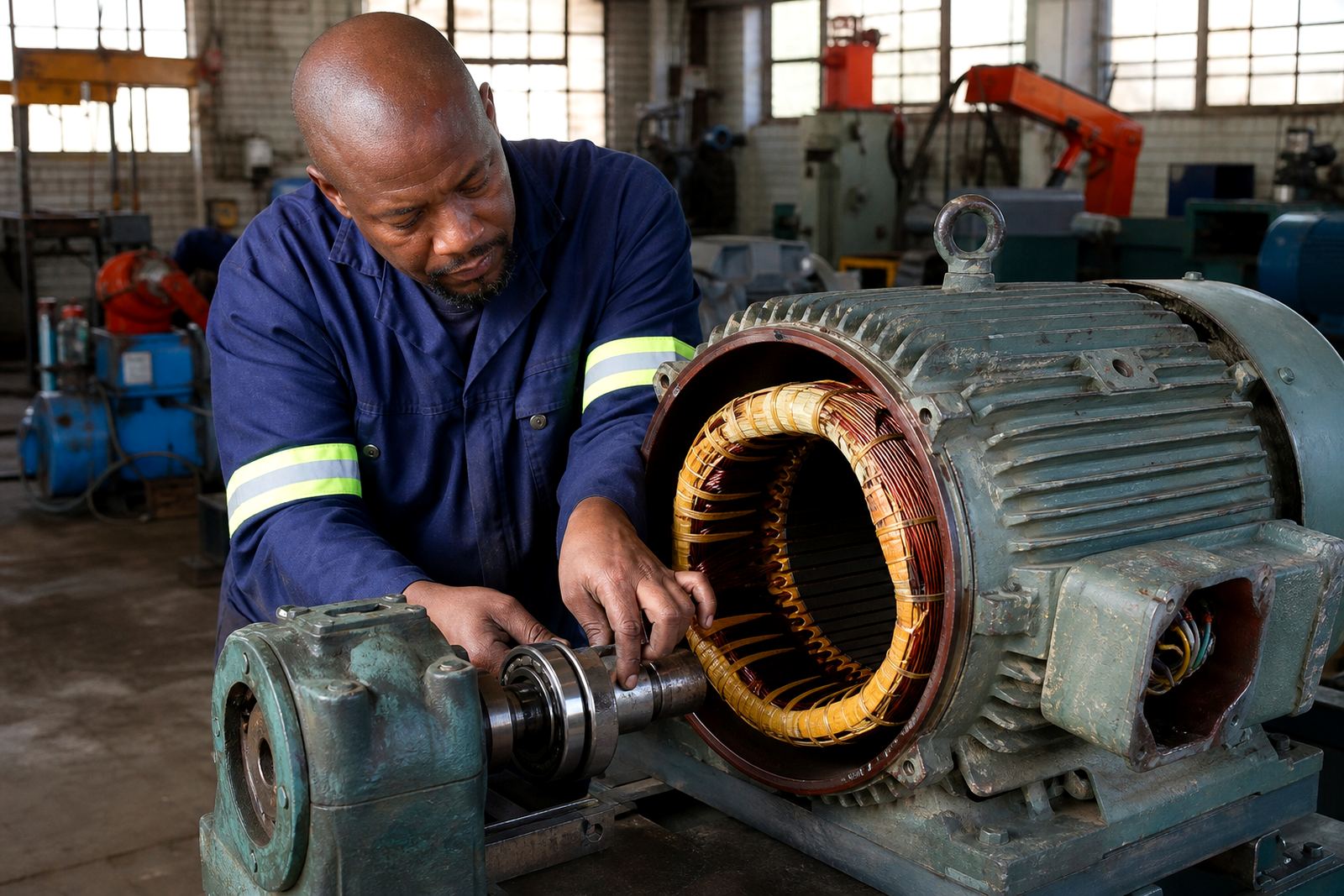
Many motor faults are not only electrical. Worn or seized bearings can cause heat, noise, vibration and shaft movement, which then affects the winding and the driven equipment. If the bearing surfaces are damaged, or if there is contamination from dust, water or process material, bearing replacement may be part of the repair plan.
We check bearing fit, end float, lubrication condition and signs of imbalance. In some cases the motor may also need alignment checks before it goes back into service. Coastal humidity, washdown areas and dusty plant conditions can all shorten bearing life, so the root cause matters just as much as the replacement itself.
- Noise and vibration checks
- Seal and grease condition review
- Shaft and housing fit inspection
- Alignment checks before refit
What Happens During Drive Repair and Inspection
Variable speed drive repair usually starts with a careful inspection of the control electronics, terminal condition, cooling path and any signs of heat stress, loose connections or contamination. We also check for faults linked to incoming supply quality, incorrect sizing, motor cable issues and site conditions. A drive can fail because of age, dust, poor ventilation or a motor side fault, so the full picture matters.
Our drive repair and inspection work can include panel cleaning, cable checks, spares assessment and site reporting. If a unit has been exposed to load-shedding events or voltage fluctuation, we look for damage that may not be obvious at first glance. The goal is to get the equipment back into service safely and with the cause understood.
- Fault finding and visual inspection
- Panel cleaning and cable checks
- Internal component assessment
- Commissioning support after repair
Why Insulation Testing Matters Before Recommissioning
Insulation testing helps confirm whether a motor is safe to put back into service. It is used to check the condition of the winding insulation and to identify moisture, contamination or deterioration that could lead to a failure under load. A motor may look clean on the outside and still have a weak insulation reading, so this step is important.
For many customers, especially those running critical plant equipment, insulation testing forms part of the normal workshop process before recommissioning. It is also useful after storage, after a flood, after a motor has stood idle for too long, or after a shutdown where the unit was removed and handled. Electrical work must always be done by qualified people with correct isolation and lockout procedures in place.
How the Workshop Process Works from Drop-Off to Handover
Once the unit is booked in, we log the equipment details, carry out the initial assessment and advise on the likely repair path. If the job needs motor removal, alignment checks or support on site, that can be planned as part of the shutdown or maintenance window. We work with customers across Gauteng and into Durban, so clear communication is important before any strip-down begins.
The workshop process normally follows a simple order: inspection, fault confirmation, repair, testing and final handover. If parts are required, the team will assess what is needed before proceeding. That helps avoid guesswork and keeps the repair focused on what the machine actually needs, not what looks convenient.
- Booking and fault description
- Inspection and test results
- Repair work and parts assessment
- Final checks and handover notes
What to Send With Your Enquiry
When you submit an enquiry through the contact page, include as much practical detail as you can. A short description of the fault, the equipment type, the site location and any recent changes helps the team respond more accurately. If the issue started after a power event, shutdown, water ingress or maintenance activity, mention that too.
Useful details also include motor size, supply details, whether the unit is coupled to a pump, fan, conveyor or other driven load, and whether the problem is constant or intermittent. This saves time and helps us decide if the job needs workshop repair, site reporting or shutdown planning first.