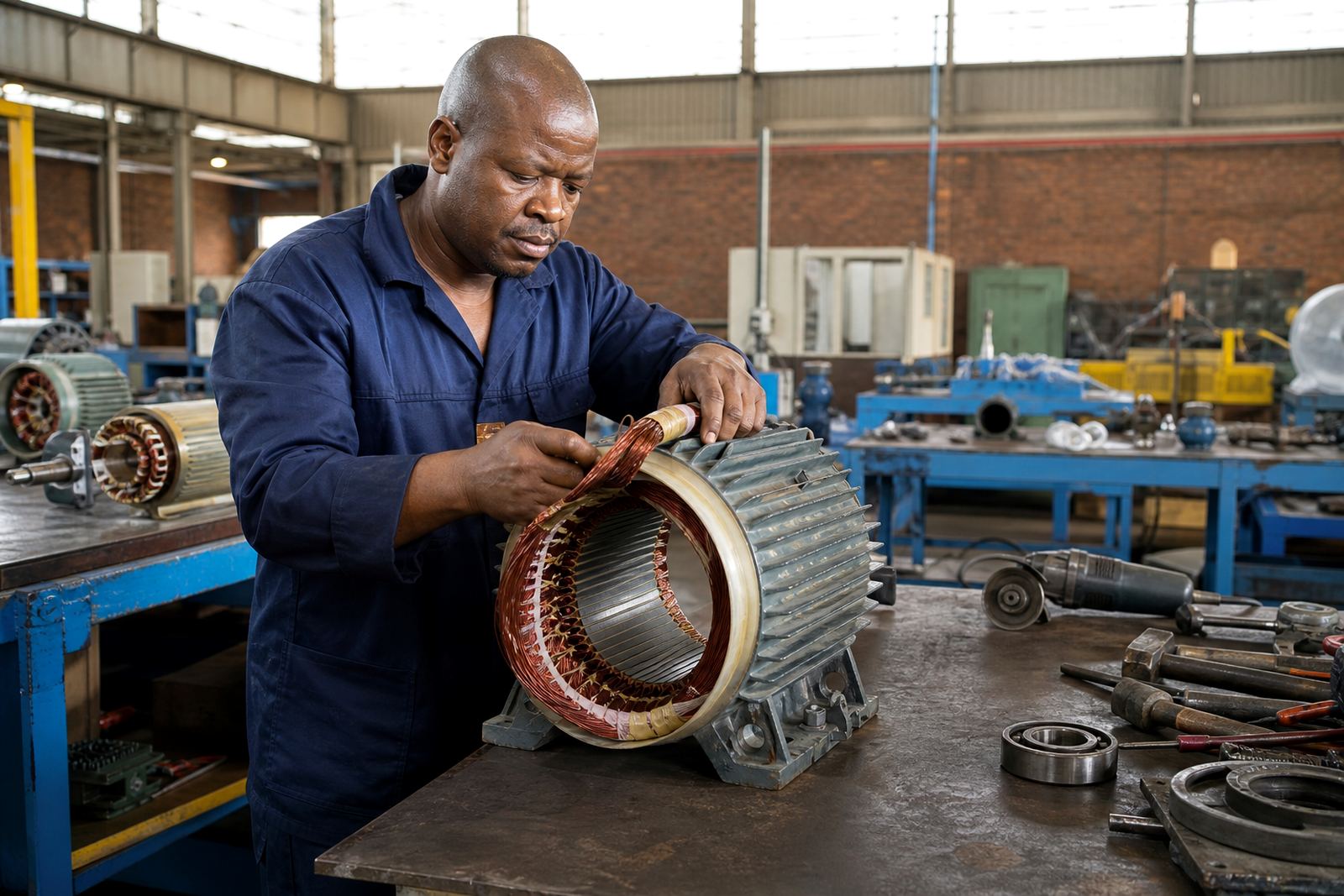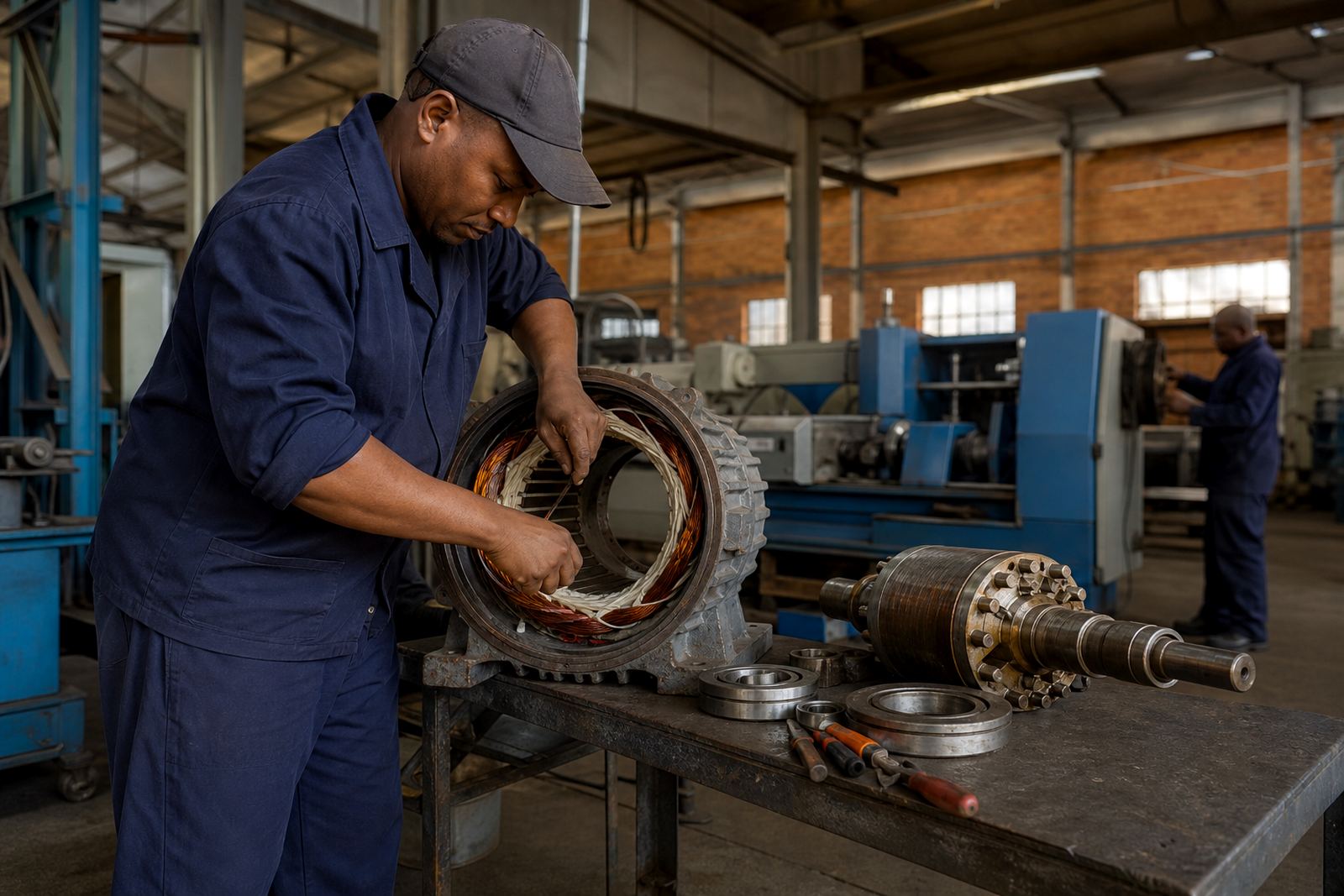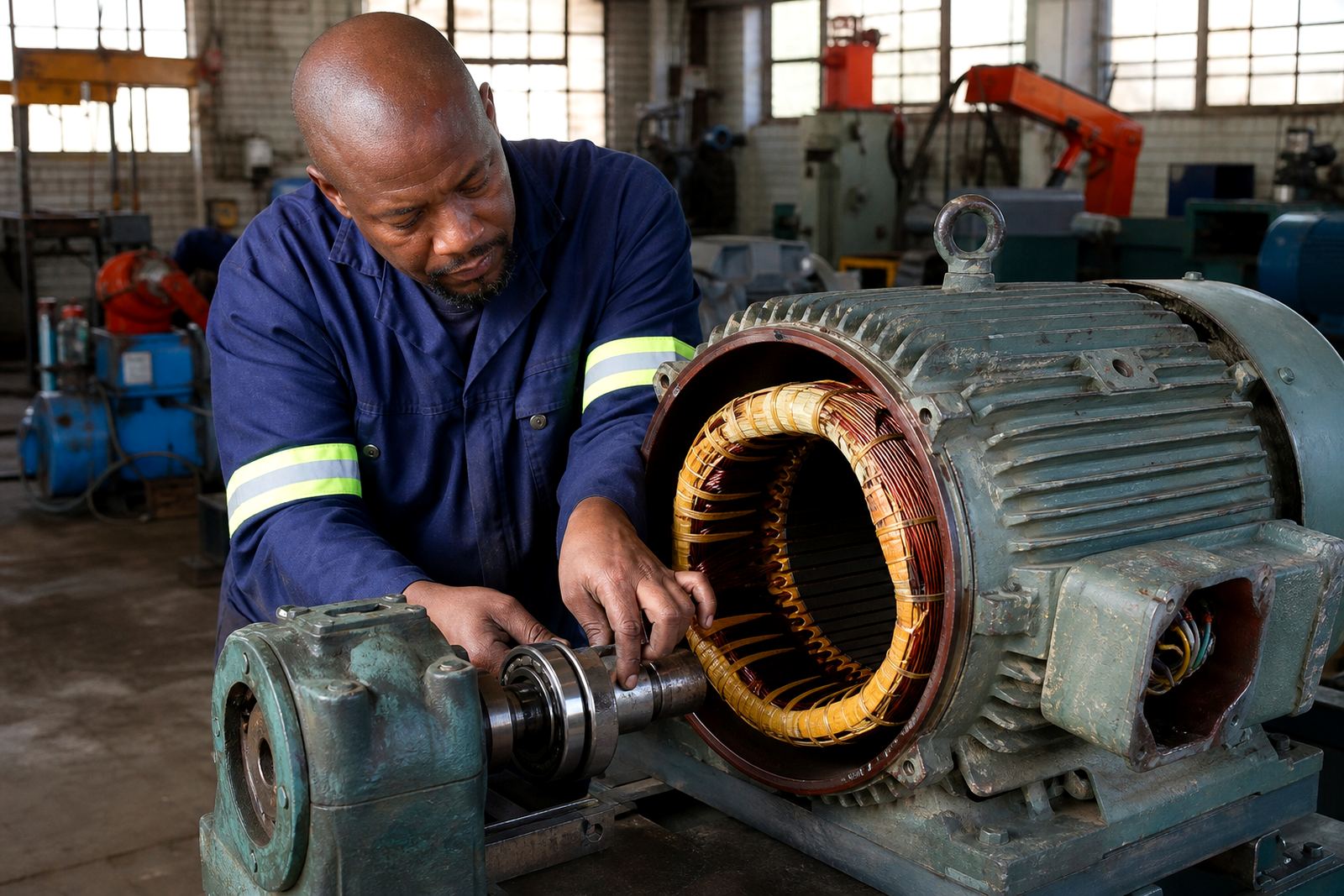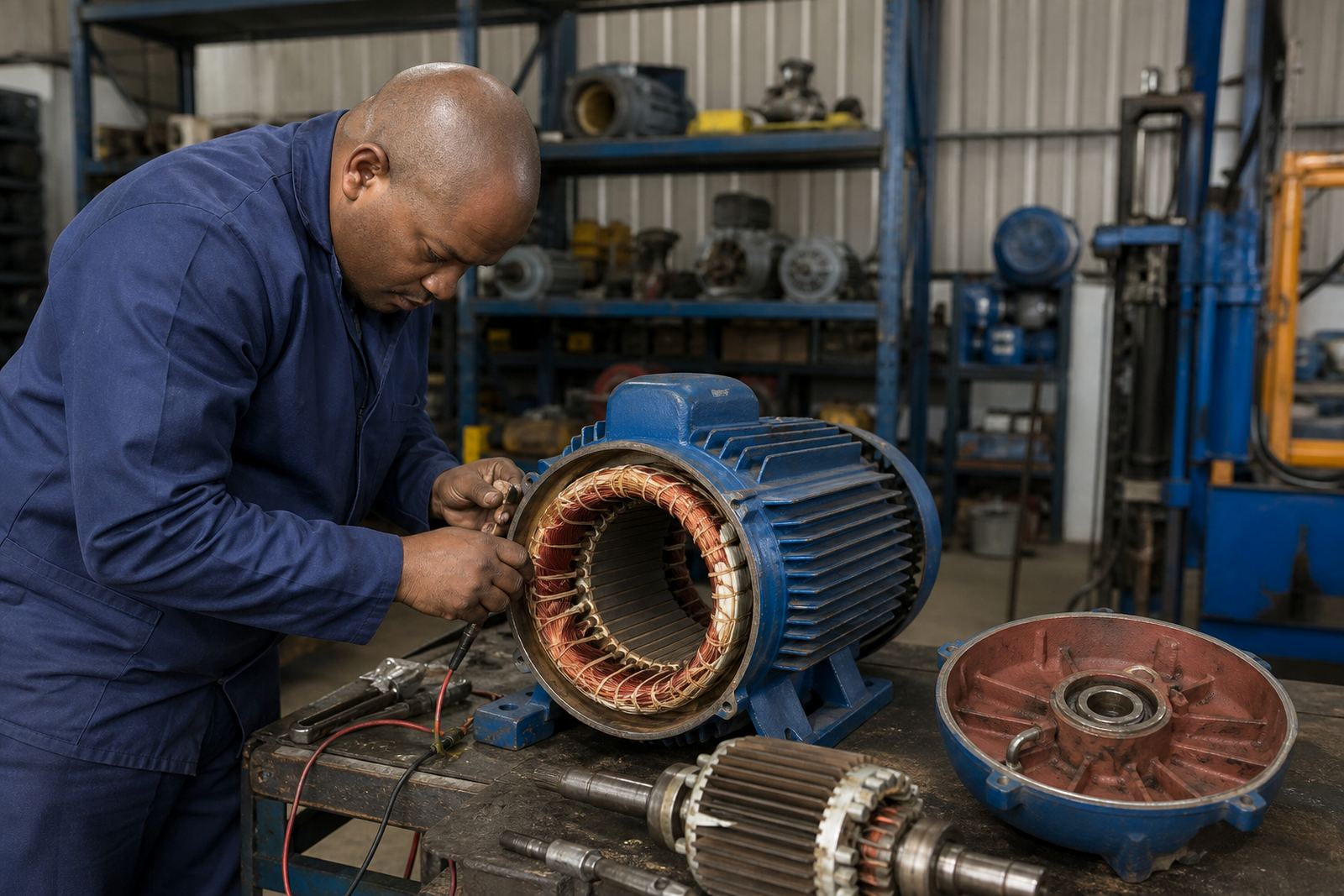


Store Repaired Equipment Before Fitting
If a repaired motor or variable speed drive is not going back into service straight away, store it in a clean dry area with stable temperature and low dust. In Gauteng winter mornings and Durban humidity alike, moisture can settle into windings, terminals and control boards if the unit is left open or wrapped in damp material.
Keep the unit off the floor on timber blocks or a pallet, away from chemical storage, wash bays and direct sun. If the original packaging is damaged, cover the unit with a breathable dust cover and keep the shaft or mounting faces protected. Do not rotate the shaft by hand unless the equipment is ready for fitting, and do not remove transit plugs until you are at the installation point.
- Store indoors where rain splash, condensation and dust are limited.
- Keep cable ends, glands and terminal boxes sealed.
- Check for signs of rust, oil seepage or impact damage before installation.
Fit the Motor or Drive with Care
Correct installation is a practical part of after repair care. A motor that is hard against the coupling, misaligned on the base plate, or fitted with loose feet can run hot, vibrate and overload bearings. Drives also need proper panel space, clean cooling paths and sound cables so they can work as intended.
Electrical work must be done by qualified people only, with lockout procedures in place before any covers are opened or conductors touched. Confirm that the supply matches the nameplate details, the earthing is sound and the cable lugs are tightened to the correct setting. If the unit sits in a workshop or plant with frequent load-shedding, check the changeover arrangement and restart sequence before putting the machine back under load.
- Use the correct base bolts, shims and coupling alignment.
- Leave enough ventilation space around the motor and drive.
- Make sure conduit, glands and seals suit the site conditions.
Run the First Start-Up in a Controlled Way
The first start-up after repair should be done slowly and with a watchful eye. Do not go straight to full load if the machine can be tested at no load or light load first. Listen for scraping, hum changes, bearing noise or any uneven running. A repaired drive should also be checked for alarm history, cooling fan operation and stable output once the motor starts turning.
For many sites in Pretoria, Vereeniging and the East Rand, the safest approach is to keep one person on the controls and one person observing the machine. Small faults show up quickly at this stage, and it is better to stop and inspect than to push through a problem that could damage the winding, coupling or load equipment.
- Watch current draw, vibration and temperature rise during the first run.
- Check that guards, covers and panel doors are back in place.
- Confirm that the machine responds properly to stop and restart commands.
Monitor Bearings, Heat and Vibration
After repair, bearings need close attention because they often reveal installation issues first. Listen for grinding, rumbling or a dry sound, and feel for abnormal heat near the end bells or housing. Excess vibration can point to poor alignment, worn couplings, a bent shaft or a load problem rather than a fault in the repair itself.
Keep a simple record of what the machine does during the first week or two. Note operating hours, start counts, load changes and any unusual smell or noise. That record helps a technician spot patterns if the motor or drive is under strain. In coastal areas, check for moisture build up and corrosion around terminals because salty air can affect fittings quicker than expected.
- Inspect grease points only if the bearing type requires it and the correct grease is specified.
- Do not over grease bearings, as that can raise temperature and damage seals.
- Report repeated tripping, hot bearings or uneven starting early.
Keep Panels, Cables and Cooling Clean
Drive repairs often involve more than the electronic unit itself. Dust, loose strands, damaged cable insulation and blocked cooling paths can all shorten service life. In workshops and plants around Boksburg, Kempton Park and Germiston, metal dust and fine dirt can collect quickly inside panels, so routine cleaning matters.
Shut the equipment down properly before any cleaning and isolate the supply. Use dry methods where possible and avoid forcing compressed air into sensitive areas if it will drive dirt deeper into terminals or boards. Check that panel fans turn freely, filters are clear and cable entries are still sealed. A tidy panel is not just neat, it helps with heat control and fault finding.
- Keep control panels free of oil mist, dust and loose offcuts.
- Check that cooling fans and vents are not blocked.
- Replace damaged grommets, seals or cable ties before they fail.
Plan Maintenance Around the Next Shutdown
Once the equipment is back in service, make a plan for the next inspection rather than waiting for another failure. If your site runs long shifts or cannot afford unexpected stops, include the repaired motor or drive in the normal maintenance schedule. That can include insulation checks, alignment checks, terminal tightening and a review of the load conditions on the machine.
If the machine starts tripping after a power interruption, or if the drive shows signs of repeated stress, arrange a proper inspection before the issue grows. Clients in Johannesburg, Ekurhuleni and Durban often use scheduled shutdowns to check spares, clean panels and confirm that the system is still suited to the work being done. A little follow up goes a long way, and saves trouble later.
- Review the machine after the first few shifts and again at the next planned shutdown.
- Keep the repair notes with the asset record and site reporting file.
- Use qualified people for any further electrical work, tests or adjustments.