

Stop the Machine Before Anyone Starts Work
Before a motor is removed, opened or tested, the machine must be brought to a complete stop and made safe. That means switching off at the correct point, isolating the supply, and confirming that stored energy has been released. On conveyor lines, pumps, compressors and fans, hidden movement can still happen after the main switch is off so the equipment must be treated as live until proven otherwise.
Do not rely on a control button alone. A proper shutdown also considers backup supplies, automatic start systems, capacitor discharge, and any linked panels on the same circuit. In plants around Germiston, Johannesburg, Ekurhuleni and Pretoria, we often see equipment that looks idle but still has a live feed from another side of the installation.
Lockout and Tagout Must Be Done Properly
Lockout procedures are there to protect the person doing the work and everyone else nearby. Each isolation point should be locked where possible, tagged clearly and checked by the responsible person before inspection begins. If more than one person is involved, each person should use their own lock or follow the site method for personal safety control.
- Isolate the main supply and any control supply
- Test for dead with suitable equipment
- Discharge stored energy where it applies
- Fit warning tags at the point of isolation
- Keep keys and records under the control of the authorised person
Never ask a fitter, cleaner or operator to hold a switch in one position while the rest of the team works. That is not a safe substitute for lockout, and it creates confusion when the job is handed over between shifts or across shutdown periods.
Why Qualified People Must Handle Electrical Inspection
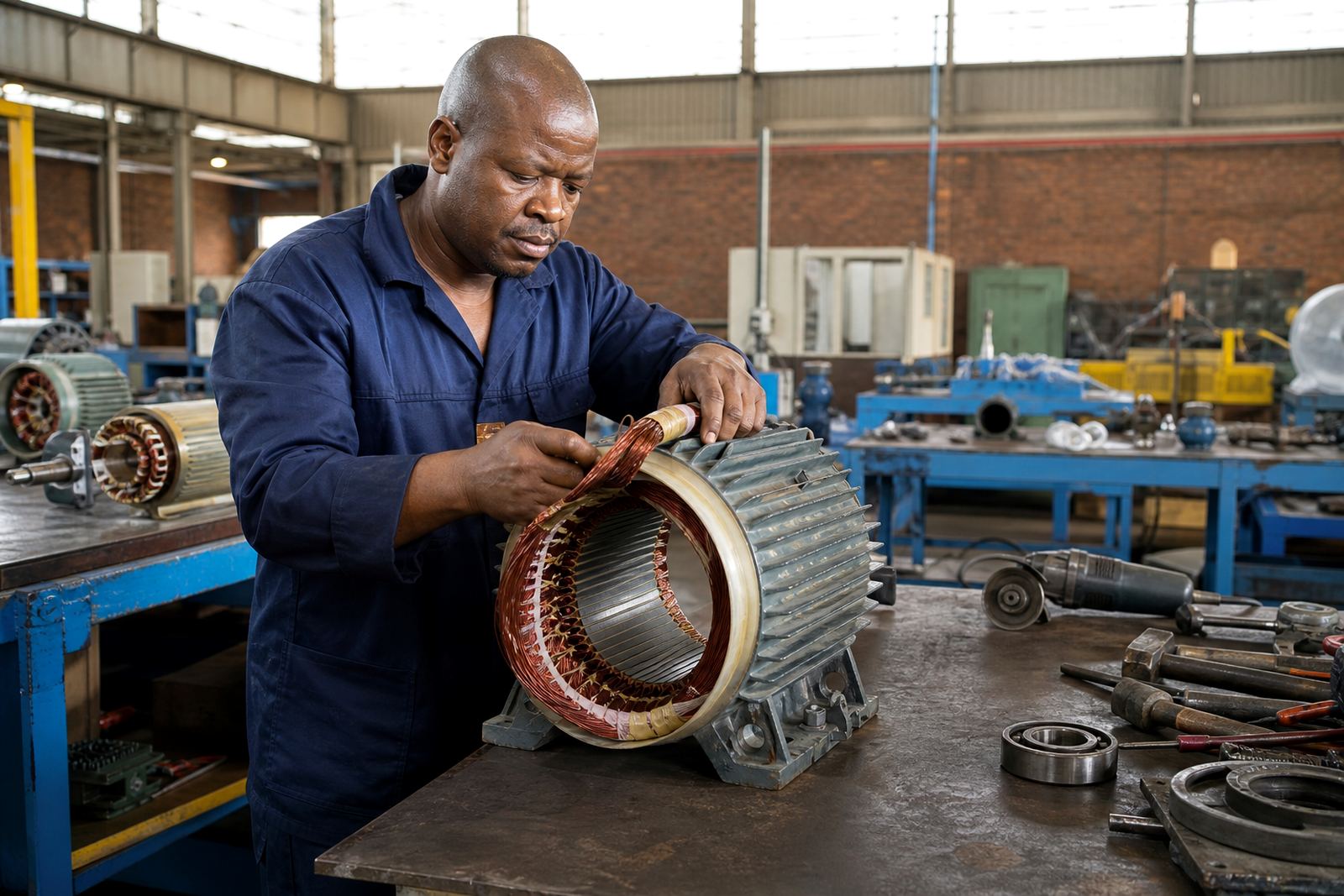
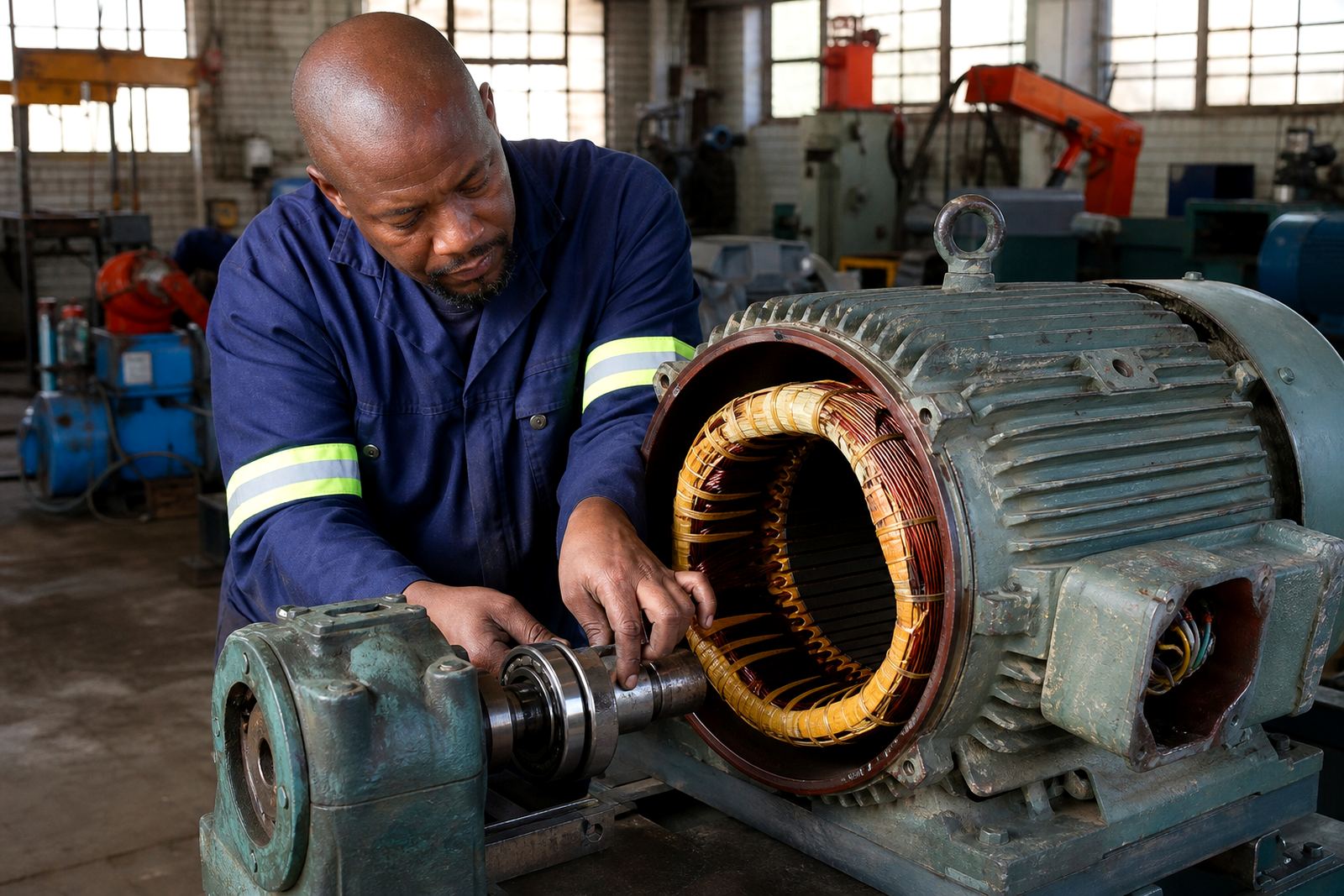
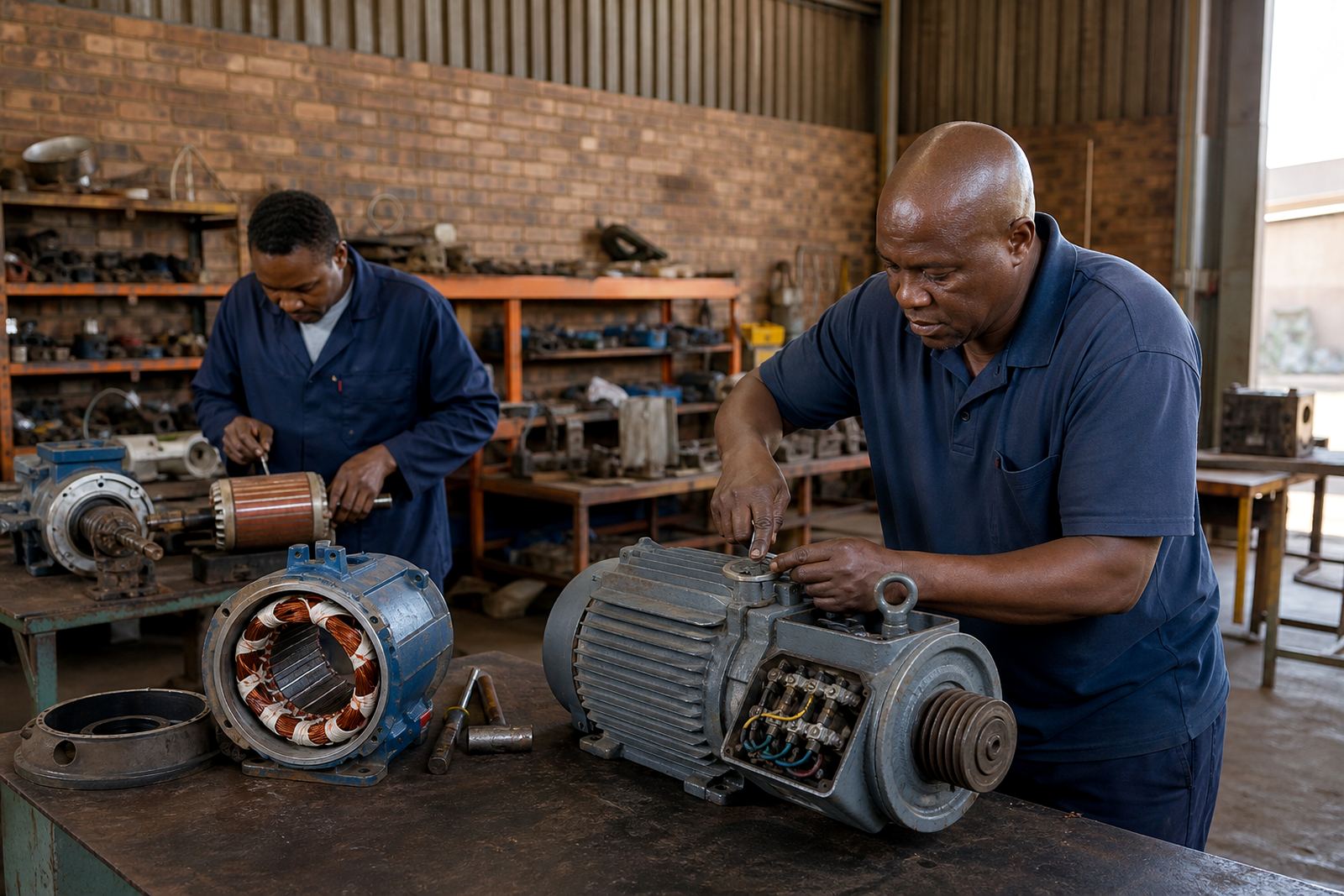
Motor rewinding, bearing replacement linked to electrical work, insulation testing and variable speed drive repair must be carried out by qualified people who understand the equipment and the hazards. A motor may appear simple from the outside, but once a cover is removed there are windings, terminal links, test points and internal surfaces that can be damaged very easily. A drive contains sensitive components and can hold charge after isolation, so it must be handled with care.
Qualified work also means using the right test method for the job. Insulation resistance testing, continuity checks, earth checks and visual inspection all need to be done in sequence and recorded properly. If cables are heat damaged, if a panel shows dust build up, or if terminals are loose, the fault may be deeper than the first symptom. That is why a careful process matters more than speed.
What We Expect Before Motor Removal or Drive Inspection
Before any site visit or workshop intake, the equipment should be identified as clearly as possible. Please keep motor nameplate details, drive model details where available, and the site location ready so the right checks can be planned. If the job is in Boksburg, Kempton Park, Vereeniging or Durban, the same basic preparation applies even when the plant layout is different.
- Confirm the machine or panel to be worked on
- Isolate the correct breaker, isolator or disconnect
- Make sure access is clear and the area is dry
- Remove loads or block movement if needed
- Note any smell, heat, tripped protection or noise before shutdown
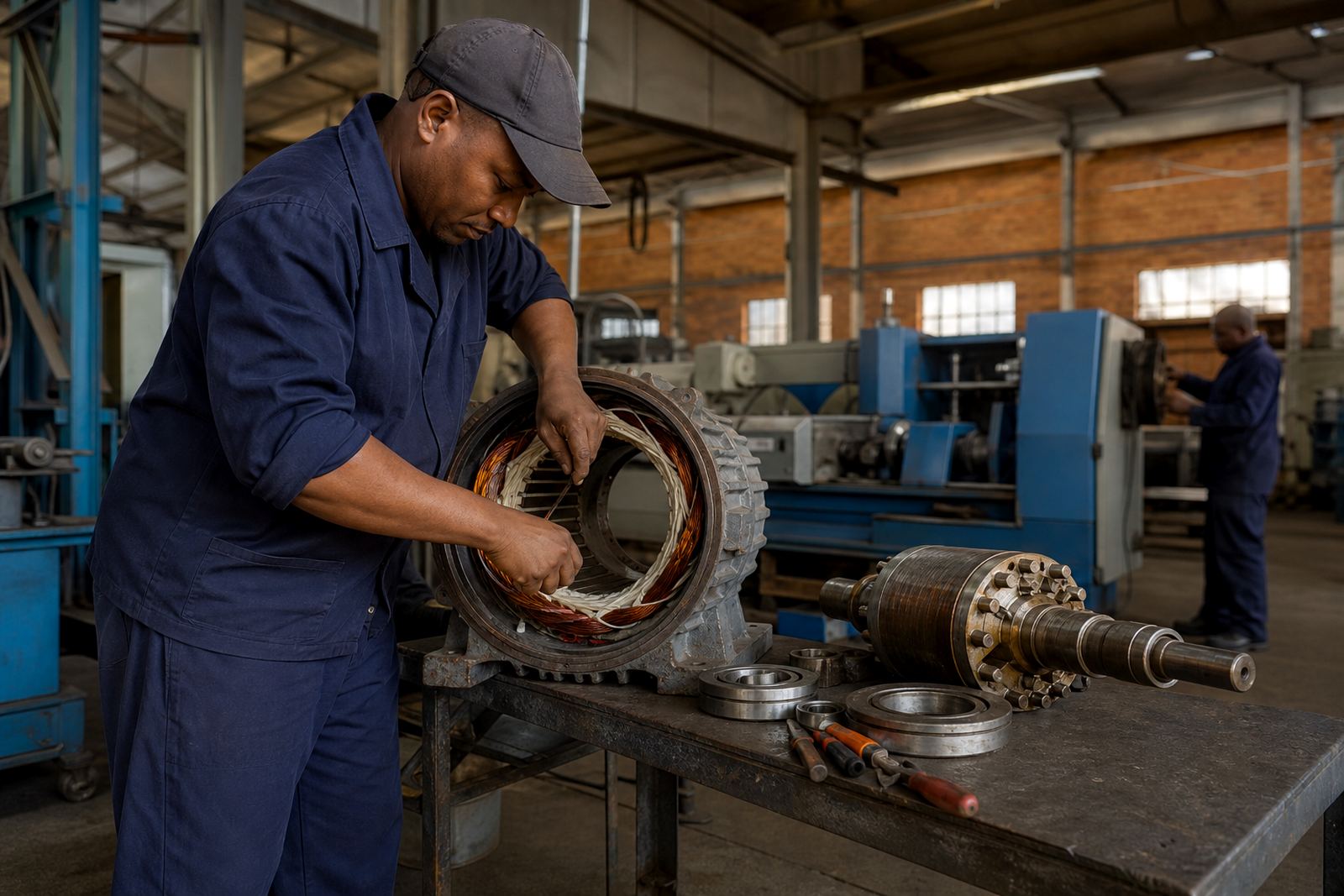
If the motor is mounted in a hard to reach position, plan the removal properly. Use the correct lifting method and do not force a coupling, pulley or cable set out of position. A bent shaft, damaged gland or torn insulation can turn a normal repair into a longer one.
Good Site Information Helps Prevent Repeat Faults
When a motor or drive is brought in for fault finding, accurate site notes help us trace the cause and not only the symptom. Information about overload trips, nuisance faults after load-shedding, breaker operation, water ingress, vibration, high ambient heat or dust can point to the reason behind the failure. In coastal conditions, moisture and corrosion can cause extra trouble in terminal boxes and panel wiring.
Useful checks before removal include panel cleaning, cable checks, alignment checks and a quick look at the surrounding plant condition. If there is a repeated fault on the same circuit, the issue may sit in the supply side, the control panel or the driven machine rather than only in the motor itself.
If There Is Any Doubt, Leave It Isolated
If a fault is unclear, if the equipment has not been isolated correctly, or if there is any uncertainty about stored energy, stop and call for proper assistance. Do not remove covers, test live terminals or bypass protection just to keep production moving. A short delay is better than injury, damage or a burnt-out motor and drive set.
Our team in Germiston supports plants and workshops across South Africa with motor removal, drive inspection, insulation testing, bearing checks, shutdown planning and site reporting. Safety comes first every time, because reliable repair starts with safe access and a controlled work area.