

What to include when you send a service request
When a motor stops, trips, runs hot, or a drive keeps faulting, start with the basics. Tell us what equipment is involved, where it is installed, and what the problem looks like in day to day use. A short clear note helps us decide whether the issue is likely electrical, mechanical, or linked to the machine it is driving.
Please include the make and model where possible, the motor size in kW or HP, supply voltage, frame size if known, and whether the unit is single phase or three phase. For drives, add the current fault code or any symptoms such as nuisance tripping, poor speed control, or no output. If the equipment is in Germiston, Johannesburg, Ekurhuleni, Pretoria, Vereeniging or Durban, mention that too so we can plan the site visit properly.
Useful details that speed up the first assessment
A little extra information often saves time at the workshop or on site. If the machine failed after a power dip, overload, bearing noise, water ingress, or a load-shedding event, say so. Coastal humidity, dust, heat and frequent starts can all affect motors and drives in different ways.
- Equipment type and what it drives, such as fan, pump, conveyor or mixer
- Motor rating, speed, voltage and connection details if available
- Drive fault code, display message, or symptoms seen by operators
- Any smoke, smell, noise, vibration, overheating, or repeated tripping
- Whether the issue started suddenly or got worse over time
If the unit has already been opened, cleaned, or tested by another person, mention what was done. Even small details can point to a loose terminal, worn bearing, insulation breakdown, or a drive issue that needs further trace checks.
How we handle motor repair and rewinding requests
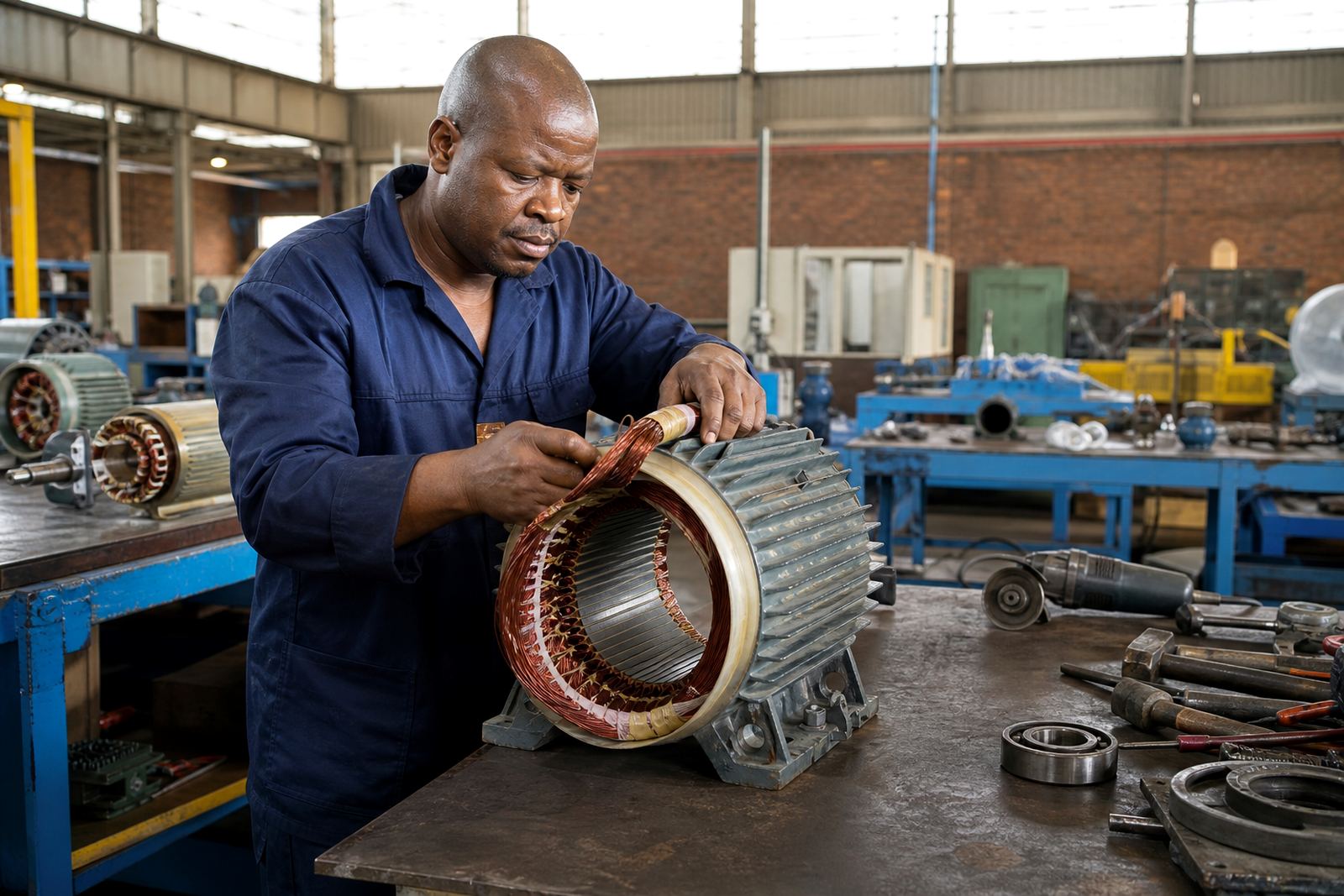
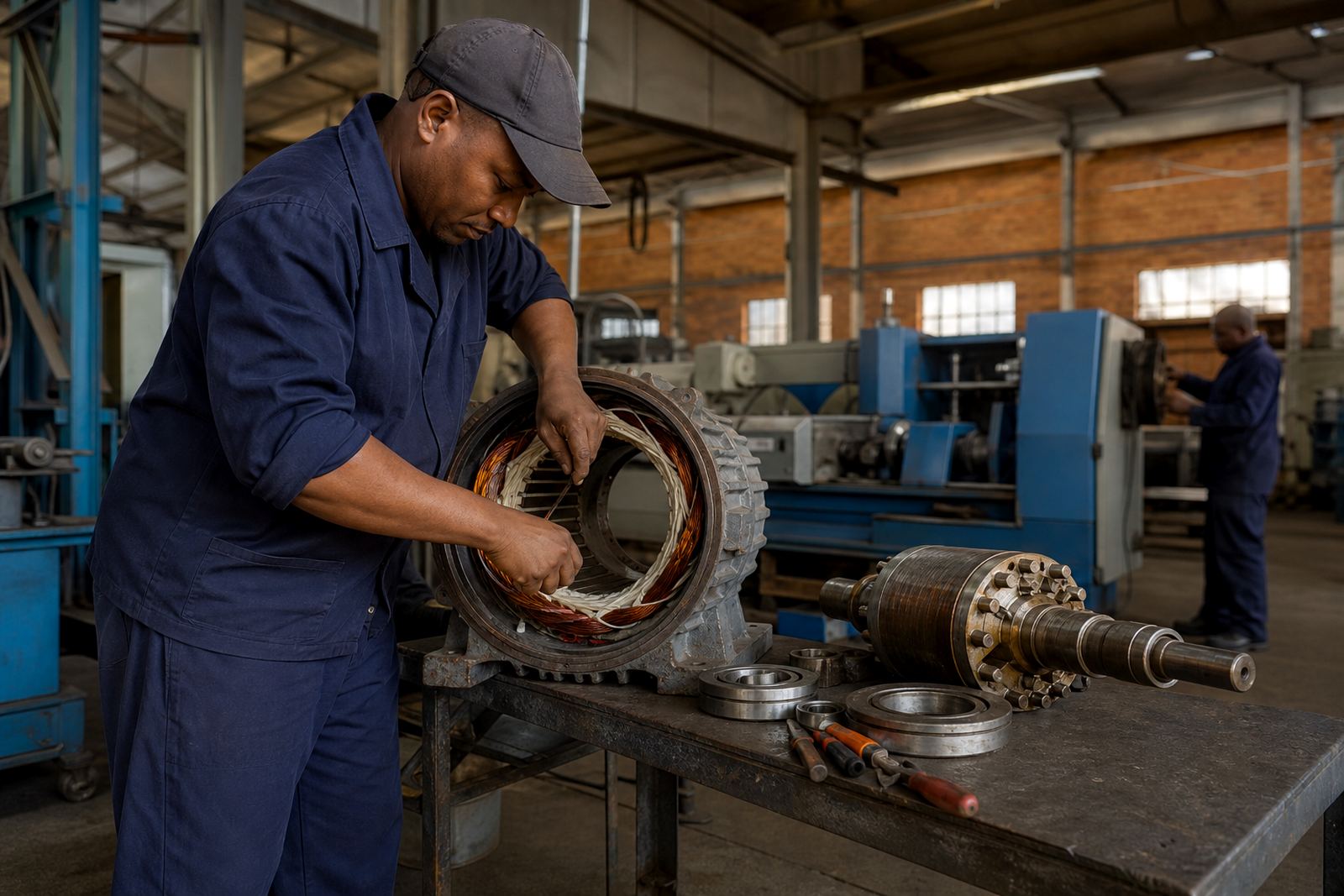
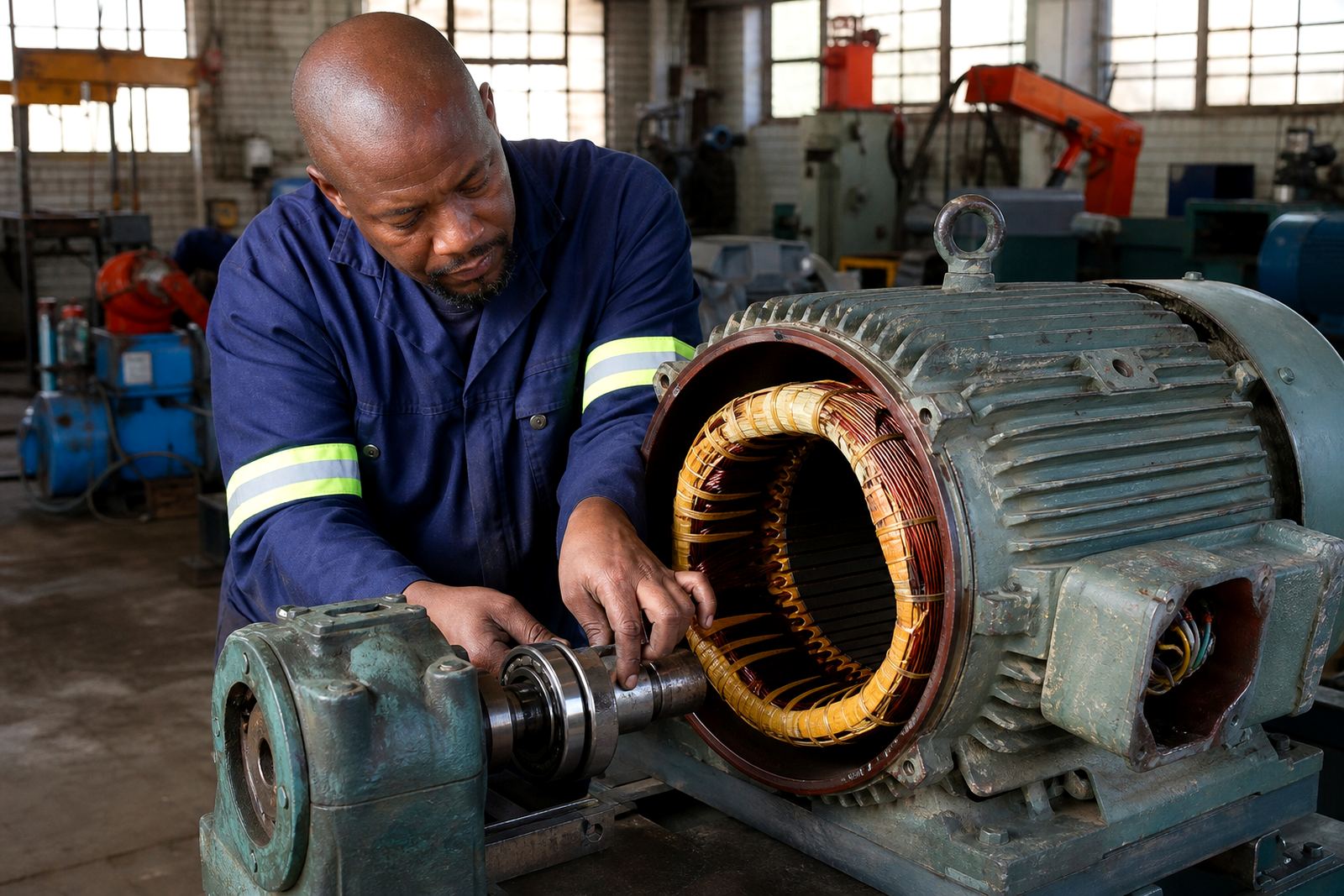
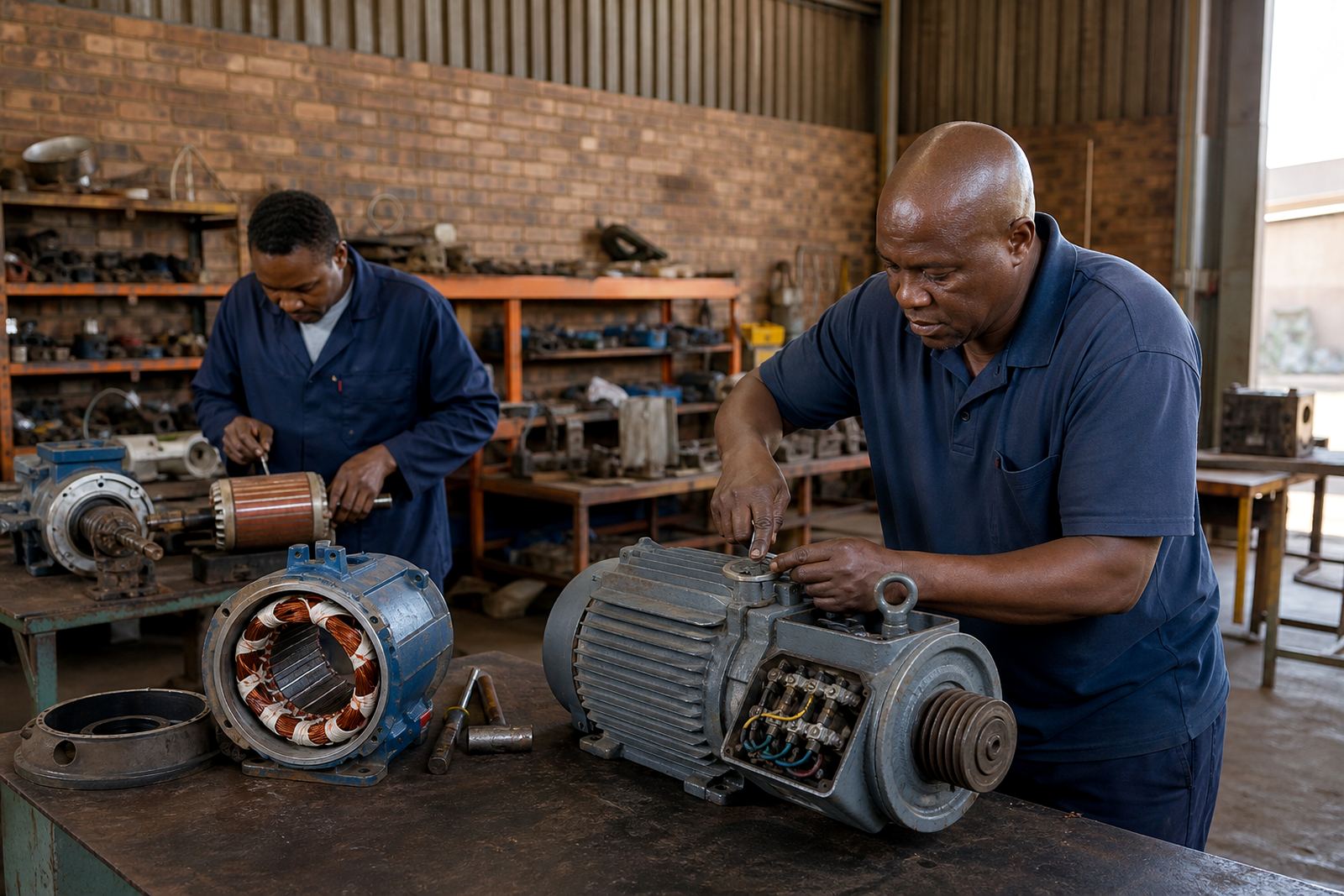
For electric motor rewinding support, the normal process starts with inspection and fault finding. The motor is checked for visible damage, bearing condition, winding condition, insulation resistance, and signs of contamination. If rewinding is needed, the original winding data is recorded where possible, then the stator is prepared, rewound and tested before refitment. Bearing replacement may be recommended at the same time if wear, noise or play is present.
We also check alignment, cable condition and the condition of the terminal box. In some cases a motor failure is linked to upstream supply issues or a mechanical overload on the driven machine, so it helps to know what the motor runs and how often it starts.
How to request variable speed drive repair support
For drive repair, the information we receive helps narrow down the cause before the unit is removed or sent in. Tell us whether the drive failed at start-up, during running, after a power interruption or while the machine was under load. If the panel has been cleaned, if terminals were tightened, or if the cable route has been altered, mention that too.
- Supply side details, including incoming voltage and any phase loss issues
- Whether the drive powers a motor directly or through another control device
- Any recent changes to settings, wiring, cooling, or the control panel
- Signs of dust build-up, corrosion, heat stress, or damaged cooling fans
- Whether the fault is constant or comes and goes when the plant is started
Drive work should only be carried out by qualified people, with proper lockout procedures in place. Panels must be isolated before inspection, and stored energy has to be treated with care. That applies whether the job is in a workshop in Boksburg or a plant in Durban.
If you need site support, tell us what the team will find on arrival
Site work often needs more than a quick look at the motor or drive. To plan properly, please let us know if access is tight, if the equipment is mounted at height, if lifting gear is needed, or if production can only stop during a specific window. Shutdown planning matters when a line cannot sit idle for long and the repair has to fit into a short stop.
Our field work can include motor removal, drive inspection, bearing checks, insulation testing, alignment checks, commissioning support, panel cleaning, cable checks and site reporting. The clearer the site conditions, the better we can bring the right tools and avoid a second trip.
Simple steps before you submit the request
Before you send the form, take a few minutes to write down what the machine was doing just before the fault. If you can, note the date, the time, and who first noticed the issue. A photo of the nameplate or the fault display can also help, although it is not always essential.
- Switch off and isolate the equipment only if it is safe to do so
- Do not bypass protection devices or reset repeated trips without checking the cause
- Keep the area clear so the technician can access the motor, drive or panel
- Record any unusual noise, heat, smell or vibration before shutdown
- Send the request with the contact form on the contact page
We support plants and workshops across Gauteng and further afield, and the best requests are the ones that say exactly what happened, where it happened, and what the team needs checked first. That makes the next step far easier.