

Start With the Simple Causes Before You Strip the Motor
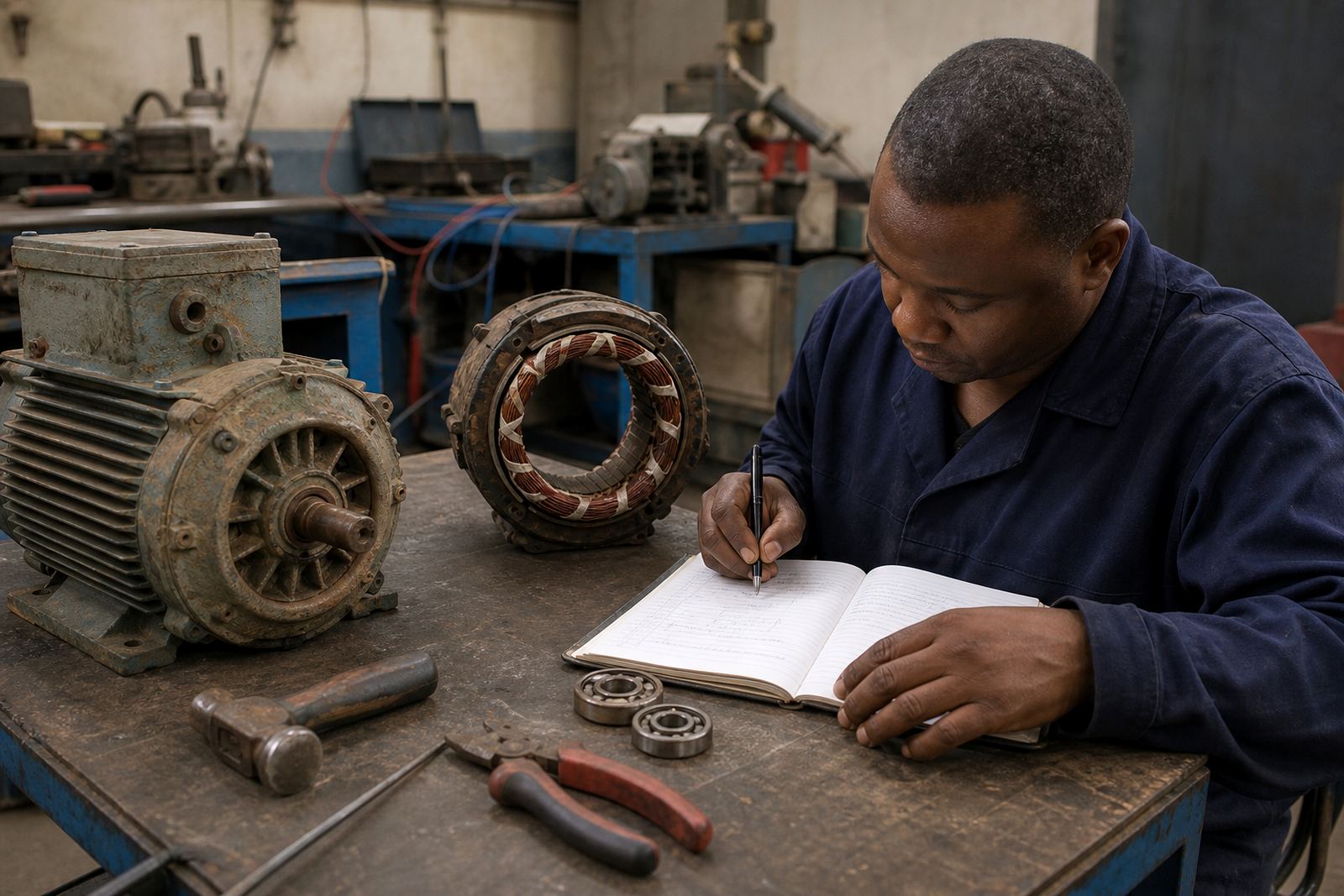
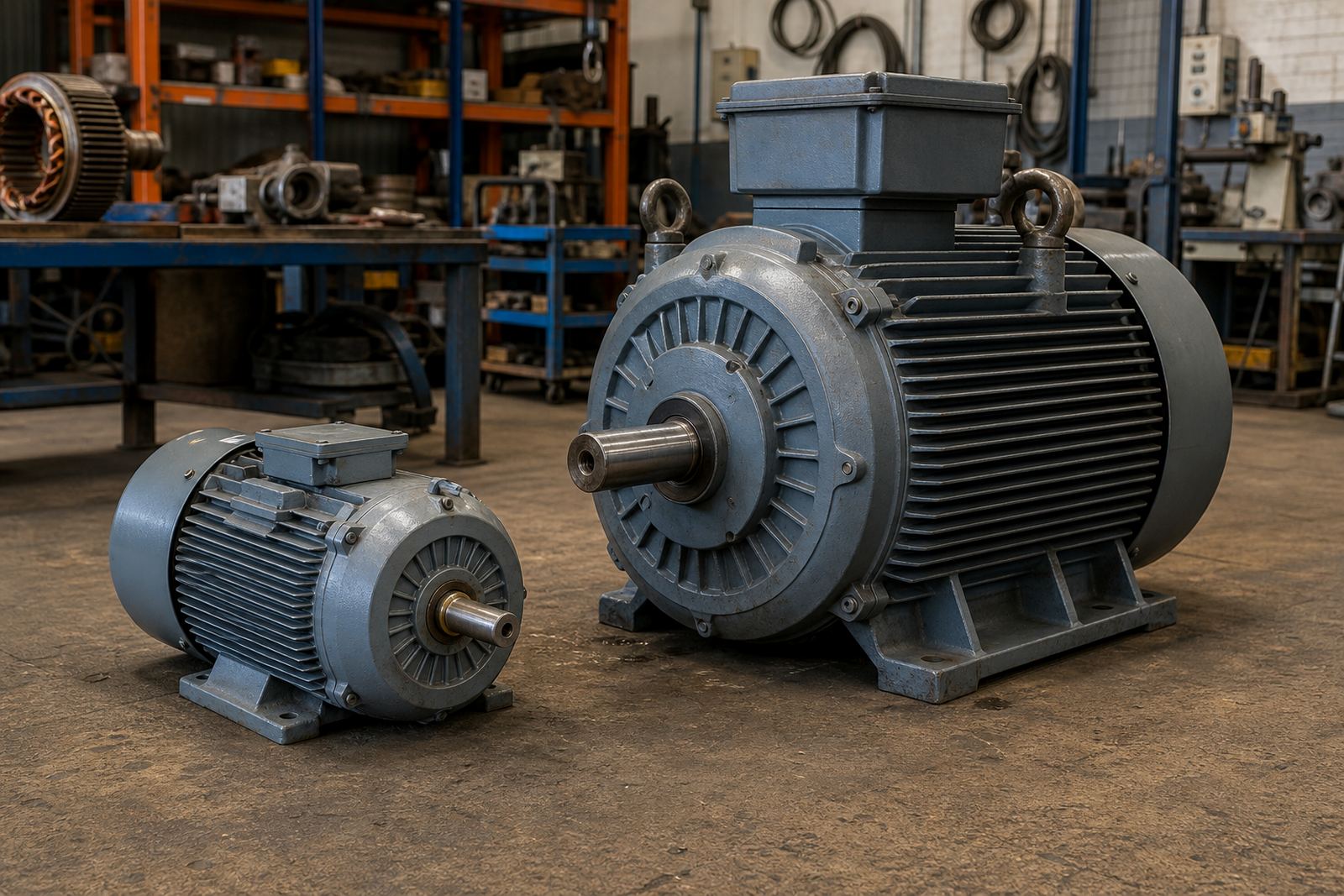
When a motor overheats, people often jump straight to rewinding, but the fault is not always inside the windings. A quick visual check can save hours and stop good parts from being replaced for no reason. Look at the driven machine, the mounting, the fan cover, the cable connections and the area around the motor first.
Dust build-up, blocked cooling fins and poor air flow are common in workshops, sawmills, processing plants and pump rooms. In coastal areas, humidity can also bring corrosion into terminal boxes and connectors. In a Germiston plant, we often find a motor running hot because the fan cover is packed with lint or grime, or because a nearby panel has been drawing in warm air from another machine.
- Check whether the motor can breathe freely around the frame and fan.
- Confirm the driven machine is not jammed, binding or overloaded.
- Look for loose terminals, burnt lugs or signs of heat at the connection box.
- Listen for bearing noise, scraping or vibration before the casing gets too hot.
Overload and Voltage Problems Put Direct Stress on the Windings
If a motor is drawing more current than it should, heat rises quickly. Overload can come from a pump working against closed valves, a conveyor carrying too much material, a worn gearbox, or a machine that is simply too large for the duty. Low voltage has a similar effect because the motor has to work harder to keep turning, and that extra effort becomes heat.
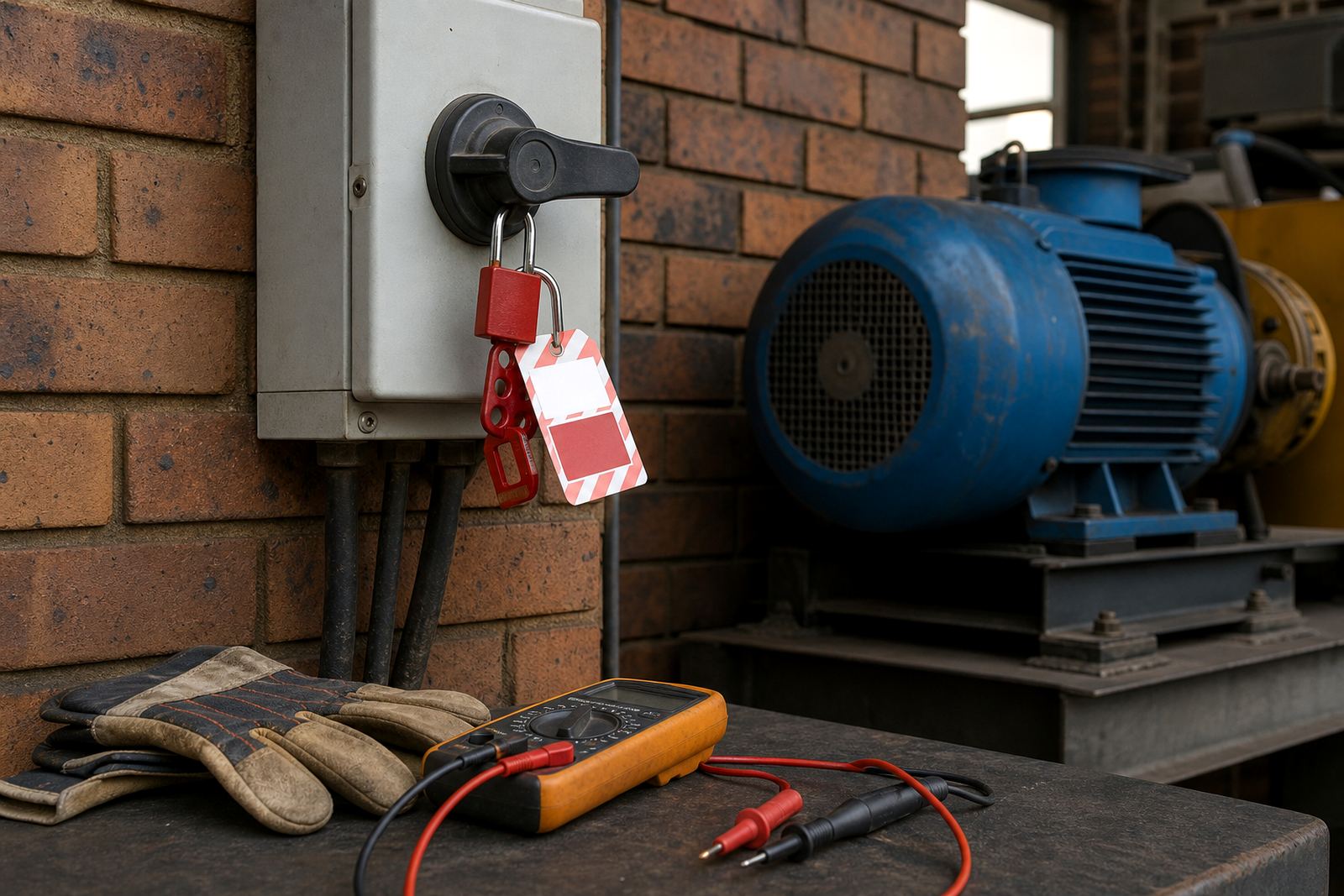
Three phase motors can also overheat when the phases are unbalanced. A small difference in voltage or current across the phases may not trip a breaker straight away, but it still makes the motor run hotter than normal. Incorrect protection settings, damaged cable insulation and loose terminations can all add to the problem. Electrical work should only be carried out by qualified people, with proper lockout procedures in place before any panel or motor is opened.
- Measure current on all phases and compare it with nameplate data.
- Check supply voltage at the motor, not only at the panel.
- Inspect overload settings and starting equipment for the correct duty.
- Test cables for damage, moisture ingress and failing insulation.
Bearings That Fail Early Can Make a Motor Run Very Hot
Worn or dry bearings create friction, and friction turns into heat very quickly. The motor may still start and run, but the casing gets hotter as the bearing load rises. You might hear a whine, feel vibration through the frame, or notice the shaft is no longer turning smoothly. In severe cases the grease breaks down, the bearing races scar, and the rotor starts rubbing where it should not.
Bad alignment can make this worse. If a motor and driven machine are not lined up properly, the bearings carry side loads they were never meant to take. That is why bearing checks and alignment checks often go together. A motor that has been repaired but then bolted back into a poor alignment will usually come back with the same complaint. The same applies where couplings are tight or the base is uneven.
- Check for play, noise and rough movement in the bearings.
- Look for evidence of over greasing or contaminated grease.
- Verify alignment of the motor, coupling and driven equipment.
- Inspect the base, feet and mounting bolts for stress or distortion.
Insulation Breakdown Raises Temperature and Reduces Motor Life
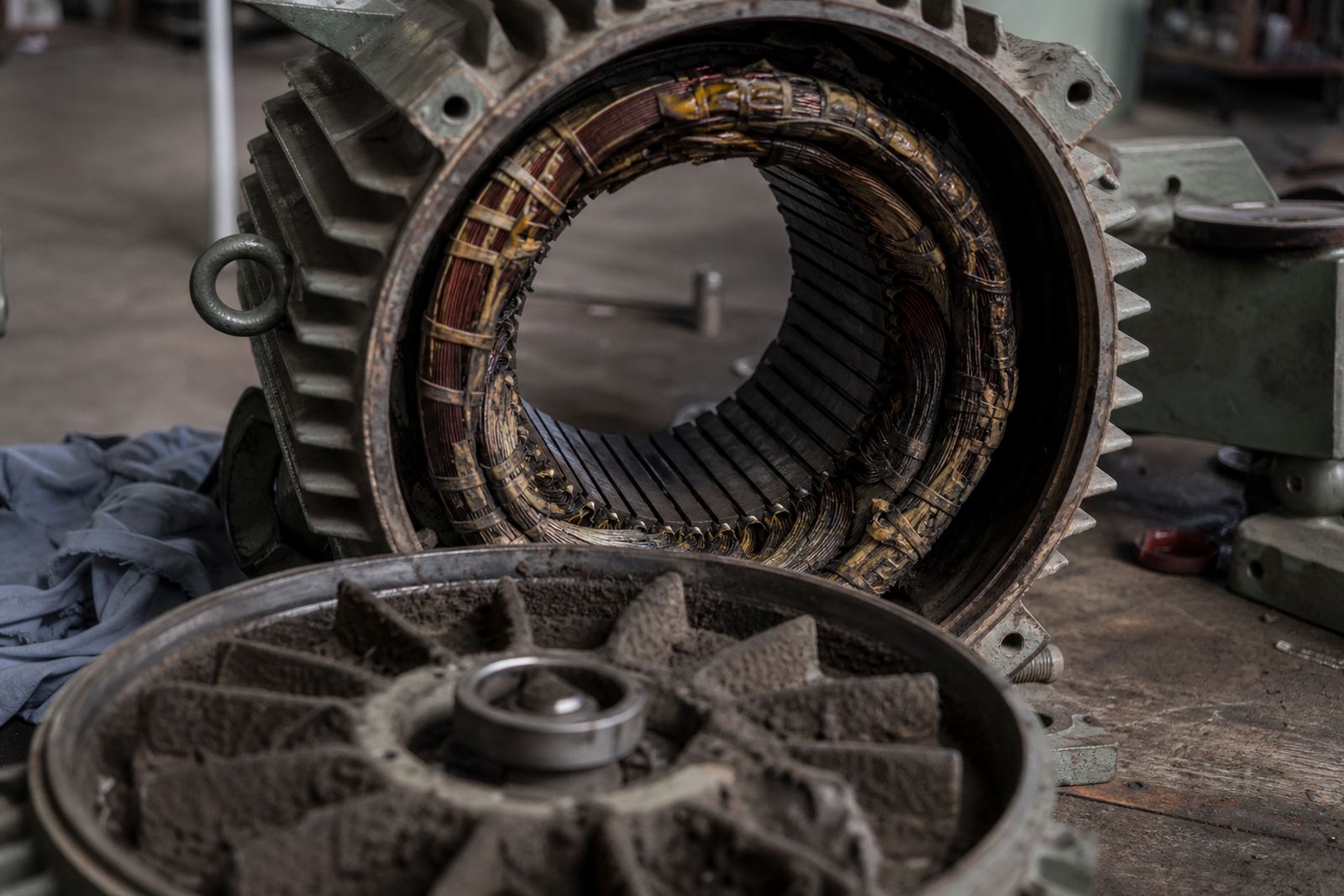
When insulation starts breaking down, the motor loses efficiency and runs warmer. Heat, dust, oil mist and moisture all attack the winding insulation over time. Once the insulation weakens, leakage current can increase and hot spots may develop inside the stator. This is often seen after repeated starts, long periods of overloading or exposure to dirty plant air.
Insulation testing helps to show whether the windings are still healthy or whether the motor needs further investigation. A basic test can reveal moisture, contamination or a failing winding before the motor fails completely. On sites around Pretoria, Ekurhuleni and Durban, we often see motors affected by washdown areas, condensation or panels that are exposed to damp air overnight. If a motor has stood idle after load shedding, it can also absorb moisture and need proper checks before it is put back into service.
Motor rewind work is not only about replacing burnt wire. It is also about checking why the winding failed in the first place, then correcting the root cause so the replacement does not suffer the same fate.
Variable Speed Drives Can Hide a Heat Problem Upstream or Downstream
When a variable speed drive has a fault, the motor may overheat even though the motor itself is still serviceable. A drive that is under-sized, badly cooled, set up with the wrong motor data, or affected by dirt in the panel can cause poor performance and extra current draw. Faults on the output side, such as damaged cable insulation or poor termination, can also create heating.
Drive inspection should include the panel condition, cable checks, cooling path, and the settings used for the specific motor and application. If a drive trips often after a power interruption, the issue may be linked to site power quality, incorrect ramp settings or a failing motor load. In factories and workshops, it is worth checking both the drive and the motor as a pair rather than treating them separately.
- Clean the panel and confirm cooling fans and filters are clear.
- Check motor nameplate data against the drive settings.
- Inspect terminals, glands and cable routes for heat damage.
- Review trip history and any recent changes to the process.
What to Do First on a Hot Motor Callout in Germiston or Beyond
The first response should always be safe isolation, then a practical inspection starting at the supply and working toward the load. At Locor, our team supports plants and workshops across Germiston, Johannesburg, Ekurhuleni, Pretoria, Vereeniging and Durban with fault finding, motor removal, drive inspection, bearing checks, insulation testing, alignment checks, commissioning support and shutdown planning. We also assist with spares assessment, panel cleaning, cable checks and site reporting when a motor has overheated and the cause is not yet clear.
A local example is a conveyor motor in Boksburg that keeps heating up after lunch shifts. The problem might be a clogged fan cover, but it could just as easily be a loaded bearing, a loose terminal, or a drive setting that was changed during a shutdown. The right approach is to test, measure and inspect in order, not guess. If the motor is rewound or repaired without fixing the actual cause, the same fault often returns within weeks.
For any overheated motor, a qualified technician should verify the electrical condition, the mechanical load and the site conditions before the unit goes back into service. That is the safest way to protect the motor and the production line.