

Why lockout comes first on every motor job
Electric motor testing is not just a matter of switching something off and opening a cover. A motor may have a live feed from a panel, a backfeed from a drive, stored energy in capacitors, or a machine load that can move as soon as power returns. That is why lockout and isolation must happen before insulation testing, bearing checks, cable checks or any fault finding.
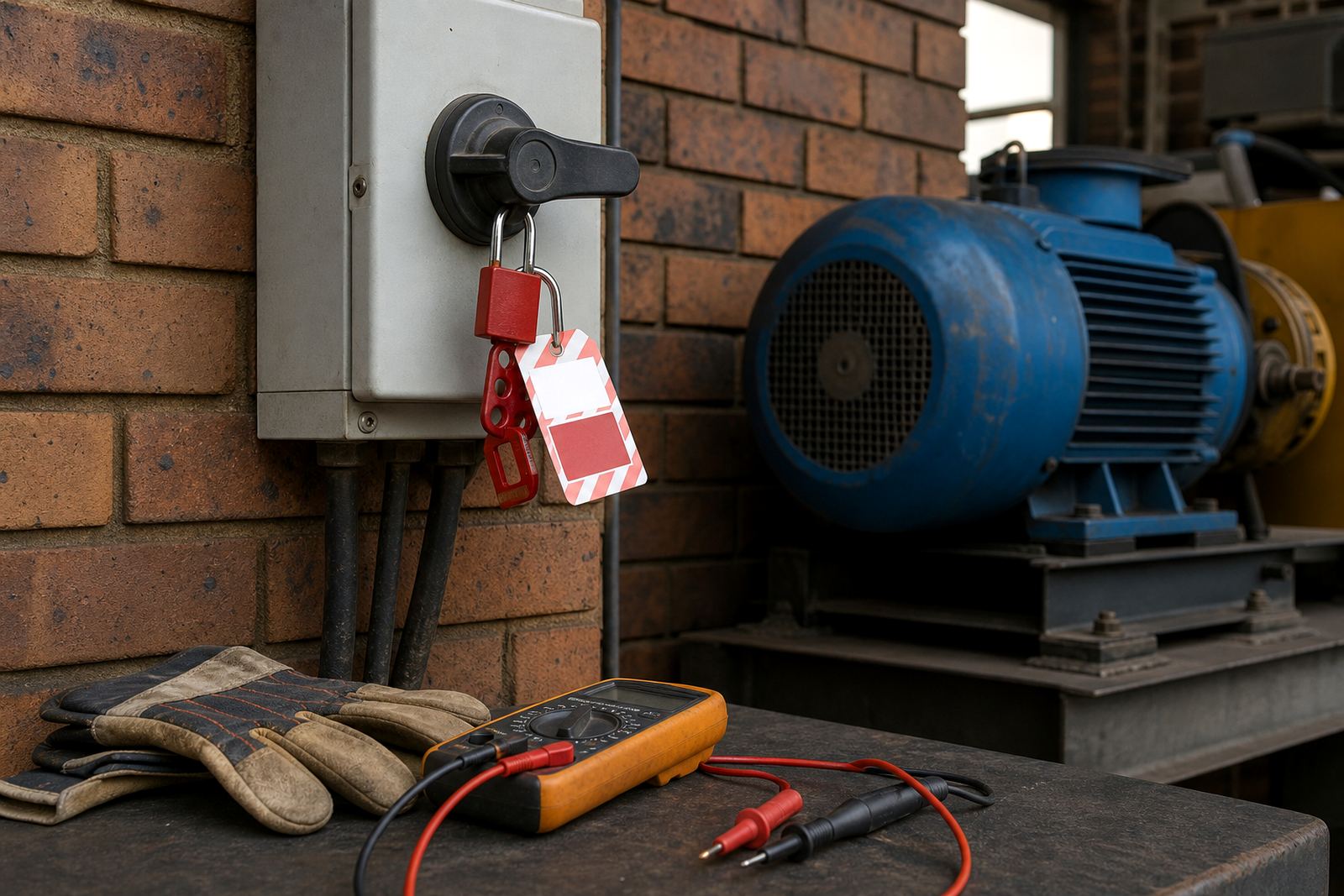
In practical terms, lockout means the source of energy is identified, isolated, secured and verified. The person doing the work should know exactly which breaker, isolator or control circuit is involved, and they should test for dead with suitable instruments before touching conductors. This is basic electrical discipline, not red tape.
What proper isolation looks like on site
Every plant has its own layout, and every workshop has its own habits. In Germiston, Boksburg and Kempton Park we still see the same risk pattern: a panel is opened, the motor is assumed dead, and a technician starts checking terminals before proving isolation. That approach is dangerous. A proper lockout sequence should be planned with the machine operator or maintenance lead, then carried out by qualified people only.
Before work starts, the system should be clearly identified and made safe. If the job involves a variable speed drive, the DC bus must be allowed to discharge fully. If the motor is linked to a conveyor, pump or fan, the driven equipment should be secured so it cannot coast or drop. On bigger sites around Johannesburg, Pretoria or Vereeniging, this may also mean notifying control room staff and tagging the area so nobody restarts the supply by mistake.
- Identify all power sources, including mains, control and backup supplies.
- Switch off, isolate and apply lockout devices at the correct points.
- Test for dead with the right metre before any test leads are connected.
- Keep keys, tags and records under the control of the person doing the work.
Safe testing during motor rewinding and repair
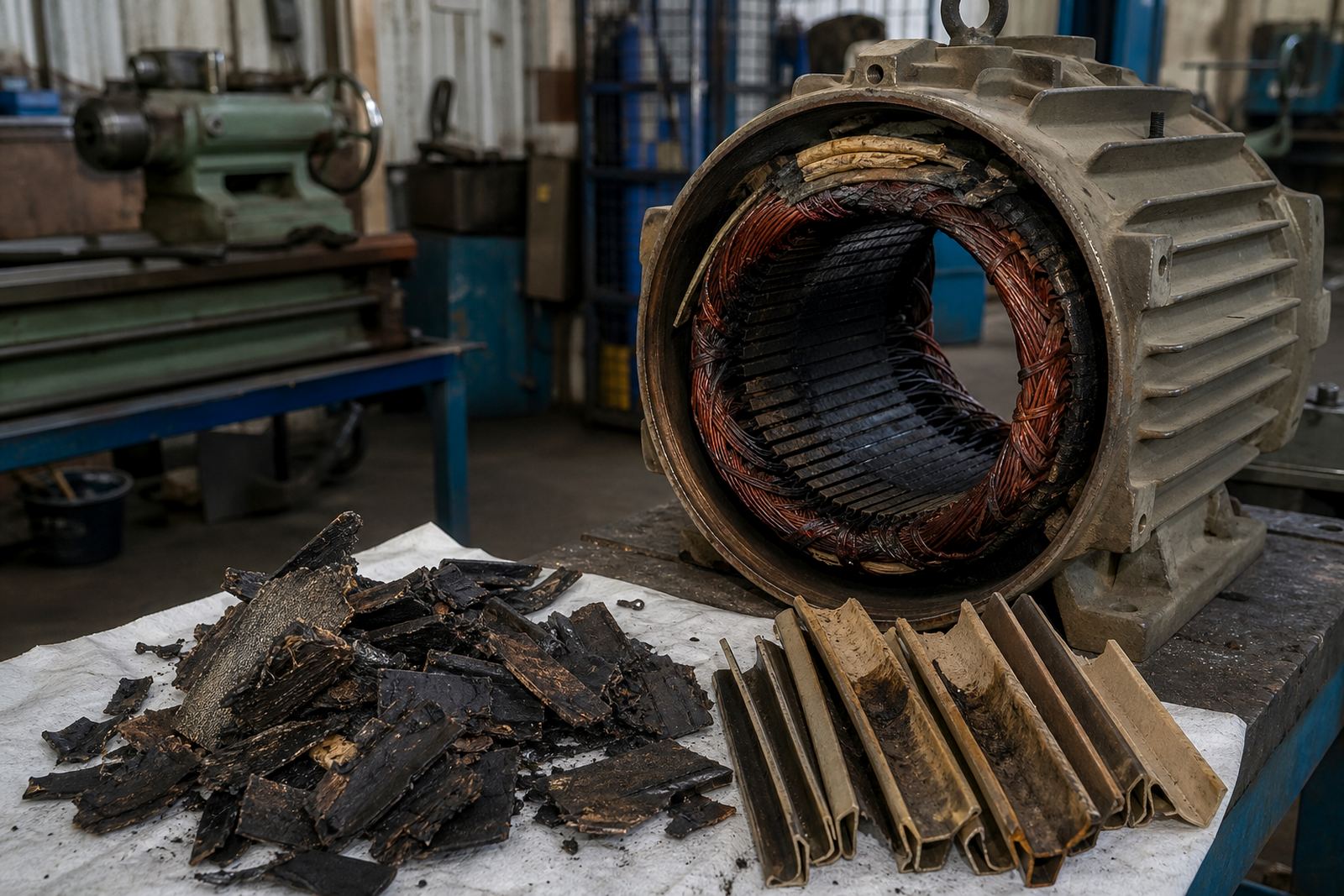
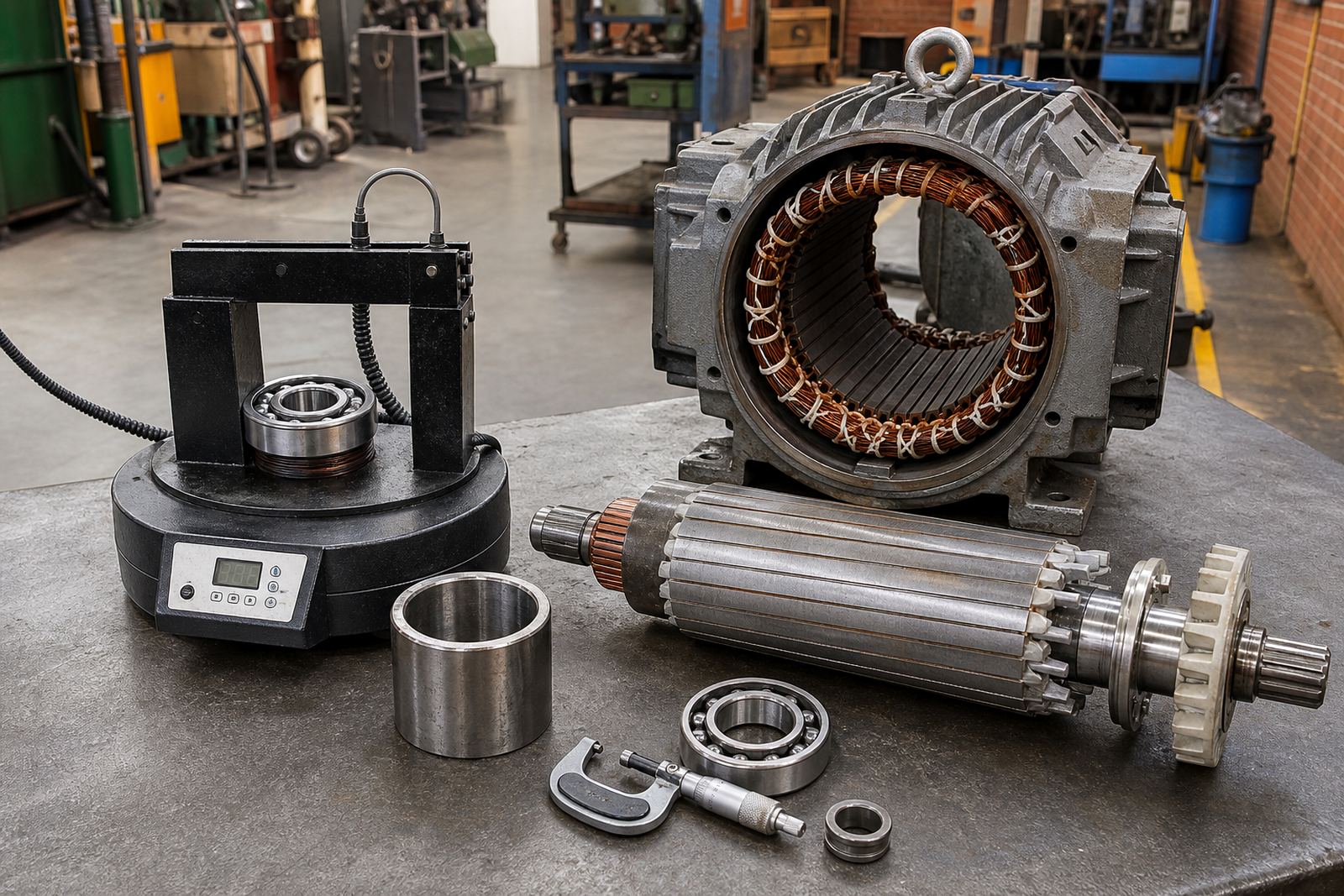
Once isolation is confirmed, the real work can begin. Motor rewinding involves stripping the old winding, checking the core, rebuilding the coils and restoring the electrical insulation system. That process depends on careful inspection at each stage. If there is heat damage, contamination or mechanical wear, it should be noted before the rewind goes ahead. Bearing replacement may also be needed if the shaft has run noisy, hot or out of line.
Testing must be done at the right point in the process. Insulation tests help show whether the winding and associated parts can hold up under service conditions. Continuity checks, resistance readings and mechanical inspections all matter, but they only make sense when the machine is safe and isolated. A careless test on a live circuit can damage instruments, trip other equipment or injure the technician. It is not worth the risk, especially in a busy plant where downtime already puts pressure on everyone.
Variable speed drives need the same care
Drive repair brings its own hazards because electronic parts can store energy after the supply is off. Capacitors may hold charge for longer than people expect, and terminals can remain dangerous even when a display has gone dark. In workshops and plants across South Africa, from Durban’s coastal humidity to inland sites in Pretoria, this is one area where patience matters.
Before drive inspection, the unit should be isolated, tagged and left long enough for stored charge to decay. Panel cleaning and cable checks should only happen once the unit is safe to access. If there are signs of overheating, dust build-up, moisture ingress or failed cooling, those issues must be logged before the drive is returned to service. A good repair is not just about replacing parts, it is about finding out why the fault started in the first place.
- Wait for stored energy to discharge fully before touching drive terminals.
- Check for heat marks, loose terminations and damaged cooling paths.
- Inspect control wiring and signal cables for chafing or contamination.
- Confirm the motor and load are suitable before commissioning support begins.
What can go wrong when lockout is rushed
Rushed testing often leads to false readings, damaged equipment or injury. A motor that seems dead may still have residual voltage on a control circuit. A drive that looks isolated may still be connected through another panel. A machine that is supposed to be parked can move unexpectedly if the load is not secured. These are the kinds of problems that cause stoppages, lost time and avoidable callouts.
Lockout also protects the quality of the job itself. If a technician is interrupted by a live circuit or an unexpected restart, the inspection can be incomplete and the fault may be missed. That can lead to repeat failures after recommissioning. Proper shutdown planning, site reporting and alignment checks all depend on a safe start. It sounds simple, but in a working plant simple steps are often the ones that get skipped first.
A Germiston example from a busy production site
One local example is a production line that had repeated trips on a motor and drive set tied to a conveyor. The first fault report blamed the drive, then the motor, then the cable run. Once the equipment was isolated properly and lockout steps were followed, the team found a worn bearing, heat damage in the windings and a loose control connection in the panel. None of that would have been clear if the team had started testing before the plant was made safe.
That kind of work is common in Germiston, Johannesburg and Ekurhuleni where plants often run through shift changes and maintenance windows are short. Good shutdown planning helps make sure the right people are present, the right equipment is locked out and the job is done in the correct order. It also helps when spares assessment is needed, because the technician can see what parts are reusable and what should be replaced.
Locor has been supporting motor rewinding and drive repair from its Germiston base since 2007, working with plants and workshops across Gauteng and further afield. The team includes Sibusiso Mthembu, Annelie van Wyk, Thabo Nkosi, Megan Naidoo, Johan Pretorius and Lerato Molefe, with each person focused on a specific part of the job from field service to customer support.
How to keep the next test safe and useful
The best habit is to treat every motor and drive as live until proven otherwise. Use qualified people only, follow lockout procedures, verify isolation and keep communication clear from the first fault report to final commissioning support. If a site has load-shedding, backup supplies or multiple panels, the risk of mistaken energising goes up, so the paperwork and tagout steps matter even more.
Whether you are handling fault finding, motor removal, bearing checks or insulation testing, the aim is the same: protect people, protect equipment and get the machine back into service without cutting corners. Safe work is slower for a moment, but it saves time in the long run. And in a plant, that is usually the difference between a clean return to service and another callout next week.