

Why Bearing Wear Shows Up Before a Full Breakdown
Motor bearings carry the rotating load and keep the shaft turning true. When they start to wear, the change is often gradual. A motor may still run, but it begins to sound different, run hotter, or pull more current than normal. That is why bearing checks form part of proper motor service, not just a quick look at the outside of the frame.
In a busy Germiston workshop or a plant line in Ekurhuleni, a motor can keep running past the point where the bearing is healthy. Dust, moisture, poor lubrication and misalignment all shorten bearing life. Coastal humidity can also make its mark, especially on units moving between inland and Durban sites. If a bearing is left too long, it can damage the shaft journal, the end shield and even the winding through excess heat and vibration.
The Sound Test: Noise That Should Not Be Ignored
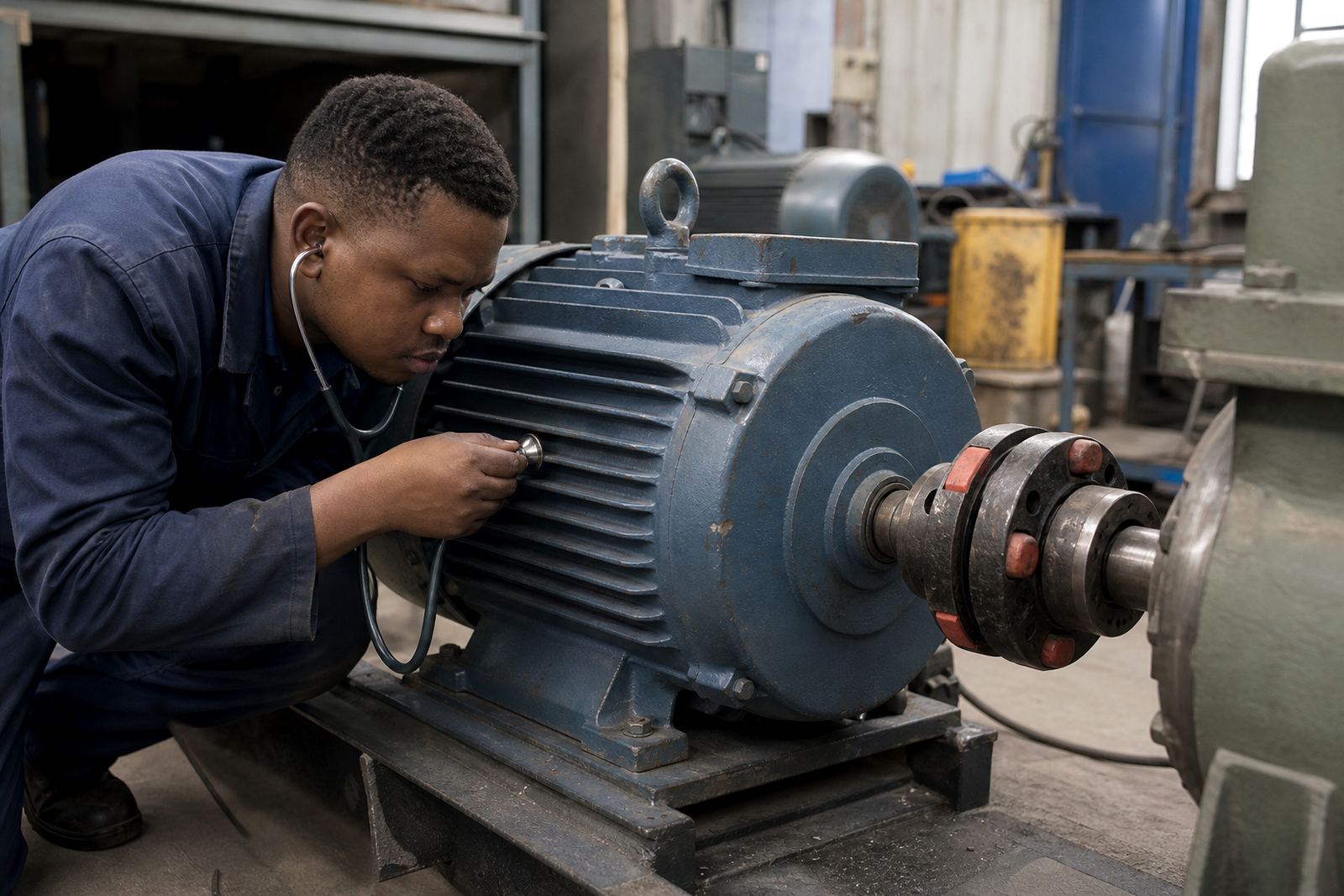
One of the earliest warning signs is sound. A healthy motor should have a steady, even hum. If you start hearing a growl, scrape, chirp or rumble, the bearing may be telling you it is running dry or has internal wear. These sounds are often more noticeable after start-up or under load, and they may come and go which can make them easy to ignore.
It helps to listen for changes over time, not just one bad noise on one shift. A motor in Pretoria may sound fine at idle, but start to complain when the process line is fully loaded. That difference matters. If the noise is getting worse week by week, replacement should be considered rather than waiting for complete seizure.
- Grinding or rumbling sounds usually point to wear inside the bearing.
- High-pitched squealing can indicate poor lubrication or contamination.
- Clacking or knocking may suggest excess play or a damaged cage.
Heat, Vibration And Play Are Strong Clues
Excess heat around the end shield or bearing housing is another clear warning. A motor may feel warm after normal operation, but a bearing fault can make one end noticeably hotter than the other. That extra temperature often comes with vibration. When the bearing surfaces are damaged or the grease is failing, the shaft no longer runs smoothly and the motor starts shaking more than it should.
End float and radial play are also important. If there is visible movement in the shaft when it should be held steady, the bearing may have reached the point where replacement is safer than re-lubrication. In some cases you can feel the roughness by turning the shaft by hand during an inspection. That rough feeling is a strong sign the bearing needs attention. Never work on a live machine, and lockout procedures must be followed by qualified people before any check or strip-down.
- Uneven heat between drive end and non-drive end needs checking.
- Vibration that increases with speed often links back to bearing condition.
- Any rough or notchy turn by hand can mean internal damage.
What Causes Bearings To Fail Sooner In South African Plants
There is no single cause. In South Africa, bearing life is often reduced by a mix of operating conditions and maintenance gaps. Dust from workshops and processing areas gets into housings. Moisture and washdown areas can push water past seals. Poor alignment between motor and driven equipment creates side loading. Long outages and stop-start use during load-shedding can also place stress on the drive train, especially when a motor is expected to pick up heavy loads again and again.
On older equipment, bearings are sometimes replaced only after a complete failure. That is usually more expensive than planned replacement during a service. If the same motor keeps failing bearings, the root cause may be elsewhere, such as shaft damage, poor fit, misalignment, a bent coupling or contamination in the housing. In that case, simply fitting a new bearing will not solve the issue for long.
- Dust and grit work their way past worn seals.
- Water ingress and condensation attack grease and metal surfaces.
- Misalignment places extra side load on the bearing.
- Frequent starts, stops and load-shedding recovery can shorten service life.
During Motor Service, What Should Be Checked Before Replacing Bearings?
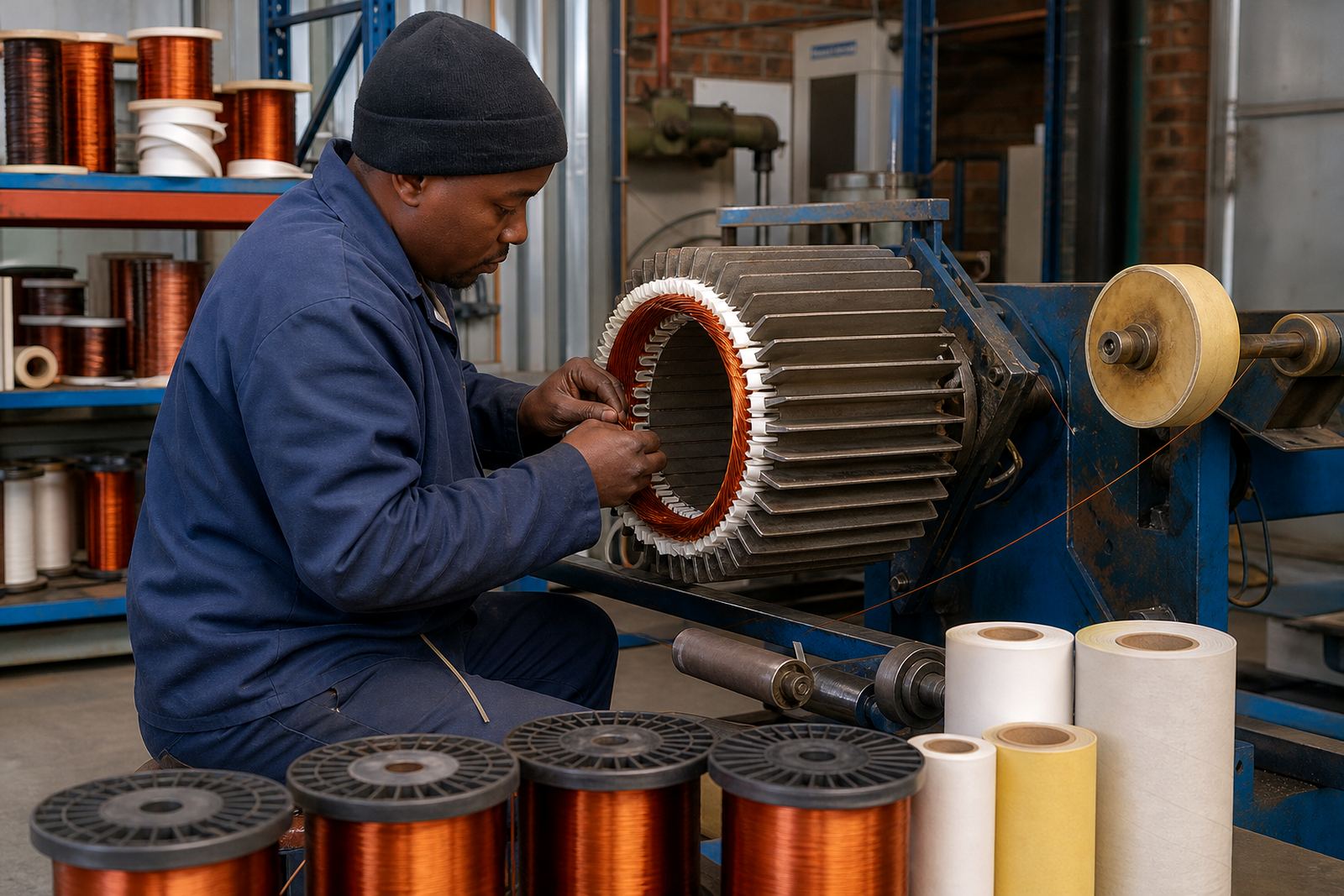
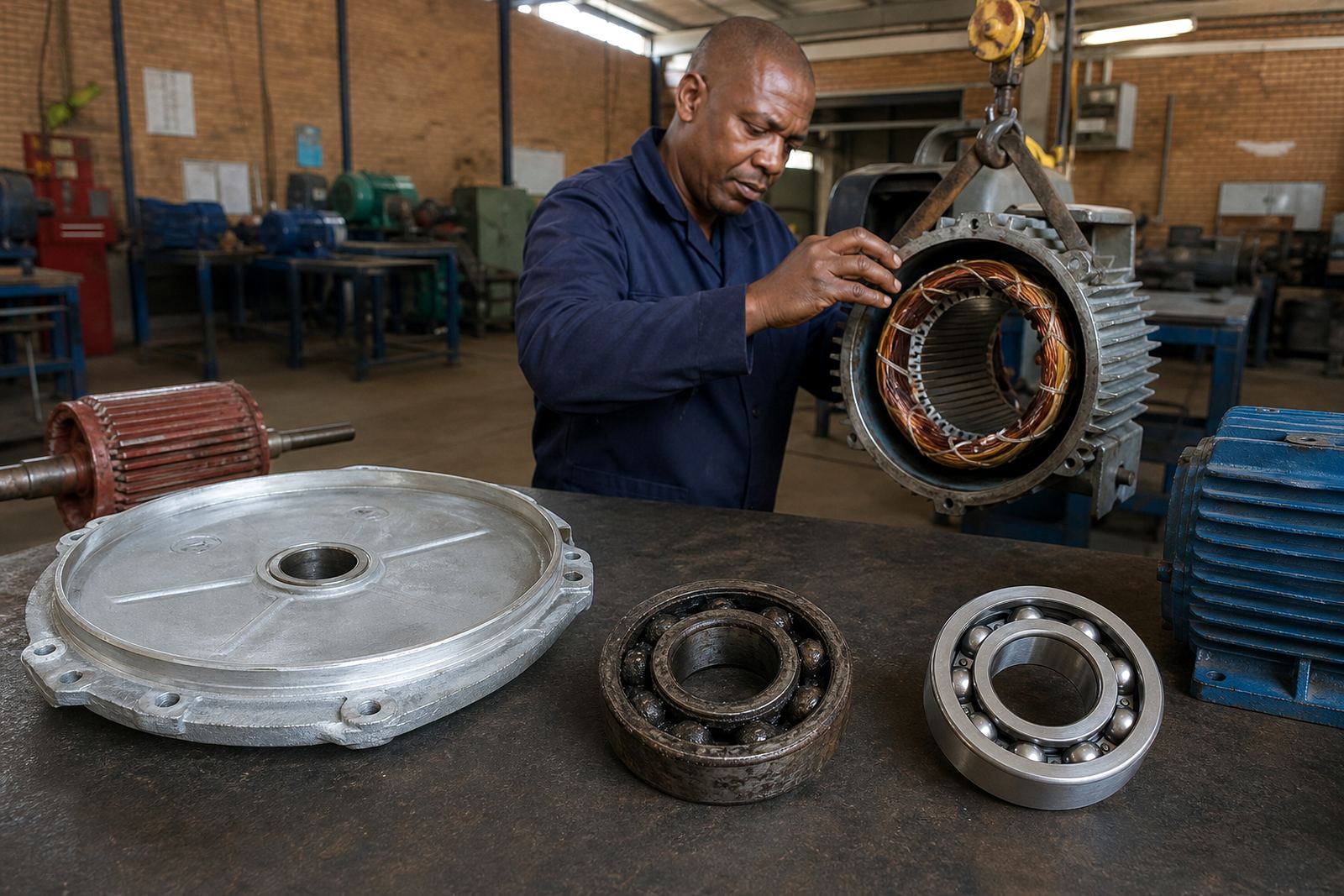
A proper motor service should include more than a quick bearing swap. The technician should inspect the shaft, housings, end shields, grease condition and sealing surfaces. If the bearing seat is worn, the new bearing may not hold correctly. If the shaft has been damaged by heat or fretting, the repair needs to address that first. Insulation testing should also be part of the process, because bearing problems can sit alongside electrical stress or winding damage.
It is also worth checking the condition of the coupling, alignment and mounting feet. A motor that is forced out of line will keep punishing the new bearing. In Germiston and Boksburg, for example, we often see motor issues that begin as a mechanical fault but show up later as electrical symptoms. A well-planned inspection helps separate the two and avoids wasting time on repeat failures.
Qualified people should handle the strip-down, testing and reassembly. Electrical work must be isolated and locked out before any inspection or repair begins.
A Practical Example From The Field
A plant motor in Vereeniging may run a conveyor or pump that cannot afford regular stoppages. Suppose the operator hears a low rumble, then notices the motor casing getting hotter than usual. The unit still starts, but the vibration is creeping up and the drive current is drifting higher on load. In that case, waiting for a complete breakdown can damage the shaft and hold up the line far longer than a planned repair would.
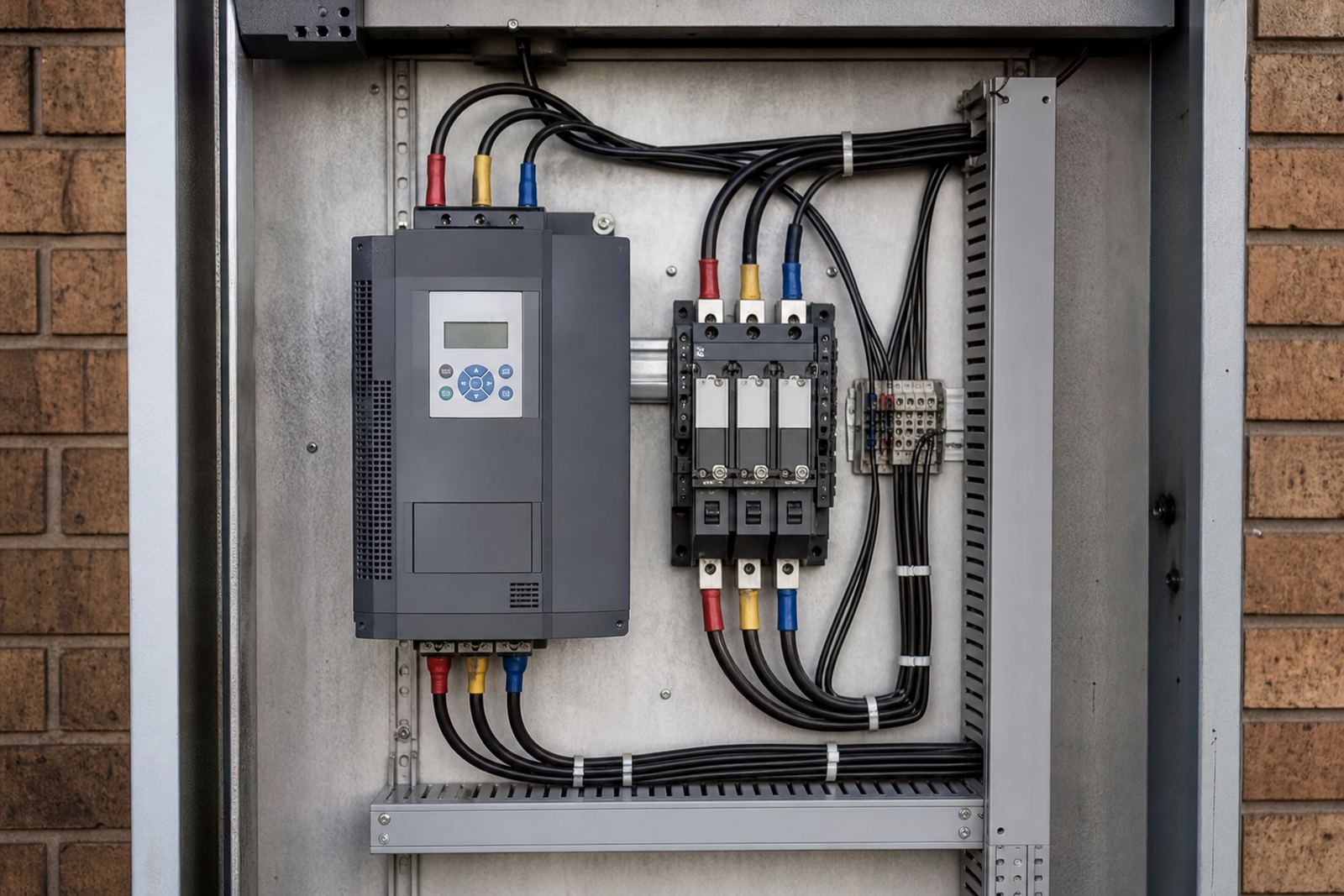
That is when bearing replacement should be considered as part of the service plan, along with alignment checks, drive inspection and commissioning support after reassembly. If the motor is being run through a variable speed drive, the technician should also check whether the drive settings or cable condition are adding stress. The goal is not just to fit a new bearing, but to put the whole system back into proper working order. A bit of planning now saves a lot of trouble later.
When To Stop Running The Motor And Call For Service
If a motor is getting louder, hotter or rougher to turn, do not keep pushing it in the hope that it will settle down. Bearing faults often get worse quickly once the surface starts to break up. A seized bearing can lock the rotor, damage the winding and put the shaft out of service. In many cases, the safest step is to remove the motor, inspect it properly and decide whether the bearing alone can be replaced or whether more work is needed.
For plants and workshops across Johannesburg, Ekurhuleni, Pretoria, Durban and surrounding areas, the practical rule is simple: if the warning signs are there, investigate early. The earlier a bearing issue is found, the more likely it is that the motor can be saved with a controlled repair instead of a bigger rebuild. That approach keeps downtime lower and helps the equipment last longer.