

What bearing noise usually sounds like
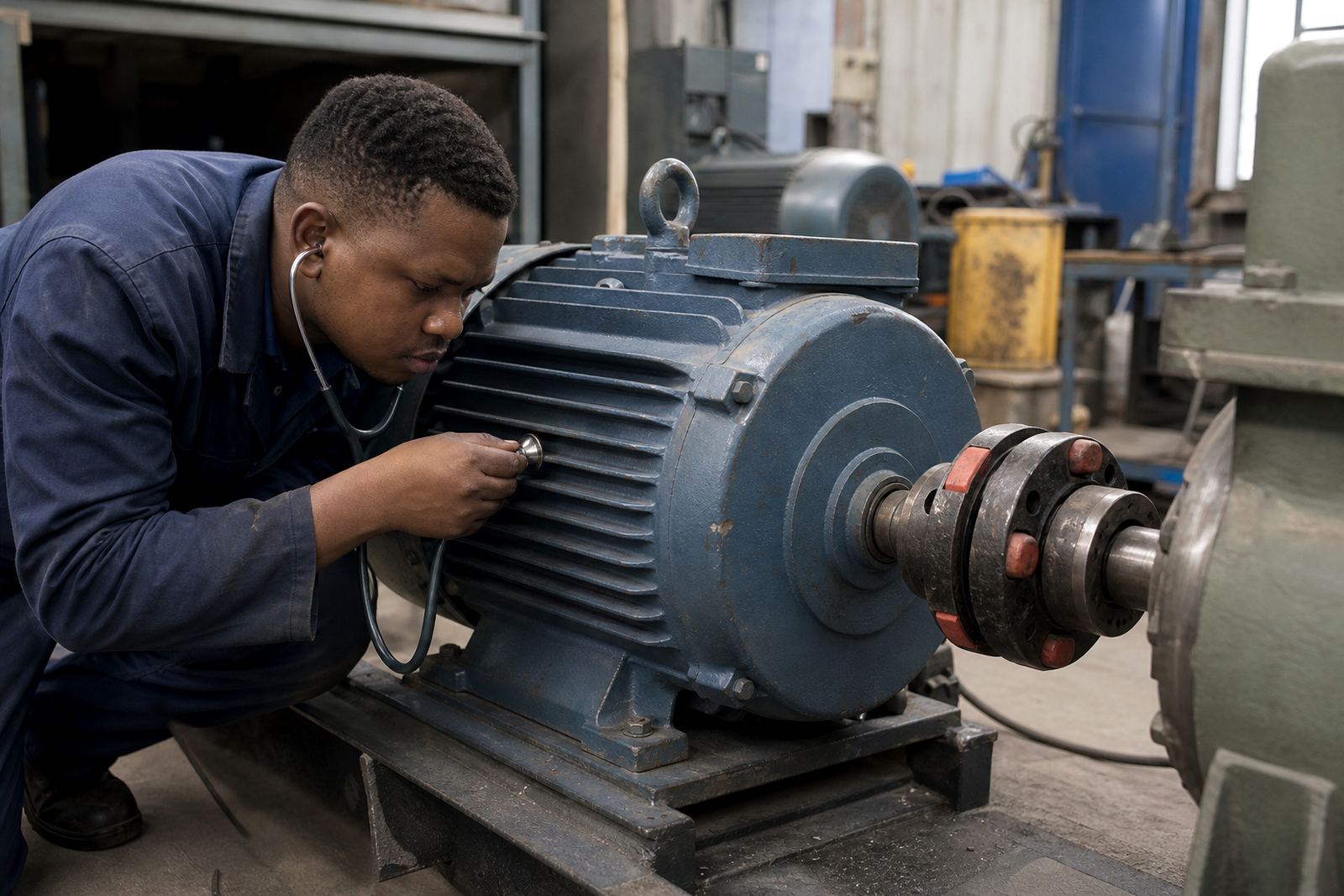
Electric motors do not all sound the same, but a healthy unit should run with a steady, even note. When the sound changes, the bearing is often one of the first parts to check. A rough grind can suggest metal contact, a high squeal may point to poor lubrication, and a repeated knock can come from looseness or damage in the bearing housing.
In a Germiston workshop, a technician may hear the change long before a motor stops. The sound can be worse when the load starts up, or only appear after the motor has warmed up. That difference matters because it helps narrow down whether the issue is with the bearing itself, the shaft alignment, or the duty cycle of the machine.
Signs that point to bearing wear
Noise is only one clue. A worn bearing often leaves other signs that trained people can pick up during inspection. Heat build-up around the end shield, vibration through the frame, and a slight drop in speed under load are all worth checking. If the bearing is failing from contamination, there may also be discolouration, dust build-up, or grease that has broken down.
- Grinding or rumbling that gets louder with speed
- Excess heat near the drive end or non-drive end
- Vibration that can be felt on the motor body
- Uneven rotation or a hard start
- Grease leakage, contamination, or dry bearing noise
These signs do not always mean the same repair is needed, which is why a proper fault finding process matters instead of guessing.
Why lubrication matters more than people think
Many bearing problems begin with lubrication issues rather than immediate wear. Too little grease can leave metal surfaces running dry, while too much grease can cause heat and pressure inside the housing. In dusty industrial areas and in coastal conditions such as Durban, poor sealing can also let moisture and grit get into the bearing and shorten its life.
It is easy to overlook grease condition during a busy shutdown, especially when the motor is still running. But if a bearing is noisy, the lubricant should be checked, the type of grease confirmed, and the housing inspected for contamination. On some motors, a simple cleaning and re-greasing is enough. On others the bearing has already been damaged and needs replacement.
Misalignment can sound like a bearing fault
Not every noisy motor has a bad bearing. Misalignment between the motor and driven equipment can place side load on the shaft, and that extra strain makes the bearing run hot and noisy. A soft foot, poor base condition or loose coupling can create the same result. If the machine was recently moved or worked on, the issue may start there.
Good repair practice includes alignment checks after motor removal and before commissioning. That is especially important on pumps, fans and conveyors where the load is steady and the motor runs for long hours. A bearing fitted correctly can still fail early if the shaft is pulling against it every shift.
What qualified technicians check before a repair
Electrical work must be done by qualified people, with lockout procedures in place before any motor is opened or tested. That protects workers and also prevents further damage to the equipment. Once the unit is isolated, a technician can check the condition of the bearings, inspect the windings, and assess whether the noise comes from the motor or from the driven machine.
- Lockout and safe isolation of the motor and supply
- Visual check for overheating, dust, moisture and grease leaks
- Bearing play, shaft movement and end float assessment
- Insulation testing to confirm winding condition
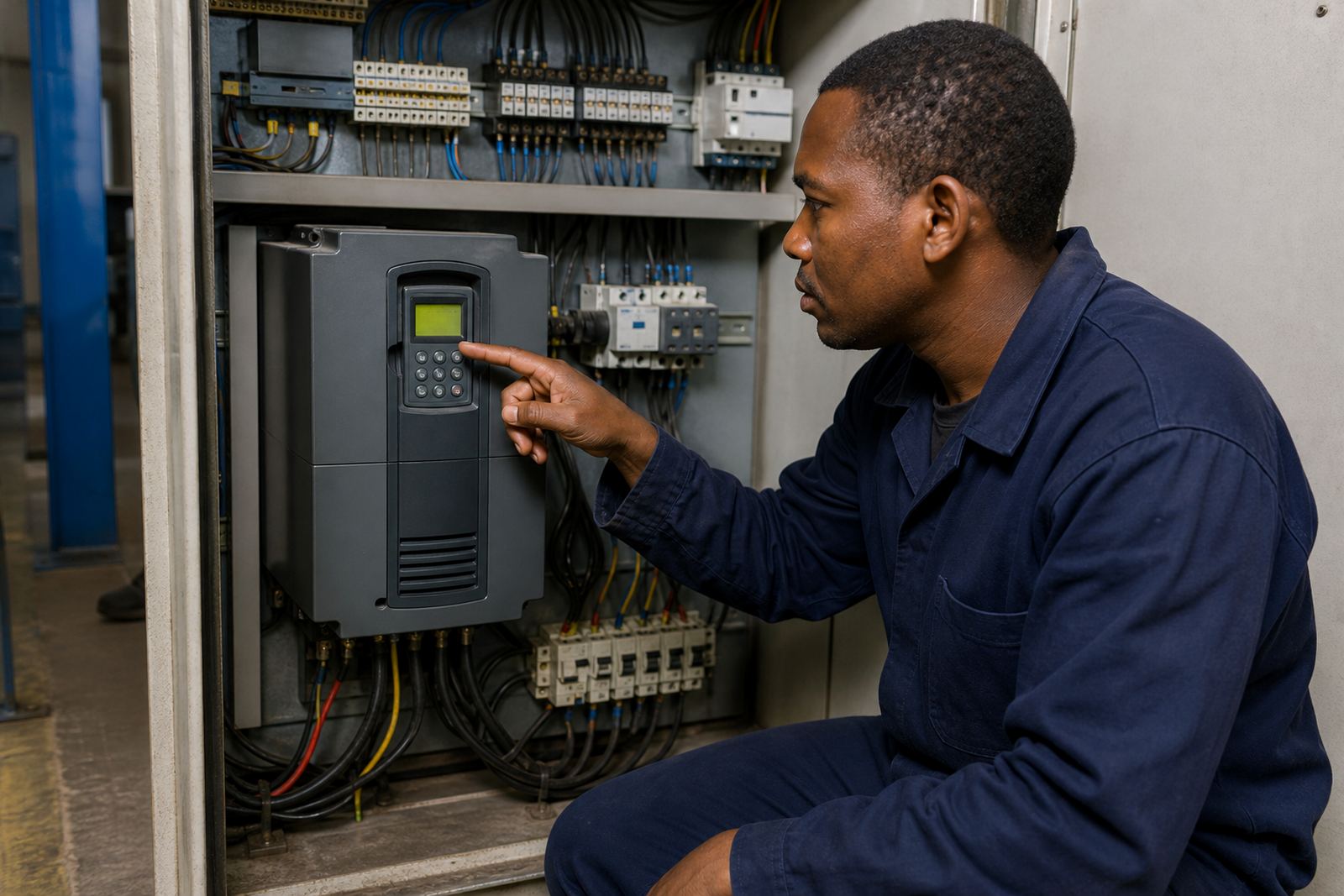
- Drive inspection where a variable speed drive is part of the system
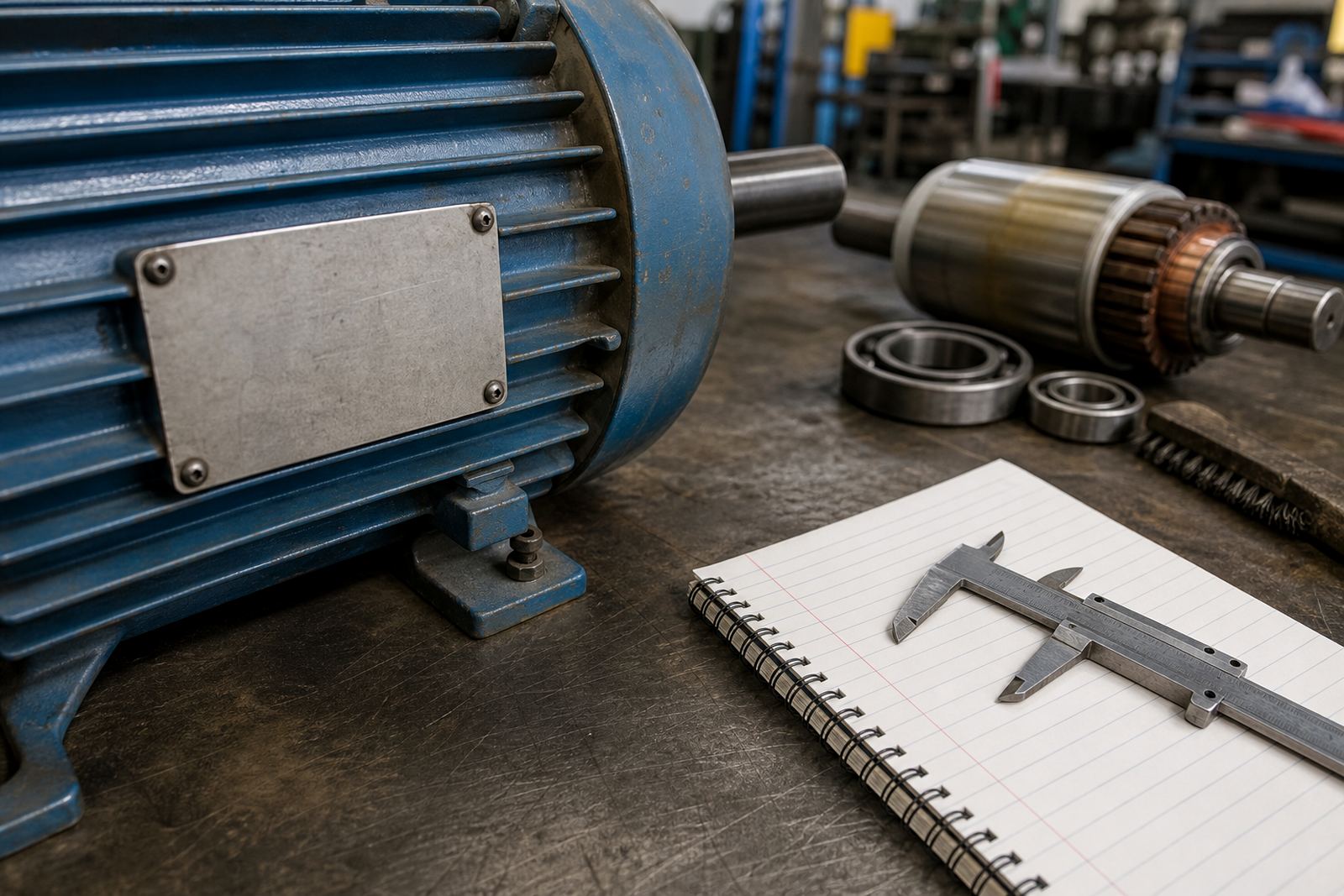
Where needed, the motor may be stripped for bearing replacement, cleaned, and reassembled with proper checks before being returned to service.
A practical example from Germiston and nearby sites
A production line in Germiston may start the day with a faint whine from a conveyor motor. By mid-afternoon the sound becomes louder, and operators notice more vibration through the frame. After shutdown, the fault may turn out to be a worn bearing combined with slight misalignment from a previous coupling change. If the problem is left too long the shaft can suffer damage too, and then the repair becomes bigger and more costly.
We see similar calls from Boksburg, Kempton Park, Ekurhuleni, Pretoria, Vereeniging and Johannesburg when workshops or plants hear a change in the motor note. The useful step is to act early, before the bearing fails completely and pulls the motor out of service at the wrong time.
When to call for inspection instead of waiting
If a motor is getting noisier, hotter or more vibration is showing up, it is worth arranging an inspection during planned downtime. That gives time for fault finding, bearing checks, insulation testing, panel cleaning, cable checks and site reporting if a drive is involved. It also helps with shutdown planning so the repair can be done safely and in the right sequence.
For plants and workshops across South Africa, early action often means the difference between a controlled repair and an unplanned stoppage. If the sound has changed, do not ignore it. Get a qualified team to assess the motor, the bearings and the drive system before the fault spreads.