

A burnt smell is a warning, not a nuisance
In a workshop or plant, a burnt odour usually means something has been running hotter than it should. It may come from a motor, terminal box, cable entry, control panel or variable speed drive. In many cases the smell arrives before the final failure, which gives you a small window to investigate.
That investigation should always be done by qualified people using proper lockout procedures. Motors and drives store energy, and a quick look without isolation can be dangerous. If the smell is sharp and acrid, treat it as an electrical issue until proven otherwise.
At our Germiston base, we often see calls where the first sign was simply a smell during a shift change. By the time the machine is opened, the damage may range from heat discolouration to blackened insulation, so it helps to stop and assess early.
What the smell can tell you about the fault
Different smells often point to different problems. A hot varnish or paint smell can suggest winding insulation stress. A burnt dust or oil smell may mean dirt has built up on the frame or fan, trapping heat. A plastic smell from a drive or panel can point to overheated components, cable insulation or terminal blocks.
Burnt smells do not always mean the motor is beyond repair. Sometimes the issue is external, such as a seized bearing, poor ventilation, loose connections or overload. But if the winding has been overheated repeatedly, the insulation can become brittle and fail under load.
- Sharp chemical smell: possible insulation stress or winding heating
- Hot oil or grease smell: possible bearing trouble or grease breakdown
- Burnt plastic smell: possible cable, terminal or drive component overheating
- Dusty burnt smell: possible blocked airflow, dirt build-up or fan issues
How overheating starts in motors and drives
Overheating rarely happens for one reason only. A motor may be overloaded, running too long on a weak supply, or working in a dusty area where airflow is restricted. In coastal conditions like Durban, humidity and salt can add another layer of stress, especially where panels are not kept clean and dry.
Variable speed drives can also overheat when cooling fans are blocked, filters are dirty, terminals are loose, or the unit is working in a cramped panel with poor ventilation. If the drive is trying to protect a motor that has already developed a fault, it may trip again and again until someone checks the root cause.
For plants in Johannesburg, Ekurhuleni and Pretoria, load shedding adds another risk. Repeated stops and starts can expose weak insulation and tired bearings, and a motor that was only just coping may start to smell hot after a few cycles.
- Overload on the shaft or driven machine
- Poor ventilation around the motor or drive
- Loose electrical terminations that create heat
- Bearing wear that increases friction
- Voltage irregularities or repeated starts
What we look for during fault finding and inspection
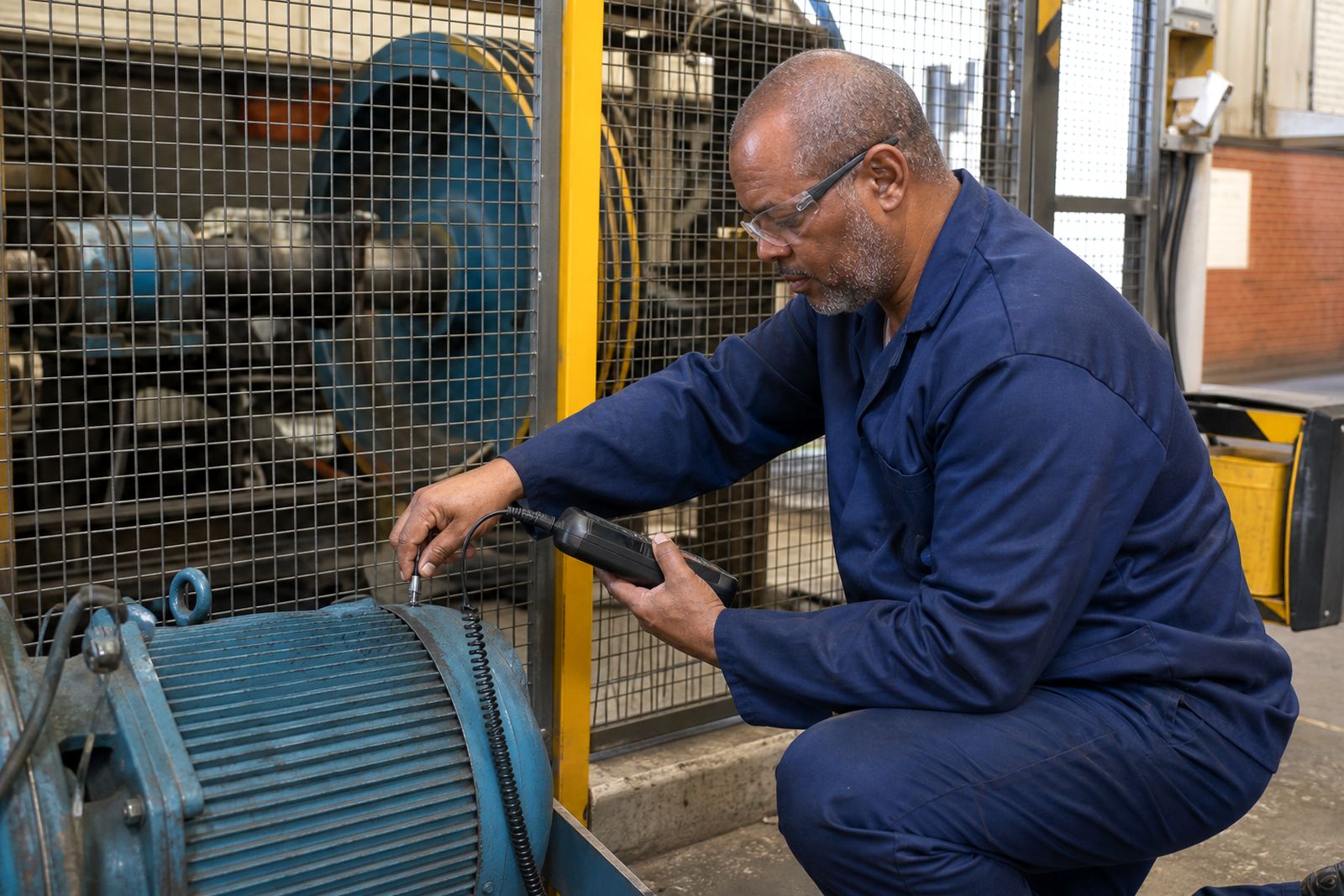
Once equipment is safely isolated, the check should be methodical. The aim is to find the reason for the smell before new parts are fitted. Replacing a motor or drive without checking the root cause can leave you with the same problem next week.
Our team handles fault finding, motor removal, drive inspection and site reporting across Germiston, Boksburg, Kempton Park and the wider Gauteng area. The same approach applies whether the equipment is in a small workshop or a busy production line.
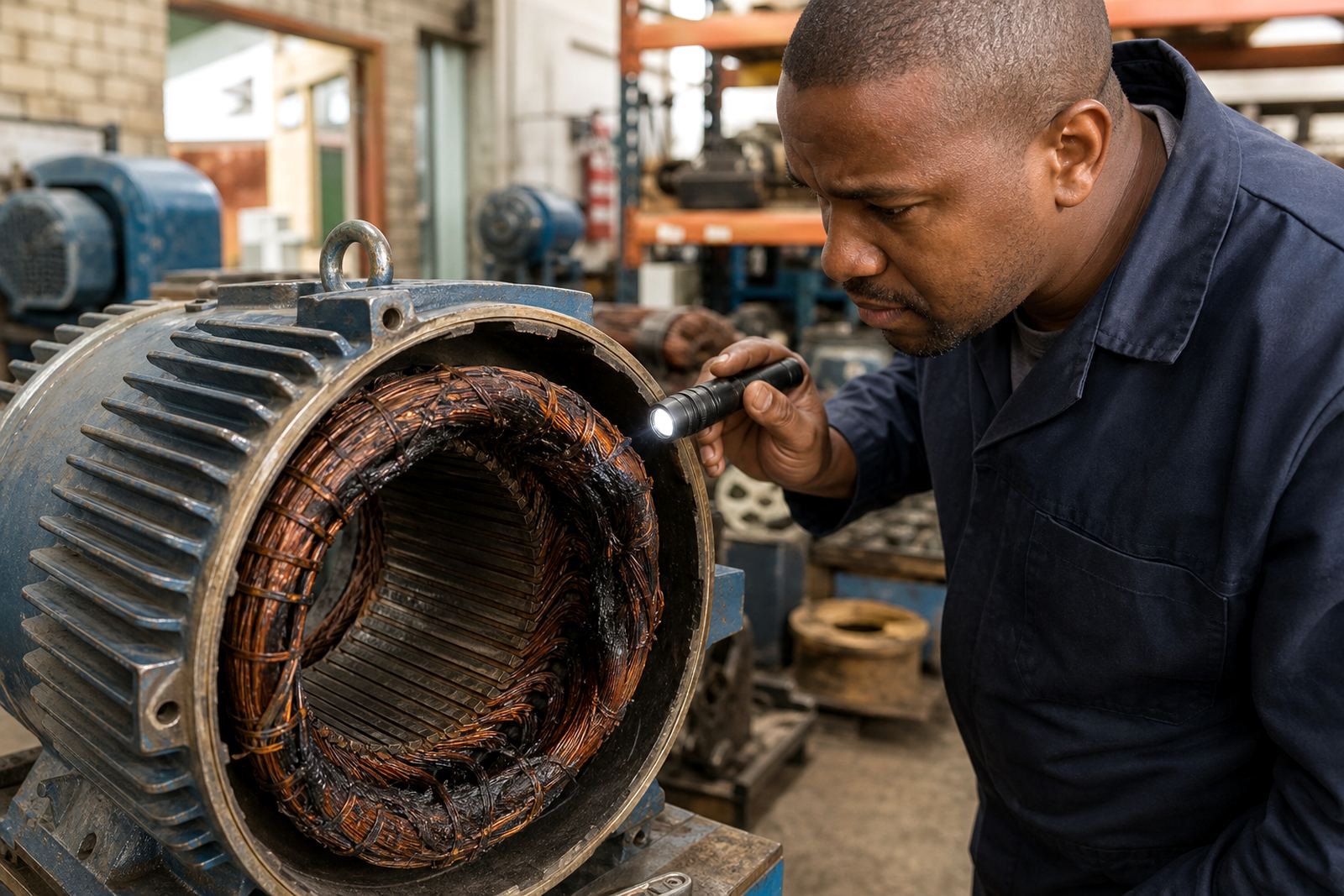
- Visual inspection for scorch marks, dust, oil and discolouration
- Bearing checks for noise, play or stiffness
- Insulation testing to assess winding condition
- Cable checks and terminal inspection for heat damage
- Panel cleaning and a look at airflow paths and fan condition
- Alignment checks where the motor is coupled to a pump, conveyor or gearbox
If the smell came after a shutdown or a power interruption, we also check the panel and drive settings to see whether the equipment is restarting correctly. Small details matter, and sometimes a loose lug or damaged cable end is enough to create heat.
When rewinding is part of the fix
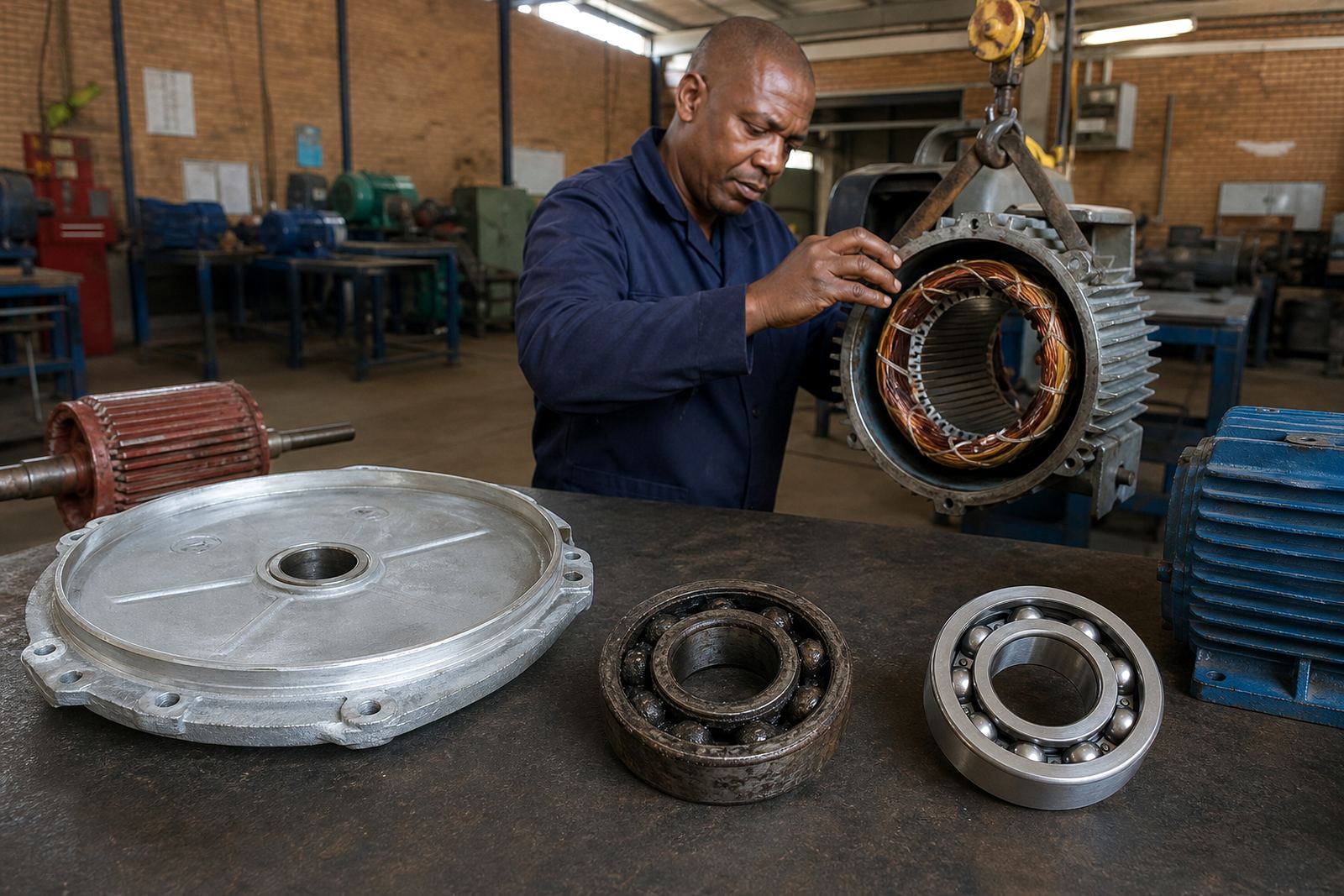
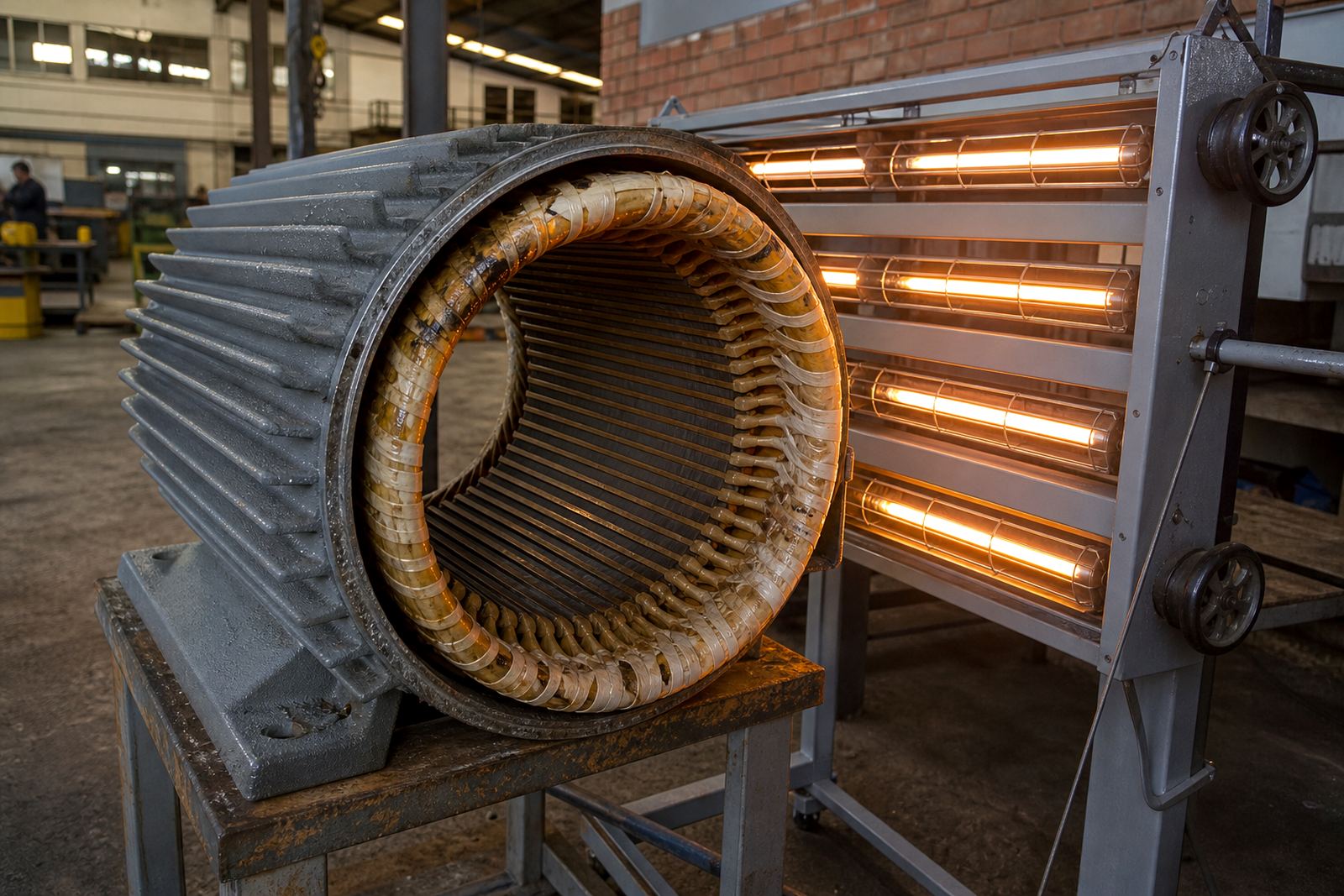
If insulation testing shows that the winding has been compromised, electric motor rewinding may be the proper repair path. Rewinding is not just a matter of putting in fresh wire. The damaged winding is removed, the stator core is checked, and new winding is installed to suit the original electrical requirements.
Good rewinding work also includes insulation treatment, careful coil placement and final testing before the motor returns to service. If the bearings are worn, they should be replaced at the same time so the repaired motor is not held back by friction or vibration.
This is where experience counts. A motor can smell burnt because of a bearing failure that overheated the frame, or because the winding itself has been stressed by heat. The repair should match the fault, not just the symptom.
Why drive repair needs the same care
Variable speed drives are often blamed too quickly, but they deserve proper inspection. Burnt odours from a drive can come from failed internal parts, overheated terminals, dirty cooling paths or a motor fault that has pushed the drive beyond its safe operating range.
Drive repair should include checks on the power section, control section, cooling fans and connections. In many plants across Vereeniging, Pretoria and Durban, the problem is made worse by dust, humidity or poor enclosure maintenance. A clean panel with correct spacing makes a real difference.
Never keep restarting a drive that has given off a burnt smell without a proper inspection. If a component is already heat damaged, repeated restarts can turn a manageable fault into a full failure.
A practical example from a Germiston plant
A local production site in Germiston reported a burnt smell near a motor on a conveyor line during the afternoon shift. The unit was still running, but the smell came back each time the load increased. After safe isolation and inspection, the issue was traced to worn bearings and heat damage around the winding end turns.
The motor was removed, tested and rewound, then fitted with new bearings before being returned to service. The panel was cleaned, cable terminations were checked and alignment was corrected during commissioning support. The early smell had done its job by warning the team before the motor failed completely.
That kind of early action saves more than one machine. It also reduces knock-on damage to couplings, belts, drives and connected equipment.