

When Vibration Stops Being Normal
Every motor and driven machine has some level of vibration. A light hum from a correctly installed unit is common, especially where the floor is uneven or the frame sits close to other equipment. The concern starts when the vibration changes, gets louder, or feels different through the base, bearing housings or coupling guard.
In our work across Germiston, Johannesburg and Ekurhuleni, the first warning is often a report from an operator who notices a new rattling sound, a warm bearing, or bolts that keep loosening. Those signs matter. If a motor that has run quietly for months suddenly shakes a panel or makes the pipework buzz, it is telling you something has shifted.
Do not ignore vibration just because the motor is still running. A machine can keep going for a while and still be damaging bearings, couplings, shafts or windings in the background.
What Rising Vibration Can Point To
There is no single cause. Rising vibration can come from a mechanical fault, electrical stress or a mix of both. On site, the pattern usually gives clues.
- Worn or damaged bearings that no longer run true.
- Misalignment between the motor and driven equipment.
- Loose mounting feet, baseplates or foundation bolts.
- Imbalance in the rotating parts after wear, dirt build-up or repair work.
- Electrical problems in a motor winding, supply issue or variable speed drive setting.
- Coupling wear, belt tension problems or pulley damage.
If the vibration changes with speed, load or direction of operation, that is useful information. Drives can also reveal an issue by causing hunting, irregular acceleration or repeated trips. In some cases the motor is fine but the drive settings are forcing it into an unstable operating range.
The Bearing Story Behind Many Faults
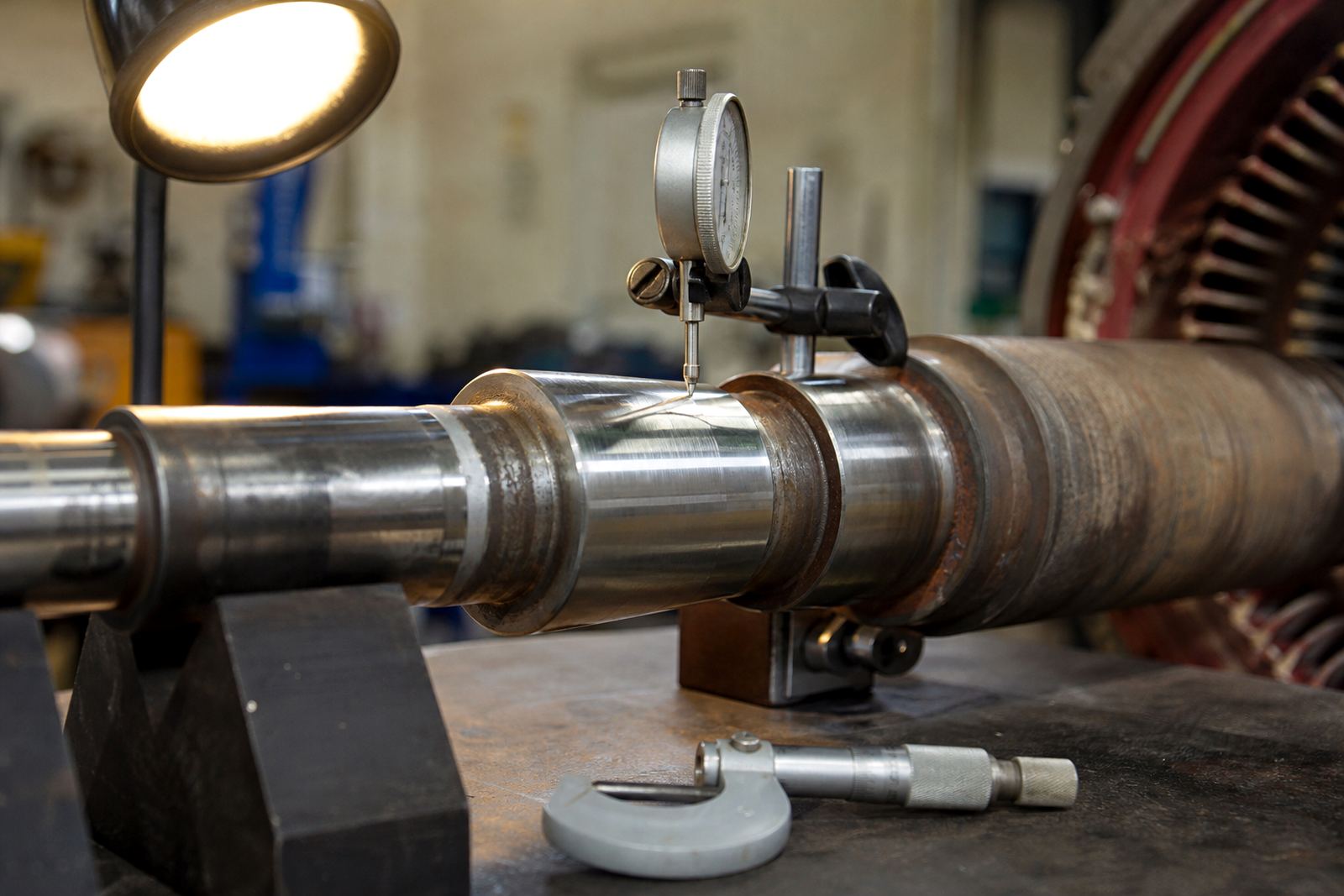
Bearings are often the first parts to suffer when vibration starts climbing. Once a bearing loses smooth running, the motor shaft begins to move off centre and the whole assembly takes a knock. Heat builds up, grease breaks down and the vibration usually becomes more noticeable at the bearing end first.
Common signs include a low rumble, a change in pitch, metallic noise, or heat that is higher on one side of the motor than the other. If a bearing fails badly, it can damage the shaft, seals and housing, which turns a straightforward repair into a longer shutdown.
For plants that run around the clock, especially near the coast where moisture and salt in the air can affect metal parts, regular bearing checks are not a luxury. They are part of keeping the machine stable and reducing unplanned stoppages.
Why Electrical Faults Can Show Up as Vibration
Not every vibration problem is mechanical. Electrical faults can make a motor run unevenly and that uneven running may show up as vibration, noise, or fluctuating current draw. In some cases, a winding fault can make the motor pull irregularly under load, which is then felt through the frame and coupling.
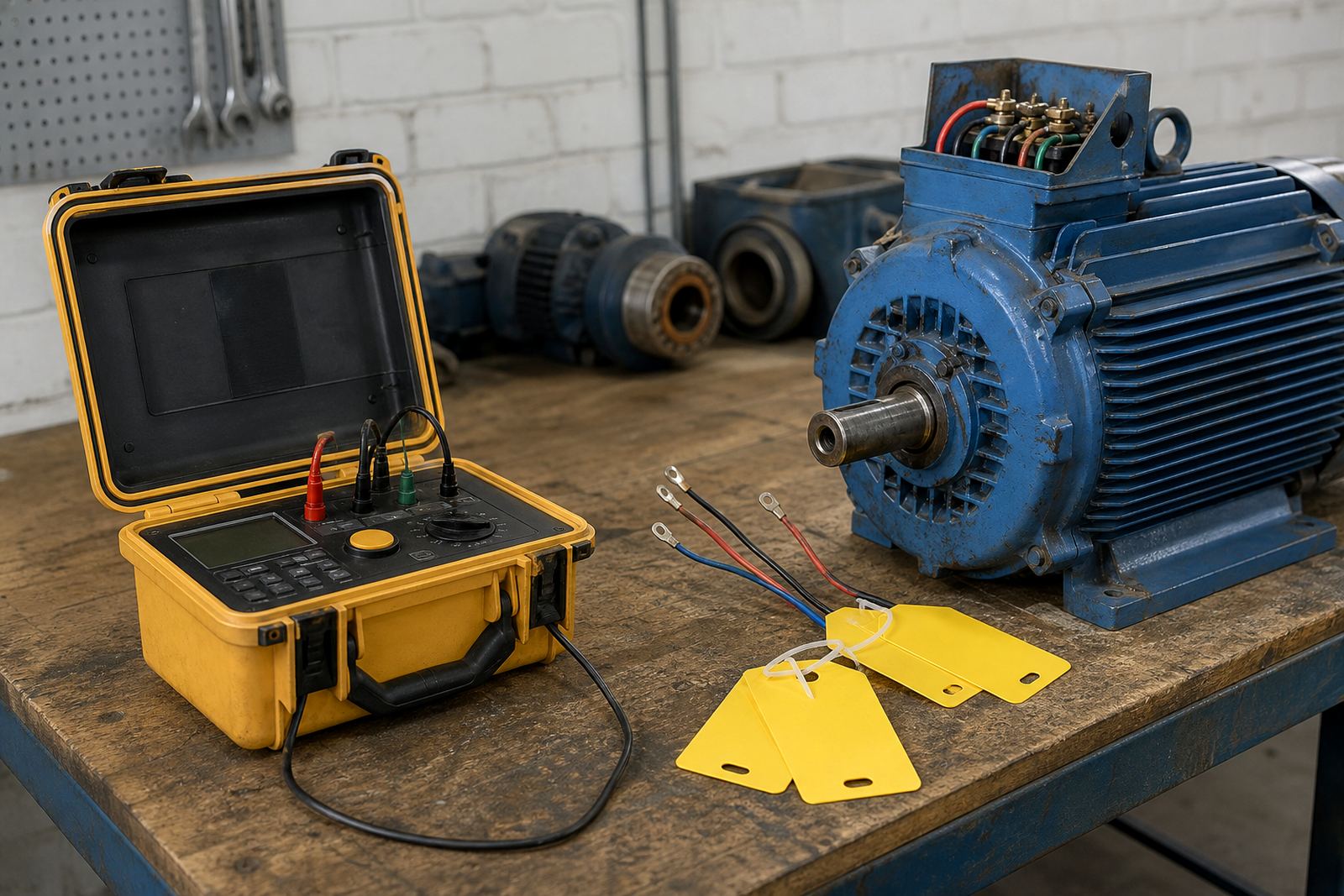
That is why inspection should include both the mechanical side and the electrical side. Insulation testing, panel cleaning, cable checks and drive inspection all help build a proper picture of what is happening. A motor can look sound outside yet still have insulation weakness inside the winding.
Any electrical work must be handled by qualified people only, with lockout procedures in place before the unit is opened, tested or removed. That includes isolating the supply, confirming dead, and making sure the machine cannot restart while hands are on it.
- Lock out before touching the motor, drive or starter panel.
- Test for isolation before removing covers or cables.
- Do not bypass protection devices to keep production going.
- Keep the area clear while inspection or removal is underway.
What a Practical Site Check Should Include
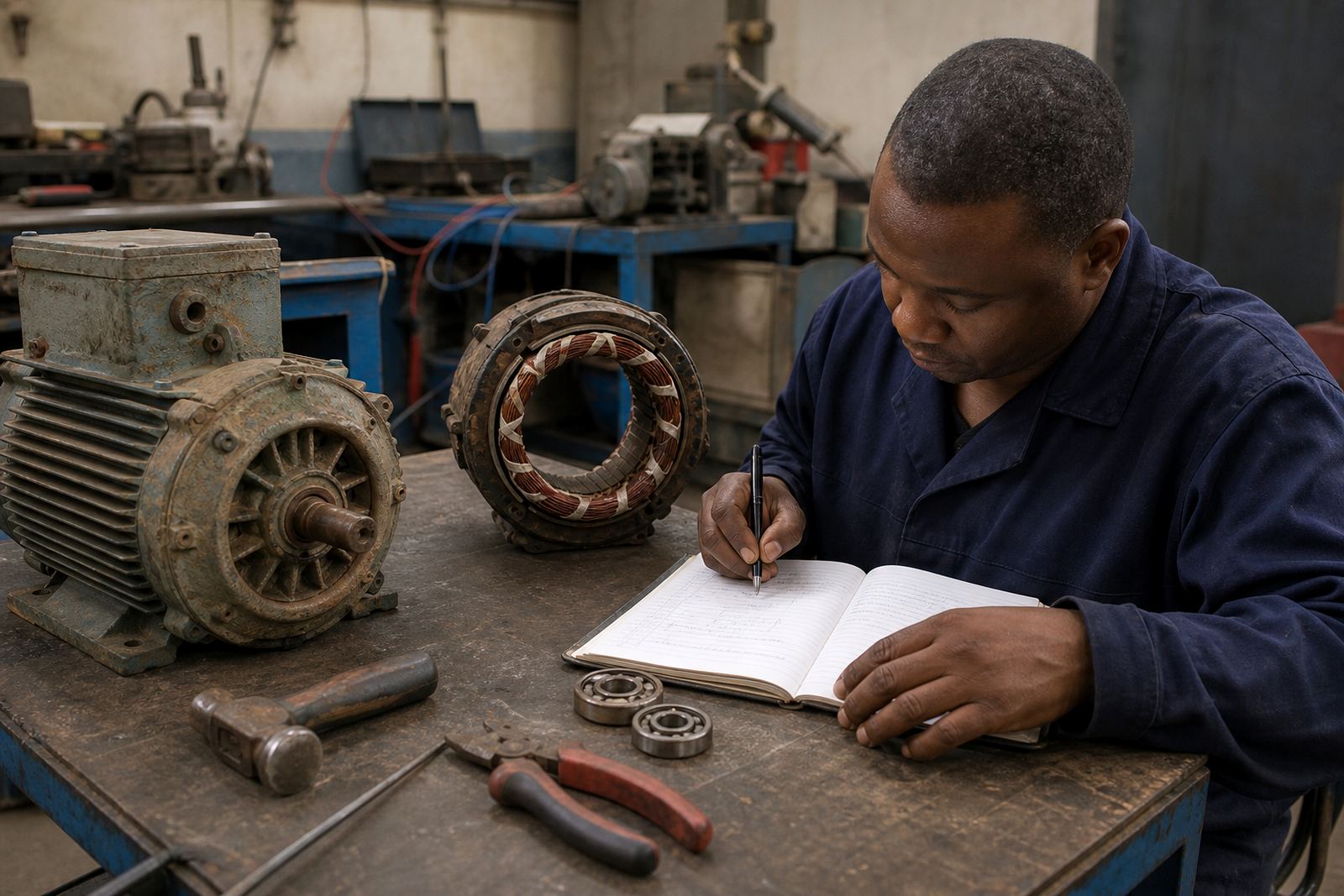
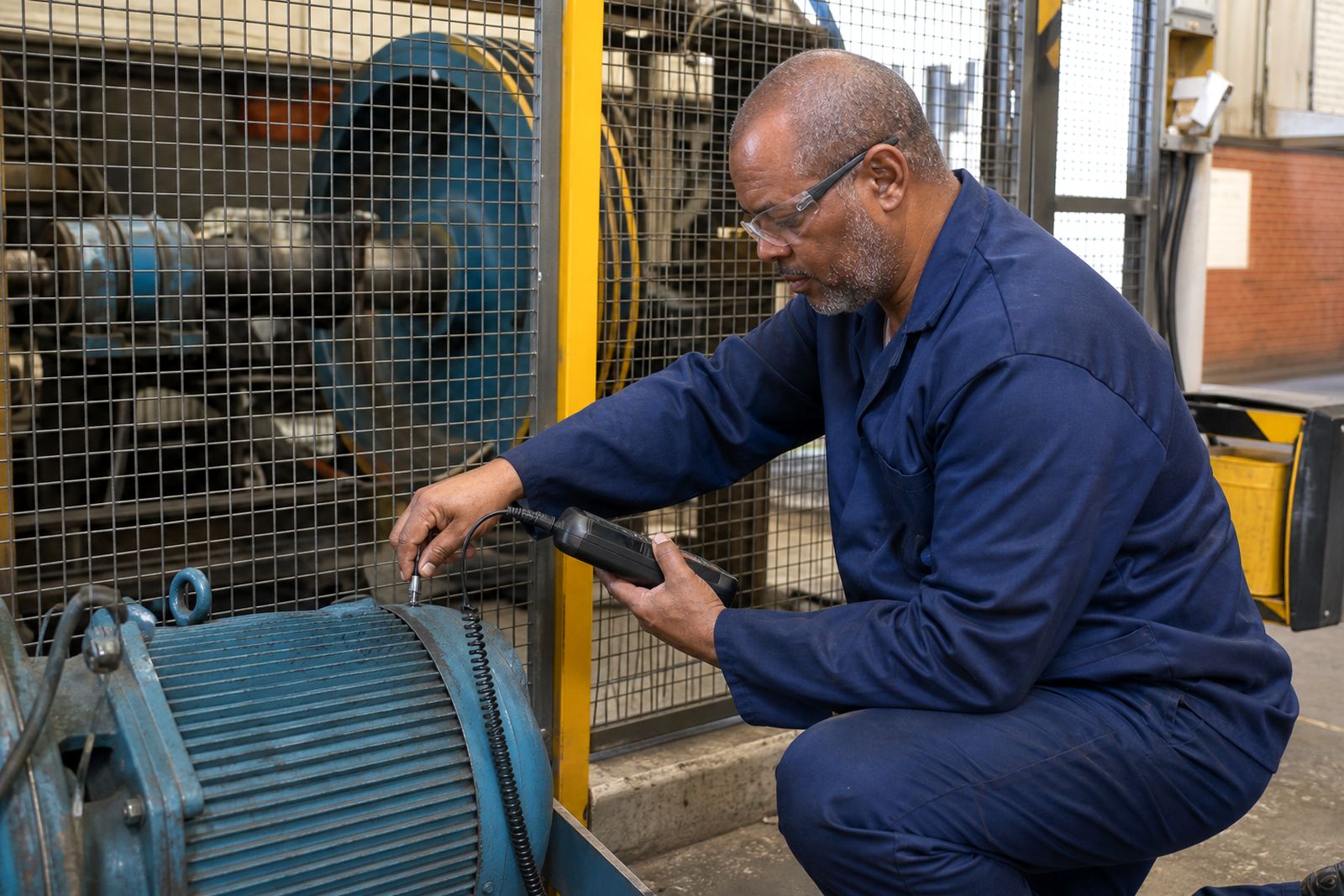
A sensible vibration investigation starts with observation, not guesswork. Look at when the vibration appears, how fast it develops, and whether it changes with speed or loading. Then move through the plant methodically so that the fault is not chased in circles.
Locally, we often find that the real issue sits outside the motor itself. A loose base in Boksburg, a misaligned pump in Kempton Park, or a drive panel with dust build-up in Pretoria can all create symptoms that look like a motor fault. Site conditions matter. Heat, dust, moisture and repeated shutdowns all play a part.
- Check alignment between motor and driven machine.
- Inspect bearings for noise, play, heat and grease condition.
- Look for damaged couplings, belts or pulleys.
- Test insulation resistance on the motor windings.
- Inspect the drive, panel and control wiring for signs of stress.
- Review foundation bolts, feet and any signs of movement.
When To Stop Running and Call for Help
If the vibration is getting worse, the motor is running hotter, or a new noise has started, it is time to investigate before the unit fails under load. That is especially important where the motor feeds production equipment, pumps, fans or conveyors that affect the rest of the site.
A planned shutdown is usually cheaper than an emergency recovery. It gives time for motor removal, bearing replacement if needed, winding inspection, drive repair, alignment checks and commissioning support once the unit goes back in. Good shutdown planning also helps when the work has to be fitted around municipal limits, site access rules or production windows.
For plants and workshops in Germiston, Vereeniging, Durban and beyond, the best approach is simple: treat vibration as a warning, not an inconvenience. If the signs are there, get the equipment checked before a minor fault becomes a major stop.