

Why Moisture Changes The Way A Motor Behaves
Electric motor windings are designed to stay dry, clean and well insulated. When water vapour, condensation or liquid ingress reaches the winding, the insulation system starts to absorb moisture and its resistance drops. That means current can leak where it should not, which can lead to nuisance tripping, overheating and uneven running.
In a plant or workshop, moisture often comes from more than one place. A motor may sit through a cold night in a Germiston yard, then warm up quickly in the morning and pull condensation into the frame. Coastal humidity can do the same in Durban, while washdown areas, roof leaks and open cable entries add their own problems. If the motor is exposed to load-shedding starts and stops, the repeated temperature swings make condensation more likely.
The issue is not only the water you can see. Fine moisture trapped in the slots, around terminals or under varnish can continue to affect the winding after the outside looks dry. That is why a motor that has been standing in a wet area may still test poorly even after it has been wiped down.
What Moisture Does To Insulation Systems
The insulation in a motor winding separates the copper conductors from the stator core and from one another. Once moisture enters the system, the insulation resistance can fall sharply. In practical terms, that means the motor may still spin but it is now closer to earth fault conditions and partial discharge damage can start to build up over time.
Moisture can also carry dirt and salts into the winding. In industrial areas, dust mixed with moisture becomes conductive. Near the coast, salt in the air can leave a fine film on terminal boxes and cable glands. In the right conditions, that film creates leakage paths and tracking across insulation surfaces. Small problems become bigger fast if the machine is returned to service without proper checks.
- Insulation resistance can drop below acceptable levels
- Corrosion can form on terminals, bearings and frame surfaces
- Varnish and winding insulation can break down sooner
- Motors can trip on protection devices during start-up
- Residual moisture can cause repeat failures after a short run
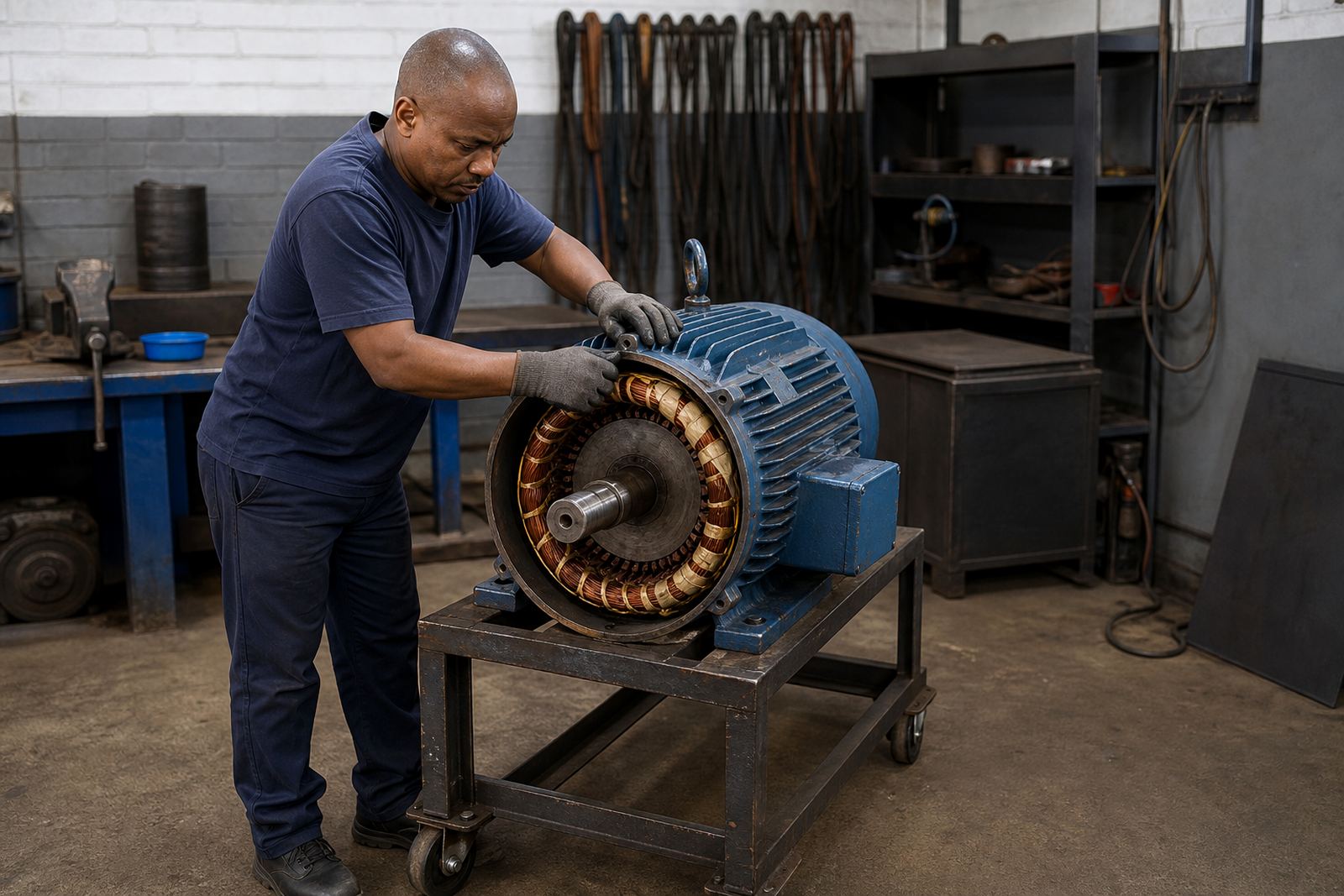
Once the insulation system has been stressed, drying alone may not be enough. If the winding has already been contaminated or damaged, the motor may need repair or rewinding to restore reliable operation.
Signs A Damp Motor Needs Attention
Some motors fail suddenly, but moisture problems usually leave clues. A machine may become harder to start, run hot or trip only when the weather turns wet. In other cases the signs are less obvious and the motor just sounds tired, especially under load.
Do not ignore the smell of hot insulation, stains around the terminal box, rust inside the cover or greenish corrosion on connections. These are warning signs that water has been inside the motor or that moisture has stayed there long enough to cause damage. If a motor has been stored on site and never properly sealed, the winding may already be affected before it is even installed.
- Frequent trips on overload or earth leakage protection
- Low insulation resistance on test results
- Rust, condensation or droplets inside the frame
- Uneven current draw between phases
- Bearings that feel rough after a wet shutdown
In many cases a plant supervisor sees the symptoms at the panel first, while the real fault sits inside the motor. That is why fault finding should include both the electrical condition and the physical condition of the machine.
Drying And Testing Before The Motor Goes Back In
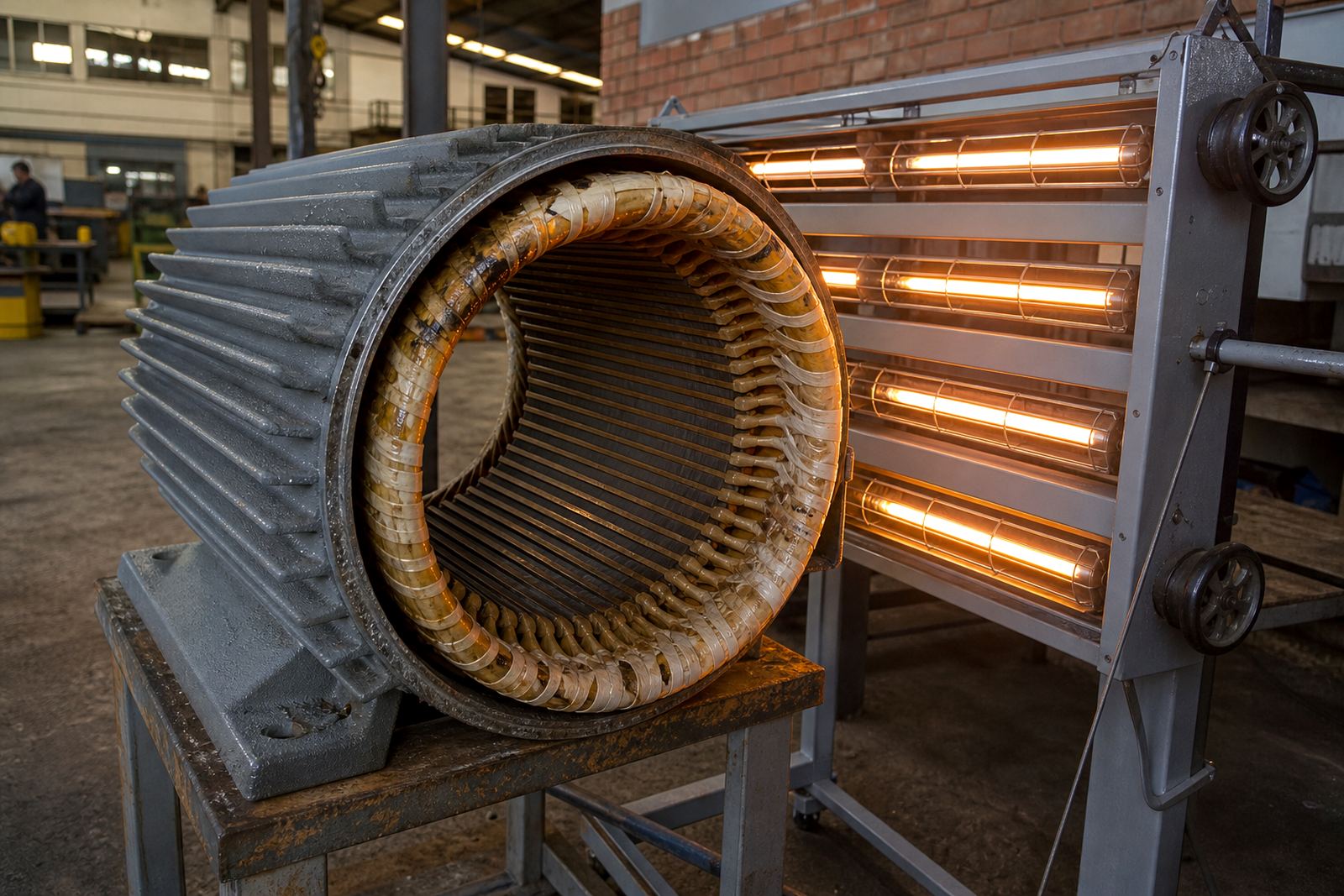
Drying a motor is not just a matter of leaving it in the sun. Proper drying is controlled and monitored so the winding is not overheated while moisture is removed. Qualified electricians and motor technicians should apply lockout procedures, isolate the supply and confirm the machine is safe before any work starts. That is not a box ticking exercise, it is basic site safety.
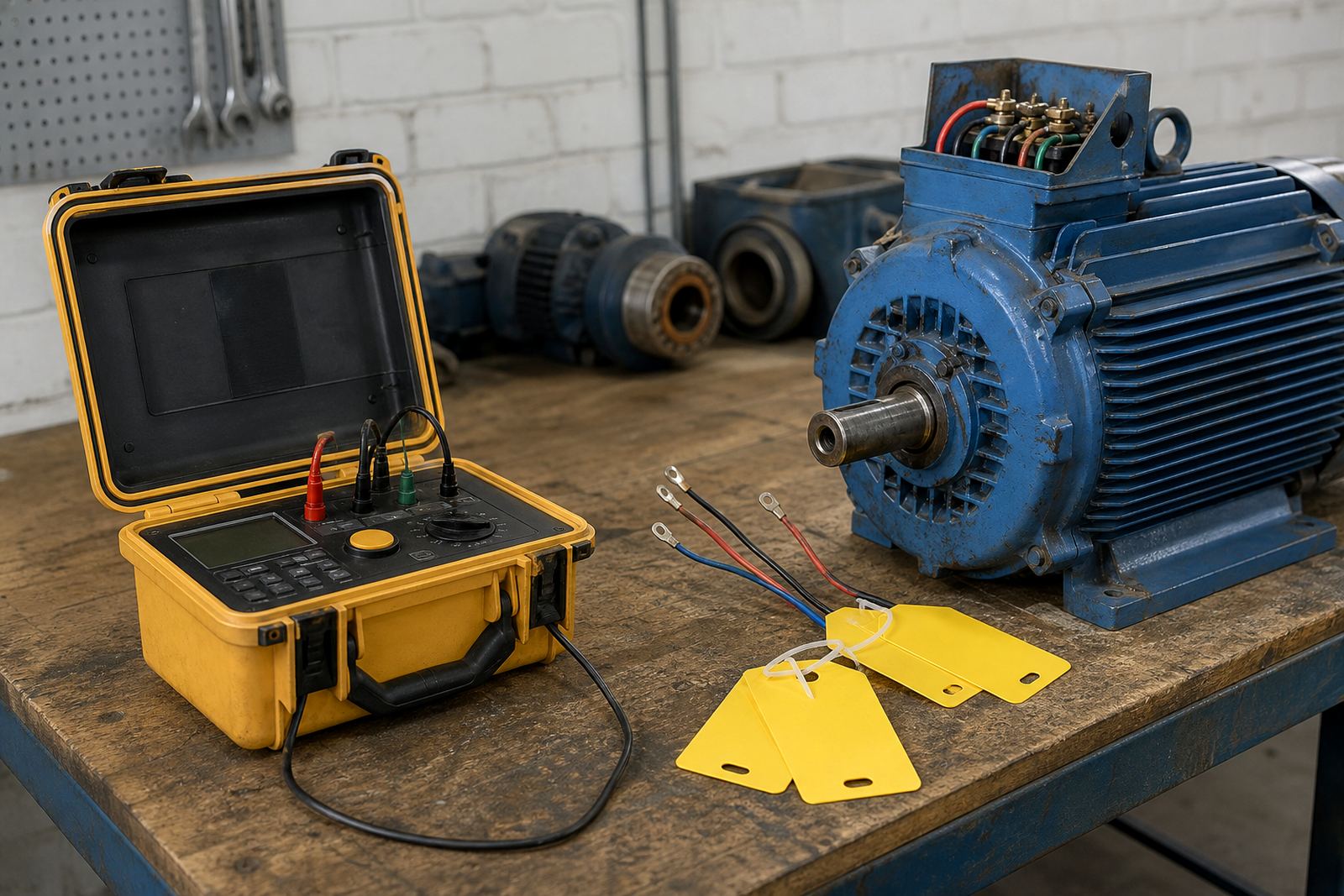
After drying, the motor should be tested to check whether the insulation has recovered. A common approach is to measure insulation resistance and compare the readings phase to earth and phase to phase. If the numbers are still poor, further drying, cleaning or repair may be needed. On larger motors, it can also help to check terminal connections, bearings and rotor condition at the same time, because moisture often leaves more than one fault behind.
Testing should never be rushed. A motor may appear dry externally yet still hold moisture deep in the winding. If it is returned to service too soon, the protection devices may trip again and the underlying issue will remain unresolved.
When Rewinding, Bearings Or Drive Repair Become Necessary
Sometimes a damp motor can be dried and returned to service. At other times the moisture has already caused enough damage that more work is needed. If insulation has broken down, the winding may need to be stripped and rewound. If the bearings have been exposed to water or contamination, bearing replacement should be part of the repair plan. Moisture can also affect the associated variable speed drive, especially where terminals, cooling fans or internal boards have been exposed to damp air or dust.
A proper repair programme should look at the whole system, not only the motor. That means checking the driven load, the cable run, the control panel and the drive settings as well. In a workshop in Boksburg or a plant in Vereeniging, a failed motor often points to a broader problem such as poor sealing, weak ventilation or a shutdown process that allows condensation to form.
- Electric motor rewinding when insulation has failed
- Bearing replacement if water or rust has reached the rolling elements
- Variable speed drive repair when moisture has affected electronics
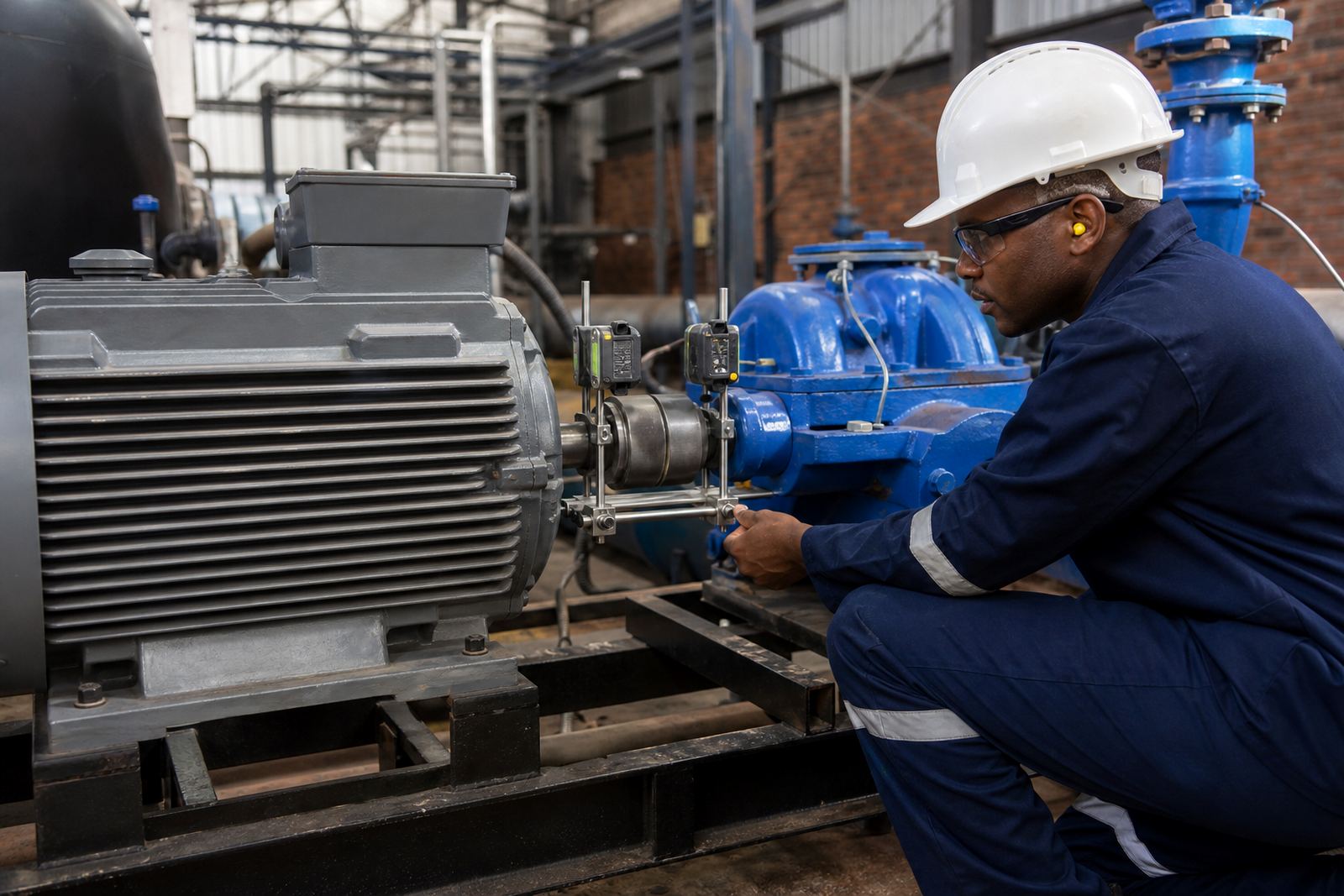
- Alignment checks after removal and refitting
- Panel cleaning and cable checks to reduce repeat faults
Choosing the smallest repair that will actually solve the problem saves time later. It also helps prevent the same motor from coming out of service again two weeks later.
A Practical Germiston Example From The Shop Floor
A packaging workshop in Germiston called in after a motor kept tripping every time the weather turned damp. The machine had been idle during a shutdown and the terminal box was not sealed properly. On inspection there were signs of condensation inside the frame, light corrosion on the terminals and low insulation readings that would not recover on their own.
The motor was isolated, removed under lockout procedure and dried under controlled conditions. Once the winding was tested again, the readings improved but not enough for comfortable service. The bearing checks also showed roughness, so the repair plan changed from simple drying to a full strip, clean and rewind with bearing replacement. The team also inspected the cable entry and panel to make sure moisture was not getting in elsewhere. The motor went back only after commissioning checks and site reporting were completed.
That kind of case is common across South Africa, especially where equipment sits through cold nights, coastal air or dusty shutdown periods. The lesson is simple: moisture rarely acts alone, so the answer should not be guesswork.