

What insulation resistance testing actually tells you
Insulation resistance testing measures how well electrical parts are separated from earth and from each other. In simple terms, it helps show whether a winding, cable or internal circuit is starting to leak current where it should not. A good reading does not mean the machine is perfect, but a poor reading is a warning that there may be moisture ingress, dirt build-up, damaged insulation or deterioration from heat.
On motors, this test is often part of a wider check before commissioning, after a shutdown, or when a machine has tripped without an obvious reason. In workshops across Germiston, Boksburg and Kempton Park, it is common to find that a motor has been sitting in a humid corner or near process water and the insulation has taken strain. That does not always mean a rewind is needed, but it does mean the numbers must be read carefully.
Why one reading on its own can mislead you
People sometimes want a simple pass or fail answer. With insulation resistance, that approach can be too blunt. A motor that has been stored for months may show a low reading because it has absorbed moisture, while another motor on the same site may test better after drying out and cleaning. Temperature also affects the result, so a cold morning in Pretoria can give a different result from a hot afternoon in Durban.
The best practice is to compare like with like and look for a pattern, not just a single figure. A rising trend over time is reassuring. A sudden drop is not. That is why interpretation matters as much as the test itself, especially on plant equipment that must keep running through load shedding and planned stoppages.
- Check whether the motor was recently washed down, rained on or exposed to steam.
- Note the ambient temperature and humidity at the time of test.
- Compare the result with previous site records, if available.
- Look for signs of contamination, burnt smell, tracking marks or corrosion.
Common reasons a motor gives a poor result
Insulation breakdown usually develops over time. Heat from overloads, loose connections, vibration, dirty panels and frequent starts can all shorten winding life. In coastal or damp areas, moisture can sit inside terminal boxes and on windings, especially if the motor is stored outdoors or the area is not well sealed. Dust and chemical vapours can also create a conductive film that lowers the reading.
On industrial sites, a poor test may point to a fault in the motor, but it can also reveal a problem elsewhere. Damaged supply cables, contaminated connection boxes and incorrect termination all affect the result. That is why fault finding should include the full circuit, not only the motor itself.
- Moisture ingress from washdown, rain or condensation
- Ageing insulation from heat and repeated thermal cycling
- Dust, oil or chemical contamination inside the motor
- Damaged cables, terminals or gland entries
- Mechanical wear that has allowed vibration to stress the winding
How a qualified technician should approach the test
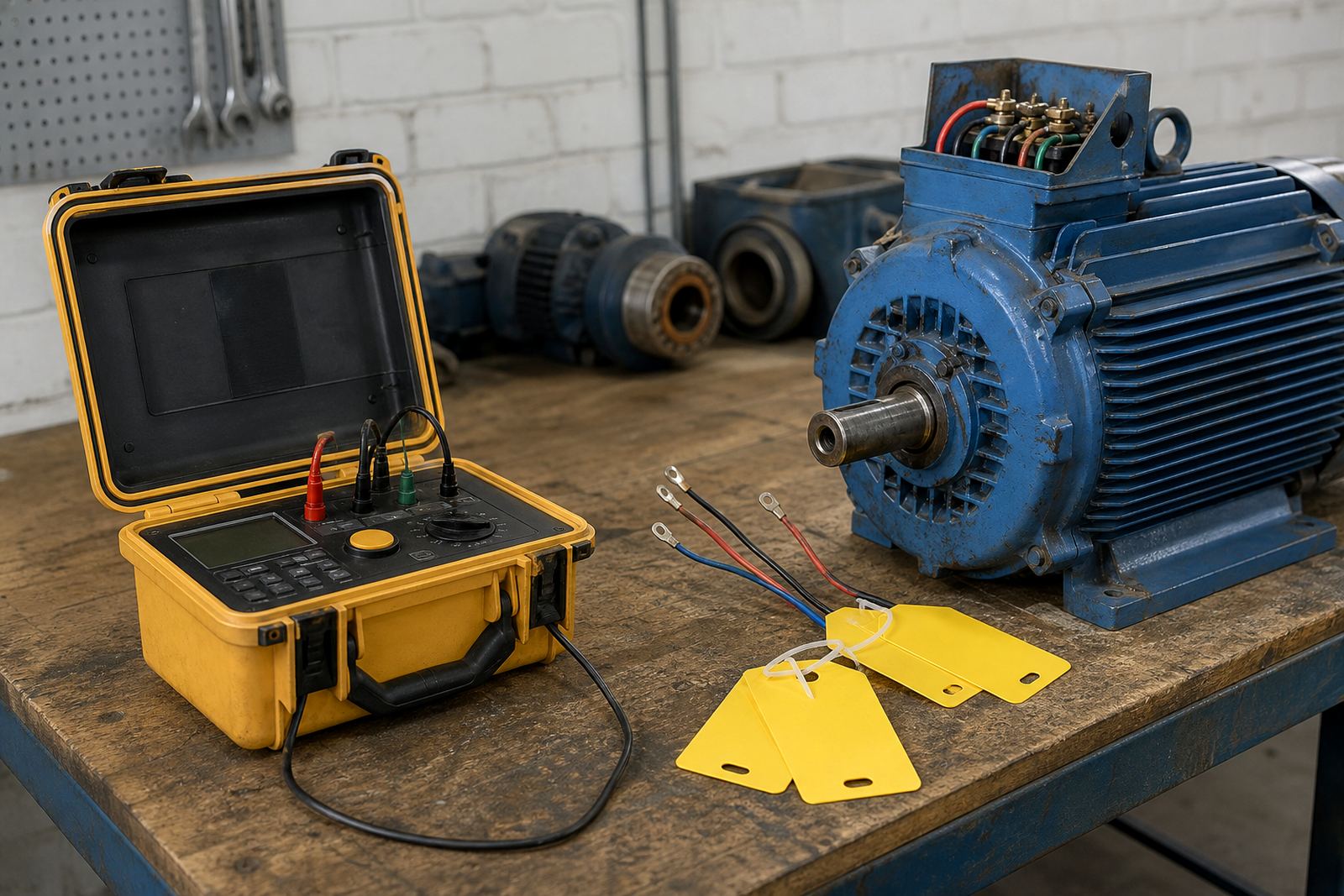
Electrical work must only be done by qualified people, and the isolation process matters just as much as the test metre. Before any insulation test is carried out, the machine must be locked out, proved dead and disconnected in line with site procedures. That protects the technician, the operators and the equipment. A rushed test on a live or partially isolated circuit is not acceptable.
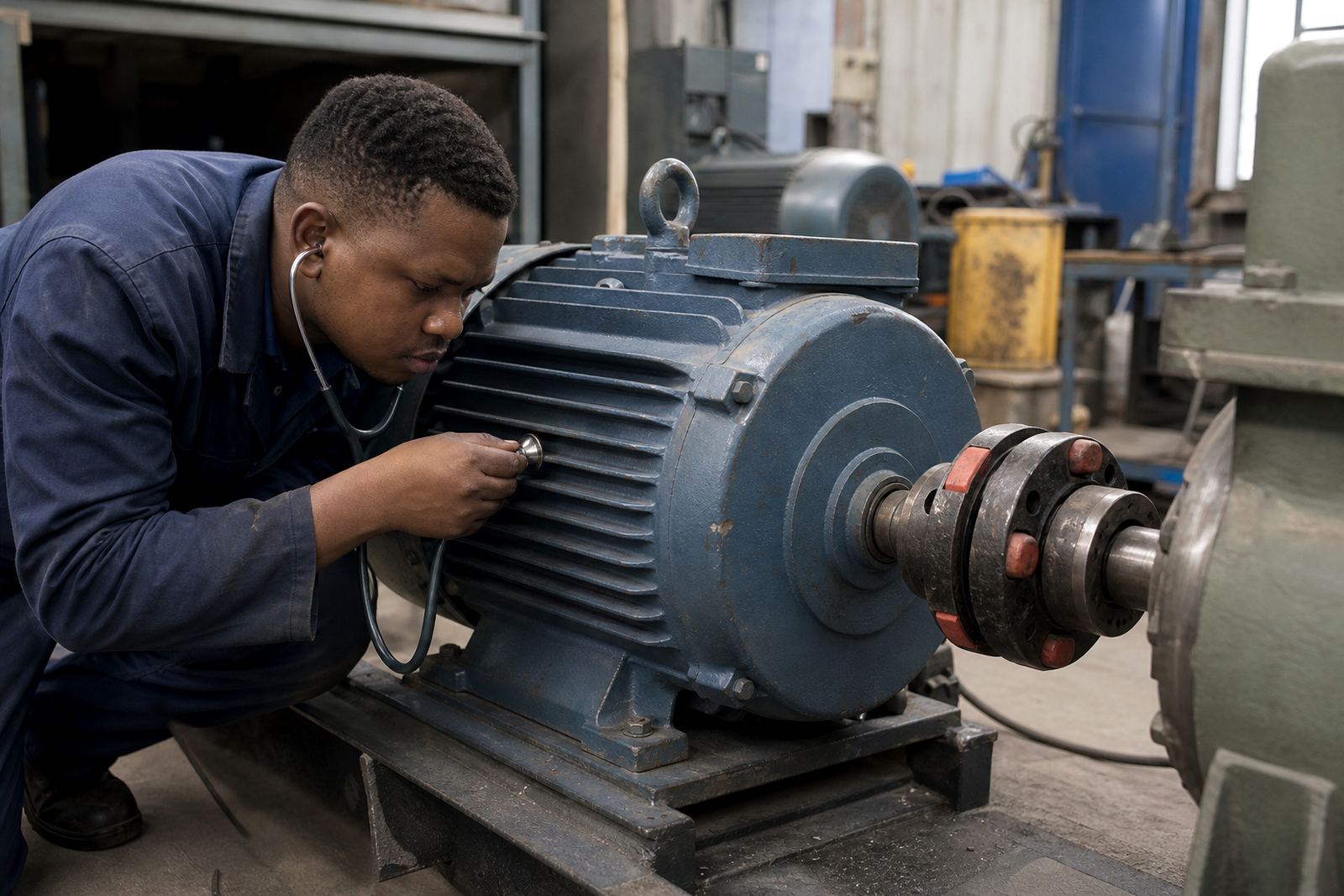
A proper inspection usually starts with a visual check, followed by cleaning, isolation, testing and then a review of the result against the machine's duty. If needed, the technician may also check bearings, alignment, cable condition and the state of the control panel. On a busy site in Vereeniging or Johannesburg, that wider picture can save time because it shows whether the problem sits in the motor, the drive, or the installation itself.
- Lock out and tag the circuit before any contact is made
- Confirm the absence of voltage with suitable test equipment
- Disconnect sensitive electronic equipment before testing where required
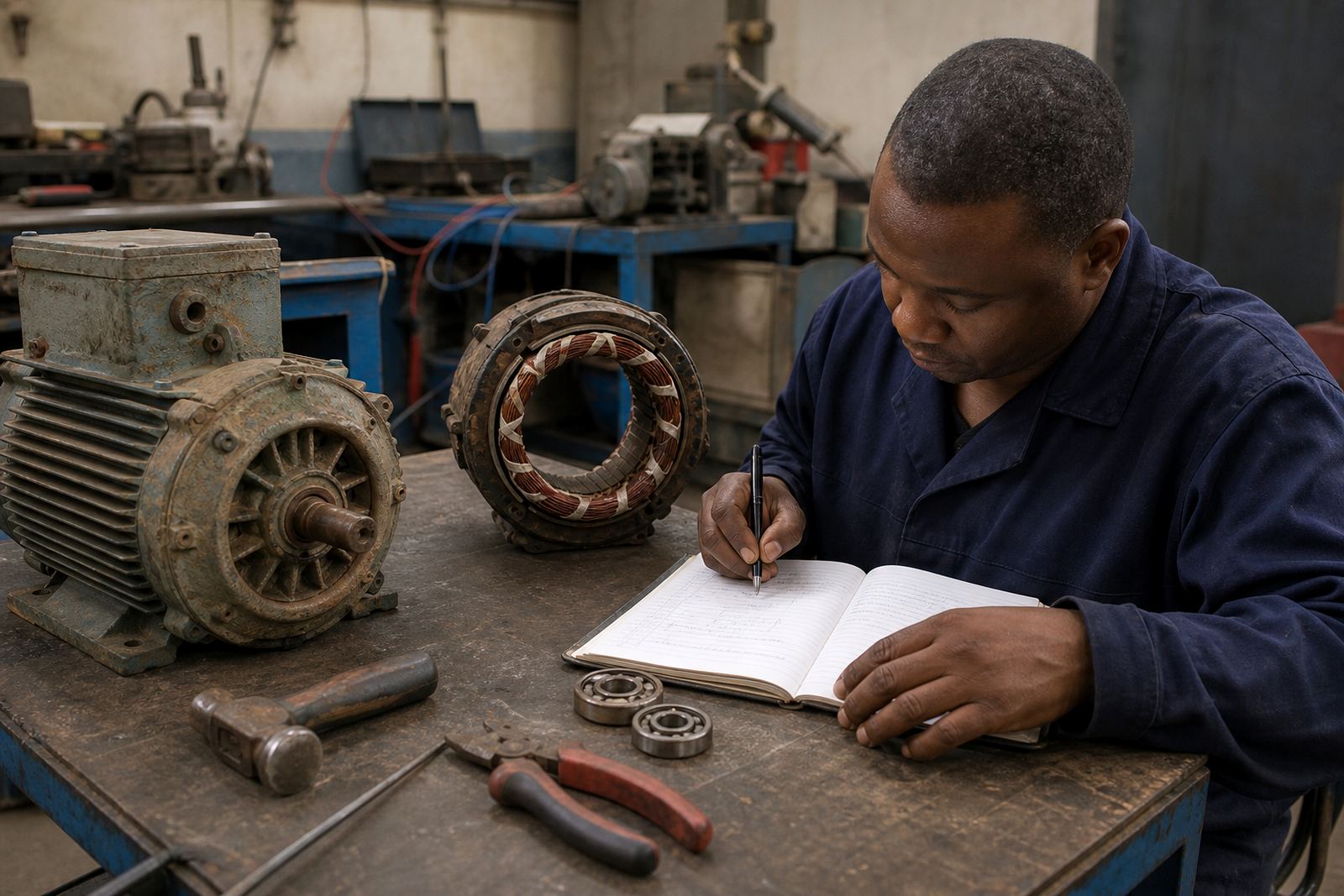
- Record the result, time, temperature and equipment condition
- Return the machine to service only after safe reassembly and checks
How this test fits into rewinding and repair work
Insulation testing is useful before and after rewinding. Before a rewind, it can help confirm the extent of the damage and whether the issue is localised or widespread. After a rewind, it provides a baseline for the repaired winding before the motor is put back into service. That is especially important on production lines where a failed motor can stop pumps, fans, conveyors or compressors.
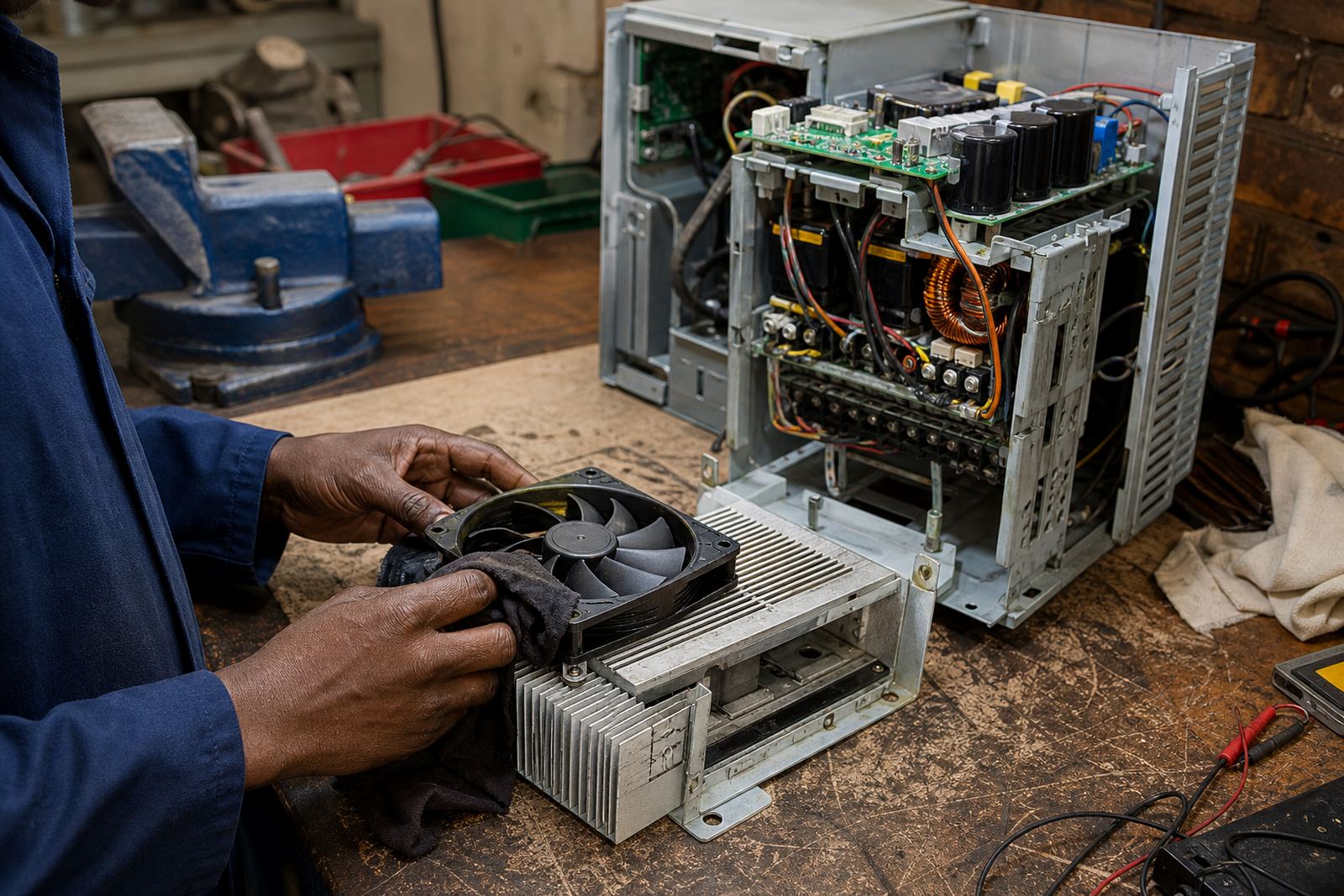
For variable speed drives, the principle is similar although the equipment is different. A drive repair normally includes inspection of boards, cooling paths, terminals and signs of heat stress. When a motor and drive are paired, both sides of the system need attention. If one part is weak, the other can suffer. In many cases the safest outcome comes from checking the full chain from supply to motor, not just one component.
A Germiston example from a real industrial site
Picture a workshop in Germiston running a motor on a critical machine that has started tripping after a wet weekend. The motor still turns, but the insulation reading has dropped compared with the previous maintenance record. A quick replacement is not always the answer. The technician first checks for moisture in the terminal box, looks at the cable entry, inspects the bearing condition and reviews whether the area gets washdown or steam exposure.
In a case like that, drying and cleaning may improve the reading, or the test may show that the winding has already deteriorated and a rewind is needed. Either way, the reading helps guide the next step. That is the value of insulation testing: it gives useful evidence, but it should never be read in isolation. The site still needs sound judgement, proper lockout and a methodical approach, especially where shutdown time is limited and every hour counts.