Where Shaft Wear Usually Starts
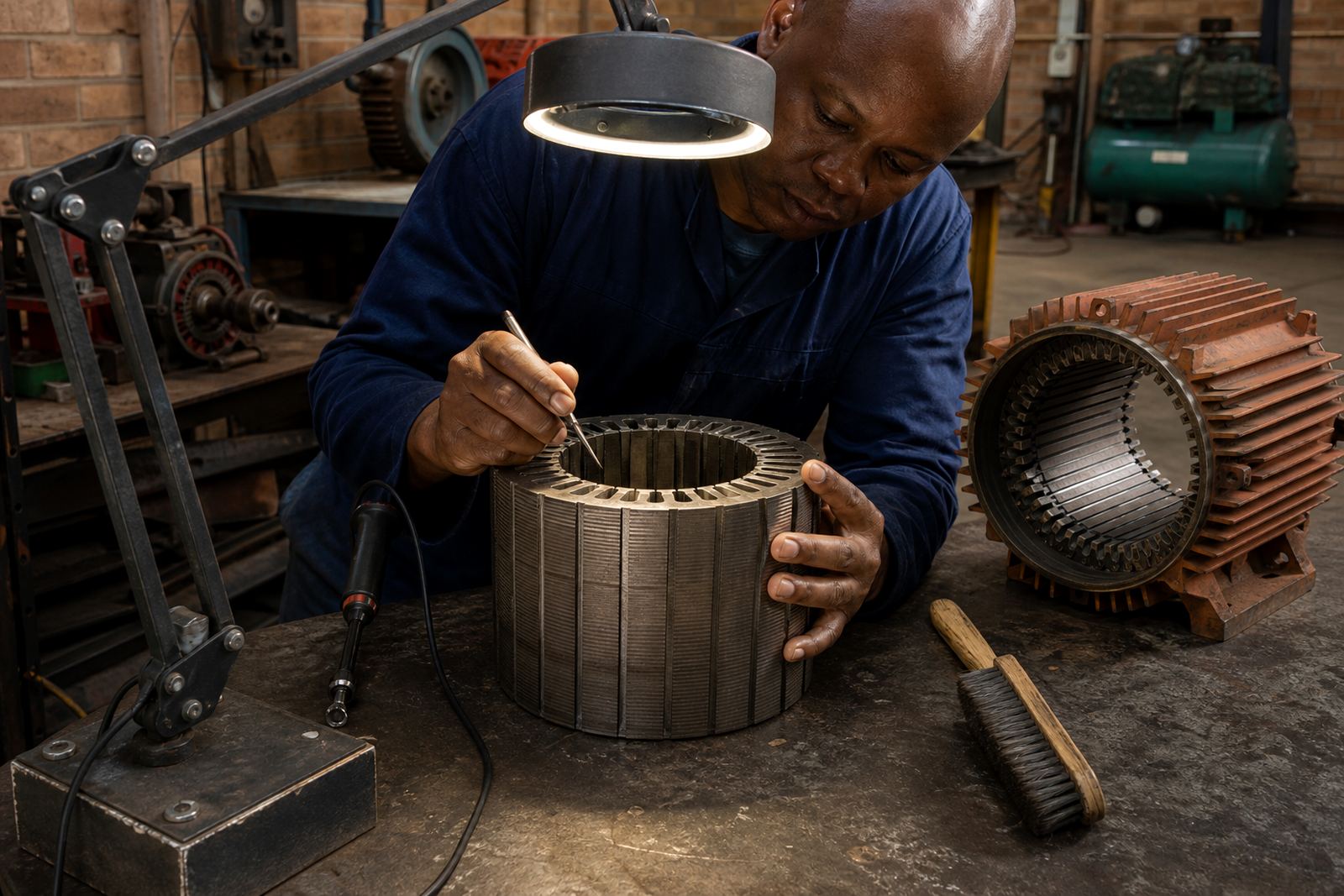
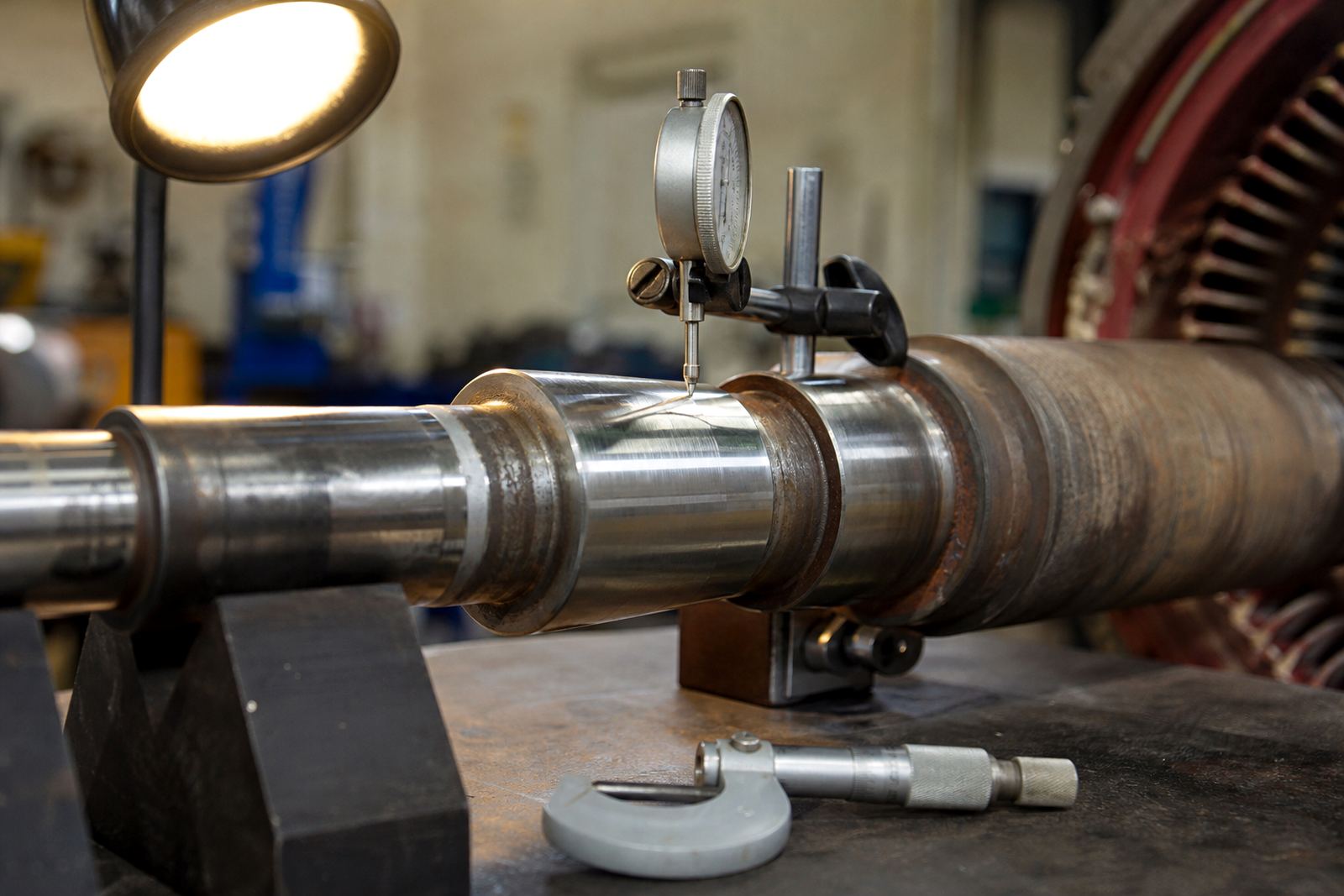
A motor shaft does not wear evenly. The usual trouble spots are the bearing journals, seal areas, coupling ends and keyways, where constant load and slight movement slowly remove metal. In many cases the shaft still looks usable at a glance, but the measuring tools tell a different story.
Wear often comes from poor alignment, repeated starts and stops, contaminated grease, bearing failure or a coupling that has been fitted too tightly. In South African plants, load-shedding can also play a part because frequent stopping and starting puts extra stress on motors and drives, especially on conveyors, pumps and fans.
- Scoring or grooves where the bearing has run
- Polished spots from movement and vibration
- Blueing from heat on the shaft end
- Worn keyways that allow play under load
Why Shaft Wear Changes the Repair Scope
Shaft wear affects more than one part. If a bearing journal is out of tolerance, a new bearing may not sit correctly and will not hold its fit for long. That can lead to early failure, more vibration and a repeat breakdown that costs more than the first repair.
The same applies to coupling ends. If the shaft is worn where the coupling hub grips, the drive can slip or work loose. On some motors, the decision is between machining, sleeving or replacing the shaft, and that choice depends on the measured wear, the motor size and the duty of the machine.
For a workshop in Germiston or Boksburg, this means a quick bearing swap may not be enough if the shaft journals are already damaged. A proper inspection gives the real picture before money is spent on parts that may not solve the fault.
What To Check Before Reassembly
Before a motor goes back into service, the shaft should be checked for straightness, surface condition and fit on all critical points. Insulation testing and bearing checks still matter, but the shaft itself must also be measured because a clean winding does not help if the rotating assembly is out of line.
Good practice is to inspect the shaft together with the bearing housing, end shield faces and coupling condition. If there was a seizure or a hot bearing, the surrounding parts may have shifted or picked up damage too. That is why repair work often includes alignment checks and site reporting, not just the internal motor work.
- Measure journal diameter and compare it across the shaft
- Check for run-out and bending
- Inspect keyways for hammering or distortion
- Confirm the coupling fit and balance condition
A Practical Example From a Gauteng Plant
One common case is a conveyor motor in a packaging area that runs near a dusty production line. The operator notices extra noise, then a warm bearing housing and a small rise in current draw on the variable speed drive. After removal, the bearing is found to have failed and the shaft journal shows light scoring from movement during the fault.
That motor might still be repairable, but the shaft wear changes the plan. The team may need to assess the bearing seat, clean the housing, check the drive settings and confirm that the coupling is not forcing the motor out of line. If the shaft end is worn, the repair becomes more involved than a standard rewind and bearing replacement.
In a place like Ekurhuleni, where factories often run on tight schedules and some areas deal with moisture or heat build-up, catching that wear early helps avoid longer shutdowns. It also reduces the risk of repeat failure after recommissioning.
How Rewinding and Drive Repair Fit Into the Picture
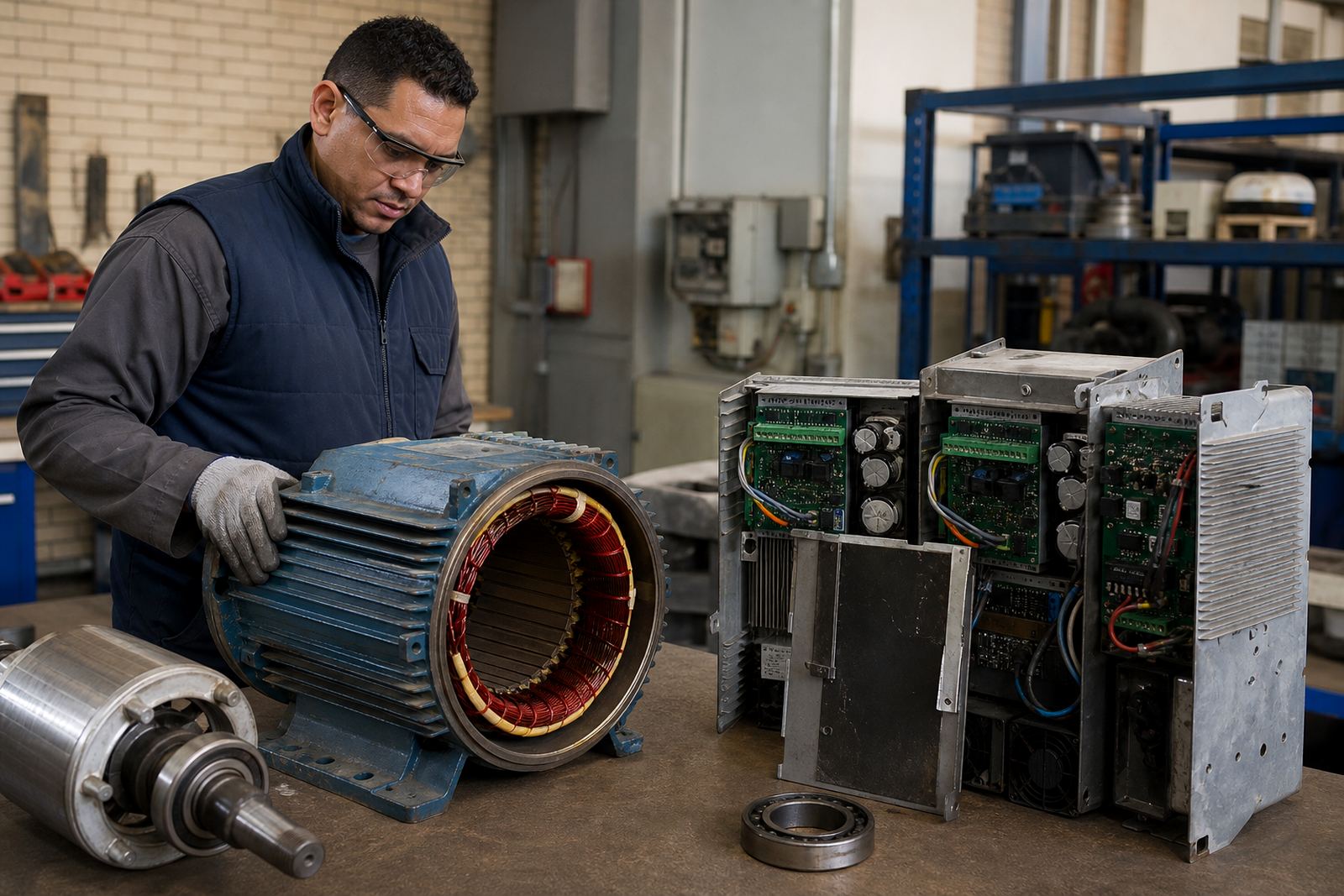
Shaft wear is part of the bigger motor condition story. When a motor is opened for electric motor rewinding, the technician should also look at the mechanical side, because a winding fault, bearing failure and shaft wear can be connected. A motor that has overheated may have damaged grease, distorted fits or signs of misalignment.
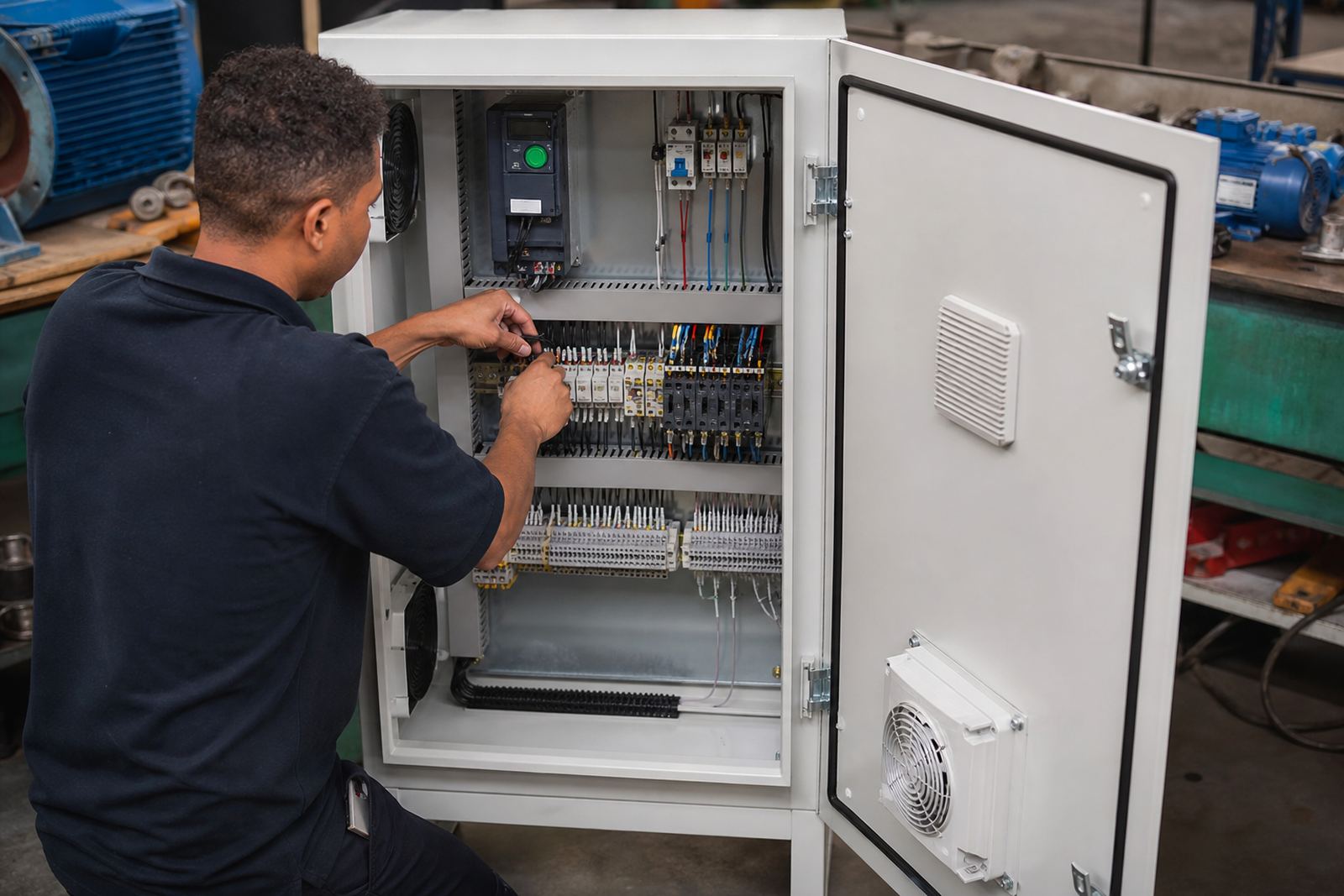
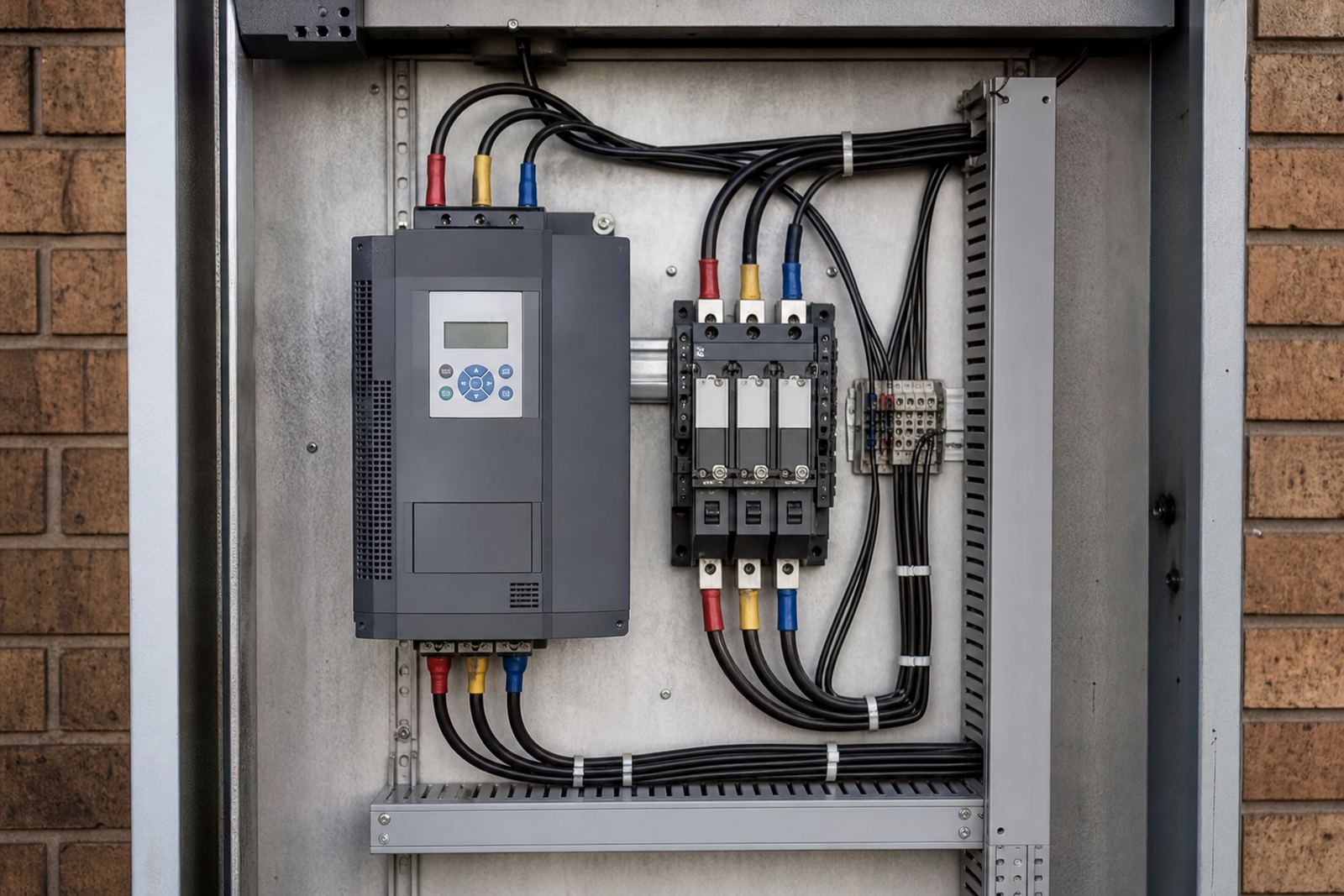
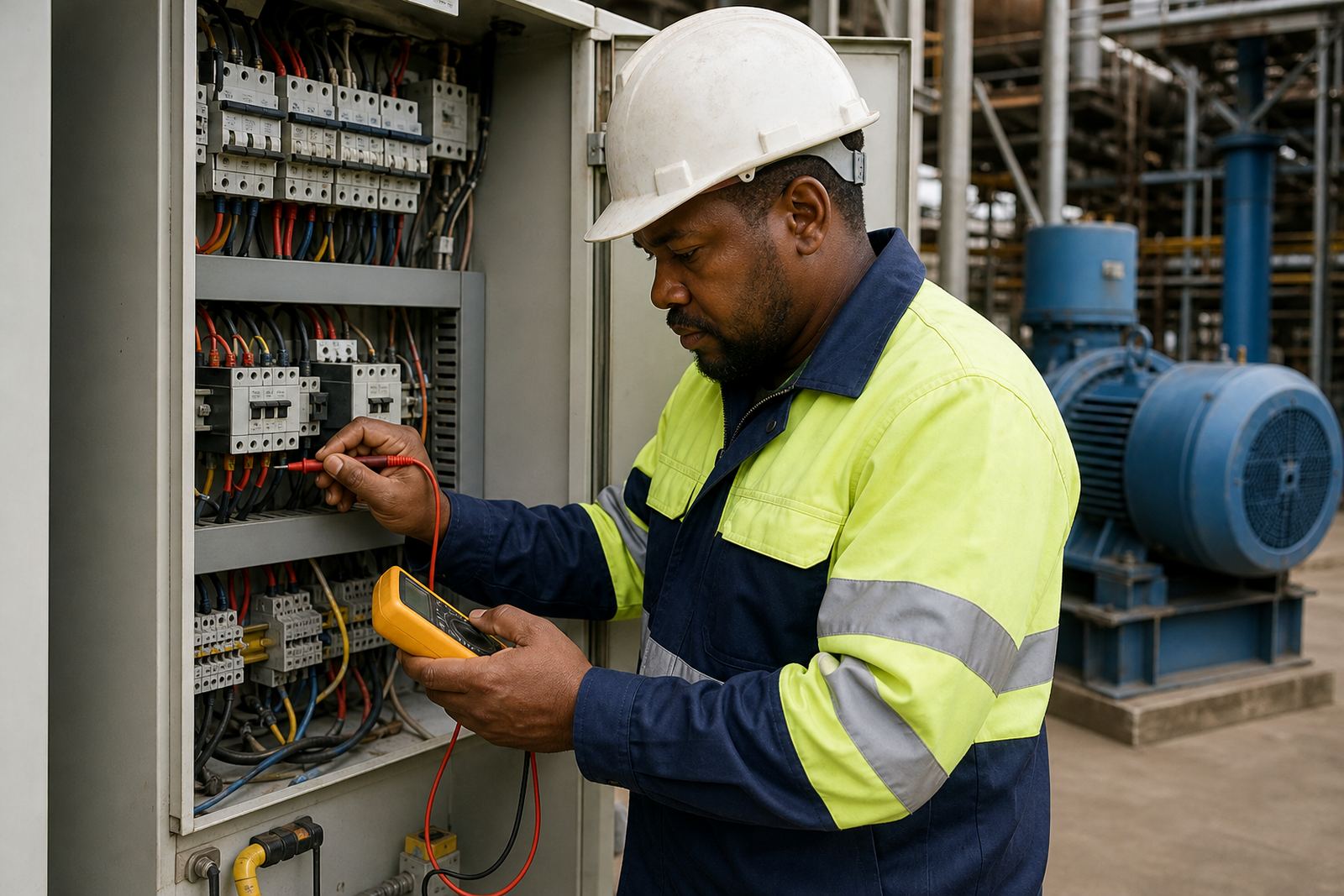
Variable speed drive repair follows the same thinking. A drive that is tripping often may be reacting to a motor problem, cable fault or overload condition. Good fault finding should cover the motor, cables, panel condition, site reporting and the process it is driving.
- Motor removal and inspection
- Drive inspection and panel cleaning
- Cable checks and commissioning support
- Shutdown planning for safe access
Safe Work Matters Before Any Motor Goes Back Online
Electrical work must only be done by qualified people, and lockout procedures must be followed before any inspection, removal or repair starts. That means isolating the supply, proving dead and making sure the machine cannot restart while hands are on the equipment.
This matters on every site, whether the job is in Pretoria, Vereeniging, Durban or a workshop in Kempton Park. A worn shaft may look like a mechanical issue, but the surrounding work still involves electrical risks, moving parts and stored energy. Good practice is not optional it protects people and equipment.
Locor works from Germiston, Gauteng and supports plants and workshops across South Africa with practical motor and drive work. If a shaft shows wear, the right next step is measurement, not guesswork.