

Why post-rewind testing matters before reinstallation
Once a motor has been rewound, cleaned and rebuilt, the job is not complete until it has been tested properly. The winding may be correct on paper, but the real proof comes from electrical checks, mechanical inspection and controlled run testing. That is especially important in plants and workshops where a single failed motor can stop conveyors, pumps, fans or presses.
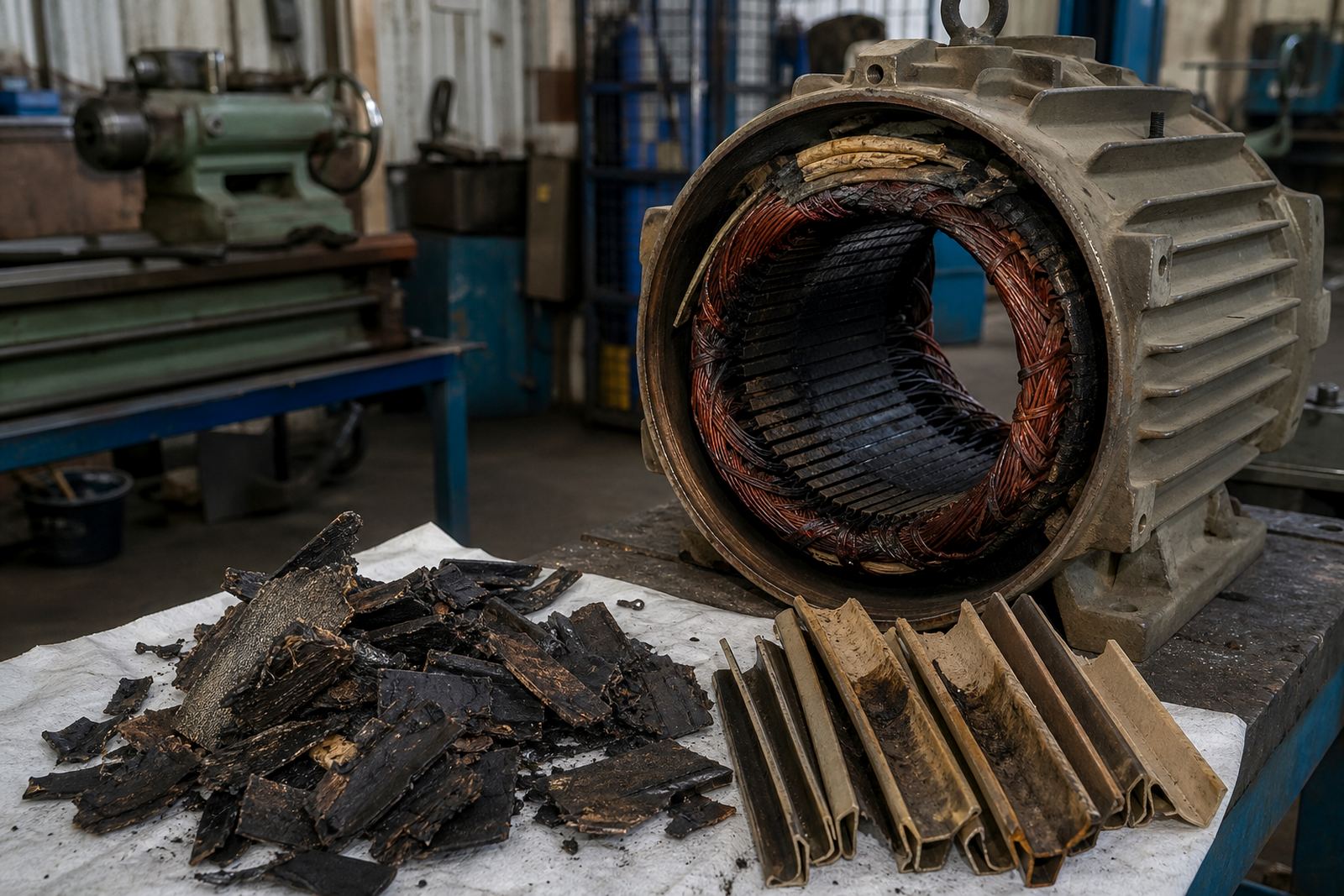
Testing after rewind helps pick up issues that may not be visible straight away. A loose connection, damaged insulation, a bearing fitted poorly, or contamination inside the frame can all show up once the motor is energised. In coastal or high humidity areas such as Durban, that matters even more because moisture can affect insulation readings and long term performance.
All electrical work must be handled by qualified people, with proper lockout procedures in place before any inspection or testing begins. A motor should never be treated as safe just because it has come back from repair.
Insulation resistance and winding checks that come first
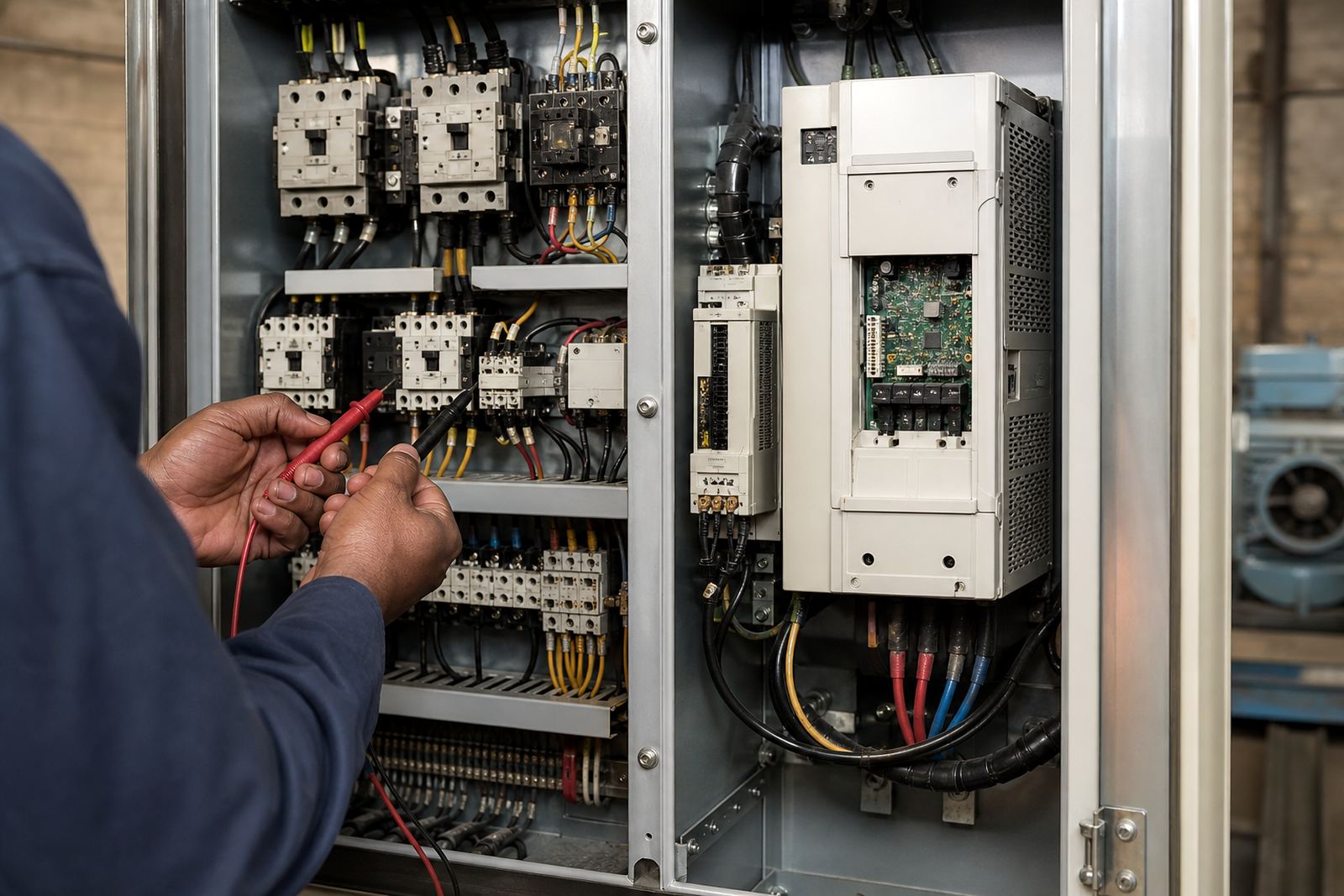
The first stage is usually electrical testing of the winding and insulation system. This helps confirm whether the rewound coils are properly isolated from the frame and whether the motor is fit for further work. For many motors, the technician will check continuity, phase balance and resistance values before any test run.
Typical checks after rewind include:
- Insulation resistance between windings and earth
- Resistance comparison across phases
- Visual inspection for damaged leads, sleeving or lacing
- Confirmation that terminations are secure and correctly marked
On site, a dirty terminal box or a nick in a cable can cause trouble later, so the inspection needs to be thorough. In Germiston and the wider Ekurhuleni area, where many workshops work under pressure to get equipment back online, it is better to find a fault during testing than after the motor has been bolted back into place.
Bearing replacement, alignment and mechanical condition
Electrical repair alone is not enough if the rotating parts are worn. Bearings are checked carefully because a motor with rough or noisy bearings can draw extra current, run hot or fail early. If replacement is needed, the fit, lubrication and end float must be set correctly. A bearing job done badly can undo a good rewind.
Mechanical checks after rewind often include shaft condition, keyway condition, end cover fitment and general rotor movement. The motor should turn freely without scraping, tight spots or excessive play. In some cases, alignment checks are needed before the motor goes back into service, especially where couplings, pumps or gearbox drives are involved.
Useful mechanical checks after rewind include:
- Bearing noise and smooth rotation
- Seal condition and signs of contamination
- Shaft runout where relevant
- Coupling and alignment condition before reinstallation
What changes when the motor is linked to a variable speed drive
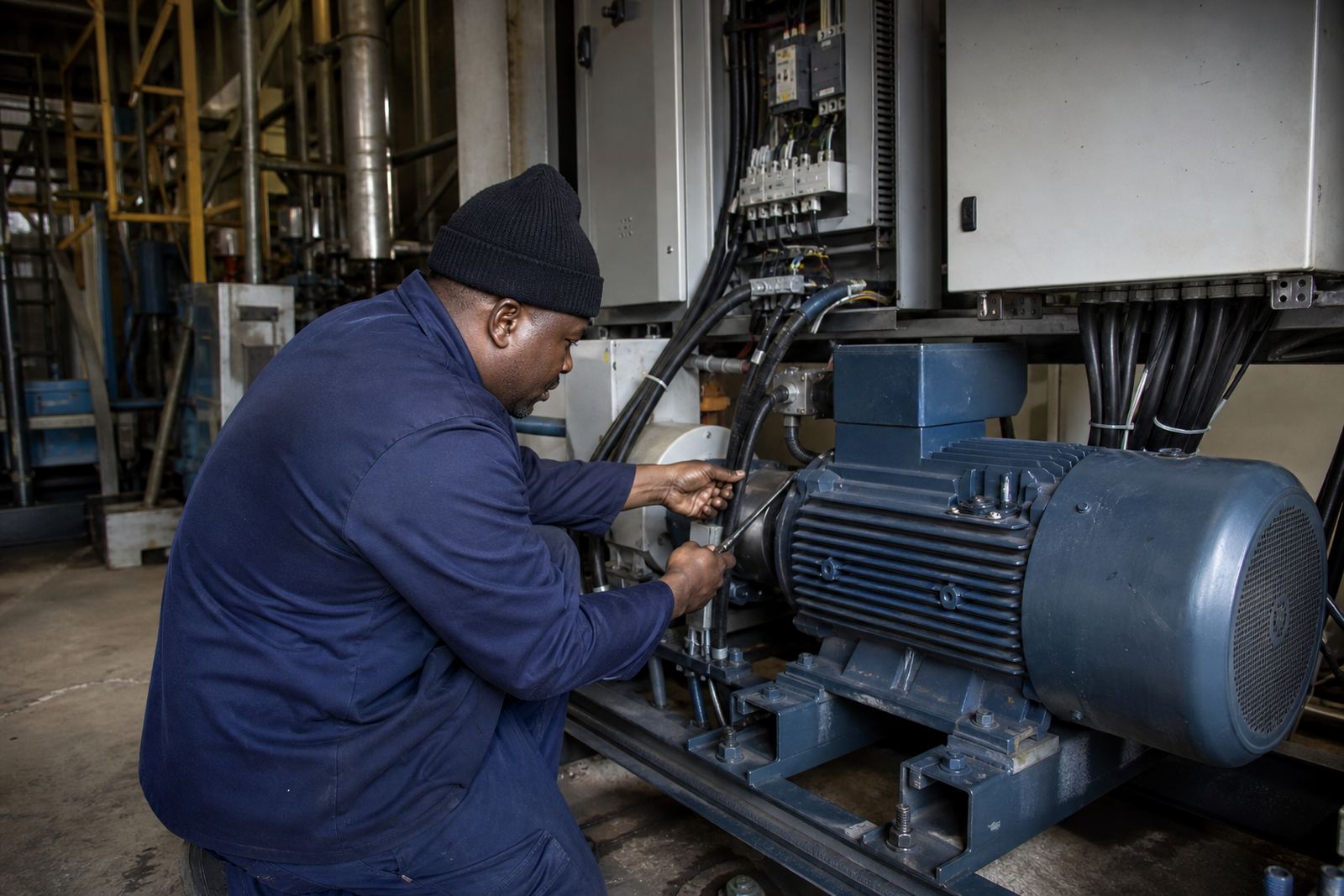
Motors connected to variable speed drives need extra care after rewind because the electrical stress can be different from a direct on line start. The drive and motor must be checked as a pair, not as separate items. If the winding insulation is weak or the drive output is unstable, the motor may run poorly or trip under load.
Drive related checks can include control signals, output condition, cable integrity and panel cleanliness. A drive with dust build up, loose terminals or overheated parts may point to a bigger problem in the system. Fault finding should look beyond the drive itself and include the motor, cables and control panel.
In a Vereeniging workshop, for example, a pump motor may seem to start fine after rewind, but once speed control is applied the drive can reveal a hidden issue in the cable or termination. That is why the test process has to reflect the real working conditions, not just a brief spin on the bench.
Controlled test running and what technicians listen for
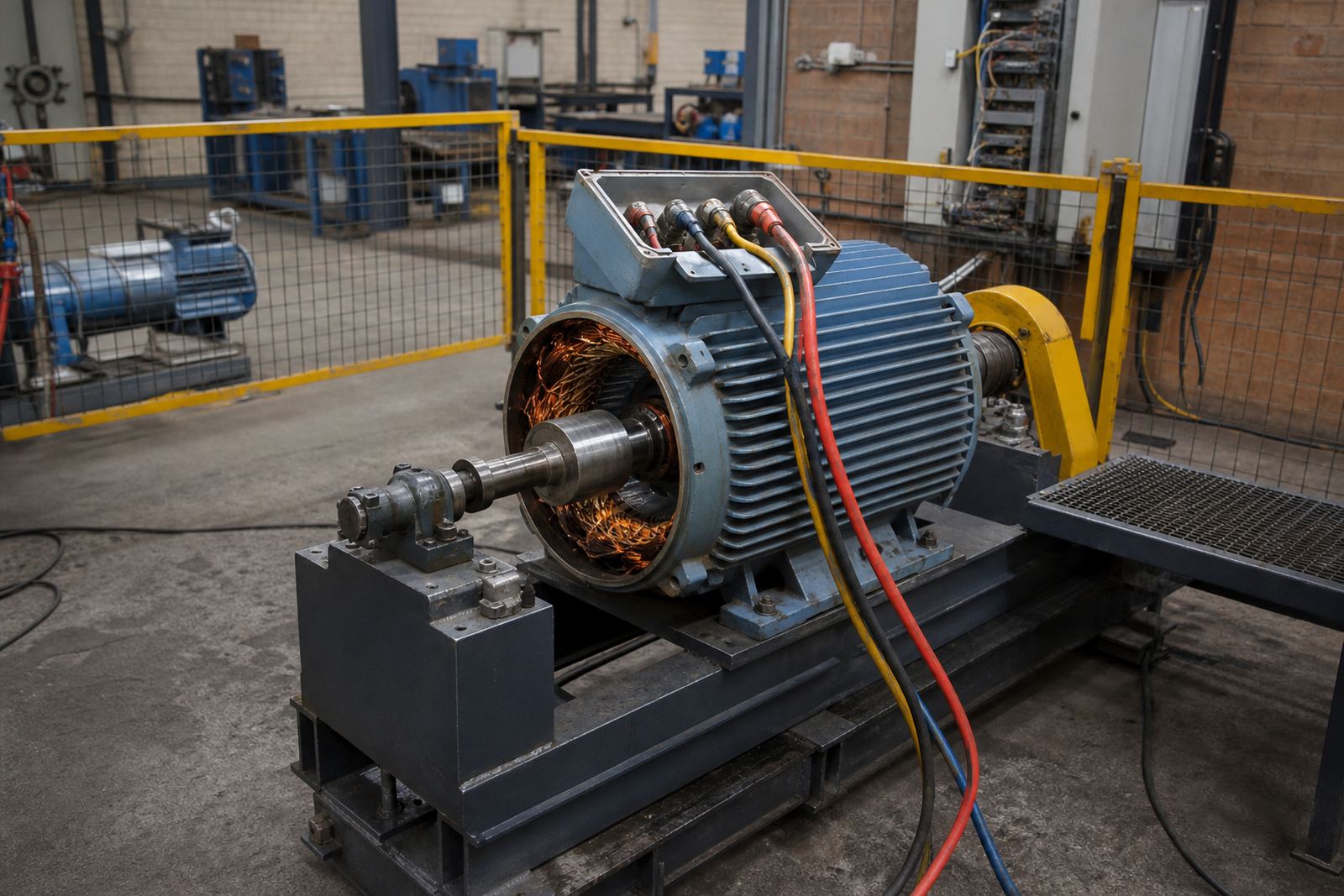
After the electrical and mechanical checks, the motor may be run under controlled conditions before return to service. This helps confirm that current draw, vibration, noise and temperature behave as expected. Any irregular sound should be taken seriously. A humming motor that is too warm, or one that vibrates more than normal, usually needs more attention.
During test running, the technician will watch for signs that the motor is not performing correctly under no load or light load. It is also worth checking the starter, protection devices and cable condition while the system is live under controlled supervision. In some cases the test may need to be repeated after a short run period if a bearing settles or a connection loosens.
Some things to listen and look for during a test run:
- Uneven hum or clicking sounds
- Excess vibration at the frame or base
- Abnormal heat at the bearing housings
- Tripping or unstable starting behaviour
Site reporting, shutdown planning and getting back to work
Good post-rewind testing ends with clear reporting. Plant teams need to know what was tested, what was found and what still needs attention before commissioning. That is especially helpful when several motors are being handled during a shutdown in Johannesburg, Pretoria or Boksburg, where timing is tight and every hour counts.
At Locor in Germiston, our team supports plants and workshops with fault finding, drive inspection, cable checks, panel cleaning, commissioning support and site reporting. The aim is to help the maintenance crew make a practical decision about whether the motor can go back into service or whether more work is needed first.
Before a repaired motor is returned to service, make sure the basics are covered:
- Lockout and isolation have been completed properly
- Insulation and continuity checks have been recorded
- Bearings, seals and alignment have been reviewed
- The motor and drive have been tested in conditions close to normal use
That final discipline saves time later. A motor that passes a proper test today is far less likely to become tomorrow's breakdown callout.