

What harmonics do around drive-fed motors
When a variable speed drive switches power to control a motor, it can distort the electrical waveform on the supply side. That distortion is called harmonics. In plain terms, the current no longer flows as a smooth sine wave, and that can put extra strain on cables, protection gear, transformers and other equipment on the same network.
On a small workshop supply you may not notice much. In a plant with several drives, welders, compressors and long cable runs, the effects add up. Common signs include nuisance tripping, warm transformers, noisy contactors, unexplained fuse failures and motors that seem fine one day then struggle the next. In coastal areas like Durban, salt and moisture can make the problem feel worse because contamination and heating often go together.
Harmonics are not always the only fault, but they are worth checking when a drive-fed system starts acting up. A proper inspection looks at the full picture, not just the drive itself.
How poor power quality shows up on site
In Germiston and across Gauteng, many plants run a mix of older motors and newer drives. That is where power quality problems often hide. You may see a line that runs well during the day, then trips more often when other machines start up or when load shedding ends and everything comes back at once.
Some effects are electrical, and some are mechanical. A drive may still run the motor, but the motor can run hotter than expected if the load is heavy, the cooling fan is weak or the insulation is already tired. If bearings are worn, the extra vibration can make the electrical issue look worse. That is why bearing checks, insulation testing and alignment checks should be part of the same fault finding process.
- Frequent drive alarms after start-up
- Hot motors or transformers with no obvious overload
- Interference on control circuits or sensors
- Repeated bearing noise or vibration after a repair
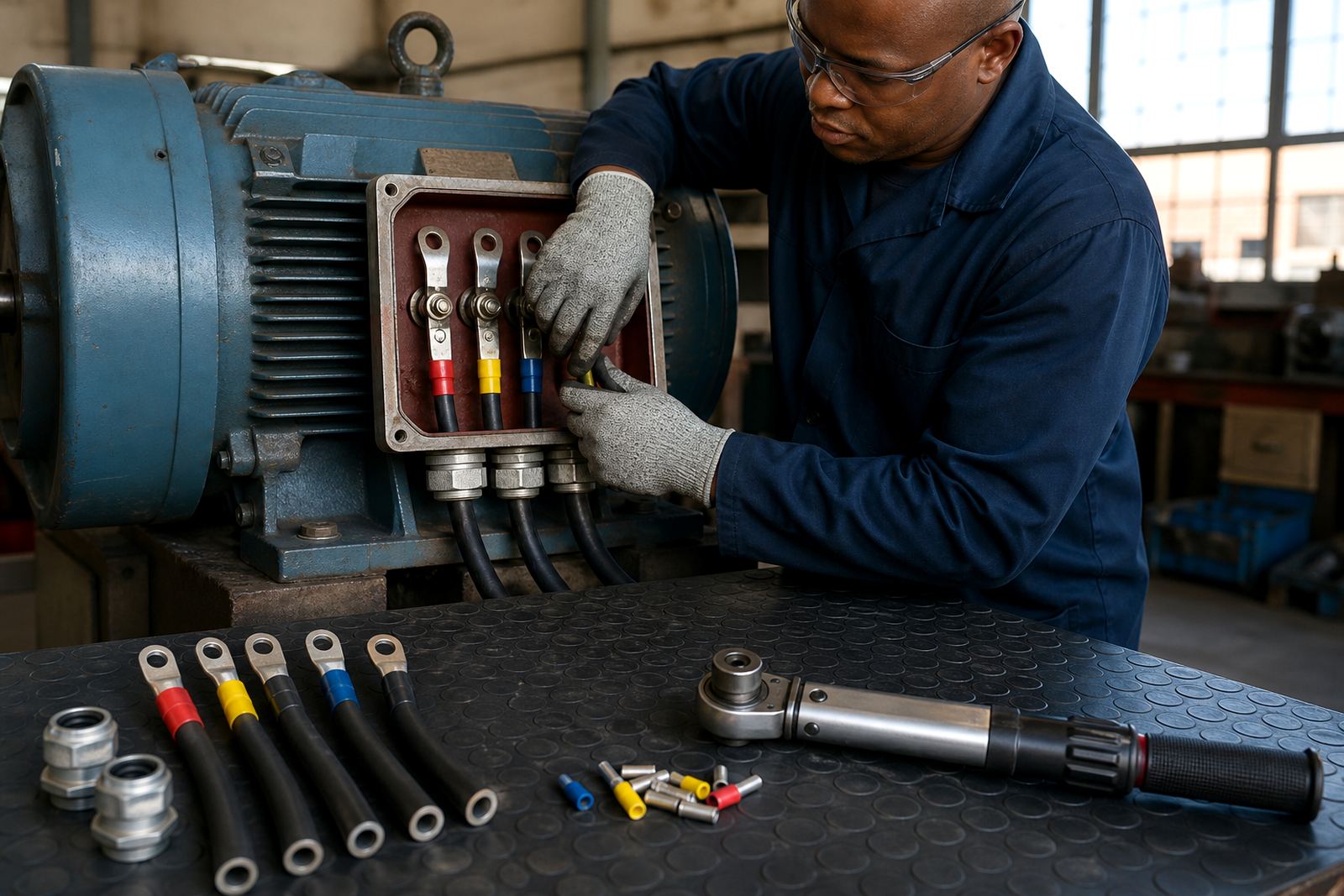
- Cable terminations that need cleaning or tightening
Why local plants should not chase the symptom only
A drive alarm can point to several different causes. It might be the supply, the motor, the cabling, the panel, or the way the line is being operated. Swapping parts without testing can waste a lot of time and money. In a Vereeniging workshop, for example, a motor that keeps tripping may be blamed on the drive, when the real issue is a cable fault, poor earthing or contamination in the panel.
Electrical work must be done by qualified people, with lockout procedures in place before any inspection or removal. That includes isolating the supply, verifying dead, and making sure stored energy is released before anyone opens a panel or handles the equipment. It sounds basic, but on busy sites it is easy to rush past the steps that keep people safe.
A better approach is to check the whole system in order: supply, drive, motor, controls and load. That makes it easier to separate a harmonic issue from a worn bearing, a winding fault, or a simple loose connection.
What good drive repair and motor rewinding involve
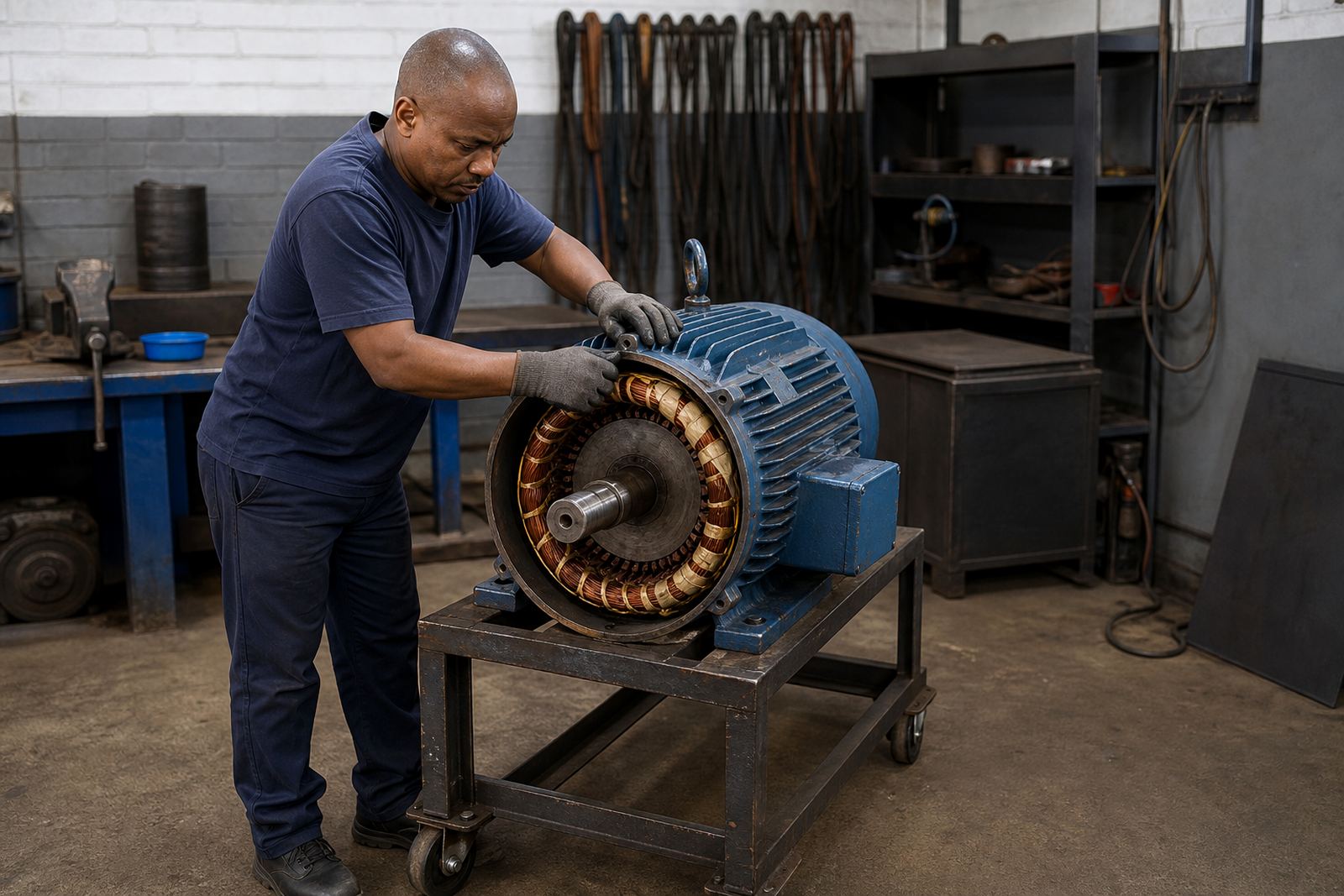
When a drive or motor comes in for repair, the process should start with fault finding and inspection. For motors, that usually includes visual checks, cleaning, insulation testing, bearing assessment and checking for signs of overheating or contamination. If the winding is damaged, the motor may need rewinding using correct wire size, insulation materials and coil placement for the application. A rushed rewind can give short life, and that is not worth the risk.
For variable speed drives, repair work may include checking the input and output stages, inspecting the cooling path, cleaning the panel area, testing the control section and looking for failed components caused by heat, dust or voltage stress. Panels in industrial sites often collect dust, oil mist and fine metal particles, so panel cleaning and cable checks matter more than many people think.
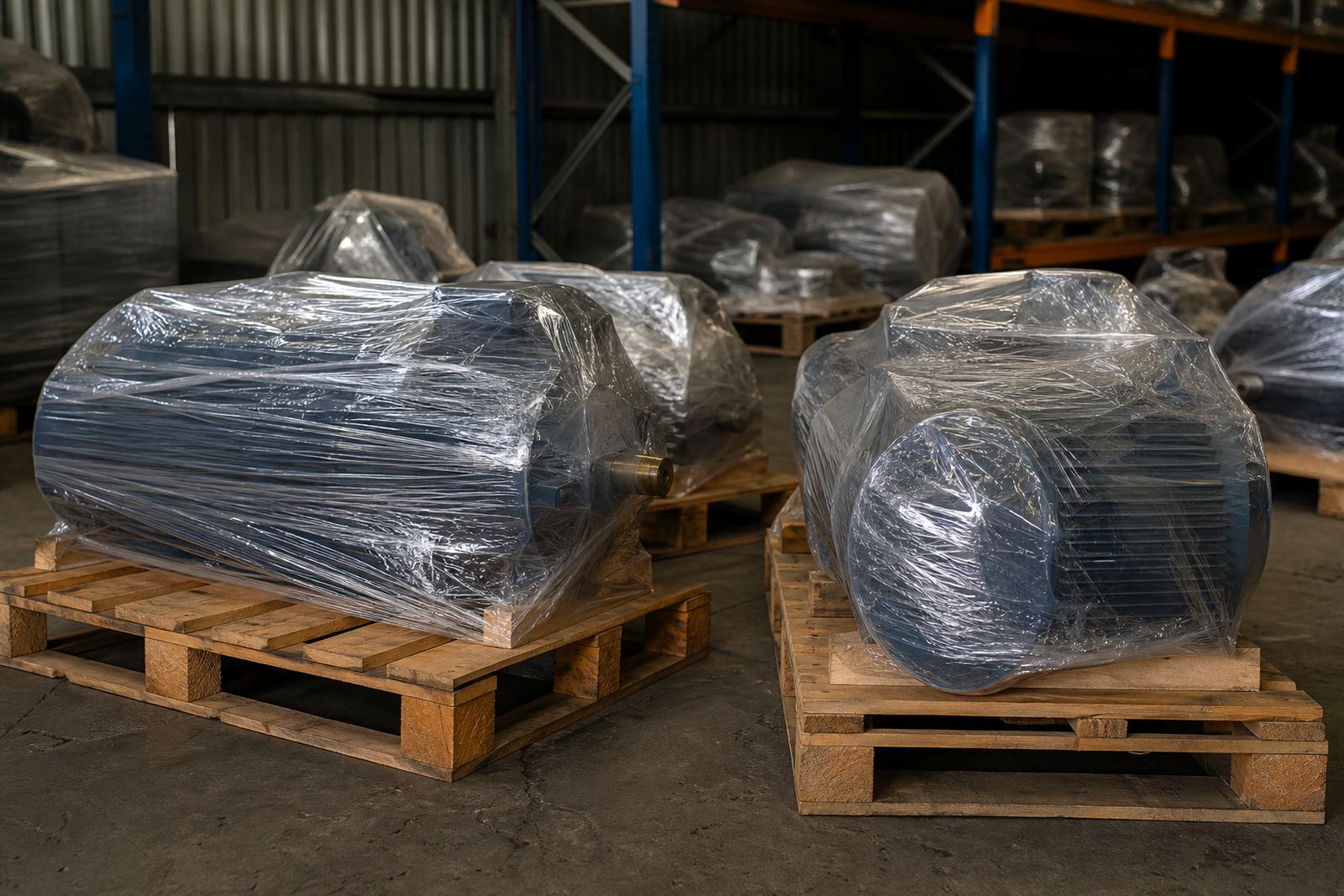
- Motor removal and site reporting before workshop work
- Drive inspection and spares assessment
- Insulation testing on suspect windings
- Bearing replacement where wear is confirmed
- Commissioning support after refit
Where harmonics cause the most trouble
Not every drive-fed line creates the same level of concern. Larger installations, long cable runs and mixed loads tend to be more sensitive. If a factory in Boksburg or Kempton Park has several motors starting and stopping through the day, the shared supply can be stressed by both the drives and the way the line is controlled. Add site conditions like heat, dust and irregular maintenance and the chance of repeated issues rises.
Harmonic trouble is often more noticeable when equipment is old or when the panel was never set up for the current load. A system that was fine five years ago may now be under strain because extra machines were added, the production pattern changed, or a motor was replaced with a different duty cycle. That is why shutdown planning and spares assessment can save time during busy periods.
Site reporting should note the actual conditions, not just the fault code. Was the panel dirty? Were cable glands tight? Was the motor hot to the touch? Was the drive fan blocked? These details matter.
Practical checks before the next shutdown
If your site is seeing repeat drive or motor faults, do not wait for a full breakdown. A planned inspection is usually the safer option, especially where production loss is costly. Even a short shutdown can be used well if the team knows what to check and what to leave for workshop repair.
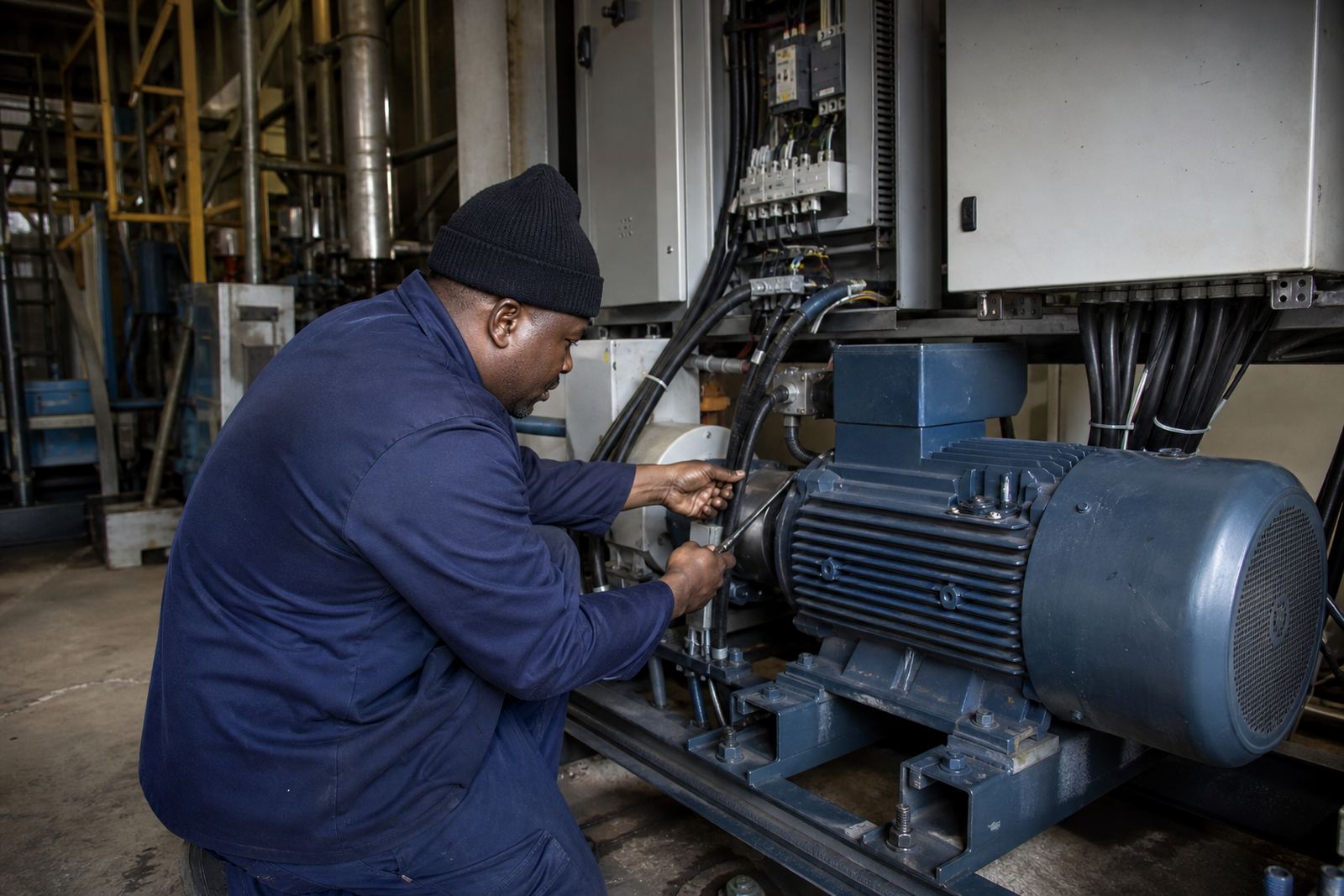
Useful checks include drive inspection, motor condition checks, cable inspections, panel cleaning and a look at mounting alignment. If the motor has been removed, it is worth checking the coupling, base bolts and surrounding area before reinstalling it. In many cases the fault is not one thing but a combination of small issues that have built up over time.
- Check for nuisance tripping after load changes
- Inspect cooling paths on motors and drives
- Confirm that all connections are tight and clean
- Test insulation before returning a motor to service
- Use lockout and isolation procedures every time
For plants across Johannesburg, Ekurhuleni, Pretoria, Vereeniging and Durban, the best results come from steady maintenance rather than emergency repairs. That keeps the work predictable and helps the equipment last longer.