
Start with the symptom, not the label
In many plants, a motor is described as having a contactor fault or a drive fault before anyone has opened the panel. That is understandable, but the symptom often tells a more useful story. A motor that hums, chatters or only starts after a tap on the contactor may point to a control circuit issue, worn contacts, low coil voltage or a mechanical load problem. A drive that shows an overcurrent, overvoltage or earth fault alarm is often dealing with an electrical condition inside the motor, cable or driven machine, not only the drive itself.
The first question is simple: does the problem appear before the motor is energised, or only once the motor is supposed to run. If the starter drops out, the issue may sit in the coil supply, push buttons, overloads, interlocks or a damaged auxiliary contact. If the motor starts then trips after a few seconds or at a certain speed, the drive settings, output stage, motor insulation or load condition need attention.
On a busy line in Germiston or Boksburg, it is easy to lose half a shift by assuming the wrong component. A structured check saves time and avoids changing parts that were never the cause.
What points to the starter circuit
A conventional starter circuit uses a contactor, overload protection and control wiring to switch the motor on and off. When that side of the system fails, the motor may not receive full voltage, or it may lose the control signal altogether. Loose terminals, burnt contacts, weak coils and damaged interlocks are common causes. In dusty workshops and humid coastal stores, control gear can also suffer from corrosion and contamination that causes erratic operation.
Look for signs that the contactor itself is struggling rather than the motor:
- Chattering or rapid clicking when start is pressed
- Visible pitting, heat discolouration or burning on contacts
- Coil not pulling in properly or dropping out unexpectedly
- Overload relay tripping even though the motor is lightly loaded
- Loose control wiring, damaged ferrules or cracked insulation
If the motor runs normally when the contactor finally pulls in, the problem may be in the control path rather than in the driven equipment. That said, repeated starting against a jammed fan, pump or conveyor can overload the starter and damage the contacts over time, so the full circuit must be checked.
What points to the variable speed drive
Variable speed drives are often blamed for faults that begin elsewhere. A drive monitors current, voltage, speed feedback and sometimes motor temperature, so it will stop the system when it sees a condition that could damage the equipment. That makes the drive useful, but also means the actual fault can be hidden behind an alarm code or a nuisance trip. A fault may come from incorrect parameter settings, poor cooling, cable damage, a failing motor, or a mechanical load that has become too heavy.
Common drive-side clues include:
- Alarm codes that return after reset and restart
- Drive fan running but the unit overheating in the panel
- Trips that appear only under acceleration or heavy load
- Intermittent operation when the panel is dusty or poorly ventilated
- Output issues after a supply disturbance or load-shedding event
In South Africa, voltage dips and abrupt supply changes can expose weak components and poor settings. A drive that worked well yesterday may show faults today after a power interruption, especially if the motor cable is long, the panel is crowded, or the driven machine has a heavy starting load.
Tests that separate the two faults
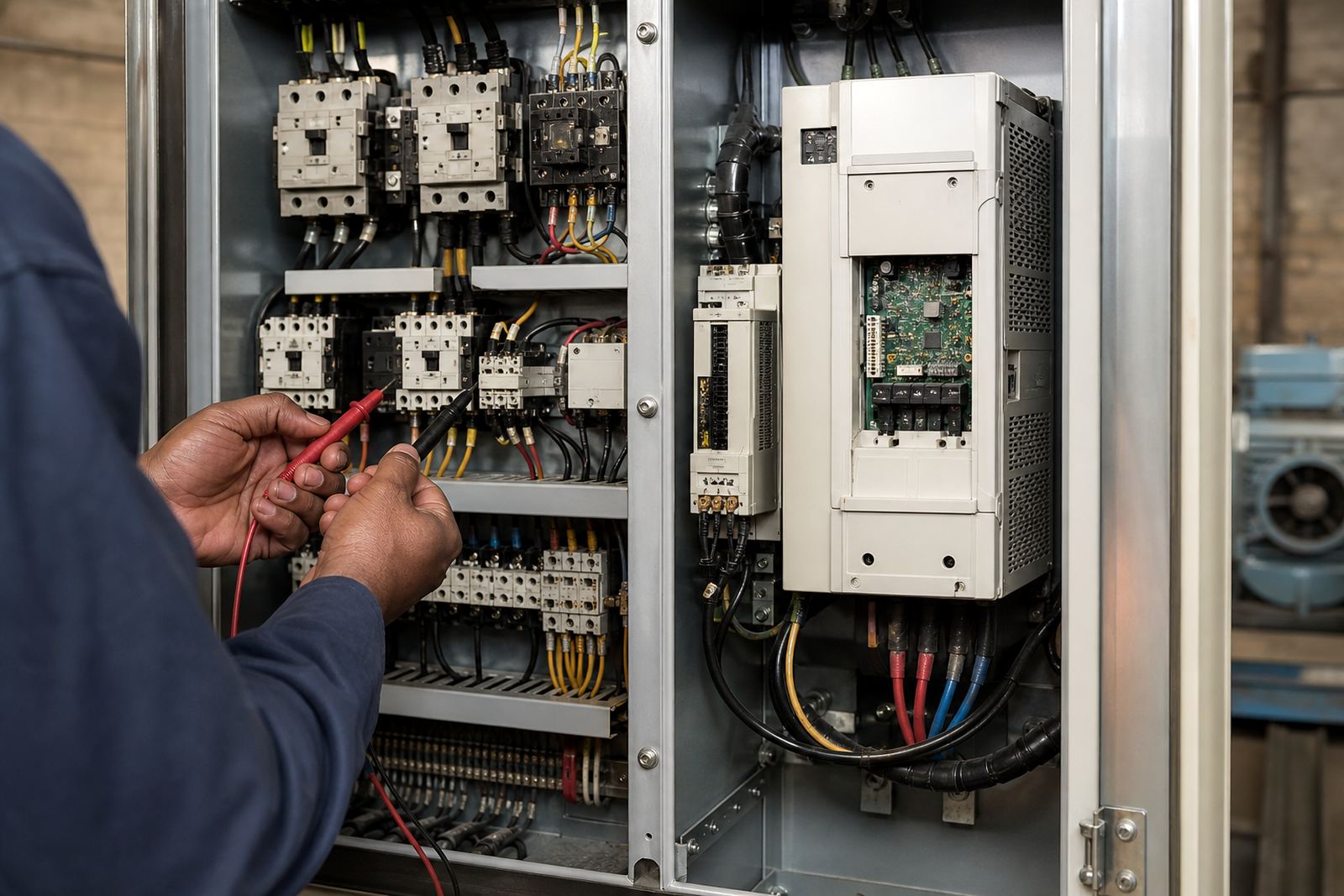
The safest way to diagnose the issue is to test methodically, with lockout procedures in place and only by qualified people. Electrical work must not be done live unless the task and site rules allow it under controlled conditions by competent personnel. Before touching the equipment, isolate the supply, prove dead, lock off and tag the system, then verify that stored energy has discharged.
Useful checks usually include insulation testing, continuity checks, visual inspection and mechanical inspection. For a motor, insulation testing helps confirm whether the windings are sound and whether moisture, dirt or cable damage is causing leakage to earth. Bearing checks can show if the rotor is turning freely or if a seized bearing is creating overload. For a starter circuit, contact condition, coil voltage and control wiring should be checked. For a drive, input supply quality, output cable condition, cooling and parameter settings are key.
A practical test list may include:
- Inspecting terminals, lugs and cable glands for heat or looseness
- Checking motor bearings for noise, play or binding
- Testing insulation resistance on the motor and cable
- Verifying supply voltage to the contactor coil
- Reviewing drive alarms, cooling and output cable condition
When the fault is in the motor, not the controller
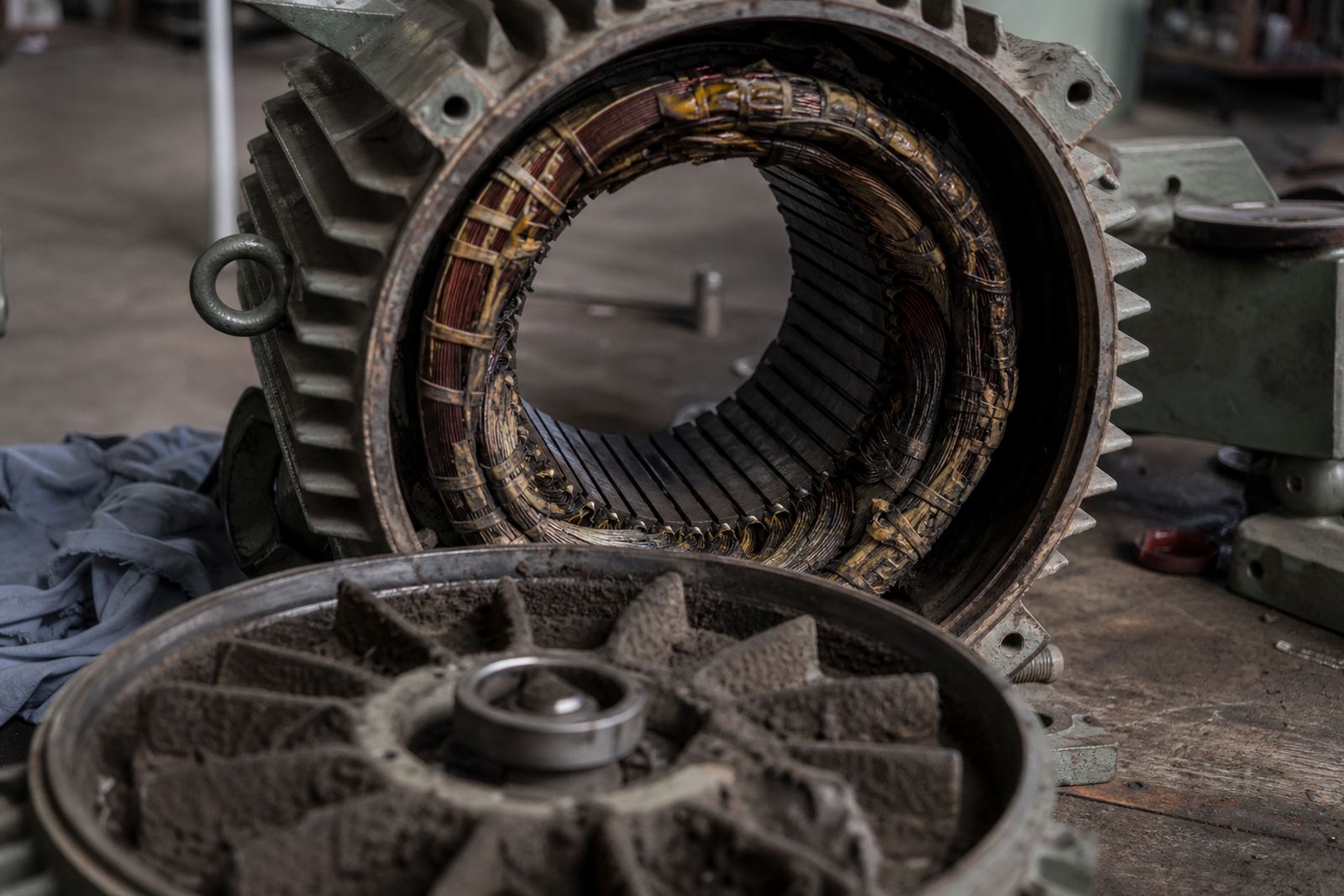
Many starter and drive problems turn out to be motor faults in disguise. A winding with damaged insulation can trip a drive or overload a contactor. A bearing starting to fail can pull excessive current and cause a nuisance trip under load. If the motor has been running hot, vibrating or drawing more current than usual, the controller may be only reporting the problem.
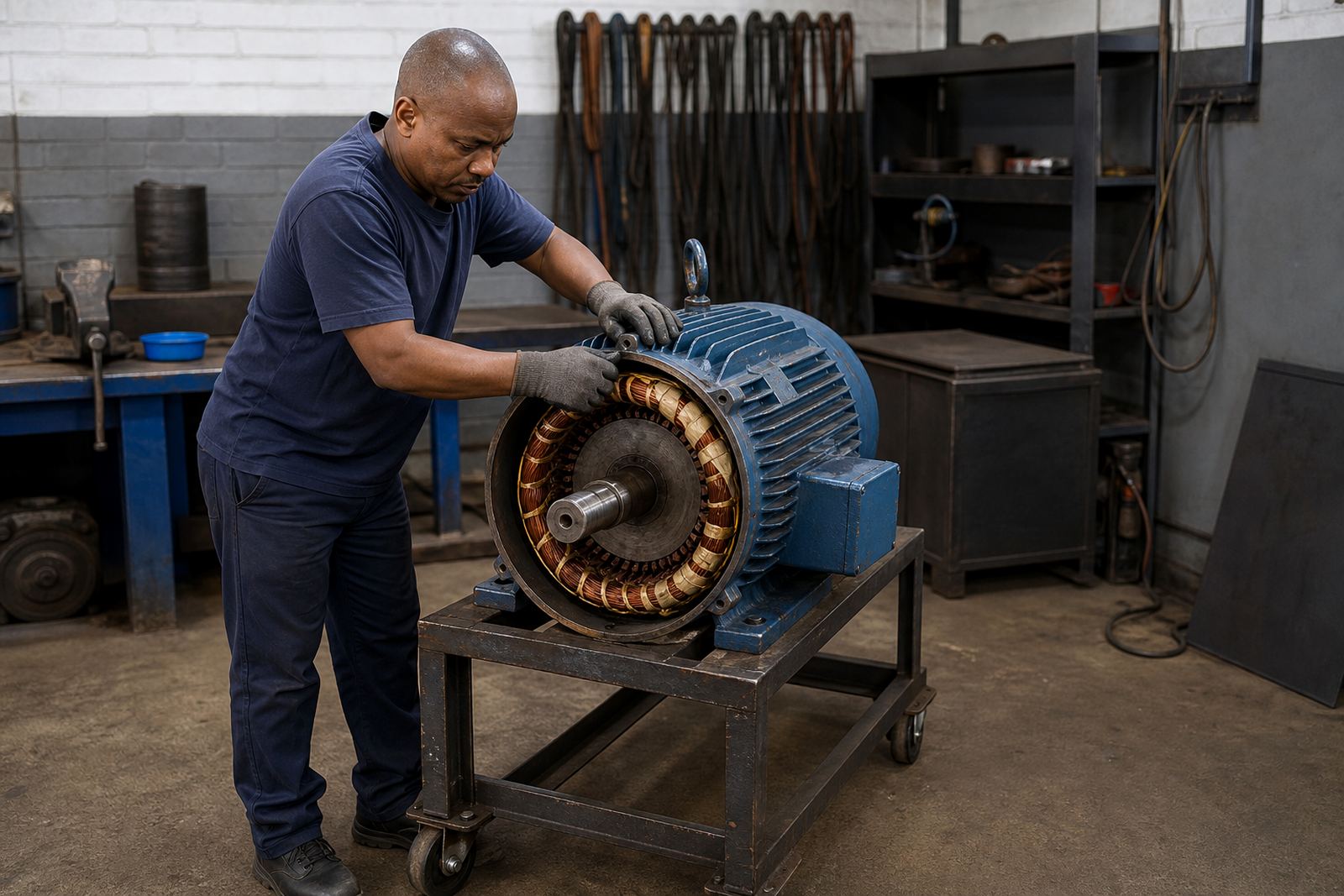
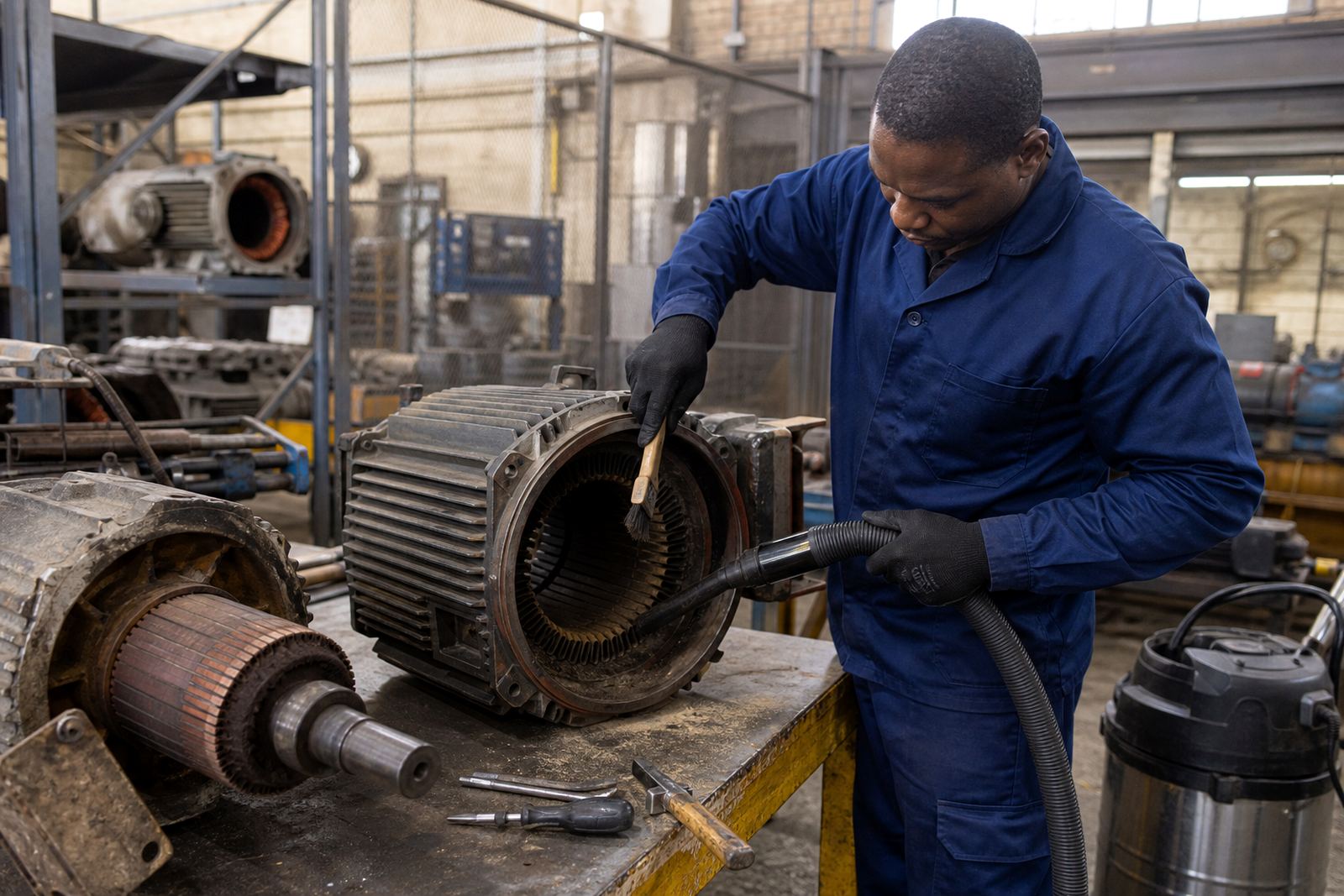
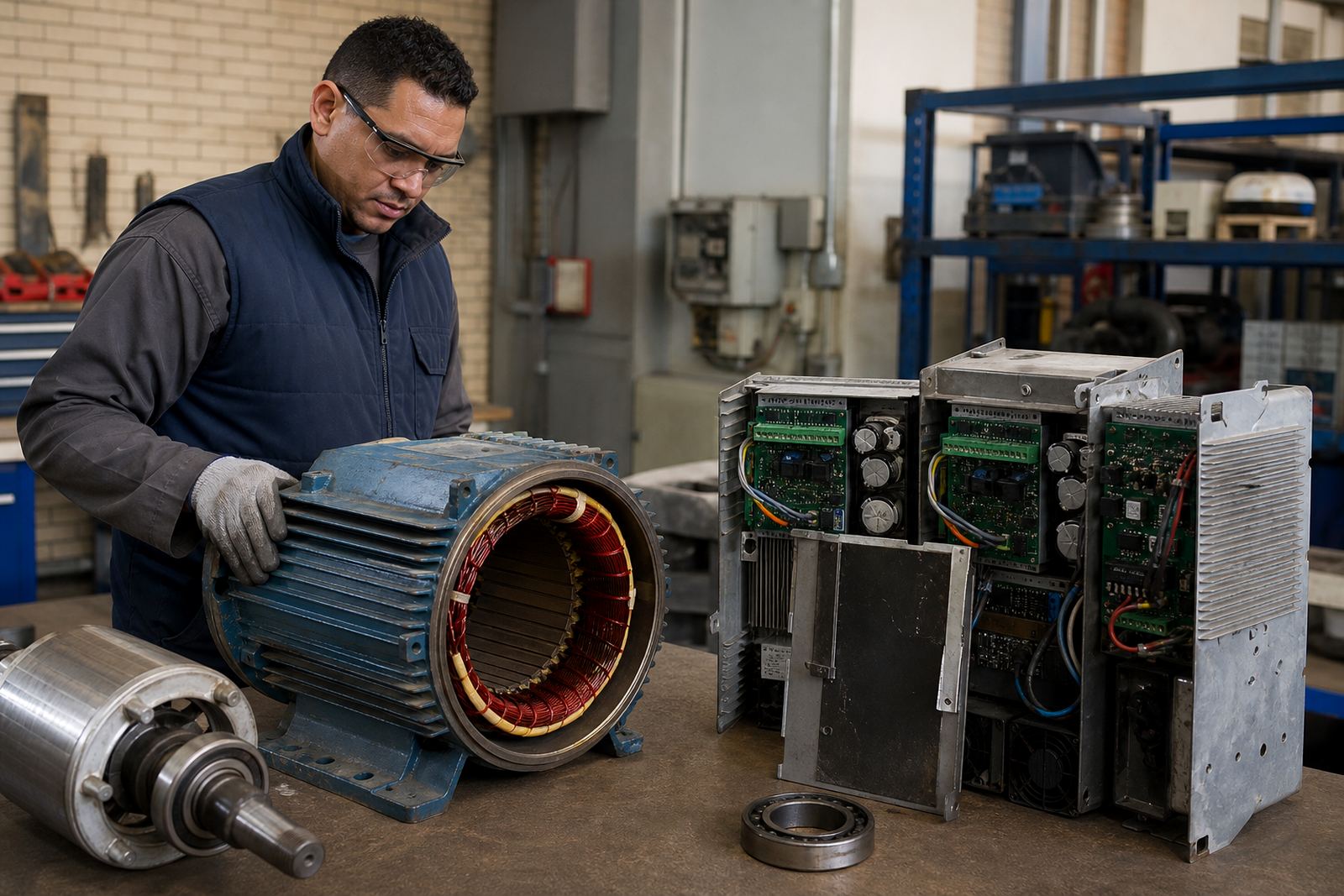
That is why motor removal, inspection and rewinding are often part of the repair plan. A proper rewind is not just replacing burnt copper. The stator must be stripped, cleaned, re-insulated and rewound to suit the motor design. After that, the motor should be tested again before it goes back into service. If the bearing housing is worn, replacing the bearings at the same time can prevent repeat failures and reduce downtime.
On a production line in Vereeniging, for example, a motor that keeps tripping on a drive may seem like a drive issue at first. After testing, the real cause may be a damaged winding combined with a worn bearing. The drive was simply protecting the system from further damage.
Why a disciplined shutdown plan matters
Plant faults rarely happen at a convenient moment. That is why shutdown planning, site reporting and commissioning support are part of practical electrical maintenance. When a fault is traced properly, the repair team can decide whether the motor, starter, drive or cable needs work and what spares should be assessed before reassembly. In workshops across Johannesburg, Pretoria and Durban, this approach helps reduce repeat callouts and avoids trial-and-error repairs.
Good shutdown planning also protects staff and equipment. It sets out who isolates the supply, who verifies the isolation, what testing will be done and when the plant can be re-energised. If the panel is dirty, panel cleaning and cable checks may be needed before the next start. If alignment is out, the repaired motor can still run hot and trip again.
Locor works from Germiston and supports clients across Ekurhuleni, Kempton Park, Boksburg, Johannesburg, Pretoria, Vereeniging and Durban. The right question is not only whether it is a contactor or a drive. It is whether the whole motor system is being checked in order, by people who know what each fault looks like.