

Why the stator core is the real starting point
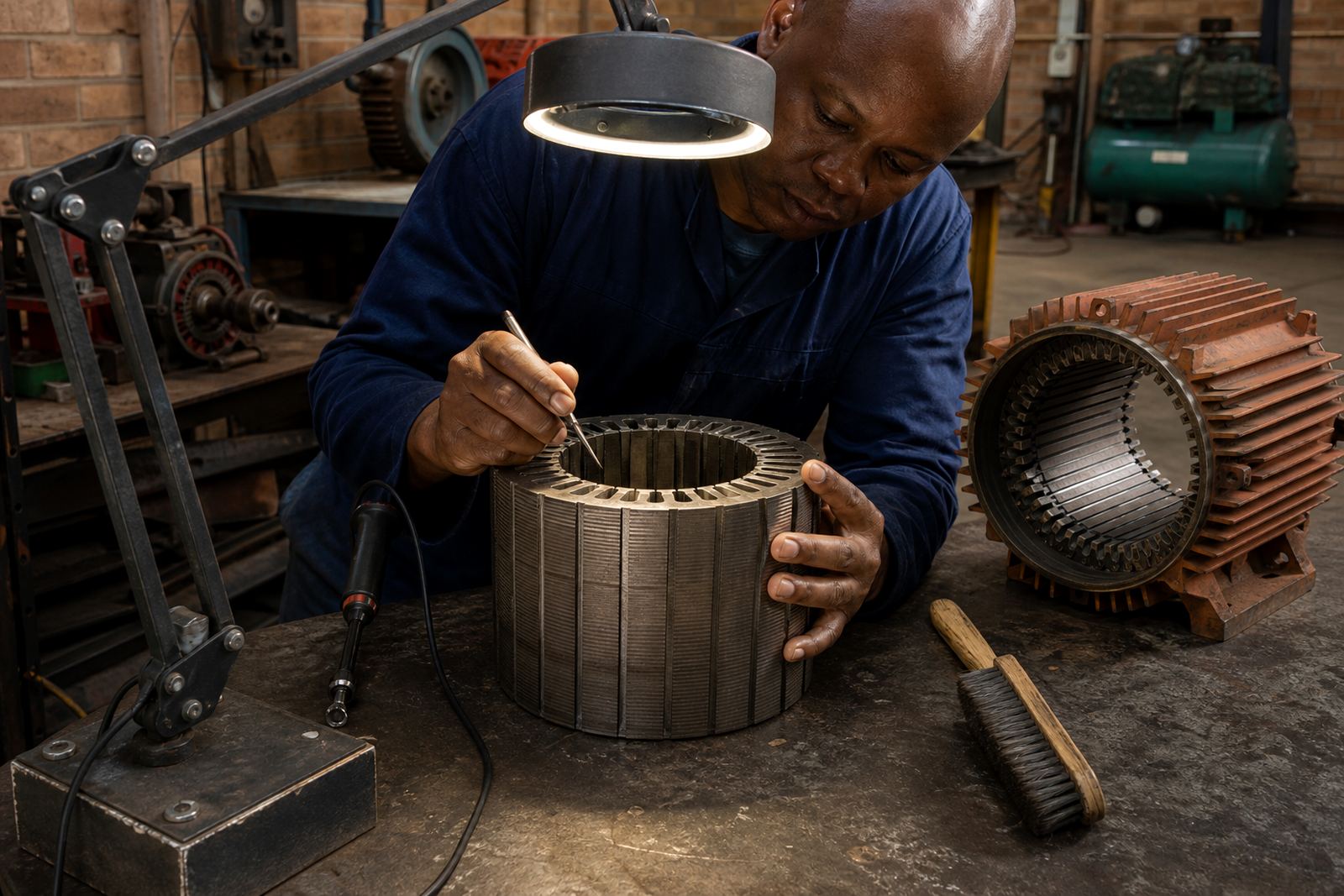
When a motor comes in for assessment, the winding often gets the most attention. That makes sense, but the stator core deserves equal care because it is the steel heart of the machine. If the core has hot spots, damaged laminations or signs of movement, a new winding alone will not solve the problem.
In practice, the core supports the magnetic field that lets the motor run smoothly. If that steel has been overheated or distorted, the motor may draw excess current, run hotter than normal, trip under load or fail again after a short period. For plants in Germiston, Boksburg and Kempton Park where motors often work long shifts, that kind of repeat failure can stop production quickly.
What technicians look for during a core inspection
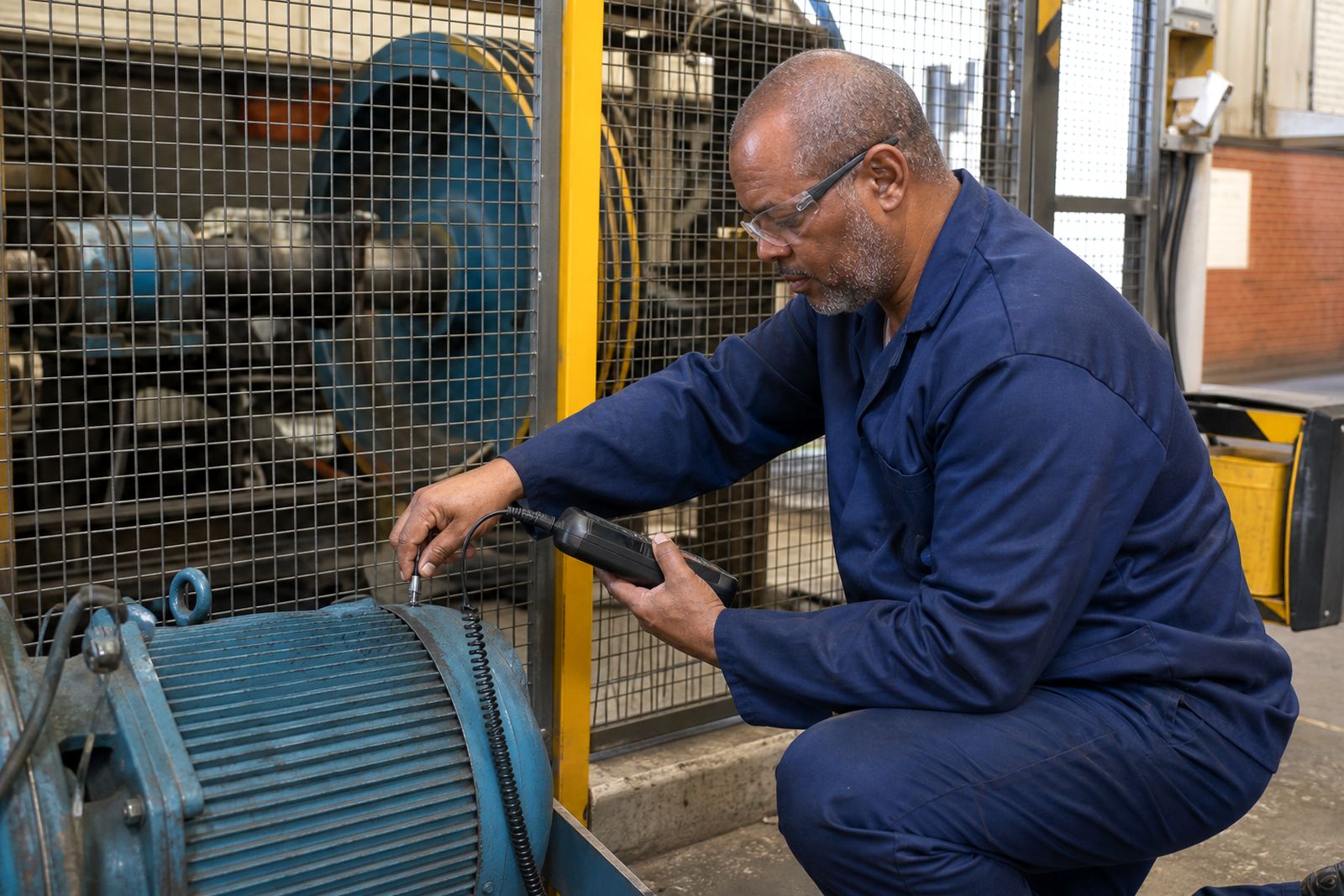
Core checks are not just a visual glance with a torch. A proper inspection looks at the laminations, slots, wedge condition and signs of rubbing between the rotor and stator. The technician also checks for discolouration, warped areas and evidence of loose steel packs. On larger machines, a core test may also be used to identify weak spots that are not visible from the outside.
Typical signs of concern include:
- Darkened or burnt steel in one area of the core
- Loose laminations or missing slot wedges
- Scoring from rotor contact
- Signs of vibration damage or movement inside the frame
- Rust, oil contamination or moisture where the motor has stood idle
These faults do not always mean the motor is beyond repair, but they do change the repair plan. Sometimes the best route is a rewind with additional core work. In other cases the damage is too deep and the motor should not be put back into service.
How heat damage affects a rewind
Electric motors in South Africa work through load shedding, dusty workshops and hot plant rooms, so heat damage is not unusual. If a stator core has been overheated, the insulation in the new winding can be stressed from day one. That shortens service life and can cause failures that seem to come out of nowhere.
Heat damage also affects how well the motor transfers heat away from the windings. A healthy core helps the motor breathe, in simple terms. A compromised one can trap heat, especially on motors that start often or run under heavy load. That is why insulation testing and core condition should be assessed together, not as separate boxes to tick.
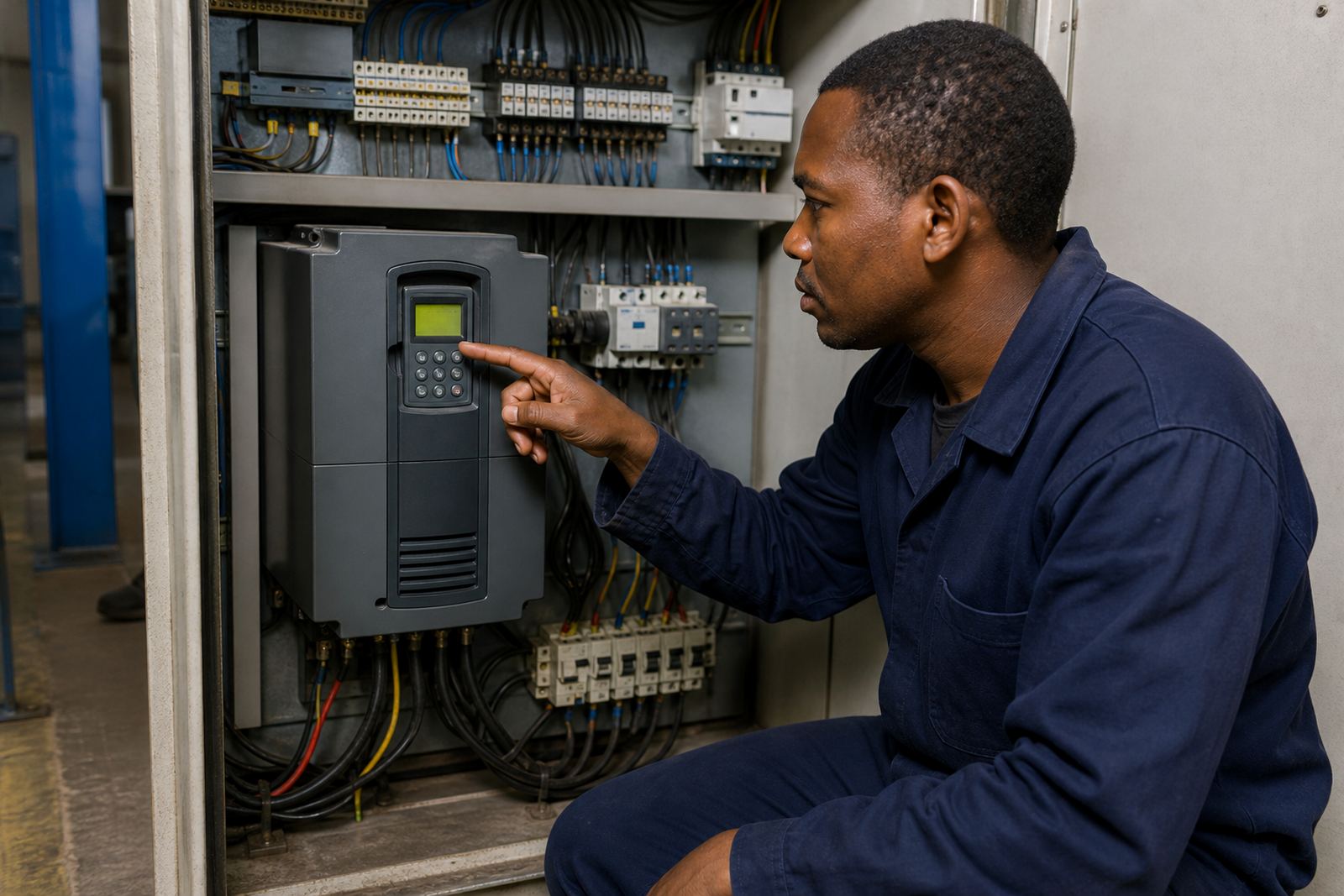
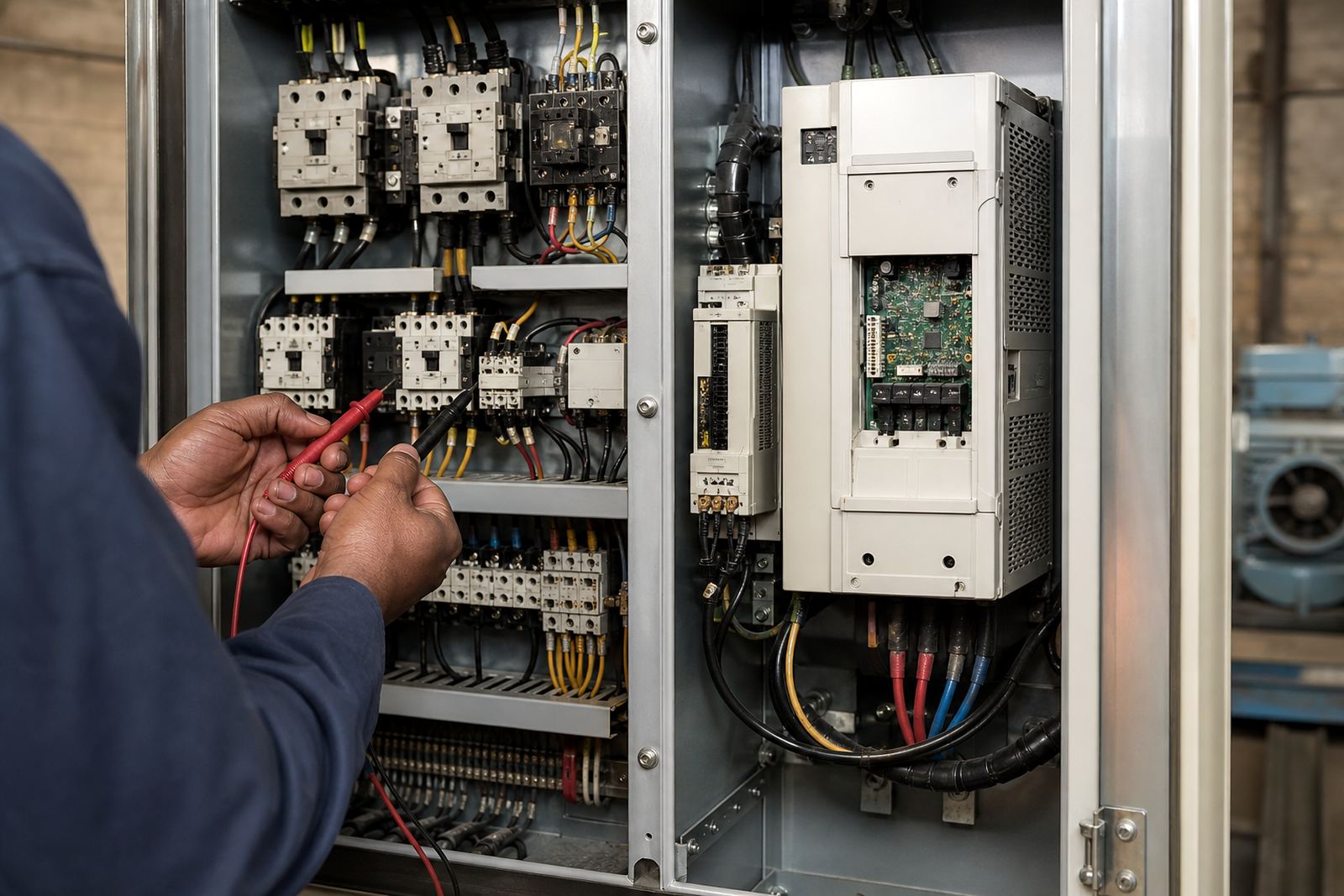
Electrical work must always be done by qualified people using proper lockout procedures, isolation checks and safe handling practices. A motor that has been removed from service may still hold dangerous energy, and the same applies to associated panels and drives.
Core checks and the rewind decision
Not every motor needs a full rewind. Sometimes the issue is bearing wear, contamination or a drive fault that caused nuisance tripping. But if the stator core is damaged, it changes the value of the repair. A good core gives the rewinding team a sound base to work from. A poor one can make even careful workmanship less effective.
During evaluation, the repair team will usually consider:
- Whether the core damage is localised or widespread
- Whether the motor frame and end shields are still serviceable
- Whether bearing failure led to rotor rubbing and core damage
- Whether insulation breakdown was caused by heat or moisture
- Whether the motor has a history of repeated trips or overloads
This is where practical experience matters. A motor from a paper plant in Durban faces different conditions to a workshop motor in Vereeniging, and coastal humidity can leave a very different footprint from dry inland dust. The repair path should match the duty, not just the fault on paper.
A local example from a busy Gauteng workshop
Consider a manufacturing workshop in Ekurhuleni that runs a conveyor system with several medium sized motors. One unit begins tripping after start-up and the team suspects the winding. When the motor is opened, the winding does show age, but the deeper issue is a damaged stator core near the lower slots, likely caused by earlier bearing failure and rotor contact.
In that case, a rewind alone would have been a short term fix. The better approach was to combine bearing replacement, careful core assessment, insulation testing and alignment checks before commissioning. The result was a motor that could be returned to service with clearer confidence in the repair, rather than a guess. That saves time later, and it reduces the chance of another shutdown when the plant is already under pressure.
For sites across Johannesburg, Pretoria and Durban, this kind of structured fault finding helps maintenance teams decide whether to repair, rework or replace. It also supports shutdown planning because the scope of work becomes clearer before the motor is lifted out.
What to send with the motor for the clearest assessment
The more information the repair team has, the better the stator core decision will be. A motor can arrive with obvious faults, but history still matters. If the fault started after a wet weekend, a panel issue or a bearing noise, that context can point the technician in the right direction.
Useful information includes:
- Motor size, application and duty cycle
- Any tripping pattern or unusual noise before removal
- Whether the motor was exposed to moisture, dust or chemical vapour
- Any signs of bearing noise, vibration or overheating
- Notes from site reporting, inspections or previous repairs
For businesses in Germiston and nearby industrial areas, this approach helps reduce delays and avoids unnecessary work. It also gives the team a better basis for drive inspection, motor removal and spares assessment where those services are needed alongside the rewind.
Why careful core work supports long term reliability
A clean rewind on a damaged core is still a compromise. That is why stator core checks sit at the centre of proper motor repair work. They protect the quality of the rewind, improve the chance of a stable return to service and help avoid repeat failures that cost more later.
For plants and workshops dealing with production pressure, a good assessment is practical, not theoretical. It tells you what can be saved, what must be replaced and what should not be put back on the floor. At Locor, that kind of repair judgement is part of the job, from core checks and bearing checks to insulation testing, drive repair and commissioning support.
If a motor is going to earn its place back in the plant, the core has to be right first.