When a drive trips, read the fault before pressing reset
A drive trip is the control system protecting itself, the motor or the process. Pressing reset without checking the fault code often brings the same problem straight back, and sometimes with more damage. In plants around Germiston, Johannesburg and Ekurhuleni, that usually means a stopped conveyor, pump or fan waiting on a proper diagnosis.
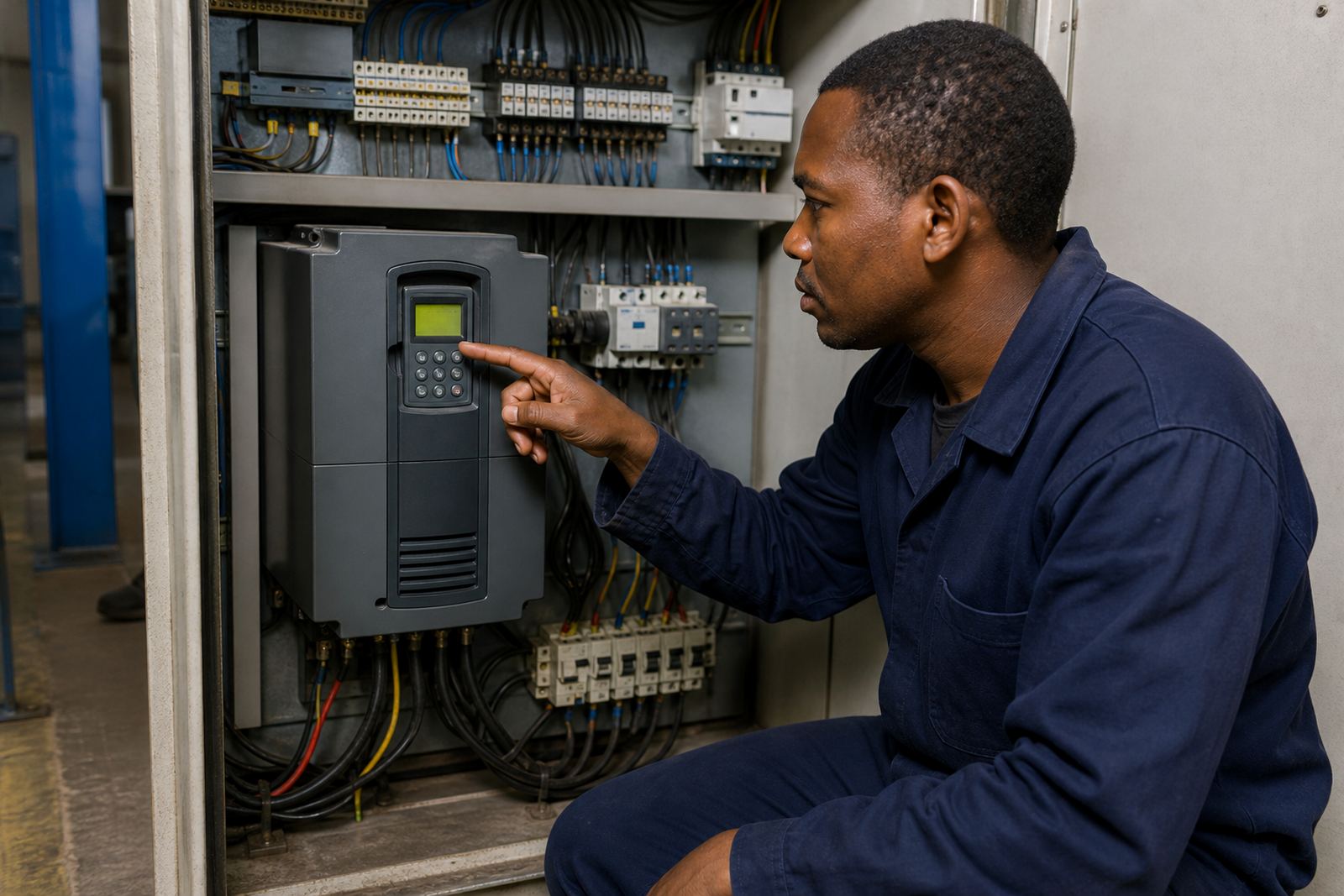
The first step is to record the exact trip message, the time it happened and what the machine was doing just before it stopped. Was it starting under load, running at higher speed, or coming under sudden torque from jammed material or a blocked pump line? Those details matter. Electrical work must only be done by qualified people, with lockout procedures in place before anyone opens a panel or touches a terminal.
Common supply-side problems that trigger trips
Incoming power issues are a frequent cause of drive trips, especially where supply quality changes during load shedding, voltage dips or heavy plant switching. A drive may trip on under-voltage, over-voltage or phase loss if the incoming supply is unstable or if one phase is missing. Loose terminations, damaged isolators and undersized cables can also create voltage drop under load.
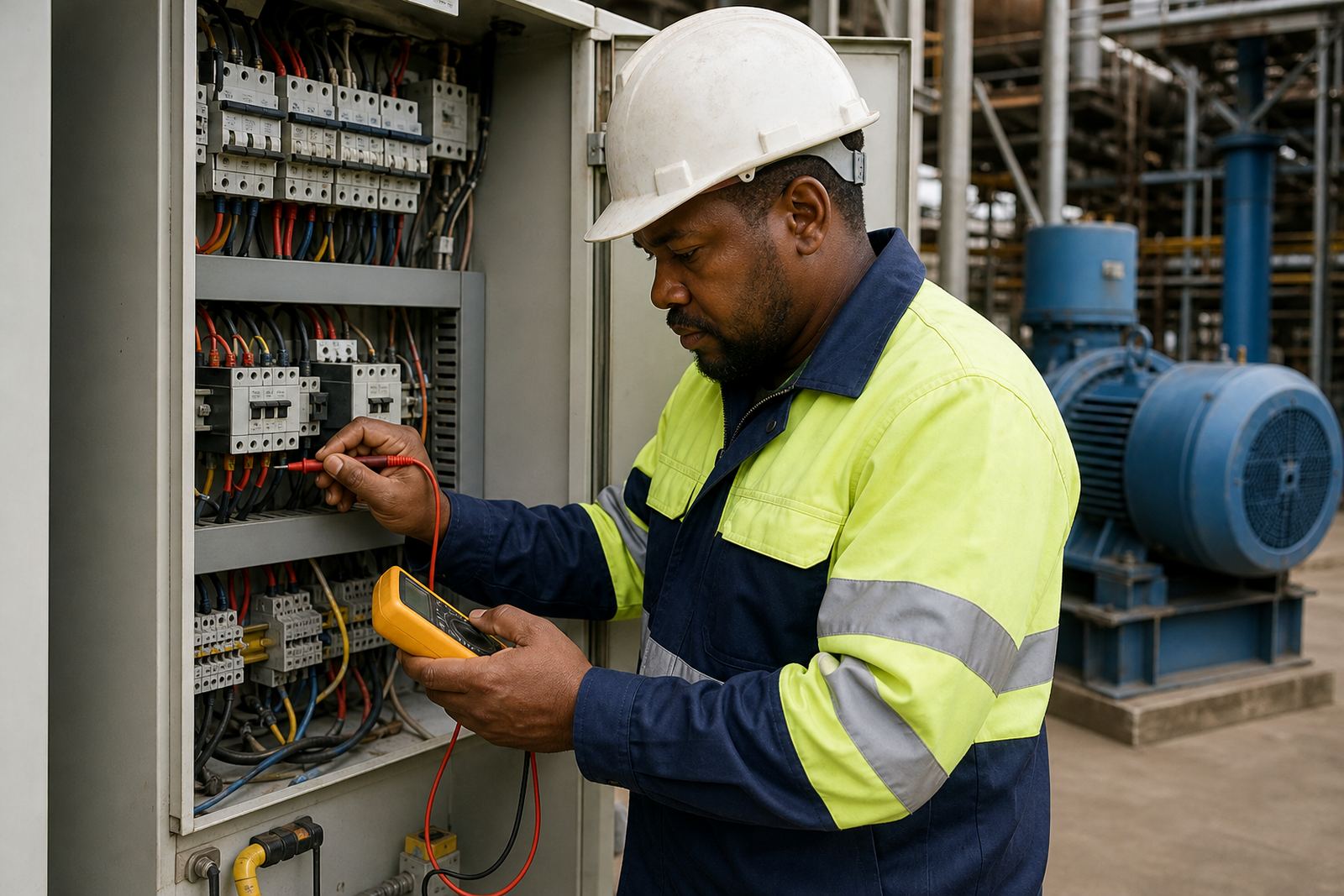
In workshop and factory settings, it is worth checking the supply path from the isolator to the drive, not just the drive itself. A careful inspection often starts with the basics:
- Check for loose or heat damaged cable lugs
- Look for scorched marks inside the panel
- Test incoming phases and phase balance
- Inspect control transformers and auxiliary circuits
- Confirm earthing is sound and continuous
Coastal humidity can add another layer of trouble, because moisture and fine dust can track across terminals and cause nuisance faults. Panel cleaning and cable checks are not glamorous jobs, but they save time later.
Motor and cable faults that the drive can detect
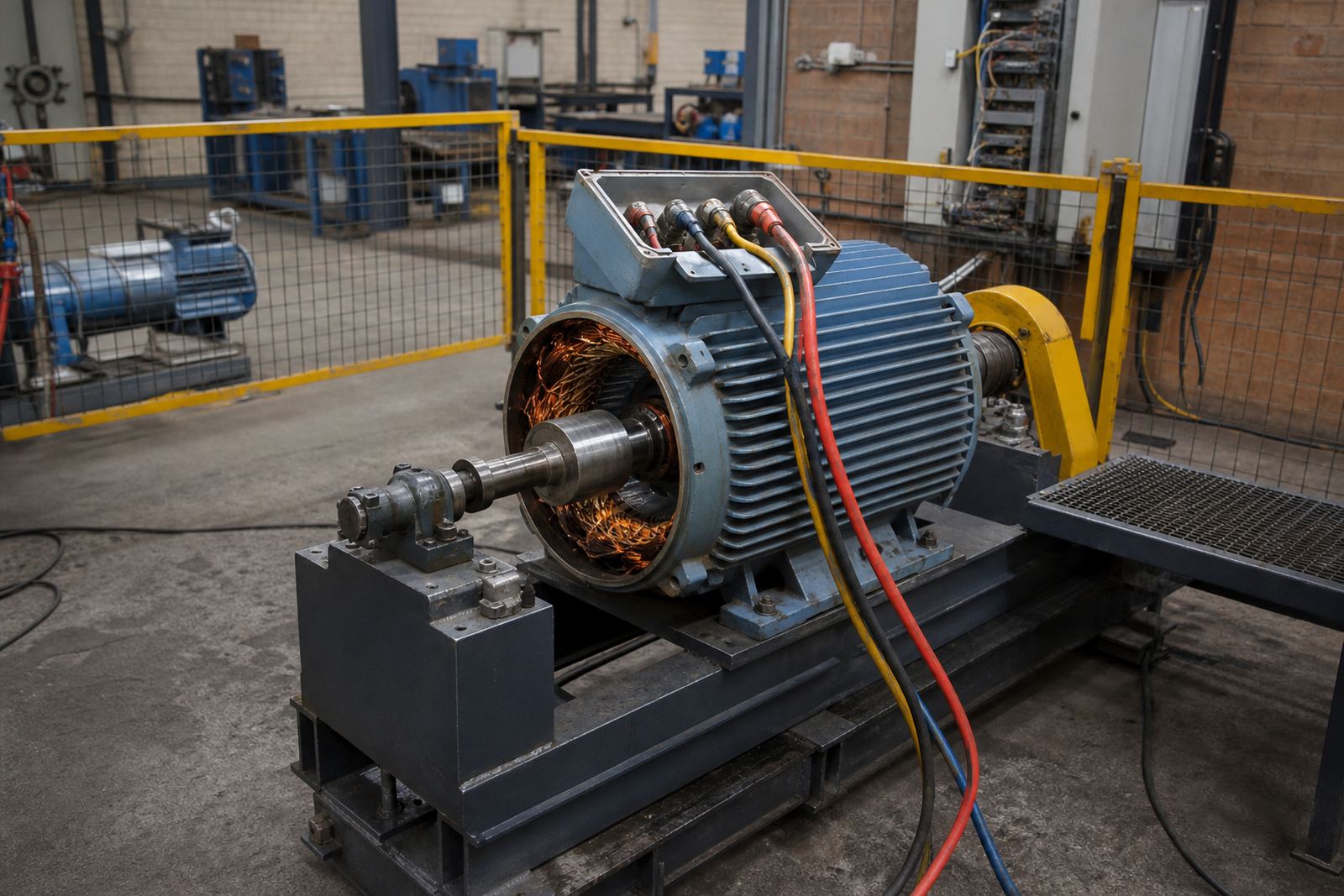
If the drive trips on over-current, earth fault or motor overload, the issue may be downstream of the drive. A motor with winding damage, a shorted turn or poor insulation resistance can draw excessive current. Damaged motor cables, crushed conduits and joints exposed to oil or moisture can create the same result.
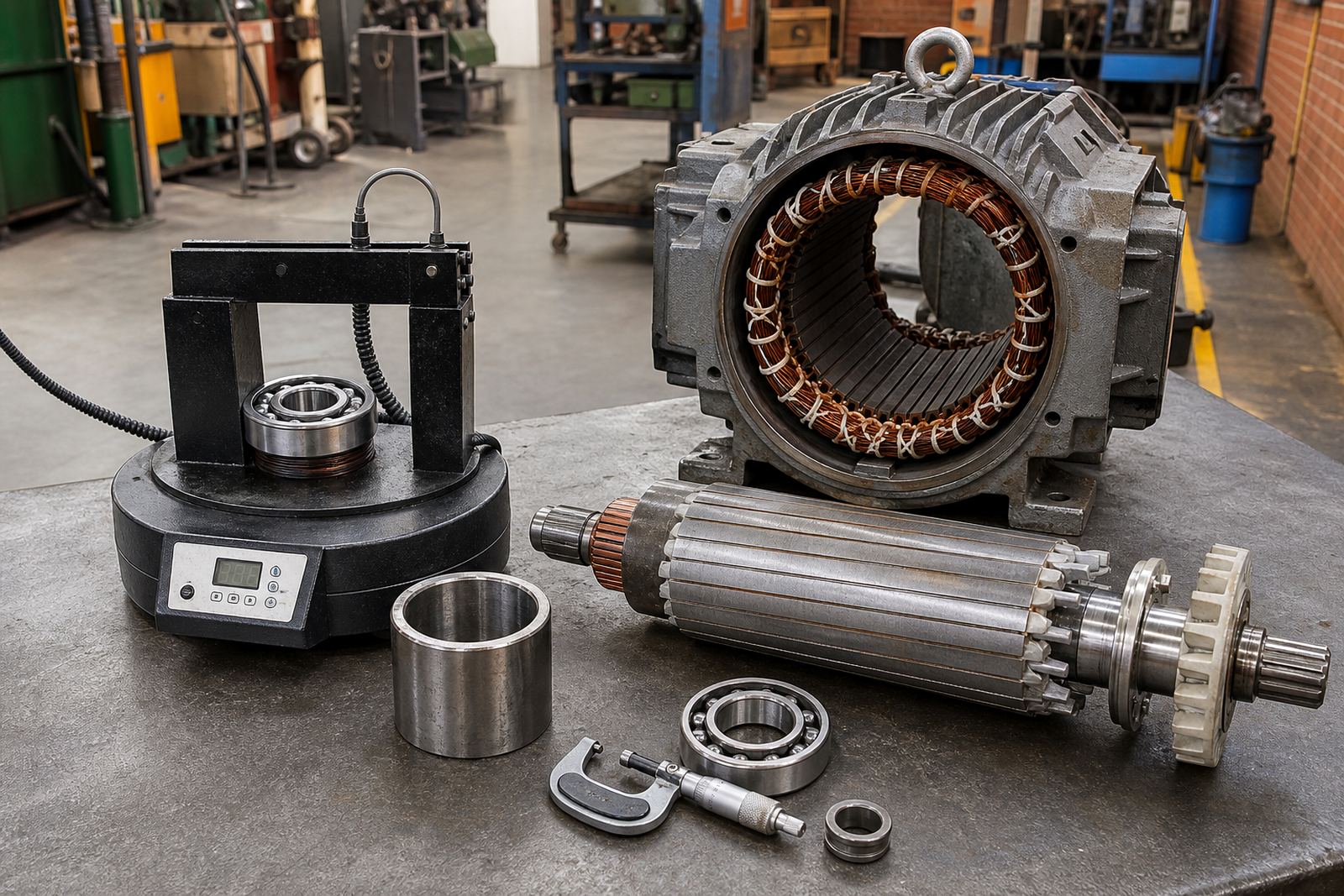
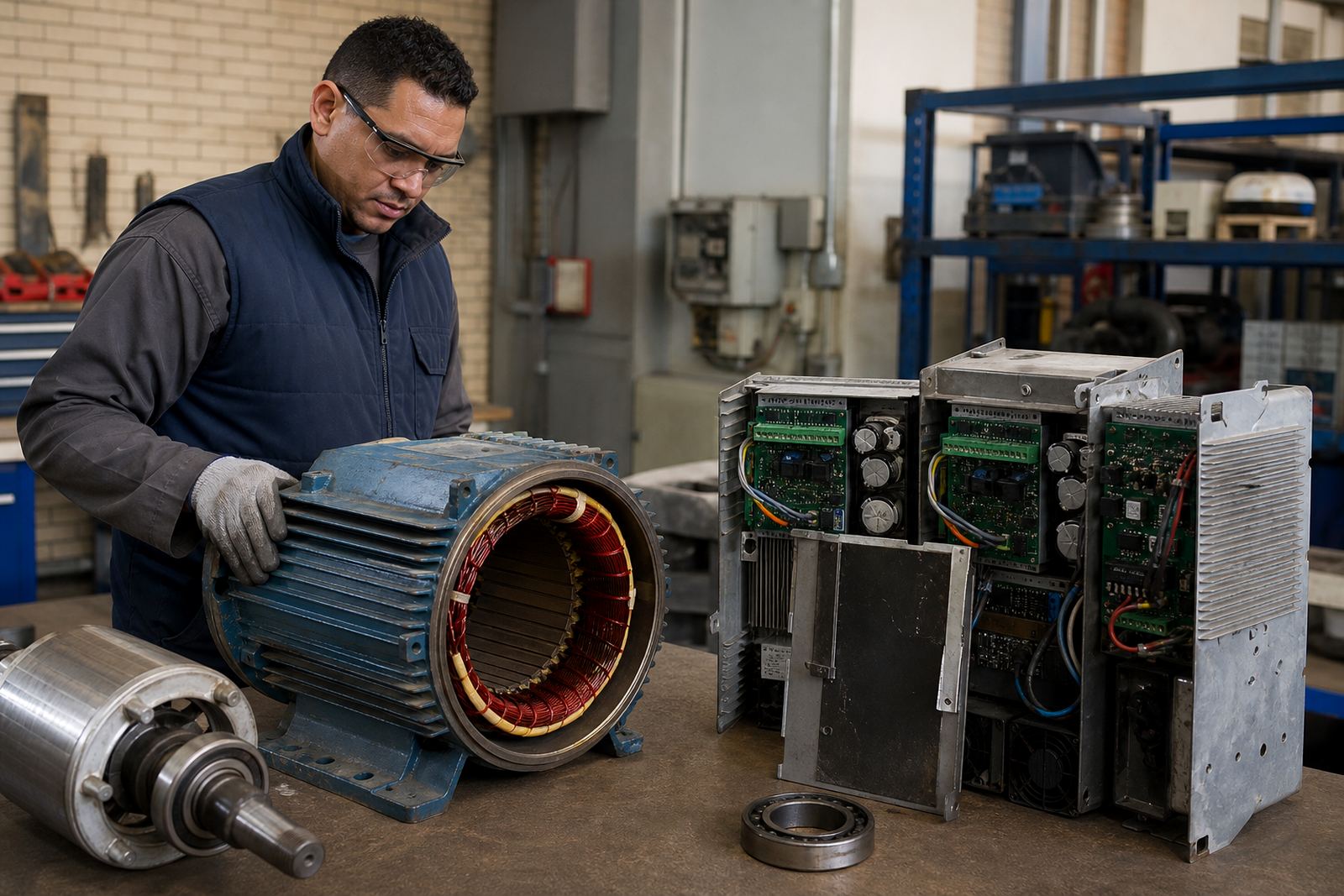
Motor rewind work should include insulation testing before the motor goes back in service, then bearing checks and alignment checks once it is reinstalled. A worn bearing can increase current draw by adding mechanical drag, while poor alignment can create heat, vibration and repeated overload trips. On larger plants, that extra drag is sometimes mistaken for a drive problem when the real issue sits in the motor or the driven machine.
Load problems often look like drive problems
Many trips are caused by the process side rather than the electronics. A pump can run into a closed valve or a blocked suction line. A fan can pick up a dirty filter or a jammed damper. A conveyor can trip when a pulley is seized or product has built up on the belt. The drive sees rising current and protects the system before the motor burns out.
Where possible, check whether the load turns freely with the motor isolated and locked out. If the mechanical side is stiff, the drive is only reporting the symptom. Useful checks include:
- Motor removal and free rotation assessment
- Bearing checks for noise, play or roughness
- Coupling and pulley alignment
- Mechanical binding at the driven equipment
- Signs of overheating or contamination
These checks are especially important on older sites in Vereeniging and Durban where machinery has seen years of service and maintenance intervals have stretched during busy periods.
Overheating, dirt and poor panel conditions
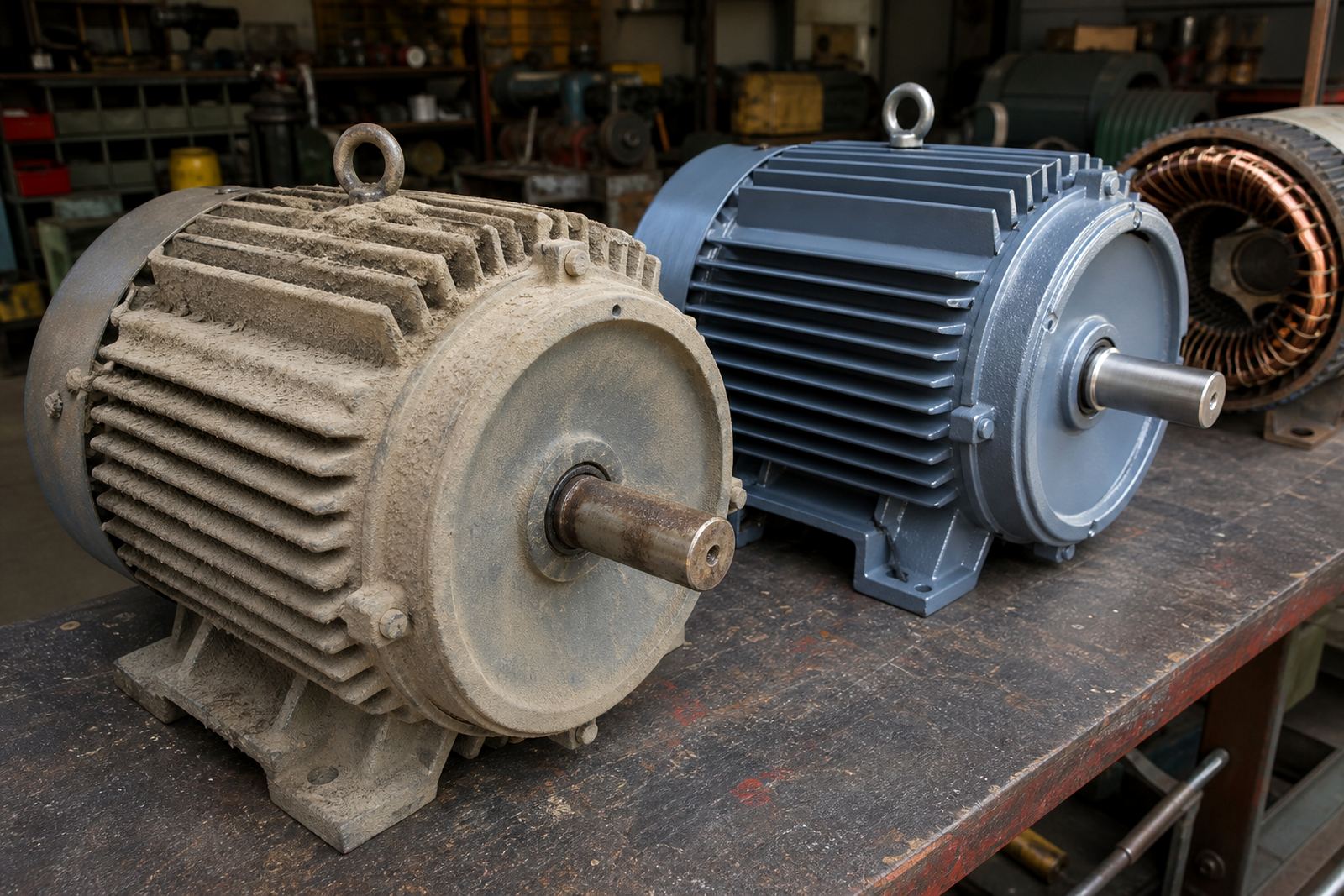
Drives do not like heat. High ambient temperatures, blocked cooling fans, dirty heat sinks and cramped panels can all lead to thermal trips. If a panel sits in direct sun, near steam lines or in a dusty production area, the internal temperature can rise well above the drive's comfort range. That is when nuisance trips become part of the daily routine.
Panel cleaning, cabinet ventilation checks and proper spacing around the drive make a real difference. So does keeping spare parts and cable entries in good condition. In many cases the fault is not dramatic at all, just a build-up of grime, a failed cooling fan or a door seal that no longer keeps dust out. On sites with frequent power interruptions, repeated starts after restoration can add even more heat stress, so commissioning support after repairs is worth planning carefully.
How Locor approaches drive trips in the field
Locor works from Germiston and supports plants and workshops across South Africa, including Johannesburg, Ekurhuleni, Pretoria, Vereeniging, Durban, Boksburg and Kempton Park. The practical process starts with fault finding, then drive inspection, cable checks, site reporting and a clear repair plan. If the issue points to the motor, the team can assess rewinding, bearing replacement and insulation testing before the unit goes back into service.
For customers running production under tight schedules, shutdown planning matters. A trip on a single machine can affect the whole line, so the aim is to identify the real cause, fix it properly and reduce repeat stoppages. In one Germiston workshop example, a drive kept tripping on over-current after every restart. The fault was traced to a partly seized bearing on the motor and a loose termination in the panel. Once the bearing was replaced, the connections were corrected and the drive settings were checked, the machine returned to normal operation.
That kind of outcome depends on methodical work, not guesswork. A drive is only one part of the system, and the safest repairs are always done by qualified people using lockout procedures and proper test equipment.