

What Overloading Looks Like In Day-To-Day Use
An electric motor is overloaded when it is asked to do more work than it was designed for. In simple terms, the load on the shaft, belts, gearbox or driven machine is too heavy, too tight or too demanding for the motor size and duty cycle. The motor may still run for a while, but it will draw extra current, run hotter and start to wear faster. That is when small faults become expensive ones.
In plant and workshop settings across Germiston, Johannesburg and Ekurhuleni, overloading often starts with a change in process rather than a clear breakdown. A conveyor carries more product than usual. A pump runs against blocked pipework. A fan is fitted with a damaged blade. The motor then works harder every day, and the signs begin to show in sound, heat and performance.
The Common Warning Signs You Should Not Ignore
Some symptoms are easy to spot if operators know what to listen for and watch. A motor that is overloaded may still turn, but it often behaves differently from normal. It can trip on protection devices, take longer to start or struggle to hold speed under load.
- Motor casing feels hotter than normal during routine checks
- Breaker, overload relay or drive trips without an obvious cause
- Burning smell, varnish smell or warm insulation odour
- Slow start-up, poor acceleration or loss of torque
- Unusual humming, groaning or vibration while running
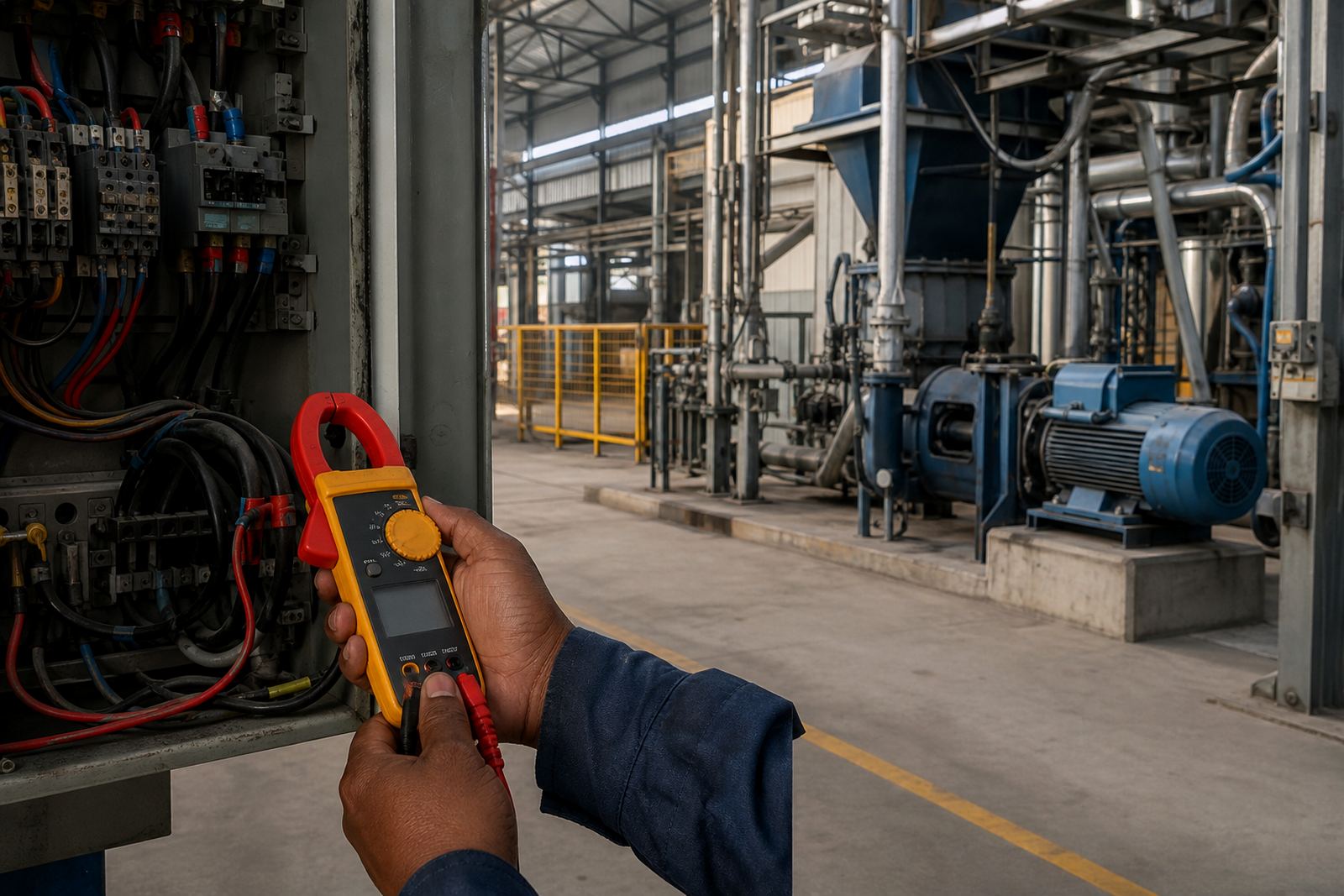
- Current draw higher than the motor nameplate rating
- Repeated belt slip, coupling wear or pulley noise
If these signs appear only after a line change, new product run or process adjustment, overloading becomes even more likely. It is worth checking whether the driven equipment is now asking too much from the motor.
Heat, Noise And Vibration Tell A Story
Heat is one of the clearest indicators of overload. A motor that runs too hot ages quickly because insulation dries out and winding life drops. In coastal humidity, that risk can be even worse because moisture and contamination can also affect terminals, bearings and internal insulation. Even inland, dusty workshops and poorly ventilated motor rooms can trap heat and make a bad situation worse.
Noise and vibration matter too. When a motor is carrying excess load, it may sound strained under acceleration or labouring under steady running. That extra effort can come from a mechanical issue rather than an electrical one. For example, a seized bearing, misalignment or tight coupling can make the motor appear overloaded even though the root cause is mechanical.
- Check whether the fan cover, frame or bearing housing is running unusually hot
- Listen for a deeper hum under load than at no load
- Watch for vibration that changes as the machine warms up
- Look for discoloured paint, dust baked onto the casing, or scorched terminal areas
When The Drive Is Part Of The Problem
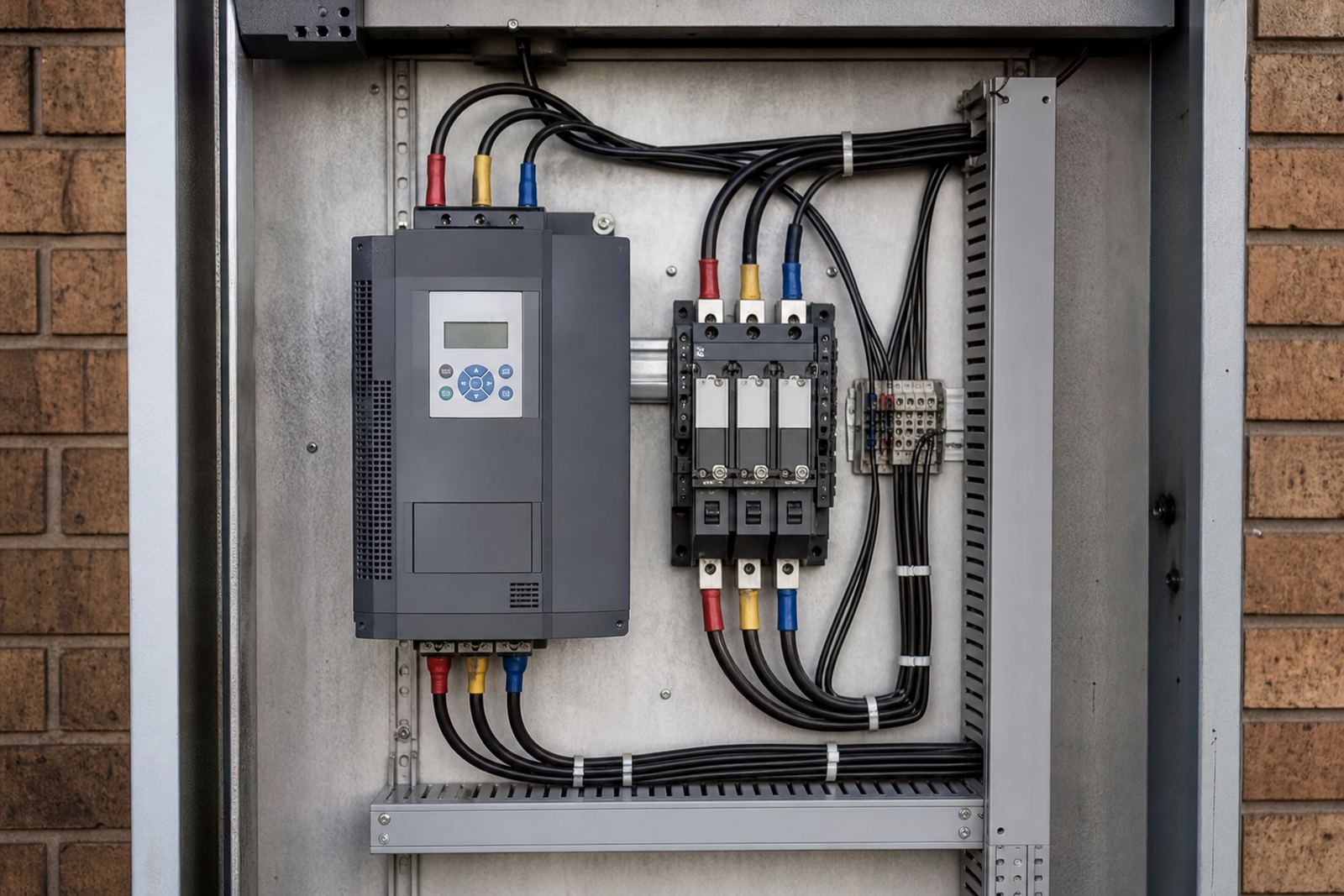
Variable speed drives can help control motor load, but they can also hide a problem if settings are wrong. If acceleration times are too short, torque limits are not set properly, or the process demand has changed, the drive may push the motor harder than intended. Faults in the drive can also lead to poor control, unstable output or repeated trips that look like motor overload.
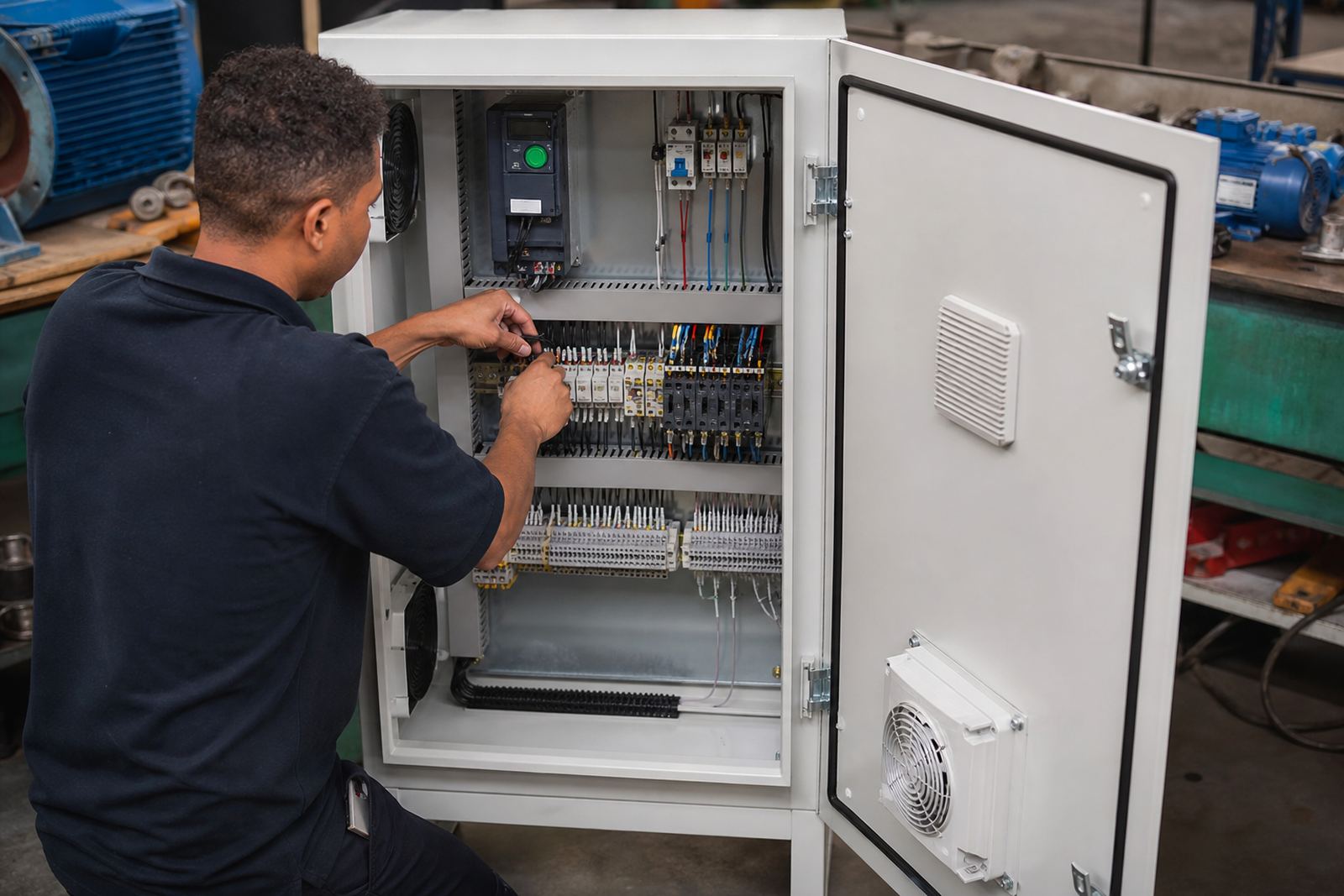
A proper inspection should include the drive, the motor and the driven machine as one system. That means checking the load profile, cable condition, ventilation, panel cleanliness and the protection settings. In some cases a motor is blamed for overloading when the real issue is a blocked fan, stiff conveyor, worn pump impeller or poor alignment between components.
- Inspect current logs and trip history where available
- Check cooling paths and cabinet dust build-up
- Confirm the motor and drive ratings match the application
- Look at acceleration, deceleration and torque settings
What A Qualified Technician Will Check
Electrical work must be carried out by qualified people, with lockout procedures in place before any testing or removal starts. That is not just good practice, it protects people and prevents further damage to the equipment. Once the machine is isolated and made safe, a technician can look for the true cause of overload instead of guessing.
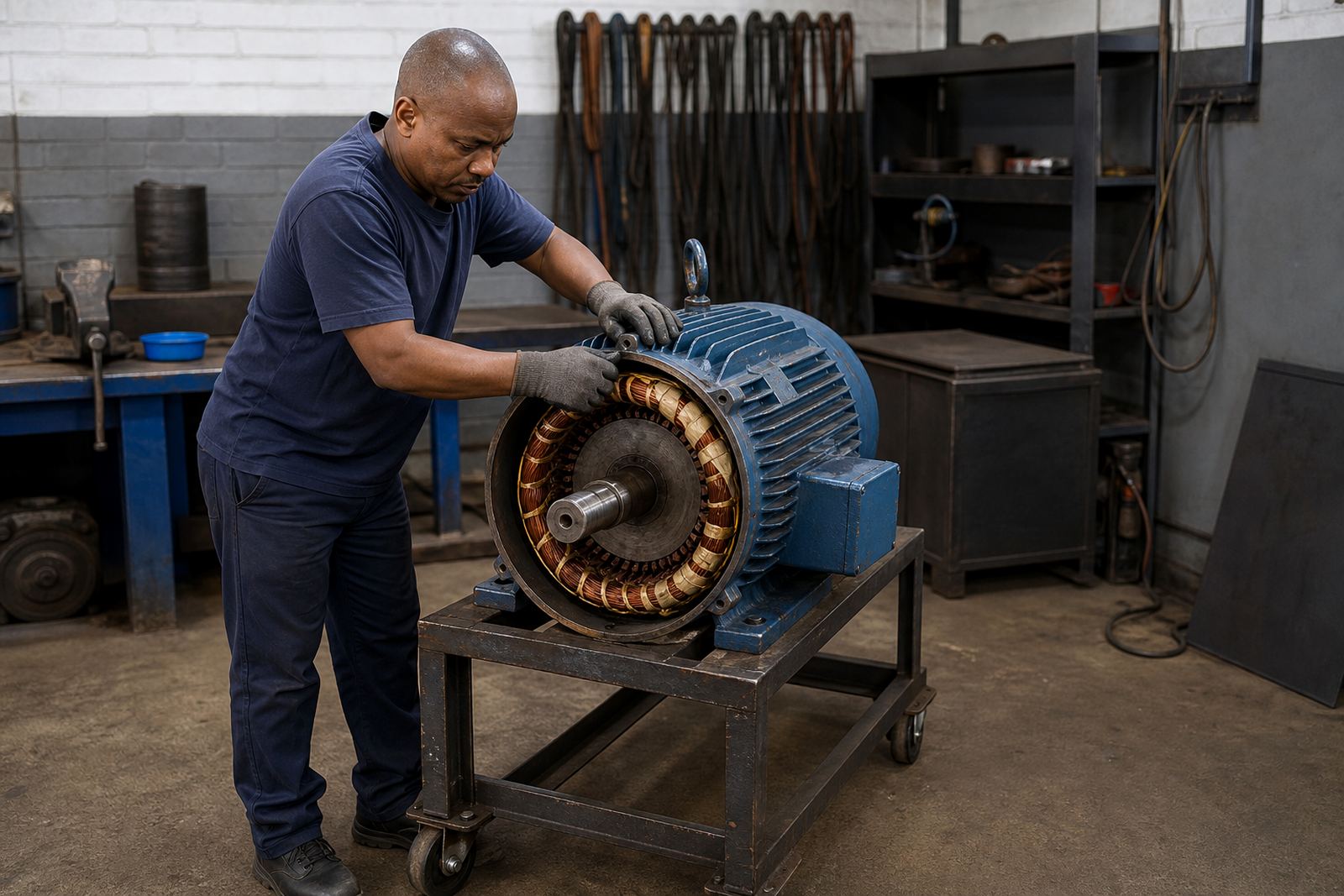
Typical checks include insulation testing, bearing condition, winding condition, current draw, cable condition and mechanical alignment. If a motor has been running hot for some time, the windings may show signs of deterioration and the bearings may need replacement as part of the repair. If the issue is with the drive, fault finding may involve panel cleaning, cable checks, spares assessment and site reporting so the next step is clear.
Useful checks during assessment include:
- Insulation resistance and evidence of moisture or contamination
- Bearing checks for noise, play and rough running
- Winding inspection for overheating, imbalance or shorted turns
- Alignment checks between motor and driven machine
- Drive inspection for internal faults, cooling issues and connection damage
A Germiston Example: When A Pump Keeps Tripping
Consider a workshop in Germiston supplying water for wash bays and process cleaning. The pump motor starts tripping during busy periods, mostly in the afternoon when demand is high. Staff assume the motor is failing, but the real issue turns out to be a blocked strainer, worn bearings and a drive setting that allows the motor to ramp up too quickly. The motor was not under-sized, it was being forced to work harder than it should.
After the lockout, the team carries out fault finding, motor removal and bearing checks, then inspects the winding condition and drive settings. The result is a better understanding of the load path and a clearer plan for repair. That kind of approach saves time, especially when plants in Pretoria, Vereeniging or Durban need to get back into service without repeat failures. It also helps during shutdown planning, when there is only a narrow window to inspect motors and associated equipment properly.
How To Reduce Overload Risk Before It Becomes A Failure
Overloading is often preventable if operators and maintenance teams watch for early changes. Keep an eye on current draw, temperature, sound and vibration, and do not ignore repeated trips. If the same motor keeps acting up, the problem may be in the driven equipment, the supply, the control settings or the mounting arrangement.
Practical steps include regular panel cleaning, cable checks, bearing inspections and alignment checks. Commissioning support is also useful after a repair or new installation, because a motor can only perform well if the full system is set up correctly. For workshops and plants in Boksburg, Kempton Park and across Gauteng, good housekeeping and routine checks can make a noticeable difference to motor life. If something is not right, get it assessed before the winding fails or the drive gives up completely.
When a motor is overloaded, it rarely stays a small issue for long. Catching the signs early keeps the machinery running efficiently, and it gives maintenance teams a proper plan instead of a crisis.