

Choose a dry store before the motor ever leaves the pallet
The first rule of motor storage is simple: keep the motor indoors, off the floor and away from places where rain, washdown water or steam can reach it. In Germiston, Boksburg and Kempton Park many workshops have a corner store that seems dry most of the year, but concrete floors still pull in moisture and summer humidity can sit in the room after a wet week. A motor stored on bare concrete will cool and warm with the room, which encourages condensation inside the frame.
Use a clean rack, timber blocks or a steel shelf so the motor sits clear of the floor. If the motor is still on its shipping base, that is fine too, as long as the base is stable and the motor is protected from dust, drips and knocks. Keep it away from chemical drums, open welding bays and areas where forklifts pass closely. A bent shaft or damaged terminal box cover can turn a good spare into a problem before it is ever fitted.
- Store the motor under cover, not in an open yard.
- Keep it clear of washdown areas and roof leaks.
- Leave space around the motor for airflow and inspection.
Protect the windings from damp, dust and temperature swings
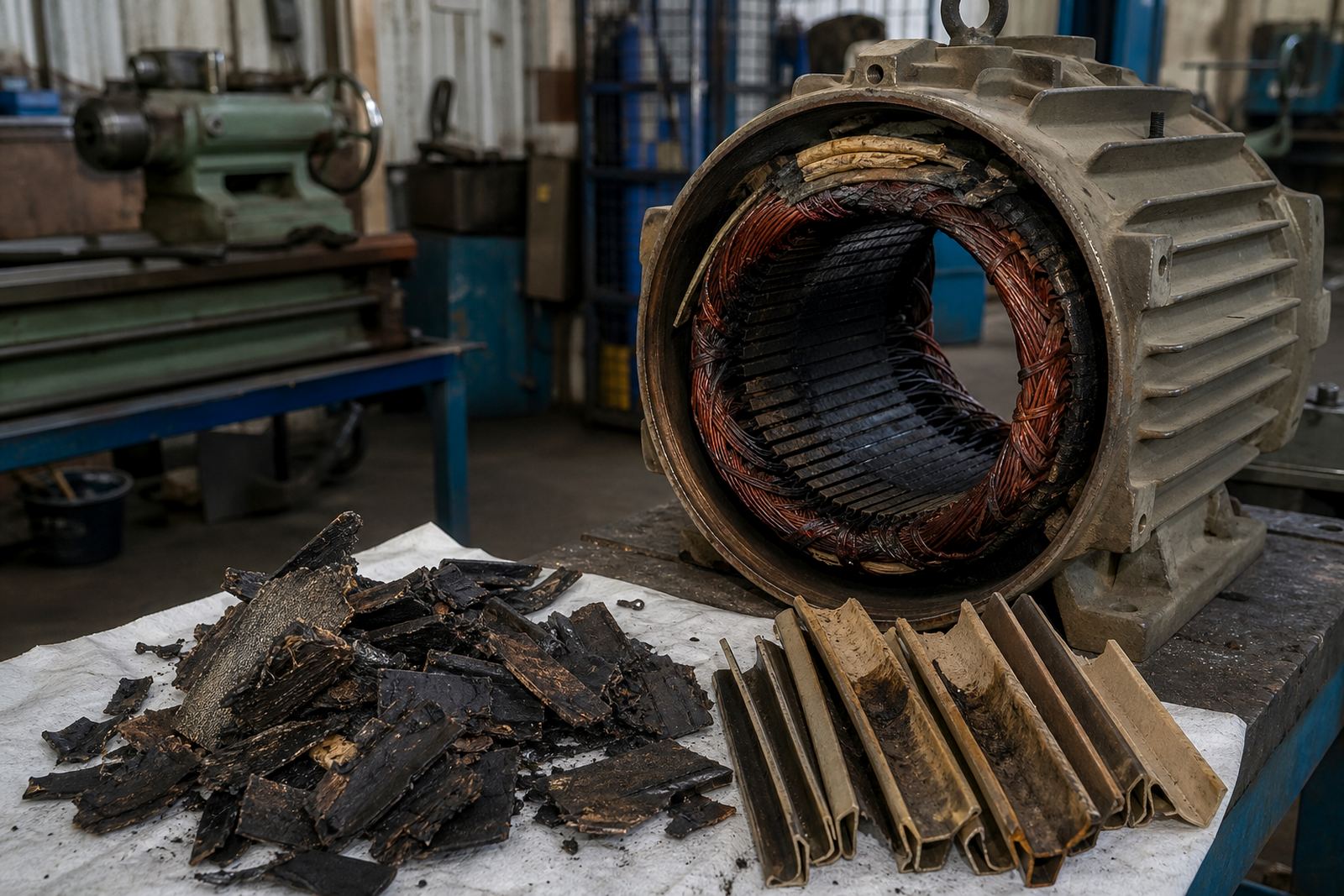
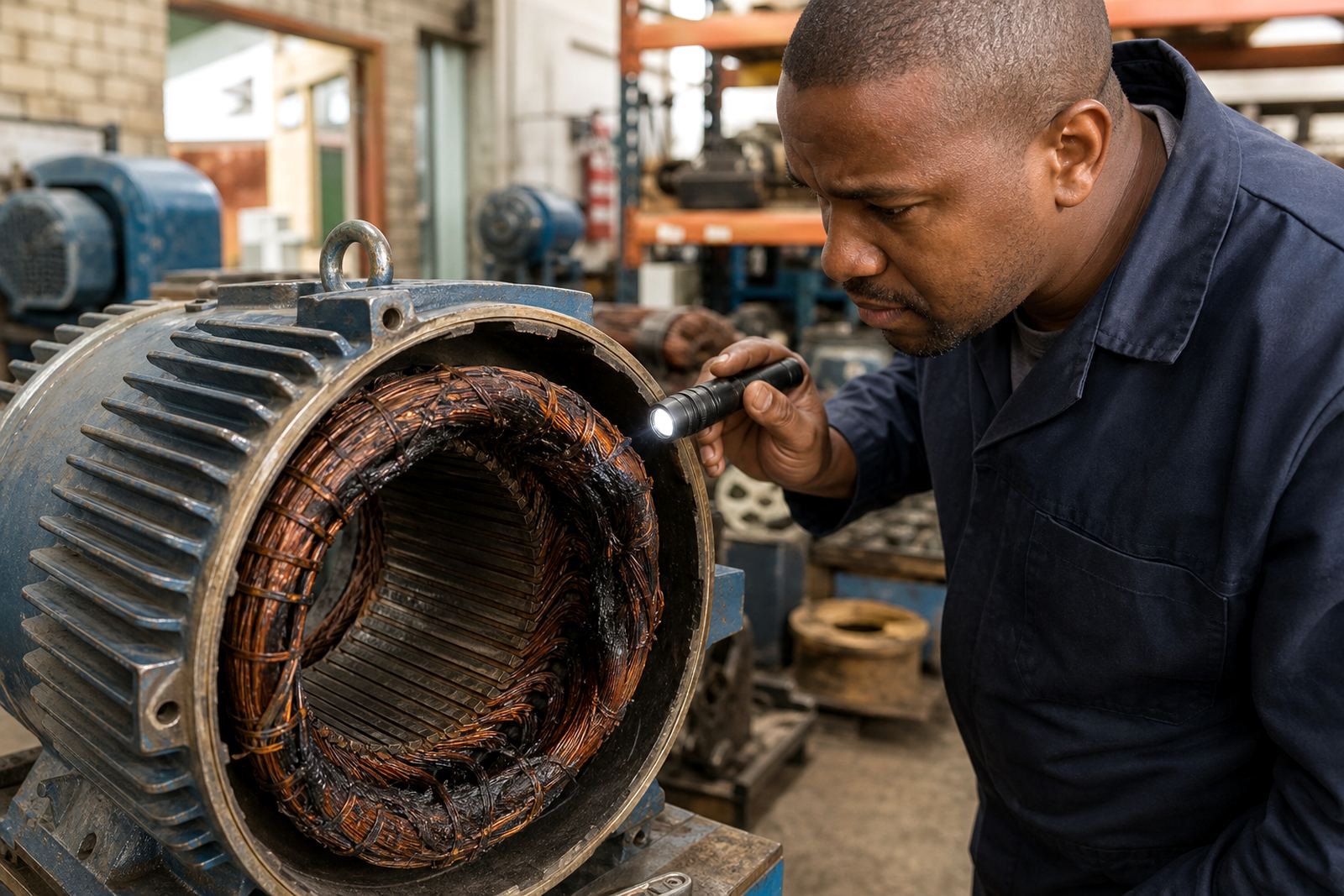
Motor windings do not like moisture. If a motor is stored in a damp room or near an outside wall, the insulation can absorb moisture over time and the resistance values may drop. That is why insulation testing forms part of good storage checks, not just repair work. A motor that has been idle for months can look fine on the outside and still need careful testing before recommissioning.
If the motor is stored for longer periods, ask a qualified electrical person to check whether the winding space heater, if fitted, is still working properly. In some plants a small heater is used to keep internal parts slightly warmer than the air around them. That helps limit condensation. If no heater is fitted, the storage area itself needs to do the job by staying dry and stable.
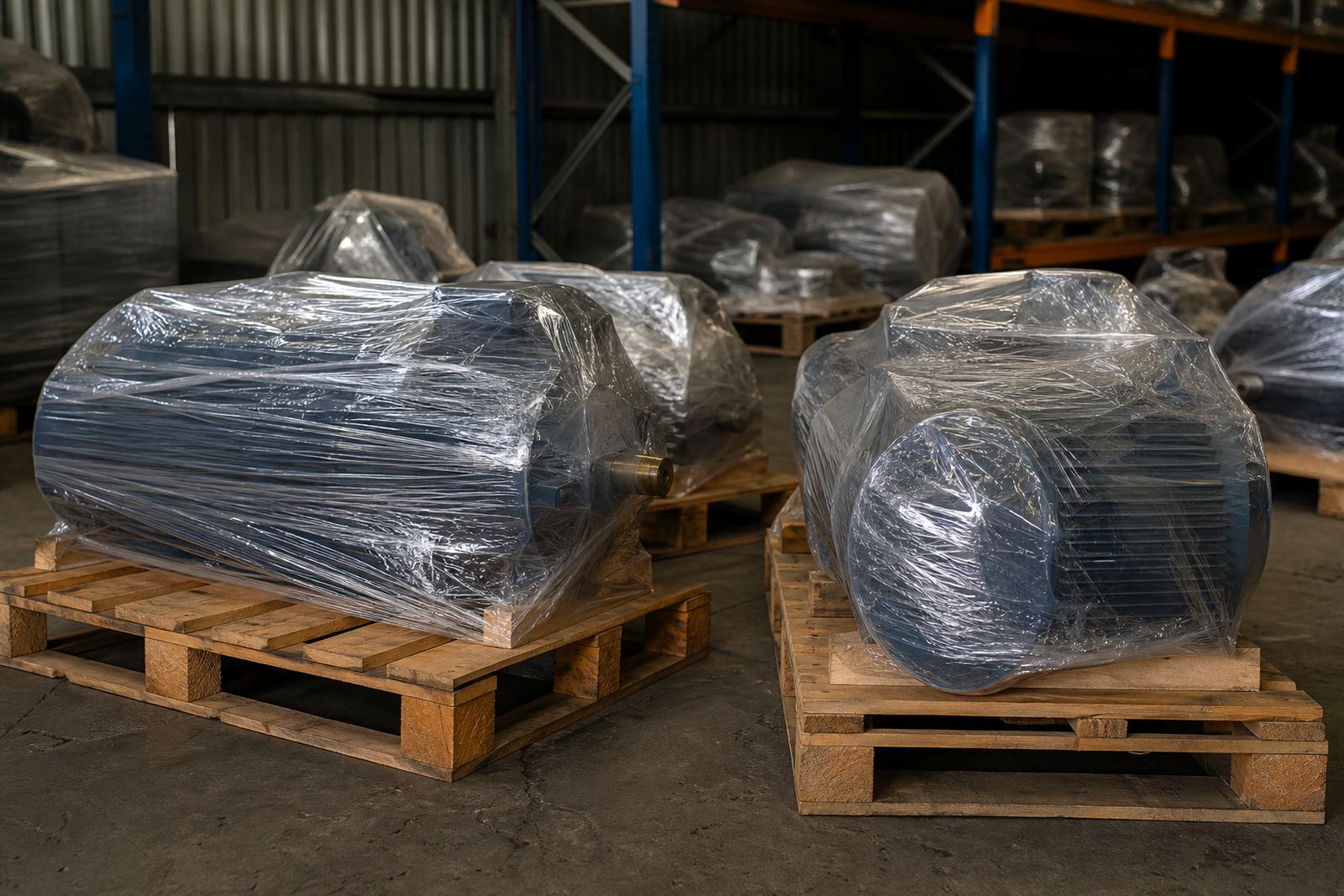
Do not wrap the motor tightly in plastic unless it is done in a way that allows inspection and prevents trapped moisture. A sealed wrap over a damp motor can make things worse. Light dust covers are useful, but they must not stop air moving around the frame.
- Check for visible rust on the frame, shaft and terminal box.
- Look for signs of moisture inside the conduit entry and cover.
- Arrange insulation testing before the motor goes back into service.
Keep bearings healthy while the motor is waiting
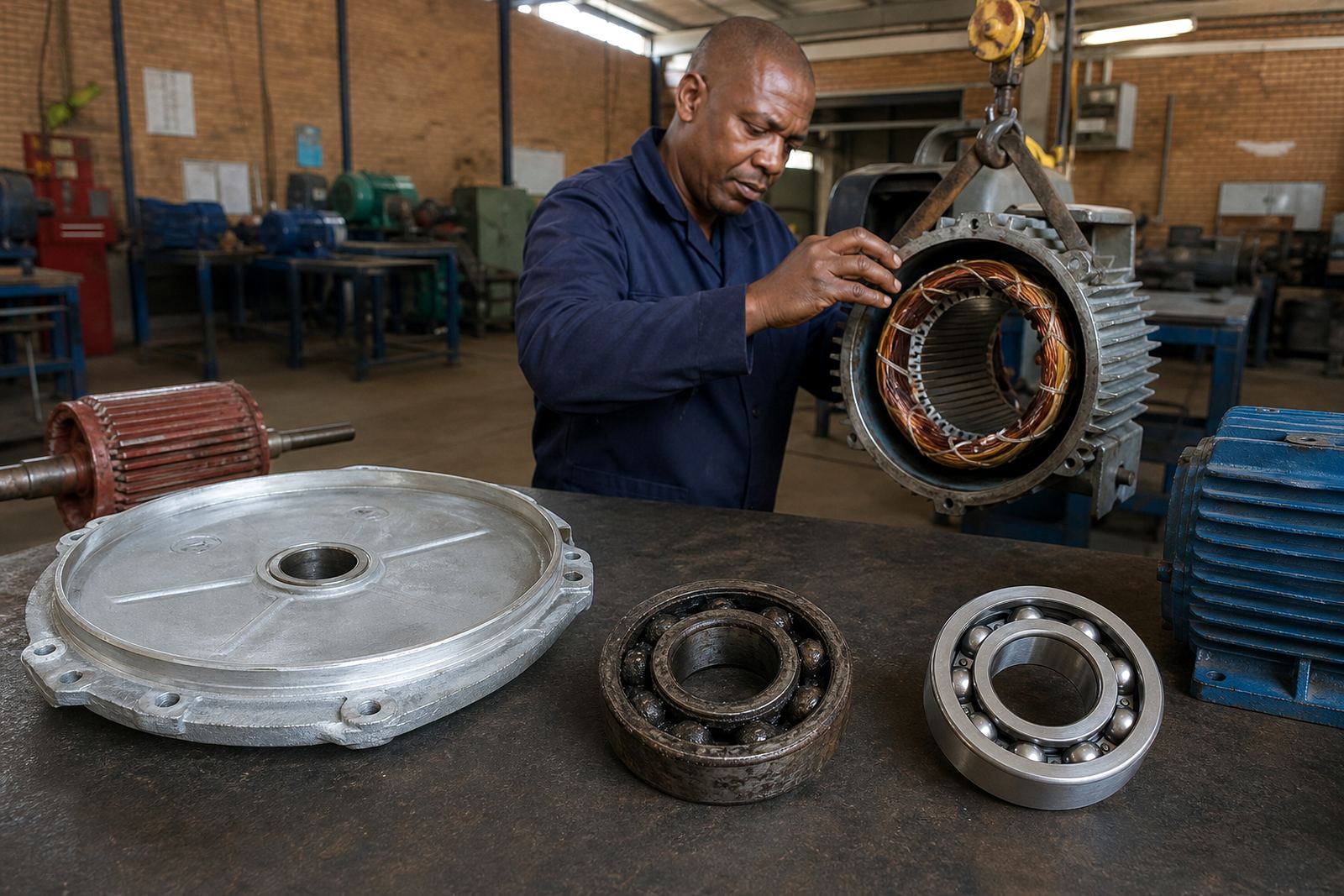
Bearing damage often starts while a motor is standing still. Grease can separate, moisture can get in and a shaft left in one position for too long may cause light brinelling on the bearings. If the motor is stored for months, the shaft should be turned by hand at intervals by a competent person, provided the isolation is in place and the motor is safe to handle. That small movement helps spread lubricant and reduce flat spots on the bearing elements.
For motors with grease nipples, do not keep pumping in grease just because the motor is stored. Too much grease can cause heat and pressure when the motor is finally run. Use the correct type and amount for that frame size and bearing arrangement. If the motor is due for bearing replacement before re-use, handle it as a planned task rather than an emergency after a failed start. It is far cheaper to replace a bearing on schedule than to lose a shaft, housing or winding later.
Store the motor where the shaft ends and coupling faces will not get dinged. A small knock on the shaft can create runout that shows up only after installation, and that can lead to vibration and seal wear.
- Rotate the shaft at planned intervals if storage is long term.
- Keep bearing grease clean and correctly specified.
- Protect shaft ends from impact and dirt.
Use proper lockout and handling when checking a stored motor
Any inspection, movement or testing of a motor must be done by qualified people, with lockout procedures followed properly. That applies whether the motor is in a Germiston workshop, a Pretoria plant or a shutdown team working in Durban. Do not let anyone assume a stored motor is harmless just because it is not running. Residual energy, stored charge in drive equipment and moving parts all need proper control.
Before a motor is moved or opened, isolate the supply, lock it off and verify that it is dead. Use lifting gear that suits the weight and mounting style. A motor can be heavier than it looks, and a dropped unit can crack feet, damage the fan cover or distort the end shields. If the motor is being prepared for a field job, check that the terminals are marked, the cable entry is intact and the mounting bolts are still serviceable.
This is also the time to do a basic site report on the motor condition, even if it is still in store. Notes on rust, dust, missing plugs or oil signs help the maintenance team decide whether the motor can go straight back into service or needs a closer look.
Do not forget the drive side if the spare motor sits with a variable speed drive
Many plants keep a spare motor together with a variable speed drive or in the same electrical room. That drive also needs correct storage. Dust, heat and moisture can cause trouble on the control electronics, terminals and cooling paths. In workshops across Ekurhuleni and Vereeniging, fine grinding dust and airborne moisture can settle into cabinets faster than people expect.
Keep drives in a dry clean area with stable temperature if they are not installed. Cover exposed terminals and keep the enclosure closed. When the unit comes out of storage, a qualified technician should do drive inspection, cable checks and panel cleaning before power is applied. If a drive has been in a coastal or humid area, such as Durban, check carefully for corrosion on terminals and signs of contamination inside the enclosure.
- Store drives away from dust and chemical vapours.
- Keep cooling paths clear and cabinets closed.
- Do not reconnect a drive without inspection and testing.
Plan storage with the next shutdown in mind
The best motor storage plan is tied to the maintenance calendar, not to luck. If your plant has a planned shutdown, make sure spare motors are labelled, recorded and ready for quick issue. Keep a simple note with frame size, mounting type, rated speed, duty and where the motor belongs. That helps when a pump, conveyor or fan goes down at short notice and the team needs the correct unit fast.
For older spares, use storage time to decide whether a motor is still worth holding. A motor that has sat for years may need fault finding, rewinding, bearing checks and insulation testing before it can be trusted again. If it is in good order, good. If not, it is better to catch the problem before a shutdown starts. In practical terms, a tidy store and a clear record system can save hours during commissioning support and reduce confusion when the pressure is on.
For plants and workshops across Johannesburg, Pretoria, Germiston, Boksburg, Kempton Park, Vereeniging and Durban, the same rule applies: treat the spare motor as active equipment, not dead stock. That habit keeps corrosion down, protects the winding insulation and gives the maintenance team a better chance of putting the machine back into service without delays.