

Why Small Alignment Errors Become Big Repair Bills
When a motor and driven machine are not lined up correctly, the coupling has to work harder than it should. Even a small offset can place extra side load on bearings, increase shaft movement and create vibration that travels through the whole machine base. Over time that movement can loosen fixings, damage seals and shorten the life of the equipment.
In a busy plant, the problem is often blamed on the motor, the gearbox or the drive, but poor alignment is sometimes the real cause. It does not matter whether the machine is in Germiston, Vereeniging or Durban, the effect is much the same. The extra stress leads to wear and the wear becomes failure. That is why alignment checks should form part of any planned maintenance approach, not only after a breakdown.
What Misalignment Looks Like On The Shop Floor
Operators often notice the signs before anyone opens a terminal box or strips a motor. The machine may run louder than normal, shake at certain speeds or get hotter after a short period of operation. A coupling guard might rattle. Grease around a bearing housing may darken quicker than expected. In some cases, the motor pulls more current than it should because it is working against extra resistance.
- Unusual vibration at start-up or under load
- Frequent bearing noise or rough running
- Coupling wear, dust or metal markings around the hub
- Loose anchor bolts or movement on the baseplate
- Repeated seal failures on pumps, fans or conveyors
These signs do not always mean one single fault. They can point to alignment issues, soft foot, worn bearings, damaged couplings or poor installation. A proper fault finding process helps narrow it down before more parts are replaced needlessly.
How Poor Alignment Stresses Bearings And Shafts
Bearings are designed to support rotation, not to fight constant sideways load. When a coupling is out of line, the bearing sees forces it was never meant to carry. That leads to heat, pitting, cage damage and early failure. The same strain can pass into the shaft and keyway, especially on motors that start and stop often.
Once a bearing starts to run rough, the vibration can increase even more and the damage begins to feed itself. If the machine is used in a coastal area like Durban, moisture and contamination can make the problem worse. In dusty industrial areas around Johannesburg or Boksburg, fine particles can enter weak seals and speed up wear. The result is often a repair that looks simple at first but becomes a much larger job later.
- Radial load increases on the bearing set
- Lubricant breaks down faster under heat
- Shaft journals and housings can oval over time
- Seal faces and coupling inserts may wear unevenly
Why Alignment Checks Belong With Motor Rewinding And Drive Repair
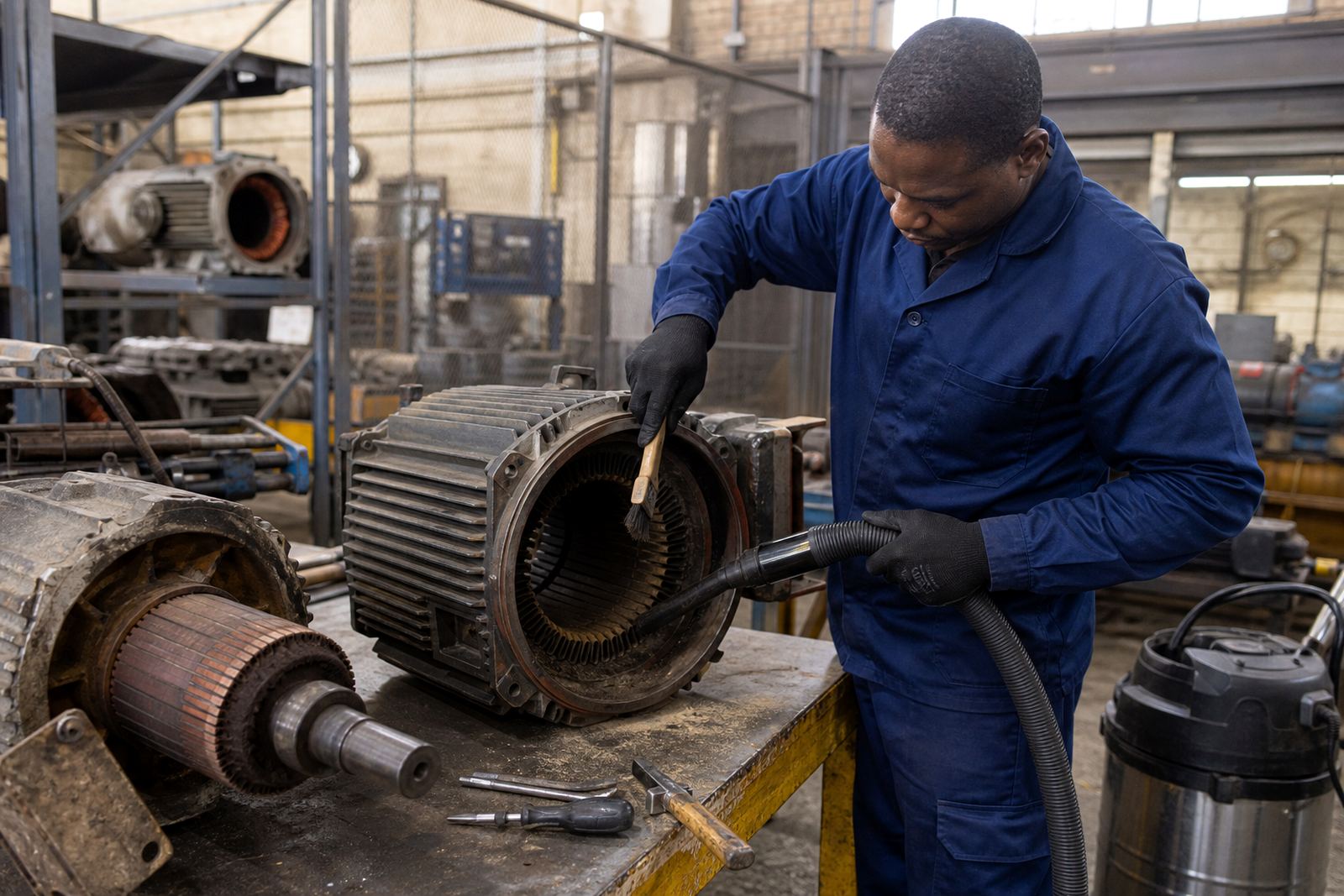
A motor that has been rewound and put back into service can still fail early if the alignment is ignored. The same applies after variable speed drive repair or replacement. If the machine starts hunting, surging or running at a new speed range, hidden alignment faults can become more obvious. That is why a complete service often includes bearing checks, insulation testing, drive inspection and alignment checks before commissioning.
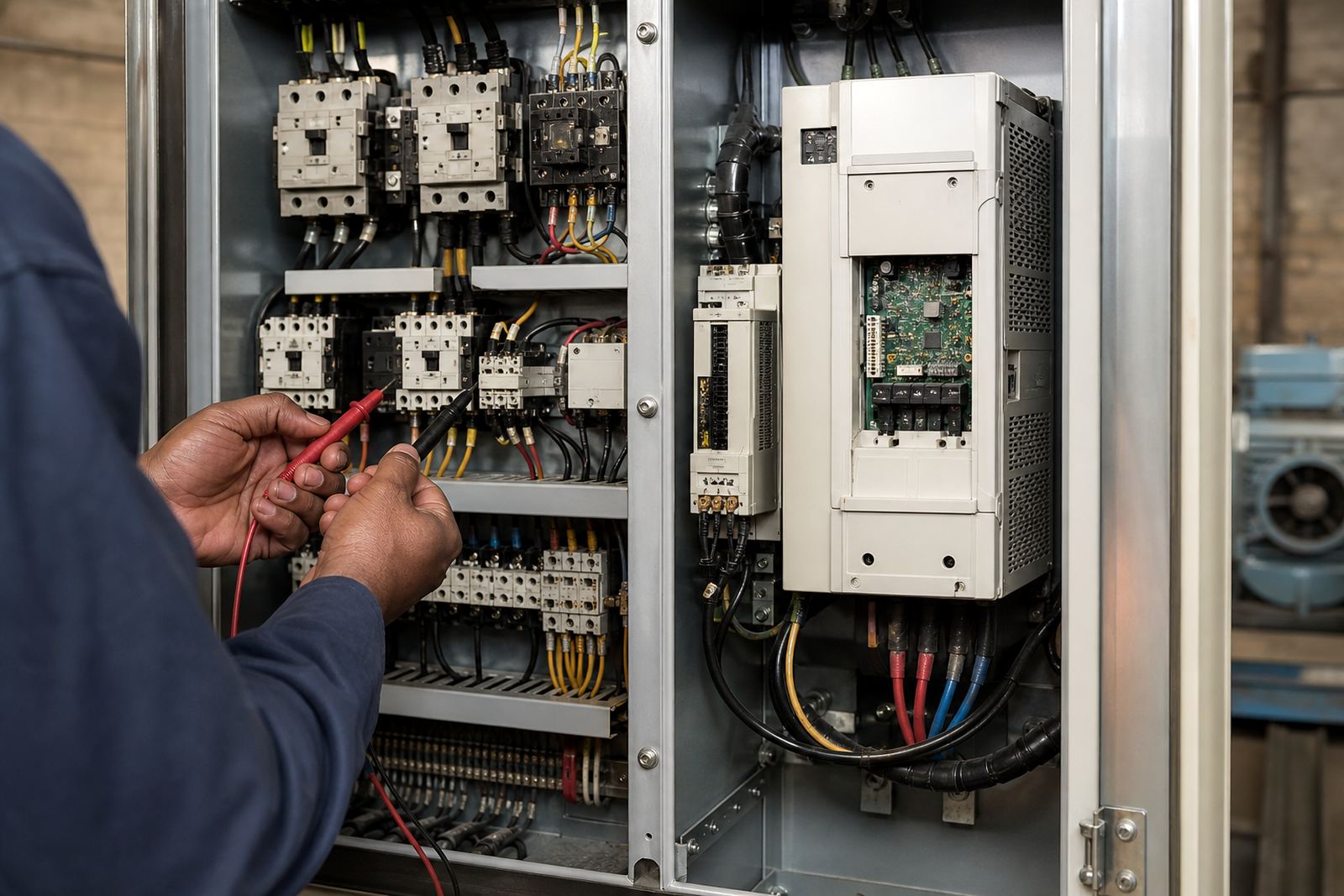
Electrical work must always be done by qualified people and proper lockout procedures must be followed before any inspection or removal starts. On site, that means isolating the supply, verifying dead, securing stored energy and keeping the area controlled. It may sound basic, but it prevents injuries and avoids damage to a repaired motor or drive. In a shutdown window, a missed step can cost more than the repair itself.
For plants in Pretoria, Ekurhuleni or Vereeniging, planning also matters. If a line has limited downtime, the sequence of motor removal, shaft checks, reinstallation and test running should be organised before the first bolt is loosened. That reduces delay and helps the repair team spot alignment issues before the machine is handed back.
Practical Checks That Help Prevent Repeat Failures
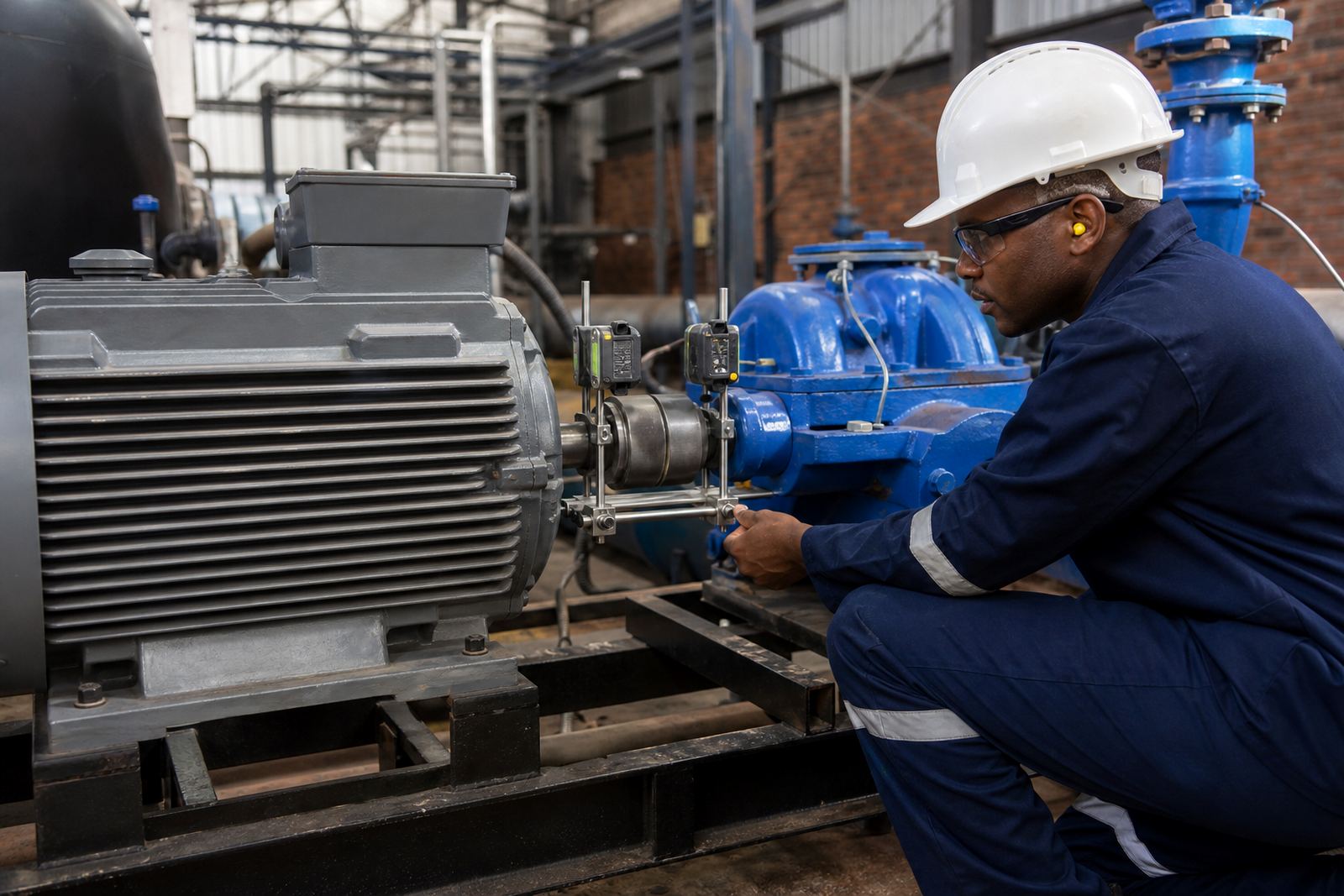
Good alignment starts with a clean and stable foundation. The baseplate should be checked for cracks, loose grouting and soft foot on the motor feet. After that, the coupling faces and shafts are measured and the readings are compared at several positions. Final adjustment is only part of the job. The machine must also be checked under real running conditions, because heat and load can shift things slightly.
- Inspect the base, bolts and grout before alignment starts
- Check for soft foot and correct it before final setting
- Measure both angular and offset misalignment
- Inspect couplings for wear, cracking or loose inserts
- Recheck after run-in, especially on high-vibration equipment
Site reporting is useful here because it gives maintenance teams a record of what changed and what was found. If the same machine keeps showing the same symptoms, there is often a pattern in the installation, the load or the shutdown process. Catching that pattern early can save a lot of wasted labour.
A Germiston Example That Shows The Cost Of Delay
At a workshop in Germiston, a motor driving a production line kept failing bearings every few months. The team had already replaced the bearings twice and checked the drive, but the vibration returned. When the setup was examined properly, the coupling had a clear offset and the motor feet were not sitting evenly on the base. The machine was not badly damaged yet, but the repeated stress had started to mark the shaft and wear the seal surfaces.
Once the alignment, bearing condition and drive settings were checked together, the machine settled down and the noise dropped at once. The main lesson was simple: if the cause is not removed, the symptoms will come back. That is why shutdown planning, spares assessment and proper commissioning support matter as much as the repair itself. A job done half way often becomes a second callout later, and nobody needs that.
For plants and workshops across South Africa, from Boksburg and Kempton Park to Durban and Pretoria, careful alignment is one of the most practical ways to protect motors, drives and connected machinery from unnecessary wear.