

Springs hoist drive fault report and brief
The job came from a plant in Springs that needed a hoist drive looked at after it would not start during normal operation. The equipment was used on a workshop lifting application, so the brief was simple: find the fault, repair what could be repaired, and confirm the drive was safe to return to duty. The client wanted a practical answer fast, because a hoist standing still can hold up other work across the whole site.
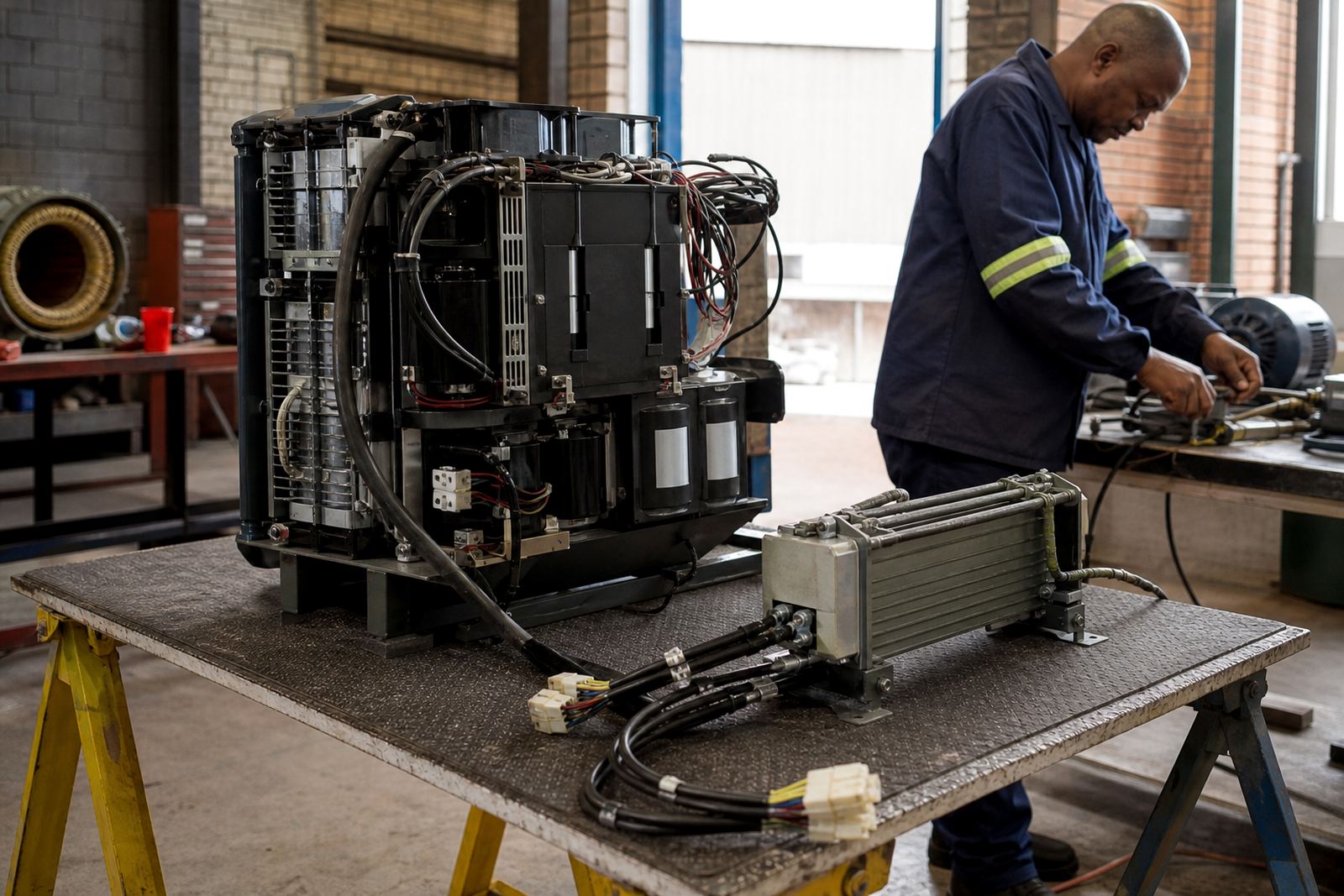
We received the drive at our Germiston base and logged the symptoms as a no-start condition with no reliable output to the motor. The unit was single phase control powered with a variable speed drive arrangement feeding a 3 phase hoist motor, and the main concern was whether the fault sat in the control section, the power section or on the load side. As with all electrical work, the unit had to be isolated properly and handled by qualified people only, with lockout procedures in place before any testing began.
What we found during inspection and cleaning
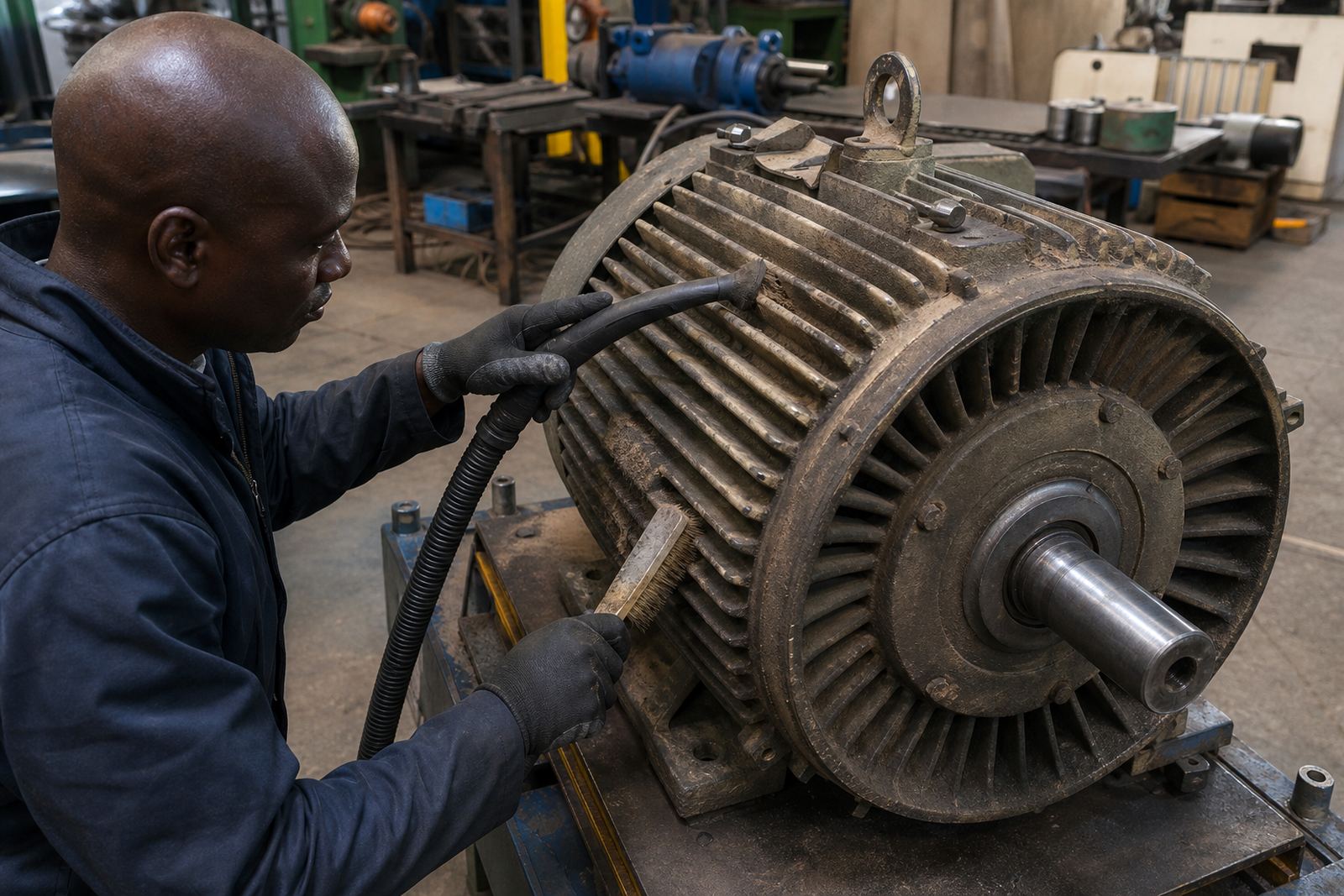
The drive was opened up and checked for heat damage, dust build-up, loose terminations and signs of moisture ingress. In many plant environments, fine conductive dust, vibration and heat from load-shedding conditions can all shorten the life of control gear. This unit had visible contamination inside the enclosure and the cooling paths were partly blocked, which can cause nuisance trips, poor drive response or a complete failure to start.
We carried out a full visual and electrical inspection before touching any components. The checks included terminal condition, cable entry points, board contamination, fan condition and evidence of overheated components. We also verified that the motor cable and control wiring were suitable for the application and that there were no obvious earth faults or loose strands at the terminations. A quick clean is not enough on its own, but it is often an important first step in bringing a drive back to stable working condition.
- General condition check of enclosure and internal components
- Panel cleaning to remove dust and debris
- Cable and terminal checks for looseness or heat marks
- Drive inspection for signs of moisture or contamination
Repair work carried out on the hoist drive
Once the fault path had been narrowed down, we repaired the affected sections and restored the drive to serviceable condition. The work included cleaning, component-level attention where needed, and inspection of the control electronics that manage starting, speed control and protection functions. Hoist drives must be treated carefully because the application places sudden demand on the motor and drive. If the unit is unstable, it can create poor acceleration, harsh stopping or refusal to run at all.
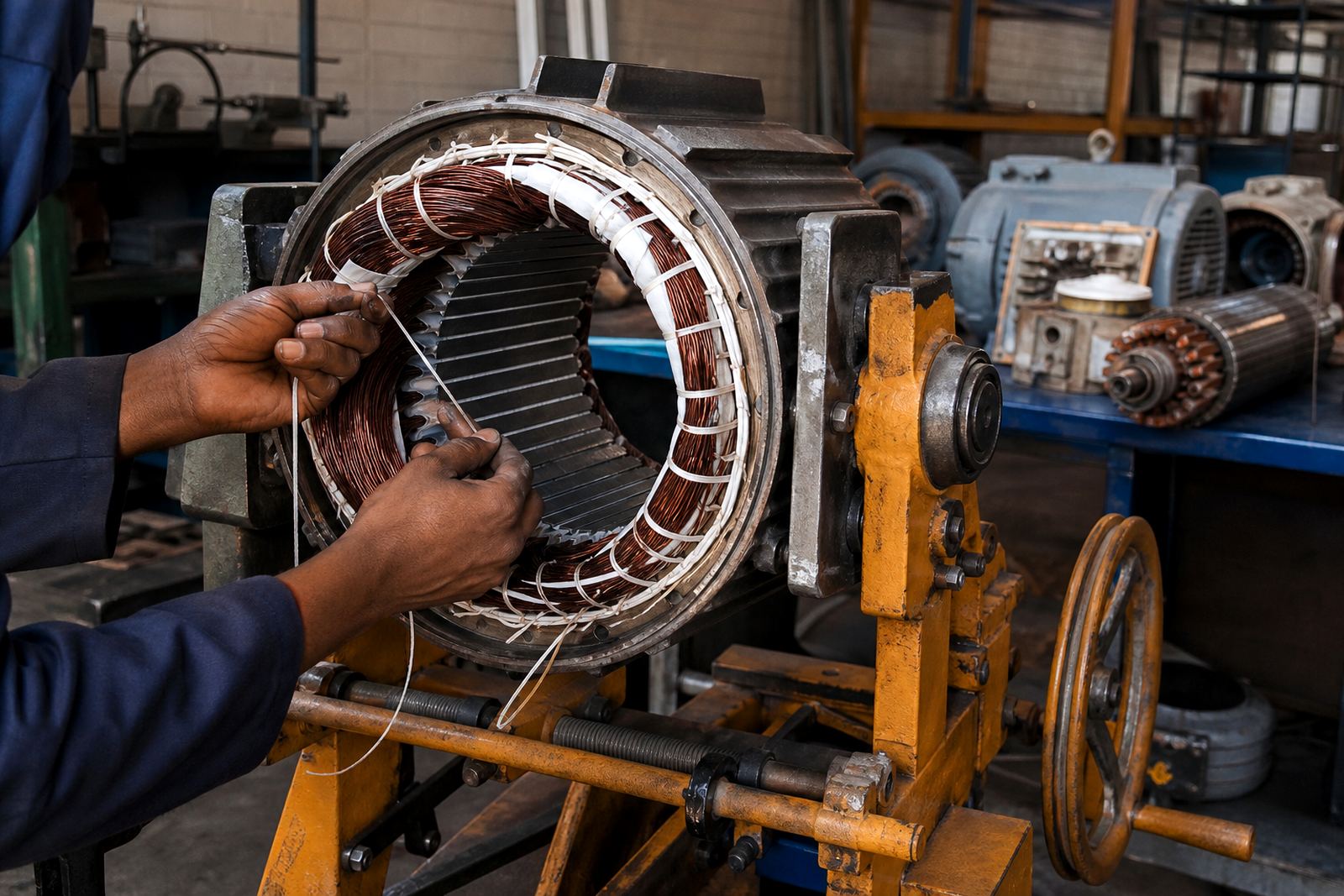
We also checked the motor side of the installation because a drive fault is not always only a drive fault. Motor condition, cable integrity and mechanical load can all influence performance. In this case, the hoist system was assessed as a whole, with attention given to alignment checks, contact integrity and the status of the supply feeding the equipment. The repair was completed in a way that suited the existing control setup, without changing the operating method the site was already using.
- Internal cleaning and contamination removal
- Fault area repair within the control electronics
- Motor supply and output checks
- Termination tightening and connection review
Testing, insulation checks and safe return to use
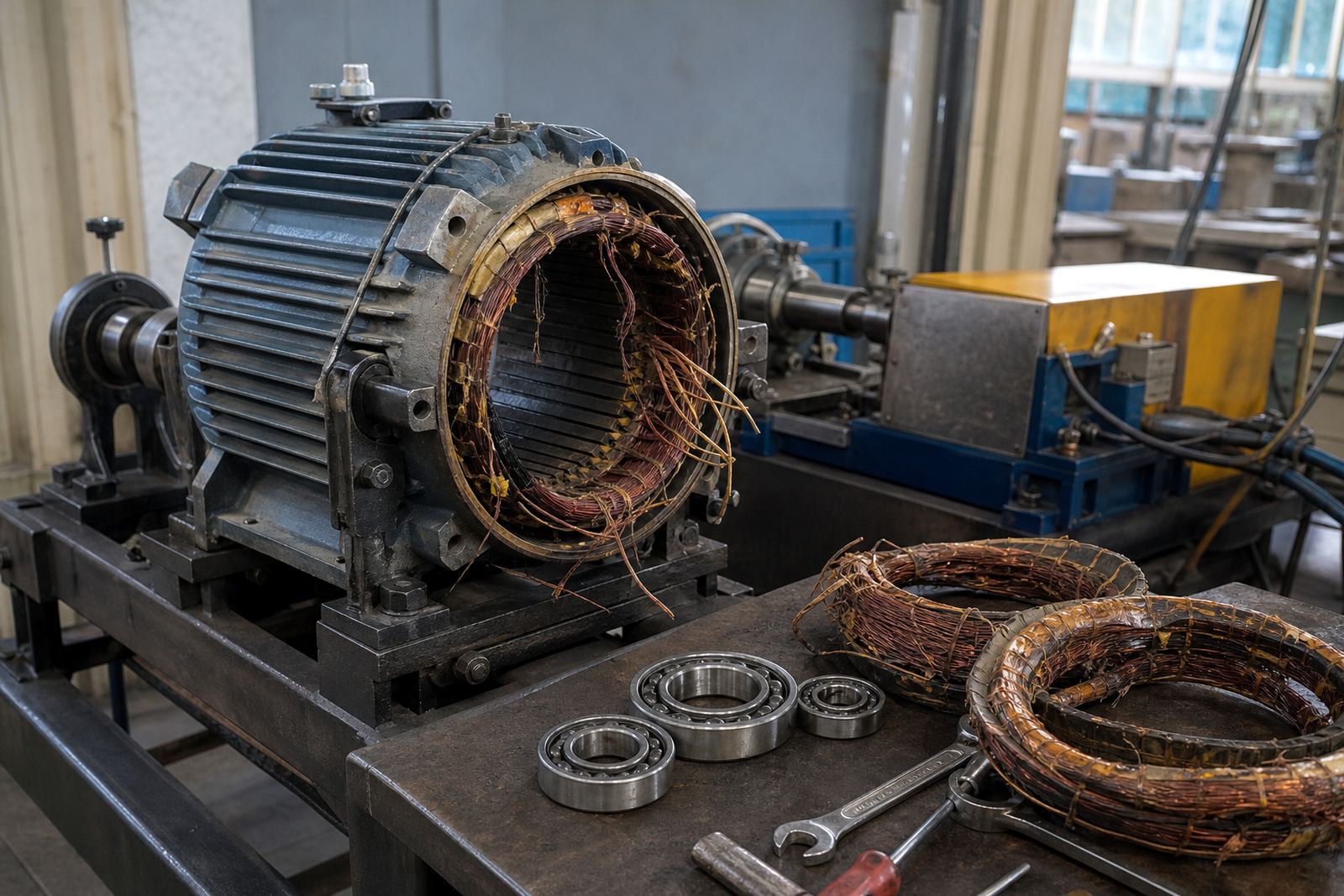
After the repair, the drive was tested in a controlled manner before it was handed back. That included functional checks, output verification and a review of the protection settings relevant to the application. We also paid attention to the insulation condition of the connected equipment, because a drive can only perform properly if the associated motor and cables are sound. In motor and drive work, insulation testing is one of the basic steps that should never be skipped.
Because the site was in active use, we kept the focus on safe recommissioning and practical support. Electrical work must always be done by qualified people and with proper lockout procedures, especially on hoist equipment where unexpected movement can put people at risk. We would rather delay a restart than rush a machine back into service with unresolved issues.
- Functional test after repair and cleaning
- Insulation testing on connected motor and cables
- Output and control verification
- Commissioning support for safe restart
Timeline for the Springs repair
The repair was handled over a short practical timeline measured in weeks rather than months. Week one covered the assessment, fault confirmation and internal cleaning. Week two covered the repair work, testing and final review before return to site support. That kind of timeline is typical when the fault is contained to the drive and there is no major motor damage or extensive rewinding required.
For the client, the useful part was not only getting a repaired drive back, but also understanding what had likely pushed the unit into trouble. On many sites around Springs and Germiston, the combination of dust, heat, vibration and interrupted power supply can expose weak points in older drives. Once those weak points are found, the site can plan better shutdowns and avoid repeat stoppages.
- Week 1: inspection, fault finding and cleaning
- Week 2: repair, testing and recommissioning support
- Site feedback: practical advice for ongoing maintenance
Results and what we would do again
The drive was returned to working condition and the hoist could be used again without the original no-start fault. The main result was restoring function while keeping the process controlled and safe. For the client, that meant less downtime and a clearer view of what to check during future shutdowns. The repair also showed how important routine panel cleaning and cable checks are on lifting equipment, especially in industrial areas where dust and vibration are constant.
If we were asked to do the same job again, we would follow the same sequence: isolate properly, inspect carefully, clean thoroughly, repair the affected sections, then test the full system before handing it back. That is the practical way to deal with hoist drives, motor circuits and variable speed equipment in plants and workshops. Locor has been working from Germiston since 2007, serving customers across Johannesburg, Ekurhuleni, Pretoria, Vereeniging and Durban, so the approach is built around real site conditions, not theory.
When a hoist drive needs this kind of attention
A hoist drive should be checked promptly when it starts tripping, fails to start, gives unstable speed control or shows a burnt smell after operation. These symptoms can point to contamination, wear, poor connections or problems on the motor side. Early fault finding can reduce the chance of secondary damage to the drive, motor or contactors.
Our team handles drive inspection, motor removal support, bearing checks, insulation testing, alignment checks, shutdown planning and site reporting for plants and workshops across South Africa. If you need support in Germiston, Johannesburg, Ekurhuleni, Pretoria, Vereeniging, Durban, Boksburg or Kempton Park, clients can reach us through the enquiry form on our contact page and we will take it from there.
Key facts
| Project | Springs hoist drive no-start fault repair |
|---|---|
| Location | Springs, Gauteng |
| Equipment type | Variable speed drive for hoist duty |
| Supply arrangement | Single phase control with 3 phase motor output |
| Work completed | Assessment, cleaning, repair and testing |
| Timeline | Completed over 2 weeks |