

Production Stopped When the Mixer Motor Failed
The site was a process plant in Benoni running a mixer that had to stay reliable through long production shifts. The motor began tripping and showing signs of winding failure, with insulation resistance falling below what the plant team expected for normal service. The issue had already moved past a simple reset, so the client needed a proper inspection and repair plan, not guesswork.
There were a few practical constraints. The mixer sat in a busy production area, access was limited, and the plant could not afford loose handling or rushed re-fit work. Like most sites in Gauteng, the team also had to work around load-shedding risk, so testing windows and shutdown timing had to be planned with care. We treated the job as a controlled electrical repair and made sure lockout procedures were followed before any removal started.
The brief was straightforward: find the fault, repair the motor properly and get the mixer back into service with the least possible disruption. That meant checking the winding condition, the bearings, the shaft condition, terminal connections and the insulation system as a whole. On a mixer, vibration and heat often show up before a full breakdown, so we look at the motor as part of the machine, not just as a standalone unit.
What We Checked Before the Rewind
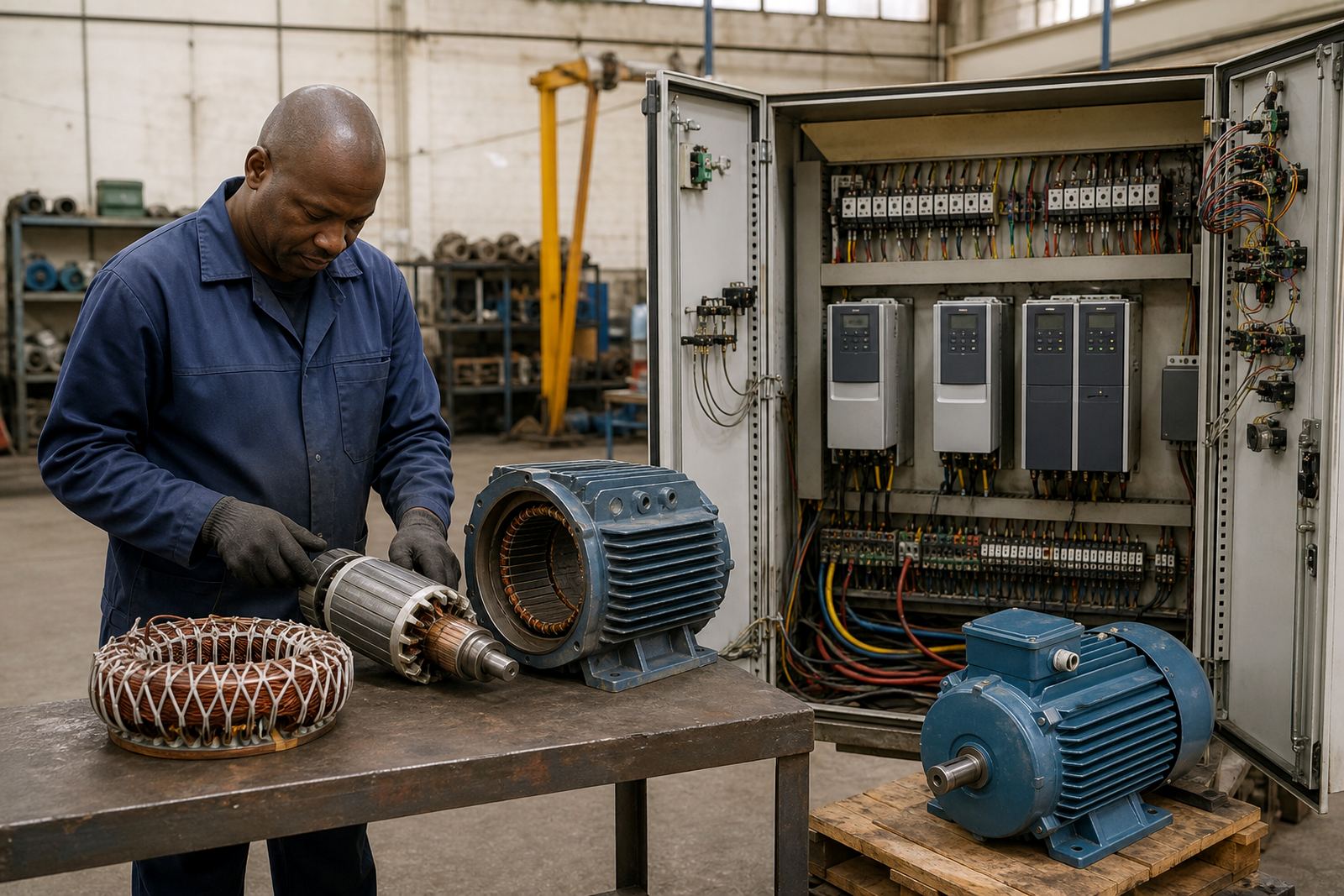
Our first step was fault finding on site in Benoni, followed by safe removal of the motor from the mixer assembly. The motor was taken back to our Germiston base for stripping and inspection. Once open, the winding damage was clear, with heat stress and breakdown in the insulation system. The bearings also showed wear, which can add noise, load and extra heat, so they were included in the repair scope.
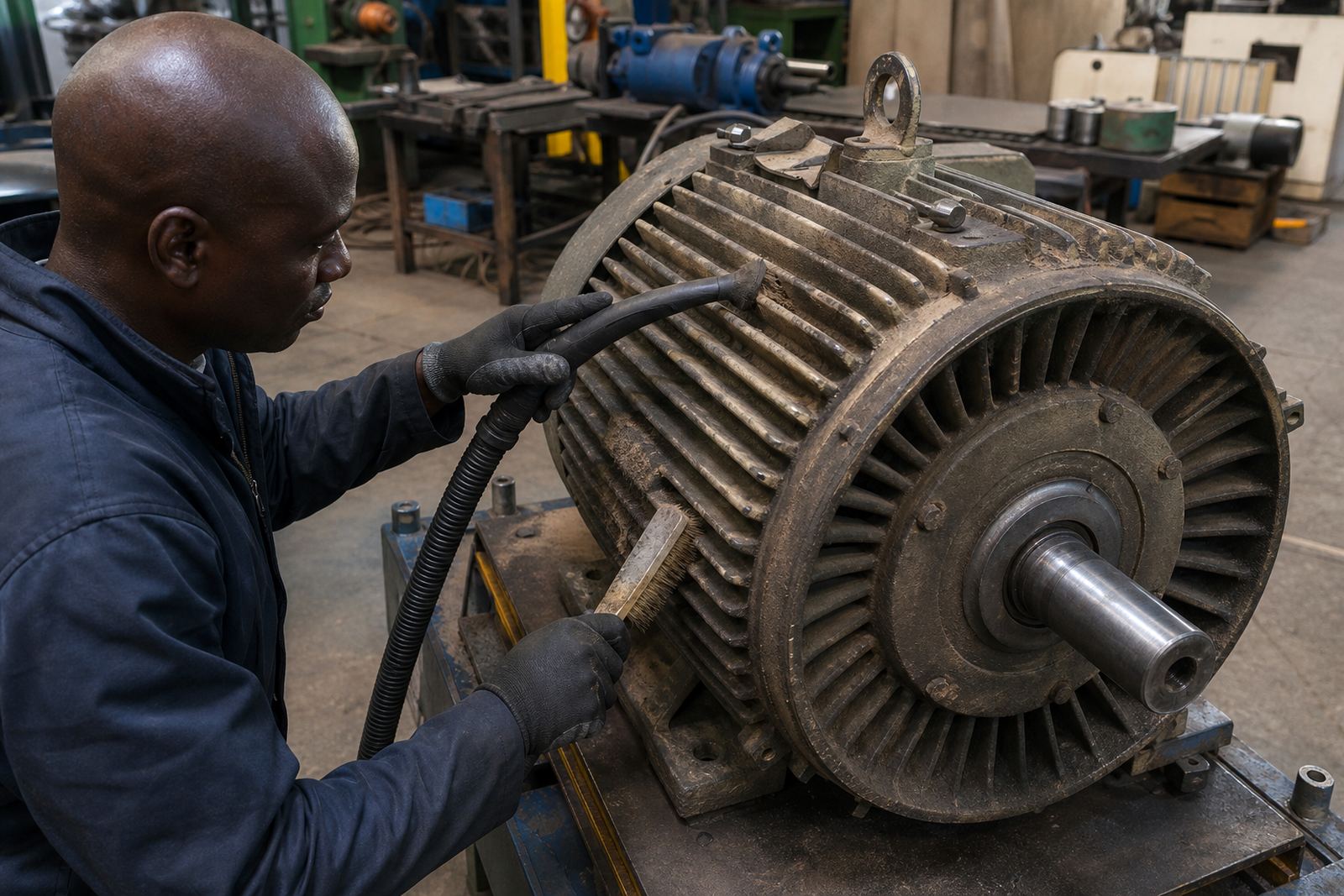
Before any rewinding work, we carried out a full set of checks to confirm the repair path and avoid repeat failure. That included insulation testing, visual checks on the stator and rotor condition, terminal and lead inspection, and assessment of contamination from dust and process residue. In plants around Benoni and Ekurhuleni, fine dust and moisture can shorten motor life, especially where equipment runs warm and gets washed down or sits near open bays.
We also reviewed the installation details so the repaired motor would go back into service without avoidable strain. Alignment, cable condition and mounting points were all worth checking, because a rewind alone will not fix a bad base or misaligned coupling. Electrical work must always be done by qualified people, with proper lockout and verification before anyone touches conductors or rotating parts.
- Motor removed from the mixer under lockout
- Insulation resistance and winding checks completed
- Bearing condition assessed for wear and heat damage
- Mounting, cable and terminal condition reviewed
- Repair scope confirmed before strip-down
Rewinding, Bearing Replacement and Workshop Testing
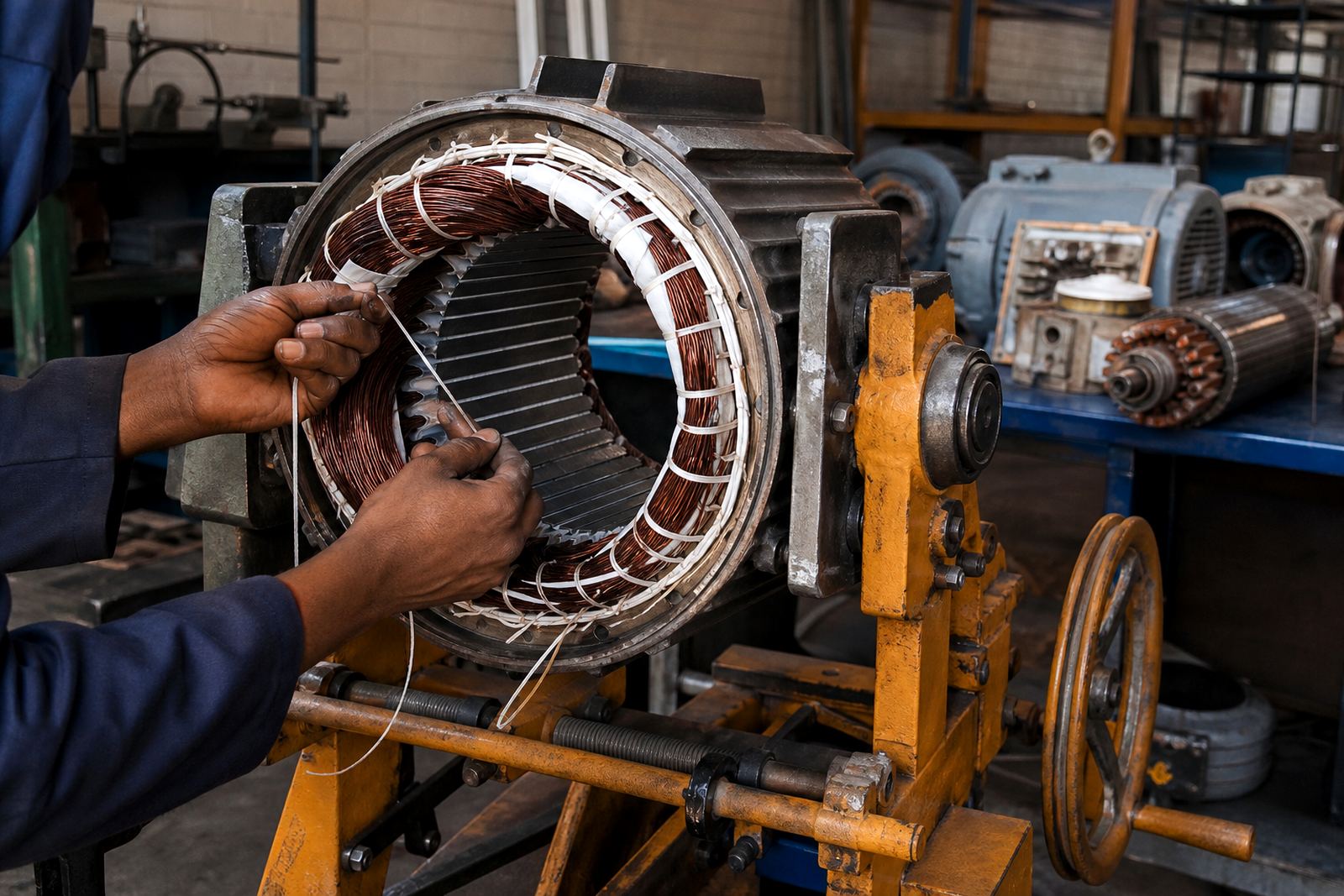
At the workshop, the motor was stripped down and the failed winding was removed in a controlled way. We rewound the stator to match the original electrical design, using the correct wire size, coil pattern and insulation materials for the duty. That part matters because a mixer motor can face repeated starts, variable loading and vibration from the process itself, so the rewind has to suit the application and not just fit the frame.
With the windings in place, we replaced the worn bearings and checked the rotor assembly for smooth rotation. The housing and end shields were cleaned, the terminals were repaired where needed, and the motor was reassembled with attention to clearances and fastener condition. We then carried out insulation testing, continuity checks and a controlled run test to confirm the motor was stable under load. The aim was to make sure the machine would start cleanly, run without excess noise and hold up under normal production use.
For this project, the work was completed over two weeks from removal to reinstallation support. That allowed time for diagnosis, rewinding, bearing replacement, testing and a final check before the motor went back to site. We did not rush the process, because a motor that fails again costs far more than one that is repaired properly the first time.
- Stator rewound to original motor specification
- Bearings replaced during strip and rebuild
- Insulation and continuity tests completed after assembly
- Run test carried out before handover
- Motor prepared for re-fit to the mixer line
Support for Reinstallation and Restart
Once the motor was ready, we assisted with reinstallation planning and commissioning support. The mixer had to be set back into position carefully, with alignment checks carried out before the final start-up. On a production mixer, even a small offset can show up quickly as vibration or premature bearing wear, so we always check the mechanical side as part of the electrical job.
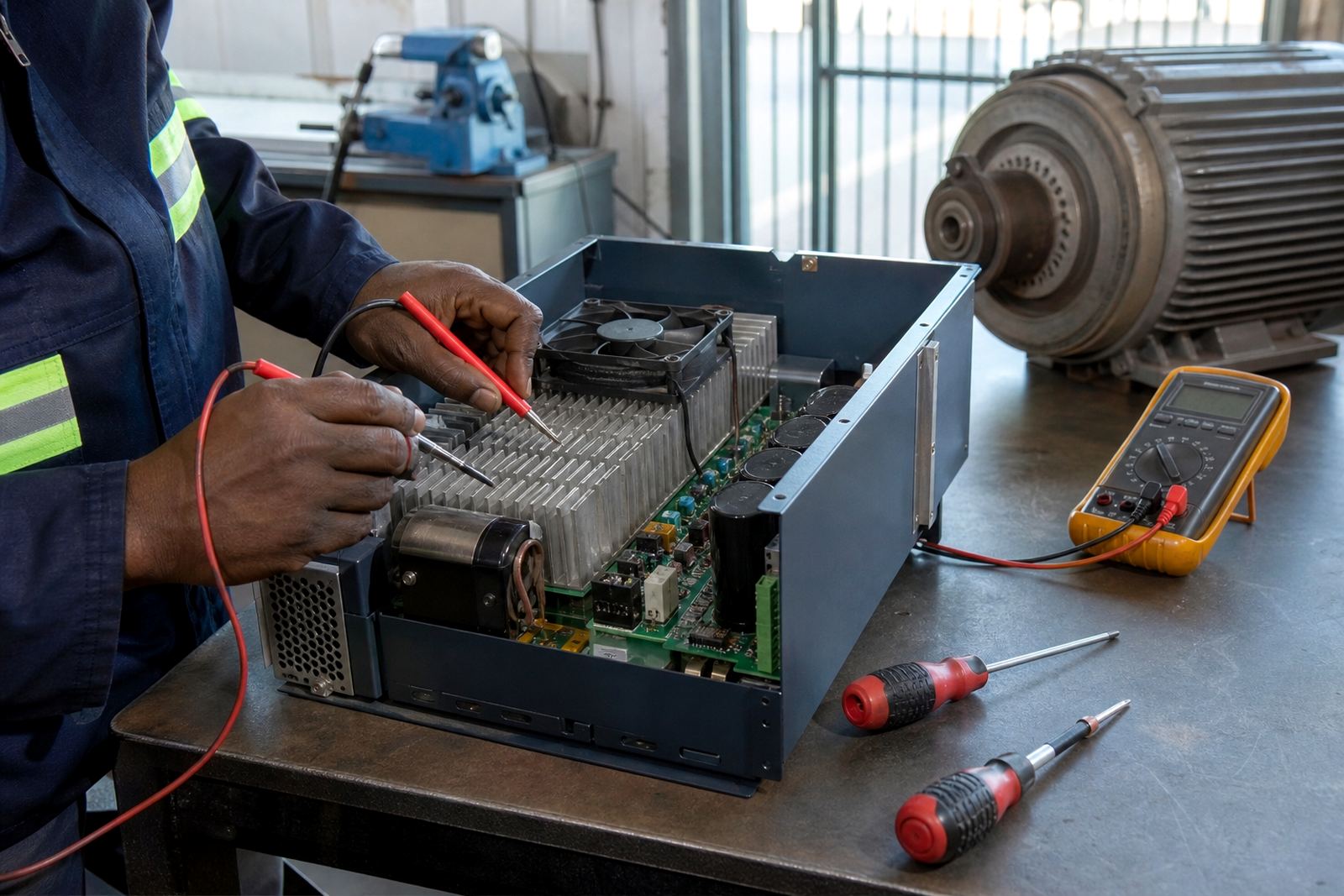
We also reviewed the cable connections, the panel condition and the basic starting sequence before handing the unit back to the client. Where a drive or starter is part of the system, the settings and protection have to suit the repaired motor, otherwise the new winding can still be under stress. That is especially important on South African sites where supply dips, start-stop cycling and general plant wear can all play a part.
The client’s maintenance team wanted clear site reporting, so we documented the fault, the repair steps and the checks completed. That made it easier for them to keep a record for future shutdown planning and spares assessment. It also helps when a similar machine starts making noise or tripping later on.
Why This Repair Held Up in Service
The main result was that the mixer returned to production with a properly repaired motor and no sign of the original insulation fault during testing. The replacement bearings reduced noise and improved running smoothness, while the cleaned and tested windings gave the client a better starting point for ongoing use. The repair also gave the maintenance team a clearer picture of the machine condition, which is useful when planning future shutdowns.
What worked well on this job was the sequence: safe removal, proper fault finding, full rewind, bearing replacement and measured recommissioning. We would do the same again on a similar Benoni mixer because the process dealt with the root cause rather than only the symptom. In our experience, that is the difference between a quick patch and a repair that actually lasts.
For clients in Benoni, Boksburg, Kempton Park, Johannesburg and the wider Ekurhuleni area, this kind of work is often about timing as much as workmanship. A plant may only get a short stop window, so the repair team has to be organised, communicate well and work cleanly. That is how you keep the line moving without cutting corners.
What We Would Repeat on Another Mixer Job
If we were called to another mixer rewind in Benoni or Pretoria tomorrow, we would follow the same basic approach: check the fault at site, make the motor safe, remove it properly and test before deciding on the repair. That is the best way to avoid extra expense and avoid sending a machine back into service with hidden damage. A process motor is not just a spare part, it is part of the plant's production rhythm.
We would also keep the same focus on the wider system. That means looking at the motor, the drive or starter, the mounting, the cable route and the panel condition as one working unit. In some cases the issue starts with ventilation, overloads or poor protection settings, not the winding alone. Good repair work has to account for all of that, other wise the same fault can come back soon after restart.
For industrial clients, especially those running in humid coastal conditions or in dusty inland sites, regular insulation testing and bearing checks can save a lot of trouble. It is much easier to spot early warning signs than to wait for a full breakdown in the middle of production.
Key facts
| Project type | Mixer motor rewind and repair |
|---|---|
| Location | Benoni, Gauteng |
| Client type | Process plant |
| Fault found | Insulation breakdown during production |
| Core work | Rewind, bearing replacement, insulation testing |
| Timeline | 2 weeks |
| Support provided | Fault finding, motor removal, commissioning support |