

Blower Repair From Kempton Park
This job came in from Kempton Park after a blower motor started running hot and making a rough mechanical noise during operation. The plant team needed the unit restored in the workshop so they could get airflow back to the line without risking a second failure on site.
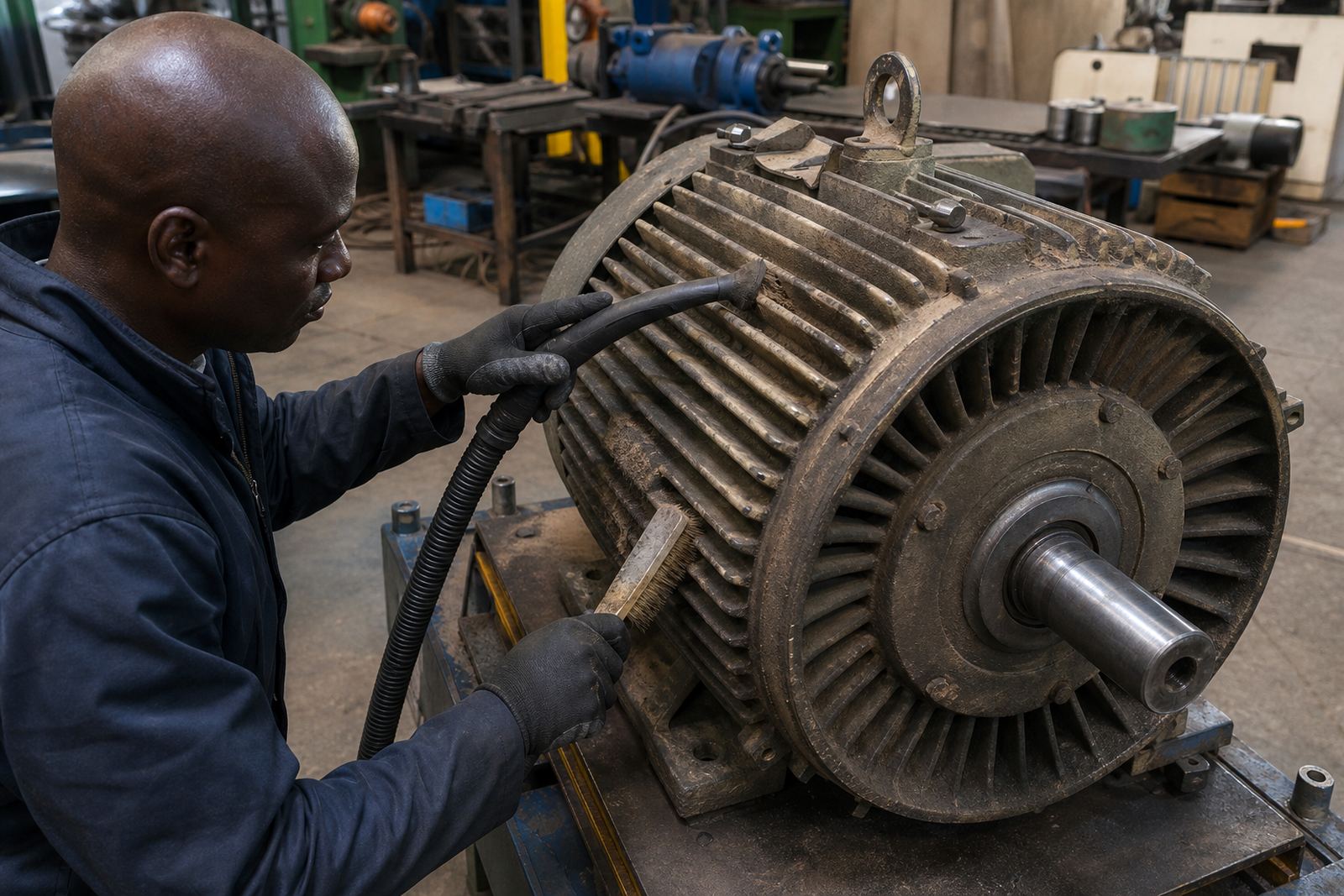
The blower had clear signs of contamination damage. Dust and residue had worked their way into the end shields and bearing area, and the insulation system needed proper testing before the motor could be put back into service. We also checked the coupling and mounting points because a blower can fail again if the root cause is not dealt with properly.
Electrical work must be done by qualified people only, with lockout procedures in place before removal, testing or commissioning. That matters on blower sets as much as on any other rotating equipment, especially where staff are working around live panels and moving parts.
What The Brief Asked Us To Cover
The brief was straightforward: inspect the motor, assess contamination damage, rebuild the unit in the workshop and return it ready for controlled reinstallation. The client also wanted a clear report of what had failed and what needed attention before the next start-up.
We treated it as a full restoration job rather than a quick clean and test. That meant looking at the winding condition, bearing fit, shaft condition and general mechanical condition before deciding what could be reused. On blower motors, a small amount of imbalance or bearing wear can turn into vibration, heat and early failure.
- Contamination inspection and internal cleaning
- Bearing checks and replacement where needed
- Insulation resistance testing before reassembly
- Mechanical checks on shaft, end shields and mounting faces
- Final running checks after rebuild
Workshop Restoration Process
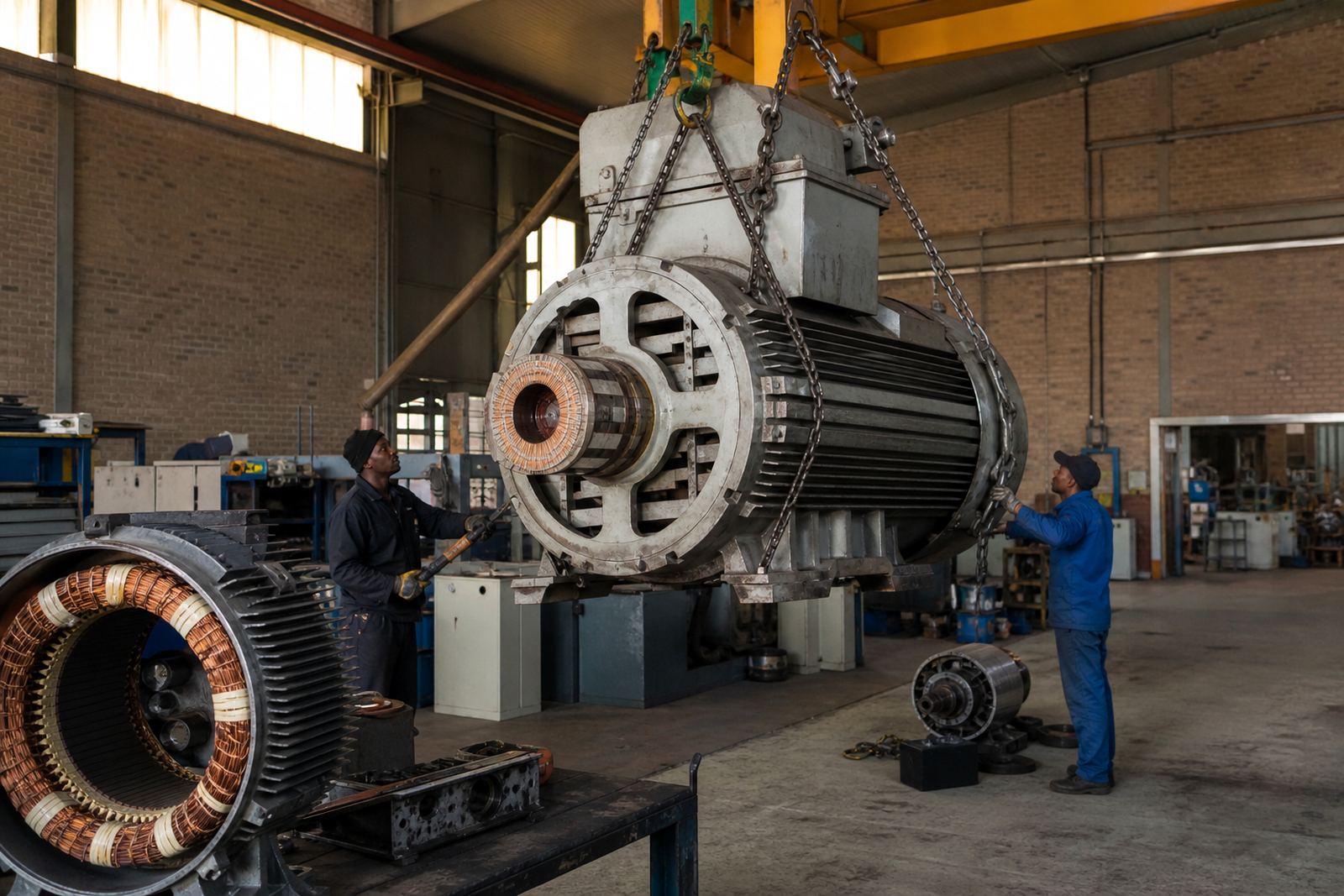
Once the motor arrived at our Germiston base, we opened it up and documented the condition of the internals. The contaminated areas were cleaned carefully, then the old bearings were removed and the housings checked for wear. Where bearings seat badly, a replacement bearing alone does not solve the issue so the fit has to be checked properly.
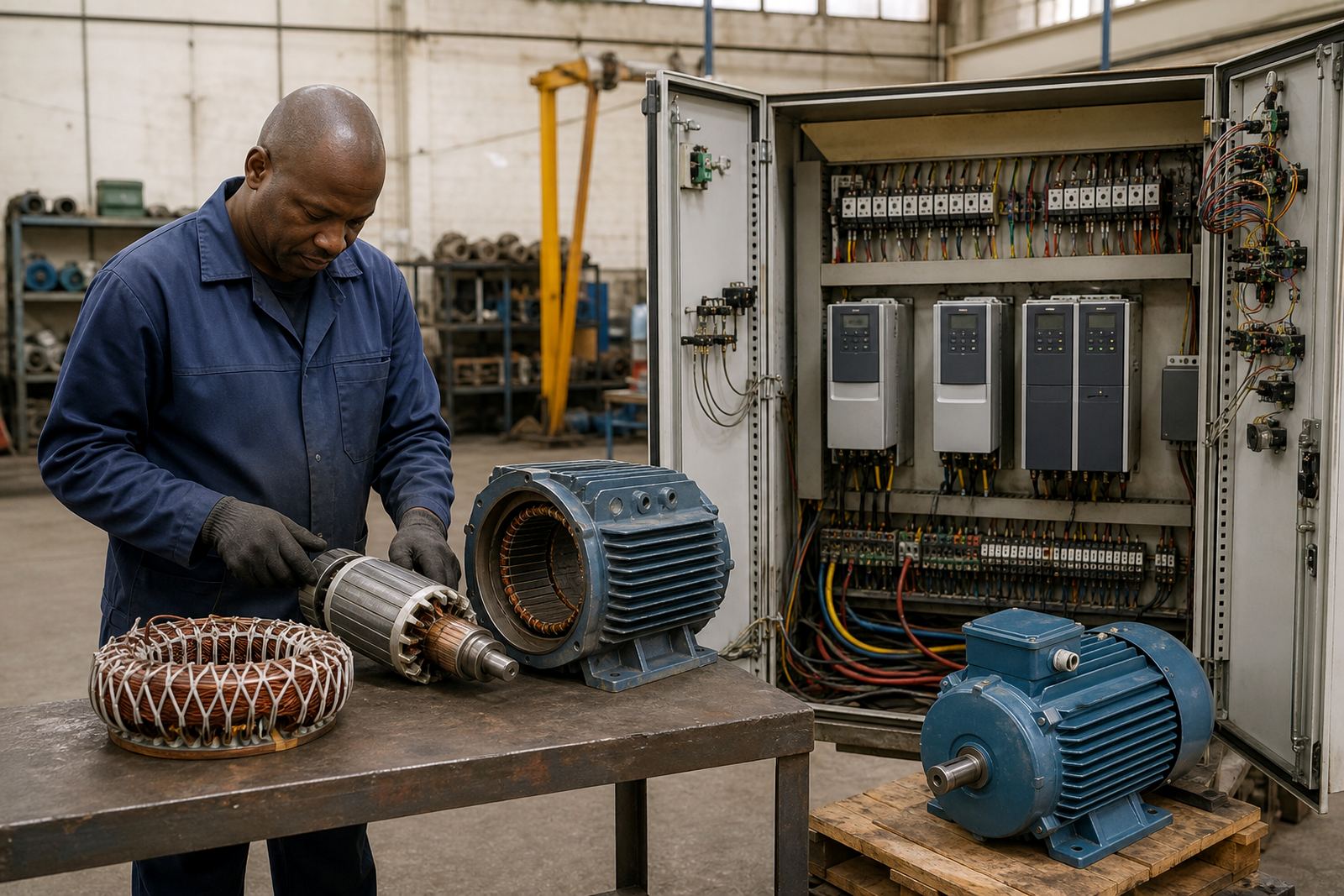
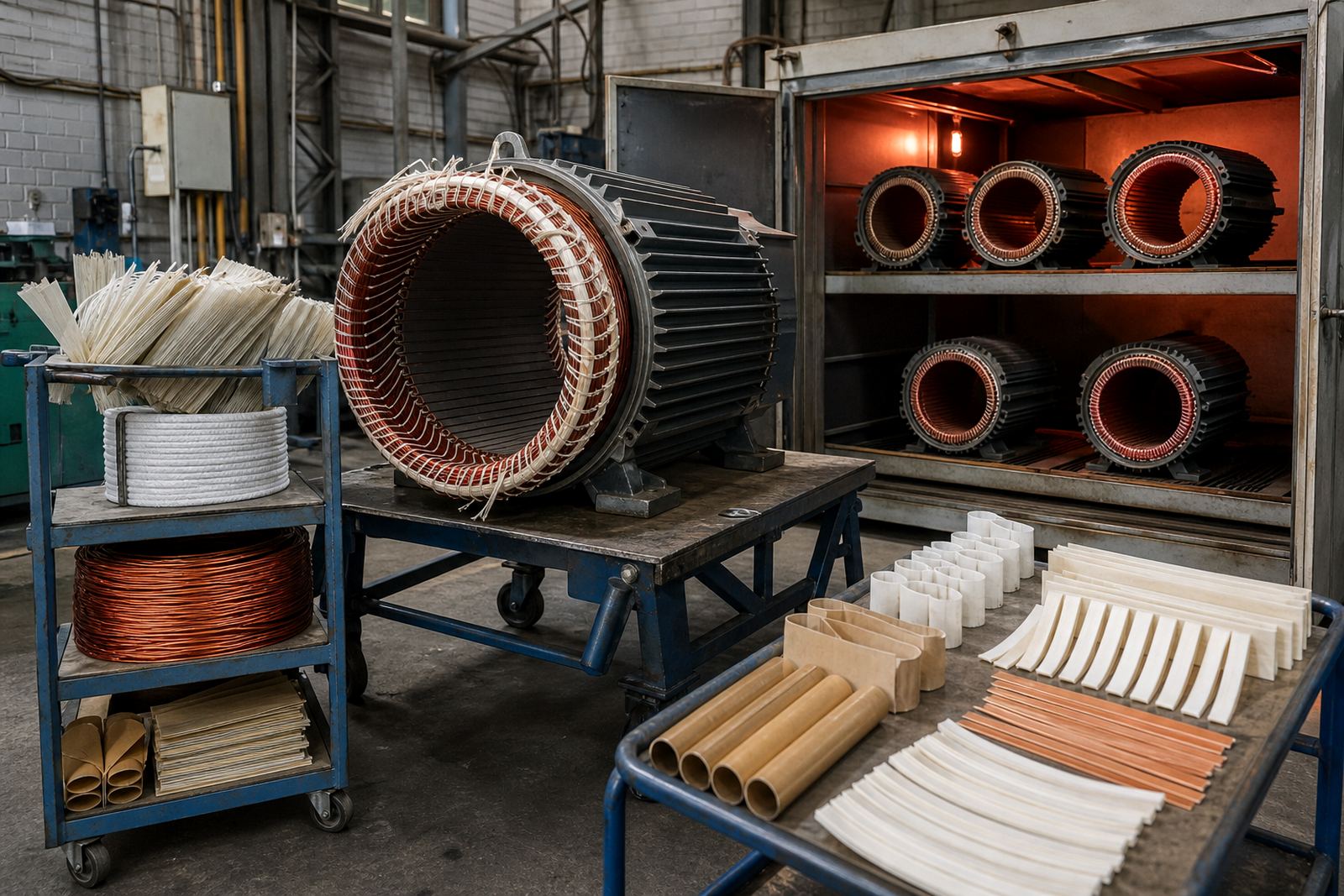
The windings were tested to confirm the insulation had not broken down due to dirt, heat or moisture. We use standard motor testing methods for insulation resistance and continuity so we can judge whether the winding is still serviceable. In this case the winding remained usable after cleaning and testing, which saved the client from a full rewind.
After the internal work, we rebuilt the motor with new bearings, rechecked alignment points and verified that the rotor turned freely without rubbing. The unit was then run up in the workshop to listen for abnormal noise and confirm stable operation. It is the kind of work that has to be done methodically, not rushed. A shortcut on a blower motor usually shows up later as vibration or overheated bearings.
Project Timing And Site Constraints
The full job took two weeks from receiving the motor to workshop completion, including stripping, cleaning, testing, reassembly and final checks. That timing depended on the inspection findings and the availability of the correct bearing sizes. We do not guess on bearings or insulation results, because the wrong part or a poor test can create more downtime.
There were also practical site constraints to consider. The blower served a process that could not stay down for long, so the client needed progress updates and a clear plan for removal and reinstall. We worked from the assumption that the motor would return to a dusty industrial environment, so we made sure the sealing, cleaning and bearing work were done with that in mind.
- Unit received from Kempton Park for workshop work
- Contamination and mechanical wear identified early
- Bearing replacement completed during strip and rebuild
- Insulation testing confirmed the winding could be retained
- Running checks completed before release
Results And Handover Notes
The repaired blower motor was handed back in serviceable condition with the contamination removed and the bearing-related noise dealt with. The motor ran smoothly in workshop testing and was ready for controlled site refit. For the client, that meant a shorter recovery period and less risk of sending a damaged motor straight back into operation.
We also supplied practical handover notes for the maintenance team. These covered the condition we found, the work carried out and the checks that should be done when the unit is refitted. On equipment like this, the next failure often starts with poor cleaning, misalignment or a loose electrical connection, so those items were flagged for attention during commissioning.
Because the motor had been exposed to contamination, we would also suggest periodic inspection after recommissioning, especially if the plant is in a dusty area or sees moisture during cold mornings. In Gauteng, a lot of workshop and plant equipment works hard through dry dust and then damp weather changes, so bearing and insulation condition should not be left to chance.
What We Would Repeat On Similar Jobs
If we were doing this same job again, we would follow the same approach: strip carefully, test before deciding, replace worn mechanical parts and document every step. That is the safest way to handle a blower motor that has been exposed to contamination, because you only keep the reusable parts after they have proven themselves.
We would also repeat the same safety discipline on site. Lockout, isolation and verification before removal are non-negotiable, and the same applies before final commissioning. Good repair work is not only about the winding or the bearing, it is about making sure the whole assembly is safe and suited to the duty again.
For plants and workshops across Kempton Park, Boksburg, Johannesburg and the wider Gauteng area, this kind of blower repair is best handled by people who understand motor condition, drive behaviour and the realities of maintenance downtime. That includes checking the connected drive if there is a variable speed unit on the same system, because a drive fault can overwork a healthy motor or hide a bigger problem.
Key facts
| Project | Kempton blower motor repair and workshop restoration |
|---|---|
| Client location | Kempton Park, Gauteng |
| Equipment type | Industrial blower motor |
| Main issue | Contamination damage with bearing wear |
| Work completed | Cleaning, bearing replacement, insulation testing and reassembly |
| Project duration | 2 weeks |