

Compressor Drive Work for a Sasolburg Plant
This project came from an industrial site in Sasolburg where a compressor drive had started running hot and then behaved unpredictably under load. The plant needed the unit back in service without guesswork, because a compressor that trips or hunts for output can affect compressed air supply, production timing and the rest of the workshop.
The brief was straightforward: identify the cause of the cooling issue, check the drive electronics, confirm whether the output stage was stable, and restore the unit to safe operating condition. The client needed practical feedback that maintenance staff could use, not just a fault code reading. We also had to work around the plant schedule, with limited downtime available and normal safety controls already in place on site.
Because this type of equipment sits between the supply and the motor, the repair had to be handled carefully. Variable speed drives store energy and contain sensitive components, so lockout procedures, isolation checks and proper discharge time are not optional. Electrical work must be done by qualified people only, with the right test gear and a clear sign-off path before re-energising the system.
- Site: Sasolburg industrial plant
- Equipment type: compressor variable speed drive
- Problem area: cooling and unstable output behaviour
- Service focus: fault finding, repair and return to service
What the Fault Looked Like on Site
The drive had been showing signs that are common on heavily used plant equipment. The cooling path was not moving air as it should, internal temperatures were rising, and the output was not holding steady when the compressor demanded more load. In simple terms, the unit was working harder than it should and then reacting badly to that stress.
Our first step was to inspect the drive enclosure, look for dust build-up, heat stress marks and signs of moisture ingress. In South African plants, especially where compressors run near process areas, fine dust and humidity can build up inside cabinets if seals and filters are not kept in good condition. We also checked the control terminals, cable condition and any signs of loose connections that could cause intermittent faults.
- Cooling fan and airflow path checked
- Heat sinks and internal surfaces inspected
- Control and power terminations examined
- Signs of contamination and moisture assessed
The main constraint was that the plant could not afford a long open-ended shutdown. That meant a disciplined inspection sequence, a clear call on what could be repaired in place, and a decision on any parts that had to be removed for bench testing. We kept the process practical so the maintenance team could plan the next step without wasting a shift.
Repair Scope and Bench Testing
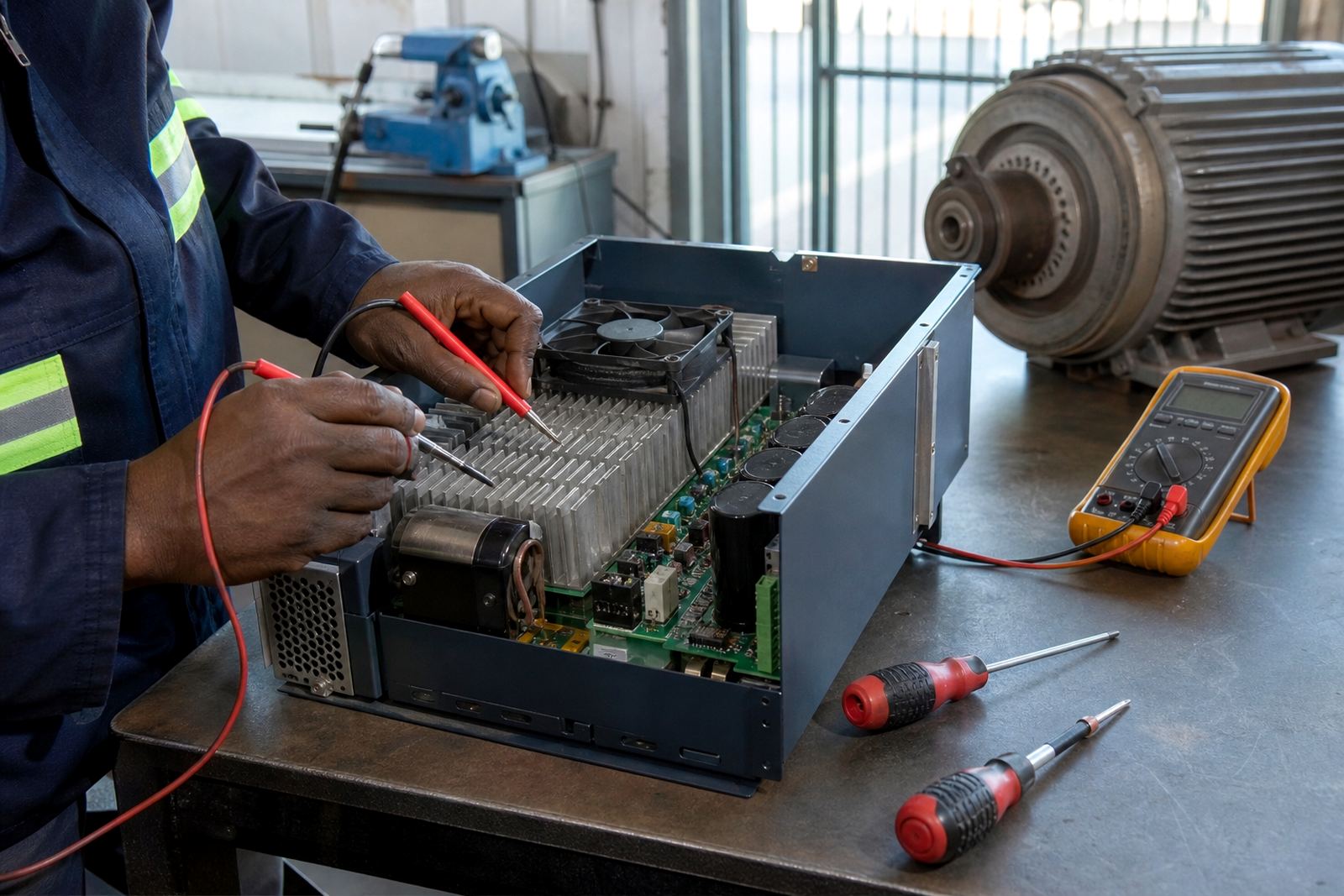
Once the drive was removed and safe to handle, we carried out a deeper inspection of the internal sections. That included checking the power stage, control board areas, cooling hardware and the condition of the bus capacitors where applicable. We also checked for thermal damage around terminals and any components that may have drifted out of tolerance after repeated overheating.
Where a drive is showing unstable output, you do not just swap parts at random. You trace the fault path, verify the input side, inspect the output stage and test the control signals. We also looked at the mechanical side of the installation, because vibration, poor mounting or restricted airflow can make the same fault return if the root cause is not addressed.
The work carried out on this project included the following:
- Detailed fault finding and visual inspection
- Cooling system cleaning and airflow restoration
- Electrical checks on control and power sections
- Component-level assessment for heat related damage
- Terminal cleaning and re-termination where required
- Insulation testing on the connected motor and cabling, where safe to do so
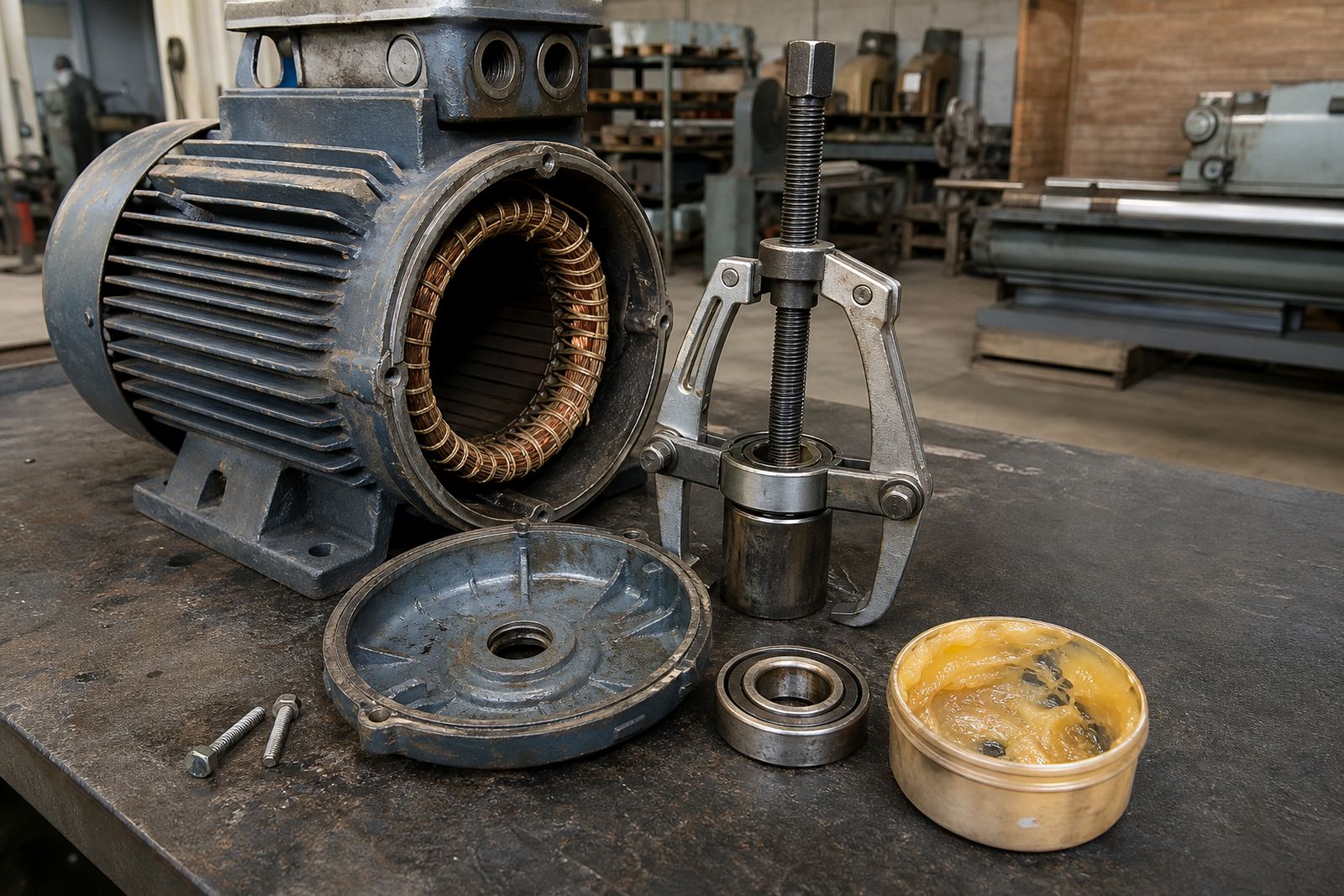
For this kind of equipment, bearing replacement is not usually a drive-side task, but related rotating plant may need bearing checks if vibration or overload has been part of the fault history. We treat the drive and the driven equipment as one working system, not as separate boxes sitting in the panel room.
Why Cooling Matters on a Compressor Drive
Cooling is not just a housekeeping issue on a variable speed drive. Heat is one of the main reasons electronics age early. When a drive overheats, output stability can suffer, components can drift, and nuisance trips become more likely. On compressor duties, that can show up as pressure swings, repeated stops or the compressor struggling to respond to demand.
In this case, the cooling fault had likely been developing over time rather than appearing all at once. That is common on dusty sites and in buildings where cabinets are opened often for maintenance. We checked for blocked filters, failed fans, restricted venting and cabinet dirt that may have prevented normal heat transfer. Small issues like that can become expensive if they are ignored.
We also checked the surrounding installation because good drive repair includes the panel environment. Clean cable routing, secure gland entry, correct spacing and a sound earth arrangement all help a drive behave properly. That matters in places like Sasolburg where industrial service conditions can be tough and shutdown windows are short.
- Cooling fault traced and corrected
- Output behaviour checked under controlled conditions
- Installation condition reviewed for repeat fault prevention
- Panel cleanliness and cable condition assessed
Timeline and Return to Service
The project was completed over two weeks from first inspection to final handover. The first stage covered on-site fault identification and safe removal. The second stage was bench testing and repair work at our Germiston base. The final stage was reinstallation support, commissioning checks and confirmation that the compressor drive was operating correctly under load.
We supplied practical feedback during each step so the client knew what had been found and what had been done. That included the condition of the cooling path, the state of the output stage, and the checks recommended before the unit was put back into everyday use. Where a drive has been hot, it is not enough to simply switch it back on and hope for the best.
The results were clear: the drive returned to stable operation, the cooling issue was addressed, and the compressor could be brought back into service with better confidence. The plant team also had a clearer picture of the maintenance points to watch going forward, especially cabinet cleanliness, fan condition and periodic inspection of terminations.
- Total elapsed time: 2 weeks
- Stages covered: inspection, repair, commissioning support
- End result: stable output and restored compressor operation
- Handover included: site reporting and maintenance notes
What We Would Do Again on a Similar Job
If we were called back to a similar compressor drive in Sasolburg, we would approach it the same way: isolate properly, inspect the complete system, check cooling first, then move through the electrical sections in a logical order. That approach saves time and reduces the risk of missing a fault that may only show up under load.
We would also keep the focus on the site conditions that often cause repeat problems. Dust, poor cabinet ventilation, loose connections and rushed restart procedures can all undo a repair. Good maintenance includes shutdown planning, safe access, panel cleaning and making sure the cable checks and insulation tests are done before the unit is put back into full duty.
Locor supports plants and workshops across Germiston, Johannesburg, Ekurhuleni, Pretoria, Vereeniging and Durban, with practical motor and drive work handled by an experienced team. For this type of repair, the main lesson is simple: find the cause, correct it properly and document what the site needs to keep the equipment running. That is often the difference between a one-off fix and a recurring fault.
- Keep the drive cabinet clean and dry
- Check cooling fans and airflow during routine maintenance
- Use qualified electrical staff for lockout and testing
- Do not restart until the system has been checked under controlled conditions
Key facts
| Project type | Compressor variable speed drive repair |
|---|---|
| Town | Sasolburg |
| Problem reported | Cooling problems and unstable output behaviour |
| Timeline | 2 weeks from inspection to return to service |
| Work scope | Fault finding, bench testing, cooling correction, commissioning support |
| Base handling the repair | Germiston, Gauteng |